The Smart Path from PT to Profitable Exit with Michael Silva
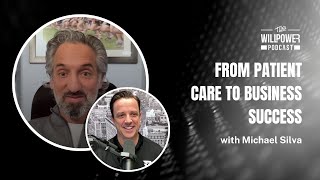
Michael J. Silva explains why PT practice owners are burning out and selling. Beyond low reimbursement, the real problems are poor visibility into business health, weak culture, and clinicians trapped in treatment roles. Silva recommends starting exit planning early with outside advisors and exploring options like selling to employees or corporate buyers.
Questions this video answers
January 28, 2025
$1,000
MichaelJSilva.com
March 1–2 (year not restated in transcript)
www.rockstar-summit.com
Chapters
Foreign.
Rockstars. If you are thinking about selling your practice because you've just had it, listen to today's episode. We've got Michael J. Silva, who is a physical therapist who built a very successful practice, who chose to sell it and is now seeing this trend of PTs, OTs, and SLP owners who are just tapping out. They're either giving people their keys or they're selling to companies who are buying them on pennies for the dollar just because they're so done that they need to be free. And I will tell you that this episode is vital because we're going to talk about a different cause for this burnout in a way that you've never heard before. You've already heard the typical stuff, right? Like decreasing reimbursements. Well, we're talking about the real core reason, a reason that you can control. So listen to today's episode. Get inspired, and we even offer you some resources for help so that when you exit, you exit on top.
All right, so, Michael, you and I are talking about physical therapy practices that have just had it. Like, they want to close the doors, they want to sell, man, it seems like it's happening all over the place. What have you seen in that area?
Yeah, unfortunately, I'm seeing that happening everywhere, all over the country. The people I've been speaking with and talking to, it's like, as soon as you said that, I'm thinking like a wwf. Like, they're just. They're tapping out, tapping out, tapping out. They're like, I've had enough. And they. But the problem is they don't know what to do or what options or what route to take. And what's the obvious one that everyone does?
Well, there's two things, right? Like, either they just sell. Like, from a place of desperation, selling isn't bad or good. But there's a. There's, like, you're saying there's people who are tapping out that mindset. Like, they're just trying to get away from it. Like, it's bad. And then there's people who literally just hand their key. They don't even sell. They just give their keys to people, right? Like, they just, here are the keys. I'm out of here. This sucks. I'm out.
I know practices that have entrenched in the community years of service to the people they're treating. And I don't know if the owners just don't think that they have anything that's sellable or have anything that they can pass on to the key employees that they Have. Maybe there's no family members that want to be in healthcare. My kids want to know part of it. But, yeah, then they're just like, no, we're done. I'm like, no, don't just be done. Like, especially if you have key employees who might want to just keep it going.
Totally. So, rockstars, as Michael's talking, I just want to say, like, if you're in a position where you're, like, wanting out, you know, obviously, like Michael saying the obvious answer is to sell, and selling isn't bad, but trying to get away from something that you've built, not because, Michael, you would agree with this. You and I have seen it from personal experience. We've built, you know, bigger businesses. We've sold from a place of power where we have, like, been really seeing that exit as a way for us to get into the next game less about getting away from the thing that we love. But we. We have seen people who are leaving, and they're so much closer than they know to, like, something more significant. Right. Like, they just. They're not as far away from having a more valuable business if they did want to sell.
Right, Right. You just maybe think of. There was some analogy or story I heard where. What was it like? An animal's trying to dig their way out of something, and they're, like, this close to breaking through to, like, the open air. They're, like, under. They're buried underground, and they just give up, and they're, like, that close.
You know, it's kind of like the story when you're saying that the analogy, it's not the same one, but it's the frogs in the. In the cream. Yes. They keep turning. Okay, so, like, the frogs. There's. There's two frogs, and, you know, one frog just gives up and drowns, and the other frog keeps kicking and kicking and kicking and kicking. And then he turns the cream into butter and he gets out.
Right. Because it turns into a solid. And he just climbs out. Right?
Yeah. And as it's getting firmer, it becomes harder to kick. And so that's why people are like, my legs are tired. I'm just. I'm just gonna give up. And they basically drowned. And they're like, hey, life is short. No one should be this miserable. I'm out of here.
Right, Right. They're not patient enough to see the butter.
Butter's coming, and we were late. Guys, I want you to know, Rockstars Michael and I, look, we're both PT owners who have been in the cream and it is. I don't know if I ever want to say that again, but I probably.
It's your show, man. You say what you want.
But for us guys, we're just like, there's nothing but empathy coming from us to you. Like, it does suck. We know you feel alone. We know you feel like things are really hard. And it's funny because there's this really.
Cool.
Graph that I saw from a company called, it's now called Keep. It used to be called infusionsoft. The guy who, who's the CEO of that, he built this predictable growth pattern. And so he talks about stages of business. And so there's like starting out and then there's the, you know, publicly traded companies, but no matter what, it's all based on revenue. But like, there's these valleys of death before we get to plateaus of stability. So it's usually when as an owner, we don't realize we're in a valley of death, which is growth related, by the way. And so this can happen when you're starting your first practice, right? I mean, what are the different stages that you've seen this in, Michael?
The ebb and flow of business in those valleys of death, as you call it, were consistent. I mean, I had my business for 20 years and I don't think there was one year out of those 20. I wasn't like, oh my God, we're not going to make it. Like, the numbers, they're trending down. What am I going to do? What am I going to do? And at the beginning I would just see more patients, see more patients because I wasn't sure. But then those ebbs and flows happened. But we were prepared for them. We knew when they were coming. Like the two times a year, around this time of year, holidays, numbers will go down a little bit. So what do you do to prepare for that? You have these strategies, you have these other offerings for people. And telehealth was great when that got introduced with the COVID to implement that in. But yes, so I think it was the same kind of ebb and flow, just at a different scale. So when it was just me, it's like, oh shit, I don't have enough clients. Like, I'm just going to call all the people I haven't seen implementing those strategies because I was the front desk person, the biller and the therapist and the trainer.
But then just bringing, you know, through the team meetings and empowering the team, we were, we were prepared for these things. And there were. They were. They Weren't as scary. Every year that went by, I had a little less angina when, when that happened. So I don't know if that's what you were asking, but they're normal. And I used to use it, you know, what's the phrase the calm before the storm?
Right?
There's like the storm before the calm when numbers are looking ugly and things are, oh God, what are we going to do when we do that always comes back up, that ebb and flow. And then there's that stability, that plateau of stability right after it. I never heard it described that way, but it's exactly true. And I guarantee if we had 12 people on here, business owners, they would all describe it in a slightly different way. But it's the exact same theory that we where that we're talking about.
Absolutely. And the bigger that companies get, the more stable they become in general. Even though as an owner it's easy, like you said, to have every year something that triggers like the fear. There's a difference between being a paddle boat in the ocean of business versus a cruise ship. These cruise ships. I have a family member who's built a multi hundred million dollar pest control company and it takes so much for him to get that boat is not going to sink. But the challenge is it's much harder for him to turn for him to change a policy amongst hundreds of employees, it's like a whole process. Whereas you and I, when we were smaller in PT we could just go, okay guys, now we're doing it this way. And as long as we were decent at presenting it, we'd get buy in. But I think what happens, Let me ask you this. Why are. I want to answer the obvious question, why PT owners are tapping out. I mean it may not be that obvious for all, but what's the quick fire answer to that question, Michael?
Oh, I hate, I hate the term. It's been used so much over the past five years. But they're burnt, right? They're just.
What are the top three, do you think? What do you think the top three would be for burnout?
They are incompetent in the future of the stability of their business because of everyone wants to blame insurance companies and reimbursement. They do not have a good grasp on their business where the leaks are in their business, culturally and financially. It's just, it's a little bit of a mess. You know, if you look at the numbers and you ask the questions there, they can't answer the questions about the financial health of their own business. They can't answer the questions about how happy their employees are because they haven't checked. So I'd say that would be number two. Number three is they've just got like, can't treat patients anymore. They, they just don't want to hear the word pain anymore. They don't want to just. If they're still the, the treat. If they're still a treating therapist and owning. They just don't. And they can't see how the transition to them just running the business and pulling away from clinical work because that's exhausting. You know, there's not many people that can treat for 30 years. I mean, do you know many pts that are not at all? No, it's. It's exhausting, you know, and depending on the population, it's either emotionally exhausting, mentally exhausting, physically exhausting, or all of the above.
Yeah, I love that answer. Here's why I wanted to ask you that question. I was sure you were going to say something different than what everyone who's listening normally hears, which is, well, insurances are declining and there's this thing called it's difficult to recruit and all those obvious answers. What you said was so much more high level that I'm hoping people are listening rockstars and going, oh yeah, I just don't know how to put my thumb on the pulse of these things. I don't know how to fix it because it's. Because those other things, those other excuses, those are victim mindsets. Oh, it's hard to recruit. If it's hard to recruit, that's an outside force that's causing a limitation that I can't control. But if I just don't know how to get my hands on retaining and like developing leads, that's a problem I can figure out. It's scary, but it's still something we can control. The third thing you said about the clinicians I want to punch as well, rockstars is that I believe that many people do not step into leadership because they honestly, as much as they may even hate the fact that they're still treating, that's what they know. It's the evil. It's not the evil they know because it's not evil, but it's, it's like this like trap because that's where they get gratification when that patient, the power of the patience for them, it's a comfort zone. And there's like when I treat it, dude, I've never, I've owned different companies over the years. The only time I Ever felt super validated as a human being was when I treated because I constantly got cookies. I got cookies, I got all the things. Like, I think it's like we kind of like, seriously, I think that's what's to add to what you said. It's like, yeah, man. I think it's like they hate it, love it. They also, like, they go and they get. They know what they're doing with the shoulder mob. The patient goes, oh, my gosh, I can do this Art. I can use my arm. In a way.
Yeah, yeah.
They're kind of stuck because it's like everywhere else they feel maybe like a dork or a loser. That's how I felt.
At least I think it is a comfort zone. Right. And I think also the clinicians in our. In, I think in probably all of healthcare, but definitely in physical therapy, they know they're here for the patient. And we get that. We are here for the patient. But if you're going to be a business owner, you better put on your big boy pants and your big girl pants and realize that you need to have a successful business. Do you want to serve your community? Do you want to be a, you know, what's the word? I'm thinking of drawing a blank here. I got to have another cup of coffee. But if you want to treat more people, you want to serve your community more, you have to have a thriving practice. Like, you can't have a shitty practice and do that. And if you don't want to do that, then go work for someone who does because they're going to have a successful practice. They're going to serve more people, they're going to have more employee happiness because they know what it takes. Right? And if you're not going to put the effort into that, maybe you're not. Maybe you shouldn't be an owner. I hate saying that right now because I'm, you know, we both try to help owners. Last thing I want to do is have someone close up shop and just go become an employee. Because, like I told them not to. That they're not.
No. But you're trying to draw a line in the sand. What you're saying is, listen, if you're not willing to let go of the mindset of being so patient centric that you can't see the bigger vision of being company centric, then this might not be in alignment. And I will say this. I think that every PT owner, every business owner has to change their mindset no matter what, to grow. Like, that's not Unique. That's not inherently baked in as like an internal thing for people. Like, oh, I don't, I can't, I don't see it that way. I don't feel that way. It's. No, you can change your mindset, but there has to be a willingness to let go.
Right, right. And get out of your comfort zone. I didn't have that willingness. It took my wife telling me a thousand times like, you need to work on the business, get out of it. You don't need to be doing it. You got a team, teach them how to mobilize a talus and dry needle a calf. Like get out of there. You've got bigger things to do. And then I was part of the Goldman Sachs 10,000 small business program. Have you heard of that?
No, never heard of that. What is that? It sounds cool.
This is really good. So Goldman Sachs went on a mission years ago that they wanted to train 10,000 small business owners in the US so you apply for it, like in Rhode island, we're so small we have one cohort for the whole state. So all these business owners and you know, it's like a, there's a requirement, you need to be near in business at least 2 years. You need to have at least 100k in revenue and at least one employee or something like that. I applied, I got accepted and I went into this program and it was basically a mini mba which we did not get in PT school. Right. So I'm there and that's what between my wife just really reinforcing that like telling me like, get out, get out. You need, you'll be, you'll provide more value if you're a better leader. You don't need to treat all the runners. You've got good clinicians. And she was 100% right. And then I get there and now I'm like looking at the business and I've got this my advisor who's basically a college professor who teaches business and economics from all these different schools from all over the country. And like showing me like a, the process, the exit strategy, like you're. Eventually I wanted to exit my business. I in the way where I was when I started that program, I would have been handcuffed to the sale of the business because I was the number one revenue generating employee on my staff at that point. I probably had in the 20s, not 20 therapists but 20 staff. Maybe we had 10, 11, 12 therapists and these. And they were like, you need to back that off unless you want to like sell your business and be handcuffed for five years and and be an employee now of a bigger corporation. So anyway, just getting the education and really pulling back and just, just leaving my practice for one to two days a week to join this program for I think it was nine weeks long. It was awesome. And then I was surrounded by 39 other business owners, only one other healthcare practice. So now I'm getting these other inputs from different.
People in gardening, construction, restaurants, coffee shops, florists, like all these different businesses and getting input from them which was eye opening, which was hands down one of the best experiences of my life.
Hey Rockstars, are you having a challenging time recruiting, retaining or training your people? Then man, am I excited to tell you about the Rockstar Summit guys. This is my personal event that we are launching on March 1st and 2nd. It is going to be two full days of nothing but workshops on how to solve recruiting, training and retaining problems. It's very heavy on the recruiting side. We're going to show you where to find candidates that no one else is accessing so that you can get a leg up in the industry and grow the business that you deserve. So again, that's March 1st and 2nd. Please go to www.rockstar-summit.com to learn all about the details. I will be there in person teaching some of the classes, but we have experts from across the country coming as well. You do not want to miss it. I hope to see you there and it's so powerful because I think our journeys are very paralleled without telling mine to the listeners. I had a very similar experience, very similar spouse. The thing that surprised me the most was that when I took time away to work on my business, I became way less stressed and overwhelmed. So it's almost a paradox of like the mindset shift. It's like when you're in the treating mode or and you can't let go of those last few patients because they'll only see you kind of thing. Like when I, when I was in that mindset, it was like the idea of working on my business in addition to how I lived my life was so overwhelming because it was like, man, this is so hard already. Now I'm going to add a new skill that I don't have. But what I learned was by letting go of that and moving into leadership full time, I became so much happier because I was addressing the main things that were causing my fears. And then I got better at them. And then I started like you. I started networking with people in and out of healthcare and Realized, wow, this is normal. And then everything just started to become more stable for me, which then resulted in a more stable company. And that's when I think when you and I exited, you and I were not in a position where we thought, man, I really want to sell to get away from this. It was quite the opposite. It was like, why would I sell this thing? I got to the point where like, why would I sell this? And that's what you're trying to say to people listening, right? Is that they're not that far away. Everyone can do it if they're willing to let go and change. So how, like Michael, from your perspective, if someone's listening to this going, okay, that's me, I want to change and let go. Where do they start?
Well, they start with assessing the health of their business right now. Because what you don't want to do is sell a business out of desperation that's trending down, right? Because purchasers will know that if they seen the numbers go down, they know you're desperate to sell. You're not going to get the value in the multiples that you want in the sale of your business. Right. So I think, and this is what I do with my clients. So they, a lot of them will come to me and they, I have what's called the business health assessment. It's a really extensive form they fill out. I put it on a spreadsheet. So we're looking at financial health, company culture, employee status, how many hours they're working, how many patients they're treating, what the vision and mission of the company is. So we just go through all these things and what their goal is, what's their 1 year, 5 year, 10 year goal, depending how old they are. So knowing where the goal is, knowing where the health of the business is and then preparing and how do you want to sell it? Because most people think the only option is just to sell to a big, big corporation, but it's not. You know, there are many ways you can exit your business. Yes, you can sell to a giant corporation and maybe you'll get a big check, maybe you'll be tied to them for three to five years, who knows? And there's endless structures for these business sales, which I've been learning over the years, right. You can basically do whatever you want as long as both parties agree and it's, it's put in a legal document somewhere. But you can sell to key employees, right? You can have an esop and employees have been buying into your business, even prepare key employees who really are in tune with your mission and your vision and know that demonstrating the core values of your business, they're like your key employee. There's ways you can give them ownership and bring them in and empower them where maybe one day you just, you hand them the keys and still have some equity in the business. You're still collecting some mailbox money, you still have some input in it, and now you just pass it on to another passionate pt. Because one thing I want to do is try to keep private practice private as best we can.
Keep private practice private. That's the statement right there, man.
Yeah. And I think our profession needs that. I mean, we have options. The bigger companies are trying to do great things and some of them may be doing it, but it's a different animal. So I think I answered the question somewhere in there.
You did very well. You did mention this assessment that you do. Is that something that you offer to people just like as a way of. As a service?
Oh, yeah. So it's called the business health assessment.
It's a paid product that's $1,000. And for that, people will. It's time consuming for them because they have to fill out all this information. So they fill it out, I take it, I put it in a spreadsheet, we analyze, I look at like, what's going really well, what numbers look good compared to industry standards, and also what their goals are. So I get all that information. I do a whole bunch of hours of work on my own, and then we meet either virtually or in person for two to three hours and we go over all of that. A lot of times people are like, oh, I didn't realize I'm this close to being profitable. And all I needed to do was make this minor change because they didn't know because they're in the business too much and not working on the business or taking the time to sit back and look at everything or have someone explain to them why a 12% cancellation rate could be bad for business.
I love that idea that you offer that because I remember starting my journey with understanding the right data. So what's cool about your assessment is that that could help very entry level owners. That could help owners who have multiple locations and they've got a lot figured out, but maybe they're just burning out. I think. I think that assessment is an incredibly useful countermeasure for burnout because it gives objective clarity. Burnout for me comes when I can't see an end, when I can't see an end to my suffering. That's when I start to really feel burned out. And I know that what has always helped me is the right data. If I have the right data, then I can make the right decisions. And then it becomes illogical because maybe there is an objective reason why I should sell now despite the reason of things tanking. And if there is an objective reason, then I can be at peace when I make that. But when I have something like your assessment, it gives me that opportunity to get out of my head into the thinking part of my brain and just realize, okay, does this align for me or not? And less about, I'm a loser, I'm a victim, I can't handle this anymore. And man, like, we were starting the episode. Most people are so much closer than they realized. It doesn't. Yeah, like that frog analogy again. It's almost. They're almost able. Don't give up. You know what I mean? Like, just don't give up. If you're going to exit, fine, but get the objective data. Know what you're selling, know what you're leaving on the table, and then make a decision based from a place of objectivity. Not this gut reaction of, this is too hard. I can't do this anymore.
Most people don't know what they're selling. And unfortunately, some of them think they have something they're selling, but they're just trying to get rid of their job. You know, they're not selling a business. And some have something worth a decent amount of money, but they have no clue. I think this is the benefit because you, you know, you do some coaching as well. Like when you have someone from the outside coming in. Like, I'm emotionally invested into my clients, but I'm not emotionally tied to the business at first. So I have this clarity.
Yeah.
You know, and when I brought in my consultant when they came in, like, oh, this needs to change. That needs to change, I get all defensive.
What do you mean? How dare you say that about me? You know, but getting. But getting like someone who's not emotionally tied, who can understand and like, I love meeting the staff members, too, and going into the clinics, if they're local and feeling the energy and, you know, you can sense when. I don't know if you can, I imagine you can because you're really in tune. Like, if you walk into a business and just hang out a little bit, it doesn't feel good. You're like, okay, there's some problems here culturally.
Yeah. The vibe of a clinic is something that with experience, you notice immediately. It's Weird.
And then when you walk in and it's just vibing, for lack of a better term, I mean, that is priceless. That is gold. That is awesome. Because so many great things can happen when culture is good and the energy is good. And I guess I'm sounding like my kids were vibing.
Yeah. You know, the vibe of a place is. But it's true, man. The energy it produces is palpable. And it does indicate directly how well it's going. But I will say this. You know that that is one of my favorite returns on investment ever was when I invested in an objective analysis of my business. Because, like, in your case, a thousand dollars to possibly save tens or hundreds of thousands of dollars. It's like the ultimate roi. Not to mention the emotional thing it did for me, which was like, oh, this is where I'm at. This is where. And by the way, I did more than one. I. At different stages of confusion. For me, as my company grew, it got to a point where it was like, okay, I need a deeper analysis, you know, And. And I. And so for. For me, when I ended up exiting, I was at a stable place where if I had pushed my. One of the reasons I wanted to exit was because we were at five locations and my team wanted to go, like, to 10 or to 20. And I was like, oh, no, I know what that's. I. I've seen my friends do that. I've networked well enough to see what my friends went through for that. And it was something. I knew we could do that. My dream was always to do this with you, like, be facing the industry. And I thought, why would I sell this? Other than the vision's no longer starting to align for me? And that's a different reason. It wasn't. I was, you know, I think there's something about that objective report that gets us out of the emotional reactive state and gets us more in the proactive analytical state to make the right decision for the long term.
And I think you said something like pretty powerful there. We wanted to still help people in our profession. Right. And I think what we're doing. And you're. I mean, you've got so many great things going on, so congratulations, by the way. Like, oh, thanks. Someday I'm going to grow up and be like Will.
But. No, but we're. But, you know, we're trying to help practice owners. By helping practice owners, they're going to help their employees. By helping their employees are going to serve more people in the community. I think the reach and the power that we have with what we're trying to do in all the different. I mean, you're coming out at a few different avenues with your business, but even just with me, with being able to help owners, help their employees and help their clients, I think I'm going to touch more people in this later stage of my career through that than through the 20 years of just directly treating clients. I feel good about that, you know, in that. And I enjoy this, you know, and I got tired being in the clinic. My hands are beat up because I know it's a really manual focused therapist. So I needed to use what's between the ears and under the gray hair more than just beating these guys up for another 10 years.
And that's so great that you hit that point, Michael, because what rockstar is. One thing I want to hit on this is that we want you to understand that the environment is tough, but you can do it. And the lessons that you've already learned and the few remaining that you have to learn are going to make you one of the most successful business. That's the ironic thing. You're going to be one of the most successful business leaders of any industry. And here's why I say that, is that I remember constantly feeling like a loser as I was going through the different states of confusion or valleys of death of growth of my company. But when I got a network, it helped me not really think about it like that. It was more like, okay, we're all struggling in this together. But one of my coaches said this, Michael. He said there is no harder industry that he had ever seen. Having coached dozens of industries I've never seen, he said I've even. He said he'd even worked in healthcare before. And he's like, I've never. Physical therapy is such a. Can be such a tough environment that when you become successful in that environment, you can be successful in any environment, which I have proven. I've started two more multimillion dollar companies outside of the healthcare. It's healthcare tangential, but they're technically like one's finance and one's virtual assistants. Those are. I'm very proud. I'm not bragging. I'm saying the reason I was able to do that was because the, the lessons I learned back when I thought I was like a loser in that space of that physical therapy practice and. And now you're off doing other things and growing and helping the industry because it's like when you. When you finally get there, right, Isn't there just a natural inclination to want to give back. Why. Why aren't you going into a different industry? Why? I want to. I want people to hear this. Michael, why are you doubling down on PT and serving the industry?
Well, I'll be 100% honest. I considered going outside the industry.
Sure.
Right. So I took some time after I sold, and I was with the company that bought me for a little bit through the transition, and then I exited and I entertained it. But then I thought, I've got how many years? At that point, I graduated in 1998. I'm old. I have so many years in this. I've treated hundreds, thousands. I don't even know clients. You know, I had a big public speaking career as well, so. And I was educating and doing clinical education work. And I have. I think I've in the hundreds of thousands, I've been either on stage, helping at clinics, helping directly helping. I'm like, okay, there's a lot of value there. I ran a business for 20 years. I made a lot of mistakes. I had a lot of wins. I learned a lot of lessons. And even my wife is the one who really. Because I was looking to go out, she's like, why would you just even consider that? Like, you have so much experience. You can't. You still are passionate about it. Because every time I talk about it, I still get lit up a little bit. She's like, and she knew I just didn't want to do what I was doing. She's like, you just need to start helping people.
And literally after she said that, my first client showed up in like 48 hours, reached out to me, not even knowing I was doing this. Reached out for help. And then I really. I didn't realize the value. You said, you kept saying I felt like a loser. You're not a loser, Will. I think you're an amazing man.
But that imposter syndrome, so many times going through the business, I'm like, I don't know what the bleep I'm doing. I hope I'm not going to destroy people's livelihoods here. So, yeah, I had this imposter syndrome. And even starting this, I'm like, why are people going to pay me? And then my first client, I forgot what his. He gave me a testimonial which pretty much said, in the 20 years he's been in the industry, he's never spent better money than working with me. And I was like, whoa, there is the impact.
Yeah, yeah.
And he's. He's like. He literally said, I could not have started and, and open this business without you, there's no way I would have done it. I would have failed before it even opened the doors. And he was, you know, I, he's like, he even said, I can't envision doing, running my business without you. Like, so there was so much validation there. And then my next client was like, more validation. I'm not doing this to pat myself on the back, but it was like creating the journey. Yeah. Yes. And it's like, wow. And things that just roll off my tongue because I've made so many mistakes and learned so many things that I think is like common sense is really not. So just having conversations with people and even a lot of my clients who did the BHA end up coaching with me, not all of them have done that. So even just that one off assessment, people like, holy crap. Like, I know so much more about my business. This has been invaluable. Now I can move forward with more confidence. Now I don't feel like a loser. Like I get a, I got a better grip on my business. So I'm like, oh man, this is like, this is freaking awesome. Like I'm helping people and you know, I don't have to be stuck in a clinic to a patient schedule anymore, which is great.
Yeah. And it sounds like the ways, the reason you, you went back into the industry, not just because you love the industry, but because you recognized through these initial clients how you could take all those painful, hard earned lessons and make everyone's life easier. And there's, we all want to help people. Like, there's no one in the physical therapy, occupational therapy space that doesn't have a passion for helping and serving. But the idea of like knowing our capabilities, man, knowing our power, how big is that? And I think that's what going kind of tying it to the beginning of this, this, this, this podcast. People have lost their way when they're like tapping out or handing their keys over because they didn't know what they didn't know. And honestly, I think the biggest mistake probably comes from them just not networking. And that's the whole reason this podcast is here so that people listen to this going, oh, I'm not alone. And who's this Michael guy? Maybe I can give him a call and get some clarity here. Right?
Yeah, I appreciate that. And if anyone wants to call me, by all means.
How do they get a hold of you, Michael? Let's cover that.
Oh, so just go to Michael. What's my, what's my website? Michael J. Silva.com MichaelJ.
Silva.com and I'll put that in the show notes as well. M I C H A E L J as in jerry silva.com yep.
And it's Silva. S I L V A S I L V A. It's not my New England accent. It's not silver.
It's not Silva.
I didn't pack my car over there.
When I get tired. I do sound like that. But, yes, this is great. And of course, I love helping people. It's what I'm doing now for my profession. Awesome. But even if not.
I think in Rhode island, we have this little incestuous nature because we're so small. I knew a lot of the practice owners, and we were there for each other, especially going through Covid on a Sunday morning. Like, four or five of us would show up with our coffee and be like, all right, what the hell are we going to do this week? Like, this is what's going on. And we help each other. And I became friendly with so many practice owners while we're all competing for the same patients. And they would call, hey, what do you know about this one? And I knew of, like, someone that someone shouldn't have hired that I knew they applied at this place. So I called my friend who owned the business. I'm like, just be careful with this one. Like, but we were there for each other. Like, yes, look, yes, call a coach or consultant or whoever, because that's going to be invaluable. But be friendly. Be in network with the people that are around you because just the power of that network, like you were saying, whether you're paying for it or not. I don't know if that's a good thing to say, as I'm trying to get clients, but we're all in this together. Like you said, people get into this profession because they're caring and they're giving. I think even on the business side of it, there's plenty of patients out there. Everyone. Like, we're not. I would rather consider the neighboring businesses as collaborators, not competition. They're. What is it? Less than 10% of the people that need PT actually get it. We're not even tapped into the 90% of the people that are out there. Like, we could all help each other out and grow and thrive and improve our businesses in a larger scale than looking at each other's competition.
Well, it's the whole point of my show, literally. The Willpower podcast is about helping build. I'm trying to share my network and grow my network because my kids came to me, I never forget this. My oldest son said, hey, if you had to say one bit of business advice above all else, what would it be? And I said, your network is your net worth. Because for me, who I knew, and we all know that, but, like, we all don't. We don't know how to rank it. Well, having sold a company successfully, and I know you have as well, it's who we know that matters. Not the most. But, like, the ultimate is coming. Our ultimate impact is driven by that. So for me, Rockstar, as Michael's saying, this whole thing about, like, getting with people in your area, stop looking at competitors. I would challenge you as you're listening to this podcast, as your one takeaway is to call a PT owner that you don't know and just invite them to lunch and get to know them. Or a call, a video call if you're too busy for that. Like, it's funny because those things are easy and actually fun. But that's the main. The job of a CEO is first to be the visionary, the second to be the cultural leader, but the third is to be the person who builds the relationships for growth. And it's so weird because those are fun things to do. I learned that, like, oh, I'm doing my job by coming to these events. I'm doing my job by meeting my PT partners. And not partners, but PT owners in my area that I used to see as competitors. That's how I ended up selling, by the way. Michael, guys that I was in heavy competition with, we started hanging out at a networking event, became friends, and then one day said, what if we came together to exit? And what could we get a bigger multiple? So we did a seller initiated exit. That tripled what we would have gotten individually. So that's the power of the network. Kind of punching that point for you is, yeah, guys, get a coach, get. Or just if you're not. If you're worried about the commitment of a coach or if you've had lots of coaches, you're like, yeah, they're all different or they're all the same. Well, Michael's a coach who's been there, done that, and sold successfully. Ask your coaches, have you built and sold a practice? If they haven't done that, then they need to show you that they've helped others do that. And I'm sorry, there's a lot of people who just like poo poo on selling altogether. It's like, no, no, no. We all exit one day. We're going to die and we're all going to exit one day. So let's control that exit. Guys like you understand that. So if people are kind of on the fence about this, I just want to give my validation and say that they need to reach out, get the assessment at least, especially if they're thinking about tapping out.
And also, it's never too soon to prepare for an exit. Never too soon.
Because maybe people are listening to this going, well, that's not me. I'll keep that in mind. But you're saying start now, start now.
Start with the end in mind, right? Like you need to know in order to get there. Like, know how you want to exit. Maybe not the exact details or, but have an idea, like how you want to see your business growing and.
Continuing after you leave it. Because if, like, you're right, we're all gonna exit, you're gonna die in your business, or you're gonna sell it or give it to someone. Something that has to happen. So why not control it? Why not prepare for it, then just deal with it? That's where, you know, not great things happen when you do it out of urgency and despair. One other thing, sorry. I know you and I can talk forever, but I think as I've gotten older and I've become more of like this old hippie, I do think the more you're out there and it's about meeting other people, meeting other practice owners, networking, you and I talking and meeting in person at pps, which was great. You never know what's going to come of these interactions, right? And you're not looking at these interactions as like you're trying to sell something, but connect. Go out there, put it out in the universe. Just be a good person, help someone out. I really think the more you put out there, I think the universe sees that and that's going to provide you opportunities that you never would have even thought were possible. Oh, yeah, right. Just get out there, meet people, do good things, be a good frigging human, you know, and good things will happen.
And be a good human to yourself first by getting your network built with people like Michael. Guys, I am so grateful, Michael, for your time today. Thank you so much for being on the show today.
Always a pleasure. Will love talking to you.
Okay, rockstars, thanks for listening. If you. I'm going to put an intro on the back end of this, but please reach out to Michaeljsilva.com get that assessment, get the network built, and we'll check with you guys next time. Guys, thank you for taking time to listen to today's episode. If you found today's information to be useful, could you take a minute and help me? I would love it if you could leave a podcast review in your app so that other people who are looking for this information can find it. Plus, my dream is to have the largest network of medical entrepreneurs and leaders in the world so that together we can change healthcare to make it better for all. So in addition, if you can think of anyone that you can send this to, not only would that mean a lot to me personally, but it would build this network so that we can make healthcare the way that we want it.
More from Will





Highbar PT’s Blueprint for Culture, Brand & Growth With Michelle Collie and Dave Pavao

Highbar PT’s Blueprint for Culture, Brand & Growth With Michelle Collie and Dave Pavao




