Why Your Best Therapists Are Burning Out (And How Mentorship Fixes It) with Stephanie Wagers
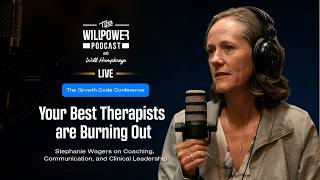
Stephanie Wagers, founder of Connect the Dots Learning Center, explains how structured mentorship prevents therapist burnout in pediatric rehabilitation. Her program pairs new graduates with one-on-one mentors, teaches scripted conversations with parents, and uses role-play drills to improve patient engagement and reduce cancellations.
Chapters
This is the Willpower Podcast live at the Growth Code Conference. No scripts, no fluff, just real conversations with rehab owners in the room sharing what's working right now. And today I'm joined by Stephanie Wagers, founder of Connect the Dots Learning Center, diving into the power of mentorship and how building a culture of intentional investment in your people is the fastest path to a thriving and lasting practice.
Here we go. Well, Stephanie, thank you so much for being on the Willpower Podcast. I'm so excited to talk to you. Thank you.
Yeah, yeah.
So we're talking about mentorship today. We're talking about not just how you mentor in your wonderful practice, but how you get mentorship. So let's start with that first. Let's start with like defining— how do you define mentorship?
I define mentorship by building into others, leaving your legacy behind, and not keeping our knowledge within. Yeah, you know, we can't take it with us. And, um, I don't know, I want this pediatric world to continue. Yes, I want to build other leaders.
And yeah, that's so amazing definition, by the way, off the cuff, not pre-planned.
Oh, it was horrible. That was not my words.
Building into others to create a legacy, full stop. You know, you have these desires in your case with pediatric rehab. Our listeners are all over— adult, pediatrics, you name it. But building legacy is where it's at, and it starts with our journey. Let's actually begin with you. I told you before we hit record I was going to do the opposite, but who were your early— I know, if you haven't noticed, I kind of go off the cuff.
Yeah.
What are the earlier— who are the earlier mentors you had that impacted you?
Oh my gosh, I— the first one that comes to mind is he was a sociology professor, and oh, I thought I wanted to be a PT at the time, and he was a quadriplegic, and I kept finding myself in his office, and he just, he kept throwing this bug in my ear about being an OT, being an OT, and I was like, no, I don't want to do that, but I kept going back there, and then I ended up taking him into the gym and doing some training with him. We just built this friendship. Yeah. And so he planted the seed for me to do OT later. Okay. So I feel like that, you know, he did mentor me in a way. Like, he didn't just tell me what to do, he just planted the seed. And then, um, I would say in my practice, probably the practice owner. She did some mentorship.
She was a little tough, but she really like cared on you, but she made me— it was more of a tough love kind of thing.
She says quiet. She was quiet, but she would bring me to conferences and ask my opinion about things. You know, and showed that what I thought mattered.
Yeah, and I love it because so many people don't get help because they don't realize that that's not a sign of weakness, that's a sign of strength, right? In your earlier mentors, you weren't really asking for help, you just found yourself in his office because you were drawn to him.
Yeah, I thought he was really interesting, and he would ask me questions about myself, what I thought, why I wanted to do different things, and, you know, yeah.
And helped tap into what you maybe you didn't know or needed to explore about your own existence and like where you were going as a leader. Out of curiosity, as a PT, why did he pivot you more towards OT?
I think he saw in me that PT and me did not align. I hated chemistry, I hated physics.
Yes.
And at that time I was observing in a clinic that was really awful. It was like hot packs, stretching.
Oh, I see.
If I would have seen what we do, I would have remained a PT. PT, but he saw that I really needed that mind, whole body, spirit. Yeah, kind of thing.
And I love it. Yeah, that's really interesting. You know, I need to learn more as a PT. It's funny, I even employed OTs over the years. I gotta be really honest, I don't know if I could really separate the difference out too much from OT to PT these days. I, I really don't know, other than like the, the traditional like upper extremity versus lower extremity, which isn't even true. OTs do more and so do PTs, but yeah, I just think it's interesting.
Yeah, I just look at it, you look at the word occupation, right? So occupational therapists do whatever it is that people need to do throughout their day. Getting dressed, eating, drinking.
Sure.
For kids, social play, doing their homework, you know, all of those things.
I love it.
Yeah.
So you had these earlier mentors, you still have mentorship now.
I do.
So you talked about working with the great Greg Todd, a frequent, wonderful guest of the show. So why do you still go get mentorship? What is this that you're, you're doing?
I need somebody to— I have a lot of thoughts in my head and sometimes I'm like, yeah, that's a good idea. And then you can really second-guess yourself.
Yeah.
And I feel like you need somebody to flesh it out and call you on your BS sometimes. And he definitely will do that. And I definitely undersell myself for sure. I had a little bit of coaching before him, but when we started with him, he really changed our world and I wouldn't be where we are right now without it.
So really, you really believe that? I mean, I'm not shocked, by the way. I'm saying this because I want the audience to really hear this, is that you really believe that Greg Todd's coaching has been transformative?
I do, because he changed our thinking about it.
Interesting.
So, you know, I have a course and we were gonna— we were valuing it so low, and he flipped it in the way of, you are saving these companies so much money. What are you doing, Dawn? Yeah. And then led me into the coaching piece with that.
He's so great. You know, I think that's the difference, by the way, between coaching and consulting. Consulting is, I don't know how to recruit, I hire an expert to teach me how to recruit. A coach is, I want to create a future or tap into something I don't know that I have, or a specific outcome. And so the coach comes in and says, let's change the way that you think around it, right? Let's help. Let's elevate the leader, which will elevate the goals and the outcomes.
Yeah.
No one does it. Better than Greg, in my opinion. He is just such a force of pure love and selflessness. Yeah.
Well, he has a way of hearing what your mission is and understanding it in a business way, which I think you can't— you got to step outside yourself sometimes. And I don't know that you can do that without a coach.
I will tell you, I've never not had a coach. I've never not had a coach or a mentor. The small delineation that I'll use sometimes between mentor and a coach is that a mentor is usually I think someone who's a little bit more free, like someone who's just like giving for— they want it like they're just helping you, like your sociology— was it sociology professional? But like, I still call coaching a form of mentorship because it's that degree of caring and loving on the person to help them grow, right? And really them being selfless to help you scale, even if you are paying them, so to speak. So let's talk how you now take that into your practice, because when I asked you about what you were passionate about, yeah, you were so passionate about how you mentor the next generation of providers.
Yeah.
So let's now take how you've taken mentorship as a model of leadership and how you implement that in your world.
In my practice or in what I'm doing?
I would say all the above.
Okay.
So let's start with your practice. Like, how— what does mentorship look like and why is it important?
Those kinds of things. So when we hire a new grad or even anybody into pediatrics, I offer up mentorship and we usually set it up on the calendar. I'll find out what do you feel really good about, what are you not worried about treating, what are you worried about, you know, is it feeding, is it CP, what is it. And so then we make a plan, they are scheduled to come in, we chat, they talk. Honestly, Will, it's like they talk through, gosh, this was really hard with this parent, or I didn't know what to say here. And that's where I'm finding the mentorship is. It's not so much the clinical skills, although some of it is, it's more of those interpersonal skills. So, and then I go into their sessions and I just am another set of eyes and, you know, support. Yeah, got a ton of experience behind me and it's like, well, what about, you know, this is nice, just thinking about things differently. So that's kind of what it looks like in the clinic. Um, and then, you know, coaching other practices and stuff, I just treat their employees, they're like my employee, how I would talk to my employee.
Yes.
And really just building into them those, because they're young, they don't know how to have these hard conversations with people. Yes.
Right? I think, you know, I've said before, any degree of success that I've had is directly proportionate to the number of courageous conversations. I heard an earlier guest say for the first time.
Yeah.
'Cause I used to say difficult, but courageous conversations. 'Cause those are really the defining moments that help us change.
Yeah, and I call 'em caring conversations.
Oh my gosh, I've learned so much about conversations. I love that, caring conversations.
And that's really kind of what my program's about is like, As a therapist, it is our job to say things that need to be said.
Yes.
Right. If you're not doing your home program and your child isn't making progress, just letting it slip, it's doing everybody a disservice.
We're wasting time.
That's why we're not showing progress to insurance companies.
Right. So they don't reimburse us. They reimburse us less because we're not good at showing our value.
Right. Right. We just need to be able to have those conversations that matter.
Absolutely.
You need mentorship behind that because it feels really hard. And so just remaining curious and asking questions and yeah.
So I'm seeing parallels. I'm seeing parallels from your early mentorship. I'm seeing parallels from your advanced mentorship through paid coaching. I'm seeing parallels between how you mentor both your clinical, you know, hires and how you coach others. And I hear some elements like listening and curiosity. And so much helping them kind of just process it out and giving them some support. I keep— that's— those are the themes I'm seeing around this. So I wasn't aware of this, Stephanie, that you were coaching other practices.
Yeah, yeah. So I've created a, um, program to train therapists how to get better parent engagement.
So this isn't just for your, your employees?
No, I've given it to them. So I—
if they work for you, they get this for free?
Yeah. I went back, got my doctorate, did a capstone, and because I wanted out of the practice, I was burnt out.
Totally.
Done because, like, just everything, but mainly because parents were not coming in, canceling, you know, the whole thing. So I was like, I'm gonna figure out what's behind this. Figured it out from the parent's side that what they needed, we weren't giving it to them because what we thought built trust was like, oh, it's my clinical skills, right? It's this. And parents didn't care about that at all. They wanted somebody that could relate, collaborate, It's the soft skills. It's the soft skills.
Yeah.
So I looked at that, looked at their barriers, and created a program to train therapists how to do it.
So how do you— how do you— so you're mentoring now, not just your own employees, but you're mentoring employees?
Yeah.
And these are OTs and PTs, speech, speech that are just working their admin and their admin over— PEED specifically.
But I do want to get into the adult world because it's the same thing, right?
It's the same thing. And you're talking— all I kept thinking about was all the conversations I had with my new grads, like, Hey, stop trying to explain the stretch and ask them why they're worried.
Right. But so it gets back to we need to teach the patient or explain the why. Why I'm doing what I'm doing with you, why I'm asking you to do this at home is going to help you get back to your daily life, doing this sport, this whatever. And how can this fit into your life? Because if I give you Theraband, you're not going to do it.
No.
But if you're standing brushing your teeth, You could do some calf pumps or you could do whatever. I'm not an adult therapist, but it's the same thing, figuring out what is motivating to them, right? What made them come to you?
Yeah.
And then just working with them. And it starts with collaboration, asking questions. Tell me about your life. What does your day look like? Yes.
So if someone was graduating and coming into their job for the first time, what would be the top 3 things you would want them to know as to how to find success in that role? I mean, obviously the mentorship program is supposed to cover all those things, but what would be the earliest advice pieces you'd give?
I would tell them, I remember feeling like this, like being scared, like, oh my God, I don't know what I'm doing. They're going to figure out I have no clue what I'm doing, right?
Right. Everyone has the worst, like, oh, what's it called? Imposter syndrome when they start.
Totally. And just to treat your patient like a peer or part of the same team.
I see.
Yeah. And just to start kind of collaborating with them. And also the bigger thing, they don't understand what you're doing and you need to tell them what you're doing and why you're doing it.
Got it.
Yeah. So tell them your why.
It's interesting.
I remember being hired for the first time. I opened a clinic without ever having mentorship. First job out of school was alone in a clinic. This guy didn't know what he was doing. He's actually a good friend of mine now, and now he's an amazing leader. But neither one of us knew what we were doing. And I went out there and I said, I don't know what I'm doing. Are you worried? He goes, "No, because you're really good at just like being personable." He goes, "From my experience, that will get you through all the stuff you don't know until you figure it out." Absolutely. And I don't recommend doing it that way, but I will say that those soft skills, I think we really should be in our schools teaching a greater degree of both business education and like, "Hey guys, let's talk about how to just be human beings around people." Yeah. Some of that you can't train, but you are finding ways to train it individually.
Yeah, I am. And that's, you know, I wasn't planning on taking my program in coaching.
That was not our plan.
Yeah. And then our metrics went—
Are you serious?
Yeah. Yeah. We're getting a decrease or increase, increase of arrivals and clinics that are—
Oh, decrease in cancels. Yeah.
Yeah. Sorry, it's late. And same thing with the clinics I'm coaching. But the bigger thing is that the burnout is going down.
So you're coaching people and just helping them deal with those relationship pieces. And you're noticing that people, that patients keep coming because they're connecting better and then the therapists are actually not burning out. They're probably doing similar volumes.
Yeah, because they have a partner.
Wow.
And it's being carried over at home. So when we're canceled on all the time, when the parent doesn't do it at home— totally. You're like, why am I not good at this? What I'm doing doesn't work. Right, right. It burns us out. Or when, especially in peds, when you're managing meltdown after meltdown after meltdown, our nervous systems are not set up for that.
I don't know how you guys do that. I've worked in adult my whole life, but the peds thing to me, I look at that and I just go, the serious, like the best people in the world are working in peds rehab.
Yeah. But it's a disservice if we don't train the parents because we can't fix their— and I'm not saying fix, but like 1 hour a week, it's a band-aid, right? We have to empower parents with this knowledge through coaching them in the session, right? To do, right?
So how do you mentor people through this program that aren't your employees? That I get because you're present. You also have some people that you've trained that are underneath you that are probably using your methodology. But how do you work in so many different clinics across the country and train these people and really mentor these people to overcome those challenges?
Yeah. So they watch the course. I have an online course they watch.
Oh, that's cool.
I talk with their owner. We make a plan for their team. They just kind of— we talk about their problem areas, survey their staff, what are their current practices, and then we set up Zoom meetings and we'll do—
So you're group training. It's like one-to-many.
One-to-many. But we also have a community in our software. And so after each lesson, they'll upload their reflection, what I'm good at, what I want to work on, here's my goals. I give them feedback. I take all of that, put it into, you know, kind of an algorithm and figure out where their team needs coaching for that particular area. But they also have access to me. They can text me, they can call me, they can email me. And some of them do, like, I've got a parent, I don't know what to say about this. And then I give them scripts and I give them the language to use. So because that's where we fail. I don't know what to say, so I'm not going to say anything.
Sure.
And then that it just builds, builds, builds.
And once they get it modeled. So it's funny, when I used to coach, that was the thing I learned was that dialogue that I would say was the most effective tool of unlocking in their minds how they would approach it because they just have never seen it before. They didn't have reality on ways to approach these situations that are Um, what'd you call it? Conversations. Um, caring conversations. So for me to be able to say, okay, let's pretend and role play, which is the biggest way to train in my opinion. Agreed, 100%.
I'm the role play queen. They're like, oh my gosh, Stephanie's gonna role play again. My staff are like, the only way.
Alex Hormozi is this, uh, he's known as one of the best salesmen in the world. He has a sales team and they train every day, even their top salesmen. Every day they block off their calendars and all they do is drill specific scenarios and they speed. They're so efficient at it. They don't like wait for you to go through the whole dialogue. They will literally go up right there. Stop. You did it like this. Do this now. Go. Okay, great. 5 times. Boom, boom, boom. Okay, now let's go. And it's this idea of like we have to as human beings, we have to say it, we have to experience it before we internalize it.
Because you've had lived experience, right?
Yes. And you've had how many reps of doing that?
Oh yeah, countless, countless. And I— yeah, so we do it in our staff meetings, and I gotta tell you, it's hilarious. They get into it like, you know, okay, you're the mom, you're the therapist, what are you gonna say? And I give them scenarios, and then we coach on that where it's like, okay, because if you can't do it with another person here, up here, you cannot do it with, you know, a parent or a client.
That's amazing. So Stephanie, you get these results because you're in there teaching best practices, but you've also created it in a way that's scalable. You know, you have your own podcast, you have the— so people can listen to that early stages and get free help. Then they, once they trust you, they start working with you and they're able to get that like online training, and then they get the drilling with this, you know, curtailed for their company. They can still get access to you for those very specific kind of off-ball kind of once in, once in a while kind of circumstances.
Yeah. And I build it like it's a framework, so I want it to be where they can plug and play, and it keeps going when I'm gone, right? So they— if they hire somebody new, they get access to the course kind of thing. And it's just like this— your whole company needs to run this way. Your intake team needs to be talking to the parent like, yeah, just so you know, we're a parent engagement clinic, so this is what this looks like. Does that sound like it'll work for your family? If it doesn't, great, here's something down the street.
The failed experience, the bad review, the canceled appointments, they're all gone.
Right. And so when they walk into the clinic, they know what they're expecting. And then we talk about your front desk needs to not just say, here's the policy, right? Like, why do we have a cancellation policy? Because kids don't make progress when they don't show up.
Not amazing.
Not because— I mean, yes, we have it for us too, but it, it goes so much bigger.
I don't know anyone who's built a coaching mentoring program around helping new graduates or even experienced providers overcome these challenges? Because it's amazing that someone— it's almost like, I can't believe no one's done this before.
I know. It's— to me, sometimes I feel like this is so easy, right?
Right.
And when I found this stuff in the research and created it, I was like, what I pictured was, here's the parent, here's a child on one side of the bridge, we're on the other, and the middle is broken. And it just felt like no one's doing this. We're like, we're practicing, but it's not being effective because we don't know how to do it.
Well, it's neat too, because it's a very specific outcome that everyone sees black and white. Sometimes with coaching and sometimes these things that people are selling to B2B, you know, like owners, like, hey, this is how you can elevate your stat. There's nothing more effective or clear than building the people in the most obvious way possible. And if anyone's ever owned a practice before, they will tell you— I know I can tell you that the biggest struggle I had was hiring people I had to find, um, cert— I had to hire people for soft skills. I would train their hard skills.
Agreed.
And that limited my, my, my search. So if I could hire just really good value-aligned people who don't necessarily have those soft skills, because I could use your program, that opens my recruiting opportunities dramatically so that I have more people to choose from.
Yeah, yeah. I was really surprised. I'm like, oh, I don't, I don't think you can train me. And you, you know, they may take a little bit more work because they're not so self-aware of their issues or whatever. But yeah.
Yeah. So they're not aware of the— oh, like the kids?
Self-aware. No, like providers, if they don't have the soft skills, they're not self-aware.
So do you find that owners are bringing people to the table who are like not aware that they're struggling in that way? Like they think they're pretty good?
Well, they're like, I'm doing my job. And they are. They're amazing provider. But it doesn't matter what you do if it's not conveyed. Interesting.
I would think that— I would have thought that was an individual that wouldn't have done well in the program because In my experience, I had people I'd hire who were new grads who were very much like just nervous all the time and they kind of were aware that they sucked at those things. But I had new grads also who were very bad at it and they were just so like oblivious. Like they would just, they'd be like, well, I don't know. I'm just, hey John, why do you think your cancellation rate is double everyone else's?
I don't know, they just don't show up.
I had one, I must be getting them better sooner. Like why are you jumping to that conclusion?
Why are they dropping out? Oh, they just you're so—
you're good. Because I'm so good. I'm so good. So, so it sounds like when we— because that was a painful thing, is like, no, John, you're, you're not connecting with people and they're leaving, and you have to fix that. It was always like a battle, right? So it's nice that they can say— maybe they're just saying, hey, we need to improve our percentage of arrival, let's help everybody connect. And then they come in and they go, oh, and then you see people get better. I'm just amazed that your program helps people to get better.
Honestly, you just have to— we weren't taught this in school, right?
Right, right.
You weren't taught what to do when a parent brings in 15 kids or like, oh my gosh, draws on the wall, brings a pig into your clinic. I mean, I've seen it all, right? Brings her laundry basket, starts folding it. You're just not taught these things.
These are, these are pediatric-specific situations. I've never had any of those things happen, just so you know. I'm like, oh, there is a difference without TMPT.
Yeah, there's a big difference.
Yeah.
But we're just not taught what to say.
Yeah.
And So it feels really uncomfortable.
Yes.
And it's just, then you start to be like, oh gosh, please don't show up for your appointment because it's so awkward when the dad comes or whatever, you know.
Right. Well, it's a beautiful thing to think about that this is something that you can help other people overcome. It helps the owners because it obviously helps their business. It helps the impact on the patient, but it also helps in the recruiting space. What's your vision for this program?
Oh, I, I've got a lot. Um, obviously I want to take on more clinics because that's— I just, I love that. But I'd love to get into the educational sector too and get in front of new grads so they, they can get this knowledge and experience of like, okay, I do need to connect. Yes. Patient isn't like worried about my skill set because the patient doesn't care, right? Right. They don't care.
No.
So that's one. Um, into like hospital settings, just everywhere.
I don't know.
It's interesting. And adults. And I would love to because it's just transferable.
I honestly don't see any difference other than some of the types of conversations you're having because all the conversations you'd have with parents about the kids, the only shift is that we're talking about themselves.
Yeah, that's it.
But they're the same conversations. Same. You know, oh, okay, so let's talk about, do you understand what the plan of care is? Have you had a bad experience with therapies before? All the things that we hit over and over again, they're the same. It's just the subject. I would say pediatrics adds additional discussions that you just wouldn't have. But even in adult clinic, even in adult practices, how many times did I have a geriatric patient who was the child, right? This was, this was something that I don't know if you thought of, but like the way that you talk to the parents to help the kids would be the same discussion to talk to their kids when they're bringing their parents. Because when you have a very frail elderly parent and you've got the child coming in, it's the same discussion. You're talking to the child With the other parent there, obviously you're not treating them as a secondary human being, but it's like a child in the sense that like the child, the, the, the adult child is looking after their geriatric parent and they're the ones overseeing their care and having to implement the programs. And if they don't help the geriatric parent, it won't get done. So I just think there's a lot more crossover than you, you may know because it's such a valuable tool that every owner would be like, yes, every owner listening to this is going, where do I get this?
Well, and the thing is, We as owners are really good at this, right?
Organically.
Organically. That's how we got where we are. We connected with people. We got a following. We got a practice.
Yeah.
And then in our head, we think everybody else should be good at it too.
Yeah.
And they're not. And it's— we don't have time to train our staff in the way. And oftentimes, like, our staff don't listen to us the way that they would listen to somebody else. Right. And that's what I found.
I have found— Stephanie, you just said something big for me. The single greatest thing I ever did for my practice outside of developing myself was bringing outside people to bring to develop my people because someone from the outside is seen as an expert automatically.
Yeah.
And someone like you who has the experience and the social proof, it doesn't take long to immediately buy in. So that trust goes to that and then it starts feeling like they're being invested in versus being reprimanded or trying to get pushed for, for money. It's amazing that you have this. So how do people get a hold of you, Stephanie, to get to learn more about this program?
They can go to my website. It's ctd-learn.com.
So C, so C as in like connect.
Connect the Dots Learning Center.
CTD, Connect the Dots Learning Center dot com. Yeah.
Well, yeah, the website's ctd-learn.com.
And we'll put that in the show notes. So please, we'll have that piece of it there. And you're willing to work with any— you have space in your calendar to work with some of these people? I do.
This is what I— it's my passion. It's like I've geeked out on it for the past 3 years. Like, my husband's tired of hearing it now. He's super supportive, but it's just, yeah, it's really exciting to me. And I love— I get those like chills when somebody is able to like get it and have those conversations and make that connection.
I love it. All right, so Stephanie, before we wrap things up, I like to do rapid fire questions at the end. You ready for this?
I don't know.
Oh, by the way, what's your podcast?
Connect the Dots Learning Center.
How easy is this brand? Okay, so everyone listening is like, can follow you on that podcast as well as they can go buy your product. So From today's podcast, what is the greatest mistake that people make when trying to mentor new graduates?
Forgetting what it was like to be that age or be that new.
Yeah, I had friends over time who would be like, "Oh, this next generation, they just don't—" It's like, "You were the same way, man. Like, you were the same way." Love that. Okay, shifting gears a little bit. What is a book, movie, television show series that you've watched recently that you've liked, or a band or concert, anything at all, anything in that entertainment space that you've enjoyed recently? Yes.
Oh my gosh. Billy Bob Thornton.
Oh, he's got a movie. It's in Texas. Or no, no, it's— I forgot the name of the show. That one. Yes. So those of you who are looking, it's Billy Bob Thornton has a show right now and it's got Oh, gosh. Doesn't it have Demi Moore?
Yes. Yeah. And it's spacing— spacing the name of it. Same writers of Yellowstone. I've also watched Yellowstone.
Right. You love that as well. Yes. I've never seen either. Really? I am— I don't know what my problem is. Shrinking? I haven't seen Shrinking. And I love comedies. I love— and I love Jason Segel and Harrison Ford.
You got to watch Shrinking. Shrinking is my favorite. Really? Yeah. Ted Lasso.
I love that show. That's one show I watch all the time.
Then you would love Shrinking. Done.
Yeah. Done. Okay. Where have you been in the world that you've loved or somewhere you're excited to go? Hmm. Ireland. Okay. You've been or you want to go?
I've been. Beautiful. Scotland. Yeah. Beautiful.
Which is better, Ireland or Scotland?
You know, Scotland was different. Oregon's very green. That's where I live. And so Scotland was crazy cool with the castles and all that stuff. Yeah. But Ireland was super fun too.
Sweet. Yeah. Okay. And final question. You know, we're all here because of our ancestors, right? Like, who in your ancestry line, parent, grandparent, had an impact on you and why? Oh, let's say a positive, loving impact. I didn't define that very clearly because there could be lots of impacts.
That's tricky. Um, my mom. Yeah, yeah. I mean, I had a great family, but I think she was always my biggest cheerleader. Yeah, just like, she didn't go on to college, and so I, when I got, when I wanted to go to OT school, my dad was like, well, why would you do that? You're just gonna go get married. Oh my gosh. Yeah. And I was like, fought him back. My mom's like, go, go, go, Steffi, go. And so she's always just been this like, go get them kind of thing.
Are you the oldest by any chance? No, you're the youngest in the family. Wow. So that was a brave thing in a sense because, you know, there was an expectation, at least from the dad, to be like, you're just going to go to college and get married, right?
That you're in the rest of you need to then pay for this graduate degree.
Wow. Yeah, that's so great. Well, her support has definitely paid off as you've had this incredible career, very successful private practice, and now you're spreading this wonderful mentorship across our industries to help better the industry and help people get like comfortable quickly so they can stay in it and not burn out. So thank you for the incredible work that you're doing, Stephanie. Thank you. And thank you so much for being on the show. I sure appreciate you taking time to be with me. All right, well, rock stars, you heard it here from Stephanie. Please reach out to her if you have any questions at all about how to mentor your people, even if it's just a mentorship program. This is an expert in the field. So thanks again for tuning into the Willpower Podcast. As always, this is Will reminding you to lead with love and never give up. Until next time.
More from Will





Highbar PT’s Blueprint for Culture, Brand & Growth With Michelle Collie and Dave Pavao

Highbar PT’s Blueprint for Culture, Brand & Growth With Michelle Collie and Dave Pavao




