Dog training was hard until I understood "Fifth Gear" (Live Demo)
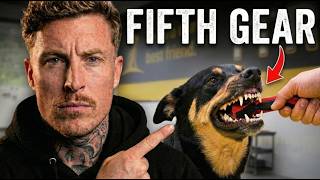
In this live‑demo video, trainer (Speaker A) works with a highly reactive herding dog rescued from a chaotic situation. The session showcases a play‑based training framework centered on the concept of "fifth gear" – the dog’s extreme high‑arousal state. Through structured tug games, toy‑chase drills, and controlled penalties, the trainer demonstrates how to keep the dog engaged, teach it to listen under intense drive, and gradually introduce distractions such as other dogs (stooge dogs) and environmental triggers. Key techniques include: maintaining the dog’s desire for the game while applying leash pressure as a penalty, never letting the dog win a tug outright, using a clear terminal marker ("yes"), creating jackpot reward events, building neutrality before social exposure, and sequencing the training from indoor controlled play to outdoor thresholds. The trainer repeatedly emphasizes the necessity of control in high‑drive states, the dangers of uncontrolled play, and the importance of progressive, low‑stakes introductions to other dogs to develop a truly social, neutral canine.
Chapters
I'm so sick right now and we haven't had— we haven't got anything filmed, so here's a video of me training a dog in Australia. Enjoy.
I offer like dog walking and pet boarding, and so he came to me from a friend with his blind sister and it was just chaos. It was absolutely chaos, like what are you doing with two littermates like this? And I was like, if you ever want to give them up, I'll take him. And a week later she was like, come and get the thing.
Yeah, cool.
So I ended up with him, and he would chase the horses. He had let himself outside to chase the horses. He would lunge and try and kill other dogs. His most recent thing was he bailed up a person with a pram.
Oh shit.
Which wasn't good. So we've had quite a big thing with like lead reactivity and everything. He's been a lot better the last few weeks actually. It's kind of things have started really locking into place. But he's still— I couldn't trust him. I can't trust him. I can't. If he finds a job to do, which, I mean, he's a herding dog, so if he's not given a job, he's finding a job. So he's just quite reactive, I would say.
Okay, bit of a dick.
Bit of a dick, yeah, yeah.
Looks it too.
He is a dick.
I like him.
Yeah.
Cool. All right, grab a toy. Let's play with him. Come on.
Any— anything?
Yeah.
What's this?
Whatever.
What's this?
You can get it.
Oh, so annoying.
Nice. Keep moving, keep moving, keep moving, keep moving. Cool. And keep moving so much so that it's now his job to catch you. And if he does catch you, he gets the prize of playing the game again. If he can't catch you, there's a penalty of leash pressure. Nice. That's it. Now you gotta keep it away from him. He's gotta work it. He's gotta work for that toy. When your dog is reacting to another dog, they go into fifth gear. If you can't speak to your dog while they're in fifth gear, you're not allowed to show them other dogs because you're inevitably gonna teach your dog, when you see another dog and you go into fifth gear, I do not matter anymore. And all bets are off. And so why I'm always putting an emphasis on play, it's the only way to practice putting our dog into fifth gear, having a conversation of control, and it being constructive. And so if you're a trainer, you should be trying to get every single client to play with their dog. That's a good boy. And losing their minds, but, and then installing control. I don't know if anyone's ever seen me play on Instagram or YouTube with one of my dogs, Kobe, the very Big handsome Malinois. Yeah, he's a prime example. Very angry boy. A lot of pent-up in there. I've exclusively done all his training kind of through play. And now he's super happy-go-lucky. It's good. Keep going. You're doing great. Will you play with me?
Yeah.
You lost it. No, you lost it. Penalty. Should have held on to it. Whoa. Oh, you go that way. Okay. Oh, good boy, good boy! Hey, hey, penalty! Gone too far. Oh, clever! Oh, he lost it. Should have kept hold of it. Oh, lad! Lost it again. Should have kept hold of it. Good boy! Good boy! Ah, lad! And when we're playing tug, super important little detail is never allow the dog to win the game like this. Okay, don't just pop it out of your hand. The dog knows you don't mean it. The dog knows it's not a real game. The dog knows it's not a real contest. And so let it slip. Oh boy. And that's the difference between a real game. And a game that is like, you know, when you're a kid and someone lets you win. You're like, oh, you let me win, it's not real. Good lad. So I'm waiting for real effort from him, and when that real effort comes, it slips out of my hand. Lad. Ready? Ready? Lad, you're a good boy. Oh boy. Oh, okay. What? Oh, what? Because he was brave, he gets to keep the toy. Because he was stupid and was worrying about the camera, I get to take the toy. Again, there's penalties in the game, right? Another example there. We can start utilizing play and punishment of keeping out the game. So I now can take him back over near the camera and see what happens. Oh, you want to play? Clever. Come on. Good boy. Good lad. Good boy. You play with Mum? Did you see a couple examples of the penalties and the pressure and then the relief of the pressure and I'm out of breath by all means, but I didn't have to get super fired up. If I asked for too many outs too soon, the dog's going to be like, this is work, not play. I'm here to play, right? So I make sure the control of the game is near the desire of the game, or desire slightly higher than control, especially early doors. And so until I would struggle at actually being able to get it off him I'm not going to add it out in just yet, but he's not as invested in the game as I want, and so I'm going to be careful adding in too much control too soon. But if you get like a mad Staffie or something that sees the ball and lights up, then chances are I'm going to add control into that game sooner rather than later. Nice. Cool, let him have a win. Take your leash and back away from him. Keep moving away from him. Now take him away from the toy. Don't do the work for him. Now drop it on the floor. Snooze you lose. Keep him away. Good. Now walk in together, stalk the toy together. Yeah. And the very last second, you're both going to race there and you're going to snatch it. Yeah, good job. Nice work. Let him have a win when he puts in effort. Now keep him moving. You're doing great. Yep, then pick it up. Good. So now he was like, "Oh, I left the toy last time," and he went and grabbed it. He was like, "Oh no, I best not leave it." Cool. And then when you're here, just bring him in towards you and just test his grip out by trying to like slap the toy out of his mouth. Good. Without taking a tooth with you. Good. And when he holds on, 'cause you've tested his grip, yeah, there's a good boy. And then he gets to parade it and then move him around. Yep. Good boy. That's it. That's it. Good boy. So making sure we've got the penalties for coming out of the game very much understood with inside. But what people do is because they don't feel like they need to have a leash on the dog because the dog stays in the game inside, they then go outside, put a leash on the dog because they need it, because the dog's going to maybe take the toy bugger off or just come out of the game. And then it's a different game which the dog has to relearn. So not only do we have a different environment, we've got a different game now. And so I always say start the game inside, make it looking like this. Making sure we have the penalties installed, making sure we have the dog understands, "If I snooze, I lose," making sure the dog understands there's a penalty if he doesn't out quick enough, and so on and so forth. And that gives us the best chance to transfer in the game outside. Further to that though, develop the game, literally open the door, and you know the threshold game we were talking about earlier? I do the same threshold game, but leaving the door to go outside. So I start the game inside, I open the back doors, I go to near that threshold, the dog goes, "Oh look, butterfly!" And I go, "Hey, gotcha!" Run back inside, penalize the dog again. And he goes, "Oh shit, now I do need to concentrate." And I can work out that way, just like if it was the person he's scared of. Just like if it was the whiteboard he was scared of or whatever. Same with him and the camera earlier. I open the back door, he's like, "Ooh!" And I go, "Whoop, you lost!" And then I penalize that way. It's nice. Cool. Does he know a drop or an out? Or an out?
Sit.
Drop. Nice. Pick the toy up, put it in front of him so he can reach it. Once he respects the distance between his nose and the toy, you start the game again. Nice. Cool. Now when you're tugging, you're going to take your left hand and just— good, that's it. That's it, good. And if he doesn't freak out, he'll keep the toy and he gets to parade it. Nice. We're just going to build a nice tough dog that is able to go into fifth gear and listen. Because when you have the dog that's super robust and you have a dog that listens to you when they're in a really high adrenalized state, you're going to have a pretty good dog. You could argue like Different layers of drive. Fighting is the absolute highest, like mid-fight, and that's why people can't get through to their dogs when they're in a reaction, right? Because they're fighting. And so of course it would make sense to teach our dog how to constructively fight and spar through play and then still listen to us if they're reactive. Of course it would. We can't ever avoid that state. We can't constantly avoid that state. It is not logical or even makes sense that they're never going to go into that state of drive. And so it would only make sense to work within that state of drive and still have our dog's ears switched on. I had a question earlier, like, I think it was about duration of play or how much is too much. It's only too much if we don't have control of the game. So if we've got control within the game, we can play with our dog as frequently, as much as we want, so long as they're not gonna be physically impaired. It's when we don't have any control of the game, we can then just build monsters. And so we see people that just play with their dog to tire their dog out. But there's no actual control there. Flirt pole, flirt pole, flirt pole, flirt pole, flirt pole. Granted, that dog is less likely to react once they're out on a walk then, but once they've recovered and their capacity for that state of drive is higher, without being able to communicate, hey, knock it off right now, or momentarily, we're just going to create a monster. Again, what people do with sport dogs, they don't put any control on the sport dog till really later on because they just want to build capacity We don't really want that with our pet dogs. If you're trying to develop play in the dog, we quit before the dog quits. Cool. All done. That's nice.
I'm done.
Nice. Cool. Now come and put him in a down over here, or drop. Makes no sense. You got food on you?
Yeah.
All right. Drop. Stay. Nice. Toy goes away. You mark good and go back and feed him a piece of food.
Good.
We want to start adding dogs into the picture, and your dog's got dog reactivity. No matter how we're treating it, the, the activity we're doing with the dog, the dog needs the best understanding we can possibly deliver. So the only change is the presence of the dog, right? We never try and teach a dog something new in the presence of their trigger. That game, whatever it needs to be, even if it's just understanding punishment and reinforcement, or understanding play, or a loose lead walk, or a down stay, the dog needs a very clear understanding of that before we overlay that external pressure of a dog. If that dog triggers the dog's desire to fight, you gotta— then, and which is a very, very high pressure, well, that then requires a very high understanding of the game, the activity, the the drill, whatever you want to call it.
Good.
Nice. He's a good dog. Not too much. You can slow it down. He knows.
Good.
Nice training. Good job. Well, yeah, nice job. Nice job. So we'll do a little bit of a run in, in terms of introducing a dog, but what's really important, especially early on in the dog's development, we start the game then bring the dog. We don't bring the dog and then start the game. Alright, so when we do our first stooge run, whatever game we're playing, whether it's an actual game or it's redirects or it's even a down-stay, we start the game, the activity, we familiarize the dog, we bring the stooge in mid-game, and then exit the stooge. So we don't put the dog in a stationary spot, bring the other dog in, and then start trying to do the thing. One, because it's easier to keep a dog's attention than it is to gain a dog's attention. So that's super important. And two, we want the situation to be the same and the only change needs to be the dog. So we don't want to change too many components at any one time. So we'll do a little bit with him, then we'll intro a dog. We're going to have this booby trap out if we need to practice a correction. So we can bring him over here. He goes, we say bad. And you just use the leash once and then just see what happens.
Yeah.
All right, even if you need to use the leash, that is, but say the word first. Yeah, yeah, bad. See what he does. If he doesn't respond to the word, that's okay, just use the leash, then we'll see what happens, and then we'll see how he feels about that setup. I don't think you'll fall for it in the first instance. And then I'm going to ask you to, uh, put him on break, and then we're going to do a bunch of redirects from me, and then we'll bring a dog in We'll do a bunch of redirects from the dog, and I'll just coach you through what we need to do. All right? If we want a social dog, we must first find a neutral dog. A dog that doesn't care around other dogs. A dog that is able to contain their arousal. Because a dog that can't contain their arousal around other dogs will not be a social dog, or will take a while to be a social dog. But to have neutrality, we need engagement. We need to be able to give the dog something to do.. And if we take a dog that's high arousal and throw them into social situations, that'll either— one of two outcomes— perpetuate the dog feeling highly aroused around other dogs if they have fun, or create maybe an aversive experience because the other dog doesn't receive your dog's arousal nicely and they have a fight, or just things just get out of hand. And so if we want a dog that likes other dogs and will interact with other dogs, our mission should always be neutrality and then a social dog, because We've all met the dogs that for all intents and purposes are social, where we take them to the dog park and they run around and have fun with other dogs, but they're not neutral and they're reactive or even aggressive in some instances, right? That's because we're socializing them in high arousal states without foundational stuff first, which is going to just perpetuate things and eventually make them more reactive, more aggressive, more hyper alert around other dogs. And so let's say we want him to start having better interactions with other dogs. First, we need to show him how to be in the presence of another the dog and completely keep his cool. Once we have that reliably, then we can look at interactions. If we don't have that reliably and we skip that step, chances are we're gonna make things worse. Even if that one interaction goes well, if he's attained that interaction via being highly aroused, next time it could go either way. And eventually it's gonna bite us in the ass. Right, put him on break. I'm gonna try and distract him. You're gonna do yeses. And move away and pay him, and I'll just coach you through it, and everything's going to be sweet.
So is break just like free? Yeah. You just do free?
Cool. When he looks at me, say yes and step backwards. Take your hand out of the food. Yes. Yeah, perfect. Pay him. Nice. Keep moving. Nice. Cool. You're just going to do really basic redirects. Say yes. Yes. And move backwards and pay him. Nice. Some people teach a "let's go." I just use terminal marker. I don't see the point in the "let's go." That's what our terminal marker is. It is a "stop doing what you're doing, come towards me and take something." Yes.
Nice.
Yes. When we have a reward sequence like this, our dog will start looking for the first clue of the reward sequence. Now, if that is our hand in our pouch, that will become what the dog looks for. If we consistently put in our hand in our pouch, then saying yes, again, we're teaching the dog the first clue of that reward sequence is hand in pouch. That is problematic when I'm trying to do redirects and do disengagement work my dog can't see me, so therefore I lose my reward. He can't see me, we say yes, he goes, that's not important because that's not the first part of the sequence which the dog will concentrate on. And very quickly, I can't redirect my dog whilst I'm not in his peripheral— when I'm not in his peripheral vision. So that's why we're very astute in giving the yes, then doing movement, and then paying. So O is cue, then movement, then payment. Yes. Nice. So that's why it's important. Yes. Move. Yeah, cool. That's it.
That's all good.
Yes. Nice. So see, within that little moment there, he anticipated my trickery. That's what we're looking for. I see the draw. I know what it means. It means disengage, come to mum. And again, why our yes needs to be movement, exciting. Yes. Elicit a turn. And our good is completely different. We should not blur the lines. Yes. Take him over to that, see what happens. Right up, right up, right up, right up. Say, go again. Yeah, we kind of want to get one in anyway. Bad. That's it. That's it. That's it. That's it. And just wait there for a sec. Cool. Show them the thing again. There you go. See, same response. Just the word. I think the word would have even done the trick then. Nice. Good work. Yes. Nice. Good stuff. Anyone got a stooge dog for me? I want a chill dog. When we're first introing dogs, we just start as easy as possible. We want the first couple of reps to be successful, even if it's too easy for the dog. Fine. Yeah, nice. Well done. Next time he doesn't fall for my trickery, you're gonna jackpot, okay? You can jackpot there. Keep moving. Keep moving. Keep paying him. Yes! Take him over to the bicky. Yeah, good. So that means we're definitely getting towards a well-conditioned punishment marker. Cool, just stay this side. Keep doing your redirects. And when he first clocks the dog, just acknowledges the dog exists, you say yes and move and pay him.
All right.
Yes. Well done. Cool. And you're playing the same game you were with me, but now with the dog. Yes. Nice. Lengthen your lead. You're all good. Yes. Nice. So now we're putting effort in showing the dog this is what you do when you see dogs. Yes.
Nice.
Yes. Nice. And come and spend some time here now. Right there. Yes. And if he throws himself at the end of the leash— bad.
Hey, that's it.
Yes. Cool. And you're just going to stop here and pause, let things pan out. This is where I want to punish my dog around other dogs for the first time because I've got a controlled setup. I've got a stooge that's not going to give him much Response. Yes and payout. Yes. Yes and payout. Yes. So then I jackpot that. I'll show you guys a jackpot or a reward event. Yes. Clever boy, clever, clever boy. You good boy, you're my clever boy, you're my clever boy. Come on in, clever boy. What we got? What we got? You clever, are you clever? Good boy, yeah, clever boy. Whoosh, yeah, he's so clever, he's so clever, so clever. Whoa, yeah, good lad, you're so good boy. Yeah, good boy, yes. And if I had more food, I'd keep paying him. Reward event needs to be like, it's your fucking birthday party. Yeah. It needs to be high disparity from regular reward. That's fine. Cool.
Should we walk past or just keep this?
Yeah, if you want to. Yes.
Nice.
Yes. Good boy.
Good boy.
And the party and the voices and the talking and the silly noises and the jibber-jibbers can happen after the S marker. You got an excitable dog? Yeah, do you want to swap? Do I? Yes. Nice. So yeah, when we first get eyes on that dog, start our redirects. Yeah, yeah, yeah, yeah. Nice.
Cool.
Yay. Keep going, keep going, keep going, keep going, keep going, keep going, keep going, keep going, keep going, keep going. Oh, keep going, keep going. Oh, no. Keep going, keep going, keep going.
Yeah.
Keep going. Yes. Keep going. Good boy. Get on his level, cuddle him. Good lad. Pay him again.
Good boy.
Yes. Yeah, good boy. Keep moving. Keep paying him. Yes. Keep paying him. Don't say yes anymore, just keep chatting. Yeah, but keep paying. Cuddle him again. Tell him he's the best dog in the world.
You're the best boy.
Cool. All right, that's a reward event. If I— you would want to Be taking it. Nice work. Cool. Let her have an eyeball if you don't mind. Pause there. Yes. Nice. And let it pan out now. Let things pan out. Let things pan out. 'Cause while we should always set our dog up for success, if we're ever gonna fail, we might as well fail now. What? What? Wait, let it pan out. Let it pan out. Good boy. Yes, woof. That's a proper woof. Yeah. Cool. If I could park you guys like here and we'll just do some passes. Yeah. Yes. Nice. Well done. Heel. Good.
Again.
Yes. Nice. That's good training. Good job. Yes. Always when you're paying out, pay out of traffic, not back into traffic. So like, we're passing here and you guys are there. I would— yes. I wouldn't pay back towards the dog. I would, "Yes," and I could spin out.
On the other way.
Oh, yeah. Okay, yeah. But you're doing great. It's nice. Yes. Nice. Nice. Yes. So, we've not seen the dog needed punishment. There's a couple of reasons. Maybe he's been a bit careful, and that's okay, because we got one in. Maybe mum's corrected him in the past, and he knows she doesn't like me to do that. And this is a little bit more thoughts and feelings than probably actual fact, but she doesn't like me to do that. Then we've taught him what a proper correction is, and he's being punished properly, and we've seen that today. And then he's gone into this picture and goes, oh, now she's got the capability to actually stop me, so I'll just not do the thing. Nice. Cool. And we'll put him away. Yeah, he can go away. Yeah, yeah, yeah. Good stuff. Nice training. Good job, stooge. Oh, fucking— this is the best job ever. Cool. That's great. Nice work. All makes sense, yeah? Straightforward? So we're gonna like really take that exercise and make it as hard as we possibly can in a controlled setting before then we go into real world. When we go into real world, we look for easier context, right? So we're gonna grill the dog, make it really fucking hard to have a border collie barking nice and close and all the rest of it, and then when we transfer to real world, we make sure we've got a street's worth of We don't expect our dog to tolerate being barked at because of the environmental change and probably going somewhere where there's a high history of reinforcement of our dog kicking off. That sort of picture, too close too soon, gonna be difficult. So we aim for, I don't know, 5 times the distance that we were using there. I appreciate you spending time with us. If you wanna join our free private community, click the link in the description, or you can listen to YouTube's very sophisticated algorithm. It thinks you'll love this video right here. Otherwise, have a great day and I'll see you in the next one.
More from Jacob




I Wish Someone Told Me THIS When I Had a Reactive German Shepherd (Extreme Case Study)



Are you playing the wrong game with your dog? #dogtraining #dogtrainer #dogowner




Mabel's Incredible Reactive Dog Transformation #dogtraining #reactivedog #dogtransformation