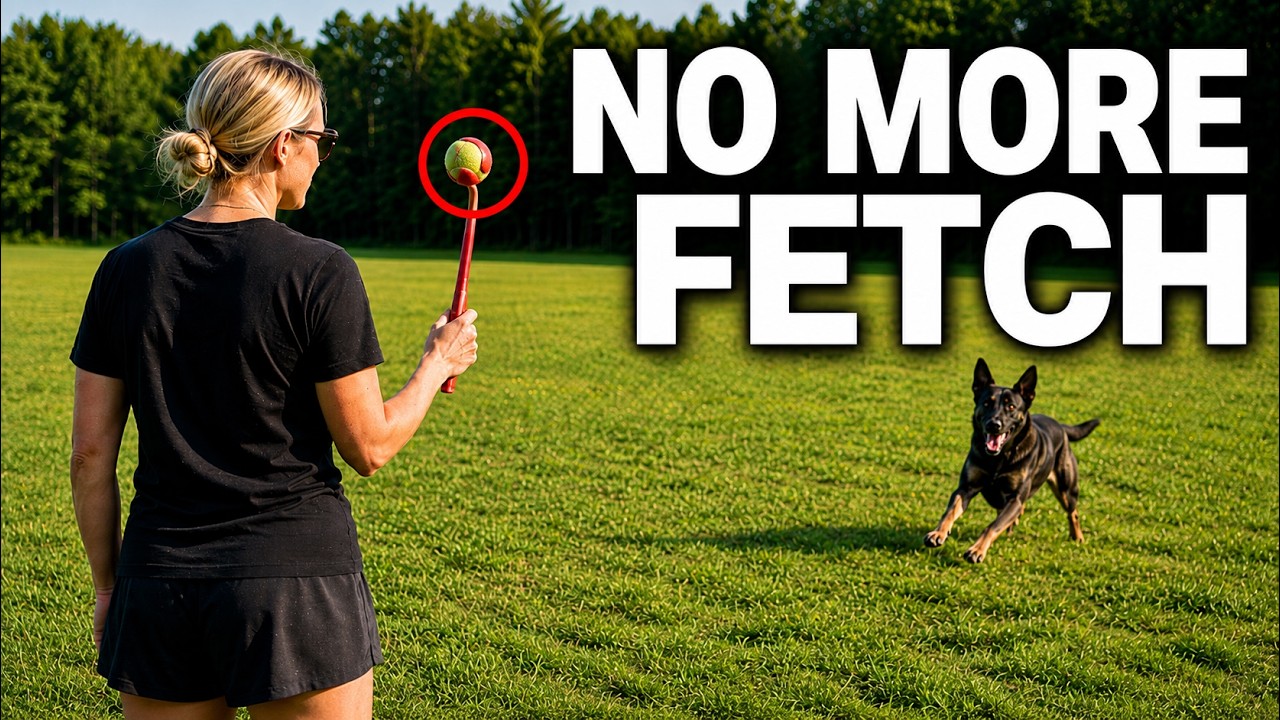
Jacob Morgan explains why endless ball-throwing makes reactive dogs worse, not better. It exhausts them physically but cranks up mental arousal and prey drive, leaving them twitchy. Structured play with clear start/stop cues and recovery periods teaches dogs to switch on and off, while fulfillment through sniffing and off-lead freedom calms them down more than fatigue ever will.
Chapters
If your dog is reactive, frantic, or easily wound up, throwing the ball over and over again might be giving you the tired dog you want today, but the more intense dog that you struggle with tomorrow. And I know that sounds strange because ball throwing is one of the most common things that dog owners do. The dog has energy, so you chuck the ball, they chase it, they bring it back, they look thrilled, their tongue's hanging out, they seem tired afterwards, so it feels like you've done the right thing. And for some dogs, in the right context, with the right rules, play that way can be brilliant. But endless ball throwing not the same as structured play, and that is the difference. If all the dog is doing is chasing the ball, grabbing it, running back, staring at you like a crackhead, and waiting for the next throw, that can become more like an obsession than a healthy fulfillment. Their body gets tired, but their brain gets more switched on. They practice explosive movement, they practice fixation, they practice scanning for the next throw, they practice going from 0 to 100 over and over again. Then later on a normal walk, that same dog is sharp, twitchy, and ready to chase the next bit of movement. Bike goes past, a dog moves, a child runs, a bird takes off, a car passes, and the owner says, I don't understand, I tired them out before we came here. But tired is not always calm. That is one of the most important things reactive dog owners need to understand. A dog can be physically tired and still mentally frantic. A dog can be exhausted and still unable to settle. A dog can have loads of exercise and still be in the wrong state. So the better question is not just 'How can I tire my dog out?' The question is, what state does this activity create in my dog? After chucking the ball, does your dog look softer, calmer, clearer? Are they easily able to settle, or do they look more intense, more demanding, more restless, and more easily triggered? That tells you a lot. For some dogs, especially dogs with strong prey drive or those who already struggle with arousal, endless ball throwing can just pour fuel on, onto an already burning fire. They're not learning rules around excitement. They're not learning recovery. They're not learning to switch on and then switch off. They're not learning to stay connected with you in any way when they're excited like that. They're just chasing the next hit of movement. That can be a big problem if your dog is already reactive, because many reactive dogs already struggle with control around movement, pressure, dogs, people, or even just the environment. So if their main outlet is another activity where they lose their head, it may not help the owner in the way they think. And I'm not saying never play with your dog. Actually, I think play can be one of the most important things a dog can learn, but play does need rules. It needs structure. It needs a dog to understand how to start, how to stop, how to bring themselves back down, how to listen in that state of arousal, and how to play with you rather than just use you as a ball-throwing machine. That is very different from standing in a field and launching a ball from the end of a Chuckit Stick until the dog is exhausted. Structured play can build confidence. It can give the dog an outlet. It can make you more able to the dog. It can teach them how to handle arousal without tipping over the edge. But random, endless throwing can create a dog who's fitter, faster, and even more obsessed, and that is not what most reactive dogs need. This is why fulfillment matters much more than just exhausting the dog. Fulfillment means the dog's needs are being met in a way that leaves them better, not worse. That might include play, it might include sniffing, and it definitely includes more off-lead freedom. At South Coast K9 Academy, safe off-lead freedom is huge part of how we think about training dogs, not just because we want dogs running around with no control, but because dogs need a proper life. A dog that only ever gets tense lead walks and frantic ball throwing is often missing something. They need to move more naturally, they need to explore, they need to come back when called, they need to understand boundaries, and they need to have outlets that are not just stress, chase, or obsession. And that's why off-lead freedom has to be built properly. Recall first, relationship first, rules first, guidance first. Freedom without control is not fair on the dog, and it's not fair on everyone else. But control without fulfillment is not enough either. The balance is where many owners struggle. They know their dog needs more, but the more they give them seems to make the dog worse. They do longer walks, the dog reacts more. They throw the ball, the dog becomes more frantic. So they try dog parks, and the dog becomes more obsessed with other dogs. They try endless amounts of enrichment and the dog still can't cope outside the house. And that is usually a sign that the issue is not simply just the energy, it's the state, the structure, and the fulfillment. So if you're currently using endless ball throwing to tire out your reactive dog, I'd ask you to watch what happens afterwards. Not just in the field, not just while the dog is chasing. Watch what happens after the walk. See what happens when they get home. Can they settle? Watch whether they become more demanding. Watch if movement starts to trigger them more. Your dog will tell you whether the activity is actually helping them. And And if your dog doesn't currently play unless it involves chasing a ball, don't write them off. A lot of dogs have never been taught to play in a way that makes sense to them. They may need help learning a new game, new rules of a game, new structure. If you want help building foundations like play, recall, and food motivation, join the Behaviour Bible. It's a free course and the link's in the description. And if your dog is reactive, anxious, lunging, fixating, or their behaviour around triggers is starting to control your life, apply for our 5-day boot camp using the link in the description because your dog probably probably does need an outlet, but the right outlet should help them become calmer, clearer, and easier to live with, and not just more tired for an hour.