Stop Playing Fetch (Do THIS With Your Reactive Dog)
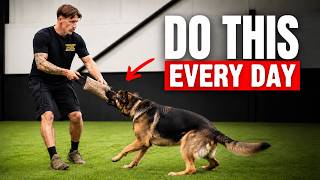
Fetch doesn't work for reactive dogs. Tug-based play gives better control and mental engagement. Use clear start and finish cues, let your dog win, and steal the toy to build drive.
Chapters
Good morning, folks. Uh, we're on day 3 of Reactivity Bootcamp, and today the trainers are going to start talking about play and getting the dogs to play. And that might sound really simple, however, for a reactive dog, play can be a really useful tool to provide them a positive outlet. Um, at the moment we've done a lot of things in creating new behaviors and counter-conditioning around dogs, and we've also done some things about taking things away. So reactive dogs like to bark at other dogs or people, and we've started to take those things away. And the analogy that I typically give is we've taken away a teenager's Xbox, and do we want them to find their own hobbies?
Drugs? Alcohol?
Or do we want to give them something positive, something like play, something like sport? All right, so the trainers this morning are going to talk to everyone about why we use it, when we might use it, and how to do it effectively to teach certain things like boundaries, or teach certain behaviors, and use it as a bit of a reward system as well. We'll also get an opportunity to see how every individual dog responds to play and kind of improve their play and the owner's play with their dog to create a nice engaging, competitive game.
Okay, we're gonna start with some play, which I already spoke a little bit about it yesterday, but play is really, really important to do with your dogs. Okay, so as Owen has mentioned a few times to you, we see our dogs a little bit like babies, but reality is they are animals. They want to chase, they want to bite, they want to kill, they want to be animals at the end of the day. They want to do all of these things, okay? And it is almost our job and our responsibility to give them that outlet. And for pretty much most of you right now, it comes out in reactivity, comes out in probably other type of behaviors. And so yesterday we've learned how we take that away and we just tell them, from now on, you are not allowed to bark, you're not allowed to react, you're not allowed to do all of these bad things. But they still need to do something, you know? And that's where play will come in. Play will allow them to, in a way, fulfill that outlet. The way we normally teach play, we try to add some boundaries into it. Some people like, for example, to do fetch. The reason we don't really like fetch is because it almost becomes like a dopamine addiction game where you just throw the ball, just throw the ball, just throw the ball, just throw the ball, and the dog is just going, going back and forth pretty much. And at some point you're just making like an athlete. They are becoming really strong physically, just want more, more, more, more, more. But mentally there's not a lot there. There's no— there's a little bit of chase, but there's no, there's no like a tug, there's no pulling, there's no pretty much just being a dog, you know, just getting all of those things, like all of that anger that they feel, you know. So the way we do it with something we call tug for the majority of dog. And the idea of tug is that the play is not about the toy, it's about you and the dog. The toy is just a way for you guys to play with each other. So that's normally why initially we'd play on a leash with your dog, because we don't want them to take the toy and just go, "Go away," which happens a lot. You see, like, the dog takes the toy and then goes to another room, and you're like, "What the hell? There he goes." We want to actually get them to play with us, to have fun with us. And so we put them on a leash, we get the toy out, and initially we just try to get some engagement with them, which with, because some of your dogs will actually play a lot, some of your dogs might not play so much. So initially you want to try to get some engagement. So we just start running around the room just trying to get their engagement, trying to get them to be like, oh my God, what are we going to do, what are we going to do? And then you say your ready cue, which is normally a cue that you're going to use to start play, and then you bring your toy. Okay, and that's when we start playing. Again, some of your dogs will play a lot today, some of your dogs won't play so much. That's fine, don't worry too much. The idea here is that at least you guys learn what to do. Okay, so you say the ready cue, you start playing with them, you start getting them really engaged with you. If your dogs really playing a lot, that's when we can start introducing boundaries. And the reason we want to introduce boundaries is because it helps your dogs learn how to behave, or not really how to behave, but how to listen to you when they are really aroused. You know, when they are just going completely crazy. And then, for example, introduce a command like "out" or "drop" for your dog to drop the toy. Again, you only do this if your dog is really into the play. Okay, a lot of people tend to try to put obedience into play very quickly, and then the dog doesn't want to play anymore. Why? Because it's not fun. And the entire idea of the game, of playing with your dog, is to be fun. So make sure your dogs are really into the game before you actually introduce an out. And we'll actually show you what's the best way to do it depending a little bit on the dog. And then we just play a little bit more, we get them engaged, and when they are really having a lot of fun, that's when we stop the game. Okay, people tend to think, oh, I need to play with my dog until he's like done, until he's like, you know what, I don't want to play anymore. That's a big mistake because now their last memory was, eh, a little bit boring. If their last memory was, "Oh shit, I wanted to play more," it means next time they're gonna be like, "Oh fuck it, let's go, come on, let's go, let's go." So ideally you always want to try to stop the game when you see them having a lot of fun. The way you stop it, it's similar to the start cue. You just introduce a finish cue. So you first say "ready" and now you say "all done," for example. And as soon as you say "all done," Play is done. This means your dog is not allowed to go for the toy, and you can use the leash to make them accountable for that. Okay, you are not allowed to touch the toy. The reason we want to do this is because you want to teach your dog that they have moments when they can be a dog. Okay, but it's only in those specific moments, in those specific windows, windows that you decide. It is simple like that. And slowly your dog will start to understand, okay, I have moments where I can bite, where I can bark, where I can just tug, where I can be a dog. But the moment As soon as my owner tells me it's done, it's time to be a chill dog again.
Good. Let him have it on this one. Let him have it. Good. Small little taps.
Nice, nice. Good.
Good. That's it. Bring him back towards you. Grab it again. Have a little play. That's it. Grab it. Nice. That's good. When he puts in a bit of an effort, you just let him win. Oh, that's it, perfect! Let him have it now on this one. Good, nice. Just keep him moving. Yeah, he get dizzy, eh? Bring him to you. Oh, steal it, steal it! When he puts in effort, let him have it. That's it, very nice.
Good.
Keep him moving.
Good.
You can even, if he's checking out a little bit, sometimes you can induce a little bit of fetch in there as well. Remember like yesterday? Were you here yesterday? The dog wasn't playing too much, we started to throw it and run after it. Steal it! Yeah, there you go. Now play with him. Good. Let's do one more of those. If he grabs hold of it, race him there. Steal it! We're gonna get a little bit more out of him, and we're gonna end it there. So sometimes if he's dying off a little bit, we can have like a race to the toy. So he's dying off and we're like, you know what, throw it. When you get there, ah, I got it. Yeah, you'll be knackered. Nice run, get it. When you get there, steal it away. Bring him back towards you. Nice, a little bit of tug, tiny bit of tug if he gets hold of it, and then we're gonna end it there. Little bit of tug. Nice, that's all right, leave it there. That's good. We'll keep him on the leash. We're gonna let him win a little bit. When he does win, we can move away, disengage, and bring him back to us. So it's like cooperative play. If we just let them win and then he runs off and fucks off and starts chewing it on the floor, it's not very cooperative, right? And we can't get the most out of it.
He's just playing on his own.
Yeah, yeah, I want him to engage with us. And if he does get a little bit bored sometimes and you're really trying hard and you can't get him to have it, you'll be like, right, well, We're going to induce something different in his prey drive, and now we're going to make him actively chase it. So throw it, run after it, he gets there and he thinks he can get it, then we steal it and we run off, and then he'll want it. But that'd be good for now. That was good. Rather it stay short and him just kind of stay interested than go too long and he just checks out. He's like, nah, I'm bored of this now. Cool, you can put away. That was good. If you're not used to playing with your dog, sometimes you have to really put the effort in. I can't remember who was here yesterday, and we were playing tug and the dog's like 'Oh, I don't really want to do this,' because your energy wasn't there. And then as soon as they picked the energy up, they started running around. It just opened. I think it was you, wasn't it? Yeah, you've been— no offense— you've been a bit boring. And then as soon as you got sweating and as soon as you started to move around, it's like, 'Oh, this is fun. I like this now.' So sometimes dad or mum has to bring the, bring the game as well. If your dog has a good time, but as soon as they have a good time and you let go, they just drop it, steal it. It's the most important thing in the world and you can't have it. And we don't want to bring the ball, the toy, to the dog's face. We want to try and move it away to induce a— what? Yeah, their prey drive. And it's there in every dog. It might not be as high, but we can use little things, um, to try and make that better for each individual dog. You'll realize how unfit you are when you start playing with your dog. That was you, that was you. He nearly fainted. And dependent on how you are and how strong you are, you might want to change a piece of equipment. Like, I deal with a fair amount of elderly people back home, and they have big dogs, big rotties, big shepherds, and they can't be playing tug with their dog. So we might use a flirt pole or like a spring pole as well that you can— back home we kind of put the, put it into the floor, it will bend over the spring, and you can then— the dog can just play by themselves and you can just stand there flick the toy around, they get hold of the tug, and they're playing tug on their own. Or a flirt pole does take a bit of work sometimes to teach them, but— oh, here he is! Be fun, move it away from him. If he drops it, steal it, and let's just go from there. Oh wow, just watch his leg. Run over, steal it, run away. Watch his— yeah, watch his leg. That's it, nice. I can't get my he's and she's right. Just, just clip, um, this onto her, her flat, her flat collar. No, go her flat collar just because it's dangling down and keeps getting like underneath her foot. I can even take her slip off if you want so it doesn't get caught underneath or anything. She's being a bit like, oh, I don't really want to. So we might need to get that sweat up. Throw it, run over. Oh, what have I got? Yeah, little throw, run after it, chase it, beat her there, steal it. Yeah, nice. And you might spend 90% of the play with your dog being like, I don't really want to, then get a little bit of engagement. Most of the time, if we get that little bit engagement, we'll just end it there. That's what I wanted. You had a little bit of fun, we're done. It's okay, we'll keep having a bit more fun and then we'll just call it. It's all right. Move it away from her face. We can switch over equipment. And what we ended up doing to get her chasing things was starting to like move it along the floor. Maybe try— it might not work. Even this, see if she just give it a go. I'll take that. Might be no different whatsoever. Move around. Good, get her engaged. Oh, I'm gonna give you 10 more seconds. It's all right, be fun, be fun, get your sweat on. Good, throw it, run after it, chase it, beat her there, steal it, run away. That's all right, all right, cool. Chuck her away. Depending on the dog's drive as well, we can use the leash for— think of it like a bit of a penalty for checking out. So like if they're really kind of just trying to check in with the environment and you're trying to play with them and they're going the other way, we might give them a bit of a tap on the leash to say, hey, at this moment in time, the environment isn't accessible. So they go to sniff that and they go over there and they feel a bit of tap on the leash and like, oh, well, that's usually fun, but I can't have that. And then they go over here, oh, well, that's usually fun, but I can't have that. Well, what can I have? And then that's when we are like, well, I have this, do you want to play? And that's when we usually get that check-in. And it might be that your dog doesn't really care for the first session and it's just you running around like an idiot. But we build it and we build it, and eventually they go, all right, fuck it, I'll play. Dad's fun, mum's fun, come play with me. Sometimes it looks like that. You're like, a lot of reactive dogs want to play, they will play, but they're getting their fix elsewhere by barking at that dog. But when we inhibit the ability to do that and we say, well, you can't have fun there, you can't have fun there, you can't bark at that dog, they've got this pent-up energy they don't know what to do with. And you're like, put it here, come play tug with me. Give them a better job, not a shit job like barking at dogs. She likes to play with you usually? Awesome. Having her on a slip is good for play, but maybe, maybe just for now, just to get her used to it, maybe just put her on a flat. We use the slip and we use a prong for play, but maybe just at the moment, for the first time here, we don't want her like running to the end of the slip and hitting it and being like, oh, I don't want to play anymore. So you just play like however you usually do with her, whatever usually works. Wow, yeah, play with Mom, play with Mom. Good, that's it, let her have it now. Good, nice and gentle on your tugs, little tugs. Good, you can kind of pop your wrist, tap, tap, tap, try and steal it from her mouth lightly. Good, that's it. Oh, good, let her have it when she puts the effort in. Next time she gets it, let her win. So you're gonna let her win it. So you're gonna let go of the tug, bring her back to you, encourage her back to you. If she— yep, steal that, run over, steal it, run away. Oh, that's it, good, nice. Let her win. Good, little bit of tug, and then you're gonna let her win it and move backwards. Go, move back, encourage her to you, grab the tug. Really good. And just do that same thing again. Little bit of tug. Oh, she's so strong! Good. Put on the drama when she wins as well. Oh, you're so strong! Let her win. Move back. Bring her to you. Bring her to you. Good. Very good. Oh, there you go. Nice. Now she's getting into it. Now try to steal a little bit more. Put like, make it real, put a bit more effort in. Try and get it off of her. Now let her win again. Move backwards, bring her to you, encourage her to you. Nice. Grab the tug. Perfect. You can have simple rules like that. You play tug, she puts in a good effort. Oh, you're so strong. Move backwards, bring her back over to you or any of your dogs. Start playing again. Really try steal it now. Whoa, tell her she's strong, let her win. Oh, oh, let her win. Bring her to you, bring her over to you. Use your leash. Nice play over again. And if she brought her over to her then and she dropped the tug, what would we usually do? Run over like a madman, grab it, run off. Put the drama on. Whoa, that's it! Bring her to you, encourage her over. We're going to play for like 30 more seconds, so I know it's tiring. Good, that's it! Make her chase it, really make her put an effort now. Let her win now.
Good.
Put, put that on her flat collar, so instead of holding the retractable, some—
yeah.
I sometimes play— well, most of the time we'll play on a short leash. So I'm playing with the dog, they get hold of the tug, then I might drop the leash. They're engaged with it, right? I'm playing with them. Oh, they're really strong. And just before I let them win, I'm going to let go of the tug with one hand, grab the leash, let them win. But then I'm like, no, no, no, come back here, come to me. So now we have a way to, if we need to, to say no, you have to drop it. We, what we might wanna instill obedience into play. Yeah. So then she loses it and then you're like, no, no, if you want this, you have to do this thing. Yeah. So if she didn't sit, we could make her sit with the leash. Boom. Okay, now you play. So the leash can keep the dog engaged, but can also give penalties, give them rules, make them do the obedience. And that's where play's good. But if we like kind of combine play with obedience, we can not only like genetically fulfill our dogs, but tax their brain as well.
Yeah.
So that's why everyone here will be like, play, play, play, play, play. Because most of the time dogs are dicks because they're not fulfilled, right? Obviously some lack of boundaries, but play is just so massive and she loves it. Look at her, she's a sweetheart. All right, cool. Grab that tug off her if you can. Take it away. Nice. And put it in your pocket. A good thing to have as a start and a finish, because mine is, are you ready? And done. So I don't even have the tug out at home. I'd be like, are you ready? Are you ready? My dog starts getting really amped up. We'll play and then I'll just put the tug away. Done. We're finished now. Cue: now you have to behave. Be crazy, be in that— be— jump all over me, um, play tug, but when I say done, we're done. Then you can put it on cue. Play is also good because we can communicate with our dogs at a high state of arousal. So when they— when they see other dogs, what do they do? Boom, they go up here. But if we bring our dogs into a high state of arousal Elsewhere, we're able to communicate with them. Obviously that's going to play off, sorry, pay off massively when we're around other dogs as well. Any certain toy that you usually play with or anything like that? Oh, sweet. So that's very common as well. Like a really easy one. It's on a bungee and it's a bit fluffy. A lot of dogs like to play with that initially. Then you can just like move on from pieces of equipment. We use that a lot. Obviously it's not a puppy, but that kind of stuff we use a lot with puppies or dogs who are learning to play. Yeah, nice. Very nice. I got the end of it. Nice. You can let him win and kind of move backwards. Yep, bring him to— use the leash, bring him towards you. Grab that. Perfect. Ah, nice. Good, very good, good. Bring him towards you, bring him towards you. Tap, you can tap on the leash. Good, nice. Let him win again. Bring him back towards you with the leash. Move away. Keep facing him. Good, nice. That's it. Hide it for a sec, and we're going to put him on his slip now. Just put the slip up nice and high. We're going to go like above the prong. So when you let him win and he kind of tries to move off away from you, you're going to turn and face him. And just, you know, our redirects with our yes Tap, tap on the leash. Move. Tap, tap on the leash. He comes back towards you, re-engages. Grab the toy. If he tries to get it, you can say, "No." And you can go. You can use a word if you want to. "Splode." Nice.
Good.
You can move away, let him win. Oh, good, good. And then if he puts in effort back now, let him win. Good. Bring him towards you. We're gonna play one more time, then we'll let him out. If he drops it, steal it. Steal that, steal it, run away. And now you've stole it, I want you to put it away. Don't let him get it. Grab the slip. Good. And this is when you— we could have a start and a finish cue, right? And this is a way of making him enjoy the play more. So we can stop on a loss. So he's lost the toy and we've made him chase it, and then finished, walk off. And he's like, fuck, I dropped it. And then when you bring him out next time, he's like, I'm not dropping that toy. We're building intensity. Even for him at the moment, I would start to put control over him. So this is— so it was a good example for a dog who likes to play but also lacks a bit of boundaries. Um, so when we're obviously standing still and stopping the game, we can start to add penalties in and be like, hey, like, don't do that, do this instead. Maybe sit, maybe down. Okay, now you've done that, now you can have it. And if we say finished, we put our toy away, and they try to come back again, no, don't do that, that's not good. Play doesn't have to be long, it can be as long as you like to, but just keep them engaged. 30 seconds, that's all you get, that's sweet. You can build up from there. Does he understand how to let go in general? He knows, but he chooses not to. What's the word? So you say let go, and he has a general understanding of like, I should do this, but I don't want to. Yeah, okay. So for this, just put him on the slip for now because, because he's not going to jump, jump over and start mauling everyone. If you want to, drop the leash. So like, play with him and then you're going to let him win. You can just let go of the tug, grab the other leash, and then you've got control of him as well. Look, he's fucking— use your leash. So example of a dog who obviously is, I want to go. No, no, no, dude, you just wait there for a second and we'll do the thing, but it's on my terms when we do the thing. And this is where you might want to have like a toy marker. So we have our yes marker. Could be like— some people use get it for something over there. Could be fuck, whatever you want. You could just say get it if you want and then start playing. Nice. Start playing with him. Drop the leash and grab the tug with both hands if you want. You can slow it down and just side to side. Tapping motions towards you. You're trying to like get it out of his mouth. You're gonna keep hold of one side of the tug, keep moving this way, you know, keep hold of one side of the tug, grab the leash of the other one. Good. Let him win. Bring him back towards you. Nice.
That's nice.
A lot of the trainers' dogs you'll see, they will happily choose to re-engage with the handler, and they'll even jump up on their chest. And punch into them because they're just like, the only way that this game happens is me bringing it to you. When it's on the floor, it's dead.
Nice.
Good. Letting go or the out does not signify the end of the game. We want it to say, hey, if you let go, we play again. But also sometimes when you let go, the game ends. But it's not optional. It's not a question. When I say let go, you let go. With dogs who don't have much drive, we might not want to add an out straight away. For a dog like him, we want control, because if we don't have control, it can get pretty, pretty wild. Could bring him to you. Say the word again, look nice and relaxed, and use your leash if you need to. Say it first. Play, play, play, play, play. So we instantly reward the dog. As you let go, bang, we can play again. But it might be let go, finished, tug toy goes away, we go. Grab hold of that leash. Good. Let him win. Bring him towards you. Nice. Now slow it down a little bit and just move back in like straight lines. You could like hold on to the tug and give him a little bit of a pat on the side. Oi, nice. And again, give him a little— good. You could like stroke his head. Nice, good. Give him a little pat on the side. Good. Grab that leash. Good. When he puts in a bit of effort, let him win. Good. It's all right, let him win. There you go. Nice. Take that. Steal it, steal it. Oi, good. Okay, stop. Stay still. Use your leash. Good. We'll just for today just say finished. Yep, use your leash. And we want to end play like that where he's like, I want to go, I want to go, I want to go. To a degree when building a dog, but we want to gas them as well so that when you take them out, they're a lot calmer. Who's next? Let's have like a little practice of like a start and start and finish. Obviously I'm wearing these pants, but I'd have my tug toy in here and just be like, my dog, you ready? Are you ready? Signifying every time tug toy comes out. But they don't just get it straight away, right? No, wait there. And then I'm going to use my marker, whatever that is. Yours is whatever it wants to be. Move and start playing. So you can just say, you ready? You ready? And you could just say, get it.
Yeah, go get it. Nice.
Good, good. Nice. When he gets hold of it, you can just like slow it down a little bit, move around with him, gently play with him.
You can't gently play. I know.
Oh, nice. Can I steal that short— can I steal someone's short leash again? Nice. Good, good. Next time he steals it, just stop and put it behind your back. Use your leash, lock it off. Good. And now I just want you to clip this onto, um, that instead. Does he have a word to let go? Does he do it, or optional? Okay, what I want you to do is just like come to a dead stop, like if I'm playing tag And then I've come to a stop. I'm just going to relax my arm, no tension. Do it, do the thing, let go. If you don't, penalty. As soon as they do, play again. You can give him a penalty if he comes near me.
Wait, wait.
You say, let's play. Just like she's doing here, when it goes side to side most of the time, right, thrashing up and down is not very comfortable. So like gentle movements from side to side. And popping. Like if I had a ball in a dog's mouth, sometimes I want to try and like pop the ball out of their mouth to try and steal it. Relax your arm with the toy in it. It's okay, you keep playing. Good. And now you're just going to say your word. Out. Use your leash. Out. Nice and calmly.
Good boy.
You can say, let's play.
Let's play. Good.
That's good. Nice. Use your leash. Stay there. And I just want you to say it once and then just use your leash, right? No, no. Bum. Then play. So I want you, I want you to try for the next like 2 reps. Get him to out. Out. Use your leash. Good. Calm. Use your leash. Use your leash.
Let's do this.
So for the next few— use your leash. The next few reps, because he's not pulling it and having like really trying, you want him to, right? You're naturally going, do it, like do the thing, take the toy, where we want to try to use punishment as a way to make him want it more. So punishment for this is just literally stealing the toy. Negative punishment. So we just go, hey, this toy, if you don't have a good grip of it, mum's gonna steal it from your mouth. He's like, fuck, I lost it. Make him work for it. He'll grab hold of it again, and he's gonna grab hold a little bit tighter because he's like, when I had a bad grip last time, I lost it. So instead of like, hey, take it, take it, take it, say, guess what, you're losing it. That makes sense. Don't let him get it, just use your leash. Which—
perfect, that's it.
So remember, moving it away. It's really easy to try and put it in his face, but you want to try and steal it away from him. Nice. Good. Grab hold of that leash. Yep. And we're actually going to stop right there where he really enjoyed it and put a bit of control over him. And now you do the exact same thing. So let's say you've put this in your pocket. You're just going to say a random word for that. Let's just say finished. Finished. And you can just walk out and you're done playing. No more play.
If you would like to improve your dog's play engagement and overall behavior there's a link to the Behaviour Bible down below.
It's free, Paul. It's free.
Oh, fuck.
It's free.
It's free.
Don't put that in.
Refilm that. Fuck's sake.
More from Jacob




I Wish Someone Told Me THIS When I Had a Reactive German Shepherd (Extreme Case Study)



Are you playing the wrong game with your dog? #dogtraining #dogtrainer #dogowner




Mabel's Incredible Reactive Dog Transformation #dogtraining #reactivedog #dogtransformation