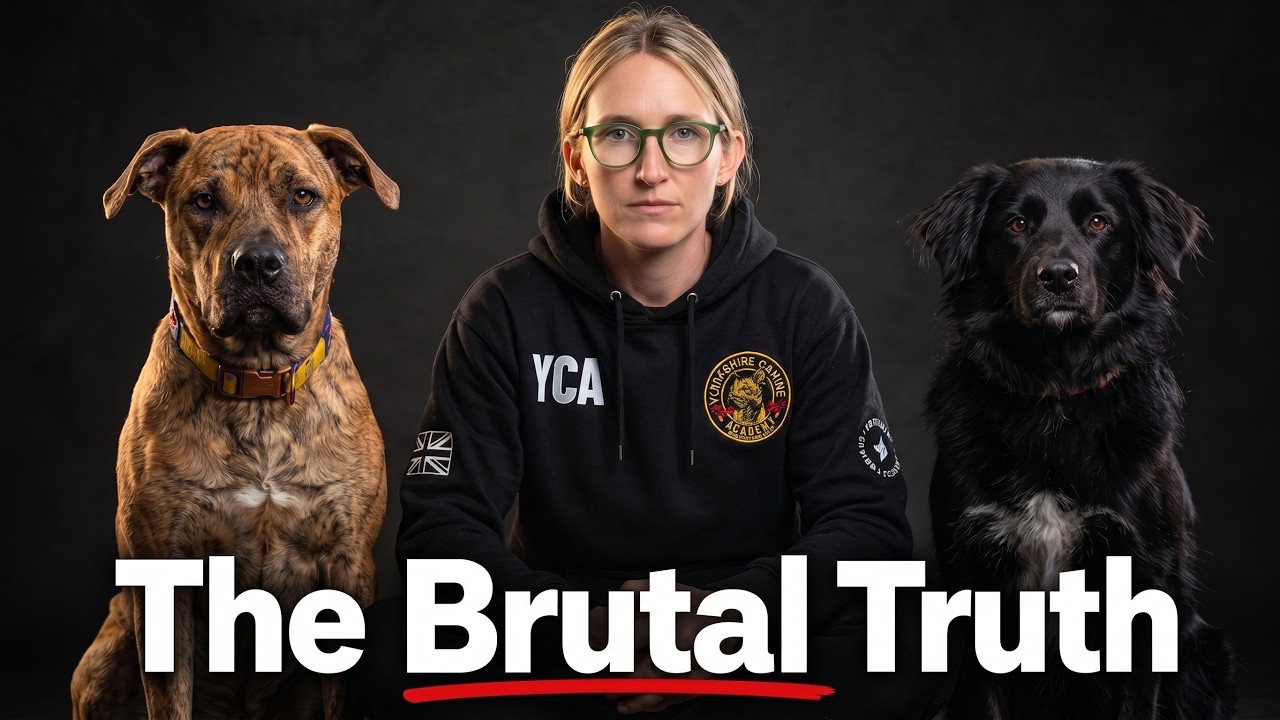
In this instructional video, a canine behavior expert from South Coast Canine Academy outlines five common mistakes that rescue‑dog owners make, explains the underlying guilt that fuels them, and offers a framework for more effective, compassionate leadership. The mistakes are: (1) granting too much freedom too early, which can overwhelm a dog that lacks coping skills; (2) excusing all problem behaviours with the dog’s past, turning a backstory into a training plan; (3) avoiding every trigger, which prevents the dog from learning new, calmer responses; (4) believing love alone can replace clear boundaries, leading to vague expectations and anxiety; and (5) neglecting the dog’s need for fulfillment through physical, mental, and olfactory outlets. The presenter emphasizes that kindness without clarity creates stress, and that guilt often drives owners to over‑protect and under‑lead. The solution is calm, consistent, informed leadership that provides structure, gradual resocialisation, and safe off‑lead freedom. The video concludes with calls to action for a 5‑day boot camp and a free “Behaviour Bible” course.
Chapters
If you have a rescue dog, there are 5 common mistakes that can keep them feeling stuck even when you're trying your absolute best. And I want to say this clearly from the start: most rescue dog owners are not getting this wrong because they don't care. They're usually getting it wrong because they care so much. You look at the dog and think, they've been through enough, I don't want to pressure them anymore, I don't want to be the one to upset them, I want them to feel safe. That instinct is kind, but kindness without clarity can accidentally create more stress for your dog. A rescue A dog doesn't just need love. They need structure, fulfillment, guidance, and a plan that helps them understand the world that they live in now. So here are 5 mistakes that people make with rescue dogs without realizing that they're doing it. Mistake number 1, giving them too much freedom too soon before they know how to handle it. When you bring a rescue dog home, you want them to feel like part of your family, so they get the sofa, the bed, the whole house, the run of the garden, the window, the doorway, any guest that comes into your house, and Unlimited access to you, but some dogs don't experience that as relaxation. They experience it as responsibility. They start following you around everywhere. They bark at the window. They rush the door every time a guest comes in. They start guarding spaces. They panic when you leave them alone, and they start deciding who belongs in the house and who doesn't. Then the owner feels confused because they gave the dog everything, but comfort without guidance can create pressure. Mistake number 2 is excusing every behaviour because of the dog's past. Your dog's past does matter, and I'd never tell you that it doesn't, but they are a rescue cannot become the answer to every question. They bark because they're a rescue. They bite because they're a rescue. They can't be left alone because they're a rescue. They can't meet other dogs because they're a rescue. These things might explain where a behaviour came from in the beginning, but they don't tell you what to do next. A backstory is not a training plan. Mistake number 3 is avoiding every trigger forever. This one is really common with reactive rescue dogs. Your dog reacts to other dogs, so you start avoiding them. They bark at people, so you avoid them too. They panic in busy places, so you start only walking at quiet times. You change routes, you hide behind cars, you turn around constantly. Sometimes management is necessary, and I'm not saying that you should flood them with situations they can't cope with, but if the entire plan is avoidance, The dog never learns a new response. Their world gets smaller, your world gets smaller, and when you do see a trigger, it often feels even bigger than it started. This is where structured resocialization matters— not random exposure, not letting dogs rush up, not hoping they just grow out of it. A gradual process where the dog is introduced to pressure in a way they can actually understand. Mistake number 4 is thinking that love can replace clarity. A lot of rescue dog owners worry that boundaries will feel unfair. They think the dog has already had a hard enough life. I can't tell them no. But a dog who is anxious, reactive, or overwhelmed will not feel safer because everything is vague. They feel safer when they actually know what's expected. Clarity doesn't mean being cold. It means the dog doesn't have to guess. It means that you're calm, consistent, and predictable. It means you stop letting the fear make all the decisions. Mistake number 5 is forgetting fulfillment. A lot of rescue dogs are controlled, managed, and protected, but that doesn't mean fulfilled. They do short lead walks, same routes, no freedom, no real outlet, no chance to move their body properly, use their nose, solve problems, or explore calmly. Then we wonder why they're relentless, frustrated, obsessive, or reactive. At South Coast Canine Academy, we see safe off-lead freedom as one of the foundations to think about, not a bonus at the end. Of course, it has to be built safely, but dogs are not designed to spend their whole lives being held back from the world. There is a 6th pattern that sits underneath All 5 mistakes, even though I haven't made it one of the official 5. And that mistake is guilt. It's the thing that makes them tolerate the behavior that they wouldn't tolerate from another dog. It's the thing that makes them avoid every difficult moment because they're terrified of adding stress to a dog who's already overwhelmed. Again, I understand it, but guilt is not the same as kindness. Kindness looks at the dog in front of you and asks, what does this dog actually need to become more stable, more confident, and more capable? Guilt How do I avoid feeling bad? These two are not the same question, and if guilt is driving the plan, the dog often ends up carrying more stress, not less. They have more decisions to make, more freedom than they can handle, more rehearsed reactions, more uncertainty, more pressure around normal life. So when I talk about mistakes with rescue dogs, I'm not trying to take the softness out of rescue dog ownership. I'm trying to put the leadership back into it. Not harshness, Not domination, not forcing the dog through things they cannot cope with. Leadership in the sense of calm, consistent, informed guidance. That's what helps the rescue dogs stop living like they have to manage the world themselves. And that's why rescue dog ownership can be so emotionally complicated. You're trying to separate what the dog genuinely cannot handle from what they simply haven't been taught yet. You're trying to respect the past without letting the past run the present. You're trying to be patient without becoming passive. And that isn't easy. So if you've made some of these mistakes, it doesn't mean that you have failed your rescue dog. It means that you've been trying to help them with the tools that you had. Now the job is to upgrade the plan. A better plan doesn't take the compassion away, it gives compassion somewhere to go. If you recognize yourself in any of these mistakes, I don't want you to feel attacked. I want you to feel relieved, because these patterns are fixable once you can see them. Most rescue dog owners aren't lazy. They're usually doing things too much. They're carrying the guilt, planning their life around the dog, Avoiding places, apologizing to strangers, and trying desperately to make the dog feel safe. That's why mistakes can hide for so long. From the outside, the owner looks devoted, and they are, but devotion without direction can become exhausting for both the person and for the dog. The goal isn't to care less, it's to care in the right way that changes the dog's day-to-day experiences. That's the whole point. We're not replacing compassion with control. We're giving compassion structure so the dog can actually understand. But Good intentions don't always create good outcomes. Your rescue dog doesn't need you to be perfect. They need you to stop letting the guilt make every decision. They need compassion, yes, but they also need clarity, fulfillment, and structure, and a plan that helps them move forward. If you're on the South Coast and your rescue dog is reactive, anxious, overattached, shut down, or starting to control your life, the thing you need to do is apply for the South Coast Canine Academy 5-day boot camp. You'll find the link in the description. If you feel like you're not ready to apply yet, or you just want some help with the basics, the Behaviour Bible is a free course. I'll also link it in the description. Don't forget, your dog's past matters, but it doesn't have to be where the story ends.