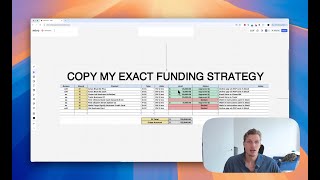
In this video, Zac Safron walks through the complete process he used to obtain $262,000 in capital for a brand‑new LLC owned by his client Marcello within a 30‑day window. He begins by emphasizing the importance of a solid personal credit profile, detailing the metrics he checks: a high FICO score, substantial comparable credit limits, low utilization, a thick mix of accounts, long account age, no recent inquiries, and consistent address information. After confirming the client’s verifiable W‑2 income, business standing, and unlocked credit reports, Zac designs a three‑round funding game plan tailored to the client’s fix‑and‑flip business, which requires cash rather than traditional business lines of credit. Round 1 focuses on high‑limit, 0 % introductory business credit cards obtained through relationship managers at tier‑1 banks (Amex, Chase, Truist) using soft pulls whenever possible, resulting in roughly $90 k of credit with minimal inquiries. Round 2 expands to remaining tier‑1 0 % business cards and introduces 0 % personal cards from credit unions, leveraging soft‑pull beta testing to gauge bank response and securing additional limits (e.g., a $20 k credit‑union Visa). Round 3 targets unsecured personal loans, beginning with soft‑pull options from banks where the client has relationships (Citi, Amex, Discover, SoFi) and then moving to hard‑pull applications that yield high‑limit loans (two $50 k and one $17.5 k loan at ~12 % interest over 72 months). Zac explains why personal loans complement credit cards—installment loans do not affect utilization and improve the credit profile with each payment. He also highlights the strategic 30‑day reporting window that allows multiple applications before new accounts report to the credit bureaus, and the “double‑dip” technique with a credit union that permits a second product without an extra inquiry. Throughout, he warns against common misconceptions such as relying on authorized‑user accounts or net‑30 trade lines, and stresses the need for consistent address verification and unlocked credit reports. The video concludes with a call‑to‑action for viewers to apply for similar funding assistance.
Chapters
All right, what is good, guys? So today we are going to review how I secured $262,000 in funding for a brand new LLC in under 30 days. This is for my client Marcello. I am going to link his testimonial in the video so you can see this is a real person, a real human being. And I think even in the testimonial, he only said $237,000 or something like that. But we actually were able to get him $262,000 after looking through all the products. So how did we do this, right? I work with a bunch of clients in my funding company and I get them capital all the time. But $262,000 is on kind of the upper end, specifically for someone that does not have business tax returns. So he had a brand new business. This is, you know, literally a day old. So the first thing we had to do was verify the credit profile and just make sure that it's fundable in general. So he had a really strong score, he had a 750, and he had very strong comparable credit limits. So what are comparable credit limits? Basically, how much in personal credit card limits you have that you personally guarantee. That's one of the most important factors because a lot of people add authorized user accounts on their credit report. They come to us, they're like, yeah, I got $20K of comparable credit limits, or I got $35K of credit card limits under my belt. And then we take a look at their credit report and 90% of them aren't actual accounts. They're personally guaranteeing, they're trade lines, right? Or they're authorized user accounts. Just remember, don't believe all this crap you hear online about funding, trade line, Net 30 accounts, all this stuff, authorized users. They really don't make that much of an impact because they're artificially inflating your score versus showing a legitimate credit profile that a bank can reference. 'Cause remember, The banks aren't dumb. Like when they pull your credit, they're pulling over 200 data points. They're not just looking at the score and being like, oh yeah, you've got a 780, we'll give you $100,000. Like, it doesn't work that way. So in addition, he had very low utilization. This is super important. We typically wanna be in single digits, but 13% is fine, especially because he had $156K of comparable credit. So, you know, there was like probably, what, $10K that he was drawing from, but there's so much here that it wasn't that big of an impact. Additionally, he had a really robust credit file. So he had 26 open accounts, including personal cards, auto loans, mortgages, and student loans. So the banks, like I said, when we were talking about AU accounts, they wanna see a thick credit file with a healthy mix of high-limit products. So he had all this and he also had a very long credit history, over 6 years for his average age of account. I think the oldest account was like 12 years. Really, we want to be at least over a year. So the fact that he was over 6 for all of his average accounts, awesome. And then this one's super important, no recent inquiries or open accounts. That really messes up a funding sequence. If somebody comes to us and they just tried to do funding, they just opened up 3 credit cards, they just put a lot of inquiries on the report, it really makes it tough for us to either go back to those same banks that you just inquired with and were denied at, or if you just opened up a bunch of cards and those then report to the personal credit file, it's really hard for us to get over that hurdle of them saying, well, you just got 3 credit cards, why do you need more? What we're doing with a funding sequence and why being under 30 days is super important is because we're taking advantage of this window that gets created where the personal accounts aren't gonna report to the credit report for 30 days. So we get to take advantage of this 30-day window and just hit a bunch of apps very quickly. And then also last thing, super important, but kind of a nitpicky item, his addresses are congruent. So same on the credit reports, the driver's license, the utility bill, the bank statements, tax returns, same everywhere. That's just kind of an identity verification piece of the puzzle. And really important one, but like we didn't have to do any work because we can fix that pretty easily. We just didn't have to. So once we verified all of this, boom, we're good. It is highly fundable file. So we need to verify a few key additional details. They have no business credit cards at all. This is one of the things we ask for in our intake form because I can't see that on your personal credit report. The fact that he had no business credit cards at all and he had really strong comparable credit, And based on him having strong comparable credit, he had really good existing relationships. He had personal cards at Chase, at Amex, at Wells Fargo, at Bank of America. He had personal cards with high limits and good payment data and history at a lot of the banks that we want to go hit, but he had none on the business side. So that's really great because it gives us a clean slate. He also had over $100K of W-2 income that he's had for over 20 years. Now, we verified this because we asked for his pay stubs and his tax returns. We want to verify the information our clients tell us because guess what? The banks want to verify it. So if we don't see it, then, you know, we're kind of shooting in the dark here. The client's business was in good standing. Very easy thing to do. Very important thing to do. Just make sure that on the Secretary of State website, we're not past due on filing fees and we are active and healthy. And then last thing, super overlooked thing in funding, credit reports are unlocked. This also plays into like he was in the United States, right? If you're overseas, hold off on funding. Your IP address is going to trigger some issues with the algorithms, but credit reports were unlocked and we were good to go. So what do we do next, right? We did kind of step 1, which is just like gather information and verify that everything's good, right? So what we're going to do next is we're going to build the funding game plan and we're going to initiate round 1. So the funding game plan, let's talk about that. This is where we assess what's your business and what are your capital needs, right? And what products are you eligible for based on what verifiable income you do or do not have? So client has indicated that they need a mix of 0% cards and low-interest cash products because they have a fix-and-flip business, right? So we know that they need cash to buy the houses. They are not eligible for business lines of credit because the LLC is a day old. Needs to be over 2 years in age to get business lines of credit, and you need tax returns that show really healthy gross and net profit. Now, the client is eligible for 0% business and personal cards because their credit report was good, and the client is also eligible for unsecured personal loans and personal lines of credit because they have really strong verifiable personal income. So this is where we're going to get the cash from. Now, we are going to start round 1 funding. That's the first thing that we're going to do after we build the game plan and verify he's good with this, which he was. Now, what I do when I initiate round 1 of funding, I'm going to start with a more relationship approach. So we're going to go for high limits and we're going to go for less inquiries being put on the credit report. We're also gonna be working on the basis of like any soft pulls that we can get, we wanna take advantage of. So we wanna target high-limit 0% cards. We wanna start with soft pull beta testing. And here is where we're gonna leverage relationship managers at tier 1 banks. So what did this look like? This was his round 1 of funding. We started with Amex Blue Business Plus and then hit Amex Blue Business Cash. Again, because he had really good payment data on the personal side with Amex, I believe he also had some money in an Amex bank account. We were able to get $25K on this first card and $15K on the second card without creating a single inquiry. That's the most important thing here. We did not create a single inquiry. So if we just stopped here and we didn't do anything else, we would have gotten him $40,000 in 0% business cards at 12 months for the intro rate without creating a single inquiry. But we want to get a lot more than that. So we went to Chase next. We worked with my RM there, and he was approved for a $50,000 card on the Ink Business Unlimited, which is one of their 0% cards. Now, we hit Truist after that. Um, real quick side note, super important. Truist, if you have not been a customer with them for over 2 years, the starting limit they will give you on a new business credit card is now $2,500. That change was made, I think, a month and a half ago. All the bankers are really pissed about it. He was a customer, so he had been a customer for a long time at Truist as well. This guy had a lot of bank accounts, which is great because he has a lot of relationships. So we were able to get $20K through Truist with our RM, and we were able to get $50K at Chase with our RM. So right now we're already at $90,000, I believe we do— nope, more than that, $10,000 between 2 inquiries on 4 products, right? All at 0%, all business. Now, not every client is going to look like this. This was a rockstar client with a great file, especially on the Amex side. A lot of people get 2 $4K limits here because it's really like— I don't want to say it's hard to build really good payment data with Amex, but you can't fake it. A lot of people get these cards, they put high limits on it, or they've got like no limit, and then they put a high balance on it and they really don't pay it down. Amex wants to see you putting $10K on that card and paying $10K off every month. That's how they're gonna give you really good internal scores based on really healthy payment data. So the next thing we went to was I sent him in person to First Citizens. He got declined for the business credit card. First Citizens is very relationship-based. But he did get approved for a 0% personal card. And then we sent him in person to Wells Fargo for their business card, got declined there. And then GM has been having massive issues. I think they're relaunching their products. This is a soft pull though, so no harm, no foul. So moving on, we went into round 2, which is basically we're going to target any remaining tier 1 0% business cards. And we're gonna start moving on to 0% personal cards, specifically at credit unions. So this is where I'm gonna give you guys a little bit of sauce, just because I'm gonna start to outlay some of the banks that I work on that you might not have heard of. So definitely make sure you're taking notes. So if we go down here, we hit another Chase Ink because you're allowed to get 2 Chase business cards per sequence or 2 Chase cards in total. So you can get 1 personal, 1 business. Or like him, because we were going for business mainly and he had a really good file. And this is super important, we were able to take a lot of data from round 1. When I talk about soft pull beta testing, Amex is a soft pull beta test. We get to see for free without creating an inquiry if tier 1 banks are responding to his profile well. When he got these approvals, I almost knew it was certain that he was going to get these 2 approvals. Now, this gives us a lot of information. If we had gotten completely outright denied for business cards in round 1, we would not have hit business cards in round 2. We would have pivoted completely to hitting personal cards because that's us getting data and information that his file is not structured for that at the current moment. But we were going for more business cards, so we applied for Chase, Bank of America, and PNC. Got denied for pretty much all of them. I think we got approved for $1K at Bank of America, which I didn't charge him for, 'cause that's BS. I think he had to put $1,000 in, so it was kind of like a secured product. Bank of America has been sucking lately. Not a huge fan of them. So, we just tried to get a little bit more out of this. Didn't work, that's okay. We were able to get a $20K approval at Justice Federal Credit Union on their Visa Platinum. 0% for 12 months, and that establishes him a really good relationship with one of my favorite credit unions. So what do we do next? 'Cause he told me, hey, Zach, like all these cards are great, but remember we gotta buy some houses. So we move on to round 3, where we're gonna hit personal loans. Now, the real game I'm gonna give you, 'cause I am gonna black out the actual banks that we got the approvals at, when you do a round of personal loans, you wanna start with soft pulls. And the way that you're going to determine which ones are going to be soft pulls are based on relationships. Now, there are 1 or 2 banks where you can do true soft pull personal loans, and that's just how they function. But the relationship side is going to be much more important. Then you're going to move on to hard pull, and you're going to hit loans that you have a really high level of certainty are going to give you high limits and low rates. So if we look at round 3, Citi, Amex, and Discover, all soft pulls because he had a relationship with them. So you can apply for a personal loan with these 3 banks if you have an existing relationship. SoFi, really popular bank for personal loans, always a soft pull. Now we didn't get anything there. Now what I tell clients is with these soft pulls, we're going for freebies, we're going for free money, right? If they don't get approved, it wasn't a real application, so don't get discouraged. The next 3 that we went for was an Experian, an Equifax, and a TransUnion pull, and we got a $50K approval, $50K approval, $17.5K approval combined. I think the average interest rate for these 3 was like 12%. And remember, these are totally unsecured loans. There is no collateral here. So in today's markets, 12% completely unsecured, phenomenal. Additionally, I think On average, these were like 72-month terms. So these are really low monthly payments, very low interest for the fact that it's high-limit unsecured capital, really high-quality products to build a business with. If these were business loans, people would tell you all day long, this is absolutely fire. Because they're personal loans, a lot of people never think about these, but guess what? The beauty of a personal loan and why a personal loan in tandem with a business credit card is my favorite way to fund a business is because neither of those products are going to affect utilization, right? We're getting approved for capital that gets deposited to the account day one. He gets 100% of this money right up front. Now, the reason that's really great is because it doesn't affect the utilization since it's not a revolving account, it's an installment account. Every payment he makes on these loans is only going to help his credit profile. Now, last thing we're going to talk about, because he was approved for the Justice credit card, we are able to double dip. So this credit union allows us to apply for a second product within a 30-day window if we were approved for the first product. So we didn't create a second inquiry on this. So all being said, this is exactly how I was able to secure $262,000 which I think I cut out the gross total or the end total. But this is exactly how I was able to secure $262,000 in funding for one of my clients that had a brand new business in under 30 days. If you want me to do this for you, just let us know. Link is in bio to apply, see if you qualify. But until next time.