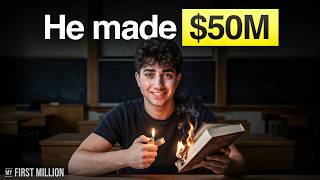
Zach Yadegari: Selling Cal Ai for millions at 18-years-old
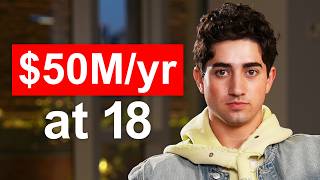
In this interview, 18‑year‑old founder Zach Yadegari walks through the rapid rise and acquisition of his health‑app startup Cal AI by MyFitnessPal. He shares concrete metrics – $30 M in 2025 revenue, a $50 M ARR run‑rate, a 1.5‑year timeline from launch to exit – and details the growth engine that powered that success: a mix of user‑generated content, high‑budget Meta/TikTok ads with custom App Store product pages, an affiliate program, and marquee influencer deals (including MrBeast). Yadegari explains how his small team of ~30 staff and contractors executed rapid iteration, creative scaling, and attribution via AppsFlyer. The conversation then shifts to the personal side of entrepreneurship: the role of unwavering self‑belief, using present‑tense affirmations from childhood, and the mental habits he credits for his confidence. He describes his raw, unedited YouTube channel as a “documented journey” that shows the day‑to‑day uncertainty of building a company, aiming to prove that anyone can replicate his path. Finally, he teases post‑acquisition plans – a coordinated media push and a Twitter‑takeover – and invites aspiring app founders to follow him on X and YouTube for ongoing insights.
Chapters
So a year and a half ago you were on this podcast. You were making $1 million per month at 17 years old. Now, a year and a half later, where are you at?
As an 18-year-old, I sold my company Cal AI to MyFitnessPal.
What was your revenue when you guys sold?
We had just finished 2025 having done $30 million in that year.
$30 million a year. So how much did you guys sell for?
I can't reveal that.
Okay. Okay. But people can do the math. Uh, if you're in the software world, $30 million ARR.
That, that's what we did in 2025. That was the revenue for the year.
You guys probably touched close to 50 recently. Yeah.
In January we did $5.7 million in revenue.
So the run rate is over 50. Wow.
Yeah. The ARR currently is about $50 million.
People can probably do the math on what the multiple might be there for the company, but didn't— so MyFitnessPal was probably your biggest competitor.
Yeah.
And they decided to acquire. Did they reach out to you guys or why did you guys decide to sell? It was a little bit of a back and forth actually.
We were talking to them for a while just because we're so close. In the space. And we built up the relationship over time and then decided it just made sense to— that combining the companies and resources would help us make the biggest impact because we are really mission-driven as a company. We want to help the greatest number of people as possible. And we thought that that was the best way to do so on both sides. It made sense. Okay.
So you guys are like joining forces. Are you still going to work together on— like, are you still going to be working on Call AI or have you decided to leave? What's your plan?
So Kali and MyFitnessPal are going to remain separate apps, and I am currently helping the company. I want this to be a really smooth transition. I'm still working at Kali, and I want to make sure that it's going to endure and the brand is going to really last very long, even past me being there. But I definitely am always, you know, I'm always coming up with tons of new ideas, so I am definitely going to start something new in time.
So you have a transition period, basically.
Yeah.
Can you talk about, was it a cash deal, stock deal, anything like that or no?
Yeah, I don't think we could reveal. I don't think I could reveal. Okay.
Okay.
That's fair. I will say they bought 100% of the company.
Okay. So they bought 100% of the company.
They own it now.
Okay, great. So it's not like a partnership, joint venture. They own 100%.
They own Cal AI.
Okay. Wow. That is so cool, dude. Are you going to stay in school?
I'm definitely going to drop out, honestly. Like, not even because of the acquisition. Yeah, I think I was going to drop out after the first year anyway. But yeah, I'm definitely feeling it. Like, I want to— I really want to just swing big in the world. And I think college is limiting me a little bit.
I mean, you were making $1 million per month and you decided to still go to college.
I mean, when I went to college, it was— we were making $3 million a month at that point.
That's crazy. Why did you go to college in the first place?
Honestly, just for the social life. Like, that was really the main thing. And I think it's like, it was good. I don't regret it at all because it was either go to college, make friends, hang out with them, have a cool social life, or I didn't really know what I would do. I would either still live with my parents or maybe move to a big city by myself, not know that many people, maybe a couple entrepreneurs there, but not really have a social circle outside of that. What I've done now, if I leave school, I'm going to still have a good group of friends to hang out with and other entrepreneurs that I've met in Miami over the time. So I'll have a good group.
So you feel like you did get like a social circle outta college? Like that was definitely a benefit.
Yeah, definitely a few, like honestly not like a big one, like not a full friend group, but there are a few key people that I really enjoy spending time with and I'm gonna continue to.
It's a, I mean, it is a really crucial time. Like most people are open-minded. I think when you get past 25, closer to 30, people are much more like, they're less relationship-based and they're more like who they've been with for a long time. So building a tribe really early and that's when people are really open-minded. So I do think that makes a lot of sense. To go to college for that reason.
Yeah.
And you met a few smart people that you could probably do business with for the rest of your life.
I definitely met some smart people. Honestly, I don't know. I haven't really thought about it from the business perspective, but I guess there are like a couple that I could see in the future once they're like out of college. But right now no one's too entrepreneurial, I would say.
Okay, so everyone just more just like friends for fun. Yeah. Okay.
So like good friends, like I know long term, like they're all going to do great things.
I think that was the right move. You got in, had fun. Yeah.
Met your people.
But now on to bigger and better things, I suppose. Okay, so I am very curious because you guys were only doing maybe like right at $1 million a month when we were first talking. Yeah. Now you're doing— you were doing way over $3 million a month a year later. Yeah. I would love to know what the difference was between what got you to $1 million a month and then what you've done in that time to grow past that. Because I know it was all about UGC. That was like all you guys were doing. And that was very, very popular. But I know you guys have expanded into a few other distribution channels. So what were you— how were you able to grow Call.ai to $3 million per month?
That's a great question. So initially when we spoke, yeah, it was all influencers that were just posting, and that was driving all of the growth. That got us pretty consistently to like $2 million a month, I would say. And then by that point, all of the influencers in the fitness space, all the big ones at least, we had pretty much worked with. And a lot of these fitness influencers share the same audiences, so it was a smaller bang for the buck working with more fitness influencers. So we decided to broaden the horizon a little bit. We started working with influencers that weren't necessarily fitness related, and that worked pretty well. But then more than that, actually, the channel that was a huge unlock for us was really just running performance ads, performance marketing, TikTok ads, Instagram ads, Facebook ads. That's just unlocked a whole new channel of growth that has taken us to, in January, we did $5.7 million of revenue.
Paid ads is so important to like track your conversion rate, train your pixel, make sure like all these different people are clicking different ads and converting. Was there anything you did for attribution to like, I know it's hard, but did you figure anything out?
Yeah, so there's one thing actually that it's a little bit of sauce for the viewers here. Not many people know about this, but you can actually create custom product pages for apps on the App Store. And for each custom product page, you're able to see the amount of revenue that that page by itself generated. Within Facebook, they actually let you upload custom product pages as the link that the ad takes the user to.
Mm.
So you're able to see directly how much revenue that each ad that's connected to the custom product page made based on the people that went directly from the ad, like clicked the link to go download. And so that allows you to have like clear data, no bullshit. You know that you at least made that amount. Oftentimes you have to increase it by about 30% because many people will see the ad, won't click download, but they'll go out of Instagram, go to the App Store and type in your app name by themselves. So you have to account for that, but that's how to know like, okay, you're making at least this amount and have very clear data. And that will work early on very well, but when you have a lot of ads, then you can't. Like it's hard to manage so many custom product pages.
Are you trying to test copy on those product pages or it's literally just conversion for like add to landing page, add to landing page?
Well, this is mostly for knowing like, okay, let's say you've run influencers for, let's say you started with influencer marketing and so now you're running paid ads. If you, if you run paid ads by itself, then you know like, okay, this is my only channel. So any revenue is from that. So, you know, if your revenue is more than whatever you spent on paid ads that day, then your paid ads were profitable. Let's say you're running influencers and paid ads and your influencers is at a pretty big scale. You can't attribute all your revenue to, um, one or the other. So that's when it's tricky. Like, okay, how much of the revenue today was from influencer spend versus paid ad spend? And that's where if you put all your paid ads under a custom product page, you could see like, okay, this amount was—
gotcha. So you're splitting, like if people search Cal AI, organically, they're going to hit the main page.
Yeah.
Then you're making a subpage that you're going to link directly for all paid traffic.
Yes.
So you can see the direct link conversions.
Correct.
And separate that. Wow. I did not know that.
Yeah, it's very, really helpful.
Very handy. If you're building a software or a web app, you should use WAP to set up your subscriptions. WAP makes it extremely easy to install our payment infrastructure into your app. All you need to do is create an account, go to your dashboard, copy this prompt and put it into Cursor or Cloud Code. And your payments are set up instantly. WAP lets you accept payments in over 194 countries. We also handle all of your authorization so your customers can manage their subscriptions with ease. Not only that, but WAP Payments also allows for pay-ins and payouts. So if you're creating a marketplace where your customers make money on your platform and need to deposit money into their bank account, you can use WAP to set this up inside of your app. There are thousands of companies that are using WAP for their payments and platforms like Sideshift, MicroOne, and Ohana are using Wapp to power their platform. So to set up your payments infrastructure for your software, just go to wapp.com/sell and start your online business today. So you were just doing influencers in the fitness space for the first million dollars, maybe $2 million, but you probably hit a ceiling pretty quickly. And then you said you broadened out your influencer pool. What was it like doing an influencer deal with MrBeast?
Oh, that was great. That was really fun. I flew out to Greenville, North Carolina to meet him and shoot it with him. I was even in the video, which was sick. And it was good. It was like, cool thing to be on scene.
How much did that cost?
That was half a million dollars.
So you paid half a million dollars to sponsor MrBeast? Yeah.
But the craziest thing is we, we could have gotten it for completely free if we wanted to.
How?
They never invoiced us.
Oh, really?
Never. And like a few months later, after I realized, like, wait, they haven't asked us to pay, I like reached out to Jimmy to tell them like, hey, your team forgot to send the invoice. And so we got it all settled. But yeah, like, if we wanted to, we could have just never appeared.
That was a really cool one because you actually got to go down there in person and be in the ad.
Yeah.
What was the thought process behind that?
Well, honestly, they just like apparently always invite the brands that sponsor them to like go see the shoot. And then when I was there, someone just suggested, oh, should we do a take with Zach Yadegari? And so I was like, hell yeah, I'm down. That's awesome. I honestly did not expect them to use it, but they did. Which was sick.
I mean, I think it's a pretty interesting story. You're like 18 years old and you own the app that's promoting a video. Like, that just made it really engaging.
Yeah.
How did you guys— because that video was a fitness video, like, that— did that just line up well? Did they approach you? Did you come up with that concept together? How did that come about?
So they initially did on the main channel, it was this guy, he was maybe 200-something pounds, his name was Madge, and he couldn't leave the gym until he lost a certain number of pounds, maybe £100. And then at the end of the challenge, you would win some prize pool, some money. That was one of their most viral videos on their main channel. And so they were going to make a behind the scenes. And we got word from one of my friends who actually is on the Beast team that they were making that. And she made the connection. She suggested the idea. Shout out to Nagash, very cool guy. He made that happen.
Okay, so he had the awareness that they were working on this concept. And then you had a relationship with him, so he just reached out to you.
Yeah.
Very good friend right there.
Yeah.
Did it convert well?
Hmm. I'd say the ad was slightly unprofitable just off of conversions from the ad.
Mm-hmm.
However, afterwards it gave us so much brand authority and we were able to say like, yeah, we worked with MrBeast, a ton of people saw it. And so it helped us sign many new deals going forward, which overall like probably made it a profitable deal.
So front end, it didn't convert at a profitable like ROAS, but back end you had a lot of social credit, built authority.
Yeah.
More brands were willing to work with you or other creators were more comfortable working with you in the future. Right. You probably get better deals.
Yeah.
Interesting.
Did, were you able to track attribution at all or was it just, it's very difficult.
Yeah.
With those types of things. We had like a few ways to model it out. We looked at the clicks in the description and then we like applied a multiple to that. Like, okay, maybe 1 out of 10 people are actually clicking the link in the description. Promo codes, maybe like 1 out of 8 people using promo codes. Just looked at the spike of like, okay, the day it was posted, how many views did it get? What was the spike in revenue versus an average day? So like a lot of different ways to look at it. And then we kind of like, if all of those sources pointed to a similar number, we were like, okay, that's probably the number.
I remember last time we were talking about attribution being a problem. Did you ever find a better way to fix it?
It's honestly the hardest thing, especially like even running performance ads. That's supposed to be better attribution. But because of Apple's privacy rules, that's super hard as well. Mm. And so you really just need people on the team that are really gritty and able to like really separate the noise. Like, okay, this is what a normal day is like. Looking at the spikes is a big thing. Doing incrementality tests, which is kind of like not running, not running a certain channel, turning it off for a few days, turning it on, seeing what the difference is, that kind of stuff to figure it out. But it's hard.
Yeah, it's very hard. There's no like tool that actually can like cover all the different channels, all the different touchpoints. So it's just more so objective than anything.
Yeah, very difficult.
Okay, so then you said— so MrBeast was probably your biggest one you've worked with. So you were going into like more female influencers. Your guys's app is beautiful because it's such a big market, like everyone eats food, everyone needs to track their calories. Um, when you got into ads, I'm curious, A, did you work with an agency or did you do it internally? Did you hire internally? And B, uh, the creative process, were you using the influencers and the UGC content and then you had usage rights and were able to run those as ads, or were you getting content shot as ads?
Very good question. So initially when we started paid ads, we were focused on influencer marketing. So we were like, okay, we don't wanna leave this channel completely untapped. So we hired an agency to run it for us. But honestly, as soon as I started doing research, I've never been a fan of agencies. I just never believe like, okay, they're never going to care as much as someone that's actually on the team, living, breathing. Talking to everyone on a day-to-day basis. So I always knew we would move away, but as soon as I started doing research, I was like, oh my gosh, this is actually horrible how we'd been running things. And so I started running it myself, then brought in someone else to do it. We like went through a few people, but then finally got a really solid team in place to run the ads. And it took a while and like we lost, we spent a lot of money on it.
So, okay, so you worked with an agency at first?
At first.
And then it wasn't really performing well, basically.
We were just capped out. Like we couldn't pass $5K a day in spend.
Oh, you just maxed out how much you could spend. Were you trying to be profitable? I mean, yeah, on the first month.
Yeah, we were trying to be profitable immediately because we're always like cash constrained because we're a bootstrapped company.
Gotcha. And so what was, I forget, what was your price point?
$30 a year.
A year.
Yeah.
Okay. So you're trying to make, trying to run ads, $20, make $30.
Right.
Did you know your churn? Like what was the, like we had someone who renewed their year-long subscription on year 2.
I don't think I could share exactly what it is, but I'd say the average for the industry 3 is about 30%. Would churn for health and fitness apps?
For annual subscriptions?
Yeah, for annual subscriptions. And that's because these apps, they require a lot of disciplines. They're like naturally have—
of course, that makes sense.
30% retention, not churn. Oh, okay.
Okay, interesting. Yeah, so that's helpful for the modeling when you're doing paid ads, but you wanted to be profitable on the first year, obviously. Okay, so you were running these ads with the agency.
What was the problem? So it was honestly how they set up the campaign structures. That was a big thing. Campaign structures are one of those things where it's more of an art than a science. Mm-hmm. But you have to, there are good ways to do it and then there are ways that like really overcomplicate it and then just like mess everything up. Like, 'cause there's so many settings. Mm-hmm. In Facebook ads, for example, that you could toggle and people think certain things are important, but really like you want to keep it simple. You want to set up your campaign structures in a very simple way. And creative is key. Creative is the whole strategy. You just set it up once and then It's all about the creatives. And you asked, like, do we use influencers or what for the strategy?
Mhm.
And for that, initially we used influencers. That was the biggest thing. But then very quickly we realized that, okay, these influencer videos, they work really well for short-form organic reach, but the ad placement wasn't strong enough. We've always optimized for subtle ads in the influencer videos so that they don't brick the engagement. And so it was really when we started to build out an in-house creator team, or not really like full-time in-house, but affiliate model of creators that wouldn't make videos exclusively to be run as ads, that we really saw good performance and scaled. Interesting.
I want to get really specific in ads. I'll nerd out if that's all right. What was the campaign structure? Like, were you running CBO campaigns? What was the problem that they were doing? What did they Over-index on, it's going to be a really nerdy part, but.
Oh yeah. No, I don't want to say.
If you got into it. Yeah. Yeah.
Um, keep it simple.
Just high-level structure. Yeah.
So I'd say high-level, what we do is we will mainly have one campaign. That's our scale campaign. And then one that's testing. That's like a pretty common strategy.
That's what we do.
And I believe in our scaling campaign, it is actually CBO.
And then do you, are you doing any sort of interest group targeting, lookalike audiences?
Yeah, we don't do any of that.
Okay.
We really believe that the algorithm is just so good at this point that you target with creative. So even if you want to do retargeting, like showing an ad to someone who already saw a previous ad, instead of tweaking any settings on Facebook saying like, okay, I only show this to someone that saw this ad, just in the creative we'll say, you've probably seen our ads before. This is XYZ. And that works.
Interesting. So you have the brand awareness and you're knowing they are already aware of what you are, and this is really just more of like a informational or objection handling ad.
Yeah, I would say so. And that's something we're trying to get better at, to be honest. Like we're trying to get better at the objection handling. Mm-hmm. But generally, like, it really is an art form. You don't know like which ads are top of funnel and which are like the ones that are converting. And so you'll see a really high customer acquisition cost for one. but then if you turn it and, and a really low for another ad set, but if you turn off that first ad set, you'll think, oh, it's unprofitable. Let's turn it off. Maybe it jumps up the cost, customer acquisition cost on another one because they were seeing this, these ads first. And those were the ones that were funneling into the second ad group.
Yeah. And then once you've calculated in like your organic content or the UGC stuff, like did they see that first? Then they see an ad, then they get a retargeting ad. You have frequency of how much they see each ad. If they see the same ad multiple times. A good media buyer, that's what their skillset is. It's not necessarily about setting up the ads, but I'm very interested to see how you guys kind of evolved. So what was the main conversion? Were you guys just doing straight up $30 conversions as the main optimization for the pixel?
We've actually optimized always for starting trial.
Okay.
Yeah.
Interesting. But then you track the amount of people who convert, obviously.
Well, on the backend, but not really for Facebook's sake. Because Apple, it really only allows you to send high quality data in the first 24 hours of getting any signal. And since we have a 3-day free trial, if we send it 3 days later, it's no longer going to be like reached by Facebook. That it's good. The algorithm will learn too slow. So we just model out, okay, we know that this is the average conversion rate. So if it's this cost per start trial, it's probably profitable.
Interesting. Okay. And then last nerdy question. Were there any other tools you were using outside of just you? This is all on Instagram and Facebook, I assume.
Yes, primarily.
Were there any other tools you were using for tracking, upsell, anything along the lines? Or just Meta Ads Manager, the pixel, and—
Well, we of course used an MMP. We used AppsFlyer. You have to really use one for apps, and that's supposed to be like the best thing for attribution. And it's supposed to give you clear data, but it never really does. There's a ton of drop-off. So one of the guys in our team, he's like always modeling out his predictions of like how much he thinks we actually made from certain things.
Gotcha. Okay. And then I guess the last thing I wanna do, creative is everything for paid ads. What was the difference between your UGC and your influencer content formats versus your paid ads content formats?
So the influencer videos, the reason they didn't work is because it would be like a 3-second clip using the app in a 30-second video. It'd be like my morning routine. Okay, face mask, breakfast, scan food, go to the gym, go on a run. And we would be a small part. And it would work, but like, that got us maybe to $10K a day in spend. We couldn't really scale more, maybe $15K. Then once we started making actual videos where the whole, the whole video is dedicated to, okay, this is an app I've been using recently where it lets me track my calories super easily throughout my day. All I do is take a picture. It's like directly selling the app directly straight to the point, like 5 seconds and less of like even the whole length of the video. Those really started doing well. And that's how we broke, like we got, I think we were doing like $40K a day.
So the influencers that had a following, they would make more like story-based content going through their day where the app was like a subtly part of it. Mm-hmm. And since people cared about the person, they were more likely to follow the story. And since the app was subtle, they actually were like, oh, that looked cool. Lemme try it. You didn't need to like sell the app, but in paid ads, you think it's because it says like paid promotion, like people like are aware that it's an ad. And they're just like, they just want the direct information.
I don't think it's necessarily that because Instagram even now, like they kind of hide the paywall.
It's very subtle. Yeah.
It takes like a few seconds before the like download button pops up. So like the hook can make them think it's organic. I think it's really the fact that it's just directly selling. Mm-hmm. And the fa— the algorithms are good at knowing who to target. And so like, if you could go to your ideal customer that already has the need for your product. You don't really need to do much selling. You could kind of just be like, here's a solution to your problem and they're gonna buy it. So I think that's what's really going on.
Yeah, that makes sense. So you just got more direct response ads that were just more structured and here's the app, here's the benefit. If you have this problem, this is the solution basically.
Right.
Just very formulaic direct response copywriting.
Kind of. I would say most of our videos actually aren't even people talking. Mm-hmm. The creatives that are winning is more of like, it, it demonstrates what the app does 'cause it's very visual in a few seconds, but it's mostly like Maybe being at the gym flexing with music, then scanning food, something maybe like a caption, like how I'm, how I cut down like this many pounds in a month or how I'm cutting for the summer, just like a hook and then just showing that.
Were you involved in the creative process, like directing what was being made?
We kind of left it up to the creators.
Mm-hmm.
And so we have an affiliate program that lets any creator make videos for us and then they just get a percentage of the revenue. And so we have some creators making a lot of money.
How do you, how do you manage the affiliate program? What tool do you use?
We use Tribe.
Tribe. And then do you have like a community that you're running this in to communicate with them?
Are you in groups? I group DM WhatsApp for that.
WhatsApp, just a WhatsApp group. Where were you spending most of your time? Like what area of the business?
So it's shifted a lot.
Yeah.
But honestly, recently, and this has been really good for scaling, it's been in talent, like managing the team, setting the vision, hiring early on. And when we last spoke, pretty much everything, all of the growth was like carried on the backs of the founders. We were doing everything. And like our developers, even we were just trying to arbitrage, use geographical arbitrage to get like 1K a month developers that live in India. And like, no wonder the quality of work wasn't that good. As soon as we started investing in real talent, that's when like the company just started growing on its own. I didn't even need to do or say anything and people are coming up with actually good ideas. That like actually move the needle on the company. So bringing on certain people to the team has been crucial. And that's where in the last few months, most recently I've spent most of my time is just finding these guys that will bring on new ideas that we haven't had before, experience from other companies. And that's all been super impactful.
But how big was the team when you sold?
More than 30 people. It's, it's about 30 people. That are kind of running the app and marketing and design team. And then we have another team of virtual assistants that's like another good amount of people.
That's so 30 full-time basically?
Yeah. The virtual assistants are full-time too, but they are contractors. They are contractors. Yeah.
Okay. But you got to 30. Did you get to the point where you were kind of removed from the business?
I got to the point where I could step away. And the business is going to keep growing itself. Like, there are smart people in every area that I trust to make decisions day to day, which is a really cool thing to have and a really special thing to have built. But I definitely— honestly, there was a period where right when I started college, I kind of stepped away for a month, and I noticed like morale was down, um, the numbers started going down or like stagnating a little bit. And then I came back and they started doing good again, and I just realized the power of just Having like someone that's setting the vision and constantly reminding people like what we're actually doing this for, what are the goals, bringing people together, like that's super overlooked and actually extremely important.
It's a later stage problem, but it's absolutely the most important part once you have some sort of product market fit and you're growing. Absolutely. If you were talking to another app founder and you had to tell them everything you've learned through paid ads, like, and very quickly, like how would you recommend other app founders to approach running paid ads?
I would say that If you have friends that are founders, you should talk to them about it. Maybe you should watch content like this podcast is a great resource. I would go back and watch that whole section we just discussed. Definitely gave away a lot of sauce on that. It's difficult to get started because it's a very complex tool and there aren't many guides. And also the alpha of like, okay, the strategies you actually want to use are constantly changing. The algorithm on Facebook is constantly changing. 5 years ago, lookalike audiences were the entire name of the game. And now it's all about creative and properly setting up the accounts from the start and looking at frequencies of everything like you were mentioning. Mm-hmm. And so you should learn, I believe, 80%, like it's kind of the Pareto principle, actually learn the 20% that accounts for 80%. Mm-hmm. And so talk to people, look at content online. There's a lot of free content and you have to experiment too. So you're gonna have to spend money like maybe $50 to $100 a day. On just running ads to experiment and learn kind of how these structures work. But if you could learn the 20% that accounts for 80%, you know enough to hire someone that actually knows all of his shit and can run it for you, run it for the whole company. So that's the route I would generally take is learning enough to make a good hire.
Okay, interesting. Yeah, I think that there it's really just like how you need a lot of creatives because they're the way they play into each other. It's hard to like understand, but you just gotta do it like iteration. And Andromeda is so good at serving these ads to people and they're finding combinations of like, if I show them this ad first, then this ad second, they buy. And so it's hard to like read that just from the numbers, but you know it's happening. Yeah.
And really say Andromeda.
Yeah.
What's, is that a company?
That's the name of the newest update of the Facebook Meta.
Ah, sick. I didn't know.
The algorithm, it's called the Andromeda update.
Oh, interesting.
First we started with UGC and influencers in the fitness space. Then you brought it out to the big creators, female influencers, MrBeast, you name it, as big as you could get. Then you tried Meta ads with an agency. They were just using those influencers' videos, just putting them in the ad library, wasn't very effective. You turned the ads in-house, went a little bit more direct response. So instead of less subtle, a little more about the app itself. And that's how you were able to scale as the pixel learned, you made more creatives. And that got you to $3 million a month. You also had an affiliate program.
Well, that's what got us to $5.7 million a month. Okay.
Even better. Yeah. Yeah. So that's all you needed to do really was just crack paid ads and then have an affiliate program.
Yeah. The combination was definitely huge, but like paid ads alone wouldn't have gotten us there. Like having, first of all, the influencers, like that definitely accounts for a few million every month.
And that didn't stop.
Yeah. That, it didn't just die down. We're still doing that. But then on top of that, now we have paid ads that's doing really well. And a few other channels that are smart that like altogether the mix is good. And now we have renewals coming in since we're a year later. We have the fact that we were so big with influencers before running paid ads certainly helped us because we already had the awareness and now we're doing like kind of direct response targeting for our ads. So people that have seen us all over social media, finally it's like, okay, time to buy. And so like all these factors played together and definitely helped.
I say that all the time. The best way to get your ads to perform better is to invest more in organic brand awareness and more ads. Like you're building up like millions and millions of eyeballs and goodwill, and that can just be more like brand awareness and like brand building. And then paid ads where you liquidate, right? Yeah. Get the actual sell and you just go straight for like the kill shot with people who are warmed up.
Yeah.
So they play in together really well, which is incredible. You guys were able to scale to $5.7 million a month with really just those two dynamics working.
Yeah.
So I'm assuming MyFitnessPal saw upside and opportunity. I guess I really want to know like how you, 'cause you kind of, when you sell a company, I'm imagining, did you have to like sell it? Like, did you have to say, hey, these are opportunities where I think you guys can take it from here? Or was it just like a no-brainer combo since they were the biggest player in the space?
It made a lot of sense to combine forces. Mm-hmm. I'd say we, we do have different core audiences. We also do have overlap and where the overlap is, is where we were going head to head and competing. and we have a shared goal. The shared goal is just help as many people as possible become healthier, lose weight or gain weight, whatever their fitness goal is. And so coming together was the best way to achieve that. Mm-hmm. Everything made sense.
That's really cool, bro. The fact that you've— how long has it been from the day you started to selling it?
So the day— it's been about a year and a half since launch to sale, which is really cool.
A year and a half to zero to $30 million. In ARR?
I mean, yeah, but at this point I guess we're at like $50 million in ARR.
Do you have upside? You said you sold 100%. Did you, do you have upside in future growth?
Not, I don't have any equity.
I would like to get into the actual, what you, how you're seeing the world develop. Like you're choosing to sell now. I don't know how strategic or intentional that is with like the uncertainty in the world, but like, do you still think that starting an app is like a good idea?
Oh, 100%. It's the best time ever to build. It's becoming easier and easier. Even if you don't know how to code. I mean, if you asked me the first time we the podcast, these vibe coding platforms, which were starting to come out, were really bad. Now they're actually great. Like Rourke, I've been playing around a little bit with that. It's actually a great platform. There are a couple others too. And so it's so easy to just build, put something up. My friend actually that I went to high school with, he built an app on Rourke. It's called Wrestle AI or Fight AI. He released two and it's now doing $30,000 a month, and he's also just like a normal kid in college, just very, very hardworking. Didn't know how to code, learned how to market on TikTok organically, and now he's killing it.
Like, how do you feel like college kids should, like, do they think they should get a job, or do you think that this is like actually like a really realistic path for a lot of college kids?
Yeah, I think they have to decide if entrepreneurship is for them. I think the hardest part about it is there's so much uncertainty. Mm-hmm. Like so much of the time you just have no idea what you're doing. Even now, I'd say when I started, when I was at zero, I had no idea. I was completely uncertain. Okay, how do I get from zero to one? How do I get from $0 a month to $10K a month? No idea how to do it. I was like just throwing shit at the wall. Nothing was sticking. Then I learned, and now I could do that again. Like at this point where I am, Sure, I learned how to build a company to scale of Cal AI, where now we're doing $50 million in ARR, but how do I build a company that's going to go from that to $100 million a year? And that's really where the uncertainty is now. And so there's always uncertainty you're dealing with. You just have to learn to live with that and kind of the job insecurity all that, you just have to learn to deal with it. And so if you want what comes with it more than the pain of the uncertainty, it's worth it. Otherwise, maybe you should get a normal job.
When you were in uncertain times where stuff wasn't working and you were like mentally probably like, I guess like going through like a hard, you don't know what to do moment, was there anything, any practice or any sort of like mindset that you've adopted that's helped you gotten through that and to like push through when you're going through a hard moment?
I think the best thing has always been that I've had really good co-founders that are super aligned and like-minded. And so anytime that I'm feeling like uncertain about things and like, they're always great to talk through whatever we're dealing with at the company. And we usually always assess like, okay, what's the maximum downside of this? Or what's even the maximum upside? And then we come to like, okay, so you know what, we're gonna make the best decision with what we know, but even if we fuck up, like we're in this together and like we'll just, we'll figure out a way to make it out.
I absolutely agree with having a business partner, especially if you're trying to build like a real company and not just like a cash flowing $10K a month business.
Mm-hmm.
Were you intentional with your co-founder choices? Like how did you guys, like was everyone a different role? Like what were the roles that people played?
Yeah, so very complimentary, which was great. One of my co-founders, Henry Langmack, he's the CTO, and we met together at a coding camp when we were 10 years old. So that was awesome. We like knew each other for a while, had built a lot of small projects together, and Cal AI was really the one that took off. Blake Anderson, another co-founder, who was mostly, I'd say, a pretty hands-on advisor slash he put some money in with us in the beginning and He was super helpful for the go-to-market strategies from his previous apps that he's built. He like advised us on how to really run influencer marketing was the biggest thing and really helped with the product design early on. And then Jake Castillo, who's our CMO slash COO, who ultimately helped put all the systems in place to scale like our influencer marketing strategies. And everything super effectively, keeping everything super organized. So all of these skill sets, super complementary, and together we were able to build this together.
And you were CEO?
Yeah.
Beautiful. Interesting. So you had the CTO, CEO, and the person running the marketing operations, then you were really the vision.
Well, I would say so, the marketing operations. So Blake was like not directly running them. He gave the strategy, he advised, and then Jake. Yeah. And then Yeah, it was mostly me and Jake, and then eventually mostly Jake running influencers.
Amazing. I think that's something that really a lot of people should understand. Like you have to, you cannot just do it with a friend that has the same skillset as you. It's like, yeah, if you're gonna, partners are extremely important. It's what broke me through my first million dollars was just bringing on a partner who actually knew how to operate and organize where I could just be ideas and marketing. I mean, that's very, very important. But if you work with your friend in college, it's fun to get off the ground, but you're gonna have problems if you're just friends and you have the exact same skillset.
Yeah.
Like someone needs to be like an organized operator. Someone needs to be a creative marketer. Someone needs to be a technical builder at the end of the day.
Yeah. That is a hard thing. And I've gone through that with a lot of people, even now. Like I'm talking to people and, you know, we like have an idea that we both really like. Like maybe he comes up with it and he shares it, or I come up with it, I share it. And then the thought is like, okay, like I like this person and he thinks this idea is good too. Is it worth doing together? Mm-hmm. But then I realized like, wow, we have so many overlapping skill sets. I just don't even know what we would split up. And so I think if you have a friend like that and you're just trying to get started, the best thing is probably to work alongside each other. It's very good to be supporting each other and like building together, but it doesn't necessarily need to be on the same thing.
So build your own apps just in the same room and like support each other with what you're learning.
I would say that's a good idea, or you could do it together, but you should define who's gonna do what. Like maybe one person. Takes more of a lead on building it. The other takes more of a lead on marketing, but there could still be more overlap. But I think that having an area of decision-making and an area, I like to call it the areas of genius, the zones of genius are important because you need someone who's like the final decision-maker on tech. Like what programming language are we going to write in? What do we, what tech stack should we use? And someone that's making the final decision on, okay, What channels should we spend our marketing money on? Otherwise you could have a lot of back and forth, which I think just slows things down and can really kill companies.
Yeah. So it's like really defining, you're going to make decisions on marketing. I'm going to make decisions on technical stuff. We're going to talk about it and make sure everyone is aware of why we're making the decisions. But at the end of the day, if we disagree, this is, we're going to go with my opinion. Jeff Bezos had a good line. It was like, I disagree, but I commit. Like, if you can get to that point, Yeah, that would be like, that's a really good way to show mutual respect, but you need to define that very early for your brand partners. Very cool. Okay. So I guess I do want to go into this with, it's so fascinating that you're like 18, 19 years old and you went to college. If a college kid wants to start an app, how do you think they should approach it?
I think building in Claude Code right now is the best way to create a high quality app, like the highest quality. The Vibe coding tools, if you have no experience, are still good enough to like make an app that's making tens of thousands a month. But they're not as good. So ideally you would go with the best thing, but if you don't want to or can't, then vibe coding is fine. You have to come up with an idea that you know that you'll be able to actually market it. I wouldn't really build anything that I had no idea from the jump, like, okay, I could build this, but then what am I going to do with it after? That's kind of a strategy with everything that I worked on. I always knew from the start, as soon as I launched, what marketing strategies I would take. And I mean, you gotta come up with a good idea. I've always found that solving a problem in my own life works pretty well, but you could also just talk to more people and there's, there are just so many ways to come up with ideas.
How do you know if something will work from marketing? Were you, did you see other people doing a strategy that was in a different industry and you're like, oh, this idea that could, like that format of content could work for this? Were you actually going out and creating content before building the app and seeing if it would get views? Like. What, yeah, how, Drake, what would your philosophy be on proving that you can get customers before you build an app?
Definitely sometimes it is that I see a format working for another app or another product and I think like, okay, if that works for this, it could definitely work for me. I mean, at this point I've definitely seen a lot, so I know I've built the intuition of, okay, this will probably convert well with performance ads. This will probably convert well with influencers. And there are some principles that distinguish the two. I think ultimately performance ads like running on TikTok, Facebook will always take you the furthest. This is assuming it's a like subscription model or pay up front. If it's something like a social media platform, this advice would be completely different. Like social apps, your growth strategies have to be like very unique for each one. But if you're running a model where you're just trying to make money from each user, then Typically the performance ad platforms, just because they have the most number of users on them, will be able to take you the farthest. However, they may not be the most profitable. You may have a higher ROI on a different channel. And so nearly anything can work for performance ads, but you have to decide, like, is there something, a different channel I should take maybe first? So maybe that's influencers, maybe that's UGC content. Like if you have no money at all to start it. I would just make videos yourself. Like that's the lowest cost way. And it's one of those things where 1 out of 10 videos maybe goes viral and that like makes you $1,000.
I think if you're just starting out, truly like being self-aware of like, okay, I'm gonna create this app that solves this problem and it's gonna solve this problem for this person in this market. These people in this market hang out on this platform, so therefore I need to figure out how to make content for these people on this platform. Research the formats that work. Yeah. If you're completely broke, make that yourself, right? Prove it. If you get some revenue, dump that into another UGC creator to give you more leverage, and then figure that out, figure that out. Then ads will take you from a million to 5 million or from, or $10K to $100K depending on the scale of your app. Right. Was there any thought process of like the visual aspect of Call AI of like making the ads easy to like understand quickly?
Yeah, 100%. On the app, I mean, we put Call AI, the name on the top of every page. We actually have two versions, a version for regular people to use when they download it, and then a version for creators. And the creator version says Cal AI big on every page. It makes it look like they have like a perfect streak of like using the app for like 30 days in a row or whatever it is. So we just make it look really pretty and optimized and like great for an ad.
So basically you're saying is like you have an influencer, you know they're gonna record their phone.
Yeah.
And so you made a second version of the app with huge Cal AI logo. So if someone was watching the ad, they'd be like, what app is that? And see—
exactly. Wow. And then you even did like the streaks, like, yeah, whoever's recording is like an active—
dude, that's so smart. I did not know that. It's like the McDonald's or Burger King ads where they have like the perfect looking hamburger, you know? Yeah, they like sprayed it and shit. Yeah, and it's like really bright. Yeah, it's not edible, but in the ad, that's what they're doing. So it's very similar.
That's advertising.
Yeah, dude, that's smart. And so I guess this is a really weird question, but do you think that a kid like marketing focused or like a business student that's creative has more of an advantage? Or do you think that the developer that's technical using Claude Code would have more of an advantage if it's just a one-person head-to-head dude battle?
100% the creative person at this point, because building an app is so easy. It's about having taste of like, okay, I could build this app, but how do I actually design it so it's a very simple and intuitive design? And then how do I make it go viral? How do I get users? If you had a perfect app, but the worst marketing, you would get no downloads. If you had the worst app, but amazing marketing, you would still get downloads and you would make some money from those people, even though it's probably like very small conversion rate. So marketing beats just building.
I would agree. I think that being able to see the opportunity and communicate the value, and then the more you understand a market or a problem space, the better your solution will be. Where if you're just a developer that knows how to build these things, you're going to really struggle with understanding that customer's problem. So I think the creators that have an audience have a huge advantage right now.
Yeah.
Because they can make hyper niche tools that really solve their people's problems. Are you recommending other people to go to college right now? Because you have probably friends in high school still, you have a younger brother.
Yeah. Honestly, it took me a little bit to realize this. Like I did go to college for the social life. If I didn't, it would've been more of like a leap of faith, but I've realized I actually there's so many entrepreneurs that are young like me that I've been hanging out with. Like, I just came from Miami to New York and I've been hit up by like 5 people that they're all in New York and they want to do dinners and like, I don't even have enough days. I'm here to see all of them. Mm-hmm. So like, there are enough like-minded people where I wouldn't be just completely on my own and isolated if I didn't build a friend group in college. So it's not necessary. It might take a little bit to build up that group if you don't go to college. But in terms of like educational value, it's good if you want to be maybe a doctor or a lawyer. But if you want to build software, be an entrepreneur, definitely not needed from a like education.
Did you go to business school?
I actually was initially enrolled in the business school and then I switched out of that.
To what?
I switched to the Arts and Sciences School, but I'm undecided as my major.
Did you go to business classes?
I took one, one business class.
If you were talking to a college president and you were in charge of like what the curriculum should be or how they could adjust to be more well-suited to the modern way of life. How would you recommend colleges fix their curriculum to give people your age a better experience?
I would say there are a few things that I would immediately change. So first of all, most college curriculums are just not applicable. Maybe they would have been 10 years ago, but the world moves so fast and the curriculum doesn't update as fast. So you leave college and then you're, you're out of date. So I think always making sure, like, there should be a guy that's dedicated to just, okay, what are the latest tools? Let's integrate that into the curriculum. Like a CIO, a chief innovation officer of the college. And they should do this in high schools and middle schools too, I believe. And so like bringing Claude Code into the classroom and teaching people how to use it. I also think teaching people how to solve problems from first principles rather than memorization, like memorization. I think should be completely removed. I think it's useless. Why would you ever need to, like, memorization? I don't think even is something you could really teach. Like, maybe it's a skill a little bit, but in the real world, you don't need to memorize all these random facts. You could just have Google out or a notepad with facts. It's more important to learn how to use the information to actually solve different things. So there should be a greater emphasis on the solving rather than memorizing the solutions.
Mm-hmm.
And I would also say that AI should be just heavily, heavily integrated in like everything pretty much. Mm-hmm. But that goes into the CIO part.
Yeah. I, my philosophy I would say is like, I was in college, I was starting a business. I was in business school 'cause I wanted to start a business, but like I was just feeling like, when are we actually gonna do the thing?
Yeah.
It was always just vocabulary.
Yeah.
Quizzes, equations. And I'm like, okay, this is, you, I can see how this could be useful to know, but I was so frustrated of like, let me just start a business. So I feel like if they just like encourage people to build an app in one class and then try to get customers, right? Or if there's like a mark, like a content class where you have to make content as like your grade.
Yeah. Yeah. That would be perfect.
Yeah.
Yeah. Like you should. And actually I will say, so I had kind of a special class in at U Miami. So the entrepreneurship class I took, there was a professor. He only was teach— taught for one semester, unfortunately, but he was amazing. He, actually sold his company and he walked away with over $100 million from it in secondaries. He actually didn't sell it, but he sold secondaries, $100 million personally, which is incredible. And he took the approach of, okay, everyone, like, we're going to actually come up with an idea here and we're going to create an MVP and then you guys are going to register your company legally and we're going to do a pitch at the end of the class. So he was taking that approach. Not— I don't think any other teacher is really taking that because he was a successful entrepreneur. He like thinks the same way as us, but unfortunately he's not teaching anymore because the school system's just like, fuck.
He probably got ousted for that, you know? Yeah.
And either— I put it just like, they're too strict, bro.
Yeah, politically. Yeah, they like aren't— they're so risk-averse that they don't want someone who's going to push the norm. Yeah, but that's directly hurting the kids. I do think they're in a position where they could genuinely help a lot of people if they just got past that. Yeah, like I would love to teach for like, you know, I want to be a teacher.
Yeah, like so strict about who can teach. So many rules.
It's very interesting, but I do think that that is a great segue into, you are probably the most credible person your age that's using the most modern tools that's actually in the field learning the best way to build apps, market them, position them, everything, and now sell it. You've done the end-to-end process. I think you're very qualified to be teaching people and colleges charge $15,000 to $20,000 a semester to learn information that's 10 years old, but I'm curious what your thoughts are on what happened when you decided to teach people how to build apps.
Yeah, so very briefly, we had the App Mafia, and that was like a fun time. So me and a few of my friends who are also entrepreneurs, right before I started college, so in August, we all got this mansion in Miami together. We were filming content. It was so chaotic, dude. So chaotic. We were filming content all day. We were just spending crazy amounts of money. On the dumbest things. And we did launch a course that taught people how to build apps for about 3 days until we made it completely free so that anyone can use it and, and watch it. And it's still live right now. And people are always messaging us like, thank you for the content. But yeah, there was like a longer vision, but essentially what we were trying to do, there was the idea kind of kept shifting and there was a lot of just misalignment with like everyone's lives were at a little bit of a different point. So pretty quickly, just like that environment, it just became chaotic. And so it eventually like broke off and we're all friends now, but we did split up and stopped really making content on that. But it was interesting for time. We got a lot of controversy and hate.
I was a very big fan of what you guys were doing. I think you guys did bring together like a really cool team, like the Quitter guys, incredible success, really good at marketing as well. Really good at app design as well, like UX onboarding. You guys very like pretty much pioneered the UGC space, you and Blake, and you guys have a very successful like scaling system. And then Hunter was very good at building like viral loops and organic PLG. And so you guys had like, like your course is extremely valuable. Like I watched almost all of it and I'm like, this is like the most up to date, exactly what you need to do, what's working, what's not course I've ever seen. So I was so, so impressed with that. I'm very happy you did that. Cause I think knowledge is the one thing in the world that's proven to help people's lives.
Yeah.
And so I think what you guys were doing was like a net positive thing into the the world. But I definitely think that, like, chaotic energy, probably internally, why are we doing this, wasn't probably very clear. I always thought you guys were going to try to, like, educate kids and then invest in their companies to make it like a private equity play.
Yeah, there were so many ideas. That was one of them. I mean, the whole goal was just helping people, empowering more people, helping them and educating. And we, we did a lot of that. Like, so many people have said that the course specifically has allowed them to reach a $10K a month business, which is beautiful. And the fact that we're letting them have it completely for free is great. And so really happy about that. Super net positive. But we did— so we had a community too attached to it, which we charged for. We made a few hundred thousand dollars from that, and then we spent it in like a month, which is just wild. Like, we did a lot of stuff with content that we had to throw out. We went to some clubs, a bunch of just random payments. I mean, the house was expensive. We had a private chef, a lot that was going on. And so it wasn't super sustainable.
I understand why you charge for the course to fund— like, the thought process is you charge for the course to fund media, to grow your personal brands, and we'll get more people to know who you are so you can help more people.
Yeah.
And so you have— you can't just make content for free. Like, it costs money to have a videographer, an editor. You're also running these businesses. Like, it's a separate entity, and you need cash flow to be able to sustain that.
Yeah.
I'm imagining you guys just are also running businesses, so you kind of spread yourself a little thin.
Yeah, yeah, exactly. None of us could really, like, go full-time and commit to it, which because what it would have required if we wanted to turn it into like a big thing, it also would have been like a long time horizon to do so.
Yeah, I just, I don't think that people should look at it as like some cash grab. Like you guys already had money. It's just trying to make a sustainable ecosystem on its own on the side that was rooted in trying to help people.
Yeah. And we had a bigger vision, which was to basically build a platform that was kind of like Shopify for apps. I'd suppose that was like the North Star. Of the company at the time, and it shifted a lot. Like, it shifted from, okay, we just want to educate, to this, to this, to this, to getting there. And so, like, by that point, it was the fact we all were running our companies on the side, so we couldn't put the necessary time and resources that it would have taken to get there. We probably would have wanted to raise money, build out a really good team, get some, like, San Francisco engineers in there. And so it wasn't, like, the best setup.
Would you have done anything differently?
Not really. Like, the grand scheme of things, probably not. Maybe some, like, minor things, but Nothing that really like comes to mind. I think, you know, it's good to— I had so many learnings from the experience, which are great.
I mean, you guys are super young, so yeah, you guys, you try something. I think that's what most people should take from that. Like, you should be trying stuff. If it doesn't work out, like, totally own it. And you guys owned it. So I think that it was a fun moment on the timeline at the end of the day.
Yeah. No, yeah, I think that the only thing that maybe if we redid it, I would have approached differently is like we purposely wanted to be super controversial. So we painted ourselves as like these just Dickhead internet money gurus. And that was controversial and like it worked. It took over the timeline. But I also think for what we were trying to go for, it was probably unnecessary, to be honest. Like Twitter wasn't— we didn't need like the Twitter people stirring up the pot.
Uh-huh. Because a lot of them already kind of knew who you guys were and knew you were legit. And if they just knew there was a thing, I bet they would have bought.
Yeah.
Yeah. So I think if I can give you some constructive criticism, here in the education space. Lead with value first. Oh yeah, like for at least a month or two, and then do the controversial stuff to get awareness out. I think we went straight into the controversy and it was just like people were very confused. But overall, dude, I don't think anything wrong. I think you actually helped a lot of people, and I think building a course is amazing. 90% of people would never share anything that they are doing. It's like you will get fired.
Like, someone that was working at X went on a podcast and he was gone the next day.
Immediately clipped. Like, so it's like, I don't think people understand how cutthroat and intense it is. And you guys just made an entire video course showing your app, every thought process and everything. Yeah. So I do just really want to reach— like, that is a very amazing thing to do for the world and very helpful. And now it's free for everybody.
Yeah, I mean, honestly, the big thought process was like, I just— when I was a kid, I've always dreamed of doing this, but I had no idea how, no idea how to start. I was just— had the uncertainty that I was saying earlier, and So like this, we really built it for our younger selves to like help them get along faster.
And it's like it probably took you months to shoot that.
It was like 60+ videos, you know, like we were supposed to do it in months. We kept procrastinating. Yeah, yeah. And we like had to record it. We like crammed it into like a couple of days.
Yeah, it's not—
no.
Oh yeah, yeah, yeah. But the actual shooting. Absolutely. That's funny. Okay, so these are all like— this is all very interesting to me. Like you have probably been the most entertaining person to watch in this make money online world because you're such like a unique character. Like you're running up an app, you had a Lamborghini driving it to high school. Was that cool?
It is, it is cool. Apparently I've heard from people that I'm like apparently known for just driving in circles around the parking lot, which is not true. It's just hard to find parking spaces, but I guess the car sticks out.
Just with the top down, just so people see you. Yeah, yeah.
How was college? Miami, first time in LA.
That's probably just fitting right in there. Yeah. How was college with that? Like, that's— to me, I'm just genuinely interested, like, what's it like to have a Lamborghini in college, dude?
Honestly, so interesting. Like, in first semester, we threw so many crazy parties, and this was like part of what we did with AdMob and part where all the money went. We threw these crazy house parties, and like all of the freshmen would come. It was so much fun, such great memories. And I feel like I got all the partying I needed for like all my years of college, just like in that short period. So like, that's why I'm kind of like not worried about dropping out because I just had such a short, such a fun time just packed into a really short duration, which was great.
I think you did it right, dude. Like you got it in, you went there, you met the right people, you had the experience, you maxed it out. Yeah, you speed ran it basically. And then you probably burnt yourself out of that and you're like, all right, back to the mission. Yeah. And now look at you, sold Kalei, do you have any plans for what's to come in the future?
I have a lot of ideas. Nothing that I'm like actively ready to talk about.
Okay. I do think that this is a good time for you, probably like a reset. Think about it because I'm sure you're trying to go for a big one after this. Yeah.
Yeah. The next one would probably be shooting for a billion.
I think that's very possible. If I can invest in you, I would invest in you as a person. Just whatever venture you have. Thank you.
Thank you.
I wonder if that'll ever be a thing.
I mean, there was like, you know, Believe for a second. Was that—
yeah, I think that was more like influencer, like, so into that. Yeah, yeah, yeah. Very interesting though. Is there anything else that you think that we should go into? I think we— everything I've observed, these are all the things, all the questions I've had, because I've been paying attention to what you've been doing. I respect you a lot. I think you're an amazing and talented person and you do good in the world. So anything else you think that we should cover? Is anything about the Kali AI journey I didn't ask about that you think would be interesting?
I mean, nothing immediately that comes to mind, to be honest.
I'll ask like if I have like a few more random questions that aren't related just to see if this is something that you think about.
Okay.
Do you, have you done any sort of like, this is gonna sound woo woo, but like spirituality, visualization, manifestation? Like do you have any sort of belief system there? 'Cause it's not common for an 18-year-old to find success so quickly. And so I'm imagining that you've had some sort of like default belief system instilled in you to make you believe you can do this, to go through uncertainty and actually set a goal and make it real?
It's a very good question. Very interesting. So I know a lot of people like these gurus online, these millionaires, a lot of them talk about like meditation and journaling. Mm-hmm. And what's actually funny and interesting is I did that.
Mm-hmm.
A few months before starting Call AI, I was journaling. I was journaling every night. I was trying to meditate. Never really got into a group, but I was like actively like meditating, like maybe weekly. And then I stopped all of that. And then a couple months later, I started Cal AI not doing any of that, and it was really successful. So like, I don't think that that kind of like morning routine type stuff ever really had an impact. I would say though, there are a couple of things that like, mottos I kept repeating over and over in my head throughout the journey that 100% took it way faster than it should have been versus speed for everything. Every fucking thing we did, speed was the key. Speed, speed was key. Every employee, I would always tell them like on the first call with them, like, speed is our number one motto here. It's our number one core value. We need everything to move extremely quickly. You should never be the bottleneck for anything. If you are, that's going to be an issue. I would always be super clear about that and If I'm on a call with someone and they're like, yeah, we're just waiting on, we're waiting on this guy to, we're waiting on Frank. Frank, there's no one at the company named Frank, but we're waiting on Frank to do this before we could move forward. I'm like, okay, why are we waiting? Let's get Frank in the call right now. Get him in. Frank, why isn't this done? And he's like, uh, Frank, do it right now. He does it on the call and then we launch it. So like constantly just identifying like what are the bottlenecks? Why are things not moving as fast as possible? How can we move things faster? And immediately. Addressing them, not waiting. That was the biggest one. I think that's the most crucial thing to get us there. And then self-belief, extremely important for sure. I think this one is something you kind of have to like find your why deep down. I've always, maybe it's like the small wins from my childhood, but pretty much anything I've set my mind to, I've always accomplished. So like there was a hackathon I did when I was like 12 years old. and I was like the youngest one there with one of my friends from school as well, from elementary school. And we won the hackathon against like high schoolers and older, and that was like sick for us. And I guess those small wins made me just have this immense self-belief from a young age that I really could do anything. And so that's stuck with me. I think you have to dig deep to find that, but I think like even if you don't have proof, you should you should just prove to yourself, like kind of the motto or a belief that I've had is I can always execute. So if someone gives me a roadmap, if I don't have a roadmap, that's one thing. But if someone shows me like, okay, this is how something's done, I believe I could always take that and always execute it. Like it may take time, but eventually I'll get it flawlessly. Like everyone says Cal AI, it's a great design. That wasn't an accident. Like I just, until it was the qua— the standard of excellence that I demanded, of myself and of our team, I wouldn't stop iterating on it more, more and more. We have to make it better, better, better. And so extremely high standards, super, super important.
I have so many thoughts there. I would just say the self-belief thing, so unbelievably true. I've interviewed a lot of kids like young, your age that have success, been successful, and that is the one consistency. Like there's just like, they 100% believed that what they were gonna do was gonna work. And then they just did it. Is there any advice you'd have to someone who doesn't have that? Like, because I had it too when I was very young. Like, I had delusional, I'm going to be a millionaire. Like, I just like felt it to my belief. That was me. And I sounded like an arrogant kid in high school. But I'm always curious, like, how do you— people that might not have that, how would you recommend they— what practice could instill it?
I mean, Tony Robbins, I believe, says something along the lines of words become thoughts, thoughts become beliefs. And so I think just changing how you speak, There was actually one time, I remember this very distinctly, I was in the car with my mom. I was super young, maybe like 9, and I was just talking to her, like saying whatever bullshit a 9-year-old would say. And then I said like, mom, if I'm rich, can I do this? I was like, actually, mom, when I'm rich, I'm gonna do this. And so like, I always like would instill like through my language, like I'm going to make it. Mm-hmm. It was never a question. And like, even in my head I was like, like, but what if I don't? Like I, of course had doubts, but like I would kind of always try to like push those thoughts to the side. I'm no, no, I'm doing it. I'm doing it.
So you have, you have a statement in present tense like I am, I'm a millionaire or when I'm a millionaire. Like it's like 100% the way like it's going to happen.
It like definite for the future.
And even if you might not believe that and feel that right away, you're actively using those words. So then it is instilled in you. So your subconscious now feels that way. That's my exact screensaver. What you think you become, what you feel it, you attract what you imagine, you create.
Amazing.
So I 100% think that's like the single most important thing to understand is speaking as if something's already happening or a guarantee that it will happen.
Yeah.
Very interesting to hear you align with that. Then you also, you have a personal brand on YouTube. Why do you make content on YouTube?
Yeah, dude, my YouTube is interesting. I mean, I don't really edit my videos at all. Most of them I've tried somewhere. I edit like vlogs, but to be honest, I like the raw format better where I kind of just rant for like 10, 20 minutes in front of the camera. I just want to document my journey, my thoughts kind of on a more day-to-day basis of like, what's it realistically like in the eyes of a founder on the day-to-day for people that are trying to get to a place I am to learn from, to kind of see my thought process. And I teach a lot of that. I give a lot of value on them, but I also just show like the realness of the uncertainty of building company and showing them like, you're not in this alone. Like even at these big numbers, like it still feels like the ship is sinking every day and that's just part of the game. And it also will be super cool to look back on in like a few decades after I have other companies and stories and successes under my belt that I'll be able to show the whole come up journey and prove like anyone could do this. I'm not some genius. Anyone can do this.
Yeah, I love how you just sit down and talk and then like 10 minutes in you're like, like, yeah, I don't really know what else I'm going to think about or what I'm going to talk about. I'm not going to cut. There's like a 20-second pause and then you're like, oh, oh, there you go. Yeah, but it does— like, honestly, it's probably really refreshing nowadays. And like, this over-edited stuff feels manufactured and makes it harder to trust. Yeah, so it's just cool to see like you're streamlining your consciousness. Yeah, into YouTube. And it will be cool to watch when you, uh, when you grow up. Um, it's so funny to say when you grow up. All right, well This was fascinating. I do really appreciate you coming on. We're shooting this literally the day before you announce this. And so yeah, we'll have this out tomorrow.
Dude, tomorrow I'm actually like, I don't know how it's going to go. The goal is that we're going to take over Twitter. We also have like a bunch of just normal, like magazines and articles are going to come out on it, like some the day of, some like a week later throughout the week. So it's going to be, it's going to be interesting. But yeah, it's like the perfect time with all the attention on me. To like do something. So I've been thinking about if there's like something special to do.
All right guys, if you are an app founder, you're wanting to start a business and you want to learn from someone who knows what they're doing, undoubtedly go follow Zach. Where can they find you?
You can find me on X. You could look up Zach_Yadegari on X, or you can go on my YouTube. Also my name's Zach Yadegari.
All right, brother. Well, thanks again. Huge congratulations.
Thanks.
I think this is like pretty iconic. So I'm excited to see where you go in the future, bro.
Thank you, man. Fire, bro.
More from Zach


Zach is 18 & made $50m from an app. Here's the brutal breakdown of how he did it (and you can too)