5 Exercises For Flawless Flatpicking
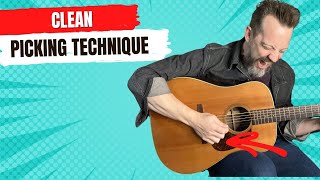
Aaron Jaxon teaches five flatpicking exercises to build speed and accuracy. They range from a simple string-skipping G-chord pattern to a complex six-string tongue-twister from Trey Hensley. He emphasizes slow practice and gradual tempo increases, with tabs provided in the description.
Chapters
Hey there, it's Aaron Jaxon coming to you with 5 really killer flatpicking exercises that are great for developing your picking technique, your articulation, your accuracy, and also your speed. So these are some ideas that I try to practice every single day, and I just kind of wanted to give these to you here in one video. I've done a few other videos on this channel giving you a bunch of different picking exercises. You can check those out here, and I'll link to them down in the video description. But for this one, I kind of wanted to just distill down my 5 favorite ones that I try to practice every single day. And remember, you can get the tabs for this lesson down in the video description and in the top pinned comment. So, all right, without further ado, let's get into the first one here. So this exercise conceptually is very simple. However, the execution of it is challenging. Just make a G chord. That's all we're gonna do. And then we're gonna pick down and up on the 6th string, and then we're gonna skip a string and do down and up on the 4th. We'll come back and do down and up on the 5th.
We'll do down and up on the 3rd, down and up on the 4th, down and up on the 2nd, down and up on the 3rd, and down and up on the 1st.
So you should see the pattern emerging there. It's just Okay, so we're picking each string twice, but we're skipping a string as we go from the 6th to the 1st string there. And then we're going to do the exact same thing in reverse. We're going to hit the 1st string again, down and up on the 1st string, skip the 2nd, go to the 3rd, and then we'll go to the 2nd now, down and up to the 4th, down and up.
To the 3rd down and up, to the 5th down and up, 4th down and up, 6th down and up.
Okay, so again, just the little descending part on that.
Okay, so that whole—
this kind of first example here. Okay, so So that's a very, again, conceptually simple idea. But I don't really care if you're a beginner, an intermediate, or an advanced player. You can absolutely use that exercise. If you need to play it really slow and just— that's fine. If you want to speed it up a little bit, you know, or if you kind of want to get a little crazy and you know, add a little bit more speed to that, you can do that. But I love that exercise. I practice it every single day, and it's one of those where after you learn it and get it down, you can completely practice that while you're, you know, watching TV, listening to a podcast. I've listened to a lot of Joe Rogan while practicing picking exercises. I mean, that amongst, you know, a ton of other podcasts there. But the point is, once you get that idea down, you can just put in the reps. And if your mind is occupied somewhere else, that's fine, you'll still get the benefits of practicing that. So anyway, I love that little exercise. Let's go into example 2 here. Okay, so this one is also familiar. I've shared this a few times on this channel, but I really do love this little crosspicking exercise. It kind of has a banjo roll feel to it. Now, at first it might seem a little complicated, but I promise it's not. All we're gonna do is down on the 4th string, up on the 3rd, down on the 2nd, up on the 4th, down on the 3rd, up on the 2nd. That's the first part to get here.
All right, so down the 4th, up on the 3rd, down on the 2nd, up on the 4th, down on the 3rd, up on the 2nd.
So that little— that part right there is really challenging. Okay, so again, what we're going to do: down, down on the 4th, up on the 3rd, down on the second, up on the fourth, down on the third, up on the second. Okay, that's the first part of this exercise to get down.
Down on the fourth, up on the second—
I'm sorry, down on the fourth, up on the third, down on the second, up on the fourth, down on the third, up on the second.
And then do that pattern twice.
We'll do— okay.
And then to end this little pattern, so after we've done that twice, we'll do down on the 4th, up on the 3rd, down on the 2nd, up on the 3rd. So we'll end it with—
okay, so that whole pattern there, I'll play that again.
Okay, again, takes a little time to get down, but once you get it down, um, and you kind of, um, you know, get a little fluidity happening with that, you'll see it kind of has a little— okay, has kind of a David Greer thing to it, you know. You know, David's just the master of that stuff. But anyway, that's another fantastic little picking exercise, a little crosspicking exercise. Again, the whole pattern there.
Okay.
Take that as slow as you need to. Use it to build a little bit of speed if you want to, however, um, however you need to use that. But that's another great, great, great little flatpicking exercise that I practice every single day. All right, let's go into example 3. Alright, so this one's a lot of fun. This is a great one for your fretting hand and for your picking hand. So what we're gonna do on this is— there's one little pattern we'll do, and that we're just— we're gonna do 1st fret on the 6th string, 2nd fret on the 5th, 3rd fret on the 4th, 4th fret on the 3rd.
And we're just picking down, up, down, up.
Sounds terrible, but— and then we're just gonna move that across the strings.
We'll do—
and then we'll come over to the 5th, 4th, 3rd, and 2nd strings, do the same thing. And then we'll come over to the 4th, 3rd, 2nd, and 1st strings, do the same thing. Okay, so we've got— and then what I want you to do right here with your pinky. Move it up to the 5th fret, and we're gonna kind of do— we're gonna do the opposite, kind of in reverse here.
We'll do—
okay, and then again, that's just— that's just down, up, down. Let's see, we'll try that again.
Down, up, down, up, down, up, down, up, down, up, down, up.
Okay, and then we'll move it up another fret and kind of do the same thing this time, and then move that pinky finger up a fret. Whoops.
We'll do—
and then I'm ending on the 5th fret right there, but if you feel so inclined, you can move that as high up on the guitar neck as you want. I'm just kind of moving up one fret at a time. You can keep going. Okay, so this is one that I've only— I've kind of recently started practicing, but I like it a lot because again, it's, um, really what you're doing is straight cross picking through that, but we're also doing a bunch of fretting there, um, with some pretty wide stretches, especially um, when we're down here on the lower frets of the guitar. So again, take that one as slow as you need to, and that's another great picking and fretting exercise to use in your daily practice routine. Let's go into Example 4 here. Okay, so this one is similar to the first one, but with this one we're kind of doing the string skipping thing across a bar chord. I got this straight from John Petrucci's Rock Discipline. Um, you know, I wore that little DVD out, and I think I had it on VHS too, and he just has a bunch of great exercises in there. You know, he teaches this stuff on electric for kind of rock and metal players, but it's equally valuable and valid and useful for bluegrass players. And all we're gonna do, just kind of take this little kind of— it's an A bar chord, but it's, if you know, familiar with the CAGED system, this is like your E shape.
And we're just gonna do And that's just down and up on the 6th, down and up on the 4th, down and up on the 5th, down and up on the 3rd, down and up on the 4th, down and up on the 2nd, down and up on the 3rd, down and up on the 5th fret of the 1st string.
And then we'll come up here. A great thing to do with this exercise is to take that little bar chord and just kind of move it around a little bit. You could play it like, um, you know, there in A, move it, uh, move it up to the 8th fret and like do it at a C.
You can move it down to the 3rd fret, do it at a G.
And then maybe move it up to the 7th fret, do it at B. You can just kind of move that around a little bit. But again, similar to the first idea there, we're doing alternate picking, but we're skipping a string, which is really, really, really going to develop the accuracy in your picking hand, which translates to clean picking. That's what, you know, when we're developing accuracy Accuracy equals clean picking, okay? Whenever we're playing some of these bluegrass lead lines, you know, we want them nice and clean. We don't want—
we don't want that.
We don't want that. We want nice, clean and developing your picking hand accuracy will translate to clean picking. All right, so I've got one more picking exercise that I want to share with you here, and that'll sound like this. Okay, so let me cite my sources for sure. This is from Trey Hensley. Um, there's a, a, um, kind of a little workshop YouTube lesson that he did, I think with reverb.com, where he shows a bunch of great flatpicking stuff. But this is one of the exercises that he says that he likes to practice every single day, and it's just a great little exercise. Um, I was, I was watching the video and I, and I saw him doing the exercise and I understood what he was doing conceptually, um, but it wasn't until a couple of days later that I sat down and tried it where I was like, oh, oh, oh, oh, oh, it's like a, like a flatpicking tongue twister here. But, um, here's what we're doing. It's like the ultimate crosspicking exercise.
Make a G chord and we'll do, uh, down on the 6th, up on the 5th, down on the 4th. Okay, so we'll do down on the 6th, up on the 5th, down on the 4th, up on the 5th, down on the 4th, up on the 3rd, down on the 4th, up on the 3rd, down on the 2nd, up on the 3rd, down on the second, up on the first.
So again, that's—
and then when we're coming down, we'll hit that first string again with a down and do down, up, down, up, down, up, down, up, down, up, down. So you can see the pattern emerging pretty quick. But that is a— that is very challenging. Like I said, it's like a flatpicking tongue twister, and, and it definitely takes a while to develop. But once you do, you know, it'll really kind of whip your picking hand into shape. One more time.
Okay.
So there's another great one. And again, you know, um, credit and shout out to the great Trey Hensley for that one. Okay, so there are 5 great little picking exercises that you can use in your practice routine, again, to develop your picking technique, your accuracy, your clean picking, and eventually translate that into speed and all of that other good stuff. So remember, you can get the tabs for this lesson down in the video description and in the top pinned comment. As always, thank you for hanging out today, and I'll see you next time.






