Simple Exercises For Powerful Flatpicking!-(pt.1 of 3)
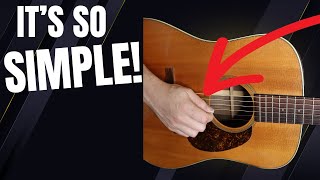
Aaron Jaxon teaches the foundation of bluegrass lead guitar: alternate picking 16th-note runs with a down-up-down-up stroke pattern. He breaks down the counting method (1 e and a), walks through five open-string exercises, and explains why bluegrass leads are always 16th notes underneath, even when they sound faster or slower. Daily practice with a metronome will build the timing and muscle memory you need.
Chapters
Today I'm going to be showing you the foundational technique that all bluegrass lead guitar is based around. This is the thing that I see most students of this style skipping over, and if you skip over this stuff, your playing is really going to suffer. But if you really get this stuff down and you master it and you understand it, you're going to make tremendous strides in your playing, I promise you. Now, this is normally the part of the video where I jump in to some kind of flashy little performance part to show you what I'm going to be teaching you today, But I'm not going to be doing that because I'm not going to be showing that to you today. What I'm going to be showing you are some simple exercises and some simple ideas that really drive the fundamentals of this style home and are going to get you a rock-solid bluegrass flatpicking foundation. So this video is going to be part 1 of a 3-part series that I'm doing on foundational bluegrass lead guitar technique. You can get the tabs for this, and not only the tabs, I've also got a couple of other things. I've got some backing tracks and I've even got a little graphic that I'm going to including in this, and you'll get that down in the video description and in the top pinned comment. So without further ado, let's go into part 1 of this lesson. Okay, so alternate picking 16th notes. So what we're gonna do on this part here, we're gonna kind of kill two birds with one stone because we're gonna set the foundation with our technique and our timing. So in bluegrass, technique and timing are not really separate things. Think of it almost as like two sides of one coin. They play into each other, and in order to get a good grip on your technique, you've also got to get a good grip on your timing. So make no mistake about it, the foundational bluegrass lead guitar skill is alternate picking 16th notes. Let me say that one more time: the foundational bluegrass lead guitar skill is alternate picking 16th notes. Okay, now I know a lot of people tab bluegrass leads out as 8th notes. That's fine, but again, when we're talking about the music and where these notes fall and where these leads fall rhythmically in the music, it is as 16th notes. It is not as eighth notes, period. These are 16th note lead ideas that we play. When we're playing fiddle tunes, those are meant to be played as 16th notes. When we're playing lead breaks to vocal songs, those are primarily played as 16th notes. Now people will ask me, they'll say, Aaron, does that mean we're never gonna play eighth notes or quarter notes in bluegrass lead? Not at all. Of course we'll play those, but they're mostly played as 16th notes. And if you can get a good grip on alternate picking 16th notes, whenever you come across a passage of eighth notes or quarter notes or half notes or whole notes, you'll be over-prepared to execute those ideas in an efficient manner. Okay, so let me illustrate alternate picking as 16th notes here. Okay, so I've got my little metronome clicking at 50 beats a minute. Okay, so 16th notes at this tempo, or at any tempo, are going to be 4 notes per beat. Okay, it'll go like this: 1, 2, 3, 4.
We'll do 1 and a 2 and a 3 and a 4 and a 1 and a 2 and 3 and a 4 and a 1 and a 2 and a 3 and a 4 and a 1 and a 2 and a 3 and a 4 and a—
okay, so I may have been getting a little ahead of it in some places right there. Um, that's actually a really challenging thing to do. The big picture idea there is that we play 4 notes per beat, okay? And we count that like 1 and a 2 and a 3, e and, uh, 4, e and, uh. Which, when you're counting that out loud, it feels ridiculous, it sounds ridiculous, and you're like, gosh, I hope no one hears me saying this. It's fine though, because that's how we're going to count these 16th notes as we play those. Okay, so there's that. There's kind of the timing part of that. But now let's talk about the technique part of that. So we're going to do alternate picking on that, and alternate picking is picking down and up. But even more more importantly than that, you want your downstrokes falling on certain beats and upstrokes falling on certain beats. We'll do a downstroke on beat 1, we'll do up on E, we'll do down on and, up on, uh. All right, so again, down on 1, up on E, down on and, up on, uh. Okay, that's it. That is alternate picking.
1, e and, uh, 2, e and, uh, 3, e and, uh, 4, e and, uh.
Okay, and that is alternate picking. That is our alternate picking technique, and we'll stay consistent with that. Now inevitably, people love to be like, but Aaron, what about economy picking? Or what about down-down-up picking? Or what about places where we do 2 downstrokes in a row and all that kind of stuff. They'll bring that stuff up, and we do this. You'll hear the greats of this style like Clarence White and Tony Rice, and even before them, like George Shuffler, will do like, you know, cross picking. Like, that's great, but that is the exception to the rule. When we're getting this stuff down, we want to focus on what we're going to be doing most of the time. We want to focus on the most important things, and the most important things is alternate picking 16th notes. Now I've included a little graphic here that I'm going to throw up on the screen right now, okay? And it just illustrates what I'm talking about. We want downstrokes on 1, up on E, down on and, up on up, okay? So I've included that down in the email with the tabs and the backing tracks and all that kind of good stuff. So take that, download it, print it out, frame it. But I want you to burn that idea into your brain because it is the foundational technique of this style. So I want to give you 5 simple open string exercises here to really hammer home your alternate picking and your alternate picking at 16th notes. So example 1 will be this.
We want 1, e and, uh, 2, e and, uh, 3, e and, uh, 4, e and, uh, 1, e and, uh, 2, e and, uh, 3, e and, uh, 4, e and, uh.
Okay, and that's just alternate picking on our open 3rd string there. Okay, and our next exercise will go like this.
1, 2, 3, 4. And 1, 2, 3, 4.
Okay, uh, 3rd exercise will go like this.
We'll do 1, 2, 3, 4.
Okay, example 4 here, we'll do 1 and 2 and 3 and 4 and. All right, and then example 5, we're gonna do like a full-on cross picking pattern here, and we'll do 1 and 2 and 3 and 4 and. Okay, so real quick, let's talk, let's talk about tone here. So when we're talking about tone, everybody wants to talk about gear. Everybody wants to talk about the, the, the guitar and the strings and the pick and all that other kind of good stuff. And people also love to talk and talk and talk and talk about hand positioning and pick slanting and escape motions and rest strokes and all of this other stuff. Oh my gosh. Um, which is fine, I'm not knocking anybody that teaches that, but the thing about it is with the hand positioning, you have to find what works for you. We're all wired a little bit differently. You have to figure out what works for you. But once you do that, you want to minimize the tension in your picking hand, okay? You don't want to have a whole bunch of tension in your hand and in your shoulders and in your body. You want to relax, get that smooth sound. And then from there, um, now this is important, like your pick position, um, you know, relative to the bridge into the sound hole. I like to hold my pick kind of right at— right where the sound hole starts. I find if I go up into the sound hole, it, it it's okay, but it just doesn't quite have the bite that I like for it to have. You know, it just doesn't quite have the edge. But if I go too back, like toward the bridge, it's too harsh. So I like it right about where the sound hole starts. So that's a great place to keep your pick whenever you're playing this stuff. And then with all of these exercises, so you want to play these at 16th notes and you want to practice them in time. One other thing that you want to make sure that you're doing is we don't want a harsh staccato sound. We don't want—
we don't want that.
We want this as smooth. We want it like butter. Nice and smooth there. So what I'm gonna do now is I'm gonna play these simple little picking exercises along with two of my favorite tools to practice my timing with. Now earlier you heard me play some of the stuff with the metronome. That's actually not my favorite tool to practice with. I like a train beat backing track and I like the Strum Machine. Okay, so real quick, let me play those five exercises along with a train beat backing track. Okay, so now I'm gonna do the exact same thing, but I'm gonna do it along with the Strum Machine this time. Okay, so I just love using those to practice my technique and my timing with this stuff. So just to kind of review real quick, remember the foundational skill of this style is alternate picking 16th notes. You have got to get familiar with playing 4 notes per beat and having your downstrokes fall on 1 and, and, and your upstrokes falling on E. E and, uh, from there you want to practice your timing. My two favorite tools to use are the TrainBeat backing track and the Strum Machine. And from there, remember what I was saying about tone. Keep your pick kind of right about where the sound hole starts, not too far back here next to the bridge and not too far up into the sound hole. And keep that smooth sound while you're practicing these. Not this. So as simple as these little exercises are, I promise you that spending a little bit of time every single day working on this stuff is going to be tremendously beneficial to your playing. Understanding this foundational technique of alternate picking 16th notes is going to be a tremendous value as you go through and you start jumping in to more advanced bluegrass lead guitar material. Okay, so I want to thank you so much for hanging out today. This stuff is so, so, so important, and I see so many people skipping over this stuff whenever they're learning this style. So get this stuff down and it's going to be of tremendous value as you're learning this style of guitar playing. Remember that you can get the tabs, backing tracks, and that little alternate picking graphic down in the video description and in the top pinned comment. Thanks for hanging out and I'll see you next time.






