The Best Flatpicking Exercises (for speed and accuracy)
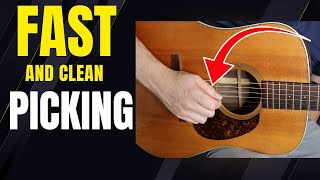
Aaron Jaxon demonstrates three flatpicking exercises: a cross-picking drill, a David Greer banjo-roll pattern, and a Petrucci-style arpeggio with doubled notes. He recommends looping these for 30 to 60 minutes and doing about two hours of deliberate practice six days a week. Tabs are available in the description.
Chapters
If you've been looking for some technique drills to really whip your flatpicking chops into shape, today I'm going to show you 3 flatpicking exercises that I practice every single day. All right, stick around. Hey there, it is Aaron Jaxon coming to you today, and I want to show you my 3 favorite flatpicking exercises that I practice every single day to keep my picking hand in really good shape. I love practicing these exercises because they do a great job of keeping my picking hand in shape, but it also makes the other material that I'm practicing in the context of this style of guitar guitar playing become a lot easier and a lot more doable whenever I'm practicing these ideas on a consistent basis. So full disclaimer, these are not beginner flatpicking exercises. These are for intermediate and advanced players, and it is something that I use in my practice routine every single day. However, if you would like a more beginner-based approach to some really great picking exercises, check out this video right here, and I'll also link to it down in the video description. As is always the case with my lessons, you can get the tabs for this down in the video description and in the top pinned comment. All right, let's jump in. Okay, so this first exercise is probably my favorite because it's like the ultimate picking and fretting exercise all in one drill. So it's gonna go like this. Let me slow it down here for you and we'll do One more time, we'll do— okay, so the, the idea around this exercise is pretty simple, although the execution is really challenging. And all we're going to do here is we're going to do the first fret on the sixth string 2nd fret of the 5th, 3rd fret of the 4th, 4th fret of the 3rd. Okay, and then we're just doing straight alternate picking through that. We're doing down on the 6th, up on the 5th, down on the 4th, up on the 3rd. And all we're doing after that is going over to the 5th, 4th, 3rd, and 2nd strings and doing the same thing with regards to the frets. And then same deal, we're moving over to the 4th, 3rd, 2nd, and 1st strings and doing the same thing with the frets again. Okay, so we're doing And then once we get here to this last note, this 4th fret of the 1st string, let's move it up to the 5th fret of the 1st string, and then we're gonna really kind of come down in reverse.
We're gonna do—
okay, so we're gonna do 5th fret of the 1st, 4th fret of the 2nd, 3rd fret of the 3rd, and 2nd fret of the 4th, okay? And then— and that's on the 1st, 2nd, 3rd, and 4th strings. And we're picking down, up, down, up. And then we're just again going to come over to the 2nd, 3rd, uh, 4th, and 5th strings and do the same thing with regard to the frets. And then come over to the 3rd, 4th, 5th, and 6th strings, and again, same deal with regards to the frets. Okay, so again, that first little— this kind of basic pattern to this exercise. Okay, and what we can do from here is you can keep going up on the neck as much as you want to. You can come up to the next fret and then— and you can keep going up on the neck as much as you as much as you want to. But what's so great about this is it gives your left hand a killer fretting exercise because, um, you know, we're down here on these bottom, uh, frets which are wide. And also too, you're kind of moving up a fret as you're going here and then kind of coming back down. So your left hand is getting a heck of a workout, but your picking hand is doing the same thing because, um, we're cross-picking the whole time here.
Um, what—
we're never playing, um, any string more than once. Every time we pick a string, we go to the next adjacent string, and we do alternate picking through that. So it's cross picking through the whole thing. Whoops, you see that? So it's, so it's a really great fretting hand and picking hand exercise, and I try and practice this every day. It's a bit of a, uh, it's like a tongue twister for flat picking if you're not used to playing this exercise. It'll take you a couple of days to get comfortable with it, but again, this isn't necessarily a speed building exercise, you know, although sometimes it is fun to just kind of, you know, push the speed limit a little bit there. But mostly what this is is an accuracy exercise. You just want each of those notes ringing out nice and clean when you're playing this. So anyway, great little exercise. I practice this every single day. It sounds terrible, but man, it is really great for your techniques. Let's go into the next exercise here. So speaking of great crosspicking exercises, this is probably my favorite. It's very David Greer inspired. You'll hear him use patterns like this all the time. But all I'm doing here, um, is, um, we want to do 5th fret of the 4th string, open 3rd string, 2nd fret of the 2nd string. I've shared this exercise on this channel plenty of times, but I want to share it again here because I just love it. I practice it every day, and I've seen so many of my students get great results from practicing this. And what we're going to do, uh, we'll do So think, think of this pattern like this. We're gonna do down on the 4th, up on the 3rd, down on the 2nd, and then we're gonna come back and we're gonna do up on the 4th, down on the 3rd, up on the 2nd. So it's that 4th string, 3rd string, 2nd string, and we just— we play that twice, okay? But the first time that we go through that, we'll do down on the 4th, up on the 3rd, down on the 2nd. But we're gonna come back now and do up on the 4th, down on the 3rd, up on the 2nd. So that's the first part of this pattern. Okay, so again, that's down, up, down, up, down, up. Do that twice.
Okay, whoops.
And after we we've done that twice. Let's do down on the 4th, up on the 3rd, down on the 2nd, and come back and do up on the 3rd. All right, so that last little bit. Okay, so the whole pattern there will do— one more time. Okay, so I love this little exercise because it gives us a little bit of a banjo roll feel, but especially too because, you know, down on the 4th, up on the 3rd, down on the 2nd, and then we're after this where we have to jump back up and do that up on the 4th string is really challenging. So that's just a great little exercise. I practice it every single day. I like the way it sounds too. Okay, now I, I like this, like where my left hand is here where we're doing, uh, 5th fret of the 4th, uh, open 3rd string and the 3rd fret on the 2nd. I just like the way that sounds, that little droning banjo thing. But here's, here's what you you can do, um, and, and you don't have to practice it exactly like this, but, um, there's a bunch of these little patterns on the 4th, 3rd, and 2nd strings that you can play this picking pattern around and that work. Just like, if you get bored with just this, so here, here's a couple of other places you can do Okay, now you don't have— you don't have to memorize that whole sequence if you don't want to, but what we're doing there, it's, um, it's essentially— it's G Mixolydian in, in sixths. Okay, and it's just that major scale with the flat 7. We're doing that in sixths, but since we're in G, we're leaving that third string open, and it just gives us this nice little— so there's a bunch of different shapes that you can practice that picking exercise around if you get bored with just this one down here. But wherever you choose to play it, it's a great, great little workout for your picking hand. But I really like it again as a right hand or just a picking hand exercise. It's great for that, and it has a really cool ring to it.
All right, let's go into the next exercise.
So this is another great one. So I got this from John Petrucci's classic— I think it originally came out on VHS— instructional tape called Rock Discipline. Basically every, um, rock shredder or aspiring rock shredder um, has, has picked this up, has watched it, has learned these exercises. Um, and you know, even though he's not a bluegrass player per se, John Petrucci is a flatpicker extraordinaire. He has a terrifying, um, picking hand there. So there's a lot that we bluegrassers can learn from a guy like John Petrucci. And, um, so this basic exercise here is essentially what I'm doing is I'm taking this kind of A bar chord And we're, we're going to arpeggiate that and pick each note twice. Okay, so that's good. I'll play it slower here for you. The basic arpeggio that we're doing there is, um, Okay, but what we're doing is I'm playing each note twice and we're skipping a string through that. Okay, and so where this is out of a, um like an A bar chord shape. You can move this around and play it anywhere. If you want to, you know, move it up and play it in C instead of A, or if you want to go down here and do it in F#, you can do that too. Now another cool thing about this is I like to do it, um, you know, just playing it 2 notes, um, at a time and then skipping those strings. What's so great about that is it forces your picking hand to go from the, from the low string here up up to the high and back down. So you cannot have a whole lot of tension in your picking hand, or you can't have excess tension in your picking hand and execute this idea. So it's great for that. But here's a couple of other things that you can do with this exercise if you want to. Um, you don't have to play each note twice. You could play each note once. Okay, great work out there. Or if you want, you could play each note 3 times. And if you want to go even further, you could play each note 4 times. Okay, the options are endless. And if you want to take it even further, instead of starting all of those with a downstroke, you could start them all with an upstroke. So you can expand on this as much as you want to, but the basic idea that I like is just taking that basic arpeggio and playing each note twice with alternate picking. Again, very, very challenging to play, um, on guitar, especially on acoustic, and get every note clean, but it's a great exercise for your picking hand. Now real quick here, adjacent to that idea, if you want something that's a little bit more appropriate for bluegrass here, just take a G chord and do the exact same thing. That's a great thing to do too. It has a little bit more of a bluegrass feel to it. And then everything that I said earlier about this other one, you could do down here. You can play each of those one at a time. You can do it 3, you can do it 4 times, and if you really want to get adventurous, start everything with an upstroke instead of a downstroke there. Okay, so I'm gonna go ahead and wrap with that right there. Those are just 3 of my very favorite picking exercises that I practice every single day. But I wanted to leave you with this, just a bigger picture idea of what using picking exercises are all about here. So we don't want to just get great at playing picking exercises because we don't want to, you know, you don't want to show up to a jam and be like You know what I'm saying? Unless you're deliberately throwing in a kind of crazy sounding idea, um, but that, that's not the point of practicing these. We practice these because these are like deliberately technically difficult ideas that make the music that we're working on easier to play and easier to execute. So here's where I'm at in my life right now. I try to get 2 hours of deliberate practice a day, 6 days a week. I don't like going for multiple days without practicing. And so what I try to do is I take these 3 exercises for the first 45 minutes, maybe an hour, and I just go in between these 3 exercises here, you know.
And then once I've got that, maybe—
and I just kind of loop between those exercises. Again, I'll do that for about 45 minutes to an hour. Sometimes if I have a little less time, I'll just do it for half an hour. And typically though, since I've played these exercises so much, I'll let myself listen to like an audiobook or a podcast while I'm doing that because it does get monotonous. But I know these ideas really, really, really well. And when I'm drilling, I'm just drilling muscle memory, I'm drilling motor skills, and I'm letting my hands just kind of get warmed up, and I'm oiling the machinery there. And then after that, for the next, you know, half hour, 45 minutes, or hour, depending on how much time that I've got, then I really dig in and I work on the music that I'm working on, the tunes that I'm working on, the licks, the ideas, the speed building stuff, all of that good stuff. And I typically find that however long that I have to practice I don't want to do more than half of that working on technique drills and technique exercises because then I'm just getting good at playing, you know, picking exercises, which is not the point of doing these. We do these to make the music that we're working on sound better. So you can take with that what you will. You may only want to spend 20% of your time working on these ideas or these exercises, but for me, I try not to spend more than 50% of my practice time I'm doing technique drills, and then I want to make sure that I'm focusing on the music. However, these 3 are my favorite. I love practicing these, and I find that they're really effective, and I find that my students have gotten great results from practicing these as well. I want to thank you so much for hanging out. Again, you get the tabs in the video description and in the top pinned comment. Check out some of these other videos right here for a whole lot more picking exercises that will really help get your flat picking chops into really good shape. As always, thank you for hanging out, and I'll see you next time.






