Wanna Build Flatpicking Speed? Everything You Need To Know Is In This Video
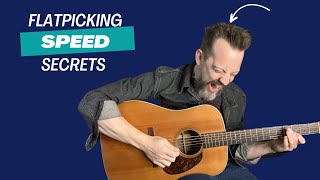
This is a YouTube video titled "Wanna Build Flatpicking Speed? Everything You Need To Know Is In This Video" created in July 2025. The content features Taron Jackson sharing detailed advice and personal experiences on building speed in bluegrass lead guitar playing. The video covers practice techniques, timing, repetition, relaxation, and pushing oneself to improve guitar chops, with references to other instructional videos and practice tools. It is a solo instructional talk focused on guitar skill development.
Sam. I want to be able to shred and blow people's minds. I want to play 32nd, 64th, 120th, 16th notes at 250 beats a minute. I want to do that and blow people's minds. Yeah. So I've had way too much coffee this morning. Hey there. Hey there. Taron Jackson coming to you today with a video on some ideas around building speed in your bluegrass lead guitar playing. And, you know, I'm going to be using bluegrass as the main kind of niche genre here, but honestly, these ideas will work for really any style that you're wanting to build speed in. So I always try to get this out of the way. I do not claim to be the fastest gun in the world west. I sometimes wish the Internet wanted to hear me play slow blues, but instead it does not and it likes to hear me play fast grass. I wanted to throw this out here because this is the most common question that I get from people is, you know, how to build speed, how to build chops and all of that kind of stuff. So I want to share with you some. These are just some ideas that have worked for me and I want to share them with you. So that's kind of the backdrop of this. This is just my take on this stuff, but it has allowed me to develop a certain level of chops and, you know, to get to the point where, you know, a lot of people are asking me about this. So that's what this video is. This video is not. Is. I'm not going to be showing you a whole lot of like what to play in this video, but what I am going to be doing is referencing several of the over 50 long form guitar lesson videos that I have on this channel. So you'll see the videos pop up on the screen as I reference them. I've also got them linked down in the video description as well. And another thing that this video is not. And I know this is probably going to disappoint some people, but I'm just. I'm trying to be as real as I can here with y'. All. I'm not going to be talking a whole lot about like how to hold the pick. Oh my gosh. I get that all the time from people. I understand it. But I think. I think people online over emphasize that stuff. It's not that it's not important and it's not that it can't affect your speed, but mostly what I get when people are asking me that people are wanting a shortcut. They are wanting. It's like, what's the magic way that bluegrass players hold the pick? Because that's where the speed and the chops and all of that stuff is going to be developed. And there's plenty of people online that do deep dives into that stuff. Go check them out. But my opinion on this stuff is that people over emphasize that because it's easier to want a secret way to hold the pick than it is to really put in the work on this stuff. So I'm not going to be talking a whole lot about that, but there are a couple of places where I'll reference it a little bit. Also, I've got a little PDF for you where I've got these ideas typed out and a couple of other sort of adjacent ideas to this. If you'd like to get your own copy and maybe print it out and hang it up in your room and look at it while practicing. But you can get that down in the video description as well. Okay, so idea number one is just make sure that whatever you're wanting to play fast, that you can first play cleanly and in time. I mean, this is pretty common sense here, but a lot of times people will skip over this. So you just want to make sure that when you're playing that the notes are nice and full and clean, and they're really kind of coming out of your instrument in a nice full and clean way. And usually the way to do that is by. Is by playing slow. But also, too, you want to work on your timing. Now, the first video I'm going to reference is this one right here. And what I talk about in that is one of my favorite tools to use for developing your timing and, you know, being able to play clean and in time. And that is the train beat backing track. I love playing along with a train beat, so that one's great. Also, the strum machine is amazing. I'm sure most of y', all, you know, are aware of the strum machine, and you don't. If you don't have a subscription to it, please get it. It's an amazing tool to practice with. It's fun, and it makes practicing your timing really easy. What a lot of people do is they kind of get stuck here and. And they're like, you know, I can play Salt Creek at 80 beats a minute. Then they're practicing that with the metronome, just. And, you know, that's a great place to be. You want to be able to play that tune, you know, clean and in time, along with the metro. And that's Great. But honestly, it's kind of freaking boring. It just is. A lot of times practicing along with just that click is boring and it's uninspiring. Fortunately, we have better technology and we have more tools at our disposal. And my two favorites are that train Beat backing track and the Strum Machine app is also great as well. Playing along with music is great too. I highly recommend it. But a lot of times I know this has been the case with me and also with some of my students. A lot of times you'll be playing along with the music and you're like focused in on that and you think you're playing in time, but you're not. Not actually. So again, train Beat, Strum machine, those are great, great, great things that make it easy to play in time and that make it a whole lot more fun. So that's again, that's idea number one. Just make sure that whatever you want to play fast, you can first play cleanly and in time. So for idea number two, here have some type of technique drill or exercise that you practice every day. So I have done several videos on this ch giving you a bunch of really great technical exercises to practice for your picking and your fretting hand. So I've heard some people in this space kind of poo poo the idea of doing technique drills in favor of just, you know, hey, just you know, play you know, fiddle tunes and that kind of stuff all well and good. But me personally, I like having a couple of like deliberately difficult things that you practice that make the other music that you're trying to play a little bit easier. You know, whether it's, you know, some of these like John Petrucci rock discipline ideas where we're doing stuff like, you know, sounds terrible but is great for technique or you know, some of this cross picking stuff like a, that stuff's great to practice or you know, that kind of stuff is really great to practice. Again, you can reference these videos here to get a bunch of technique drills that you can start using in your practice routine. I don't recommend spending all of your time on technique drills though because you know, we're ultimately doing this to play music and in this case, you know, we're playing bluegrass. But having a couple of those ideas that are deliberately difficult that feels force you to oil the machinery of your technique I think will make playing fast easier. Alright, so let's go into idea number three here. Repetition, repetition. Find a couple of licks or phrases that you would like to be able to play fast and just Do a bunch of repetition on them. Like a bunch. This is where we want to put together. That whole repetition is the mother of skill truism. And now for this, check out this video right here where I give you a couple of really great bluegrass licks that are good for doing just a bunch of repetition on that. I just don't hear a lot of people in the guitar playing space anymore really like blowing the horn for this idea. But I mean, honestly, if you'll take like a couple of licks that you'd like to be able to play fast, you know, something like, that's a good one. Or it could even be something as simple, you know, just like the Little Tony Rise, something like that. But then just commit to practice, to play in that 50, 100, 200 times a day. It actually doesn't take as much time as you might think whenever I'm throwing those kind of numbers out there. But I promise you, if you will just commit to doing that on a day daily basis, you will build speed over time. It's going to happen. But it's got to be, or it needs to be some phrases that you would use in your bluegrass lead playing. And you've got to do a bunch of repetition on them on a daily basis. So let's jump into idea number four here. And that is push yourself. Okay, so definitely check out this video right here if you haven't had the chance to yet. But that is where I show you like a full length lick that goes like a. But then I show you how you can shorten that lick a little bit doing. And you can shorten it even more just doing. But each time you do that, you kick your metronome or drum track up a little bit and it starts to acclimate you to playing at tempos that are faster than you're normally used to playing at. Another great thing to do is maybe take a fiddle tune that you're working like Big Mine. Let's say you can play that at 100 beats per minute. You can play that whole tune at 100 beats per minute, which is great. But then maybe just take a little bit of the A part of Big Mons and kick your metronome or drum track or strum machine up 5, maybe 10 beats per minute and just do the A part. Okay. You can even just do like the first half of the A part and then just kick that tempo up a little bit. And now you're forcing your hands to play at tempos that are a little bit faster than you're used to playing that. Now, I don't recommend spending all of your practice time there. You don't maybe like 10% of it. But if you'll push yourself and again, do that on a daily basis, and you'll do that over time, your baseline for how fast you can play is going to rise. So that's a great thing to practice. And I find a lot of people leave this one out when it comes to building speed. They forget to actually push themselves and to actually practice playing at tempos that are a little bit faster, faster than they're used to playing it. So, again, that's a great thing to incorporate into your practice routine is pushing yourself. Okay, number five. And this is a big one. Relax, relax. This is one of the most important things here, and it's something that I still struggle with. And I think a lot of people. I've heard Eric Johnson talk about how he struggles with this. But now this brings me around to the picking hand here. And, guys, you have to find what works for you with the picking hand. Again, whether you, you know, brace a finger or two, or whether, you know, you kind of touch the back of the bridge a little bit, or whether you have your hand just floating, whatever works for you is fine. But you want to bring awareness to the level of tension in your picking hand. You want to make sure you're not tensing up too much. That's kind of what really constricts your motion. However, our body is a system. Our muscles are interconnected. So not only do you need to bring awareness to the tension in your picking hand, you need to bring awareness to the amount of tension in your whole body. For me, when I'm doing this stuff, especially in my shoulders and in my back, okay, I find if I'm hunched over the guitar and I'm tensed up like this, it's just. I find I just need to relax my shoulders, relax my picking hand, and it just makes playing fast a lot easier. Now, that's very challenging to do. I have to practice this every day because in the human animal, anytime that we go to do something that we perceive as difficult, our fight or flight response takes over. And we tend to tense up whenever we're about to do something that is challenging. So it's counterintuitive to relax your body and to, like, relax your hand whenever you're gonna, you know, play something that's fast or challenging. But I promise you, I promise you it'll feel a little weird. But as you get into it, you'll find that it really does make playing fast a lot easier and you'll surprise yourself. I promise you. You'll surprise yourself again. This is something I still struggle with. I have to remind myself every time I'm practicing, every time I'm playing this stuff to just relax. And not only relax the muscles in your picking hand, but your whole body, your shoulders, your back, your legs. Just be relaxed, be relaxed. So I've got one more here, and this is. This is like a little bonus idea here, but is practice ideas 1 through 5 consistently and do that over time. I know I've already said it with a couple of the ideas on here, but that's probably the most important. So again, idea number one, make sure that whatever you want to play fast, you can first play cleanly and in time. Idea number two, have some type of little technique exercise that you practice that's deliberately difficult, that forces you to oil the machinery of your technique. Number three, remember, repetition is the mother of skill. Get you a couple of licks or phrases. You want to be able to play fast and just commit to just doing a lot of repetition on those, like 50 to 100 times a day. Number four, remember, push yourself. Push yourself. You know, take a. Take the. A part of a fiddle tune. You want to play fast and just play it a little bit faster than you're used to. So that's huge. And then number five, relax. Relax the tension in your picking hand in your shoulders. Then that bonus idea number six, just do those every day over time. So that kind of brings me to the end of the video here, but I wanted to leave you with a story that just really illustrates all this. So this was. This was probably about 10 years ago, and I was playing in a bunch of different bands. I was playing in some country bands, but I was also playing in a couple of rock and roll bands that were kind of like blues rock. And I wanted to start incorporating some of these kind of Eric Johnson style, little fast, kind of cascading pentatonic runs into my playing. And so I remember, I think it was at the beginning of the year, this was like 2015 or 2016. I had been spending a bunch of time online watching a bunch of videos about pixel slanting and, you know, how to. How to hold your pick. And then finally I was like, you know what, I'm just going to take a couple of these licks that I want to be able to play and incorporate them into my playing. And I'm just going to play them a bunch. I'm going to play them like 100 200, 300 times a day. And I'm just going to do it every single day. I feel like I'll probably get pretty good at them if I do that. So I had like a couple of technique drills I was practicing, and then I just started taking a couple of these Eric Johnson style ideas, you know, those kinds of things. And I was just playing them, you know, 100, 200, 300 times a day. So I started doing that and I did it like pretty consistently for like four months, four whole months. And then the band I was playing in had a gig at a local venue in town. And man, I thought I was going to get up there and just set that place on fire. And we got up there and honestly I kind of felt like I choked. It wasn't as bad as it seemed while I was playing, but it certainly wasn't great. And I was disappointed because I was like, man, I've been playing these licks for four months. Been doing it every day for four months. And so I was, you know, I was a little down, I was a little butt hurt, but I don't know, something happened and like my inner drill sergeant just kicked over and it was like, dude, get your ass back up and get to work. Just keep practicing. So I just kept practicing and I kept doing it every single day. And then that same band had another gig at the same place. This time it was like, I think like eight months after the original gig. So now a solid year has passed and again, I've been practicing these Eric Johnson style licks a couple hundred times a day, doing some technique exercises. I was practicing it along with music. So a solid year has passed now and, and, and, and we had to gig and I got up there and it was just effortless. It was just effortless. The licks and the ideas just kind of came right out. It wasn't hard for me to do. And I had a bunch of people after the gig coming up to me being like, dude, you're playing is at a whole new level here. And guys, all I did, all I did was. It was those ideas that I was just telling you about. That was it. I was pushing myself, doing a lot of repetition. I was being consistent, I was trying to relax my body. But mostly, mostly I was just consistent with that stuff. And that's why I wanted to share this video here with you today. So again, down in the video description, I've got links to all of the videos that I was referencing for these ideas. And I've also got a little PDF for you down there if you like to get a download on this and again, you can print it out, hang it up in your room and use this again. These are just some ideas that have helped me in my guitar playing and I genuinely hope that they will help you as well. So, as always, thank you for hanging out and I will see you next time.






