DMJ Ep 488 Adam Callinan: Every entreprenuer is struggling right now!
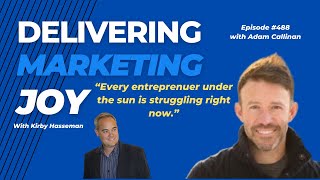
This is a YouTube video titled "DMJ Ep 488 Adam Callinan: Every entrepreneur is struggling right now!" featuring an English-language podcast episode recorded in March 2024. The episode is hosted by Kirby Hosman and features Adam Callinan, an entrepreneur and founder of Pentain, discussing his entrepreneurial journey, challenges of running a business, insights on profitability for early-stage companies, and his experience on Shark Tank. The conversation covers practical advice and personal reflections on entrepreneurship.
Every entrepreneur under the sun is struggling and that's just the reality of being an entrepreneur.
Hey there and welcome to a brand new episode of Delivering Marketing Joy. I'm your host, Kirby Hosman and joining me today is a brand new rock star. So excited to dive in today. He's a true entrepreneur right now. He's the founder at Pentain, an e Commerce focused SaaS company. Before that, he co founded Bottle Keeper, which we're going to dive into a little bit here. Adam Callanan, thank you so much for joining me.
Thanks for having me, Kirby.
Cool, Cool.
So let's start.
Let's start with sort of your journey at Bottle Keeper. You were able to build a company to 8 million in sales with no employees. So that's not something that you hear every day. So what kind of secrets can you share?
Yeah, you know, that was a, obviously it was a little bit of a unique experience. And the, the reality is that the foundation of that business came from the company before that, which was a medical device business that was big and heavy and had people in multiple states and delivery vehicles and warehouses and all this stuff. So exiting that and getting into this new consumer product business with my cousin, I was very, very adamant to that we didn't do that. I didn't want to go and build a big business that I couldn't get away from. The, the intent when I agreed, Matt is my cousin, when we agreed to do this together was that we would not take an opportunity or do a thing in the business that was going to require us to hire people. We would just flat say no to it. I was at that point rather, I would rather not do it. So we put really, really strict guardrails in place that forced us to look at technology and software and automation to build the platforms as opposed to people and payroll to build the platforms.
Wow, that's really interesting. And isn't it funny how, you know, I've heard people say that when entrepreneurs are starting out, they think that the business they're starting is going to be their forever business. And so often that's a, that's not the case and B, that business will build on the skills and how you shape your future businesses.
You know, 100%. It's all part of the story. These are all just chapters in the book.
Yeah, love that. Well, you know, obviously I think one of the things that you see is that we always see the highlight reel. We see the success. They went from garage to Apple. They went, you know, whatever. But the fact is entrepreneurship can be really difficult really hard. You were successful. But what was one part of building Bottle Keeper and that journey that was kind of difficult or challenging?
Yeah, it's a really important question that I really wish got talked about more because you're absolutely right. All you hear is the highlight. Like 0 to 8 million in sales with no employees or investors. And that's all great and it sounds awesome and to be fair, over the course of a decade it was awesome. But you know, the reality is it was phenomenally difficult. I mean the, the company almost failed dozens and dozens of times over the course of that. From the very beginning when our first 3PL provider shipped the wrong product to the wrong people and literally lost half our inventory as like it was our first order, it was our first load of product. I mean we had countless versions of that that are just. I mean they're lessons, they're painful lessons, but as long as you can make it through, there are lessons. I would say the hardest part about operating Bottle Keeper was that it was an extremely cyclical business. So we would have, if you go through the quarters of a year in Q1 would be a super down quarter. Q2 we would do really well because a Father's Day summer, it was a beer, beach boats, pool product. And then Q3 would be down and we would absolutely crush Q4. We would literally do half our revenue for the entire year in the last four weeks leading up to Christmas. So the business would just go through these massive roller coaster swings that are one, they're hard to deal with just as a business with managing inventory and trying to figure out how to do that. But mentally it was, I got into, as operating a successful business, I got into some pretty weird dark places coming out of Christmas where you just have the high of the high of the highs and the mayhem. And then you know, Christmas, two days before Christmas when you basically can't ship the things anymore, it goes completely silent and it just stops. And it's, it mentally is very, it was very, very difficult to deal with. I can tell you. I'm not going to do that one again either.
Yeah, no, that's fair. And I think it's important. Like you said, I think it's an important discussion because I think that what happens is early stage entrepreneurs or entrepreneurs of any level think, well, everybody else is killing it because that's all we're talking about. And I think if it's hard, I must be doing it wrong. And that's not true. It's just, that's part of the journey.
It's just Patently false. I mean, every entrepreneur under the sun is struggling, and that's just the reality of being an entrepreneur. And if you're considering doing that, that's just a thing you have to accept and, and be proactive about putting things in place to help deal with that. I mean, being a founder can be really lonely. So you need to create some structure that, that allows you to not live on an island and make sure that you're taking care of yourself physically and mentally because it's, it's really hard. You know, you, you involve money and money from other people and your own money and all. I mean, enormous amounts of risk for the potential for upside. It's, you know, it can be, can be really difficult.
I appreciate your candor on that, Adam. I, I heard sometime and, and I always, I'm reminded of it during a challenging time that they said that being an entrepreneur is like riding a giant lion. And everybody on the outside is like, oh my God, look at that person riding the line. And the person on the top is like, how did I get the. How did I get on here? And how do I get off without getting eaten?
Yeah.
Um, so I appreciate.
That's a great analogy.
Yeah. All right. So speaking of starting up businesses, why do you think so many early stage companies are not profitable?
Well, I think there are two big reasons. One, the natural default to start a company on a capital raise, I think is. Is a little bit dangerous. Now to be fair, there are some companies that you. I mean, if it's a big expensive thing to start it, it just might not be realistic to bootstrap some early version of that that's very inexpensive to get going. So I'll caveat that. But, but the default in the US Is let's go raise a round, let's go do a friends and family, let's go do a pre seed or a seat or an air. Whatever you want to call the hodgepodge of rounds that are out there now. And I think that that creates a precedent that allows companies to spend a little bit more frivolously than they would if they were tight, financially tight. The other part to that is once you start to experience a little bit of success, and by success I mean revenue, you, things start to click and start to work. The natural tendency is to go and hire. It's to go and open an office, it's to go and add health insurance, it's to go and do these things that I'm not saying are wrong, but they immediately add fixed expense weight onto a business. In a scenario where the operator doesn't understand how they're going to get out from under it from a revenue standpoint, they don't understand the financial metrics in the business well enough to know the amount of revenue they need to drive in order to pay for those things and what marketing efficiency or roas they need to be at in order to pay for those things at that revenue level. So what do they need to be spending on? Advertising dollars. And I mean, it's complicated, but it's really, really important. And that's, that is the number one thing that we see at Pentane constantly is companies that come in that are, you know, they have good businesses, they have good revenue models, they're just overweight on fixed expenses and it's easy to happen. I mean, again, that's. Those are lessons that I've learned the hard way too.
Right? Yeah, totally. All right, this has been great final question for you. You know, I know that's on your bio. I'm sure you get asked about it all the time. But you were on Shark Tank and that's a big claim to fame. So how was that experience and how did it shape the company?
Yeah, it was an amazing experience. I would highly recommend anybody that has the opportunity to do it, regardless of what your fear of the outcome might be. Because the reality is it's incredible free advertising whether or not you do a deal. We were pretty late. I mean, we were already a ten plus million dollar a year business by the time we got on Shark Tank. It took a couple of years to get through the process and we had grown a lot from a million to 8 to over 10. And so we were, and we were profitable. And so our episode, which you don't see, thankfully they edited the vast majority of it out was them beating us up on why we probably didn't need to be there. I mean, Mark Cuban's actual quote which was on the TV is you're either the worst business people in the world or you don't need to be here. Perfect one liner. So, you know, our episode was complete mayhem. It turned out really well. We did a great deal with Mark and Laurie for, for exactly what we had asked for. They edited it in our favor. They treated us really nicely because they can with 50 minutes of taping, I mean, they can do whatever they want. They can make you whatever they want you to make, make you into. So, you know, the outcome was incredible. We were able to attribute over a million dollars in revenue just to the Shark Tank airing within the first week of that airing. And we also got a little bit lucky that it aired right before Christmas, aired like November 30, which for us was massive. But yeah, you know, then it re airs through this today. That was in 2018. It re airs every two months. So we don't. We. The company was acquired in 2021, but the current owner, they get a boost from that every time it shows up on CNBZ forever. That's pretty cool.
That is really cool. Well, Adam, this has been amazing. If somebody wants to learn a little bit more about you, learn about pain Pentane. Where, where can they come?
Yeah, you can go to pentain.com. joy I did have our team set up a special for any listeners that will get you into Pentain for the first 30 days for a dollar. And that'll provide you with some really deep insights on solving that financial operation problem where your revenue and roas needs to be based on your spend and how to get profitable or more profitable if you're already there.
Adam, thank you so much. I really appreciate it. We'll have to do it again sometime. Okay.
That was great. Thanks for having me, Kirby.
You bet. Well, that's going to wrap up this edition of delivering marketing. Joy. We'll see you next time.
More from Adam
Embrace the Suck: Purpose, Resilience & Leading Through Crisis w/ Groundswell CEO Jake Wood
The BottleKeeper Boom and Beyond: The Birth of Pentane with Adam Callinan (Ep.111)