Embrace the Suck: Purpose, Resilience & Leading Through Crisis w/ Groundswell CEO Jake Wood
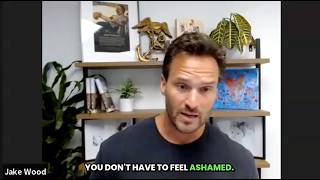
Jake Wood, CEO of Groundswell and founder of Team Rubicon, talks about his path from the Marines to leading nonprofits, his leadership philosophy, and how to build resilience. He shares stories about managing crisis, maintaining culture, and balancing family with running a business.
And sometimes being an entrepreneur, I think this is one of the most important things for us all to understand. It can feel really lonely, right? It can feel like you're on an island, you're isolated. That's why groups like this are so helpful, because you need to talk to folks who can relate. Like the number of times you and I could just sit down and have a conversation and be honest with each other and say, hey, like, my world is melting down. Like, what would you do? You don't have to feel ashamed. You don't have to feel like you're going to get judged, like nobody knows entrepreneurship like another entrepreneur.
Welcome to the Growth Mavericks podcast, where we know that entrepreneurship isn't just about strategy. It's about stamina. It's about disrupting your default and getting comfortable, being uncomfortable so you don't burn out before you break through. I'm your host, Adam Callanan. Let's get to work. Our conversation today is a special one for two reasons, the first of which is because it was actually a live recording that I did with our guest for the Scaling Montana speaker series. Montana is the state in which I live and this is a business organization and so we got to use that, which is great. The second reason is because it's with a very close friend, Jake Wood. And he is an absolute gangster from an operational leadership, just an all around epic guy. Aside from the fact that he's just devilishly handsome and six foot six, he has a crazy background going from playing football in Wisconsin, going into the Marines, becoming a sniper, like probably the biggest, tallest sniper that has ever been, doing a couple of tours coming out of that starting team Rubicon, this incredible nonprofit organization that at this point deploys hundreds of thousands of veterans and volunteers all over the world to disaster zones. He's now chairman of that he know won a Pat Tillman Award, which is an sp. He's featured on the news all the time across every network that you've seen. He's sat in a room with all the living presidents. Just really has an incredible experience base. And you will see through this conversation that he is very well versed in communicating about leadership and operations. He's written books about it, he speaks internationally about it, and there's just so much to be gleaned and learned from how he communicates and more specifically, how he communicates about his experience. So you will notice in the conversation towards the end, there was a Q and A that took place in the Scaling Montana speaker series. I did not include all of it, but I did Want to include about a five minute clip where a guest asked Jake his thoughts on leadership. So there will be toward the end of the podcast, a piece where I come in and sort of explain the question and then we will play that clip before we close up. So sorry for the jumping around, but I, I really enjoyed the answer and so I thought it would be really valuable to include in here. So let's go from there. Please enjoy this conversation with Jake Wood. Why I am particularly interested in having this public discussion today with Jake, because we've known each other for seven or eight years. We've been through some really interesting hard things together, much of which in and around fatherhood. And I think his background and the things that he's done under immense duress and come out of the other side and just absolutely crushed are there's so much learning and so let's start there. Jake, you and I met from, from a background context standpoint for the listener audience. You and I met a couple of weeks after our first daughters were born in the fall of 2018. Our wives met at Mommy and Me, became quick friends and that, that spun us down this rabbit hole when we met. One of the things that I, that I was immediately fascinated with and we started, we were sitting on the patio talking about grounds or not grounds. Well, Team Rubicon. And your background is how frequently it seems you have gone and, and put yourself into extremely difficult mental and physical situations and come out on the other side having just dominated them, starting with football, going into the Marines, becoming a scout sniper, and then starting Team Rubicon. Have you always been wired like that or were you, was that a dad thing growing up? How did that start?
Yeah, I don't know. I mean, I was, I was a rambunctious child, I guess gave my mom a lot of headaches. But I guess I never really thought about my life much in that through that lens. I guess I've never really thought of myself as like avoiding hardship and challenge, but I think more off more often than thinking of myself as someone who sought it out. I just kind of feel like I find myself stumbling into those moments and maybe that's just a subconscious thing. But yeah, you know, listen, I, I, I played football in college because I a big guy, I'm, I'm six. Six. It would have been a shame to like not play football. Right. And I, I was very fortunate to be able to go and, and you know, and play at a, a big ten school at the University of Wisconsin. I wouldn't go so far as to say I crushed it there, if any me, which is how I ended up in the Marine Corps and not the NFL. But, yeah, you know, the, the thing about the Marine Corps is it teaches you to really embrace and love adversity. One of the kind of the famous phrases of the Marine Corps is embrace the suck. And, you know, there's so much about the Marine Corps that is hard and trying and in some ways even purposefully challenging. You know, the Marine Corps kind of famously takes pride in doing more with less. They get the hand me downs from the Army. They've got the smallest budget of any military branch, you know, yet, you know, we would at least argue that we're the fiercest fighters among the bunch. And it's just like this, this, this source of great pride that we endure and embrace the suck. You know, the journey to Team Rubicon was, was, you know, a little bit different. I think that was, that was as much just a, you know, a decision, an impulse really, to go and do something in the face of, you know, a crisis, a moment in time. And I'm sure we'll dive into what Team Rubicon was, but. And then I just kind of found myself stuck, you know, so it's, it's interesting that you see it that way. I'm not sure I actually reflect on my life and see it the same way, but, you know, certainly found myself in plenty of tough situations.
Yeah, I mean, that's a great rabbit hole to go down. Obviously, perception is reality, and, you know, how we perceive ourself and, and perceive others is always going to be a bit different. But, you know, you, you said that you just sort of found yourself in that, in those situations, from my perspective. And let's talk about the story. Team Rubicon was not. You chose to do that. You didn't accidentally end up in Haiti like in your Marine runners and get, you know, into controlling a Jesuit hospital. Like, that was a very intentional move. How did, what, what prompted you to do that?
Yeah, yeah. So for context and background, for those, you know, that aren't familiar with any of, of those stories that we're, we're referencing. So, you know, I, I, I played football, University of Wisconsin. I graduated 2005. I enlisted in the Marine Corps, served in Iraq, came back, joined a scout sniper platoon, went to sniper school, went to Afghanistan, got out of the Marine Corps after a total of four years in 2009, and about 60 days after I got back, or, I'm sorry, after I got out of the Marine Corps, I was planning on going to business school. It was. It was 2009, like, heart of the Great Recession. Economic conditions were terrible. You know, if you were looking for a job, good luck. And if you. If your only professional experience was being a scout sniper, like, you know, your. Your prospects were pretty poor. And so my plan was, I'll go get my mba. I'll kind of wait this out. And. And I also kind of saw it as just an opportunity to take a couple years to decompress after two really tough combat tours. As I was waiting for my grad school applications to come back. Earthquake hits Haiti in 2010. So January of that year, and watching that unfold, I just kind of felt this urge to help. And I think that that urge was equal parts seeing the devastation and the suffering that was on the ground. And I've always been moved to help throughout my life. And so there was. It was. It was that. But I think there was also just this impulsive, inflated sense of self that I had coming out of the Marine Corps. You know, it was like, oh, well, there's this terrible situation. It's dangerous. It's. It's violent. It's chaotic. Like, I just got back from Afghanistan. Who better to go than me? And I. That's kind of like a ridiculous. Kind of a through line to draw. But, you know, I ended up calling the Red Cross and saying, hey, you know, let me go down and help you all manage operations in Port au Prince. I'm free for the next six months. They obviously said, no, thanks, as they should have, and not taking no for an answer. I. I ended up calling a couple of guys I'd served with. We ended up organizing a team of doctors, and we got down there a couple days after the earthquake, and we crossed the border from the Dominican Republic into Haiti. Nothing but the packs on our back. Got down into the heart of Port au Prince, and we started running medical triage operations in the city. And it was. It was crazy. It was just. It was. It was probably the craziest thing that I've ever done. And that's after two combat tours at the height of the wars. You know, it was at one point, as Adam said, we. I think this was day two or day three. We were evacuating some critically wounded or injured survivors to the. The general hospital in the heart of Port au Prince. And we showed up, and nobody. It was just chaos. There were German nurses in this room. There was a team of Dominican doctors trying to perform surgery without any anesthesia in the room next door, and nobody was in charge. And it was obvious and at one point we just kind of, you know, used our sergeant voices and, you know, kind of got everybody, hey, everybody, stop what you're doing. And everybody stopped and looked at us and we said, who's in charge? And. And nobody. Everybody just kind of looked at somebody else and I just said, we're in charge. And. And I think there was just like this sigh of relief throughout the room because people just needed to have someone bring some order to that chaos. There's a lot of well intentioned folks who didn't necessarily know, okay, how are we going to task this out over the course of the next couple of days? And so, you know, pretty, pretty crazy environment. Over the course of the last 15 years. That team that we took down to Haiti has now snowballed into a global movement of military veterans that we call Team Rubicon. We deploy domestically and globally to disasters all around the world, all around the United States. Right now we're in Texas responding to the Guadalupe river disaster. And it's been a pretty remarkable journey. Obviously, once we started Team Rubicon, then, yes, we were seeking out hardship and disasters pretty regularly to the tune of about 1500 over the last, you know, 15 years.
And for context today, how many veteran volunteers does Team Rubicon? I don't know if I would say, manage. How do you refer to that? Manage or host or sort of oversee.
Yeah, we've had about 200,000 volunteers enroll over the last decade. Decade plus. About 150,000 of them are military veterans. You know, the rest of them first responders of some sort, and some just everyday citizens that are looking to help, that we can provide the necessary training and frameworks to, to plug in and help communities following disaster.
You went from that initial sort of ragtag group of, you know, men and maybe some women down in Haiti to, you know, if you fast forward from that period five years later, how big was Team Rubicon revenues? I mean, it was a nonprofit, so the revenues were public. And total team size. Internal team.
Yeah. So 2015, you know, we were probably an 8, $9 million a year organization. We probably had, you know, 15 to 20,000 volunteers on our rosters at that point in time. And, you know, we'd had some big disasters that we had responded to in between. You know, things like the Hurricane Sandy in New York, you know, more Oklahoma tornadoes. In 2015, specifically, we had things like the, the earthquake in Nepal, you might recall, that was a massive disaster. We deployed search and rescue teams up into the himalayas for that. 2015, the very same Guadalupe river flooded in Wimberley county in the hill country of Texas. And so we're very familiar with that part of the country. So about five years in, that's where we were.
In December of 2018, you and I and our wife and kids were sitting at a palapa bar in Mexico, and both of our businesses were melting down rapidly. And my context was we had moved our marketing agency in Q3, which was an awful idea. They completely, for lack of a better phrase, shit the bed. And I was like scrambling to buy TV ads based. December 10th, you know, via cell phone in Mexico. You had some other stuff going on with Team Rubicon. What? Why did I feel like I was completely out of control and insane, and you were completely under control and cool and calm? Like, did that come from all of that hardship and experience or is that a perception issue?
You know, it's funny because I probably would have said the same thing. I felt like my world was falling apart, my hair was on fire. And I looked over at you and you felt like. I felt like you were enjoying your margarita a whole lot more than I was. Which I think is like a. I think it's an interesting observation to make. Right? I. It's funny, I. I recently had one of my teammates here at Groundswell, this is a couple months ago, but she said, Jake, you're just like, you just never get flustered. You just. You're just like even keeled the entire. It doesn't matter how stressed out you are, you never show it. I'm like, holy, you should talk. Sorry. Now, now I'm reflecting. You. I thought to myself, like, you should talk to my dentist because I'm so stressed. I broke two crowns in the last three months. And, you know, my dentist bill is directly correlated to the level of stress in my life. And I have put my dentist's children through, like, multiple four year colleges. So I. I think as entrepreneurs or as CEOs, we often, you know, you have two types of folks. You have those people who are outwardly melting down, and you have folks who are outwardly remaining calm. But like, nearly everyone is kind of feeling that internally and sometimes being an entrepreneur, I think this is one of the most important things for us all to understand. It can feel really lonely, right? It can feel like you're on an island, you're isolated. That's why groups like this are so helpful, because you need to talk to folks who can relate. Like the number of times you and I could just sit down and have a conversation and be honest with each other and say, hey, like, my world is melting down. Like, what would you do? You don't have to feel ashamed. You don't have to feel like you're going to get judged. Like, nobody knows entrepreneurship like another entrepreneur. And so, like, I think that's where a lot of our friendship has come from is, you know, just that mutual support in those moments. I was in the middle of a nasty litigation fight. You were in the middle of, like, your, your crazy Black Friday, and it was not going as planned. Like, you need people to lean on in those moments.
Yeah, 100% agree. The island reference is, is really valid for, I mean, virtually any entrepreneur, whether you have a co founder or not, you always sort of feel like you're, you're living on an island. In that same year, earlier that year, we both had our first kids. We both had our first daughters. How did that or did it shift the way that you look at operating a business?
Yeah, you know, I, I think there's so many places I could go with that. I. You know, first of all, for anybody that has a kid, they know that, like, all the cliches are true. Like, there is your life before that child comes out, and then there's your life after that child comes out. And like, cliches exist for a reason. Totally transformative. On the other hand, though, for me, like, I'm not sure I changed my work habits that much when my, when our. My first daughter was born, I took my full paternity leave. I was a huge believer in that. I was a, I was a staunchly. I almost forced the, the, the fathers in Team Rubicon to take full advantage of the six weeks that we afforded them. I would pull executives aside in particular, if they were having children and they, they were indicating that they weren't going to take the full six weeks. I always made it clear that, that I, it was there to be used and how important I thought that that was. And so we were in a really critical moment when board. I took that full six weeks. I was fully unplugged for it. But when I got back, like, I went back on the road, my travel schedule was always insane, and I kind of fell back into my old habit. And then what happened? You know, a year and a half later, Covid happened, right? And travel got shut down just, like, hard and fast for nearly a full year, with maybe some really limited exceptions. I was no longer going into the office. I was working insane hours. I probably worked harder during the first six months of COVID than at any other point in Team Rubicon's history. But you know, my daughter could come in in the middle of the day and sit on my lap while I was on a zoom call. I could walk out to get coffee and spend five minutes, you know, playing, you know, whatever with her. I would take conference calls, pacing in my backyard, you know, with her chasing me with a soccer ball. And that those were the Most like, precious 6, 9, 12 months of my life. And you know, I will say I then was a lot more conscious of my, my travel schedule and what I said yes to on the back, it was, it really served as a forcing function. You know, I had a, a colleague of mine who, who, who said something to me once that really stuck with me. He said, jake, you know, your children are the most important startup you'll ever have. And I thought that, that framing was like just so powerful for me and it's always really stuck with me now. What happened was in 2021, I made the decision it was time for me to move on from Team Rubicon, at least from the day to day. I'm still involved as chairman of the board and very involved. But I started a new company, a software company, venture backed, called Groundswell. And that was about six months after my second daughter was born. And I'll tell you, starting back at zero with a family is fundamentally different than starting at zero. As you know, either a single, you know, or someone who's unmarried or somebody who's dating or even somebody who's married with no kids. It is just fundamentally different. And it was really hard because I, you know, I have made it a point to be home for nearly every dinner if I'm not on the road. No, no more staying at the office until 7:30 or 8 or 9pm it's, you know, you really have to make carve outs and that's, it's not easy. And you know, the natural result of that as well is like you then create a workplace culture where that's the norm and again, that it should be. And so I have a number of parents in, in this team here and they all make it a point to get home for dinner. And again, that's a good thing. I'm not complaining about that at all. But it's a totally different operating tempo than if you have a team full of 25 to 28 or 30 year olds who are single, having fun and willing to be at the office for 12 or 14 hours a day because they love the mission, love hanging out with one another and are willing to put in that amount of time. It's just A completely different environment to build a business. So it's been, it's been an interesting journey on round two.
Yeah, I mean, same. Obviously you're aware of this. The listener may not be. I'm in the exact same position, like bottle keeper. That was pre kids by five years. And by the time we had our, our first daughter, you know, that business was, was humming and sure, it still had its challenges. And that acquisition happened in 2021. Pentane. I started with two kids in a completely different situation. So yeah, I wholeheartedly agree with the reprioritization and complexity. Not bad. But it is complex. It's just different with doing it with kids.
Yeah, yeah. And the stakes are different. Right. Like, you know, now, now if we fail at our respective businesses, like we've got mortgages and mouths to feed. If I'd failed previously, you just, you go get a job, you know, you figure it out. But like now the stakes are just fundamentally different.
Yeah. In 2021, when you stepped to chairman of Team Rubicon, how had the. What was the size of the organization relative to 2015? Revenue and internal team?
Yeah, so we were doing close to. It was about a $50 million a year budget and we had at that time, you know, about 125,000 volunteers, I would guess, running about 250 disaster operations a year. So it was a, it was a big, complex organization. You know, four offices across the country, affiliates in Canada, and, you know, pretty much more complex than a $50 million PNL I think would. Would indicate.
Yeah. How do you leverage that experience of building from, you know, one or a couple into your internal team at that point was what, like 500 people somewhere around there?
Yeah. Between staff and contract. Yeah, yeah.
How do you, how do you translate that experience to groundswell, which is a completely different beast? A business is like an engine. It needs fuel to run. For consumer brands and pretty much every company on the planet that fuel is profitable. Without it, growth stalls and everything feels harder than it should be. Pentane helps you fine tune your business and advertising so you're running at peak performance, showing you exactly what's driving your margins, your cash flow and pricing power. No more wasted time in spreadsheets or guessing what's working, waiting until you get your P and L next month to see if it's good or bad. Just the clarity and direction you need to grow faster, smarter, and with less stress. So if you're running a consumer brand, go to pentain.com and fuel your growth today.
Yeah, you know, I decided to start a fintech company because I was totally unqualified to do that. You know, it's. It's. It's. It's interesting. I think that there are. There's obviously different archetypes for entrepreneurs and founders. You have people with kind of like deep expertise in an industry or deep technical knowledge, and that's maybe one or two archetypes. I. I've never had any of that. Like, I've never written a single line of code. I wasn't even a. You know, like, I had no professional emergency management experience, and yet I. I was leading the third largest emergency response organization in the country. Like, I was in some ways entirely unqualified to lead Team Rubicon. But I think I. I fall into a different archetype, which is one that knows how to build teams and align resources and get people what they need to go out and execute. So I think, you know, I'm. Yeah, yeah, I think, you know, I'm more than willing to acknowledge what I don't know. And so I think I took from Team Rubicon again, again, this experience. I just got out of the Marine Corps. I was 25, maybe 26 years old. Didn't know anything about the nonprofit sector, didn't know anything about emergency management, didn't know anything about running a business. I had. I had never. I had never done any of that before. And if I had, in that moment, tried to fake it, right? If I had relied on bravado to try to build that business, people would have just kind of, like, seen right through, and I think I would have failed within a year or two. But I. I had no choice but to approach it with a level of humility and acknowledge, like, hey, I don't know what the hell I'm doing. I've got to go find people that do. I got to surround myself with people that are way more talented and capable than me, and then I have to be able to bring them together, align them to a vision, right? Get them the resources that they need, inspire them to do more every single day. And if we can just kind of inch along in progress there, then we'll be good. And that's what we did. And so I think when I came to start groundswell, it was similar. I didn't know anything about technology. I had no idea how technology worked. I still don't. I asked my CTO ridiculous questions every day, and he just laughs and he just rolls his eyes, and he's like, you are a complete buffoon. But then he'll take the time to Explain it to me, right? And so I learn every day. And I had never sold enterprise software, so I had to go out and learn how to do that and surround myself with people who are capable. Customer support, account management, like, all of these elements of it. And so it was, how do I find the right people and get them to again align behind this vision that we have for how we are going to make change, positive change in the world, and then ensure that I'm just clearing obstacles and bringing in resources for them to do their job, and I just kind of stay the hell out of the way.
Looking backwards at whether, you know, whether your upbringing playing football at Wisconsin, your time in the Marines, your time at Team Rubicon, and now, you know, the last, I think, three or four years at Groundswell, what do you do? What are the practices that you have or the things that you do and build into your life to. To remain resilient, like, to deal with the ups and downs. And to your point, now we. We both have totally different consequences because we have kids and families, and that. That shifts all of that. How do you look at that? What are the. What are the practices that you do?
Yeah, I mean, I. I really don't. It's such a cheap answer. I don't know that I really have any. I. I don't. I. I think I've. I think I'm somewhat inherently resilient, but I also think that I've been.
A.
Part of organizations and culture in which resilience has been a requirement. Wisconsin football, it's. It's an interesting program because it's typically a top 20 football program in the country, but it never cracks the top 50 in recruiting rankings. And so ESPN often runs this analysis of, like, what college football programs most outperform the level of talent that they have. So if you look at, like, an annual recruiting ranking as some marker for the level of talent a program is bringing in and then their results on the field, how they're actually ranked at the end of a season, you can draw a line between, okay, who's outperforming on their talent index in. Wisconsin is typically in the top three in that delta between recruiting ranking and performance on the field. And the reason is it's cultural, right? It's this commitment to hard work, execution, mental toughness. And those were the things that were driven into us. My football coach there, Coach Alvarez was. He's a Hall of Fame football coach now, and he would always, before big games, like if we were playing Ohio State, he'd say, like, all you Guys wanted to play for Ohio State, don't lie. If they would have offered you a scholarship, you would be there. But you're not there because you weren't good enough. Here's how we're going to whoop their ass on Saturday. We're going to out execute, we're going to out tough them. We're going to get punched in the face and we're going to punch them back. We're not going to flinch. And that was the attitude. And then you go into the Marine Corps, right? That prepared me for the Marine Corps where again, this embrace the suck attitude. You have this grueling 13 week boot camp. You are completely stripped of your identity across those 13 weeks. You know, funny, funny quirk of Marine Corps boot camp. You're not allowed to use personal pronouns. Pronouns are big deals these days in boot camp. For 13 weeks, you're not allowed to refer to yourself in the first person. So you can't say like, I could not say, hey, I have to go use the restroom. You can only say, this recruit has to go use the restroom. You probably think like, that sounds really silly. Why would you do that? And it's all about like stripping that personal sense of self and introducing this. You are only a part of this collective. You don't matter. The only thing that matters is this institution. Okay? So for 13 weeks, you don't refer to yourself by name. Your name is never spoken. You don't use personal pronouns. And you create this sense of shared resilience across the platoon of recruits that you're going through with. So that's just like the start of becoming a Marine. Right? And that's built upon everything that you do. And I think one of the, one of the keys to how the Marine Corps indoctrinates that resilience across 200,000 Marines is storytelling. Right? I think storytelling is like such a powerful tool for leaders and for organizations. I think Marine Corps is probably one of the better storytelling organizations on the planet. And the thing about storytelling is, you know, you can tell somebody what to do, how to do it. But like particularly Marines, you're not that smart. You're probably going to forget what to do or how to do it. But if you tell people stories, people remember stories. And so the Marine Corps will tell the stories of these moments, moments in past battles. So if they're talking about tactics, you know, in school of infantry, where I had to go, they'll teach you the X's and O's, just like a football coach, like, okay, hey, if you're on a patrol and get ambushed. Here's how you respond. This person goes here, blah, blah, blah, blah. Kind of the X's and O's on the chalkboard. You spend like five minutes showing you the X's and O's, and they spend 30 minutes telling you a story about what happened when somebody encountered an ambush like that in Fallujah or Guadalcanal or the Battle of Hue City, because they know when it happens on the battlefield, you're not going to remember the X's and O's, but you're going to remember the story, and you're going to do everything that you can in your personal capacity and your collective capacity to live up to that story. Right. And to become that story yourself. And I think that's where resilience comes from. You don't want to fail the story. You want to be a part of the story. And so, you know, I think one of the things that Team Rubicon did really well and one of the things we're trying to do at Groundswell is be a great storytelling organization, create your org, make your organization a story that people want to be a part of, and spend every day convincing people that they're a hero in that story. Right. If they, if they think of themselves in that capacity, then they come in and they do a level of work that goes above and beyond what you're actually asking them.
There are so many epic parallels through. Through that experience base. From a resilience standpoint, I didn't have, and frankly, this is why I enjoy having these conversations so much and why I seek out people in my life that have that type of resilience that come from. Because there's just so much to be learned from it. This is the part where I interject and pop up the question that was asked to Jake about leadership. It was a very broad question which you will hear in his response, but it was effectively just his overall thoughts on. On leadership and how he executes that or has executed that across organizations.
Odd one.
It was a very broad question which you will hear in his response, but it was effectively just his overall thoughts on. On leadership and how he executes that or has executed that across.
Odd one. You know, one of the things that I was. I, I didn't get in to and say when. When Adam asked a question about or his observation that he felt like he was melting down and I was super calm. I think one of the, the, the. The really powerful tenets of leadership that I, I learned in the military was this notion of Emotion being contagious. And it's typically framed through the lens of panic. And you've probably heard that phrase like panic is contagious. And it certainly is. You can see it. You know, you yell fire in a crowded room, you'll see that spread like contagion. But the reality is like any emotion, any human emotion is contagious. You know, empathy is contagious. Compassion is contagious. Courage is contagious. And I think, you know, when I think about how I try to show up every day for, you know, the people that I lead, I try to imagine how am I being observed right now? Because if I have any shred of influence, how I am being observed. One, perceptions, reality. To Adam's previous comments. So if people perceive me as calm, whether I am or not, they're going to think I'm calm. I might be freaking out inside, but, but I don't want them to know that. But two, they're going to reflect what they see to certain degrees, right? Not perfectly, but they're going to reflect what they see in leaders. I think, you know, leaders have an obligation to really have self awareness when it comes to how they are showing up in those moments. Because anybody here who's been leading a business knows that it's, you know, every day can bring a disaster. There's a disaster around the corner. It could be financial, it could be personnel related, it could be PR related, it could be anything. But like when those moments happen, you have to be ready and you have to again, kind of exude that attitude and behavior that you want to see. I think kind of related to that is you also have to be transparent and honest with people. So like I, you know, to the extent like yes, you want to exude this sense of calm, I think you also, you want to acknowledge when you don't have the answers or when you don't necessarily know the path forward. I'll give you an example. You probably remember the Silicon Valley bank meltdown in 2023. Well, guess who had all their venture capital money at Silicon Valley Bank. In fact, you talked about how I do a lot of keynote speaking on leadership. I was in Las Vegas giving a keynote on managing chaos to 3,000 salespeople for VMware big annual sales kickoff. I get off the stage, I go to the green room, I pick up my cell phone and it is practically smoking from text and just vibrating with all these alerts. And I pick it up and I've got all these texts from various investors asking where's our money? And I thought, that's a strange question to ask on a Tuesday morning. And then I saw the news skip ahead. We had $10 million locked up in SVB that we couldn't access. We had to make payroll within three days. And in California, if you don't make, if you miss a payroll, there are really, really steep fines and consequences for that. And so I pulled the team together in a conference room after flying back, and I was freaking out. This was one of the craziest moments of my entrepreneurial life. And I looked at him, I said, hey, guys, I don't know what's happening. I don't know if I can pay you. I don't know how I'm going to solve this situation. And frankly, I don't know if our company survives this moment. Paper over any of that, trust that your people can handle the brutal truth, but then own what you do know. Like, here's what I'm going to do. Here's how I can control the situation as much as possible. Here's what I need from you. And by the way, I commit to keeping you updated every two hours as the situation evolves so that you feel like you're brought. Brought along on the ride. So just like, trusting your people, being transparent and not, not, not bullshitting them, because they can see through that, right? They'll see through that and you'll lose their trust really quickly. I'll close that with a caveat. There's always a moment when you're gonna have to bullshit your people where you're gonna have to fake it, right? There's always gonna be a moment where you're not gonna, you're gonna, you're gonna think you know the answer, but you're not quite sure, but you feel it in your gut and you wanna, you wanna convey that false sense of confidence. You can only do that if you've built up that leadership capital throughout, in all those other moments. If you've built up that, that capital with that trust and that transparency and that humility to spend that in that moment, to say, hey, trust me right here. Trust me right here. You have to build up that capital for those moments, and so don't squander it. Those are very, very unique, special, rare moments. But, like, you have to build it up in advance.
So where do you. Before we sign off here, where do you want people to find you and find groundswell?
I'm pretty active on LinkedIn, so feel free to, to find me on there. I'm. I'm usually, you know, doling out advice I'm not qualified to give on there. So feel free to sign up for any of that. But, you know, certainly you would encourage anybody that wants to get involved with Team Rubicon. You know, we're pretty easy to find on the Internet. You can just Google us or go to team rubicon USA.org you know, if you're, if you're a business leader and have a, you know, a business that's interested in doing some corporate philanthropy or focus on impact, that's what groundswell's focus is. And, you know, happy to have a conversation with you there as well, but I'm easy to find.
Epic. We'll make sure all that stuff gets in the show. Notes. Thanks a ton, man. I really appreciate you taking the time. A huge thanks to our guests today. Don't forget, this is powered by Pentane Financial and Advertising Demand center for consumer brands. Stop what you're doing. Put your phone down. Walk away from the computer screen. Go outside. Get some air. Do something hard. Push your limits. Get uncomfortable. Become more durable and more resilient. Create the stamina required to get through those entrepreneurial barriers. Stay in the game for as long as you can, and we will see you next time.
More from Adam

The BottleKeeper Boom and Beyond: The Birth of Pentane with Adam Callinan (Ep.111)