Mastering E-Commerce & Profitability with Adam Callinan
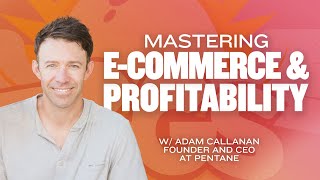
This is a YouTube video titled "Mastering E-Commerce & Profitability with Adam Callinan" containing an English-language podcast-style interview recorded in February 2025. The content features Adam Callinan, founder and CEO of Pentain, discussing his entrepreneurial journey, including his experience building the Bottle Keeper brand, navigating product development, manufacturing, patenting, and eventual acquisition. The conversation also covers his transition into software and insights on balancing business with family life. Multiple speakers participate, with Adam Callinan as the primary interviewee.
Foreign. Hey everybody, and welcome back to Eggs Podcast. Today's special guest is Adam Callanan, founder and CEO at Pentain. How are you doing?
Great. How you guys doing?
Not very good. Yeah, thanks so much for making time to visit with us today.
Oh, thanks for having me. Excited to be here.
So let's, let's kick this off. Just give a brief interview or explanation of who you are and what you do and your company.
Who AR and what I do are not the same thing. I won't go too far down that I'm a dad. I'm all those things. I have a Hulk.
We love hearing that though.
Yeah, that's not what people are probably interested in.
Well, and actually I will say, I mean, if you want to do a little bit of that. And the only reason I say so is because a lot of our, the people who listen to the show, I mean, we have CEOs, we have startup founders, we have young entrepreneurs, we have all kinds of people that are thinking about getting, getting into business but aren't.
Yeah.
And a lot of times, you know, family and things like that become the excuse for not doing the thing you want to do.
Great.
And so I don't think it's a terrible thing to mention that you've got.
A family and all that. That's a great lead in because you, you may see that the way I approach things revolves around that time saying so I mean, to be fair, I am a dad, I'm a husband. Those are the most important things in my life and they have been for a while. I mean, I have a three and a six year old, so I've only had them for a little bit. But even in my last company, you can absolutely structure what and how you do it around your lifestyle if you're careful and you don't go and do the things that a lot of other people do, like raise up a zillion dollars at a crazy valuation and get on that mousetrap. But I mean, Pentane is my, is my current company. I've been in a couple of different startups. I'm sure we'll get into some of that. Pentane's, it's basically, it comes out of my experience as an E Comm founder building scalable, profitable businesses with little to no team, no investment. Pentane is the software application that is built on top of super complicated math and spreadsheets that we ran my last company, Bottle Keeper, on to simplify driving profitability, to simplify growing revenue and operating a consumer brand. You know, that's sub 50 million in revenue where you don't have like a full C suite of people that are finance people and marketing people and all this stuff.
Yeah, so no, and I love that just kind of, that little moment that you mentioned, just kind of being purposeful in the way that you design your, your business. Because I think there are people, you know, obviously who are looking for the, you know, big VC route and they're, you know, they're ready to go 90 hours a week to work. But I think there's also people, and this is sort of a conscious decision that we made when we had our kids was just that they weren't going to be the reason we didn't do whatever it was we wanted to do. 100 and so, you know, and it's not saying, hey, you guys are a lesser priority. In fact, it's, you guys are a greater priority. We want to make sure that the lifestyle that we have, the travel that we do, the things that we're involved with, like you guys get to be a part of all that. It's not, you know, okay, well, now we're going to shut off and we'll never see our friends again. And we're just, you know, we're going to take care of our kids, you.
Know, so you get to make a choice as a parent and you get to make a choice as a business owner. I don't think they're actually that different. I mean, clearly there's some emotional differences in there, but they're not actually that different. You can be an accessory to their life or they can be an accessory to yours.
Yeah, but you can't fire your case having.
Yeah, he can't fire the kid. It's hard.
No, I've been thinking about it.
It's difficult, but yeah, I mean, that's obviously the way we, we've approached life and parenting as well. And we have epic kids, I think probably largely as a result of that.
So tell us about Bottle Keeper. That was your. You were on Shark Tank. A few other things. Is that what kind of got the thing going for your first go around was Bottle Keeper?
Yeah, I mean, I was in a medical device company before that that I sold out of in 2013. My cousin had this idea sitting on the beach in Manhattan beach for a beer bottle. Actually, this is our original prototype. He literally took a stainless steel water bottle. I don't know if you can see this. Like, if you're not watching the video, you won't be able to see it, but it's a Stainless steel bottle that he vise gripped like, and see the vice grip marks. And he hacksawed it in half and stuffed like cut up koozies in his garage and stuffed them inside so a beer bottle fit inside. And it was literally, he just wanted to drink a beer on the beach out of a Corona bottle because he's a lunatic. And that's what he wants to drink it out of a party out of, you know, a red Solo cup that's warm in four minutes. So he comes up with that idea. And I was now looking for the next thing. I started a venture fund, which is a terrible idea because I hate raising money. Not good for a venture fund. And you know, it sort of fumbled along for a little bit. And then eventually we agreed to come together and do it. But I was really adamant that we build that company without employees. My company before that had 80 people in multiple states and delivery vehicles and warehouses and all this stuff. And it was just really heavy.
Yeah.
So we, you know, that was at a point where. That was at a point where you could build scalable tech by linking all these things together. You could use Shopify or at that point was kind of Woocommerce. That was the early stages of Shopify. And we did that really successfully. We each put in ten grand. That was the extent to which we had to invest in the company. It was profitable its first year. In the third year, we got to 8 million in sales, no employees. And this is all before Shark Tanks. By the time we went on Shark Tank, we were way too big to be on Shark Tank. But it was an epic experience. I mean, we did that in 2018. Our trailing 12 months was just over 10 million. When we filmed that episode, we got really lucky. When we filmed it was the week before Father's Day, which is like her second biggest holiday. So we, Yeah, I was able to like open the thing with some crazy stuff that, you know, like we did a million dollars in the last week, like that kind of stuff that. That blew their minds. But it was, that was a super fun experience. It was great for the company. I mean, it's like the never ending free customer acquisition tool.
So. So let's talk about. You have the prototype right there. You just showed it to us. Let's. Let's talk about R and D and actually getting the product to market. And then once you have it to market, how did you market it?
We.
Used. So if we back up. I did not think this thing would be a thing. I'm very upfront about that. Like I thought it was interesting and cute and the thing you'd see at Spencer's gifts for $8, which is not a business.
Sure.
So when we, you know, when we decided to go and kind of dip our toes in the water on that, I wanted to first prove that people would be interested in it before we went and spent any money, real time or money on doing it. So we. The first thing I did was I put up a landing page. I shot a video on the beach in front of my house just of the product kind of in action and put $500 in Google AdWords and collected emails and basically just said, are you interested in this? Collect emails? And enough people did it where it was like, okay, fine, next step. So shot some more videos. I did all the stuff myself. I had no idea what I was doing, but, you know, you can hack together. And we did. Crowdfunding is how we launched the company. That was the only way I could figure out how to get strangers to swipe their credit cards. Again, it wasn't an expensive company to start, so it was. It was a little bit less about just raising money. Although obviously having sales before you've actually sold the product is cool. I wanted to see that we could get people that we weren't related to to spend money.
Yeah, well. And I suppose by doing the crowdfunding model, too, they were able to. I guess that helped facilitate, like, the building or the actual manufacturing process too. Right.
It certainly kicked it off. I mean, we, you know, the crowdfunding thing, to us, we figured that we. If we could sell $5,000 worth of product, that would be enough to say, okay, there's interest in this, you know, at $20 a piece. And we, you know, we sold 350% of that or something. I think we sold 15 grand, 13 grand worth of product. So we took that money, put it all in patents immediately, and then, you know, we. We went and found. How we did it is we went to Alibaba. We went and found 10 companies that were manufacturing just water bottles in China, because that was. I know we're kind of where you had to do that. We tried to do it domestically multiple times throughout the life of that company, and it just couldn't figure it out. But, you know, we could found Alibaba. Then you go to those companies and we said, we have a thing that we want to talk to you about. When you sign an NDA, knowing that most of them will not. Seven out of the 10 will not. And I know you hear this thing about NDAs and intellectual property in China not being worth anything. And that's not true. China actually has really, really strict intellectual property, internal intellectual property restrictions. You just have to follow their rules.
Yeah, so.
But we just, we didn't know that at the time, to be fair. I know that now afterwards, but we didn't know that in 2013. I just figured, Matt and I, my cousin and I figured if a company wasn't willing to sign it, that was just a red flag to not start. And if a company was, even if they've totally violated it, like, at least, you know, they're kind of willing to play the game. And then you take the next step into a big. A big thing with international manufacturing is just being really careful that the people you're communicating with fluently speak your language. Because we would deal with, you know, a couple of conversations where we'd ask questions and they would answer in a way that clearly meant they did not understand that we were asking. And that's obviously a problem when you're trying to have something made sure. So we whittled that down to one company. Another thing was MOQs minimum order quantities. You have a company that will. Their minimum order is, you know, 50,000 units or 20,000 units. Working with manufacturing, particularly in China, you. You have to kind of sell the. We have to start lower, but the next one's going to be a little bit bigger and you have to dangle this carrot forever. It's just part of doing business in China. So we, you know, we got the last two companies, we got one of them to commit to bringing their moq down to 1200 units, which is, you know, what we needed to fulfill in that first order and had the product made, shipped. That first product, we missed Christmas by like five days, which is awesome. You know, shipped it like the first week of January, our first orders, fulfilling all of that prior crowdfunding stuff.
So we've had a few people on this show that one of them is a specialist that actually specializes in being like an intermediary for someone like you who's going to China to get something manufactured. He's got all the connections already there, and he's. He's your local US side person that you would talk to to get something manufactured over there. And he seemed like really knowledgeable person, really great guy to work with. Ian Foster is another guy that we've had on the show that he was the founder of Center Cam. He's a guy that. He put your webcam in the center of your monitor so you have eye Contact with people when you're talking to him on a zoom call. And he did the same thing. He used crowdsourcing to sell his product initially. He got the first round made and then went from there. He's on his like version 3 or version 4 at this point now, but he's done over a few million in sales just off of a simple cool idea like that. And I love watching someone here, I want a Jacuzzi for my beer bottle. And that turns into a multi million dollar thing. I love those stories. And thank you for sharing that with us.
Yeah.
Can I ask you a couple things sort of along the way? And this is something that we stumble on a lot. I talk about a lot and I don't know how to solve this for people yet, so maybe you can help me. So as you were working through this process and just talking about sort of your step by step up to that initial launch, some of the things that you said, I don't think are going to be the immediate thing that somebody thinks of. Like, for example, you said that some of the money that you guys had up front went right into patent. I don't know that going right to patents is something that your average, you know, small business owner or person trying to, you know, build a business or something thinks about. Right. It makes sense, you know, but it's like things like that make me wonder about sort of your prior experience, like, where are you getting these kinds of things? Because there's a lot of people out there in the world, including ourselves, you know, because we don't do this perfectly. But I mean, you know, we try and share people's stories, we try and sell or share people's information and how they, how they do whatever they do. But, but there's this gap between, I guess, hearing something, even reading something, and then doing something. Yeah, right. And so those, I think whatever that is, these mysterious step by step part is I think people need a little bit more handholding on that. I think you really get it from experience more than you do from reading it or whatever. And so I wonder, like, you know, patents is just one example of the thought processes you shared. But like, the business that you built seems like it was built on sort of a foundation of some sort of sophisticated business knowledge already. Like, was there something earlier in your life, did you have a real relationship with, you know, I don't know, parents who are entrepreneurial? Like, you know, is there some, like, level of knowledge that you brought to the table when creating this thing that you were leveraging? Or did you guys just have a really smart approach.
So I'll separate that into two things. One, if you want to go into patents, I will literally give you the playbook from start to finish, exactly what to do for your startup founders that have an idea and they're not sure where to go. I literally. It's simple. It's really not that complicated. You can do it very inexpensively. I'll tell you exactly how to do it. Um, the second part. So we can come back to that. If you want to, we can put it.
Yeah, no, I think that'd be a great topic for people.
Um, the second part. You know, I, I did have prior business experience. My cousin also had prior business experience. We both got degrees in molecular and cellular biology, which is great and fancy and that's awesome. But what it taught us to do was solve problems. That's what science and math do. You start at A and you need to get to Z and you have to figure this stuff out in between. That's what literally, that's what all of math and science is. So we, we collectively spent eight years at university doing hard physics and calculus in organic chemistries, all of which that 100% revolve around problem solving. So, you know, using the scientific method and testing hypothesis is. Really works perfectly in business. And that, that goes back to like in Bottle Keeper, the early stages. I did not. My hypothesis was I did not believe we could get strangers to pay for this ridiculous product. So we put structure in place to test that. And again, that was also not. It wasn't my first company and it wasn't Matt's first company. So we, we had been involved in other things with some amount of success, and a lot of that does actually translate. I mean, now I'm in a software company that has nothing to do with my last consumer product company, but an incredible amount of the experience that I gained from the, you know, nine years we own Bottle Keeper translates to what I'm doing now.
Yeah, yeah. And like I say, I mean, I think that this is the, I mean, the, the crux of what we're trying to solve is, you know, how can people take what they hear you say and then apply it in real life? Right. So we can maybe do a quick tangent on patents and we can talk about that. But I mean, yeah, in general, I mean, I think what you're saying is a really right approach and it's actually a different way that I've heard about it, you know, because most people that come on the show have a business degree from somewhere or whatever. And so it's a little bit different approach, but because honestly, I don't think a business degree teaches you to solve problems in the same way it might teach you to manage books or, you know, it. Be a good manager or something. But, you know, I don't think you're getting that type of approach. And, and I would just say probably, I mean, Mike and I can probably relate. I mean, neither of us are scientists, but the way that we've kind of, you know, worked our way through life is by, you know, kind of running into a brick wall and then figuring out our way around it, you know, and, and so it's kind of the approach you're describing, maybe less eloquent, but, you know, it's exact same, something like that.
It's literally the exact same. You got to break stuff and you just do it fast, learn fast, move fast. And that's the benefit of being in a startup, that's the benefit of being in an early stage business, is you can do those things quickly. Yeah, but you have to do them quickly or you're. You're totally throwing that benefit out the window.
Yeah, it makes sense. Well, and I think there are a lot of people get stuck, you know, and obviously there's a big philosophical discussion here because I think there's a lot of baggage people bring to business when they try and start a company. And so a lot of it is fear and trepidation and all kinds of other things that keep them from being totally successful. But yeah, no, this is just. It's always been something that I've been trying to work through in my own writing or on this podcast and things like that where we, you know, man, it's just like, it's one thing to just espouse the knowledge, it's another to actually be able to do something with it. Right. And so anyway, it's a topic I like to dig into. So. But let's take, let's take a quick little tangent down patent road. Let's talk about, like, what. Why would we even do it? You know, I mean, first of all, in your case, you had a physical invention, but like, I mean, what can we patent? Why would we patent? You know, and, and how did that work? I assume it probably factored into your eventual exit.
Yeah, it was a huge part of our exit. I mean, we went from nothing to. By the. In our acquisition, we had 42 patents and they were insane. Like, our PAT portfolio was epic. I mean, get into specifics on that. But look like at the beginning if you have an idea, let's make it, let's simplify it and make it a physical product. The first thing that you do is you have to find a patent attorney. Do not call your real estate attorney uncle. Do not talk to the contracts attorney. That's your neighbor who's awesome and probably epic at what he does. Intellectual property is extremely nuanced. They have to specialize in that thing. So that's the number one mistake. Like don't have your, you know, don't have your brother in law who's a criminal defense attorney file trademarks for you nuts. He doesn't understand how it works. So number one, number two, the first thing that you're going to do is they're going to do a patentability search. They're going to take your thing, they're going to look at it, they're going to find the things that are interesting about that and then they're going to, for inexpensive, for a thousand dollars, they're going to do a patent ability search. Because the first thing you want to know is that you're not actually violating somebody else's patent. That's the first massive barrier is let's just make sure we're not violating someone else's ip because that can be painful and expensive. Then assuming that's not the case, you know, or you might design around that other existing patent, which you can do. I mean that's a thing that's possible. They'll file what's called a provisional patent in the patent system. I should have prefaced all this. I'm not an attorney. Talk to your attorney. But like in the patent system with patents, they're first to file is who has priority versus trademarks which are first to use. So they're, they're different. Like you can't just file a trademark and whoever filed it first wins. It's, they have to go and do deep searches on the Internet to see who used that term in that class a decade ago. And then you have to go get permit. It's a pain in the butt with patents. It's first to file. So you, the filing date is really important. A provisional patent allows you to secure that filing date for really inexpensive. A provisional patent will generally cost like fifteen hundred dollars. And what that does is it gives you the ability to take a year and go prove that what you've invented is actually a thing that you can sell before you go and invest tens of thousands of dollars in real patents. And the years long prosecution it takes to get them through the system. And then the defense of them, which is a whole other thing. So the first step is a provisional patent you that gives you a year to convert that patent or abandon it. Generally convert it to a utility patent. So then once you have, then you file the utility patent. You know, you're law firms. Some are great, some are terrible. Just like accounting firms, just like doctors. Some are great, some are terrible. So use the resources around you to get advice on who to who to speak with. I'm proud to say that our most of our most epic patent prosecution which is getting the patents, came through Quarles and Brady as the law firm that we use. They were exceptional. The things that they did were outrageous and had a huge impact on the business and the value of the business in the end.
Love it. So let's talk about that. Actually you were acquired because of the patents. I'm sure that actually made that that much more valuable because you owned the product. You didn't have to worry about someone coming out and cloning it and stealing your customer. You know, all that stuff. Can you maybe talk about the acquisition process, why the patents helped and you know, why you decided to exit? It seemed like a nice cash flow where you didn't really have any employees. That's almost something you could just kind of sit on forever and just have cash flow coming in. But I guess large lump of change versus you know, just the passive. You got to pick your which one you want. Maybe just tell us about that process, how you got acquired the patent in that and then. Yeah, why?
Yeah, I'll first say that when you get a patent, you have to be prepared to defend it, which is the worst part of a business.
Yeah.
And that happened to us on Amazon in 2016 or 17. Fake product, fake bottle keeper product, called something else. So they weren't violating our trademarks. Started showing up on Amazon and we at that point we were not on Amazon. We were shopify only completely direct to consumer, no wholesale. And so we had to go to Amazon. And the process of being able to defend your patents on Amazon is a very rigorous, very expensive. I mean it took a year, cost half a million dollars. We had to sue 10 teeny tiny companies operating these little businesses out of their garage and with the intent to get, not to get money from them. It was literally we wanted them to destroy the product. And they needed to agree with the courts that they were violating our patent. And we needed the court to agree that they were violating our patents. The result of that is called a consent judgment. And a consent judgment is a court order. That's the tool that you need to enforce your patents on Amazon.
Okay?
So it's like there's all this stuff, and honestly, that is the hands down the worst part of operating a business like that, because then once you clean it up, you literally just play whack a mole for the entirety of the company forever. So. So there. That's an important piece that you just. Those of you thinking of patenting things, you just have to. It goes with the territory. If it works, you just are going to have to accept the fact that's going to be a part of your life from an acquisition standpoint. We, you know, we were really. There were some things that we did really, really good, and there were some things that we failed at. One of the things that we failed at is we did not do a good enough job early on getting off of, like, the Facebook paid media teat. It was awesome early because we literally couldn't spend the money fast enough. That's how we grew so quickly. And it was super profitable because we had no employees. But, you know, in 2017, 18, when everybody and their mom had a Facebook account advertising something, including a lot of big businesses, like, it got really expensive. And, you know, that's been a slippery slope ever since. And because we. We could not figure out how to get our revenues off of those channels, it just. It's like our revenues would grow, our profits came down, you know, or they certainly weren't. Maybe they weren't growing as efficiently as they were before. And it just got, you know, combining that with the fact that, like, as a CEO of the company, I was spending a huge amount of my time dealing with lawyers. Sure. It just got not fun.
I get that.
And so we. We had had companies and bankers reach out to talk about acquisitions years prior to that. And we didn't listen. And in, you know, in 2020, we started listening and we, you know, had a conversation with the banker that represented a company that was interested in an acquisition. We went through the process, got a term sheet. Another private equity group, much, much bigger private equity group that had just bought Arctic Outdoors, called Windpoint Partners, came in. You know, we were able to leverage them a little bit, which is always helpful when you're going through an acquisition. They closed super fast. It was a great transaction. They were great to work with. Honestly, they did everything that they ever said they were going to do, which is not generally what you hear about private equity transactions. It was just time we were. Were ready to move on.
Okay, so you sell, you get out. I'm sure you took a year or two off, because I would. But what made you want to decide to get into software, of all things?
I mean, I didn't want to. It happened accidentally. Same thing. I didn't want to get into consumer products. Like, it just that it happened. I mean, the. Well, I mean, the timeline.
Ryan is using AI right now to build these software products, and it's pretty simple for him. But a year ago, you know, you didn't just fall into software. You had to kind of like, yeah, you have to make it. So tell us how you got into it. I guess.
Yeah. So we. That the Bottle Keeper transaction closed in March of 2021. I. Part of the deal was that I would stay on through the end of the year to oversee the transition because they. They put us with Arctic Outdoors. Windpoint had just bought Arctic, so they paired us with Arctic. Arctic now makes Bottle Keeper products.
Okay.
And so that was. That was the deal. So I was there through the end of the year. I did say take some time after that from guidance from a wise sage, you know, like, got into carpentry and using my hands, doing stuff differently that I absolutely love. And I mean, I'm in Montana, so I spent a ton of time in the woods doing woodsy things. And I got bored. I literally woke up one day, I was like, you know, I could feel my brain melting. It's like the most difficult decision I have the entire day is what to have for breakfast, and that's a problem. So I got again, like, permission from the wise sage to go and start doing something. So I reached out to a couple of companies that we had invested in and my wife and I had invested in and asked if I could help. Just anyway, like, can I look under the hood, see where I can help? And they said yes. And I quickly realized they had no idea how to make money. And it wasn't because they were bad businesses or bad operators. They're incredible operators. I mean, one of them is a $20 million business. 20 million a year business. They were profitable, but they didn't understand, like, the mathematical nuance between the operational finance side of the business and the customer acquisition side of the business, because they are completely dependent on each other, but they speak different languages, they use different math, they're different people running those things. So we did that really well at Bottle Keeper. We built.
More from Adam
Embrace the Suck: Purpose, Resilience & Leading Through Crisis w/ Groundswell CEO Jake Wood
The BottleKeeper Boom and Beyond: The Birth of Pentane with Adam Callinan (Ep.111)