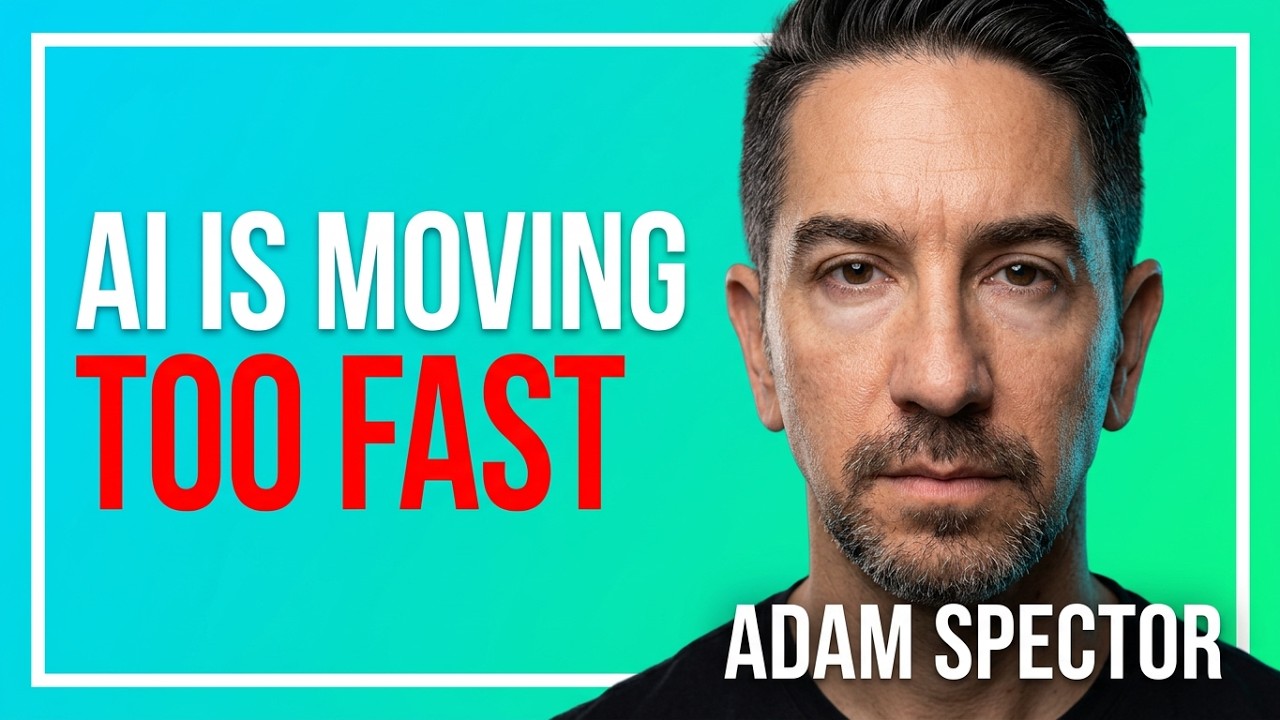
In this monologue, Adam Spector, founder of Levy, explains how founders can harness extensive professional networks to accelerate growth. He describes how his previous company built a network of 350 investors—both direct and via syndicates—who become financially motivated advocates, and how each new employee adds hundreds of connections, multiplying the company’s reach for go‑to‑market, product validation, and referrals. Spector emphasizes the importance of authentic, long‑term relationship building, sustained reciprocity, and thoughtful, value‑driven introductions, noting that merely asking for favors without offering something in return erodes network value. He introduces Levy as an outsourced chief‑of‑staff service that handles back‑office functions (HR, finance, compliance, equity) so founders can focus on their core product expertise. Finally, he mentions Swarm, a tool for mapping and managing one’s network, illustrating how a systematic approach to network data can make outreach more efficient. Throughout, Spector conveys optimism about the startup ecosystem and a personal passion for helping founders succeed.
Chapters
My last company, we actually had almost 350 investors as part of it. Now, part of it were via syndicates and other things like that, but the value is you now suddenly have 350 people who are financially incentivized to spread the good word about you and your business, and that becomes incredibly powerful for what you're trying to do as a company. If you're trying to grow, trying to target for, in our case, we work with startups. So how do you get in front of startups? Well, you have all these investors who can make introductions for you, and that is, that is a really viable path to building a successful business. But of course, also leveraging your entire team's network. So as you're growing as a company, every new team member you add, you're adding their entire network, right? So I don't know what the average number of connections people have on LinkedIn, but let's say it's 1,000 people or maybe even 500 only. in their network, suddenly new employee and teammate on your team, they're connected to 500 other people. And so as that keeps growing, the number of connections you have as a company overall grows too. And if you can leverage it, it becomes a really good way to do go-to-market, do product verification and product checks. And it's just a great long-term play to leverage that network really in a really strong and thoughtful way. Levy is basically your outsourced chief of staff. The whole thesis we have is that founders build a great company because they're the best in the world at whatever that company topic is, right? Being it for AI or direct-to-consumer, you name it. And then yet you have all this other stuff you need to do to run your business and to make your business successful. It's not a core competency, it's not a core skill, but it is incredibly time-consuming to run the rest of your company. What if you could hand that off to a team who knows how to do this well? That is the thesis of Levy. We take care of your entire back office for you, HR, finance, compliance, and equity. You just hand it to us, you get back to focusing and building the best darn startup you possibly can. Building a network has been something I've been working on since I really moved to Silicon Valley, which was 13 years ago, which is kind of crazy to think about. But the value of that network in meeting people, networking, either doing it digitally, of course, like we're doing, or doing it in real person, both are really valuable. And I think you can do both nowadays in the kind of digital Zoomified world we live in. But that is really just following up with people, meeting them, getting to know them, building relationships. And I think also being authentic is a critical, critical part of it. I like to think when I speak with people, they know that I'm genuine. I care deeply. Part of why we started Love Even is because I just care deeply about startups being more successful. The more founders who can be a success, the more startups that can be successful, the better world we have. And I just enjoy that. So getting to hear new founders talk about new ideas and how they want to change the world frankly inspires me every day and energizes me. I'm optimistic for the future because I get to see these great companies out there. And building that network is fun for me because I'm meeting these fantastic founders. Everyone in your network is a potential referral at some point. And it's part of something people forget a lot. And part of why I think I have a pretty high-quality network is I've stuck with the tech space for a long time. I've been in this tech space for over 13 years now. I've stuck with it. A lot of people sort of come in, jump out, and that's just for any job role you might be. I don't care if it's tech, it could be you're in government business or environmental tech, you name it. But people only stick around and they go to a different job and leave that world. If that's the case, you're never really building your long-term network and real value. For me, I've stuck with it for a long time, and now I have long-term connections I've known for a long time. They trust me. They know that I'm not going to bother them with low-quality requests. And so part of it is once again, like being around for long enough and building that over time. I think building a network is something that is slow going at first. It doesn't happen overnight and you have to be cognizant of that and willing to take the time to build it. Another part is constantly reconnecting with people. It's actually something I wish I did more of, frankly, is reconnect people and say, hey, look, I'm so excited to chat with you. Here's why. It would be great to catch up. what's going on. And so I, as an example, been doing that recently with a bunch of venture capitalists that I know. We're providing value to them and I've sent some stuff. I've sent interesting things to them and then it's like, hey, look, we should catch up. It's just been a long time. No ask. I'm not raising money. I just want to chat with you. And I think people are pretty open to that because it really is about providing value in a reciprocal way. It's really important to be thoughtful about going through your network the right way. Looking on LinkedIn, how are you connected to someone? What is relevant to them? So using your network is not just about asking people for introductions. It's about being thoughtful who you should connect with and why you should connect with them. So if someone reaches out to me and says, hey, I would love to chat with X, Y, or Z person, that's pretty lazy. I want you to actually come with— come to me and say, I want to connect to this person. Here's why I think it'll be valuable to that person. And then I will make a connection in an introduction. It essentially has to be an exchange of value for all parties involved. What a lot of people miss is that, hey, I'm going to ask for stuff, but not give something in return. That's not a good way to leverage your network. You're not building something that is of value. You should make sure when you use your network, you're offering something in return. So when I reach out to someone, For my own sake or for friends of mine or for investments of mine, I'll say, hey, look, I'd love to chat. Here's why. Here's the value you're going to get from this introduction. And by the way, can I help you in other ways as well? So it really becomes an exchange of providing continuous value to my network, which hopefully makes me a valuable person for that individual to have in their own network. People are busy. They don't have an interest in time to just respond to random reach-outs. So if I can get a warm referral and someone says, hey, I trust Adam, he's coming from this quality network, he's a quality person, people will usually get on the phone. But otherwise, people don't like to be sold to. They don't want to waste time. And so having a useful way in that's easy to kind of map that network is really powerful. And that's where Swarm really comes in.