Video Interview with Adam Spector from LiftIgnighter
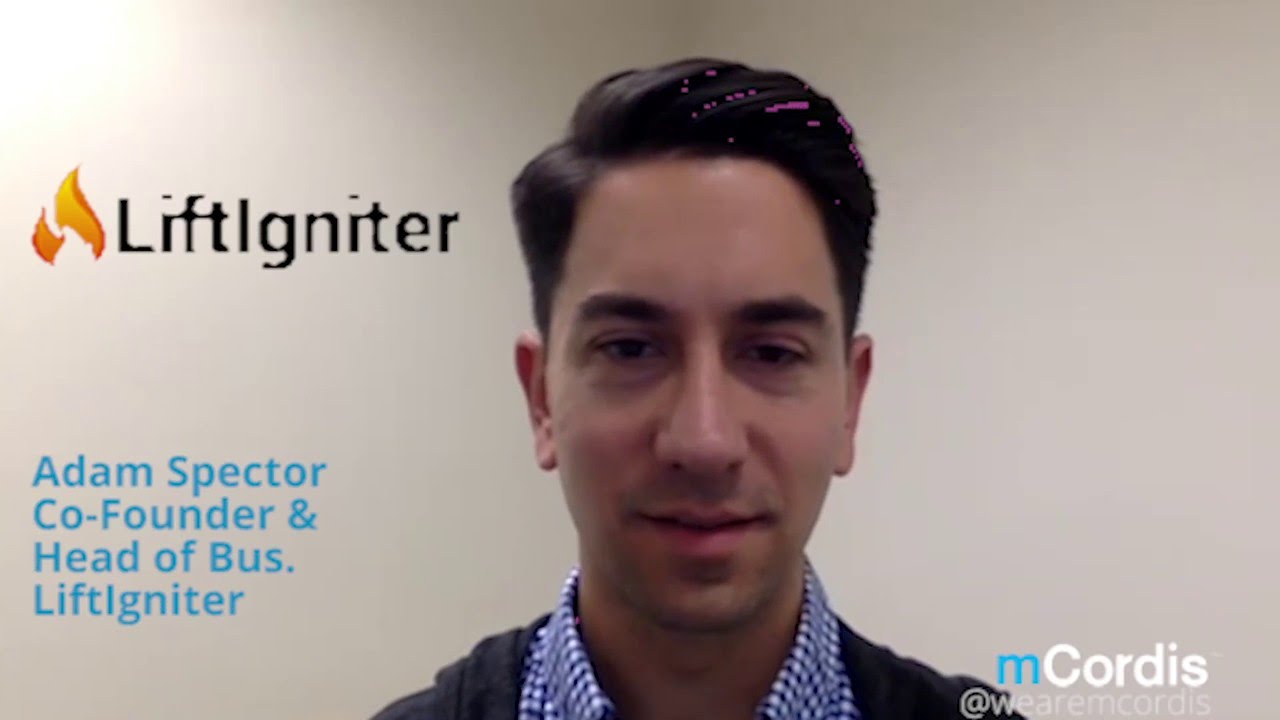
In this interview, Michael Becker talks with Adam Spector, co‑founder and head of business at LiftIgniter, about the company’s machine‑learning driven personalization platform. Adam defines machine learning and personalization, then outlines the three core challenges faced by media publishers: internal discovery, engagement, and monetization. He explains that the underlying problem is understanding each individual user in the micro‑moment, using examples from the New York Times and e‑commerce. LiftIgniter’s solution is a lightweight JavaScript beacon that collects user and content data, sends it to LiftIgniter’s servers, and returns real‑time recommendations (≈150 ms round‑trip). The system learns within about a week, delivering 80%+ improvements in click‑through, engagement, and conversion, and continuously optimizes without requiring deep engineering effort. Adam emphasizes the platform’s ease of integration, goal‑driven optimization, proven A/B‑test success, and applicability across all digital touchpoints (web, apps, email, push, SMS). Contact information and a guarantee of rapid results are provided at the end.
Chapters
Hi, my name is Michael Becker, and welcome to this installment of the mCortis Mobile Insights. And with me today is Adam Spector, the co-founder and head of business for LiftIgniter. Adam, welcome. Thank you for joining us.
Thank you so much, Michael. I appreciate it.
So let's just jump right in. Give us the 30-second elevator pitch of who you guys are and what you do.
Yeah, LiftIgniter is a machine learning personalization company. That's, that's really what we are.
So what does that mean? I mean, so we hear the buzzwords of machine learning and personalization all over the place. So can you give us a quick definition of what each of those terms mean?
Yeah, absolutely. Machine learning is the idea that you take thousands of computers and they're able to calculate in real time and learn in real time what, what's happening on the problem they are set to solve. So in other words, saying, how do we optimize for X goal and learn in real time and adjust so that we are always optimizing at the moment in time when that is that X is occurring. Personalization, what that actually means is, in this case, the X being a specific user, we want to personalize what they see. So it's about me, it's about Adam, it's about Michael, it's about everyone else having a personal experience that is unique and special just to you.
I see, I see. So you're taking this concept of machine learning, all of this capability and the algorithms you've written to to empower these machines to help them learn, so that you can inform and enable a personalized experience.
Exactly.
So with that in mind, there are a bunch of marketers in need of this. There are retailers, there's e-commerce sites, there's traditional media publishers, there are CPG marketers, finance marketers, etc. My understanding is that your capabilities can service all of these marketer sets, but right now you're primarily focused on that media publisher. And with that in mind, can you, you know, what are the general, you know, obviously, and again, these, these, these, these, their issues can be translated across all the types of publishers, but for that media publisher specifically, what are the core problems or challenges or opportunities? What are they, what are the challenges they're facing? What are the opportunities they can take advantage of right now? What are their key issues irrespective of who you guys are?
Yeah, no, absolutely. Look, their key issues are pretty simple. The first one's Internal discovery, and frankly external discovery as well. And what I mean by that, to make that really clear, you have external discovery where you have Google and Facebook and other areas helping users find your site, right? How do they even know you exist? But once you've solved that with a lot of advertising and SEO and things like that, people get to your site. So you have to have internal discovery and help them find the content that's relevant to them. If they, they took the time and effort to show up at your site or on your mobile app, They then want to discover what's relevant for them and their time, right? They're giving you, in a sense, they're giving you their data, and you're giving them something valuable for their time. And that's what internal discovery is all about. The second big problem they have is around engagement. How do they get people to actually engage with this content, enjoy it? You know, in that case, reading more things or watching more videos or buying more goods. And then finally, monetization, right? how do you make sure you monetize them in a way that it doesn't feel abusive, and in fact is a valuable monetization process where the user is getting something valuable, in other words, the right content, and by doing that, they stay on site longer, they engage more, they share more, they return more often, which means the website can monetize them in a greater way, but it's a win-win for both sides.
I see. So marketers, specifically in this conversation today, the publishing marketer, whether or not it's to a website on a computer, to a website on a phone or to a mobile application on a phone or tablet, their issues are discovery, engagement of that user once they've discovered you, and then the monetization of that engagement, meaning the business and the publisher can get the most revenue and the most value for that engagement that they have with that individual. Yep. So, how does a marketer go about addressing those problems? Can you talk to us a little bit about that?
Yeah, absolutely. So those are the kind of 3 big problems they have, but actually there's an underlying problem that underlies all of those pieces. That underlying problem is actually understanding that end user. So it's the ability to understand who is the person who got on my site, why did they get here, what is their context, what are they looking for right now, and how do we give them what they want to create a unique and better experience? I mean, that is the underlying problem that every single marketer has.
Okay, and can you give us an example of that?
Absolutely. Think about— I'll just use the New York Times as a simple example. The New York Times has lots of users who go to the site. A large percentage are people they've never seen before. They'd be kind of cold start, brand new users. You don't know anything about them. Those users came to the New York Times for a reason. Maybe they heard about the New York Times, they did a search for a news article, they want to read about the stock market. Who knows? The New York Times doesn't even know. But their goal is to say, okay, you got here for a reason. How do we keep you around? And then for the New York Times, how do we engage you? How do you watch more videos and read more articles? Then, by the way, how do we monetize not only by ads, but maybe we can even convince you to subscribe? And how do we figure out, given this limited information we have about you and the fact that you are unique at that given point in time from everybody else on the internet, how do we give you the right thing that you want right now? And, and that's sort of the example of the problem.
Okay, so understanding the individual, who that individual is, is the core and the root challenge to all of the both problems that marketers are facing and the ability for them to take advantage of the opportunities that are presenting themselves.
It is, yeah. I'd add actually, it's kind of the holy grail. We talk obviously to a lot of different marketers in a variety of spaces, and the holy grail, they're paying hundreds of thousands of dollars for great analytics tools and for buying data about demographics and segments to try to understand these users. And we sort of say, that's great, but there's actually now technology out there that allows you to do all this for, frankly, a far lower cost. Without— you don't need to know. It's actually not relevant to know the exact information for that user for you to look at it on a spreadsheet. It's important for your machines to know because they can personalize in real time for that user right now when it's important. And that's the holy grail, is really getting it right for each individual impression.
I see. So it's not just about user understanding, but it's user understanding in that micro moment. Because if you knew I was there 2 weeks ago, so what? You're needing to serve me now in real time.
Exactly. Yeah, no, and that's another great— I'll give you another example of that, sort of an e-commerce example. Let's say, you know, 2 weeks ago or even a month ago you bought a pair of shorts, right? Well, maybe you're going to Florida for a vacation. So you bought a pair of shorts. Is that pair of shorts relevant now that it's snowing in New York? Probably not. So that historical data isn't really relevant, but you still might want to go buy something from this store. So we need to figure out what you actually do want. You might want a coat right now instead of that pair of shorts you looked at previously. And it's the ability to make that decision in a split second, and as you kind of call it, that micro moment, to give that user what they want, to enable them internal discovery without them having to spend a lot of extra time searching, because the more time they spend searching for what they want, is every second extra is another second they might go back to Google, they might go back to Facebook, to outsource that discovery to those services, which means that person might not ever come back to your site. They might not find it again, they might not care.
Okay, so as I understand it then, LiftIgniter, it helps solve this problem, this core fundamental holy grail issue of consumer or visitor understanding. Mm-hmm. You're essentially a data company that amasses a bunch of information, provides the machine learning algorithms to be able to help a publisher and/or an e-commerce site and/or whatever the marketer is to be able to actually understand who that individual is and then in real time inform insight to the marketer system so that the appropriate content is displayed to that individual within microseconds, whatever that is right now. How does that work? Can you explain that to us? And what does the marketer need to do if they think, oh, Adam, this is fantastic, I wanna go work with you guys. How does it work? What do we do next?
Absolutely, it's actually pretty easy to do. And I'll keep this kind of high level and less technical, but obviously we're happy to dig into that as well. But the super high level version is literally on a website, app's a little bit different, but it's pretty much the same idea. We add a JavaScript beacon to the site, which is basically a way to collect the data that we need to collect. We do all that work on our own. We don't care what your CMS is, we don't care what you're running on, on the backend. We collect all the data on our own, so you don't even have to worry about sending us any data. We collect that information, then we gather the information about all of your inventory, all the content you have, all the items you have on the site, about all the users as well. We can collect all the information we need about the users, how they're connected. And the way to really think of it is we're learning, in a sense, from your users. in real time and are able to figure out where they're going, what they're doing, and why they're doing all these different things. And then take the machines to then learn from those users how that it gets from point A to point E or point X, and then serve that up to the next user in an intelligent fashion, and then learn on that user in real time and move on and on and on. And we do all that, and literally all the work's essentially on our part. It's like an hour or less of integration.
And how much time of learning does a machine know? So then on day 1, it's like a baby. It doesn't really know a whole lot about the customer and all of that. How long does it take for the machine to actually be able to learn enough about that publisher, that retailer's customers, so when they're showing up on the site, you're able to understand that individual and to be able to serve and instruct the site on what kind of content to be Presenting to the individual.
Yeah, so Michael, actually baby is a great, a great kind of analogy. So the way I describe it and describe this working is imagine a child learning how to walk. Um, you know, it might take them a year or so. I don't have kids, so we'll say it's about a year for them to— they watch their parents walking, they learn about it, then they finally stand up on their feet and they start walking around. They kind of stumble a little bit, but next thing you know, they're off and running pretty quickly. Lifted Endurance is very similar, of course, at a highly faster rate. So it's about a week of us learning on our customer site. We'll learn the information we need to learn on our own, no extra work from the customer, no extra tags we need to add, no extra work. We learn all that information in about a week. At the end of that week, we're ready to stand up and start walking. It won't be perfect, but it'll probably be at minimum on par with whatever's happening right now. And then within a day, 2, 3 days, we've learned enough that we're off and running, and you're seeing 80%+ improvements, click-through rate, engagement, and conversion. And then it continues on from there, it just learns in real time every bit of content that you're changing, that you're adding, new users that are coming to the site. It's learning from all of those things and updating all of that automatically in real time to make a decision for that specific impression.
Absolutely fantastic. And again, so how does this work though? So if I'm the product manager or the marketing manager for a particular publisher, I've decided I want to integrate your capabilities onto our sites, then how does your system then work with, say, my content management system and help inform the systems on what content to present? I mean, is that a ton— do we need to be data scientists and tons of engineering to make that happen, or is it fairly straightforward and easy to implement?
So we do provide actually some analytics that give you more information that you can look at yourselves, but the truth is, from an implementation standpoint, And from using it, we've made it, I like to say, almost dead simple. It's literally you add our beacon to the site, we gather the data we need, it does the full computation on our side. What you need to figure out, which is critical I think for every marketer anyways, is what's our actual goal? When a user gets to the site, what do we care about them achieving? Is it more clicks? Is it higher engagement? Is it more shares? Is it more purchases? Is it converting to subscribe? You decide what the goal is, you decide a bunch of other rules that you could have in place if you wanted it, and then literally, the machine optimizes automatically for you and for your users. It's an automatic optimization that's occurring 24/7 as your content's changing, as your users are changing. It's always on, it's always learning, and it's always making the optimal prediction of where that user needs to get to next.
But again, at some point though, isn't your system then reporting back to the publisher's system, saying, here's my prediction, this is what you should serve up, and essentially instructing the publisher now to serve this?
Essentially, yeah. So yeah, to give a little bit more detail, so once we collect that data, the user lands on site, user gets here, we collect the data, Lipsonator collects the data, it gets sent to our servers, it goes to our servers, we calculate it, we then send back in real time to the site a list of essentially recommended items. which again could be almost anything, back to the site itself and say, you should show these items to the user. That round trip is about 150 milliseconds. So it is gather the data about the user and about the page, sends it to our servers, we analyze it, we send it back. It's 150 milliseconds, it's made a decision about what content that user wants to see right now. And that happens every click. So every click they take, Every action a user takes has an intelligent reaction from the site itself. So the site is learning from the user, reacting in real time, and giving that user what they want.
So if I'm a publisher and I want to see, in some cases, upwards of 80% increased engagement and interaction with the visitors on my site, which in turn means that I'm providing them more value, which one would hope that's a proxy to them coming back, and engaging me more often over time.
Absolutely.
I can reach out to you, work with you to install your capabilities on my sites, and within a week or two, I'm gonna start seeing results. Is that what you're telling us?
That's actually exactly what I'm telling you. It's that easy. We love A/B testing, by the way. Like, don't— you don't have to believe me, believe the tests. Our team is essentially all data scientists. They love data. So we will prove it out to you. I will give you guarantees that prove this out happening. We've never lost a head-to-head A/B test. We've won every single one we've ever run, and we've run a lot. Literally, all the things I've said to you, this is the future. It's going to be a dynamic future for where every single website is going to be slightly different for every single different user at every single moment in time. There's nothing that's going to be static anymore on the web or on apps, ever.
And is that just about websites and apps, or does it also play, or could it also play into Email, push notifications, text messaging, any form of automated individual communications at scale.
Every single touchpoint that you have for a user is gonna be fully dynamic, fully personalized, in real time for each user. Every single touchpoint.
Okay, and to be clear again, as I understand it, for our listeners so they understand who you are and they can make the choice whether or not they wanna work with you or not, you are not an email provider, a push notification provider, an SMS provider, etc. You are an engine to collect data, analyze and learn from that data, and then feed that back to the marketer's systems, so the marketer's existing infrastructure is still in play, they can still use it, they can still leverage it, they're not having to rip out everything that they already invested in. You're just an augmented utility that they can integrate into their process to make their existing investments that much more efficient and amplify the engagement they have with their users. Is that correct?
That's 100% correct. That's exactly right. We are big believers in being the best-of-breed provider for personalization every single way. We don't care what tools you use otherwise, we can hook up to them, it's very easy. Use your tools that you have in place, we can enable you to have that underlying personalization layer that enables the best overall user experience no matter where they're coming from, what they're doing, on any of your platforms, using any of the tools you already have in place.
Fantastic. That was really exciting. So, you know, we're gonna wrap it up now. If people want to learn more about what they're doing, where do they go? How do they reach— how do they engage you or a member of your team?
Yeah, absolutely. We're at liftigniter.com. So liftigniter.com. You can also certainly email me, adam@liftigniter.com, and reach out. We're happy to talk with you about it. We're happy to set up a trial. We're happy to prove out everything that I just said, and as Michael was saying, A week from now, you turn this on, a week from now you're gonna see 80%+ improvements. My guess is you've never done anything for the amount of time or effort you'll put in that shows you the same high results. I'd be happy to actually guarantee that.
Well, that's fantastic. And on that promise, let's leave it at that. Again, this is Michael Becker with the mCordis Mobile Insights, and you've just been listening to Adam Spector, the co-founder and head of business for LiftIgniter. Adam, thank you again. That was really exciting.
Thanks so much. Appreciate it.
Take care, everybody. Bye. Bye.
More from Adam



7x on Paper. Break Even in Cash. Adam Spector on Staying in the Game After a Sale.


#207 - Why Smart Entrepreneurs Stop Hiring and Start Doing This Instead | Adam Spector