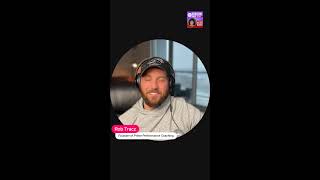
Meet Rob Tracz

Rob Tracy built Prime Performance Coaching after burning out working 16 training sessions a day. He created a six-principle framework called the Prime Performance Process to help solopreneurs and small-business owners build sustainable momentum without sacrificing themselves. His approach uses tools like the PACE and SKILS acronyms to guide clients from ex-athletes to authors and coaches.
Chapters
And once we go live, I can blow it back up.
Nice.
And if I look down, it's just big. We're live. Okay, just take it a second. For all of you that are not live and you're listening and you're listening to podcasts in a couple of weeks, I feel bad for you. And I would suggest you go to YouTube because this guy is really handsome. I mean, like, 10 out of 10. So I'm sure I'm embarrassing Rob, but he's got this. So I've got Rob. I forgot to even ask you. Let me guess your name. Trax.
Uh, close, pretty close.
What is it? What is it?
To be honest, I'm not even 100% sure, but, uh, I've— my whole life I've just gone with Tracy. That's what I was kind of told. But I used to ask my dad all the time, and he was just always like, yeah, whatever you want, whatever you want, whatever you want. Never ever actually told me what it— how he pronounced it. So—
oh my God, what a special dad! That is really sweet. I don't know my last name. Rob Tracy, I love it. Tracy. Okay, so Rob, you know the score. I don't know who you are. We just meet. This is— when I say no prep, I literally mean no prep. Like, I didn't look you up. I don't, I don't even— you just said yes. I think I said let's do it when we matched. I don't even— so welcome to the show. I will say though, I have been getting about 7,500 downloads per month, so I'm very excited, and, and that's great. So people are enjoying the crazy wackadoo that I am and my guests. And it's all— so we are live on Chatter Social, so you could always come in and download the app. So, all right, so because of that, there's 3 things we always say: you're brave, you're bold, and you're beautiful. But we're all handsome. But seriously, and I mean that, but I'm not trying to say seriously, but I really don't know who you are, and I am really looking forward to understanding what Prime Performance Coaching is. Wait, is it something to do with working out?
No.
Oh, then tell us.
That's part of this, but that's kind of part of the story, so it's interesting.
I'm all ears.
Oh, let me just dive in. Okay. Yeah, so, um, so as before we kind of kick things off, you were looking at a little bit on that bio before so you could bring it over, and, uh, if you were to dive into it a little bit further, you'd see that my background is in strength and conditioning. I got my, uh, like, sports have always been my thing. It's kind of been my way of creating my own family because my parents got divorced when I was like ish, somewhere around there. And moving from Philadelphia to upstate New York with my mom and my sister, we went from the suburban kind of like outside of Philly to super rural. Like, I remember the first time like getting to town, I was like, geez, where are all the sidewalks? There are no sidewalks around here and there's one traffic light. And being by myself, it was hard for me to make a lot of friends and sports became that kind of outlet for me to do that. And that was also really the gateway to personal development for me. And sports, pushing myself and always trying to progress towards a better version of myself, led to more playing time, more friends, championships, and so on. And I've adopted that kind of mindset and process into my, um, schooling and everything else through life. And moving through, I got my master's in exercise science. And in strength and conditioning, there's typically two routes to— you go— are you familiar at all with the strength and conditioning profession? As an industry?
A little bit. My son had a business called Set for Set, and, uh, he did the, um, Steel Maces and Variety. So I did some social media for a year, so I kind of read and got a feeling for what he's doing. Yes.
Nice.
A little bit. But you've got— maybe the audience says, no, I don't know anything, just, just tell us.
Well, so yeah, I try to— I want to keep it conversational too, so I would like you to be able to participate as well. But in strength and conditioning, you either go collegiate and try to work with like bigger schools and bigger universities and maybe go on to work with a professional team once one time or one day. And, um, the other side is you go into the private sector, starting your own business, and you get the taste of entrepreneurship.
Are you talking about sports medicine?
Um, no, exercise science. So similar, it's like another branch of the same tree. And, um, so basically it was like a personal trainer for athletes is what I was doing. And I went the private sector, so I was working. I got that taste of entrepreneurship, as I was saying, and That was amazing to me because I was like, wait, I can make as much money as I want. All I have to do is just work a little bit harder and just open my schedule for a couple more sessions. And because of my background and identity as an athlete, I've really prided myself on pushing harder and enduring more than others. So when somebody told me that I could work as much as I wanted, I just boom, scaled my book of business up and just nonstop. And nonstop is literally what I was doing. I was working sometimes 16 training sessions per day. So like starting at 3 AM and not finishing till after 10 PM, just back to back. And I did that 7 days a week for about 3 and a half years without taking a day off, like holidays, birthday parties. I skipped weddings. I, I was just working all the time. And to me, that was good because I was successful on paper, making plenty of money, but, um, I was stuck in what I call robot mode. So I was really efficient at training people, solving the problems, writing programs, and doing what was success to me. But the problem with being in robot mode for too long is you lose that human mode or human aspect of yourself. And with that, you lose awareness, you lose a lot of emotion, you lose, uh, lose yourself essentially. And as I kept chasing after the shadow of success, this idea of what I thought success was, I kept losing parts and parts of myself. And I was out of shape. And as a strength and conditioning coach, you're supposed to be a role model. So I was weak and I was eating poorly, running on caffeine. Uh, the girl I was dating, our relationship fell apart. She left. My friends stopped calling me. I stopped seeing my family because of the— I was working during the holidays and such. And so I lost a lot. And the most important thing that I lost was, was my dad to stage 4 pancreatic cancer. He— I still have the voicemail that he left me. It was the second week of June, and he's like, hey Rob, I got something serious I got to talk to you about, can you give me a call? And, uh, about 6 weeks later he had passed away. And I regret not spending a lot of time with him when I had the time available, and now I can't get that back. And that was my first eye-opening experience of saying, hey, maybe I'm, maybe I'm working too hard, maybe I should change something. But then that busy schedule that I had built for myself ended up becoming a distraction. Distraction from having to go through the grieving process of my dad, and the distraction from losing the girl that I was with and losing my friends. And that distraction just kind of kept feeding the fuel and kept me working for about another year and a half until it was another holiday weekend and everybody was away. And I was, I was like on a— I was like sitting in my apartment, it was dark and cold, and I'm just like swiping through like I'm on a dating app, like looking for any clients to come in and work with me, but everybody was away. And in that moment, I asked myself, I was like, well, what do normal people do on Friday nights? And in that minute there, I started thinking about what I used to do and how I used to be around all my friends and family. And, and then from there, I was like, this isn't what I want to be doing. This isn't the life I want to be living. And, and I really am passionate about coaching, but I knew there was more than just squats and deadlifts and working out. And I've always had this passion for this performance enhancement So then I went on this journey of starting to develop my personal brand and really figuring out who it is that I could help the most. And then I realized from one of my mentors saying that you're most powerfully positioned to serve who you once were. So I started thinking about myself as that burned out solopreneur, owner-operator, just constantly trading myself for success. And that's what I'm doing now is I help those previous versions of me, help them realize that they don't need to sacrifice themselves in order to achieve what they're trying to chase after. So I've developed this process, the Prime Performance Process, and that's who I teach these other owner-operators to pay more attention to what's important to them and teach them different strategies on how they can generate momentum so they can get— break free from stagnation and plateau and really achieve that success without sacrifice.
So I have a question. So the interesting part about this is that the people that you were training and staying busy for, they're driven too.
Yeah.
So, so it wasn't like you're training someone who wasn't really into it. You're working and doing 9:00 PM at night training because they want you, but they're driven enough to want what they want. So that I could see would, could be very powerful and kind of help you and keep you motivated and drain the life out of you too. Yeah.
Wow. Well, it was fun at first in the beginning because it was what I was really interested in, and I had a lot of passion around fitness because that helped me have a lot of success with sports, and, and then the same principles carried over into my schooling and everything. And then for once I stepped into business, that same endurance, resilience paid off to a certain degree, but because I lacked the awareness that I teach now, that prevented me from generating momentum and moving to the next level. So So I was trying my best to fit more in and learn how to grow and expand, but I had no time to learn. I had no time to reflect. I had no time to seek out mentorship or, or connect with more people. And I was isolated. I was tired and exhausted. I had no direction, and I was just circling, spinning my wheels day after day. And it looked like success on paper because I was busy working and I was making money, but there's nobody to spend the money with, or to do— no time to spend it, or go anywhere, because I was stuck with clients. And my clients were great, like, I loved everybody I worked with, and they loved me too. They just— and they wanted me to take time off because they could see the toll that it was taking on me, but they just didn't want me to take time off during their scheduled training sessions. So it was always like, yeah, yeah, take some time off, but not during my time.
And then if everyone says that, there is no right time. That is crazy. So, and you said something that I thought was really interesting. So here you are, and you're driven. But I love that you're looking at what you could have and needed at the time, and now you're doing— you're helping. Because I always say, when I grew up in a family business and when I was in my 30s, what I would have done for a coach. There were therapists out there, I guess, if you needed to see someone to talk about something, but there were no life coaches. So when I meet a life coach or a performance coach like you, I'm like, oh, I'm jealous because those that really could use someone like you, that, that, and getting people to understand why they need a coach. So tell us why. So I know I had a feeling for who you are. I love your story. I am curious, when you say upper state New York, what do you mean? Like Buffalo or Rochester or—
No, I, it's like the Hudson Valley. So it's like not even upstate, but a lot of people, like, so I went to school upstate, like near Syracuse, and, uh, majority of the people there were from like Long Island, and everybody from Long Island's like, yeah, if you're you're north of the city, you're considered upstate.
Oh, that's so funny. But also from Philadelphia, I could say that's a big change. Okay, so you— so, so interesting. So you're, you're, you're in, you're studying, you're, you're doing all this work, then you realize, wait a second, so, uh, so how— like, yeah, what does it look like now? What, what do your clients look like? Like, I'm curious what kind of challenges that they have and how are you helping them with those challenges.
Yeah, so that's what really motivates me and energizes me with this, this whole world and new challenge for myself. Because back in fitness and strength and conditioning, it was always people had knee problems, back issues, they wanted to get stronger or faster or maybe lose a little bit of weight. And I got really good at solving those problems. And then things became a lot more boring because it wasn't— there wasn't any challenge. Now I work with an author who's writing his novel, and he's also juggling 3 other side hustles, and he's trying to organize himself to keep himself in line. And so now there's so many new variables for that one individual case. So it keeps it super exciting cuz there's a lot of strategies and different ways we can tackle things. And then at the same time, I'm working with a bookkeeper who's trying to develop more influence for herself so that she can set better boundaries to working with her own team so that she can increase efficiency for her bookkeeping business. And then at the same time, I've got other personal training like clients or coaches who are trying to build their business online, or they're trying to pivot out of teaching to get into this other role. So it's a lot more, uh, variety, which keeps it super exciting.
Yeah, that I can understand, the variety and the difference. Let's look at your, um, are you, uh, proud of your website? Do you like your website?
Yeah, yeah, I like it.
I have to say that because some people's websites, I say, are you proud of it? They're like, no, please don't show it off. It's okay. I like to show. I don't know, I think it's cool. Okay, so let me see. So yeah, so see, there you are. And I can't blow it up because with the StreamYard, but okay, wait. So I wanted to go to the top because I think this is cool. All right. So you're, so you go on stage and speak. Where were you here?
This was in Stanford, Connecticut. This was at the A2B Personal Development Conference.
My gosh, they had people up there too.
Yeah, super cool stadium seating. There's, uh, the down there was all like the VIP tables and then the general admission was all up top.
I love it. Oh my gosh. All right. We're looking at the website. So if you are listening on the podcast, it's Rob, R-O-B, and then Tracy, T as in Tom, R as in Ralph, A as in apple, C as in cat, Z as in zebra, dot com. But it will be in the show notes just in case. Okay. So the method behind the momentum. Okay. Tell us about the 6 principles.
Yeah. So I essentially took what made me a successful strength and conditioning coach and And just success through sports and a lot of other ventures and adapted it for entrepreneurship and really put it through the lens of generating momentum. So the principles really are around resilience, intentionality, clarity, efficiency, influence, and opportunity. And it kind of flows right through. So the resilience is all about building the confidence and strength really to handle adversity. Especially by, uh, challenging ourselves. Because I feel like we grow, we grow the most through challenge and not celebration. And we always look to try to get to the point to celebrate the wins, but it's another thing to kind of think of the hardship is something to appreciate as well. Like, it's hard, it's hard work, is rewarding, it feels good. And sometimes if you can challenge yourself appropriately, it sets the stage for such a strong foundation of growth. So that's why it's the first principle. And then getting into the intentionality, I like to look at what influences us. So obviously paying attention to our dietary nutrition, the types of foods that we eat helps. And, and having a background in nutrition makes it pretty easy for me to kind of share a little bit about that. But another side of nutrition that we don't talk about a lot, especially as entrepreneurs, is, is the digital nutrition. So the types of content that we consume, are we listening to great podcasts like this? Are we listening to good books that inspire us, or are we just binging on Netflix every day and after we get home and not really feeling inspired to or energized to tackle tomorrow? Because a lot of people, they come home and they just want to turn off and they, they want to avoid tomorrow. Whereas if you listen to great podcasts, it's like energizing, inspiring, and, and you want to go out and achieve more. You can relate to awesome people and, and, and see that like, hey, there's a lot of other people doing what I'm doing out here in the the world.
Oh my gosh, just wait, stop. Digital consumption. Oh my gosh, digital consumption like that. Oh, I, I, I'm— that is like, that is dropping a bomb right there. That is really great. I love that. Never even heard that before. That, that's awesome, Rob. Okay, that just made me happy. Okay, keep going. I'm loving this.
Yeah, yeah. And then we move over into clarity, and that's really, um, this is where I like to start to think about, okay, who are we, but Who are we trying to become? Because when we have these businesses and we try to, to grow them, there's a level that we're trying to get to or, or some sort of impact that we want to create. And it's important to know where we're currently at, but then consider who we need to become to achieve that success. Because a lot of times I'll see people who are coming in and they're like, yeah, I want to have like 15 coaching clients. And then I talk to them like, okay, well What does that look like? Like, what do you— who do you have to be to have that? Like, do you have to be more organized? Do you have to be a better communicator? Like, what are these things you gotta, you gotta become? And then once you know what point B looks like and where point A, where you're at currently, you can see the path to get there. Then when you have the path laid out, we move into the next principle of efficiency. And this is, how do we smooth out that path now? What are our rules and routines that we live our life by? And, and how do we optimize our schedules and habits so that we can make a smooth, smooth ride to get to that point B. And then from there, we get into influence and opportunity. And when you're talking about influence, it's important to consider who's influencing you. So I talk about the team triangle a lot and, uh, making sure that you know who your captains, your coaches, and who the crowd is that supports you, because that'll help you keep going when that imposter phenomenon kind of kicks in and we're starting to second-guess ourselves and The other side of influence is also being able to influence other people. So you gotta be able to sell, you gotta be able to speak to somebody, you gotta be able to create change, which is what influence is, the ability to create change. And you gotta sharpen those skills. So I teach the framework of social skills, a nice acronym to kind of help people refresh their ability to connect with other individuals and develop more of that influence. And then finally, it's that opportunity creation. And if you do everything before the last one, well and you put time and energy and effort into that, you create opportunity and you become that overnight success that like we all always see on the news or on social media. But you, you know that there's no such thing as overnight success. There's a lot of work that has to go into it beforehand.
Oh, I love it. Well, so who is your ideal client?
That, that's the same exact person who I used to be, right? That person who got really good, who got really good at doing something. So like it could be a cook, a chef, it could be an accountant, or a bookkeeper, or it could be, um, any kind of small business owner where they're really good at doing something and then they step into this business mindset. So now they're not only the operator, but they're the owner. They have to make decisions and there's so many different things to juggle. And where I come in is to teach this process and teach the strategy behind it to bring more awareness to the different areas that maybe would help to spend a little time paying attention to.
Oh, I love that. I love it. Wow. Okay, so this, this is really great coaching. Let's go back through and see. Okay, so that is it. Okay. So, yes. So when you were, you were in essence coaching, you're doing the fitness training, which I really do understand what you were talking about, not the physical therapy, but getting them trained. Okay. So you don't have to give us any names, but initials will be fine. and, you know, description. So seriously though, were you doing like, like NFL teams? Are you doing, like, college students? Like, who, who were you when you were doing the training? I'm curious what your clients look like.
Yeah. So there were some ex-professional athletes that would come in. There were also semi-professional. There were a lot of Division I college athletes across different, different sports too. Um, we had some Junior Olympic athletes, we had some, um, Olympic-bound athletes who were training to go to the Olympics, and then a lot of younger high school kids with big aspirations, and, and then even some middle school and younger kids getting out there. So in, in my career, the, the youngest person that I worked with was 3 years old in strength and conditioning.
No, that's really— yeah.
So as young as 3, uh, his training was actually, um, was replicated after his older brother. So the 2, the 3 brothers actually came in. One was 8, the middle one was 6, and the youngest was 3. And the 3-year-old just followed the 8-year-old around doing everything that he was doing. So it was, it was, it was so fun to watch him because he was doing well with his form. He, he's, cause babies know how to squat down and they know how to stand back up. They know how to move. Maybe not the most graceful, but they, they have good form. And, uh, it was fun to watch him follow his older brother around. And then the opposite side of that, the, the oldest, uh, athlete that I had got to work with was 86, and she was, she was the best pushing the, pushing the sled down. She was getting down on the ground, getting back up, and she just loved it, and she was awesome to work with.
Oh my God, do you stay in touch with anyone?
Um, actually, so it's funny because the, the 3-year-old, um, he's now up in high school and like his older brothers are going— has gone off to college. And a lot of the younger kids that I had first started working with back when they were in like maybe 7th, 6th or 7th grade, they're now out of college. So every once in a while when they're back in town kind of visiting family, we'll go get sushi together or something like that. And it's always fun to reconnect with everyone.
Oh my God, that's lovely. And lovely for all the parents that actually took, took care to make sure that their children got the right training. All right. So we're in over at the Meet Rob. Oh, what's CSCS mean? What was that?
Yeah. So the CSCS is the Certified Strength and Conditioning Specialist. So that takes— you have to have a 4-year college degree to sit for the exam. And there's a very intense written and practical versions of the exam. And you have to take, um, 60 credit hours, 60 continuing education credit hours every 3 years. Um, so that was a big one because that's kind of like the gold standard in the strength and conditioning world. It's like personal training. It's like the highest tier of personal training, but for, for more specifically for athletes.
You know what's crazy is that, so I, in the family business, I, 35 years and I, I tell people I lost my mojo. But actually, that robot mode is really interesting. Just where something that you could love so much of doing can become that cycle of overwork and stagnation. I'm reading from the site. I don't want anyone to be like, she's so smart. Well, I mean, you could think I'm smart, but my question is, does that also— is that the beginning of burnout?
Yeah. So I think burnout really starts to happen when, as soon as speed outpaces direction. And when you, when you lose direction on who you are, where you're going, and your authentic self, I think that's where the friction starts to, starts to come into play. Like, so strength and conditioning was great because it was aligned with athletes, it was the human performance, it was stuff that I really loved doing, but it wasn't quite what I really love, which is this high performance stuff that I'm doing now. And, and before, it was so close to what I really want to be doing, so it was like right there, but there was like a little bit of friction, and then eventually that friction caught up and started causing that burnout.
That is so— so what is TAPS? T-A-P-S? Is that the name of your new program?
No. So TAPS Coaching is, is the name of the business itself, um, and Prime Performance Coaching is, is the coaching that we do with it. Um, so when I had first started, it was all the performance things, it was all the strength and conditioning realm, and then when I switched into the performance coaching because what I'm building now is actually a, is a personal performance strategy firm. So the firm is going to— we're going to have a lot of other coaches working with these small business owners and growing together to share strategy and, and a lot of different things too. Like the mastermind is kind of growing and getting bigger, then there's going to be retreats and a lot of workshops and conferences and stuff down the road as well.
Oh, I love your plans! I love it. All right, I see this. Just tell us of, um, your— I like this, I like that I have your 3 keynotes here. So will you share a little bit about each keynote just in case someone out there wants to book you for that, which you should, you guys, if you're smart, you will. So would you share? Because I love it. I love how you, I love how you titled them.
Yeah. Yeah. So the Stop Spinning, Start Winning, that is kind of like the story that I shared before about how kind of from burnout to breakthrough kind of thing, just going sharing about my life as a strength and conditioning coach, making the pivot, and then really how I gained clarity. So talking about the clarity and, and the influence aspects of the Prime Performance process. And then the self-care strategies is more of a workshop, and that was— is always fun because I usually bring in some, some interesting twists and turns. And for the most recent one of those, I partner with a, um, I guess you can call it like a male grooming, luxury grooming salon. It's called a— it's called Hammer and Nails. It's this men's barber shop. They also do a lot of other things. And, uh, I partnered up with them so I could run an event, brought in a bunch of people to talk about self-care strategies and, and how self-care can be— is it— isn't a luxury necessarily, it's more of a necessity for high performance. And everybody was there. They were learning a little bit. I was teaching the workshop, and then I surprised everybody there because the second half of the workshop everyone was going to get a pedicure. So I was talking about like getting out of your comfort zone, and a lot of the guys there had never gotten a pedicure. So it was an interesting experience for all of them. And the final one—
awesome.
Yeah. And then the final one there is the, there's the Secrets to Sustainable Success. It's the same kind of concept, but through a different lens. This is more of like a longer process thing where there's multiple workshops aligned with it. This is where we go through the process in different periods. So it'd be like going through one principle, sharing a lot of stories, practical takeaways, and that's a little more customized per the audience.
Really interesting. Hey Caleb, thank you for being here. If you want to come up, just raise your hand. I'll bring you up and you can meet Rob. And it's nice to have you in the room. I appreciate it. I am loving this. I, I, oh, I, I just, this is so cool. I'm sorry, guys. I'm just looking at the site right here. Very, very cool. Okay. So you can book your free performance assessment. That is cool. It's a nice looking site, actually.
Oh, thank you.
Struggling to keep up the grind. You're not alone. You're drained, scattered, and stuck, but you don't have to stay there. Yeah, that's so good. So there's, there's kind of, If, if I'm thinking of this correctly, there's kind of two things that you could do, right? You could kind of like give up and be like, I can't take it anymore. I'm done. I quit. Boom, boom. Or work with you to, to, to bring yourself back to a position where you can enjoy what you're doing and be successful at it.
Yeah. Yeah. So there's, so there's really two types of people that I can help. Like they're the, the burnt out, kind of frustrated, plateaued, stagnant small business owners. The, the person who I was, um, who's ready to kind of change and move and grow. They want to kind of step into this next level. They know that there's more on the table for them. They're just struggling to kind of figure out how to get there. And then the other person that I could help is the same exact individual, but they're not ready to make changes, to move. And I could help them, but they don't get any results because they're not ready to change or make the move. So really got to be you got to be aware that something is kind of off. If you're not sure, that's where the assessment comes in. We can kind of figure out like, okay, hey, what have we been doing? What hasn't been working? Where are we trying to get to? And what can we do to actually get there?
Yeah, I love that because otherwise you could just— it's easy to give up. So it's nice to have this. All right. So we've got the— I'm going through the site, you guys. Sorry. So the services apply for coaching. What do you mean apply? Won't I just— do I have to— I have to apply? I have to do something special to be— wait, you mean coaching for your company?
Yes.
Oh, so for me, so, okay, so if I have the same drive and I have the same kind of background and skill, I can apply to be a coach, and that's how you're growing that part of your business?
Oh yeah, so, well, it's for both sides. So if somebody's like interested in getting coaching, you would apply by filling out a form to kind of show interest, and then if we're a good fit for each other, then we could have a conversation to either take it to the next level or at least point you in a direction where I think could still help you.
Gosh, I really love this. This is, this is really, really interesting, this whole— and you hear the term burnout. Hey Caleb, do you want to unmike and say hi if you can? If not, it's cool.
Yeah, Caleb.
We'll get him. He may be, uh, he may be at work. Um, this is interesting. I really love this. Okay, all right, let me— I want to go through so everyone could see this. Someone's got a podcast. Who's got the podcast?
Uh, that's me. So I host Surviving the Side Hustle. So I'm wondering why that's not popping up though so well.
I don't know. I could find— I find them.
Oh yeah, things here. Wait, so there's kind of clear— so they are a little bit lower, but it says listen now, subscribe now, and apply as a guest. But good thing we're running through this because no one had mentioned this to me before about the podcast.
No one ever does. Nobody ever does. They— but it's the most important thing, you guys. If you, if you see someone's site is— because sites break so easily, it could be anything. So yes, definitely share. I like your, um, I like your tagline. Will you share it out loud?
Yeah, reflect more consciously so you can look good, feel good, and do great things.
Yeah, that's a great mission. That's a really great mission. All right, sorry guys, if you're, if you're watching this, I'm, I'm scrolling like a crazy person. All right, so, um, what's the name of the podcast again?
Podcast is called Surviving the Side Hustle.
It would help if I know how to spell surviving.
Um, if you go back to the website there, you can— it says listen now right below the, um little podcast icon there.
Oh, I pulled you up on Spotify because I know you're on all the channels. I want everyone just to see, so let me share this tab, you guys, just so you can see. Hi Farrah, thank you for being here. You're welcome to unmute and meet Rob if you'd like to say hello. And this is Surviving the Side Hustle. This looks good, this is nice. 165 episodes and you are doing— wow, very nice, nice and weekly. Oh, so sometimes you're doing 2 a week?
Uh, yeah, so I did—
this is great—
I did 100 episodes with, uh, just with a guest interview every week. And then around 100, I decided I was going to start to bring in repeat guests to kind of see where they're at now with their side hustle and their project. And then around episode 120, I started to, um, do a recap episode. So now I release 2 a week.
I love it, I love it. When I get to my phone, I'll— I will, um, I will follow you. I think that is fantastic. Surviving the Side Hustle. All right, you guys, you definitely look at— see all over the place and on PodMatch, free resources, newsletter articles, 5 Keys to Clarity and Momentum. Oh, oh, let me show this tab, you guys. Oh, oh, hold on for a second, everyone. I just gotta fill out my name. Okay, hold on. Okay, I like, I like, uh, getting information. Yeah, this is, um, let's make sure. Yep, you see, we're working. It's— well, yep. Oh, oh, right away I get the information. I like that. And will you email me too? Yep. Okay, very good. Is this a video?
Uh, no, but it is a— it's a slide deck.
Oh, it's nice. I'm just gonna take a second. To show it while I've got the live going on here. Yeah, which key should you focus on first? Tell us a little bit about this.
Yeah, so this is a great diagnostic tool, um, kind of going through it. If you've got time to kind of read through the entire document, it takes about 15 minutes. Um, but if you get to this page here, like, this is what you should focus on. So kind of going through that quick questionnaire, it'll tell you like, hey, you should go to this page first, or you should go to that one first based of how you're feeling. And then each page following up has plenty of information on what you could do to kind of start to generate some momentum, why it's important, and how it could be beneficial for you to focus on that area. And then the— each principle or each key here has a follow-up, so it has a little activity for you to do to kind of start to work on that. So for key 1 here, here's a prompt for you to start to generate some of that that, uh, resilience stuff for you.
Oh wow, I really, really, really, really like this. I think you've done a great job. Intention, big word of the year too. Oh, share, share, share more of what this page is about.
Yeah, this is all about like paying attention to the energy inputs that you have. So going back to the dietary nutrition, but then also the digital nutrition too, and Like, yeah, we know that we, we probably should be eating a little bit better. We should be drinking more water. But like, like I love— like, if you follow me on social media, you'll know that I also am a competitive food eater. I just participated in a donut eating competition about a year ago.
I love you. I love donuts. Really?
And unfortunately, I placed second. This is the first one that I hadn't won, and I was pretty upset. I've won a meatball eating competition. I did really well in this hoagie eating competition. I did a spicy noodle challenge in the past.
So all that to say, like, yeah, about the donuts, donut challenge, that's all I care about, donuts.
Yeah, so I love, I love it.
Were they like a Dunkin' Donut, a Krispy Kreme donut? Were they all the same donuts? Do they have filling? Do they not have filling? I have a million questions on donuts.
They were all, um, glazed donuts and they were like Krispy Kreme. They're from a local bakery here in Connecticut called Baldotti's Bakery and they were so good, but they were huge and we only had 8 minutes and I only got I got like 10 and a half done. So the guy—
what did the winner get?
He had 12, so barely beat me.
Oh, that's so funny. Oh, definitely gonna follow you. Oh yeah, I saw your socials. Let me go back to this because— but oh my gosh, oh my gosh, oh my gosh, oh my gosh, I love that. Sorry, if you know me, everyone knows I, I'm— love my donuts. Okay, and sushi too. So those are the two things. All right, I love, love this. I love that you have the reflection prompt. I love that you even talk about reflection because even as a young person, I was always like— I always used to say, like, don't you— I always thought that everyone reflected on their day at the end of the night, but then I found out that that was crazy. Not everyone really does reflect on, like, their day. No, you reflect on your day?
Oh my gosh, yeah, all the time. But I see so many people who just get done with work and they're immediately on social media scrolling, looking for a distraction. And I'm not saying that I'm a saint because I do it too all the time, where I have I have the TV on in the background, then I've got my phone open. I got double screen action going on. And, you know, sometimes you need that distraction from a hard day or whatnot, but without that reflection, we disconnect from ourselves. And the further we disconnect from ourselves, the harder it is for us to connect with others and to create more in, in life because we're so busy consuming and stuck disconnected.
But isn't that why programs like yours is so great? Like when you're looking at clarity, because because there's really no clarity when you're like going through your social media, which is really your own algorithm that's like being fed to you. So I love that. I think clarity is definitely another keyword of the year. And then, okay, the reflection. Wow. Does your current lifestyle support or sabotage what you say is important? This is good stuff. This is really good. Efficiency. Oh, Oh, share a little bit about this.
Yeah, this is going back to touching on the principle around efficiency and making sure that we are operating to the most optimized that we can for this certain season that we're in. Um, so because everything that I talk about is the spectrum, so there's, there's always room for improvement, but then there's also a reason to regress, right? So going back to what we were talking about, like with donuts and everything, like it's important to eat healthy when we have to do a lot of work and we want to make sure that we're fueling ourselves with good energy. So we can work long periods of time to get things done. But we also want to know when that work period is done so that we can relax and enjoy the things that we enjoy doing. You said sushi. That's another huge favorite of mine, and I almost always go to all-you-can-eat sushi with a couple of my buddies. And yeah, we, we crush like 100 pieces of sushi and have so much fun. But I don't do that every single day. It's more of a reward, and there's a reason for me doing certain things, just like when having all the peanut butter or ice cream. And when Victoria, my girlfriend, and I, we go out to eat or something like that, it's like, yeah, of course I'm gonna have, uh, something to drink and enjoy myself. And because I want to be able to enjoy life too, right? I don't want to just hunker down on, on the boring plane, do this, do that kind of thing every single day. Otherwise you lose that aspect of life, that human aspect.
Exactly. I love that. Do you like eel too? Are you an eel? Eel? Um, do you eat eel?
Uh, for like sushi, like, yeah, I'll have it if it's on a roll or something, but I'm not just gonna go out and like just order straight up eel. Is that what you—
yeah, I will. Oh, I love eel. Eel, I love— I've always loved it. Hi Gary, thank you for being here. If you want to come up, that's great. If not, you're totally fine. So the efficiency— wait, by operating at your P.A.C.E. pace, is that an acronym that stands for something?
Yeah, I've got plenty of— I'm a big acronym person, so if you click to the next one, it should show you on the reflection there. So you see—
ah, okay, share it for those that can't see.
So P is the plan and prioritize, so understanding what's important and urgent so you can decide how to make better decisions. And then A is automate or delegate, so How can you either systematize this or hand this off to somebody else? And then C is either cut or contain distractions. So sometimes we need to cut the distractions out and then other times we might just need to contain them for the time being. And then the last letter, E, is evaluate and adjust.
I love that you're not black and white. I love that you have the balance there and then the influence which you were sharing a little bit earlier before. This is great. Oh, and then the SKILS. All right, give us the acronym for that one.
Yep. So this is all about developing influence and connecting better with your audience or your network. And SKILS is fun because the acronym is S, so survey your network. So understanding who, who's in your audience. K is knowing their goals. So this is where when you are considering people to reach out to and connect with, like think about what they're working on or maybe what they're working towards. So if I know if I'm going to call up my friend Mike, I know he's got 4 girls under the age of 4, so he's probably super tired and things like that. So when I call him up, maybe instead of asking him to go out and grab drinks, maybe planning something around that could be energizing or relaxing for him. And then I is initiate the conversation. So how am I going to bring that up? If I haven't talked to Mike in a long time, it might be a little out of the blue if I just contact him But how do— what's the strategy behind touching base and starting that conversation? Then the first L is listen, right? So you know who you're going to talk to, you know what they're trying to do, you've figured out how to start the conversation. Now it's time to actually listen, listen to what they're saying and actively listen. And then you want to— second L is leverage. So leverage your resources and your network to help that person in manner or way. So whatever you can do to kind of put yourself out there and provide value to them. And then the final letter is S, and that's strengthen. So what is the system that you're going to do to strengthen them? So, hey, I just followed up with, with Mike yesterday. I'm going to touch base with him again in 4 weeks. I want to see how the kids are doing. I want to check in and see how his wife is doing, what's going on. And that's how you can deepen your relationship. You put— create a system around checking in with your friends and genuinely showing up and caring about what's going on.
Oh, I love it. I absolutely love it. This is fantastic. And then there's the prompts for it. This is great, you guys. I hope you— I hope everyone goes in and then— and then— oh, this is really nice. Okay, I love it. All right, before I let you go, I'm not going to let you go so quickly, but hold on. I want to just go back to this and I want to Oh, this is the Canva. Okay, so I wanna go back. I wanna go back to your site. And then that's a nice— that was fun. That was fun to do. Thank you. Love the pictures. Love, love this. Okay, here we go. Okay, let's see what we got here. Facebook. Make sure— whoops, I'm not in my Facebook, so hold on. Going to mine. So I feel like if I don't do this, then I want to— oh, let me go back to you. Let me go here. And then let me share the tab so people could see it. All right, recognize this, you guys. Go into Peak Performance Coaching. I'm going to like that. Boom, we're good with that. I'm going to go into your Insta. I'm going to share this tab instead. Hopefully I'm in my Insta. Let me make sure. I think so. Follow— oh, oh, you're following me! How'd you do that? That's crazy. I love this. I'm really excited. Okay. Okay. Sorry, guys. I get really excited. Okay. And then what do we have? LinkedIn. LinkedIn. Do you have a LinkedIn page?
We got this. It's not—
oh, it's not. Okay. So you'll connect that. So you just have 2 things to do. And then we got the YouTube. And Oh yeah, nice.
For some reason it didn't work for me. Let's see.
Oh, it did.
Which page were you clicking it from? Because then that'll help.
Let me see right here from your— I think it's from your— let me see, hold on. I have it share this tab. You see that? So if I go to— oh, from this page. So let me go back one. Okay, here we go. This probably is it. Okay, and then we go like this, and now boom bitty boom. And then here's the LinkedIn, guys. One thing that way we could support— I'm gonna click connect. I love it. Oh, look at us! So we have, we have some mutual, um, connect. Oh, Antoine, did you have him on your show?
Uh, he was supposed to be on today, but there was, uh, some issues, and, uh, we're gonna reschedule for next week. I think. Oh, and Brandon Gidison.
And to— I have to see the mutual connections. Let's see. Oh, isn't it fun to tell that, like, when you know this? It's so interesting. It is. Um, it's a great— it's great. We're all connected, which I think is great. You have been an amazing guest. Let me get back to you and let me stop the share. Thank you for letting me have fun on your website because I really enjoyed that. That was fun. And is there anything that— let me make you just larger so that everyone can enjoy you. There we go. Meet Rob Tracy. Okay, so is there anything that I did not ask you that I should have asked you, you'd like me to ask you?
Uh, no, no, we covered pretty much everything. Touched on the podcast, the website, we talked a lot about my story and Um, yeah, I feel like we covered a lot. This was really fun.
You look a lot like my son. It's funny, same shape face. He's got the same— well, he shaved his head bald. Blue eyes like you. It's funny, I feel like, like Sam and you could be twins. All right, so this has been a great— I really enjoyed it. I hope you enjoyed the conversation. I love learning about you. I will definitely have fun writing the show notes and putting everything in. And it was just, it was really enjoyable. So thank you, Caleb. Just one more chance if you wanted to say anything before we say goodbye. Are you there? Okay, well, thank you, Caleb, for being here. Gary, thank you for being in the audience. That's nice. And, uh, thank you, thank you, Rob. Really, I loved it. So I will, uh, uh, we'll, we'll communicate on PodMatch, which shout out to Alex because it is a great program. And I will talk to you later, Alligator. You're fantastic.
Thank you so much.
I love— wait, I want to be cool too. Okay, thank you. I'll end the stream right now.