A Visually Impaired Founder’s Journey [Entire Talk]
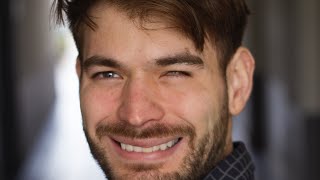
Adrian Rodriguez, CEO of DreamLinks, shares his journey as a visually impaired founder building AI-powered tools for creating virtual 3D worlds. He discusses how he learned to use technology, the challenges he faced as an entrepreneur, and what inspired him to focus on inclusive design.
Chapters
I am so thrilled to introduce to all of you today Adrian Rodriguez, our first speaker for winter quarter 2024. So quick note. Adrian is the co founder and CEO of DreamLinks, a startup developing AI powered building blocks and that make creative virtual 3D worlds as fun as playing with LEGO bricks. Prior to founding Dreamlinks, he taught game design at Street Code Academy, created a web design course for blind programmers, and worked as the CTO of AmpaWorks, a company that uses computer vision to automate inventory tracking in hospitals. Adrian's entrepreneurial journey follows from his own experiences with technology and creativity. Born legally blind, he struggled to write legibly, let alone make visual art. Then rapid advancements in computing made it possible for him to learn graphic design and ultimately work as a UX engineer. This experience inspired Adrian and he resolved to further unlock the blind community's creative potential by developing inclusive design tools. He earned a B.S. in Computer Science from Stanford. So he was in this class twice, right?
At least.
At least. And he is pursuing a PhD in Human Centered Design and Engineering at the University of Washington. He has shared his work at such venues as Atlantic Live and tedx Stanford. So welcome back, Adrian. The floor is yours. Thank you so much for being here today.
Thank you, Emily. Like Emily mentioned. Oh, thank you everyone. Like Emily mentioned, I love this class and this is really a huge honor for me to get to be here today. So. So thank you so much. I'm curious, has anyone here ever heard of the Balmer Peak before? It's a bit of a joke that the best programming creativity happens when you have exactly one drink. And I'll admit that I'm totally sober, but my sleep deprivation surely is at the level of a couple drinks, which is good news because my goal is to be very candid today. I want to give you guys pretty much everything I have because I got a lot out of this class, and so I want to give you at least half as much as I got. And so, to begin, I'm going to talk about some of the main influences that have inspired me as an entrepreneur. And to begin, I want to start with a story about my home country. I was born in El Salvador, and one of the experiences that was the most formative for me was watching a set of sea turtle hatchlings brave the ocean for the first time. And so my family and I would incubate these hatchlings in a shallow well, and when they were just ready enough to be able to move on their own, we would take a bucket near the water and we would tip the Bucket over. And miraculously, the turtles, without hesitation, would just move towards the Pacific Ocean. If you've been to El Salvador, you have mavericks not too far from here. You know how rough it is. And I remember seeing this as a kid and being just completely shaken by the experience because I thought, wow, like, there are really levels to courage in nature because they did this incredible feat with just really. No, without apprehension. And so that's something that really, really stuck with me. And so this is how it might look in the abstract, how this image of these turtles looked. But I want to give you guys a little bit of perspective on how I see the world. To start, this is how a regular person might look through binoculars. So we're going to use a bit of an abstraction. And so this is how I see very roughly with glasses. And so with best correction, I don't really have detail. You know, I can't see. I couldn't see any detail on my own fingernails. I can't count my own toes. And my field of vision is constrained. And so when it came to going to school, reading text became a really difficult thing to do because, well, the right represents what it's like to have my vision with respect to text. And so, to be a little bit more precise about my vision, I have no light perception in my left eye, and in my right eye, I have what's called a coloboma, which is a hole. It's a literal hole in the right eye that regular optics can't really correct. And so text at your readable scale is basically nothing to me. And this was a couple days ago, my, like, absolute best effort of writing online paper from a reasonable viewing distance, what would definitely be within the range of a normal writing distance. And I just can't do it. I never was able to do it. And I think the real downside to being disabled in this way is that this sloppiness comes off as incompetence. And this is something that a lot of people with disabilities face, is that if you are do certain things clumsily, it really counts against you in society. My next major influence, actually, is my father. And so my father is a prosthetist. I grew up with a garage full of arms and legs and signs about renewing human potential. And watching him work with patients every day and creating through his hands these molds and then pouring plaster into these molds and then ultimately making people walk again is something that really stuck with me and I think inspired me to try and renew or maximize my own potential. And fortunately, there were a range of visual prosthetics that really exploded during my lifetime, during my childhood. And I got to be a guinea pig for these. My family and I, when we came to America, we found a public school that was willing to fund some of these experimental technologies and let me give public school my best shot. But as you can see, it took a lot. And I felt often really over encumbered by having to carry around all these things. And actually, eventually I had to carry so many different things that the school recommended I maybe go to a school for the blind because it just was difficult to, for example, accommodate one of these devices that would take up a desk and a half. I'd have to leave class early, get to the next class a little late. And it just, you know, as a teenager, I wasn't really willing to put up with this at a certain point. And I eventually started to kind of resign from school. And the other thing is that these technologies were great, but in actuality, this is what I see when I look through these technologies. I can only see a couple characters at a time. But then this renaissance happened in consumer electronics where everything became miniaturized and the most valuable company in the world happened to ultimately kind of become a camera company. And thanks to that innovation, thanks to this consumeristic coincidence that benefited me, I was able to get rid of all these devices and use these really incredibly engineered cameras to see more at once. Right. You had better displays. But not just that. These devices were extremely engineered to be fluid. If you ever use a TrackPad on the MacBook, you know what I'm talking about. It took a very long time for other laptops to catch up. And for me, the combination of the fluid responsiveness with the fluid rendering of Mac OS made it so that, sure, I may suddenly be able to see a finite number of characters at one time, but I can move through the other characters adjacent to them so quickly that it's almost as if I have a larger field of view. And this really unlocked me. And before I knew it, I was here at Stanford, which was really, really apply a plot twist, to be honest with you. And then this happened right as I entered standpoint. You might remember Google Glass. Yeah, I know, it's kind of a meme. Meet me in front of what's a glass hole? Always a glass hole. So I saw this video and I thought, wow, this is obviously the next frontier. And I want to be clear, this video came out in, I believe, 2011. Google was far away for me to deliver on this promise. And the jury's still out on whether anyone is still able to deliver on this promise anytime soon. However, I think that the premise, I think that the prompt, the vision of having situational computing that is aware of where you are and can basically annotate your environment for you is an unquestionable theoretical breakthrough for the blind and visually impaired community. And so I saw this video and I thought, wow, if I can just help push that movement even 2 degrees in the right direction, people who see maybe a little bit less than I do might end up at Stanford or might end up to go on and fulfill whatever it is that they want to fulfill. Because for me, genuinely, I would not have been able to come here, which was my dream without these technologies. It just would not have happened. And so I am now going to tell you a story of how I have gone from being inspired by this video and grappled through all the hardship of realizing that this technology is not going to come tomorrow to where we are today. Before we get started on this journey, this game, so to speak, I want to talk a little bit about the moveset. What are the capabilities that we have at our disposal? And this gets actually at one of the first lessons I want to share with you that I learned from etl. I believe it was the founder of Polyvore who said to us, do the hard thing. And so what do we mean by the hard thing? Well, I actually was more of a humanities kid growing up. I liked writing short stories and reading poetry. But again, I couldn't deny this love of technology. And so when I arrived here, I was sort of torn. I was like, should I go? Should I go CMSIs? Should I go STS? And these are all like, really tremendous majors. We didn't really have an art discipline per se. And time and time again, I got so much cultural backlash. This is a very technocratic place. And I don't think that's. That's necessarily a bad thing, especially for undergraduates, where when you're 18, 19, 20, it's really such a great time to immerse yourself in technical field. And so these question marks are what I would call kind of your secondary skills. So you are here now. You have unquestionably proven that you can learn and you can express your knowledge, you can listen and you can speak at an incredible level. These are your primary skills. You already have them. The question is, what will your secondary skills be? What will you do with your time at Stanford or your time at college? Well, I chose to learn design and engineering, primarily engineering at first and I am just so grateful that I did those things because in my opinion, there is no greater advantage you can have in this game of starting technology ventures than being a technologist. It seems kind of obvious and it's not always the most fun to eat all those vegetables, but. But it is absolutely worth it. And I would very much encourage all of you to take the hardest path that makes sense for you with respect to how much technological growth you get out of your Stanford experience. You're just in this incredible buffet and don't leave a crumb if you can help it. All right, so what is this game? Right, One way to think about this game of entrepreneurship is sort of the unfortunate way of appraising one's value, which is quote the game, which is what's the shortest path to a Forbes list? How much money can I get? How can I further myself not just from everyone I went to high school with, but now how do I further myself from my peers at Stanford? And it is obviously a sick game. And it's a game that's also generally marked by arbitrary deadlines. Oh, what am I going to say in my five year reunion? What am I going to accomplish by the time I'm 30? You don't want to be in this mindset, but there are so many driving forces that push you in this direction. There's peer reviewed science that suggests that all scientists publish their breakthroughs or the majority of scientists publish their breakthroughs by the age of 30. We have the Forbes 30 under 30, etc, etc, and so you almost have to fight against this mentality. But as you'll find out as a technology entrepreneur, you cannot move the pace of technological innovation past a certain point. All right, so I'm going to tell you about three startups that have formed me and that I would say I could plot on this traditional curve of success. The first one is called Curist, which I founded as well. Co founded as a freshman here at Stanford actually. So fast forward actually to sophomore year. It's something that began freshman year and will return to that origin. But I worked with a student named Matt Mistele and a student named Nadi Jiang Rong Wang, two brilliant people. And we all were really fascinated by what Google Glass could do for healthcare. In particular, Nadi, who is now an md, she went to Cedars Sinai, is now a practicing doctor. She came to me with this idea, she said, hey, look, we are just having some really basic problems where I'm from. She's from Thailand and she had traveled around rural Thailand and seen, for example so much medical malpractice happening just because paper records would get lost and people would die. And it seemed like, you know, as young engineers, we could at least put together a basic CRUD application to like manage some patient records, hit a HIPAA compliant database. It didn't seem like rocket science, it seemed like something we wanted to try next. And so we did just that. We went out to Thailand, thanks to Nadi, and we found some sponsors. We actually went through Cardinal Ventures, believe it or not, where I got to meet Constantin Buhler, Olivia Justine Moore before they went and became hyper successful VCs. And anyways, when we were in rural Thailand, we brought Google Glass and we were just experimenting, we wanted to see, okay, is this just, are we just sipping our own sauce here or is this hands free paradigm actually going to be good for health care? And so we brought some mobile applications next. We brought some mobile applications, we built some web applications. And what actually happened is that while we were there trying to demo our fancy futuristic technology, a team of nurses accosted us and said, hey, look, we literally are struggling so hard to use our electronic health record system. We have an on prem database, we have a schema. Can you help us clean it, do some migrations and then build a nice front end over it? And this was around 2013, 2014, when web applications weren't quite that pretty, right? And so this was actually just a huge unlock for them. And to us it wasn't the biggest lift in the world, but it was a first lesson in the reality of creating value versus promoting technology. And believe it or not, this system that we built has gone on to serve thousands of patients in really remote clinics. And we actually even gave a convocation address at Chiang Mai Business School, believe it or not. And we had some sponsors, they took some cool Google Glass photos and it was kind of funny to feel like I was famous in Thailand for a summer. And then I came back to my junior year and realized, actually, I don't know, that I want to run a electronic health record company serving emerging markets. I. I hadn't done a Silicon Valley internship yet. I still wanted to be a kid. And so I came back and eventually did my Stanford career, interned at Palantir, and then was out on my own. So fast forward AmpleWorks. So I went from a team of three, core team. And I actually also do want to shout out Alina, Luke and Sarah park, who contributed to Keras as well. But I'm about 25 now, been out of school for a little bit. I've Learned a couple hard lessons about what it's like to not succeed as an entrepreneur. And fortunately I find this team of doctors, John, who is just to the left of me, and Bianca, who is a PhD in neuroscience and a practicing nurse. Anyways, they had realized this inefficiency in basically inventory management. They thought, seems like computer vision has come a long way. Can we set up some cameras, automate inventory? And they were totally right. The technology was actually pretty ripe. There were some workflow challenges around it, but we ended up building this system, trained a bunch of option detectors. A lot of it was building pipeline, to be honest with you, and then training a bunch of models on vaccine boxes. And it looks like things were going well. They raised from 500 startups. I joined right as they raised from 500 startups. And so it was one of the. I was the first full time cto, but they had a classmate from Wharton who had helped them prior. Anyways, this was looking good and then Covid hit and we had funding from Cedars Sinai and so we were actually at Cedars Sinai and we had to pack up all of our stuff. There are no more vendors. And it kind of dawned on me that my salary, I was the only full time engineer at the time and I was just going to probably run out our runaway and I needed to pivot. And so it was a hard lesson. And a little bit of time goes by, a little bit of time goes by and I finally find my next gig, which is a company called Convictional, which was funded by Y Combinator. And when I joined Convictional they were already grooving a little bit. The product wasn't really there yet, but they were creating value for people. And now they're, I believe, the number one dropship platform in the world for retailers, if not everybody. And it's become an incredible platform where they've automated away a lot of the difficulties in businesses trading with each other. So if Shopify makes it easy for you to sell your stuff to anyone, Convictional makes it easy for you to sell anybody else's stuff. And I won't lie, I wasn't like enthralled by pivoting from Google Glass. Let's make the world come to life and be magical and accessible to making B2B trade software. But I got to get a lot of reps in and I finally got to see a company grow. We raised a Series A, then they raised a Series B from YC Continuity. And I would say this company is definitely going to be a unicorn. And it was just so cool to see, you know, from the founders, what they were doing, what things actually looked like. As you know, we evolved from, from 15 to 50. But of course, this wasn't my journey that I had been on. These, on some level, were concessions. All of these startups, all of these ventures were actually concessions. And like I mentioned, my journey has been to try and continue this tradition of technology trickling down and helping people with visual impairments, because, again, that just was. That's my way of saying thanks for the good fortune that those things have brought me. And so I'm going to talk about the seeds behind each of these ventures that actually led me to join them. This is how much space it takes.
To label something in what's considered large font.
And this is how much space it.
Takes to label something in Braille. Currently, if you're blind or visually impaired, these are your only two options, and they're both static and inefficient. There's no way you could ever represent all the information on this jar in either of these two formats. However, using reprogrammable QR labels such as this one in my labeling software, users could use their smartphones and by simply looking, could create and read these labels by speaking what they wanted them to contain into their smartphones.
And so the video goes on a little bit, and then the punchline is, I eventually say, and this would be amazing for Google Glass, because flailing your smartphone around isn't exactly good ux. And I was fortunate that Google had a competition called if I had Glass. And it was basically just an open competition to the public where you had to tweet out ideas for what to do with Glass. I just spammed it until they finally took me. Excuse me. And I was able to. We ultimately got four pairs of Glass between my co founders and I, and we started messing around with the software. And we found that the Glass platform at the time had basically become just kind of Android on your face and didn't really have augmented reality capabilities. Right. It didn't have lidar, which Google would eventually make, Project Tango, which is a tablet that had infrared. And we experienced it with that as well. That was my kind of senior project here. But the reason I got into Curious, which was the EHR application, is because I wanted to make these labels for blind people. And it just opened up this door because Nadi saw this opportunity to take that framework we were developing and use it for ehr. I never would have. Never would have occurred to me. And it was funny because, like the. The deal Was that, okay, we'll go and we'll write this software for these hospitals. But I want to test this app with at least one blind student in Thailand. And so this was a blind student in Bangkok who was trying out our labeling software. And it was really great. And I think it was kind of my. The first step to my PhD, which I, in retrospect now seems sounds obvious that I would have enjoyed doing that kind of work. And so from there, I want to talk about group theory. So group theory, as you can see, I have it really high up on. On this kind of sort of personal actualization journey. And that's because group theory is like literally an abstract theory, right? It's like as ideal of a thing as you could name something. And as in retrospect, I sort of realized that that's exactly where my head was. You know, on some level, it was. It was all flower power, but at the same time, it was the essence of what I'm still trying to do.
Blindness is a puzzle, like most things in life. And I differentiate a puzzle from a problem with the notion that a puzzle.
Has all the pieces you need to solve it. Right?
It's a matter of performing the right operations in the right order. And in fact, that is the landscape of disability in 2018. Given the technology that we have, given the connectedness that we all share, we are uniquely equipped right now, this generation, to solve entire classes of problems that previous generations considered to be completely immutable. Things that would not change, things that would always be bad things. And so this picture represents me teaching what are my students. Thanks to the help of a teacher assistant of mine named Denny Lucas. She and I co designed this Rubik.
And so this is the punchline. So, like I was talking about in the video, there's a lot of stigma around disability. Blindness especially, comes off as incompetence. And there's a long legacy of people interpreting blindness as karma, as you paying off something terrible you did in a past life. And some of these attitudes still persist, and they persist in parts of Southeast Asia, as they do everywhere. And so the first time we went to Thailand to do this EHR record, we stopped by a school for the blind in Pattaya. And years later, a friend of mine who had helped create an inclusive design class at Stanford was going to go back to do volunteer work. And she said, hey, we should maybe collaborate on something. And so I thought, whoa, like, I'm not really, you know, Google Glass is, you know, AR is not happening tomorrow. So it looks like where I can maybe create value is in transferring these skills, right? Maybe we can computationally design things. But then I realized that there was this social barrier of like, why invest in this population? And there have been a lot of governmental programs in the US that have excluded the blind specifically because it seemed as if it wasn't worth the investment. It's tough, right? But you know, when you're so out of sync with the environment, there are hard truths around how the government needs to make decisions. But again, technology has just radically changed the outlook for this community. And to start, we needed to make a social statement, right? We needed a symbolic outcome. And so what we did is we taught the solutions to the Rubik's Cube as just an exercise in control structures. Here's an if statement. Here's a for loop. We weren't trying to speed. We were literally just trying to demonstrate that a blind person could use control structures. And of course they can. And all we did is we took a hot glue gun to this Rubik's Cube. We later found out Rubik's actually sells a tactile Rubik's Cube. But how it goes. And so we got this student named man to solve it. And then I joined a new team. And so I want to shout out my freshman year roommate, Ken Chan, and I also want to shout out a special guy named Trevor Fried, who banded together with me and his family backed us as well. And they were just really, really remarkable allies. And so we ultimately got an opportunity to go back to Thailand and scale up this work. So initially I had gone with Danny and Stedman, whom I will mention in a second, to, to do this first course. But I then went solo and pitched a senator, a royal legislator named Dr. Montien. And basically he helped me raise funds to scale up this class at a national level. And so I got the band together and we set sail. And so you saw me teach a blind person at Rubik's Cube. And now you're going to see two low vision people to help each other with the Rubik's Cube. These are two of my students who are both blind. One's blind, one's low vision. Okay, Thank you very much. So before I knew it, the best day of the class was when the students came in with their own Rubik's Cubes that were better designed than mine, and they were selling them in class. Yeah, these kids are awesome. And we didn't just teach them this exercise in control structures. We actually taught them git and the command line, and we made websites. And at the End they got into teams and they deployed a website on GitHub pages using Jekyll, which Steadman actually taught me. And it was just so remarkable to see the entrepreneurial spirit. And I don't want to mythologize disability, but I do think there's a reality that when you're just not with the mold, when you were the peg that doesn't fit, you kind of have to be in an entrepreneurial mode, in a problem solving mode. And it kind of seemed like no surprise that all these kids had these entrepreneurial ideas and it was just so cool to get them to express it. And to me, this is the height of my personal success in my life thus far is getting to be a part of this course. And this is Dr. Montien, the royal legislator who is blind, who is again, basically a senator, a royal legislator in Thailand, who came to the class and gave this brief address.
Let them be lazy and we will be crazy. Okay? Let them stay still and take good rest and we will create the path for them to walk.
We will create the path for them.
To walk as we create the environment. Some of you may be beginners, some of you may be in the intermediate level and some of you are already in the advanced level, hopefully. But I think you already know what it means to be a creator.
I think you already know what it means to be a creator. So a simple message, but a universal one, that this community is hungry to participate in the creation of the future because the present is not working for us. And so of all the people in the world, we are definitely at the forefront of wanting to make the future as good as possible and have a hand in making the future as good as possible. Again, I was extremely idealistic through group theory. And my dream actually was to basically have a consulting company that would have an internal tool for designing websites, basically like a an internal IDE that would use tactile pieces and make it possible for people to go beyond templates and churn out hyper accessible websites because there was a big demand in the market. It hadn't really been as operationalized yet. Now I think that making, you know, there's a lot of services for making accessible websites. And I came back to Stanford and I pitched a group of investors called the Farmers. You guys may not have heard of them, but there is a group here of faculty staff that together invest in very early stage companies. And so I came and I pitched them and they sat me down. They said what you are, the business model of what you're pitching is a Consultancy. And in order for those economics to work out, here is how much you will need to build. And I realized I really had a lot to learn and they were absolutely right that I was not talking about a venture scale business whatsoever. And so I sort of just had to make peace and realized that this vision was not compatible with economics of startups. And this was my first lesson, I think, in balance, right, in that you ultimately really do need to find the midpoint between your personal journey and the reality of the world, of the systems that actually drive us. And before we move on, I do want to take a second to highlight Stedman, who's actually here. Stedman? Yeah. So Stedman is basically the person who trained me as a designer. He designed the Group Theory logo and he was with me in Thailand. He and I lived together in a one room. So I didn't tell you how broke I was through all this, but at 1.7 and I were living in low Tokyo, in Los Angeles, in a boarding house. I don't know how to describe it. It was like worse than the dorms here. And we were sharing a bathroom with like who knows how many people. And yeah, I think we had like a cot. And it was like we had like his cot was a pool, like a mattress that was under the bed. And it was hard times for sure. But that's one of the greatest things about this journey, is that you can really strike extremely deep friendships with people who are just, you know, similarly crazy. And so I'm so grateful to have him still be around. And so I want to talk about this left side here. So we talked about your basic operations, right? And I would say that these lessons are kind of your special abilities, right? Your special abilities. And maybe you don't use them all the time, but when need be, when that extra bad boss comes, you have up your sleeve. And so this next journey is extremely personal. But as personal journeys tend to be, it gave me a number of special abilities. So I met in Los Angeles when I was working at AmpleWorks, a woman named Molly Burke, who is a sensational YouTuber and is totally blind. And she really just turned my world upside down. I had never met someone like her. She was just, you know, beautiful, smart, and had created this community to help people through bullying and mental health. There are things that she had overcome in her life and she would have this Patreon where she would go live and you know, in a sense, like facilitate for people. And I just saw her use this platform she had built of 4 million subscribers across Instagram and YouTube, et cetera, to do really good things. And obviously, I fell in love with her and we moved in together. And if you want to see it on the Internet, I would encourage you to watch her videos. They're great. And I think she's really educating people. And so I could do a whole talk on just how great of an entrepreneur she is and the lessons I learned from her. But suffice to say that I took away two really important things. The first is the notion of stewardship. And one of the most important lessons I learned at ETL was this work with the people who are staying after the party to clean up. Right? Those are the people you want on your team. And I'm sure, like, someone's parents is, like, rolling their eye right now, but like, the. But it's true. It's that, like, there's just not. Starting a company is not glamorous most of the time. You have to be willing to take out the trash. You have to be willing to write code. You have to be willing to go into Illustrator, just do whatever needs to be done. And I think that for me, entering a very serious relationship with another person with a disability and who had service animals and a lot of. For me, it was this huge opportunity to kind of understand what it means to care for another person every day, no breaks. You know, my first breath would revolve around doing something for us. And that was something that I think has carried with me as I look at my companies now, et cetera. And of course, if you have watched the videos, you know that Molly and I are no longer together again, I would encourage you to watch her videos. I stand by the way she has portrayed our relationship. And it brings me to another lesson that I heard from Melinda Gates at etl, and it was a lesson she was promoting broadly, which is this idea of let your heart break. And no one wants a broken heart. No one wants to be in that mode. And it's not a good mode to be in. It's not a productive mode to be in, but what you want is the heart that comes back afterwards. And for me, going through such a profound experience with this person and me realizing what my limitations about being the right person for everyone, you know, you ultimately realize that there is, you know, such thing as fit, et cetera, ultimately, I think has made me more willing to accept my path in the world. And you will have to do that as entrepreneur. Right? You can call it pivoting, but it's deeper than pivoting, right? Because we get attached to the things that we make. We love the things that we make, but we need to let that heart break sometimes so it can continue to grow back. And so we're rounding out our special abilities. Which brings me to the culmination of group theory, brought slightly down to earth. And before we go further, I want to highlight some more people. Gabe Alvarez is. My freshman dorm bailed me out of at least a couple of computer science assignments. He was the guy, no doubt, and I'm just so lucky that he was willing to work with me. And so, again, freshman in Robley Hall, 3C, and he is head of software for what we're building. He's just an extraordinary person. One of my best friends in the whole world. And then Elliot Mueller, he was really the leader on the floor leader of the Seattle makerspace. And I went to him in a pinch trying to 3D print some stuff, and I talked to this guy for 10 minutes, and I could totally tell he was just absolutely brilliant. And one thing he told me that perked my ears. He said, oh, man. I was trying to get a job as a janitor at the University of Washington so I could work the makerspace. And of course, I thought, well, here's a real steward. Here's someone who knows what it takes. And I will say, having worked with Elliot for months now, I am so fortunate to have his talent and his perspective, and so I'm going to run things back a little bit. So Group Theory created some technology, and it's technology we never brought to market. But my goal was, how do we get blind people to go beyond the template? So the problem with interpreting a computer through synthetic speech is it does not tell you the relative size and position of elements on screen. The only way around that is tactility. It's just a different form of media. And so at the time, I was working on IoT systems, right? Amper works with IoT cameras. There's a whole nother guys. There's startups that I just didn't even put up here that were like arcs in themselves. But suffice to say, I spent a lot of time working with websockets. And I knew what could be done. I knew what could be done with QR codes, I knew what could be done with websockets. And I thought, you can pretty much entangle anything with the browser. Why not just make websites? And so we did this. And then I went to street code and started teaching Roblox. And I saw the value of 3D. I thought, okay, how do I Get my kids to make 3D worlds, because this is a phenomenon, right? It's over half of kids 4 to 12 play Minecraft. It's really right, like a cultural phenomenon crucial for development. Parents believe that it helps with spatial reasoning, something that's key for blind people, collaborative problem solving, et cetera. Minecraft is great. Kids love to build things. How do we get blind kids to create 3D worlds when even creating 2D layouts is really prohibitive, given the current paradigm of synthetic speech. So what you're seeing here is my co founder Gabe built a simple 3D platformer. This is actually the official Roblox curriculum that we teach at Street Code Academy. Game design one is you basically build Super Mario 64, an obstacle course with a spawn point, a checkpoint, some hazards and a win point. And even in Roblox Studio, which is a hyper simple way to do it, you still need to dive into a file directory, you still need to move assets around to do such simple things. And I find that most kids just end up fighting with Roblox Studio and they spend just a fraction of time actually designing a fun game, trying to think about what would be a fun jump. And we have not tuned the physics, so pardon us for not being good at our own game. So the reality is that you can actually just map these movesets. And so it is augmented reality. It works with your phone as well. So again, simple moveset emerges to a really wide range of creations. So that's what these are. We call them dream links and they're quite strong. We've been working on them for a long time. They have these magical magnets that attach in any direction. And guys, people always talk about startups. What is a truth that you believe that everyone else disagrees with? I think Legos suck for real. Like I struggled so hard with Legos as a kid. They're small, you know, if you put a bunch of two by fours, you can't add anything to the side. I know they have cubes. I'm actually currently running a study interviewing a lot of blind kids on creativity. And we all struggle with Lego. And so next. So this is Dreamlinks and we are launching later this year. We basically have a variety of fun things in store. We're excited to show you more when we can. But I want to bring things home because this isn't a talk about my latest scheme, it's a talk about how to create value for you guys as you go on in your journeys. And I wanted to highlight a professor here named Clyde Wilson who Actually teaches nutrition, and he also teaches a class called Analysis of Human Movement. At least he used to. And he was just one of the most profound people I've met. And he is going to share something about nature and how you have to sort of obey your own nature in the context of nutrition. But I want you to keep in mind what I've said about going with the flow of the world as you start your company.
Changing how we eat is really hard because what motivates us to make any decisions comes from part of the brain near our brainstem, our limbic system that almost decides for us what's important to us from moment to moment. And depending on what's happening in your day, like, if somebody yells at you or you're upset about something, then eating a donut or having some cake can compensate for that. The reason is because all of the dopamine signals that drive us to do things go into this one part of the brain. That is where we decide what matters to us. And whenever we respond to a dopamine drive, like for sugar or for reaching out to someone for love or doing a good job at work, there's an opioid release that rewards us for doing that. So when sugar hits, tips our tongue. Oh, boy. Chai cappuccino. When some sugar hits your tongue, there's an opioid release. So that's your brain basically patting you on the shoulder, saying, good job. You did something I wanted you to do. You followed your survival instinct of physical contact, emotional love, sugar, fats, satiety, all these things that were rewarded for. So it's kind of like we're surfers on a wave. The wave is 90% of our brain that's pushing us to do things to help us to survive and to be happy. And the prefrontal cortex, the conscious part of our minds, is the surfer on that wave that can dance and be artistic and change paths a little bit along the surface, but cannot change the direction of the wave. Trying to just decide, I don't want sugar is like saying to the wave, I want you to change directions. The wave will drown you. It will kill you. And the way that that manifests itself in the real world is obesity, suicide, depression. That is the wave saying to the surfer, you can't decide what the underpinnings of survival instinct and the core primal version of instinct for happiness is. All you can do is. Is be artistic on the surface and ride that wave.
All you can do is be artistic. That's not a bad deal if you really think about it, and that's my last lesson here, is that there will be times when you want your company to scale fast, but there's just no market. When you want to make a breakthrough product, but the technology just isn't there yet. And you can hustle, you can ship something that isn't good, you can try and make a market, but the reality is that you're going against the wave. And you can only do that for so long until it catches up to you. And so with that, we have our four lessons. And if I could sum them all up into how I want you to pursue your entrepreneurial dreams, it would be this next image. I believe you should be a technical turtle with a fast broom hand and a metal heart. Because the only thing that's certain is that there's a wave coming and it's going to be a mess when it hits. Thank you so much.
Hi, thank you for your presentation. Can you share with your experience of how do you monetize your projects, how you, how did you do with your, the startups? Is it like a, like a, can you earn money from this? Or it's just like, let's say like a charity thing.
Right, right, right. So it's almost like asking like the common thing people say is like, oh, you have a product but you don't have a business. Right. And so what's the business model behind a toy? And so, I mean, I do. We could look at Lego, you could look at Roblox. I very much believe that Dreamlx in particular has a lot of potential as a great toy for kids. And so that's a consumer market that follows consumer business modeling, et cetera. Right. It's not B2B enterprise. Right. You're not going to get a nice SaaS business with hyper predictable margins. It's almost like releasing music. And I concede that that is the case. However, if I were to make a business case for Dream Links, it would actually follow the adage of you start with a niche, schools for the blind, and then you pay, build the technology. You have to imagine there will be next gen Legos at some point. Someone will make a next gen Lego. Lego does $2 billion a year. Yes. Much of that is on licensing other recognizable brands. They're not really making better Legos as much as they are just slapping brands on them. And I understand that that's a moat in itself. And so I don't mean to trivialize what they have done, but I do believe that there is a market for toys, a big market for toys.
So when it comes to project ideas that can turn to a startup, I wanted to ask whether this was merely because you felt like this is something that would change the people life who experience the same thing that you're doing. I mean, we often think of ideas that should be prospering and it's very difficult to get one. How did you have the courage to start to pick this idea? And you know yourself that the target audience are not really. There's not a lot like huge numbers of them to justify the journey to bring up your product itself.
Right? No, it's a great question. And one thing I didn't touch upon too much is that along this social inclination, there is this technical understanding of knowing technology for a very long time or relatively long time and being able to make reasonable bets. So it's like as much as I believe in a social cause, I believe in a technology and where I believe it can go and the kinds of products that will come out of that trajectory. And so for instance, I've been working on AR since Google Glass and I am optimistic that in the next five years there will be a real market for it and it'll enable all these crazy new mixed reality experiences that are just. Kids are going to go crazy for them. And I think something like we will see Minecraft meets Lego that will happen. And I just believe that because I know the technology will be there. And I work with kids, I do structured research with kids through my PhD and I feel I'm still one of those kids. I really want it. And so it's part of this social inclination, but then also just this fascination and dedication to the technology itself.
All right, I know we are very much over time. Thank you so much, Adrian, everybody. Give them a huge round of applause. Thank you.
Thank you.
It.
More from GHION.AI


O processo de reconhecer limites, mesmo quando a vida parece exigir sempre mais.





Depois de tantas histórias, aprendizados e pausas necessárias, o @interior_iza está de volta



