Anne Wojcicki: Driving Discovery and Disruption [Entire Talk]
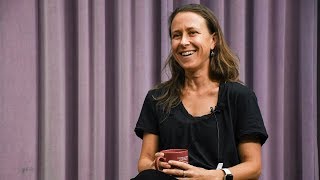
Anne Wojcicki co-founded 23andMe after frustration with profit-driven healthcare and the drop in genome sequencing costs. The company treats genetic data as its core asset, publishing research and now developing its own drugs. She discusses privacy, consent, and expanding beyond DNA into microbiome and wearables.
Chapters
I would love for you to tell us your story of what happened from getting. From being a biology major. Do we have any biology majors here? Okay, a handful of biology. I was actually. I did my PhD in neuroscience, so I'm a biologist as well. And how did you go from that to starting 23? Andme. Can you give a little bit of a snapshot of your story?
Sure. So I, I think the reality, that's the advice I give to young people now. The reality is whatever you think your life is going to be at the age of 18 to 22, your life will not be that. And so in some ways, the best thing you can do is just really push yourself to keep learning. And I was really lucky because my parents were people who really didn't worry about, oh, you have to find what you want to do right away. And they were really supportive of, you should find what you're really passionate about. So I graduated. I was a biology major. I always dreamed I was like, oh, I should so want to be a doctor. I love my pediatrician. I like sick people. I love medicine. I love molecular biology. I find it so fascinating. But there was something that just didn't feel right. And so I graduated college, and I was one of those people. I graduated with no job plan. So I drove cross country. I was a nanny. I nannied, actually, for a Stanford professor, John Donahue and his wife in the law school. And my mom made me go to a job fair. And in some ways, it kind of shows how random life can be at times. But I went to this job fair and I gave my CV to someone and they took my CV and it ended up being for Montgomery Securities. And she then knew somebody, which ended up being the Wallenberg family in Sweden. And I know there's a bunch of Wallenberg buildings, and lo and behold, they interviewed me. I only took the job interview because I wanted the frequent flyer miles and as, like a good, scrappy Stanford brat should. And then I took this job and I had no idea. I didn't even know what a balance sheet was. And here it was like the Wallenbergs. And I met Marcus Wallenberg, came out to interview me, and I was like, I didn't know who he was. I had him meet me at Printers Inc. I was in flip flops and a skirt, and I was like, you get your own bagel over there. And in some ways, life is very random. And I ended up on Wall street. And for 10 years, I was investing in healthcare companies. I didn't know anything. I. I didn't even know what Wall street was, but I knew that it was super interesting. And I was learning every single day and learning about how I had this passion for molecular biology and for me to be able to meet with these amazing CEOs who are pioneering the world. And my first project was xenotransplantation. And I would fly around the world and meet with great academics who are trying to understand whether or not you could transplant animal organs into humans. And so at some point, I realized, like, I wasn't. Not that I wasn't learning, but I felt like the healthcare system was not reflective of my values. And I got into investing and I got into, you know, the whole business because I was learning. It was so interesting. And I love, like, the potential of, like, oh, we're all going to live better and it's going to be better, healthier lives. And then after a while, I started to realize that healthcare is this, like, amazing money machine and it's $3 trillion. It's the largest part of our economy for a reason. There's so much money in health care. And I would have meetings with people who were CEOs who were like, oh, yeah, we're seeing margin expansion because we're really good at collecting from the uninsured. And you're like, oh, margin expansion is good, but the fact that you're squeezing poor people doesn't sound great. And so I just felt like there was this ethical debate for me. And so in some ways, 23andMe came out of this frustration that I saw that the healthcare system was not reflective of me. And I spent probably a year just shorting stocks. In your anger. I was like, I'm just going to short everything. Everything fails. It all sucks. And I sat with this one professor and we were talking about. It was obviously at the early days of Google. And that was on my mind and has sort of this discussion like, well, what if you just had the world's health information? What could you do? He's like, well, you could solve everything. I was like, well, then we should do that. And it was the beginnings of the social networks and crowdsourcing and MySpace and it was this idea, well, what if everyone. We all have a common interest in our health. You look at Livestrong and Susan G. Coleman and all these groups, people come together and they care. So why don't we just all come together with our health information? I don't need pharma and I don't really need all the specific academics. We, we can crowdsource the world's largest study and empower each of us with our information, like, let the people rise. And why is it that your healthcare system is like, why are they all telling you what you want? No one ever asks you. And so, like, 23andMe came out of a rebellion. And in some ways, like, we've always meant to be a rebellious brand. It was always about, like, I want to change the whole system. And the beauty of Silicon Valley is that you can be totally unrealistic with your expectations of what you can do. And I really believe, I tell people in the company all the time, I'm like, we really can topple a $3 trillion industry. It's going to be amazing. Little old 23andMe. But that's what we're trying to do, start a revolution. 23andMe came out of that sense of, I was super frustrated with the industry. I was very clear, seeing that the consumer has no power, that there's a potential for crowdsourcing. And I was fortunate to have the Stanford upbringing and this Silicon Valley community that was really supportive of, like, think crazy thoughts and, like, follow your passions and it's okay to fail. Like, everyone fails at different times. Like, do it. And I think that, you know, then came 23andMe.
I love this. I love your passion. And this is such a fabulous story, first of all, about the serendipity, but also how once you found your passion, you dug in deep. Now, 23andMe was such an early, early player in this game. I remember when it started, and this was sort of in this gray market. You know, there were. The regulations weren't yet. Maybe even the science hadn't quite caught up with what you were trying to do. The market certainly wasn't there, which was most difficult. And how has that changed over time? The technology, the market, and the regulations.
So the thing that has changed the least, ironically, is the technology. We're actually still using the same platform. One of the things that happened when I was, you know, when we were looking at starting the company is I was. I would do calls with experts, and I called somebody at the Broad, and I remember him saying, he's like, you don't understand. He's like, the enthusiasm we felt in 1999, we feel it again. The whole world's gonna change. And it was because Affymetrix had introduced this whole genome chip, and suddenly you could get all this genetic data, and it was somewhat affordable. It was like $1,000 a chip. And it was so cool. He's like, we're like kids In a candy store. It's like the potential is all there. And so in some ways, hearing that enthusiasm, the potential, that to me was a sign. We should start the company now because it's cheap enough and you can really get all this information. So the technology is the one thing I'm really grateful for. Illumina has an amazing product. It is reliable, it works. They drive the cost down. It just gets cheaper and cheaper. But we're on the same platform that we started with the regulation. In some ways, the regulation in the consumer market, those are two things. It's almost like I was lucky. From the investing world, I learned, like Amazon Back in 1998, we used to have these discussions all the time, like, will consumers really put their credit cards online? And in some ways that seems so crazy now, but that was the discussion. Like, we would debate it. Like, will they change their behaviors? People want to. How would you buy something online? And so in some ways I had this support. Like when 23andMe launched, the consumer was not ready. And to this day, after 11 years, the consumer is now starting to get it. But people have no idea why you would want your genetic information. And our society trains people in that sort of communist sense of like, you should wait for big brother to tell you what to do. If it's important, then your doctor will tell you what to do. So we've been. And it's one of the things I've learned, if you're changing society and how people think and how they work, you have to have patience. And so it's part of it is that you can't do a marketing study. And I can't go and have marketing people out there trying to figure out what do people really want. They don't even know what they want. We have to try and fail and try and fail. And I can see in my mind this world of consumer driven, affordable health care. And so we have to sort of create that. So we have to teach the consumer. So the regulatory side, when we launched, we believed, like, really simply, I own myself. Like, it's my body and my genome is just the digital representation of me. And so, like, of course I can get access to it. Like, why would I not be able to. That seems crazy. Like, why would there be any prohibition? And then my taxpayer dollars go to all this genetics research. So why wouldn't I be able to get access to that? All I want to do is connect my own body, my genome, and understand what's happening with all this research. And I already paid for that research. I want to see what it is. So the idea was we're not interpreting, we're connecting the dots for you. And sorry, I was like cold. And so we just felt like it was information. It was almost like this is your first amendment right, like you can see. And from a lab perspective, we felt like we fell under clia, which is the Clinical Laboratory Information act managed by Medicare as a laboratory developed test. And so, you know, we, you know, and lots of blood tests, like blood tests today and most genetic tests are all LDTs. So we felt like we were under that pathway clearly. Like one of the things that's interesting for me is like especially from an academic perspective, the history of medicine is so interesting. And you know, birth control tests used to be super controversial. And anytime the consumer is at the point of interaction, like it's a direct to consumer, that's really controversial. So we realized like that we were just getting. There was a lot of controversy around us because of the direct to consumer. And so we did have sort of what's now known as the most well read ever warning letter by the FDA's history, which I actually, in some ways I'm really proud of. I think that that was a sign that we're doing something really different. It was sort of radical. It's the change that we want and our approach to it has been to work with the agency and say, you know what, trying to fight with the agency or sort of that arrogance of like. Well, we'll show you, like part of it is that you to really drive change, you have to change the system. And so for me, the best thing that we've done is then partner. Partner is not the right word, but that we actually listen like we listened to the FDA and we said we're going to do all the things that you ask us to do and we're going to get a direct to consumer approval for our test.
Okay, this all sounds great and I'm all in. But there have to be some interesting ethical considerations here. I mean, once you give people this information for first of all, the question of what do you do with it? You've mentioned several times, essentially this data is also going into some central place and being used for research. So there's who owns that data and do you own the data? And also then what happens with people who get information that they don't actually. Maybe it's not actionable. Maybe they get things that scare them. What do you think about from an ethics perspective?
Yeah, so we. Is Hank Greely here? No, he's across campus. He's across campus, but you know him. Yes. So Hank is a Stanford ethicist. It was funny because, like, in the early days, we recognized there was going to be all these ethical issues and we could get an ethicist to work with us. And, you know, in some ways, like, ethicists were like, no, no, no. This is like, groundbreaking. Like, we're going to just comment from afar. And it's true. There's been a lot of really interesting sort of ethical questions that have come out of this. My approach to it has been sort of like, there's a reality. There's like, truth that comes with your DNA. Like, I can tell you whether or not you are related to your family members. And so the same way it's not fun to get a cancer diagnosis. And there's no easy way to couch that. Like, sometimes you just tell people, like. Or we make the data obvious, like, you're not related to your father. And is there an ethical debate about whether or not you should or shouldn't do that? I'm just a big believer that that was consumer choice. And I feel like there's truth about you that you should just be empowered to learn that about you. There's really interesting ethical debates in that you share DNA with all of us, you share DNA with me, you share DNA with your whole family. And so you might want to learn something, but your sister might not. And so how do you. You might learn that you or a carrier for the BRCA mutation, and your mother learns that she's a carrier for the BRCA mutation. And now your sister knows she has a risk factor, but she didn't want to know. So I've just kind of put that all in the bucket. Like, you have a choice to learn about yourself. The same way you have the right to ask about a family history, you have the ability to learn other things about, like, go and get a test on your own. So the reality is, like, we all share DNA in common, but we're about empowering you. And there's definitely considerations that I need to empower you with so that when you are getting this genetic information that you are aware. And we spent over a year with Hank and others on the consent form making sure that we were as thorough as possible helping think through what are all the different things that should come about with it. And I would say after 11 years of doing this, the number one thing that is with it is with family, is you might not want to know something, but your sibling does, or you find out that you're not related to. There's a lot of secrets that went to the grave that suddenly are unearthed and you realize, oh, Uncle Joe is actually just Joe. So there's all kinds of things like that that people start to learn. And we've always just kind of that approach. The best way to do it is just to be really candid. And I think we have a brand that is very direct and very honest and is what I've always said when I worked in hospitals, there's no easy way to tell someone you have stage four cancer. The best thing you can do is be sort of factual and then help make those decisions. And for me, what we try to do is be very give people the information and then create a community around it so people can start to understand what to do.
But let's just talk about privacy then, right? Because now the information is out there. It exists in the world, who owns it. And the consequences for me might be one thing, but if the insurance company knows or if the government knows or my employer knows, there might be some interesting consequences that are unintended. Can you talk about that?
So we do everything we can right now to protect your privacy. The reality is like, I'd love to see your genome. I'm sure it's wonderful and beautiful, but part of the reality is that your bank account is a lot more interesting and the banking. So when I think about people like the desire to hack in and see, like, oh, you know, you might have blue eyes or, you know, you might be the most salient, like, you might have a high risk factor for Alzheimer's. It's just not such a motivation to hack in. And it gets back to, in some ways, some of the ethical questions is that it's potentially more within a family. Even the insurance companies, like, when we talk about insurance right now, we will never give your information out without specific individual level consent. But we have the question, will insurance companies hack in? I'm like, well, it would be unusual for an insurance company to break a law to try to get information about a risk factor that they don't really have any great models built around. Plus, we also have this thing. We don't have legal chain of custody on our customers. So meaning that if you ordered five kits, I have no idea if you ever spat. So from a privacy perspective, I don't actually know that you are you. I didn't actually see you spit. It could have been your five friends spat. It just went to your address. And so I don't actually have a legal chain of custody on my customers. So I think that actually gives a fair amount of. Like I said, we do everything we can to protect the privacy of customers. But again, we spend a lot of time with privacy experts. And it was really ingrained in me that or hammered into me that privacy doesn't mean not sharing and that privacy actually means choice. And that people say, I want to have the choice to say no one sees my data or I want to have the choice to say all my family sees my data or make it public. That we want to enable choice and we need to do everything we can to respect your choice. I don't want to share it with anyone and we need to respect that. But I also need to respect your choice of saying, I want to share it with my whole family. And so we've enabled those kinds of sharing abilities with all of our customers. In terms of the research. We do consent. We ask our customers if they want to consent for research. So it's an opt in. Over 85% of our customers today are in fact opting in. And what we find is similar to this sort of goodwill nature of Susan G. Komen. Like, people want to help. You know, there's no such thing as a healthy person. Everyone has something. Everyone has allergies or migraines or I have Hashimoto's, like, everyone has something. And so we all want to help each other and we can all be empathetic to this fact that like, you know, like one of my good friends has cancer. Like, I'm like, everyone has a story, everyone has a friend who has something. You've all seen other people suffer. And we want to help. So the consent for us is like it's an opt in. We ask people then to take questions if you want. But it's always that ability. You have the ability to say, I don't want to take this set of questions or I want to withdraw my consent. So everything for us is, again, it goes back to that definition of privacy. It's about choice. And so if you want to participate and take every single survey question we have, do it. And then we will tell you what you participated in. If you don't want to, then don't do it.
So do you consider yourself a biology company or a data company?
Data data company.
So what do you do with all this data? I mean, yeah, I'm going to guess you have. How many data scientists do you have working with you?
It's my head of people. A lot. The answer is a lot. Okay, well, I think it's probably it's a fair amount. I mean, we have over 100 PhDs. We're over a third sort of PhDs. Sorry, I hate to bug so much. I just have to get more water.
There's some right here.
Yeah, I'm going to go through that. Just what you said.
Okay. There is more water on campus. Super. So great.
Hydrate, hydrate. Sorry, I don't want to start coughing like crazy. So we have, I mean, what we do. Like, we see ourselves as a data company. And I think, especially speaking to this kind of crowd, you know, the whole new world is about how do you use data. Like, we see what Google can do, we see what Facebook can do, we see what, you know, Netflix and Amazon. Like, all these things are based on data of customers. And so in some ways I look at this as a tragedy that the most important thing is not like, what movie you really want, which is very important. But when you go to the doctor, use your data to tell me what's likely to happen to me. Like, I find it crazy that we have this mentality where we absolutely accept, you know, oh, you're diagnosed with something like my friend diagnosed with cancer. Let me go and get five different opinions. Because there's not consensus. Like, we don't actually have the data to know what is the right thing to do. And so what we want to do is like, use our data to really transform healthcare. And so we have. I see us as like, we're a data company. The first thing we started doing was publishing. We have over 80 publications. We try to collaborate with as many different academic and pharma groups as we can because we feel like your data is really valuable for you and it's valuable for one study, but you could participate potentially in 100 studies. And our customers, we've actually seen that the average customer has participated in over 200 different research projects. So we're really about trying to empower people to participate more and more in research. So one of the next things that we do with data is we hired Richard Scheller, who used to be at Stanford.
He sat in that chair.
Oh, did he?
A few years ago, yeah.
At this talk. Yeah. Oh, did he when he was at Genentech.
Exactly.
So cute. Richard. So we hired.
He was my professor when I was a student.
Oh, really?
Yeah.
Richard. Richard's is a lot of fun. He tortures me all the time. So one of the things that also really frustrated me when I was on Wall street is that we have this horribly inefficient drug discovery process. It's potentially the only group I know that actively promotes how they get worse every year. When I started investing, it was 700 million to make a drug, and now it's $2 billion to make a drug. It's crazy. It's crazy that. I mean, this is where it reminds me of the communist era, of where you actively promote how much you are worse every single year. So something is wrong in the system. The whole approach, the mythology. Something's wrong. So my hope was that if we actually started with a giant human data set and you're getting insights from humans instead of potentially animals, would you actually have a higher likelihood of success? And I think that's where we've actually. I don't have the ability to say yes yet. But my hope that is, in 10 years, I'll be able to say, hey, by starting with a massive human genetic database, I was able to develop drugs faster, better and cheaper with higher outcomes than the rest of the industry. And so that is like, one of the main things we're trying to do with this data is like, how do we actually develop insights in our biology and then turn that into potentially therapeutic? Like, we publish papers and then also develop therapeutics. And one of the other things I'm also frankly most passionate about is, is that no one really pays for prevention studies. So, like, the whole question, you're neurologist, how do you prevent Alzheimer's? If we actually really figure out how to prevent Alzheimer's, who's going to make money on that? No one. So the question there is, who's going to fund that study? And that's kind of the reality is we're all. Every single one of us in the room cares about preventing Alzheimer's, but if I had a whole group of pharma execs, not that they're bad, but, like, no one's gonna make money off of prevention unless it's a pill. And so that's what I'm really passionate about. Like, are there lifestyle interventions? Is it food? Is it diet? Like, what is it we can do? Oh, amazing. Thank you. You're welcome. Oh, and a cough drop. Oh, thank you. So I think that's where I think there's, like, I lost my train of thought on that one.
No, it's okay. It's okay. But did you actually say that you wanna get into the business of actually developing therapies, or are you just partnering with companies that do that, giving them using your data and your.
Oh, no, we're developing drugs.
You are?
Yeah, we are developing, like, people. It's funny because I meet people sometimes. I'm like, no. We hired Richard scheller who spent 15 years at Stanford and 15 years at Genentech, something like that. And we hired him specifically with this idea. We want to develop drugs. So we currently have seven therapeutics, seven compounds or seven targets under development. And we get the question all the time where people are like well did you buy them? I'm like no, no, no, they came from the data. Like well did you acquire it? I'm like no again, came from the data. Literally it's all from our data. And so we've developed this whole pipeline of our data science. Like my consumer team, we bring customers in, we ask questions. We have a whole team of PhDs and survey methodology who figure out how to ask questions in the right way. We analyze the data and then we work with Richard's whole team about how do I translate all these insights into potentially drug targets.
So can you give an example and of that pathway? Because that's super interesting.
It is super interesting.
Where did you start, what kind of insights you got and what sort of therapy are you developing?
So the thing that's interesting about what we have done is that we don't do phenotype specific research. For instance, I don't say I'm going to go find people with Alzheimer's and I'm going to do a study on Alzheimer's. I take everyone, every single person in this room is interesting to me and all of you have something to contribute. So we follow the data and it's in some ways it's really hard for people to grasp that we have compounds in all kinds of areas like cancer, asthma, autoimmune and we picked those compounds or we picked those ideas because that is where the data was most interesting. And we look at the whole story where we can do a genome wide association study and then we can like looking to see is this genetic variant associated with these diseases. And then we can look at, oh, at this genetic mutation, people with that mutation, what are all the different conditions they have. So we can do all kinds of interesting, you know, analyses of the data that we have and we're using that then to develop these compounds and but we don't start with a specific hypothesis. And in some ways when we started the company that was one of the most controversial parts. I would meet with scientists and they would say, oh, this is a fishing expedition. Get enough data, you can find anything. And I think that's where in some ways for me not having a PhD or an MD was helpful because you can think I wasn't trained in a certain specific way. I just have this idea. A lot of data sounds good. And we've been able to show now that a lot of data, especially when it is collected and I have this appreciation now for the survey methodology team. Data that's collected, well analyzed in the right way, we really can get a lot of really fascinating insights.
Cool. In a few minutes, I'm going to open up to questions from the audience. So think about your burning questions about the industry, the company and anything else you have. I'm curious. Let's zoom out to the whole industry because things, the technology is changing so fast in so many different disciplines. What are you most excited about in this area of health care and prevention and genomics?
Well, I'm excited about us and we are too. I'm excited. What I enjoy, I think Silicon Valley is really, we have such a culture. There's brilliant people all over the world. But the thing that's really unique about Silicon Valley is we have a culture of risk and innovation. And it's helpful because that becomes infectious. It's okay to fail. It's okay to start a company and fail, and it's not okay in all areas. So what I enjoy is there's really smart people who have been through sort of the startup culture and have done really successful companies and they hit their 40s and they start to get sick or they know people who get sick. And so suddenly they become aware of health. And there's really good enthusiasm right now from people who I believe are willing to take risk and really willing to know how to innovate and build companies who are trying to build companies for sort of like the next generation of healthcare. And I'm optimistic, like, I'm really optimistic about 23andMe being able to partner with a number of these groups that can really be able to quickly get you data. So, like some of them that I find fascinating, like the ability to look at all your radiology and can you scan it? Like, is there machine learning that can potentially help scan that in a much better way? To me, that's super interesting. There's companies like Grand Rounds where you can get expert opinions online. I'm really excited about. So I'm excited about all this sort of like the Health 2.0 world and what's happening and the enthusiasm from Silicon Valley going into that. I'm also really excited and I think this is odd. A lot of people don't get this sequence 23andMe has almost no partnerships with hospitals. Like, we have no partnership with Stanford almost. We have one partnership in Nevada with Renown, but I have a partnership with every single retail group, so Target, Walmart, cvs, Sam's Club. And I look at that because, like, the future of prevention is not with your doctor, but the future of prevention is with Walmart. And the reality is like, your health and the status of you today is accumulation of what you have done every single day. So I tell my kids all the time, like every single day, you're making decisions that are cumulative and they impact your health. So if you want to prevent disease, you need to take responsibility on a daily basis. And where do you live out your daily basis? It might not be in this room, but most of the country lives it out at Walmart. The average person goes there three times a week. So if I want to drive real change in this country, I need to work with Walmart and I need to be where people are going. The reality is like, no one wants to go and hang out in the doctor for fun. That's not like I don't happen to randomly stroll by Welch Road and see my doctor. It's not near any. I mean, it's near Stamina Shopping center, but it's not part of my ecosystem. And so that's, for me, one of the big things. I think retail is going to become really interesting as they partner with healthcare and I think that's going to become more and more of an ecosystem for us to actually get a lot of our care.
So it's interesting because really, really interesting insight and I think that'll be fascinating to see that play out. Genetics is only one thing you can look at, right? There are lots of other things in our systems that aren't necessarily embedded in our genome. It might be in our blood, it might be in other bodily fluids. Are you thinking about going in that direction as well, looking at other measure other things?
So we joke and how we always want more data. So we've had this debate in house almost for 10 years now about two hot topics, the microbiome and telomeres. So the challenge here is when I talk about genetics and the technology I have, my technology platform is spectacular. I'm so grateful to Illumina that they have this great platform that's incredibly reliable and robust. And I know that when I give you a result, I feel good with those results. Microbiome, I don't quite have that yet. There's a lot of debate in collection the discussions and my research team, they love the debate. Do I Need the entire sample or do I need part of the sample? And what part? I mean, the debate is kind of fascinating. And so I just don't think it's quite yet. There's, there's other stuff. Methylate, like there's, There's a whole other world of other technologies that I think would be interesting. The thing that I'm actually most interested in. And again, it goes with some of the prevention work and somewhat of our rebellious brand and even just my spirit, like I'm really. And also being in Silicon Valley where people like talk about organic and Are phthalates really good for you? Are they bad for you? I would love to do environmental testing. And I did. In 2008, I did a test called the Body Burden Study where I was tested for 80 different chemicals. And it was really interesting that I was super high in fire retardants and it was environmental working group who did it. And they're like, oh, you must fly a lot and coach. And I was like, I do. And they're like, yeah, that's circulated air in fabric seats. You absorb more than in leather seats. And so I was like, oh, it's great. Better for first class. Yeah. And I was really high also in mercury. So I stopped. So I did a couple things. Like one, I changed out all of our furniture to get rid of the fire retardants. I stopped eating tuna. But it was really interesting to just know that that was in my body. And I think there's a huge potential for 23andMe to have, like to bring truth to a lot of these hypotheses. Like, like there's, we all know, like it's all, there's data out there to speculate. Like, oh, some of these chemicals are bad, but we don't really have data to say exactly how bad. Or are they really bad in our lifestyle, they might be horrible in rats at 150 times our concentration. But I don't know what does that mean for us? So I would love to actually bring truth to some of these questions that are out there, or some of these. Is it a hypothesis? Or some of the stuff that's about what we do every day? And can we actually bring some real science to that?
Very cool. Who wants the first question? I have a preference for students. If you're a student, do you have any students want to raise my hand? There you go.
There you go. Hi, I'm Jenna, Mechanical Engineering.
And I was wondering, you talked about.
The transition from going to undergrad to whatever you are doing right Now.
And then later on, you talked about kids.
How do you manage family?
And. And being able to invest 10 years of your life on the same project. So I'm gonna repeat the question for the audience. It essentially is, okay, you're working really hard. How do you balance your work and your family?
Yeah, so I'm lucky. Cause my sister's life is more crazy than mine. Cause I have two kids and she has five. And we both run companies, and her company's even bigger. So I think the thing is, one of the lessons you have as a company is that you have to. Our product success depends on our prioritization. And my life also depends on my prioritization. And so there's some rules I've had. I stopped traveling for conferences. There's kind of a crazy conference world. You can go to endless conferences. I only do stuff that's local or people can come to my office now. It's just otherwise it's such a suck of time. Dinner meetings are also usually a total waste of time because you. I mean, it's the reality. People usually want something from you, and you can just like, ask in 15 minutes and then you're done. And so I'm really kind of strict. Like, I have to pry. My kids want me. Like, they want me around. And so I have to be really disciplined about it. And the thing that's been hardest for me is I love. Like, when I first moved to New York, I had this mantra. I was like, oh, I'm going to do everything. Every opportunity that comes my way, I'm going to do it. And it's really hard now because I must get a handful of invites every day. And it's not in my nature to say no and everything. I'm also like the Energizer Bunny. Everything looks fun, and I can see the potential and everything. I'm like, well, I don't know, maybe going to Sweden in winter is fun. And it sounds really interesting. And so I've had to learn, and my team has been really helpful with me of saying, no, no more travel for you. Sweden. And the winter's not good. And so I think you have to just be super disciplined with it and recognize there's some things that are fun and some things are not. Running a company, the most important thing, my company is also my child. And so for CEOs who are traveling all the time, you're missing, like, it's not functioning well, then, like, you need to actually be there. I need to meet with people, and I need to spend time with my kids. So it's just about like you gotta run it. Strict. Great.
Do you have another question back there?
Hi, first of all.
Can you please, please speak up? Yeah.
And I think you're doing amazing things. I Two questions actually.
The first question is down the line.
When, if your drug discovery becomes successful, do you have any plans to provide.
Recompense to the patients whose genetic data.
Went into discovery of the drug?
So let's just say that question first. Do you plan to essentially give some sort of compensation to those patients, the people who contributed data to if there were some drugs that came out of it? And the second question, second question was.
What was the process of starting such.
A capital intensive business like for you in terms of raising money?
Did you find it more challenging to get people to believe in the risk given how much you have to buy the sequencers, et cetera?
Okay, so the question is the challenges of starting a capital intensive business.
Right, so I'll go to the first one first. So I think a lot about that. Like I, and frankly like kind of disgusted the way the research environment today treats participants. Like you're called a human subject. Like at what point in time do you ever want to be a subject? It's just, it sounds horrible. And I think there's kind of this mentality of like, I'm going to get you to consent, I'm going to take everything I can from you and then I'm out. And I just like, I just like, it's so dirty. So 23andMe is totally built around you're a partner. If you don't like what we're doing, you're gonna delete your data and that's gonna screw us. We have totally set this up to be a balance. I feel compelled every time you answer a question and then there's a publication, I need to give you that data back. So I don't know what it is. Richard and I sort of talk about this. We have to do something for the people who are participated in some way. There's a long, long, like we have some studies. Like our depression study was 400,000 plus individuals who participate in that study. So there's insights from there, but then there's going to be 10 years of work to do. So I don't know what the right plan is in some ways for people. And I hear this all the time. If you're a severely depressed individual and you participate in this study and then we discover something and I come back and I'm like, I'm gonna give you $15 for like what you've done. Like, it's insulting. And even for people who have a terminal illness, it's not about the money. They're not doing it for the money. Like, they're doing it for the respect and that they wanna move it forward. So I think there's things that we should do. We recruit from the 23andMe community all the time for studies. And so I should definitely. If I recruited you for a study, like a phase two trial, should I do something special so you don't have to pay for drugs or something like that? Without a doubt. Like there's things like that we should do. I just think it's. And I don't know what it is, but our approach is always like, I don't know, but we should do the right thing. And whatever it is today is not the right thing. And so we're gonna definitely innovate on it. Great.
And the second question had to do with starting such a capital intensive business.
We were totally naive. You can never start a business saying like, oh, I need hundreds of millions of dollars. We were totally naive with what it is. And the beauty of being early is you're just naive. And the reality of venture capitalists, they've seen it before, so they know you're naive. I mean, we started a business knowing that we outsourced as much as we could. So our capital really went to just hiring people. And in some ways we had built a plan where it was like all the really expensive things we've outsourced even now. We just did a big fundraiser. We raised $250 million. But that was because I have this machine that's built and that money is going to go for potentially funding R and D with Richard's team on the therapeutics and a lot for marketing and for potentially acquisitions. So we didn't need the capital.
Another question. There you go.
Hey there. I was wondering if there was a plan for proactive and proactive preventative measures, maybe using additional data sources like smart watches, and then you can start to also use that with the data you already have to give people proactive insights.
So the question is, are you thinking of using other source of data such as smart watches to augment the data you're getting from your existing tests?
We would love. We're not doing it yet, but we would love to start doing that. So you can. That's the kind of data source is relatively reliable. And so I would love to start actually getting move like I think about movement and sleep. Like those are Some of the best diet is really hard to get, but movement and sleep would be great.
Super. Another question back there. Yes.
Hi, Larry.
You talked about preventative healthcare and a.
Lot of what 23andMe can offer. So better lifestyle changes, lots of lifestyle changes come with pressure, positive pressure from a community. So if you go to active friends, you go to the gym with your friends. If you have friends that eat hamburgers.
You eat hamburgers simultaneously.
You talked about building a good community of users that contribute their data. Are there any plans to build a more active community of people that are interested in exercising more, eating, better cooking recipes, you name it, but leverage that community in some way?
So the question is, are you interested in leveraging the community to change better lifestyle choices?
I think we want to leverage community when it's really targeted towards something that's genetic or something that gets a real insight in you. So, for instance, saying you're higher risk for Alzheimer's, and these are people in their 30s, higher risk for Alzheimer's, community of them. We potentially would engage individuals to say, let's do a lifestyle intervention study and see if we can change outcomes. We have forums right now on the site. I think that that's an example of potentially where we would partner with groups if we felt like someone else was going to do that better than us. If you really want to start to exercise better or lose weight, there's so many other people who really are experts in that and what's the right way, then we could connect you. So we look at a lot of what our communities and our partnerships, it should revolve in some way based on something that's really personalized to you and ideally your genome. So I think we think about communities in that. And in some ways, we're such a unique company. Everyone talks about diet and weight loss, but if I have, for instance, very specific recommendations for you, and then there's a group of people and they're pulling in information there that 100% I can envision a world doing. And we are specifically starting to do a bunch of wellness studies. So it would be sort of the diet and exercise. Like, what is it like? Is there a certain diet that's better for you than other people in this room? And so then you could imagine specific communities there. Great.
Yes.
Hi, my name is Andrew. First of all, thank you so much for doing this. Talk to us.
Awesome.
And my question concerns what happens when all this data is crunched? So I think it's really cool that 23andMe right now is like making drugs Using this data. But down the line, as you said, I think it's really interesting that, like, theoretically, the genome is, like, has infinite power because we can find out, like, everything about, like, what genes control, what things. So what could this pave the way towards, like, intelligent design? And, like, my question is more like, what happens to the people who can't afford to have 23andMe now? Especially if it leads to things like intelligent design, where we can make, like, designer babies as a result of this data. Because, you know, people who can pay for this, they can, like, use their data and figure out what genes they can change to, you know, like, improve future generations, because that theoretically is what's possible down the line.
So I think. I think the primary question is, how are you dealing with people who can't afford it, who would benefit tremendously from having this information?
Yeah, so I'll answer the aspect. Like, people who can't afford it. We do a number of programs trying to enable access. So we give away a lot of kits for free. We try everything we can. Like, right now we have an offer. It's two kits for $99 or $49 each. So we're doing as much as we can to drive down affordable price. The second part, in terms of intelligent design and whatnot, I think there's a Gattaca world that is more science fiction than the reality. So we know, like, we know crispr. I know cystic fibrosis, but I can't cure people yet with cystic fibrosis. So there's a long world before I'm going to, like, have, you know, you know, a homogenous society of, like, everyone's choosing this one set of phenotypes. That said, like, I think this is the ethical discussion, like, as, like, I look at 23andMe part of our mission. Like, I want to understand the genome. Like, what keeps me up at night is, like, we have this code in us and we don't understand it. How can everybody sleep? Like, it's just like, I really want to understand. It's so interesting. And the fact that it goes back to the beginning of time, that's so cool. And so I want us to be the ones who are understanding and deciphering the genome. There's all kinds of ethical questions about crispr and, and how are you going to use this information? And there are realistic issues that need to be discussed. But I look at our job as, like, I want to understand it, so.
I want to build on that. Because one of the concerns I've had early, early in the early days, I was offered to participate and get my genome done, which I have not done yet. Okay, well, here was. The issue is I'm concerned that do we actually really understand it enough to be giving meaningful data? At what point? The rate of knowledge increase in this world is super fast and we still are quite far from really understanding it. I mean, you're saying, how can we sleep at night? Because we don't understand it. And that's my concern is we don't understand it and am I getting information that is really accurate?
So there's information we toggle. In some ways, this was a regulatory question. In some eyes, we toggled between, oh, my God, your data is so actionable and so scary. How could you give it to people and then like, oh my God, you know, nothing and it's meaningless. Pick an argument, people like, either we're too scary or we're meaningless. The reality is, like, it's the early days. Like, we know cystic fibrosis mutations and I know BRCA mutations and I know, like, you know, some of the familiar hypochlosteremia mutations. Like, there's certain mutations we feel really good about. There's an entire world in the whole genome sequencing department that makes me nervous. And it's vuses, so variants of unknown significance. So I might, like, I used to give this talk that it was called deleterious Me. Like all. When I got my whole genome, like all the different ways I should be dead, but I'm not. And so you start to follow my mutations. Like, I had this mutation and like, I look and you can look in some of the, you know, the genetic databases online and be like, wow, there's like all these, like really terrifying diseases associated with this mutation. So to me, the fact that we don't know everything is like symbolic of life. Like, we don't know everything about everything. Like, it's like. But it doesn't mean we shouldn't have it. Like, to me, it's like the journey to actually starting to understand what the genome means is only going to come by starting to actually explore it. And I really have this belief, like, everyone can be a scientist. My dad, my number one takeaway from the particle physicists is that in 1991, 1992, my dad ran something called the Superconducting Super Collider, and it got shut down by the government. And it was going to be the largest, you know, giant accelerator smasher ever. And part of the reason why it got shut down is because the physicists couldn't articulate what the value proposition was. And all the scientists, like, I repeat all the time, you hurt yourself by wearing the white coat and using big words and talking down to people. Of course, the average population believes more in Gwyneth Paltrow than they do at anyone at Stanford because she speaks their language. And it's like, it drives me crazy. Like, we have to empower people and be like, you know what, be honest. We don't understand most of the genome, but you can all still understand it. And it's beautiful and it's fascinating. And the whole journey of science is the fact that we don't know. That is what inspires all of us to be scientists, is like, to figure it out. There's nothing better. Like, my two great moments are like, the birth of my children and like the results of an experiment. Did it work? Like, same thing with my children. Did they work? But like, I just think, like, for me, the fact that's an unknown is the beauty of it. And like, we're all gonna solve it and all of us, like, every single person on this planet should be interested in it. It's about them. And I really, like, I really, I so want scientists to embrace this idea of like, everyone can be a scientist. You don't need a degree. Like, we can all learn. And the more that we actually get, like, you know, the person stocking shelves at Walmart to understand CRISPR and what's happening and gravitational waves, the more we're going to get funding, the more we're all going to be connected, like, the more we're going to actually advance society. So I really like, to me, that's an opportunity we don't know. And I think medicine and healthcare in general would be so much better if people actually just admit it. Like, we just don't know most of these things. We don't know most of the things of how the body works, but it's.
Job security for all those scientists, you know, and all that thrill of discovery in front of us. So it's interesting because a tremendous number of students at Stanford study computer science. We know that there's the big sucking sound at the CS department as people are looking at the opportunities there. Can you talk about where you see what sort of things do you think students should be studying? Should every student take a biology class just as they take a computer science class? What are the things that if you came out of school, you go, everyone should have this type of baseline knowledge in order to just live a fulfilling life.
I mean, I'M biased. So I would say computer science is definitely. I wish I don't have a CS background. I wish I knew more how to code. I think that biology, having a basic understanding of biology and the thing that I think is great, the more people understand statistics. I love one of the first books I gave my kids was how to Lie with Statistics. Just because I think it's such a great. Kids always start talking about numbers and my son always quotes different stuff off the Internet. And that book again, it's a really short book, how to Lie with Statistics. And it really does a great job of just showing how numbers can be manipulated. So I really like if I like my dream hires are people who are computer scientists who have a degree also then in statistics and then a degree also in biology. And it was funny because there was one day I was describing, I was like, I'd love to hire someone who's like anthropology, computer science, biology, stats. And they're like, oh, Pardis. And I was like, what are you talking about? They're like, pardis Sabeti, she's a professor at the Broad. I was like, what? Oh, and she's a rock star too. She plays in the band. So there are some of these people out there. I was so surprised. And I now love this woman. Like, I spent a lot of time with her. But like, to me that's like such a fascinating convergence of like data, you know, being able to code the biology and really understanding the numbers and anthropology and anthropology, like, that's to me also the beauty of like under, like being able to relate to people and understanding the story that's behind it. Like, that's the most interesting aspect for me of your genome is like the story, like, why do you have these mutations? Like, I kind of love like people, you know, lost their dark skin for a reason, you know, like, you want it to absorb more sun inside. Like, there's all. Every mutation has a story. And that's like part of the beauty I want to show is like how we're all connected to the beginning of time and how you evolve to be you sitting here today.
So let's go back in time. Okay, I'm going to ask the last question. Okay, so imagine you were going back to being a student and you're 20 years old. What do you wish you knew when you were 20?
You know, I think there's a lot of things that I again, I think my parents, like, my parents really did a great job of, of encouraging us to take risk and not being afraid of trying something new and not being afraid of quitting. One of the hardest things in some ways is to change. So when I think back on that moment of when I graduated college and I remember leaving, getting in the car and leaving it and drove cross country, I think the number one thing I didn't realize is how every single experience of my life was cumulative. Like, every experience, so long as I continue to learn, everything has become meaningful in retrospect. So I can point back to my first boss, Marcus Wallenberg, who then invested and has been super supportive. And every job, even when it was sometimes painful, added because I was still learning. It all added to my experiences today. And I think back on, I volunteered in Belvedere Hospital in New York, which was like kind of a traumatic experience. But those experiences really formed me. And I think the thing that my parents emphasized and that I push other people on today is always quit. Like, leave if you're not learning and if you're not doing something new, if you don't feel stimulated. And I think that is at that moment in time you sort of worry as a 30 year old, like, my God, my life is so random. But I think part of it is like, eventually it all comes together. And I think it's really important to just like, the more you push yourself, at some point there's not that pressure of like, oh, you have to figure it all out this time. But at some point the story comes together.
Well, your curiosity, your passion, your drive, your enthusiasm, and of course, your intelligence are incredibly inspiring. Please join me in thanking Ann.
More from GHION.AI


O processo de reconhecer limites, mesmo quando a vida parece exigir sempre mais.





Depois de tantas histórias, aprendizados e pausas necessárias, o @interior_iza está de volta



