Answering Common Startup Questions [Entire Talk]
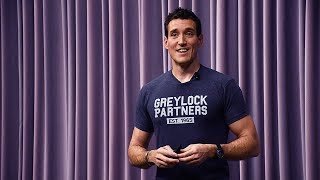
This content was created by GHION.AI . This content was uploaded by GHION.AI . This is a YouTube video titled "Answering Common Startup Questions [Entire Talk]" created on March 9, 2018, which appears to be a talk addressing frequently asked questions about startups.
Chapters
I realize Harrison Ford is kind of a tough act to follow, so I brought some props that I think will help spice things up a little bit. So Harrison Ford writes, lightsabers are cool. You guys ever seen a champagne saber? Show of hands, how many people have seen a bottle of champagne sabered? Okay, so here's what I promise you. Stay till the end, stay awake, and I am going to saber a bottle of champagne for you. It's actually woven into my talk. One of the things I'll talk about is how important rituals are to get you through both the high points and the low points of startup life. And savoring champagne is a ritual that we had at Teleport. We did it sort of around every major moment. Whether it was a new customer win or the hiring of a fantastic new employee, the signing of the acquisition by Twitter, we always savored a bottle of champagne. So I wanted to be able to share that with you. In preparing for this talk, I realized how special this moment is for me. And I went back through some old files and things, and I dug out a couple things that, that are particularly meaningful that I'll share with you. One is that it was 21 years ago tomorrow that I applied to get into Stanford. And I know that because I found a letter that I wrote to the dean of admissions, dated 3-1-97, which implored him to consider me a second time for admission to Stanford. So I actually got into Stanford as a freshman straight out of high school, but couldn't afford it. So I came from relatively humble upbringing. I mean, I had like, incredibly smart, hard working parents. I grew up in a small town in Wyoming. My dad was a coal miner. My mom worked at a community college. Before that, they ran a small carpet store in our town. And when I got into Stanford, which was really the product of a lot of good advice that I had had from my family and my grandparents, I realized too late that I couldn't actually afford it. So I wrote Stanford a letter and said, hey, I can't afford it, but I'll be back. And I went to the University of Wyoming for two years. I worked, I saved money, and then I reapplied. And so I actually came into Stanford as a junior year transfer in the fall of 97. So this is actually a really special moment for me. And I remember when I was trying to make the. When I was making the decision when I got back into Stanford, it was the summer of 97 and the deadline was coming up for deciding whether or not I was going to Leave University of Wyoming, moved to Stanford. And I was making my pro and con list. And it was a difficult decision because I had sort of built my base with all of my friends and everything and the professors that I knew at Wyoming. And I had to throw all that way to come out here. I'd never been to the campus. I didn't know a single person out here. And I picked up a copy of Fortune magazine. And in that magazine was a two page aerial spread of Stanford. And it just talked about this rich ecosystem of what was happening in technology and startups in Silicon Valley at the time. And honestly, I saw it as a sign. I was like, okay, this is it. It's time to kind of uplevel my life, my challenges. And in this article, there was another interesting picture. So this is Tom Byers and his crew of students here, and they were all part of this thing called the Stanford Technology Ventures Co Op, which now you'll know as Mayfield Fellows. And I read about this group and I was just like blown away. And I remember thinking like, I want to go to Stanford and I want to figure out how to be a Mayfield Fellow. Another funny little thing you'll see here on the sides. For those listening on the podcast, it talks about this restaurant in downtown Palo Alto, which is like the deal making spot, right? You think about like Hollywood. This is where all the artists get signed. And I have it underlined, Il Fornayo. I'd never heard of Il Fornayo. I had it underlined because at the time I was working at Applebee's and I thought to myself, like, that's how I'm gonna break in. I'm going to go do be a waiter at Il Fornayo and I'm going to hustle my way into the startup scene. Fortunately, when I got to Stanford, internships were aplenty and I didn't have to actually go into food service to make my way into tech. But it's pretty magical that in really just about two years time, two and a half years time, I went from sort of wide eyed looking at this two page aerial spread of Stanford magazine or of Stanford in Fortune magazine, to a two page spread of myself in Stanford magazine. I submit this with a bit of embarrassment, quite honestly. You can see, yes, I did have platinum hair at the time. So did Justin Timberlake, just for the record. But it was my dream come true. I became a Mayfield fellow and Stanford magazine happened to write about program and I guess they wanted the weirdest looking dude on the COVID So, you know, so for me, like, being able to come here and speak to you all is such an amazing feeling. But I'm not here to do a victory lap on my career, like how I got here. I really want to share with you some like really intense moments of startup life and give you a framework by which you can deal with these intense moments in your own lives, especially those of you that go on to start startups. So briefly, my career. So I was a Mayfield Fellow. I then joined an early stage company that one of my fellow fellows worked at called Zaplet. And I was there for about three and a half years. That company was a colossal crash and burn sort of dot com poster child. Raised too much money, had no idea what we were doing. And in the summer of 2003, I joined Google and that was really exciting because it was a little less than 1,000 people and it felt very much like a startup to me. Like I'd always wanted to be in and around startups in the sort of fast paced environment. And Google, although it was larger, really continued to feel like that for several years. So I was at Google from 2003 to 2008. I left Google with one of my tech leads and the two of us became co founders. We joined Greylock Partners as entrepreneurs in residence, built the company, incubated the company inside, ran it independently for the better part of seven or eight years. And then in 2015, Twitter acquired us for a little over half a billion dollars. So we had grown the company to over 100 people, well over $100 million in revenue, and it was a really exciting moment for us. And then for the two years that followed, I became vice President of product at Twitter and then I am now a general partner at Greylock. So it's kind of a fun full circle for me, from the firm that sponsored me as EIR all the way to an actual investing partner at Greylock. So briefly, that's my story and it probably sounds pretty good, like sitting there, right? Like it's just all up and to the right. We of course know that's not the case. And I've been dealt a couple of setbacks in the last year and I was speaking with a group of fellow CEOs, honestly, actually in a program that I'm a part of called ypo, Young Presidents Organization. And to get to know each other, we do this thing called a lifeline. And it's very simple. You graph out from your earliest memory to present day everything that happened in your life. The high and the low points and the y axis. Is simple. It's like, on the top, life was great, and on the bottom, life was lousy. And you graph all of these things out from when you were a kid to your present day. And the thing that struck me is, as I looked at everybody's graphs of what's called these lifelines, is they all stayed within a fairly narrow band. And yet, to take a step back, you're like, well, wait a minute. Your life has actually been really up and to the right. I mean, you went from this small town in Wyoming to now being venture capitalist at one of the most successful firms of all time. Why doesn't this trajectory look more up and to the right? And I was thinking about the frameworks for how we used to process this stuff. And there's this one, which you guys have probably seen, right? The difference between expectation, reality, how messy reality is. This one kind of hurts my brain. So let's actually just assume success is a rational function. A good friend of mine, actually, Jess Lee, who was at Google with me and then went on to run a company called Polyboard before she sold it to Yahoo. And I had traded notes over a meal several years ago, and she was feeling the same angst that I was, even though both of our companies were doing well. And she actually came up with this framework that I've adopted, which I really like, which is, when you think about success, even something that looks up into the right, obviously you have highs and lows. But what's weird is that as entrepreneurs, when you get to point B, it feels worse than point A. And you're like, well, how can that be? B is clearly better off than A. If success is on the Y axis and time is on the X, like B is just, like, categorically better off, right? And she made this observation, which I love, which is that we actually feel acutely the rate of change more than the absolute value at any one point in time. And this is a very human thing, which is think about when you're flying in a plane. You can't really tell if you're going 300 or 400 miles an hour. You can tell, however, when you're accelerating and decelerating. You can also tell. It's really hard to tell whether you're at 30,000ft or 35,000ft, but you can really tell when you hit a pocket of turbulence and you drop 50ft. And so when you take the first derivative of success, you realize it's actually the rate of change that you're feeling at any one point in time. So when Things are getting better, it feels really great. When things are getting worse, it feels really bad. Regardless of where you are on that continuum, being up into the right. So I wanted to lay this out basically as a framework and I'm going to tell you some stories, some of the accelerating times and some of the decelerating times and the lessons that I learned from those. And hopefully these will be things that you guys can intuit and apply through your own journeys. Cool. So the framework that I've taken is basically thinking about all the questions that people ask me now as a successful one time entrepreneur, now venture capitalist. People come to you for advice, right? And I actually don't like to give advice, I just like to tell stories. I like to say, well, this is what happened to me and if that's useful, this is, you know, please apply that to your own case. So I've taken a set of questions and then I want to tell you a set of stories. So the first question, how did you know it was the right time to start a company? I'll tell you a couple things. One is don't be in a rush. So much about Silicon Valley, I think insists that we as entrepreneurs must do things faster, must do things younger. Whether it's Peter Thiel and the Thiel fellows saying, ah, don't even go to college, or it's Y Combinator saying like, screw normal jobs, just come in and do this incubator thing. The sort of ethos is to go faster and faster and being younger and younger. But it doesn't have to be that way, right? If the stars align for you and that's true for you, great. But they didn't for me. I mean, I was 31 years old when I started my company and I had been through an incredible arc of a career that gave me a really great base of knowledge and a network. Right. It was frankly that network that allowed me to get the offer of being an entrepreneur in residence. That gave us the sort of backbone that we needed to build an enterprise software business. So I'd say don't be in a rush. The second thing I'll tell you is there's no right time. So at Google, this was at the September 2008, my co founder and I had reunited. So he was one of my former tech leads. We knew we liked each other, we liked working together, we had shipped some really impressive products together and we both wanted to start a company and we were both ready, the time was right and so we had worked on some ideas. We had a handful of ideas One of which became telepart. And we turned in our resignation at Google and there was just one little problem, which is, as you can see from this chart, it was like the worst time to leave your cushy big company job. This was two weeks before Lehman Brothers blew up, right? Like anybody who was kind of plugged into what was going on was probably stockpiling like tuna and dog food for the end of days. And we're just like, yeah, sounds great. Forget the free food and the stock options and everything. Let's just go out on our own. And it's funny now looking back, I sometimes think, what were we thinking? And yet the act of entrepreneurship is so difficult. No matter what, there is no right time. Reid Hoffman, who's one of my partners at Greylock, likens it to jumping off a cliff and building an airplane on the way down. Elon Musk says it a little more morosely where he says, starting a company is like eating glass and staring into the abyss of death. To the extent that is true, and it feels like that from time to time, there's basically no good time to start a company, but there's also no bad time to start a company. And if you start a company when the consumer confidence index is at its lowest point it's been in decades, and the nice byproduct of that is that there's kind of only one way to go. And yes, I did Photoshop Drake's head on an emoji, but really you get steeped in how bad things are and then things just keep getting better and you get this tailwind at your back. So there's no right time. And the worst times can also be the best times. The other thing I'll say about how you know it's the right time is when you can surround yourself with people who have yes energy, right? Not yes people, not people who aren't challenging you. But by and large, whether it's your co founder or in this case James Slavitt, who is now our managing partner at Greylock and was our sponsor as entrepreneurs in residence at Greylock, he is the kind of individual who just like they exude this yes energy, right? You bring him an idea and he says yes if or yes and but it starts with a yes, right? It's not this skeptical like no cross arms view of the world. It's like, yeah, actually I think I believe in you guys. You're smart, you're from Google, you can probably figure it out. Why don't you come in and use one of our offices here at Greylock for a few months until you get your feet under you. Just that. Yes, Energy is really empowering as an entrepreneur. So I implore you, encourage you to seek it out. And then I'll offer you this statement that has proven very valuable for me over the past year, which is simply, everything you want is on the other side of fear. So there will be a point at which the stars are aligning. You found your co founder, you have the idea, maybe you've been offered some seed money or an entrepreneur in residence position, something the universe is conspiring with you. And then you will be gripped by fear because you're about to jump off the cliff. Right. In a proverbial sense. And I just, I really, really believe that at that moment you can just like say this mantra, everything you want is on the other side of fear. How do we get what we want? Let's get on the other side of fear. Let's just go for it. So again, to reiterate, don't rush it. Don't be in a rush. You got plenty of time. If technology and the singularity proves out like we're all going to live as long as we want, upload our brains to the cloud, there's plenty of time to decide when starting a company is right for you. There's no right time. The worst time can be as good as the best time. The yes, energy part, surrounding yourself, that is really important. And then finally just get on the other side of that fear. Next question. How did you know when and how much money to raise? This is a tricky one, but I'll tell you now, as a venture capitalist, there is one thing that matters when I see entrepreneurs pitch me at any point in time, and that's momentum. You need momentum of the business, momentum of the team, momentum of the idea, and then ideally, momentum of various venture capitalists like me starting to get FOMO to get into your deal. Right? But this idea of momentum is really important. And so once we started out with our idea, we had to build momentum. This is a picture of me on a twin bed in Holiday Inn in Omaha, Nebraska, which is where our first customer was. And this was taken about 3am by my co founder. As you can see, he's sitting on his bed because we were bunking to save money. And I remember it was like, I don't know, minus 10 degrees out in February in Omaha, Nebraska. And we were so hungry to get our first big win that we would do anything. And once we got this company to sign with us and Say like, yes, if you build this software, we'll be your first customer. We'll buy it. We went for our funding. And so this is a picture of us signing our series. A term sheet from Greenlock. There's James again, you can see in the middle. And this was a really exciting moment for us because everything kind of came together, right? It was like it was suddenly real. I have a lot of friends in industry who say fundraising is not something to celebrate, right? They say, like, well, you haven't done anything. Like, whoop dee doo. You got somebody write you a check. Like, that's no big deal. Like, now the hard work begins. And that is true. But I also believe that you should celebrate. So we did. We sent out a silly photo and we were excited about it and we got to work. The Brinks truck did not actually show up, by the way. That's all Photoshop. And so as we got to work, we prided ourselves in our scrappiness. So the first thing that we did is basically ask Greylock if we could use some of their extra space. And their extra space was in their old office. And it had kind of this. This hallway that nobody was using with a bunch of empty rooms on it. So we actually just set up desks in the hallway. So this is Sanjay, who's one of our first employees, sitting in the hallway. And we did that for about nine months, actually. We incubated. And part of that was because it was really nice to save money. The other part is we were waiting on an office to open up that was shared or that was leased by another Greylock company called Cloudera. And so when that opened up, I thought, what could be more scrappy than moving ourselves? So we piled all of our stuff into boxes, rented our own U Haul, and moved it in. And it was fun. That was kind of like a fun team bonding moment. Although when I look back, if I think about the lost productivity, that's probably the most expensive move in the history of man. And then finally, down here in the lower right corner, you can see a picture of our lobby. And you'll notice that everything that we did in the pictures that you'll see, it shows really well. It's beautiful. And yet everything that you look at was either left by the previous tenant or purchased from Ikea, including these high gloss white panels that we actually put up ourselves. And the ethos of scrappiness actually ran deep in our veins. And it was useful up until a point. And then I remember I went in to give an update to the greylock partnership about 18 months in, and, man, everything was going really well. I think we were at a $2 million run rate, maybe, and there were only four of us, and we hadn't spent very much money. We still had most of the money in the bank. And so I go and I give this. I just nail the presentation, right? I'm like, look at how great things are for the low, low price of, like, having spent almost none of your money. And aren't we awesome? And I swear, like, you could have heard a pin drop in the Greylock partner meeting. I'm like, well, this is weird. And then one of the partners, Anil Bushri, who's a very, very successful venture capitalist and CEO, he's CEO of Workday now and has started multiple companies while being a venture capitalist. Multiple billion dol. While being a venture capitalist. He raises his hand. He's a super nice guy, and I'll paraphrase, but he kind of said something like, what the hell are you doing? And I'm like, what do you mean? This is awesome, isn't it? Isn't this great? And he's like, yeah, it's awesome. Clearly, you have something here. You have customers paying you millions of dollars for software, and there's only four of you, and you have no salespeople. What are you thinking? Like, go, go, go. And the conversation that came out of that is, you guys should raise more money. I'm like, well, that's weird. We still have all the money. And there were two reasons that we actually did raise more money at that point in time. One is because it was unclear whether or not we were going to go into a double dip recession because this is right when Greece was looking like it was going to blow up. And the second was because we could, like, in a very short process, we could go out and add another rock star board member to our board and put a bunch more money in the bank, and then we could use that to power the business, right? So we could almost, like, get the capital worries behind us so that we could just really lean into the. Into the challenge. So we did. And I took another picture. This is the gentleman. Second to the right is Ajay Aggarwal, and he was our second board member. He's from Bain Capital Ventures, and he led our Series B. It was a $13 million Series B, and that is a metal briefcase full of cash. Not all $13 million. But I think about two things in the context of these fun moments in the startup's life. One is, I implore you. I give you permission to be a tourist. You feel kind of silly taking all these photos of these otherwise mundane moments in your startup's life and then you realize how important those are to the culture that you build and the stories that you get to tell. And the other thing I'll say is you only get one go at this, so you might as well do some fun, crazy stuff like get a metal briefcase and put a bunch of cash in it. So what did we do with all of this money? Well, we figured out how to deploy it in really high leverage ways for things that really mattered to our business, including giving out cash. So we hiring was really, really important for us, obviously as for any startup. And it's also really, really hard. And we built a great culture around hiring and around referrals and bringing in. Basically, I would say 60% of the company was probably hired by somebody who referred to us by somebody who worked there. But we also incentivized it so we would give a $5,000 cash bonus to anybody who made the introduction, talked the candidate into applying with us, and then that person actually became a tele partner. And the twist was we gave it out in cash. And every time was a little bit different and every time was a little more creative and cool. The first one was the proverbial briefcase full of cash. I called up Wells Fargo, I said, I need 5,000 $1 bills. They said, that's going to take a little while, we have to order it from the Fed. I was like, okay. And then I was like, and then do I just show up and do you have a bag? And they're like, nope, it's byob. So I showed up with a duffel B and went to the teller window and she went to the back and got a big brick of cash and stuffed it in the bag. And I walked out in downtown San Francisco with five grand and a duffel bag, which I proceeded to put into the briefcase. If you look closely, you also see there's handcuffs attached to the briefcase. And then at our all hands, we surprised Stan here who's like incredibly sweet young engineer at the time, never would ever deigned to ask for a briefcase full of cash. And I pull it out from under the table and I slap it on his wrist and I say, all right, open it up. And it was just like one of those really fun moments for the company. And then the upper right corner here, you'll see there's basically five solitaire pendants. These are one carat solitaire pendants. And underneath in the display stand, There's a bunch of other diamonds and accoutrements. And this was our booth at an e commerce conference and we came up with this idea. So the name of the company, I guess I should tell you what we did. We built software that would basically take in all of this data from retailers, all their transactional data, their web data, their mobile traffic data, their app data, and then we would build machine learning or artificial intelligence models to help them tell apart their high value customers from the rest of the. And so when it came time to get our own booth, like, here we are, this tiny little company, like, nobody cares about us, nobody's even heard about us. We said, what if we had a contest with five 1 carat solitaire pendants, four of which were cubic zirconia. One is a real diamond. Can you tell apart the real diamond from the fakes? Which was fun. And it turns out everybody likes sparkly stuff. So we had this endless stream of traffic at our booth because you would walk by and there would just be like all these glittery diamonds everywhere. And then we had a jeweler's loop and you could go stone by stone and try and pick it out. If you won, you got entered into the contest to actually win the solitaire. And if you lost, you got a Starbucks gift card and we gave you a handful of cubic zirconia, which turned out really cheap and also very sparkly and fun. But it's little things like this that help push a startup forward by way of using your cash in a very smart way. And so I'll offer you these. First is it took me a while to get to really like intuit this statement. The way to build value is to make money, not to save money. So you can totally go overboard in the like, look how scrappy we are. DIY did this all ourselves and it will be a detriment to your company. Like, I did not. There were a lot of ways in which I used my time which were not effective in retrospect. And so putting yourself into that mindset of like, we're here to build value through making money was really important to accelerating our success. It's okay to use capital as a weapon, by the way. A lot of times people are sheepish around like, how much money have you raised? And oh, it seems like you're being profligate with your spending. But if you spend in really smart ways, you can deploy this capital to beat your competitors, to get to market faster, to claim more market dominance than you would if you were not spending as aggressively. And then finally hire missionaries. Like I would tell you, every single person that worked at Teleport was not there for the money. But when they did things that mattered for the company, I tried to reward them like mercenaries. Higher missionaries. Reward like mercenaries. Having missionaries and rewarding them like mercenaries just really adds to the momentum of what you're creating. Another question. How did you assemble such a great leadership team? So this is a picture of Teleport. Team Teleport. We are probably three years old, three and a half years old at this point. And this is. You're looking at all this imagery, actually. Let me give you the. This is a cheesy dad joke. Stay with me. The phrase I always used when I presented this slide was, and we did this with customers. We're Team Teleport and we're outstanding in our field. All right, good, good. Thank you, thank you. Thank you, everyone who's laughing right now, thank you so much. The logo is a stylized wheat stock. And we talked about separating the digital wheat from the chaff. Again, these things really make sense when you're from a small town in Wyoming. But you'll notice if you were to look closely across everybody in the company, we're missing one thing. Executives. We had no executives. It was just my co founder and I and everybody that reported to us. Again, almost like the scrappiness or the diy, we had really prided ourselves in how much we were able to accomplish with nobody having any title whatsoever at Google. I was at Google early, and Google was really a company that eschewed titles. We didn't give titles to anyone. And so the two of us kind of brought that ethos with us. And the truth is, we overdid it. We could have gone faster by hiring more leaders earlier in the company. Problem is, it's really freaking hard. And. And none of us get very good at it because you don't get to practice hiring VPs very often in your career. And the problem with executives is that they are expected to perform at such a level. You don't really have the same kind of, like, compassion and caretaking for them that you do of an individual contributor. And so there's a far shorter time frame in which you decide that they work or don't work, and then you're back to square one. And so we went through this a couple of times. I had four different heads of revenue. I had two different heads of engineering. I had at least two different heads of marketing. And it was difficult. It's difficult. And I don't even feel like I got really, really good at it. I feel like I got pretty proficient at it. And by the time we sold to Twitter, we had an amazing leadership team. And so looking back, I was like, well, what was I doing wrong? Why did I run through so many executives? And there was an op ed written by a philosopher, a modern day philosopher that I really like. His name is Alain de Botton, and it came out in the New York Times about two years ago. And it's titled why you will marry the wrong person. The article is really thoughtful. The title is necessarily hyperbolic, but I would encourage you to read this, actually, and apply it to all different dimensions in your life as it applies to executives. What I took from the article is he basically makes this point, everyone is the wrong person, because given a sufficient amount of time, particularly under stress, like in a startup, you will clash with people, right? And they will do things that annoy you. And I'm sure I was doing tons of stuff that was annoying them. And it's really difficult to invest in the relationship when there's that much stress and that short of a fuse when you decide if somebody is going to work or not at the executive level. And so what I took away from this is two things from the article. He says, try and find the mostly not wrong person. So mostly not wrong. This person is actually super smart and works hard and I mostly get along with them. And then he says, learn to argue well. And that was something that I really had to practice with my team is the ability to argue well with them. Something that I got better at over time. Again, never, never would claim to be perfect at that. A couple of other thoughts here. When we hired across the board, but especially executives, I looked for characteristic that I call confident humility, or a friend of mine refers to this as confidence without arrogance. This is really hard to find when you're hiring executives. By the way, there's something in Silicon Valley where once you become a vp, you could never imagine being anything but a VP again. And you come in and you've got this resume that's like vp, vp. That actually doesn't mean a whole lot. Just because they were a VP in one company doesn't mean they're going to be successful in yours. And so being able to really interview them just like you would anyone in your company is really important. And finding somebody who can achieve at a particular level and maintain the humility to be interviewed is surprisingly difficult. And Wade Chambers, who became my vice president of engineering, is now CTO at a greylock company called Grand Rounds probably exemplified this the best. When I got to know him, he came by way of reference to two friends that I really trust. And they were like, this guy is hands down the best engineering leader we have ever seen. I was like, sounds great, I should hire him. And I went to meet him and he's like, look, I'm running hundreds, maybe 500 engineers across dozens of offices. I'm a public company officer, but I really like your little startup of 20 people. And so I said, great, let's get to know each other. And he was so confident in his skills, but so humble in his approach to me that he would come after working a full day at his normal day job. He would drive from Saratoga to Burlingame, where we were, right? So that's 45 minutes. And then he would hang out with me for a couple of hours at night when everybody else had left, and we would get on the whiteboard and we, we would talk about engineering processes and he would show me exactly how he would think about testing out different designs for us. And so he had this confidence, obviously this resume that spoke volumes. But he also had this humility of saying, like, sure, I'll come up to your office, I'll get on the whiteboard, right? We'll hammer this out together. So confident humility is something that really resonated with me. Our board members at every turn applied a lot of tough love to me. So when I would come to them and I'd be like, so, yeah, the third head of revenue is not working out. They're like, we need to talk. They're like, look, we're going to back you up because we love you and you're the CEO and we trust what you're doing, the company's doing well, but this is not a one sided issue, right? Like, what can you do to improve? And so finding people that can push on you along with the alignment of your executives was really important for me. Jeff Markowitz, who is our partner for recruiting at Greylock, he handles all of the major executive searches across the Greylock portfolio, taught me the lesson that until you found a bad one, you've never actually checked references. You haven't sufficiently checked references. So you call and you call and you call and you network your way through. This is really important with executives. Until you find a bad reference. You find a bad reference because it proves to you that this person is not perfect, which none of us are. And because the bad reference will tell you something about how they behave in a certain situation or under duress or Maybe when they were less mature. That will help you understand how they think and how you can navigate around those issues going forward. And then the final thing I'll reinforce is learn to argue. Well, arguing is a skill. It's really, really freaking hard. Especially when you're headstrong and founder and CEO who created everything from scratch, right? So the ability to hear the other person, to understand their words may not exactly match their intention or what they're trying to get across. The skill of arguing is really important in building a successful executive team. All right, this one is kind of fun. How do you choose your battles? So here's the truth. You are going to get thrown a bunch of curve balls, and some of them are really going to suck. And I could tell you so many stories, like when Amazon pulled our contract with Zappos because they wanted warrants in our company. And I was like, that's not fair. Like, what the hell? Like, Zappos is our customer. Just because you bought Zappos doesn't mean that you get to, like, own part of my company. And they're just like, well, that's how it is. So do you want the deal or not? And I walked away from that customer. So there were lots of instances in which I lost. And then there's one in which we won. So we were sued by a patent troll. Or maybe the technical term is non practicing entity. This was the weirdest thing that happened. We got in the mail, like, the lawsuit, like, you were being sued by this company. I'm like, what is going on? And basically they had taken a couple of patents and incorporated and actually gone public under the ticker symbol PTNT as a non practicing entity and employed two people, a CEO and a lawyer. And their only job was to go out and find companies to sue. And the patent was basically like a patent on submitting forms on the web or some nonsense, right? Like something that you would largely deem, like, unpatentable. It's so obvious. And I don't know if they just like, you know, flipped through a phone book of startups that had recently gotten funded and just like, you know, randomly poked on us, but like, they sued us and one of our early customers. And this was really dicey because these things can go bad, right? You can lose a ton of money on legal fees and then you can lose a ton of money in the courts. And they're all litigated in these strange places in Texas. And it's a weird underbelly of, of the technology ecosystem, unfortunately. And I talked about it with my board. And I was like, look, we have to fight this because if we don't, it'll establish precedence, then they're going to go after our bigger customers and then we're forever going to be paying this tax on our revenue. And the worst thing is that then we're going to have fueled this patent trolling entity and they will have precedence based on Telepart and INS customers that they'll go out and they'll tackle these other startups like, we have to put an end to this. And my board fortunately, again backed me on this. And so we did. We fought these guys and it cost hundreds of thousands of dollars, but we basically destroyed their company. So we got to a point where we invalidated the patent. We were going to win our own case and that was insufficient. I was like, no, no, no, let's invalidate their patent with the uspto. So we spent some more money to actually take this all the way and just take the patent away from them. And when that as that was happening, one of their majority external shareholder wrote this open letter where he said, you guys are in a bad situation, like you should just give your cash back to investors because teleport is going to kill you. He said it's equivalent to being in the ninth inning of a baseball game. Down five nothing with two outs, no one on base, and and an 02 count at the plate. And when that came out, we printed this out and handed out copies around the office. And you can see roughly in the timeline of their stock price here when the patent was invalidated and the fact that they have essentially gone down to nothing. So all is fair in love in startups. You're going to be dealt a bunch of things where you're just like, well, this sucks. And, and that's okay. You just have to know which ones you want to fight and which ones you're going to let go. A couple of words on culture. So much has been said about culture. I just want to offer you a couple of things. One is I think space really, really matters. We were very proud of our office. If you want to, you can go on YouTube, find our TechCrunch Cribs episode, which was really fun. More champagne being savored. And it details how we took this old auto body shop and turned it into this sort of like gleaming tech space in downtown Burlingame, which was really fun. But the best part about it was at the end we were left with just a really great office that we were happy to come to work to every day and happy to have functions and parties in. And I just think that's really important. So don't. So don't lose sight of the importance of your space. The other thing I just want to offer around culture is involve your people. Culture is not off sites that are master planned. It's not bringing in super nice catered lunch. It's really about involving your people. So a few stories top left. This is Team Teleport on a Sunday night, the Sunday before Cyber Monday. Cyber Monday was the biggest day for retail, therefore the biggest day for our customers, therefore a really important day for us and how our revenue was built. And so for the Sunday before, we would get everybody in the office and we would decorate a tree and we would have a potluck, and, you know, we'd be blasting Christmas music and we would be preparing for the next day. And it kind of sucked because you're at work on a Sunday night, the Sunday after Thanksgiving, by the way. But it was really, really impactful to building the fabric that carried us through. Lower left is a picture of us having taken that sledgehammer and smashed through this wall. So we had two parts of our office and we renovated one section, and then over time, we subleased and renovated the next section. All that was left between the two spaces was this drywall section of the wall. So I put on a Ronald Reagan mask, gave the Mr. Gorbachev tear down this wall speech, and everybody got to take a swing with the sledgehammer. And we absolutely destroyed that wall and all the supports in it. And then we marched through and had champagne on the other side. So it's little things like this, right? It's like, we didn't have to do that. But it was so cool to get all these pictures of people swinging the sledgehammer at the wall in their office. And then this one here on the right, a little bit hard to see, but yes, that is a two story sledding hill of real snow in Burlingame, California. And we had the good fortune of being a very profitable company. There was a point at which in my January 2014 board meeting, I walked in, I said, look, I want you to hear me out on something. We're going to do some crazy stuff. We're going to double our team size, triple our office space, buy companies for cash, and throw some serious parties. And I want you to remember, it's all 40% off. And my board is kind of looking at me like, what are you talking about? I said, well, we're out of what's called net operating losses. So this year we start paying taxes. Every dollar that we don't spend, 40% of it, 40 cents is going to the federal government. So let's throw some parties. So once a year we would do this thing called the tele party and we would invite all of our friends and family and we would bring them in and we would just celebrate with them over what an incredible and difficult year we had had. And this particular year we brought a team up from Hollywood that basically fed ice blocks through a glorified wood chipper and turned it into a two story, real snow sledding hill. Awesome. So space matters rely on your rituals. So per my opening comments, like, rituals really matter. They help get you through the down times and they help make the up times that much more exciting. And then finally involve your team and their families. Like, bring their kids, bring their significant others, bring their parents. Let everybody come to these functions because it really helps them be a part of what you're building. All right, this is the last story and then I'll open it up for a couple questions. I've actually never talked about this in public, so I'm kind of excited to share. So I get this question, how did you know the right path for you was to be acquired? And the answer is, you don't. You don't get an A B test life. But you are in control of your destiny. So as you're building your company at various junctures, as happened with us, you're going to get offers to be acquired and you will feel differently about those offers as they come in at the various points. And so along the way, every time I got one of these sort of soft offers, it was never a formal term sheet, but I always got the hey, would you ever consider joining forces with us and be like, oh, you're so kind, we think so highly of you, but we're doing so well. We love being independent. And at some point you just start to say, okay, what are our options going forward? And for us, our options were put our heads down and bill for probably two or three more years and be a public company or be open to hearing what people had to say when these kind of overtures came in. And what we looked for was a platform that would really value what we had built and put us on a bigger stage to have more impact in the world. And so it was January in 2015 that this man, Anthony Noto, who was then my boss for a little while, he was CFO of Twitter at the time, and he's now CEO of SoFi. It was at this point that the conversation started happening. I'll say a couple of things. Anthony's a big guy. He was a linebacker at West Point and then went to Ranger school. And so when he makes an offer, you think twice. We had a bunch of interests that all came in at the same time. And I hired an advisory firm or bank called Allen and Company. You may know them for their big Sun Valley conference that they do, where Oprah and Bill Gates and all the heads of state show up. And they also hold a smaller conference in Arizona, which is more technology oriented. I went to this conference and it was a really fun setting because Allen and Company is so good at what they do, and they're very, very white glove about how they help their companies navigate these kind of processes. But what they did for me is bring me into an environment where. Where all of the other bidders, all the other people who are interested in acquiring Teleport at the same time as Twitter, could see the other conversations happening, right? And so the first morning I went in and I happened to sit next to the CFO of one of Twitter's competitors. I won't name names. I happened to sit next to him because, like, I had gotten to know him years prior and he had become kind of a friend. So it was just like, hey, I'm going to sit next to somebody that I know. And we're in session. And as we walk out during the break and we're going down the hallway, the two of us are walking together. Anthony Noto is standing there, and I can see him just, like, laser locked on me with his main competitor, you know, the other CFO of the other company. And he just kind of, like, watches us walk by. And the next night, I had come down to dinner late, and they had this beautiful buffet dinner out on the lawn in Arizona, and everybody else was seated with their dinner. And so I'm the last person in the buffet line, right? And dusk has set, and it's getting kind of dark out. And so I'm going through the buffet line, putting my salad on the plate, and all of a sudden, like, Anthony Noto is on the other side of the buffet line. I'm like, where did he even come from? And he's, like, looking down at his plate, putting his salad on there, and he's basically talking to me, but he doesn't want to signal to anybody else that he's talking to me, right? And so he's putting his salad on his plate and he's Talking to me, but not making eye contact and saying, tomorrow you're going to go on a hike with Dick Costello, who's the CEO of Twitter at the time. And at the end of that hike, you're going to get a term sheet from us. Like, we're very serious about this and we really want to make this happen, right? And so I'm looking down at my plate, talking, and I'm like, I'm so excited. You guys have been great through this whole process. Like, I'm really excited for the hike. And he's like, okay, great. So tomorrow, 3:00pm I was like, great. And he looks up and he says, one more thing. If I see you talking to that other cfo, I'm going to break your legs. And then he like disappears into the bushes. Just leaves his tray and his, like, salad on the plate and just like disappears into the bushes. It was the most amazing thing. Anthony, by the way, is a super nice guy. He was like one of the most loved people at Twitter and he was really fun to work around, but he definitely has a way about him when he's making an offer. So the next day, Dick and I went on a hike, grabbed a photo, obviously be a tourist, and then right after that. This is a little dark, but this is sort of the deal team. This is the technical due diligence team within my company. There are only about 13 of us who knew that this was going down. And we all gathered in my VP of engineering's house and we worked all weekend to prepare ourselves for the meetings that happened next week. The next week. And we thought everything was going magically well. And we basically were high fiving after the meetings because everything was great. And then I got a call. That call came from Kevin Wheel, who spoke here a few weeks ago, upper left hand corner, who is SVP of product. And he is like, we need to talk. And so we jumped into a conference room at the Rosewood. I drove down from the city, he drove over from Portola Valley. And this is a picture of us here. And then the other picture is of Adam Bain, who is chief operating officer. So there's kind of a threesome or three part deal team. The cfo, the coo, and then the SVP of product, who are all working on this deal, and. And the two of them. This is Adam doing his best. Like, I'm blowing up your deal face. Say legal has looked at your contracts. They don't agree with some of the wording. Like, you know, we're really, this is not good. And I'm like, what are you talking about? Our contracts were written by one of the best law firms in Silicon Valley. Like, all of our customers sign them. Their legal teams have been through them, so I can't imagine what you would have to. To pick about. And by the way, it's just contracts. I'm sure we can get through this and for whatever reason. Well, Twitter's legal team has a lot of clout at Twitter, and obviously, I mean, it's a big company, they have a lot to defend. But it spun us out for about a month. And at one of the points, I reached just a real stalemate. And so Adam and I got on the phone and we just kind of came to a head. And he's like, all right, well, if you're going to be like, if you're going to be so dogmatic about this, I guess the deal's off. And I said, well, look, I told my team to put their pencils down. We're not working on this anymore until you guys come back with something more reasonable. And he's like, okay. We just hung up the phone, and my heart just sank because we had worked so hard to get the deal all the way through, and now I involved my team, and everybody was getting spun up on what the future could look like with our two companies combined. And we really. I mean, it was dead. It was dead, dead, dead. And then a couple days later, the phone rang and they said, okay, we think we found a clever way around this. Let's work it out. So, as luck would have it, everything came together. There's a nice little picture of our two logos mashed up, which I think I made myself in Photoshop while being interminably bored on the phone with lawyers one night. And I wanted to screenshot this just because it's pretty special. So Dick, who's the CEO, had texted me, and this is like, the deal was clearly going to go through. It's like the morning that we were going to announce. And he says, how you holding up? Did I ever tell you my ma rule? Probably should have told you earlier. Costello's rule of M and A. To which I answer, never go in against a Sicilian when death is on the line. Any Princess Bride fans? Okay? He says, close. Every deal dies three deaths before it closes. And that was really magical for me. Our deal did not die. Our deal went through. This is a picture of us in what I still maintain is the world's largest coordinated champagne sabering ever. Everybody on the team got a champagne saber engraved with that deal logo that you just saw we went up to the roof of our building. We filmed it by drone, and I think it was executed absolutely expertly. Only one person was harmed in the making of the film, and it was just a very minor, very minor cut. But this was really special and it was really amazing. So to reinforce you're in control of your destiny, think about this. Think about how you want to proceed with your company. Expect three deaths and believe in what's called your batna, your best alternative to the negotiated agreement. What made me so confident in holding my ground against Twitter is that we were running a really great company with really great characteristics that was very profitable, and we knew we could always go back to being that. So that was pretty magical. Now, I would like to tell you, of course, I would like to have you believe that everything after the acquisition was up and to the right. No surprise. It wasn't. Even if it was, it wouldn't have felt that way. You know, we navigated through two layoffs. A lot of change at Twitter, and yet I'm very, very proud of what the team has accomplished and very bullish on where the company is going from here. Two things that I want to say. This is a really rocky road, and you're not the only person going through it in your life. Your significant other, to the extent you have one, at the time that you're building your company is also going to be feeling this very acutely. And don't forget to pitch them on why things are going to work out. Sometimes you bring home all of the negative energy that you can't share with your team on any given day. You just kind of dump it inside your four safe walls. And you should not do that. You should treat your significant other like you would a board member or an investor employee. A candidate that you're pitching, like, help them believe why this is going to be successful. The last thing is make no little plans. My favorite architect, one of my favorite architects is named Daniel Burnham. He designed the Flatiron Building in New York, and he has this quote. And the reason I'll leave you with this is it is as hard to run a company of two people as it is to run one of 200 of $2 million. Of $200 million. So make no little plans. Like, really bring the full force of everything that you have, from creativity to passion, to drive to expectations of outcome. It will be worth your time, and I wish you guys all a lot of luck. Shall we? All right. Might want to turn off the camera for this just in case it goes badly. Just kidding. All right, so the physics of savoring a champagne bottle. A bottle is actually two halves that have been melded together. If you look on the bottle, you can see a tiny, faint vertical line. That's the weakest point at the neck. You want to take the blade. The blade does all the work. It's actually not sharp at all. It's just the weight. You want to run it along the neck, and then you want to connect. Right. With the sort of outcropping here. And the bottle is under 90 pounds of pressure per square inch, so it's about double that of a car tire. So the bottle and the blade do all the work. Right, ready for this? All right, Can I get, like, a drum roll or anything? There we go. All right, Here we go, team. Just that easily.
More from GHION.AI


O processo de reconhecer limites, mesmo quando a vida parece exigir sempre mais.





Depois de tantas histórias, aprendizados e pausas necessárias, o @interior_iza está de volta



