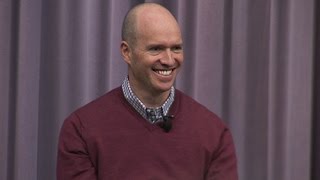
Ben Horowitz talks with Tom about scaling after early success. He argues that building a great product comes first, and that management is a skill you learn, not something you're born knowing how to do.
So there's a lot of emphasis on starting the company, but the real hard stuff comes after some success. And so the skills and the behaviors it takes to start a company, is that the same as it takes to scale it and grow it or which ones are similar? Which ones are?
Well, so, like, startups get really hard when the product gets into market. And those of you who've done it know this, right? Like, when you're building the product, it's all good, you know, how's your startup? It's doing fantastic. We're building a product, it's going to be great. It's so genius. Like, everybody I tell about it kisses me on the lips and says, wonderful. But then you get in market and nobody wants it, then it gets real hard, real fast. So that's kind of the first psychological trauma. But the initial skill is, can you build a great product? Can you build a product that a lot of people really want for whatever reason, that is different than building a great company? But if you can't build a great product, doesn't matter if you can build a great company because you don't belong at a startup, because if you can't build a great product, you never get to the great company. That was actually a big error in the 90s, and a lot of the lean startup methodology and so forth came out of the mistakes that were made in the 90s where they'd bring in a professional CEO really early on who didn't know how to build a great product and would build the company to a giant size and burn up all the cash. But the skills are different. But management skill is. Management is a learned skill. It's not like nobody was born a great manager. And I think that's one of the things people run into is you feel like, oh, well, that person over there just seems like such a natural manager. But it's not. Nobody's really that natural at it. It's an unnatural.
What, you know now?
Oh, yeah, it's a very unnatural job. Like, you know, like, so I'm having this conversation with you, and if I, you know, like, if I stopped you and it's like, Tom, you know, like the way you asked me that question, like, it was okay, but, like, you didn't really have the right emphasis at the end and go back and practice and come back tomorrow and do it again, like, if I said that to you, you would be like, that guy's an asshole. And so, like, anthropologically, like, you don't want to do that, because if everybody doesn't like you, then they're going to feed you to the lion or whatever. So it's not natural. But as CEO, as a manager, that's what you have to do. You have to evaluate people's performance. You have to correct them, you have to make sure they're on task. And those kinds of motions, you have to learn how to do them. And you have to learn how to do them in a way that everybody doesn't hate you all the time. They're going to hate you some of the time.