Ben Horowitz: Nailing the Hard Things [Entire Talk]
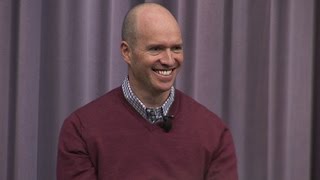
Ben Horowitz, co-founder of Andreessen Horowitz, talks about the hard parts of being a CEO: managing people, making decisions when you don't have enough information, and why technical skill alone doesn't cut it. He walks through real moments from his time running Loudcloud during the dot-com crash.
Chapters
Let's start with college.
College, college.
Where'd you grow up, Ben?
Well, I grew up in the People's Republic of Berkeley, right across the way there. Beach, Denver. Yo, Berkeley. Berkeley's not really about sports anyway. It's more about communism and weed. Pete's Coffee.
Pete's Coffee. Communism and weed. But how else did Berkeley influence your entrepreneurial bent, do you think?
Yeah, well, you know, Berkeley, when you're a teenager, you know, you tend to be rebellious and not want to do kind of what your parents do or what the establishment does. And the establishment in Berkeley was hippies. So that kind of caused me to want to be the opposite of a hippie. And so I, you know, I joined the football team and I, you know, was kind of just oriented around, like, what was going on in the world and wanting to be part of the society that I was definitely counseled to stay away from. So it was kind of good in that way. Although I have a great feeling for Berkeley now that I'm no longer rebelling against it, I see more value in some of the hippie culture and all these kinds of things. But, you know, the rebellion has kind of drove me from being a communist to being a venture capitalist.
Well, let's take the journey on that, that transformation. You went to college at Columbia and ucla. What did you study and what's your memories of that?
Well, I studied computer science. And in those days, well, when I got to Columbia, computer science was a little bit of a kind of frowned upon major, if you can believe it, given what's going on today, in that there was a big debate in academia at that time that computer science wasn't really science, that electrical engineering, that was real, and that computers software was just like the tools you use to program the computer. It wasn't like there was nothing to it. It was kind of a thin layer and it didn't warrant its own major. Maybe a class, but not a major. And so everybody in the major was like, what are these guys, idiots? They ought to actually try and understand how a compiler works and so forth and then make that claim. But that was kind of the beginning for me.
It's a funny sort of question, perhaps, but what do you wish you had learned or spent more time in? I've just been thinking about that myself. I went to Berkeley, first time I've ever admitted it here, but three times. But I was an undergraduate engineer and I avoided sociology and psychology classes, of course. Now being an entrepreneurship professor over 20 years, that's exactly the roots of entrepreneurship. So what Are your regrets, if any, about what you studied?
Well, it's funny because when I was in college, the thing that I thought I was doing that was a huge waste of time was I was completely obsessed with rap music. And, you know, I would listen to it constantly and to the point where in those days there was actually no. There were no rap radio stations and there was no UMTV raps hadn't come out yet or any of that stuff. And so there were only two rap shows, and they were only on one day a week on Saturday night. So I would never go out on Saturday night. I would sit at home because I had to record them. And then in those days, it wasn't like these fancy, like, record to disc. You had a tape, you would press record, and then when it got to the end of the tape, you had to be there to flip it around and do it. And then if you were smart, you would be there to pause on all the commercials so that you could get more life out of your tape. So I missed, like, all that college life, and I was like, wow, I probably wasted a lot of time. But now, like, my whole career is kind of based on my affiliation with rap music. So it's what I'm best known best for. So that turned out to be good. You know, I kind of wish I had studied more biology. I didn't. I was very interested in it. And I did not realize at the time that kind of information science and biology would connect when they did or in the way they did. I'd studied a little neurology in graduate school as part of AI, which was also seemed like a complete waste of time because AI didn't work for like 25 years, but now it's working, so you never know. I guess I would say anything that you learn is a good use of your time, probably.
Well, let's drill on that for a minute. What skills can these students learn, you think, while in college, in addition to perhaps technical? We're in the engineering school, so let's assume they're getting a great, great dive into technical matters and science. But what about the rest of the skills that will serve them well no matter what they do?
Yeah. So, you know, in the world of entrepreneurship, the big skills are kind of programming skills and people skills. Like those are the big two. And I think people skills tend to be highly underestimated in terms of kind of just ability to run a company and so forth. And what I mean by people skills is the ability to understand other people's motivation and other people's motivations, who you're talking to and then who you're also not talking to and how they're going to think about something and where they're coming from and relate to that in a way that gets you to the right conclusion about how you build an organization or build a company or make a deal or any of these kinds of things is incredibly valuable. And that's what I would say most of the kind of good entrepreneurs end up lacking more than the technical skills that we see now, like being like a boss level engineer. That's extremely valuable. I'm not discounting that. But that's really the other big, big skill that you can learn in school.
And we've seen that in engineering education curriculum. It's added a great deal of those kinds of, oh, skills and behaviors and techniques since, you know, since we were in school. The other thing I want to talk to you about when I think back is you came out of school and then the Internet came upon us as an opportunity and it's defined your professional career. I'm a little ahead of you in life. And so 10 years before that was software. It was software on a personal computer. And I got so lucky that we, you know, software to be in software. You always thought, in my early days you thought you had to go work at a mini computer or mainframe company, which was really boring, you know, programming this. So we package software was just this big change that I fell into with a lot of luck at Symantec and so on for you. How did you, were you brilliant to see that opportunity or was it just so obvious that it just drew you in and it's, it's been your life.
Well, yeah, so in the beginning, because I ran into the Internet long before I kind of moved my career that way. But in the early days, so when I kind of first interacted with the Internet, it was slightly after DNS was invented. For those of you guys I don't even know. Like, it may be too low level plumbing, but DNS is a system where you map the, the name of the computer to the IP address and like how that gets looked up. Get host by address, get address by host, whatever. But dhcp, which is basically the protocol that gets you your IP address. So like when you connect into whatever your WI fi hotspot and so forth, then you get the address like that had not been invented yet. So the way you got on the Internet when I got started is you'd like call a guy and you would say, can I have an IP address? You remember? And he'd be like, okay, here's a four octet number. And you'd go in and you'd edit your file etchost, and you'd put in your four octet number. And there was, depending on your version of Unix, there'd be some other file you had to edit. And so then it was all text based. And we had email on it at that point. And it was obvious that the plumbing was going to get standardized because there were these other kinds of rival plumbing systems like netbios or netbuoy or Lanman or SNA that were just like. They were vendor specific. So it was like, yeah, there's going to be one network, but the Internet, the way we think of the Internet today was not at all obvious at that point. But then when actually my partner Mark built Mosaic, and I saw that for the first time, and there wasn't that much on it. There was like a guy who was monitoring his coffee maker to know when it ran out so he could go get coffee. And then there was some guy in London, put his restaurant menu. He had an Indian restaurant. They put that on the Internet. And those were like the things that were up there. But it was like, oh, wow, this is going to be everything. Because I had enough of a basis and understanding to go. I called my wife, who's sitting here, Felicia. I was like, get the kids. We're moving to Netscape. That's it. This is definitely the future, no question. But I had a big. If I had just seen Mosaic, it might not have been so obvious, but I kind of had seen all the other stuff, and I hadn't quite gotten there yet.
And you were working for a big company initially out of school.
Well, Silicon Graphics, yeah.
So I want to talk. Can we talk a little bit about that? Because I was talking to my undergraduate class this morning, and a number of them are seniors and they're thinking about life after Stanford. And it made me. In getting ready to chat with you, I thought about what's happened in this room the last month. And many of these folks were there. Matt Rogers from NEST went to Apple right out of cmu. I think I'm gonna get that right. Lou Cerny came out of Dartmouth and went right to Apple as well. And you did Silicon Graphics. But those are, you know, is that just old school? I mean, is that just old? Bad pun. But is that just last decade or decade before? Or is there value now to work for an established company out of school?
Yeah, there's definitely value. It's Kind of the same value that there was when I did it. So when you come out of school, you know some things and there's a whole lot that you don't know. And there's kind of advantage and disadvantage in building a company at that point in your life. But the big disadvantages in that, the things that you get from a big company are one, you really have no idea how to run a company or manage a company. And going to a big company, that's where I learned how to manage. And it wasn't so much that there were great managers who managed me or something like that, but the way you learn how to run a big organization is to work in a big organization. Because it's the frustrations you have trying to get something done that basically become the basis for the design of the organization. When you're on the other side because you're like, okay, if I was an engineer and it was taking me an hour to check something into the source code Tree and then 12 hours to build it, that would be a nightmare. Now I'm back running the company. I know that that's going to be an issue. Or if it took me a week to get a decision made, how frustrated would I be? Whereas you talk to a CEO right out of Stanford who's never been through that, and they've got guys sitting there not being able to get a decision made, and they're like, what's the problem? And it's like, well, that's why you've got all the attrition. Nobody wants to work for you. But it's harder to figure out if you've never worked in a company, why that would be such a big problem. To not be able to work for a week on anything, because you're waiting for somebody to make a decision who doesn't think it's important enough to give it the time of day. These are the kinds of things that you learn. And there's a million details around that which you just can't learn. It is not intuitive. I guarantee you. Nobody figures out how to do that on their own. And that is the best way to learn it. So that's the first thing. And then the second thing is you meet people who, like people at Apple, like people at Facebook, people at Google, like smart people. And you kind of build a reputation so that if you go to build a company, those are people whose skills and who you can draw upon and who you can hire and work with and build something really excellent. And then the third thing is you kind of learn about the world. And the basis of a good company is to basically figure out something about the world that nobody else knows, and then that secret becomes the company. And if you've not been in the world, then your basis for the secret is you just have a more limited scope of what you might have learned. Now, there are people who learn stuff in school that is a big enough secret. Like Mark Zuckerberg figured out Facebook while he was at Harvard. Like, absolutely. If you have an idea that big, then by all means, go for it. But if you don't and you try and go build a company with zero management skill and no network, that's hard, bro. That's going to be hard. And you have to think, who would want to work for you? Unless it's like, well, everybody's smart will want to work for me because I've got the breakthrough idea of all times and it's running away like a freight train and it's growing like nothing else ever, then, yeah, definitely start a company. But if you don't have that and you try and do it and you're competing with like Tony Fadell, who invented the ipod and is also starting a company for engineers, like, where would you work? Would you work for you? Would you work for Tony? And that's the kind of thing you have to figure out.
I got so many questions to ask you in different directions that we go in. How many of you have heard about his book? Yeah, I mean, there's been a few really cool books come out this year. Peter Thiel's book came out. Walter Isaacson has done a really cool book about history of Silicon Valley and so on. And look, the Hard thing About Hard things, which is just the. Where did that title come from? Because that's just a way cool title. The Hard Thing about Hard Things.
Well, I actually wrote that title myself, which I understand is like actually pretty rare in the book business that they let you keep your own title. But where it came from was when I was a CEO, it was easy time. I slept like a baby, woke up every two hours and cried.
And did a drum roll on that.
And when I would be up, and this is not a joke, it's actually true, you can ask my wife. I'd be up at 3 o' clock in the morning, just sitting there going, why are none of the management books that I'm reading helping me? They are no help at all. And I read literally every management book. I realized that management books are generally written for. Here's how to not screw up your company. But if you start a company that lasts like a week and then you've screwed it up and then where's the book for that? You know? And that's what was missing. So I would think about it. I'd be like, okay, yeah, so, like all the VCs. And everybody tells me, ben, you know what the key to a great company is? Hire eight players. And I'd be sitting there like, oh, great. Because I was going to hire a bunch of fucking idiots. And now you've unlocked the secret for me. Thank you. But you know, like, that wasn't like that. And I was like, the hard thing is not to, like, hire the best people. The hard thing is when your company is going like this and the great best people don't want to work for you, and then who do you hire and how does that work? And do you hire the person who's okay across the board, or do you hire the person that's got something horribly wrong with them, but super great about them? And how do you think about that and what do you do with the horribly wrong stuff once you get them? That's a hard thing. And then there's like, I read this, the Jim Collins books, which I hate, but some of you like them. I know it doesn't mean you're not smart if you like them, because a lot of smart people like them. But the thing that he does is he makes you feel good about yourself. But then when you get into it, you realize cause and effect is all swung around and all these things. But he's like, big. What great companies have is a big, hairy, audacious goal. And that's great, but that's not hard. It's pretty easy to write a big, hairy, like, we're going to go to the moon. We're going to build the biggest company in the world. We're going to have software on every desk, desktop. It's all going to be ours. That's our goal. Okay, so now you've missed your goal. And not only did you miss your goal, but you build up your whole company to achieve your goal. And you have a cost structure that's designed to hit your goal. And you missed your goal, and you're running out of cash and the company's burning to the ground, and all of the company, everybody who works for you, thinks you're a moron because you missed your goal. Okay, that's hard. That's a hard thing. Like, what do you do there? Well, that's not in Jim's book. Like, he didn't Even talk about that. It's like nobody ever misses their goal who's a great company. So like why would you miss your goal? Like you must not be great. It's like, okay, fuck Jim. So anyway, that's where the hard thing about how things go. Some of you are already entrepreneurs, I can tell.
I just want you to translate the F word for our friends from Uruguay. Oh yeah, I'm sorry, does that translate?
Yeah, I've got co Tourette syndrome.
Oh my goodness. Well, that was a bit of a wartime CEO rant just then. Talk about this peacetime versus wartime CEO in the context. I mean, since we're on the book and it is a lot from your. You opened up and talked about what it was like to run the company. Let's talk about that difference.
Yeah, so. And it really is a difference in wartime and peacetime. It's really a difference in the decision making process. And the reason that I kind of wrote that piece, Wartime CEO, Peacetime CEO, is that if you read in the management literature, it's almost entirely written for peacetime CEOs. So everything you learn about decision making and delegation and don't micromanage and all these things are very peacetime oriented in the sense that in peacetime you're much more focused on the development of the people and the development of the organization over the long term and the ability for the organization outside of yourself to make higher quality decisions and then also kind of be creative outside of the mission. And that's kind of all affordable. If you've got, say you've got Google search and you're just running steamrolling through the industry, then you can do a lot more kind of peacetime sort of things. On the other hand, if you're running out of cash or if you're like Apple when Steve Jobs first took over and they had three weeks of cash left and so forth, you can't actually, that's not affordable in the decision making process. You've got to get to a very accurate decision extremely quickly. And that's when you kind of have like that's when the wartime techniques come into play. And you know, sometimes in wartime you end up doing things that actually do undermine the development of the organization because there's more burden on the CEO to make a much larger number of decisions because accuracy is so important. And the CEO, by virtue of her position has got more knowledge to make those decisions and more authority too to make him definitive and fast and high quality. So that is a lot about what that was about. And I Thought, you know, a lot of it came from. Andy Grove, has a great book called Only the Paranoid Survive, which a lot of you probably have read here. But there's a part of it where he talks about when he turned intel from the memory business into the CPU business, which is like a real wartime story. It's like, okay, I walked into the room and I was like, okay, what would we do if I was fired tomorrow? And then somebody came in to replace me and then all my whole staff was fired and replaced all of them. What would they do with the business? And then I walked out to the car, I had a cigarette, I looked out into the distance. I was like, all right, we got to lay off 80% of the people. And those kinds of things are. They're just not things that you kind of normally encounter in the business education. But in the real business world, that's like most of it. Most of it ends up being wartime. Particularly in startup world, like, a huge amount of it ends up being wartime. So that's kind of the basic.
On a related post, and I don't want to miss this opportunity, especially for the students and the in the room and thinking, in particular the undergrads. To hear directly from you, these leadership and entrepreneurial traits that we talk about in terms of starting a company. You were here a couple weeks ago with Sam's course, talking about starting a startup or something is the name of the course. So there's a lot of emphasis on starting the company, but the real hard stuff comes after some success. And so the skills and the behaviors it takes to start a company, is that the same as it takes to scale it and grow it, or which ones are similar and which ones are different?
Well, so, like, startups get really hard when the product gets into market. And those, those of you who have done it know this, right? Like, when you're building the product, it's all good, you know, how's your startup? It's doing fantastic. We're building the product. It's going to be great. It's so genius. Like, everybody I tell about it kisses me on the lips and says, wonderful. But then you get in market and nobody wants it. Then it gets real hard, real fast. So that's kind of the first psychological trauma. But the initial skill is, can you build a great product? Can you build a product that a lot of people really want for whatever reason? And that is different than kind of building a great company? And. But if you can't build a great product, doesn't matter if you can build a great company because you don't belong at a startup, because if you can't build a great product, you never get to the great company. And that was actually a big error in the 90s, and a lot of the lean startup methodology and so forth came out of the mistakes that were made in the 90s where they'd bring in a professional CEO really early on who didn't know how to build a great product and would build the company to a giant size and burn up all the cash. But the skills are different. But management skill is. Management is a learned skill. It's not like nobody was born a great manager. And I think that's one of the things people run into, is you feel like, oh, well, that person over there just seems like such a natural manager. But nobody's really that natural at it. It's an unnatural.
What, you know now?
Oh, yeah, it's a very unnatural job. So I'm having this conversation with you, and if I say stopped you and it's like, Tom, the way you asked me that question, it was okay, but you didn't really have the right emphasis at the end and go back and practice and come back tomorrow and do it again. If I said that to you, you would be like, that guy's an asshole. And so anthropologically, you don't want to do that, because if everybody doesn't like you, then they're going to feed you to the lion or whatever. So it's not natural. But as CEO, as a manager, that's what you have to do. You have to evaluate people's performance. You have to correct them. You have to make sure they're on task and those kinds of motions. You have to learn how to do them, and you have to learn how to do them in a way that everybody doesn't hate you all the time. They're going to hate you some of the time.
Don't you just screw up my night, because now I'm going to go home and my perfectionism is going to take over.
And I'm going to say, I really.
Didn'T ask that question. I'm going to lay awake at night. Can we talk about a 16Z? First of all, who came up with that for the first time? Andreessen Horowitz.
Was it you, Andreessen Horowitz or a 16Z?
Yeah, I knew which one. Oh, a 16Z.
So I came up with a 16Z. That was mine. That's me, baby.
And then, so let's back up. Why did you and Mark start a firm IN what now? 2009, five years ago. Why did you start a VC firm?
So it's really a simple idea which that kind of started on a thing that, that he got really fired up about, which is he's like, Ben, it's so crazy that when we look at the companies that you and I really like, you look at like Amazon, Hewlett Packard, Microsoft, Oracle, any kind of great technology company, Google and so forth, they're either like run by their founders or their founders are like right at the top of the company. Like the founder is like essential to all, every long lasting tech company, IBM. But the Silicon Valley way, the way of venture capital is to replace the technical founder with a professional CEO. So are we just focused on building mediocre companies here? Why is that? And so I was like, that's kind of right. Having been technical founder CEO, that was like the very first meeting with my venture capital firm was like, when are you going to get a real CEO? And so we thought there ought to be a firm that is designed for the technical founder to enable the technical founder to run basically her own company. With the basic idea being, we came to the conclusion that it's easier to teach the innovator how to be a CEO than to teach a CEO how to be an innovator. Particularly in a domain that you've transplanted them into where it wasn't their invention, it was somebody else's that you're kind of trying to advance. And that was basically the idea for the firm. And we thought that was like startup type stuff. You thought it was a good idea, so you go ahead and try it. And it did turn out, we refined the idea a lot. We said, ok, well what do you need to do be a CEO if you're just like an inventor? And it's like, well first it'd be great to have somebody on your board who's actually started a company and been a CEO. And so our first thing was like motto with some experience required to go on your board, which is very unusual. Most venture capitalists have not run companies or certainly not founded and run companies. And then the next part was we felt like the network that was the really thing that made the VC's eyes pop out of their head. It's like, oh, that guy's network, he knows all these customers, he knows all these executives, he can build a team really fast and it's going to be awesome. We thought, well, what if the firm was that network? What if we just built the firm into a giant network where we knew every important Customer and every great executive and every great engineer. What would that look like? And that's why we have 100 people at Andreessen Horowitz and eight investing partners. And like most other firms are kind of the opposite kinds of ratio and much fewer people because we wanted to build the professional CEO network for the Inventor CEO.
Yeah, it's fascinating. I went on the web and I look at your site and I suggest you do that as well. Look at a 16z site and look under the people or about the team or what have you. And you'll see these hundred employees in different categories, some in marketing, some in business development, some in, well, board members. I forget the other categories. Finance.
Finance. Technical talent.
Yeah, across the board. And then look at the sites of the other firms. It's quite remarkable. So in the fight, let's just also, since we're a bit on metrics of the firm and then let's talk philosophy. The first fund was how much?
300 million.
300 million. So you raise it from other folks and then you go out to invest it. And that was five years ago. Now, how much total capital are you managing?
4.7 billion.
Wait a minute.
That's a lot of skrilla. I got excited.
Was that in your mind when you started five years ago? Or that happened organically? I mean, it was. I wouldn't say accidentally, but did you imagine you'd be managing almost 5 billion?
So like, one of the things we knew from being entrepreneurs, and this is a very, very key point in entrepreneurship, is that it is just as much work and just as traumatic to build a company that's trivial and nobody cares about than it is to build like a really significant, important thing. Like, it's the same amount of work, so you might as well try to do something important. And so that was always our thought with the firm. We were like, we are going to like, our goal is to be the most important venture capital firm in the world. Like, it's completely megalomaniacal and arrogant and idiotic. But that's like, if you don't have that attitude as an entrepreneur, like, you should not be an entrepreneur. So, yeah, we were always going to be the biggest. We were always going to be the best. And that was the goal. And there was no reason to exist if we weren't going to do that. Now did we expect to get there that fast? No, of course not. That would be ridiculous. We thought it was going to take much, much longer, but we always thought like, if we can get there, a big thing in venture Capital is size. Because one, for an entrepreneur to know that you've got a firm who's not just going to give you $500,000 for your seed round, but then when you need the next round has still got money like that. So that's actually a big deal. But then in our model, the other thing that was important is in order to build the network, we needed to be like one of the bigger, more important funds because building the network costs money and the bigger the fund, the more fees you have, the more money you have. And so we could redirect those fees rather than. We didn't pay the general partners much money, but we pay everybody else in the firm. And so that was all part of the theory of the.
Well, I'm trying to think of some questions that might not be asked, you know, too often of you, the six. I mean, just the success in terms of headcount and fund size is remarkable. What about the conventional VC firms that you admire? There must have been a set, you say they're really good friends that you kept. You know, in other words, the core principles that you brought forward, because the brand you've built in five years is just, you know, it's, it's over the top in terms of impact and you've been very disruptive. But what was the conventional pieces that you kept?
Yeah, so we actually, a lot, we spent a lot of time with Andy Ratcliffe, who was on my board and actually teaches here at Stanford often, and he had a bunch of philosophies that were. That we adopted and, you know, we still.
And he was from Benchmark.
Yeah, he was from Benchmark. And one of them was just look, 90. He had done various studies, but somewhere between 90 and 97% of the returns for any given year of all the companies that get venture funded is concentrated into 15 of them. Peter Thiel talks about that a lot in his book and so forth. But that's a really, I would say, counterintuitive principle and very important. A lot of the design of the firm was around this, that like, if you can get into make investments in some significant percentage of those top 15, then you're going to be a good fund. And if not, you're going to basically lose all your investors money. That's the easy principle, which is kind of why all the returns go to like five firms every year. Like, if you study venture capital, there is, when we started, there were, I think, 800 venture capital firms. There's a lot less now, but all the returns went to not only like five firms every year, but the same five firms for like 30 years. And the reason is, or the reason was that the best entrepreneurs would only take money from the best venture capital firms. And the best venture capital firms up until kind of, you know, I would say like up until really us were mainly determined by their results. Like, so what companies had you funded in the past? So it was an awesome business model because it was self perpetuating. Like as long as you were at the top, you are very likely to stay at the top. We were able to kind of crack that open by doing something that was really unconventional at the time, which is not unconventional at all anymore, which was marketing. So we were sort of the first venture capital firm to super aggressively market itself. So we had a unique position and a very aggressive marketing idea. And that sort of opened it up to say, well, they may have a much longer track record than us, but we will tell you exactly, exactly how we think about building a company. Like everything from how you hire, how you conduct a layoff, like how you think about capital raising, like everything. We were going to lay it all out in great detail. And up to that point the industry was just super opaque. Like you didn't know. It was all like the man behind the curtain, which was actually a very good strategy for the people who were winning. It was just a bad strategy for new firms. But new firms tended to just adopt what the old firms were doing. So that was the big breakthrough. It's not a breakthrough. You couldn't break through that way now because everybody markets their venture capital firm. But we got there on time, so yay.
I going to open it up here in a couple minutes for questions from the audience, but oh, I can't help it. What are some companies that excite you now? We know the big winners you've invested in, but it's always fun to think about the potential game changers, at least in your view.
Yeah, well, everything's exciting. We love them all the same. We love all of our children. One company that's really exciting is company called Databricks, which is guys out of Berkeley and they invented this technology called Spark. So those of us who kind of like are in the industry, there's been this thing called MapReduce and Hadoop, which some of you are probably familiar with. And the thing about and Hadoop has got like crazy momentum in the world, in the market and so forth. But anybody who's kind of gone in and tried to program MapReduce or dealt with it knows like technology is a little effed up and in multiple ways. One, it's just, like, hard to deal with. It's hard to program, it's hard to use. But it also has technological assumptions that are already starting to get out of date. For example, like, one big assumption in MapReduce is, like, things are on disks and network speeds are slow, so that you've got to farm out the work to a lot of nodes, have it computed, and then, like, sent back up. But you don't want to be doing computations across the network because that's going to kill you. So that is kind of fading. And these guys have come up with basically a much better programming model and a much faster kind of solution than MapReduce. And it's got great momentum, and they're geniuses, and I think it's going to kind of take over big data. So I'm, like, really fired up about that one. Another company. So there's. This is a funny story of how venture capital works. So there's a company that we invested in called Teespring, and inside the company. So Teespring, on the surface, basically makes T shirts. It's much more than that. But this is the thing about venture capital. We invest in things that look like bad ideas but are really good ideas. And this one really did look like a bad idea when we first saw it. It's like T shirts. How big can that be? But what it really is is a platform for converting your social capital into actual money. And it works unbelievably. And in the conversation about whether we should invest or not, like most people were saying, we cannot invest in this. It's T shirts. Like, you're out of your mind. What are you doing? And it wasn't even me who was the one who was out of his mind. It was somebody else, another partner. And then one of our partners said, well, this is one that doesn't work in theory. It only works in practice and has continued to work in practice amazingly well. So those are.
Well, thanks for sharing that. So let's open it up to questions. We've got a few minutes here. How about right here on the aisle?
Hi. Thanks for being here. Ben. I wanted to ask you, you mentioned wishing that you had taken more courses in biology and the intersection between biology and information science. And I'm wondering, specifically related to. To Jawbone, how do you see that space converging? And what do you think Jawbone needs to do to really differentiate themselves from their competitors in that industry? Yeah, and Jawbone's actually a whole another dimension on it too. So Jawbone makes devices that monitor your health, from sleep to steps to heart rate and so forth. And a lot of it is. So part of it is, how do you collect the data in a way that's not, like, obnoxious, where it looks cool and it's fun to wear and those kinds of things. But then the other thing is, what kind of insights do you get from it? And I think they're doing actually quite a good job of building a data platform for not only a data platform, but a team of people who are really deriving insights from across the population. Like, what's the normal amount of sleep that people get? And I think they've already conducted, like, the largest sleep study of all times and things like that. But these kinds of things, like, okay, people, like. And then you start to segment that, like, okay, people my age with my genetics, what kind of sleep do they get? And then my below or under on that. So I think you got to. The next thing is to get, like, the 23andMe data into the Jawbone platform. And you start to put that together and you really start to understand where you are in terms of your actual health against where it should be, with people who are kind of like you and what you should be eating and all that kind of thing.
Let me check in the back of the room. Let me see. I'm looking for somebody way in the back, next to the camera.
Let's say that you are the technical founder, and you're simultaneously trying to juggle between that building, being the product lead, and also being the chief evangelist, business guy. As the company grows, obviously all three of those vectors are going to pull on you. Which of those would you say is first to be delegated away? And how would you think about that decision?
Can you repeat the question just in case?
Yeah. So it's okay. What if you're the technical founder, you're like the head engineer, the chief evangelist, the. The number one designer, and, like, you can't do them all indefinitely. So which one do you delegate first? So I don't actually think that's probably, you know, it's probably less of a functional question and more of a. Like, when do you find somebody that you trust that can replace you in those things? Because you only get leverage. And this is something that is really tricky for founding CEOs to get to, but you only get leverage if the person that you hire can do it better than you can, because as long as you feel like you're better than them at it, then you're just going to keep second guessing them and you're not going to get any leverage. And a lot of times I'll be talking to CEOs and they'll have an executive and they'll be like, no, this person's really good and they're working really hard. And I'm like, well, but you're always frustrated about. You always feel like you have to do that yourself. And it's like, yeah, because they don't understand how to do this and that. And I'm like, well then they're not an executive. Because the whole point of an executive is to get you leverage. And so on a question like that, it's like, okay, where can you find the right person and make the hire to get you leverage? And wherever that is, that's what you should give up first. And you want leverage in all spots because as CEO you can be the keeper of the vision, the quality control over the top, but you can't be the lead engineer forever. There is no. And it doesn't matter how good an engineer like Larry Page, as great an engineer as he was, is not an engineer at Google. He just isn't. And he cannot work on production products. It's a full time job. Even for somebody who can do as many things as Larry, he cannot do that and nobody can. If Larry can't do it, you can't do it either, I guarantee you. And so you're going to have to give them all up. And so it's just a matter of where do you get the leverage? Thanks.
How about right here?
So you mentioned that you were interested.
In bitcoin and you guys are invested.
In Coinbase, the first for an asset or money that has fluctuated so crazily in value over the last couple of years. What really makes you so enthusiastic about cryptocurrency in general? Yes, that's a great question. So the question is, so like you're investors in bitcoin, your investors in Coinbase, but it's gone up and it's gone down and it's gone way up and way down and like panic and Mount Gox. He didn't say all that, but that's kind of in the. Why do you have any confidence in cryptocurrency? Why is it going to be a thing? It's fake money, like you're an idiot. No, he didn't say he wasn't meaning that he was actually prompting me to say something good about Bitcoin to shut all you naysayers up. So the thing about Bitcoin So let me kind of break down what cryptocurrency is and why it's important. The first thing to understand is it's a legit computer science breakthrough. So it solves a problem that was first specified, I think, in 1983, called the Byzantine General's problem. And without going into the exact Byzantine General's problem, which is interesting and complicated, think of it like kind of like the dining philosopher's problem for those of you who take computer science. But the big thing that it solved was like the ability to transfer a piece, transfer, not copy a piece of digital property from one person to another or one machine to another. And in order to do that, you have to basically solve the double spending problem. So a naive version of a kind of electronic money would be you just make up a big set of serial numbers and then you give them out. And so then I give you a dollar. But the problem with that is you don't know that I didn't give that exact same dollar with that exact same serial number at the same time to Felicia. Like, you have no idea that I didn't do that. And that's a hard problem to solve, the double spending problem. So Bitcoin, the original bitcoin paper and the blockchain kind of technology solves the double spending problem and lets you transfer a piece of digital property from one person to another. So what does this mean? It means that kind of for the first time, and then the way that's been solved through history is like with Visa or something, where they run a ledger that keeps track of all the money that is kind of transferred from one person to another. But the problem with Visa is several fold. One is that it's a proprietary system, and then it's a reversible system. So there's a large fee associated with it. With Bitcoin, that's solved, there is no person in the middle. So it's the first time that there is a ledger that everybody can use that nobody owns. And the reason that that's important is if you think about what was really powerful in my youth about the Internet was it was a network that everybody could use, but nobody owned. And what that ends up meaning or what it ended up meaning on the Internet and why everybody. The reason everybody underestimated the Internet is when they first saw it, it's like it's got no functionality. You got to plug a yellow cable into the back to get it to, you know, and you've got to call the guy and he's got to send You a four octet number and you've got to. And oh, by the way, there's no security at all built into TCPIP and it'll never be secured and blah blah, blah, blah, blah, blah, blah. But it was a network that nobody owned. So even though like the IBM networks and AT&T's network and Deutsche Telekom's network were like radically more functional, every new entrepreneur developed on the Internet because whatever they built, they got all the value for because nobody owned the network. And so the Internet over time became way more functional than any of those guys networks. In the same way, we have a very strong belief in the firm that the ledger that nobody owns is going to be the thing that draws all of the developers and the best payment functionality, wire transfer, foreign currency exchange and all kinds of other functionality that you can't even imagine now. Just like when people thought of the Internet as like, oh, it's the electronic post office or whatever. Well, it's not just a post office. Right. Like that metaphor is too weak. Electronic money is actually too. Or money is too weak a metaphor for Bitcoin. But we think that having financial services platform that nobody owns, that everybody can benefit from is going to be a very, very big thing as time goes on. And I could give you like a million zillion examples of the kinds of things that might be built if something like that existed. So yes, it's going to fluctuate up and down. Yes, we're in the very early days of it. But if I was, there are two things. Like if I was at Stanford, the two things I would probably be working on would be either cryptocurrency or biohacking, because that seems to be the two most exciting areas that will develop in huge ways over the next 20, 30 years.
Oh, that was good, wasn't it? That was good. It reminds me, I just had a flashback. So Mark, your partner, when we first did this series in the 90s, I think you and Mark had just started Loud Cloud. So we were in a building that doesn't even exist anymore and it now is a pilot pond or you know, it's not even a pond because there's no water. But then he came back last decade when we were in another building called Skilling and was super excited about what you were up to at the time. And it. And then to have you here now in 2014, so we'll have to have you both back sometime, that would be something else.
You know, I don't think we've done much together over all the years. So that would be exciting.
Would you like to see both of them together sometime? See, that's called public commitment. We were trying to close the deal. It's called public commitment.
Now. We would definitely do that.
All right, we got time for a couple more. There's a couple more right here.
Thanks again, Ben, for coming. A lot of students travel into San Francisco Bay Area for school, for work, for exciting opportunities. And it's really an epicenter of. But we're starting to see like Boris Wirtz up in Vancouver or other VCs kind of spreading out. Do you see that changing or is San Francisco the place to be?
Well, you're talking about ecosystems. Can you replete?
Yeah. So the question is, a lot of people come to San Francisco now to build companies, but there's, you know, there are kind of mini centers popping up all over and Boris Wirtz is like a great VC in Vancouver. And then there's, you know, there's Fred Wilson and the Union Square guys in New York and so forth. So do I see kind of Silicon Valley's importance changing over time? So I guess my observation is that people have been saying that for a while, and Silicon Valley seems to keep getting more and more important. Like it's important seems to have been increasing over the last 10 years when all this kind of activity started not decreasing. And the reason really is the network effect. So if you're the N plus one engineer, I was just talking to some very excited entrepreneurs before the talk. Where are you going to go? Like, if you want to be the best in the world, are you going to go to Vancouver? Are you going to go to Austin? Are you going to go to Silicon Valley? And most people go to Silicon Valley when they ask themselves that question. As a result, Silicon Valley is still by far the easiest place to build a really important technology company. And a technology company is not a standalone thing. You have to understand everything that's going on in Android and iOS and with Bitcoin and what's going on in cloud computing and so forth to be competitive. It's an ecosystem thing. And there's certainly nowhere in the world where the ecosystem, like you have this kind of ecosystem awareness. And then as you go to build a company, where are the people have built companies that are somewhat like it in the past? Well, like, most of them are here. So like the ability to accelerate the trajectory of your company by bringing in talent. So not that other people, other places won't do it, but it is a very strong network effect. And the way I say, like, look, you could build a. You can make a movie outside of Hollywood. You know, you can make one in South Dakota, but you're not going to get the best director, you're not going to get the best actresses, you're not going to get the best key grip because they're all in Hollywood. And it's a lot easier to make a movie than it is to build a technology company. So you just have to kind of consider these things as you think about it now. It's not to say that I was on the board of Skype, which is built in Estonia, and there are some amazing engineers in Estonia and they built. More good companies will come out of Estonia, mark my words. But Whereas the repeatable $10 billion market cap, mega companies, most of them, I think, will continue to come out of Silicon Valley. And you look, and then you look at what's going on in China, it's quite amazing as well. So I'm not saying this is the only place that you can build things, but I don't think it's going to lose its importance.
I know there's a lot more questions, but we're winding down. What question did I forget to ask or we didn't get to ask? You can ask yourself a question sometimes.
I ask.
We're flipping. We're flipping this right now. What do we forget to ask? Did we cover it all?
Yeah, I think we covered most of it.
What does it take to be married for 25 years? You come up here and answer that. Let's thank Felicia and Ben for being here.
Thank you.
More from GHION.AI


O processo de reconhecer limites, mesmo quando a vida parece exigir sempre mais.





Depois de tantas histórias, aprendizados e pausas necessárias, o @interior_iza está de volta



