Bobby Lee: Why Bitcoin Makes Sense [Entire Talk]
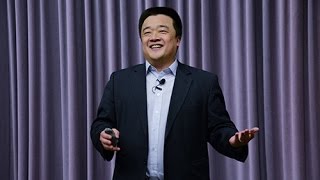
Bobby Lee, former CEO of China's largest Bitcoin exchange, explains why Bitcoin makes sense as a currency and store of value. He covers Bitcoin's decentralized design, its protection against inflation, and why traditional financial systems need an alternative.
Chapters
Hello, good afternoon everyone. Can you guys all hear me? Yes, good, good. So let's get started. Spent a few nights preparing these slides. So I'll talk about Bitcoin, talk about China, why Bitcoin is popular in China, and also talk about my journey in China I've been living in Shanghai now for the last 9 years, I used to live in the US, and how I started BTCC, and share with you some thoughts on that. So how many here know about Bitcoin? Yes, finally, finally, the vast majority of the room raised their hand. 3 years ago I would ask, it would be like crickets chirping, no, silence completely. So this is great. So how many of you actually own Bitcoin, how about that? A few of you in the front row, that's great. So let's get started. So Bitcoin is actually many things to many people. I say it's just like the internet, because the internet is used in different ways by different people all around the world. And for me, Bitcoin is also like that. Many of you know Bitcoin, maybe you heard about it in the media, some of you even own or transact in Bitcoin. But I think the truth will come out over time about how Bitcoin is really used for the society. So let's talk about, let's go back and talk about why I think Bitcoin is great. Let's go back to the internet days. So think about digital information. Why is digital information great? So the way I look at it is, for the first time, when the internet came about, we can now transmit information, transmit messages, in real time, instantly, without third parties involved, and also practically for free. So this is what I call the faster, better, cheaper. Right, when something is truly faster, better, cheaper, that's when it's revolutionary. It changed the world. So with digital information, with electronics and computers, we now have information at the speed of light. So before that, with Pony Express or even postal mail, to transmit a message even across the Atlantic Ocean, it could take days or weeks. Am I right? So that's why communication was very limited to small communities, and anything outside, you don't know what's going on in the rest of the world. With the internet, we can now have information at your fingertips, And this has been going on for the last 20 years, by the way, right? But this is the, the best part is that the digital aspect. It's the digital aspect of information that allows for all this breakthrough. Faster, better, cheaper. So what about Bitcoin? How is Bitcoin related? So a lot of people say Bitcoin is related, it's kinda like the internet was 20 years ago, and I truly believe that. So I'm very excited. So now, instead of digital information, we have digital assets. And digital assets is even better than digital information, because now you can have real value transferred over at the speed of light. Right, real value, think about that, what this means, okay? It's also instant, it's also no third parties, and lower costs. So it's same thing, faster, better, cheaper. But what we have now is real value being transferred. What I mean by that is, this is the precursor to teleportation. I'm getting ahead of myself here. Do we have teleportation here? We don't have it yet. But with the ingenuity of humanity, I think, you know, maybe in our lifetime or not, we will have teleportation like the Star Treks. But this is as close as we'll get. Because we can now send something truly valuable in real time across the internet, anywhere in the world. So it's not just information, but something of real value. Let's say you have a Tesla car, you want to send it. Can you send a Tesla to China? Now you could, because you could actually encapsulate the price of the Tesla vehicle and send it by Bitcoin over, and then they can receive it, the recipient can receive it in China, and use that money to pay for and buy a Tesla and drive it off the lot. Does that make sense? So this is why I say it's close to teleportation, because with that you can even have instructions. You can even hire, you can even pay for someone in China to go and do the dirty work of actually buying and bringing the car to you. So with enough Bitcoin, you could send it out there, and someone will do it, and give the Tesla to the recipient. Okay, so it's real value at the speed of light. So a little bit more about Bitcoin. So this is maybe confusing to some of you, but what I mean by this is information now has value. Okay, it's definitive transferable value. So before that, let me go back, before I show that word. Information was always valuable. If I take some pictures, I can share with you, wow, that's great, I can do sharing on Instagram or Facebook. But it's not definitive, nor is it transferable. Meaning by sharing photographs, all I'm doing is I'm making multiple copies, I'm sharing with 100 people, 1,000 people. Right, same thing with this video, with this ETL talk, probably recorded, probably streamed later on for YouTube and so on. On Stanford's eCorner. But it's not transferable value, it's not like I'm giving it to you and therefore you have it, I don't have it. But with Bitcoin, this is what we have. For the first time in humanity, we now have a digital currency that is information-based, duh, information-based digital currency, right? But has definitive transferable value. That means that I can give you some of my digital currency for you to have it, of which I no longer have it. And this mimics the physical reality, physical world, where I can give you a glass of beer, and you will have it, and I don't have it anymore. Does that make sense? So this is the really cool thing, and this is real, this is a really big deal, this is real. This is not hocus pocus, this is not virtual currencies of the 1980s and 1990s, okay? We're talking about cryptocurrencies. That's why Bitcoin is different. So, is Bitcoin valuable? What do you guys think? Yes, no? I have a, let me pull it out, I have a pre-release of a new physical Bitcoin that BTCC will be selling in about 2 weeks. I won't tell you too much about it, it's pre-release. But this is valuable, if I toss it over to you, I've essentially given you access Nice one. If you toss me some US dollars, we can do that exchange. Yeah, but this is, in this case it's physical, I can toss it to you and then it'll be physical, you catch it, right? But it's truly valuable because once I toss it to you, it's out of my hands, and that's what Bitcoin does electronically, but we made it in physical format. Why is this valuable other than the piece of metal? Well, because a few things. It's got uniquely great features. So until Bitcoin was invented, nothing in the world was able to encapsulate the functionality, the sort of the feature set that Bitcoin gave us. Where physical, we could give you money, gold, we can give you stocks or bonds, give you a house and so on, or title to a house. But with Bitcoin, now we can have a global network for payments, with a fixed supply of Bitcoins, 21 million, of which this is one, we can have a decentralized payment, decentralized nature of it. What that means is, the Bitcoin that I give you, let's say, does not depend on some company telling you how many Bitcoins you own. Does that make sense? So for the first time, you can now have Bitcoin that is truly, truly decentralized from any other company. Now even though our company, my company BTCC, we run a Bitcoin exchange, Bitcoin wallet service, and all that, we are a centralized service. But even if our company goes away, or there is no Bitcoin company, you can still own Bitcoin without depending on any other central government, any sort of university, or any sort of company. Okay? And of course, very low fees. So this is truly faster, better, cheaper. So, why I like Bitcoin, to summarize, for the first time, we actually have a digital asset. Think about that. All the assets you own, everyone in this room, other than the few of you who own Bitcoin, all of your assets, all the things you own that you've worked hard for in your life, are physical in nature. The other types of assets are intangible, like for example, your Stanford education. Or your knowledge about the world. But any other tangible assets, always, always physical in nature. Everything from the money you own, have in your wallet, the precious metals, gold and silver, the stocks and bonds, even real estate, all physical in nature. Some of you, do any of you own domain names? Yes. So domain name comes close, but email addresses actually are not digital assets. Would all of you have email accounts? But you don't own them. Right, at a moment's notice, Gmail can stop your account or lock you out. Or iCloud, Apple iCloud could. Right, so you don't own your email address any more than, it's more like a permission for you to use it. Okay, domain names, you sort of own them, but it's at the mercy of the domain name registration companies. They could make a mistake, or they could take it away from you. And what if, I've heard some horror stories with domain names. But the point is, none of you, if you don't own Bitcoin or digital cryptocurrencies, none of you own digital assets. Don't we already live in an internet digital age? Yes? Who's still living in the Stone Age? So, given that we live in a digital age, Bitcoin is very important, Bitcoin and cryptocurrency is very important, because for now we really have digital assets. Second thing is, it's not just any digital assets. It's not just, you know, seashells, or peanuts, or pieces of rice, or candies. Because this is a strictly limited and scarce digital asset. 20 million, 21 million sounds like a lot, but in the grand world of things, it actually comes down to about 0.003 per person in the world. Right, it's only 3 one-thousandths per person if you spread it all around 7 billion people. So what happens is Bitcoin was actually created down to 8 decimal places. So you have 100 million units in each Bitcoin, so that way people can use it in smaller things. So that's what we call, for each Bitcoin we call 1 million bits, okay? So that's why, even though that's a lot, but it's still scarce and limited. No one can make more Bitcoins. Does that make sense? You cannot print them, no company can issue more Bitcoins like they can issue virtual currencies. So, for example, how many of you belong to airline frequent flyer miles, hotel reward points? Yeah, so those points you have there actually are centralized by the companies, right? That's why no one in their right mind would spend their allowance or spend their monthly paycheck to buy more airline miles. Or do any of you do that? Do you buy more hotel points, they ask. They always offer to, they always say, hey, you wanna buy more miles? I'm like, yeah right. And the reason I say that is because the airline miles are ultimately controlled and configured by the airlines, and they can do whatever they want. They can increase the redemption price, they can make it invalid, they can say your miles don't expire, and then a few years later they say miles do expire, you know, they change the rules on you. But with a decentralized cryptocurrency, that will never happen. Okay, so if you own, for example, 21 Bitcoins, then you'll always have at least 1 millionth of the supply of the whole world's Bitcoin. Okay, so lastly, those two features, of it being digital and being scarce, it actually makes for a good payment system. So today, Bitcoin is not yet the world's best payment system. Right, you have really good payment systems like PayPal, in China there's Alipay, there's WeChat Pay. there's Venmo in the US, right? There's a lot of good payment systems around the world already, or even just physical cash. Bitcoin is not yet the most revolutionary, it's not yet the best payment system, we don't use it to buy coffee yet, but Bitcoin has a potential, because of it being a great digital currency. Okay, so for me that's a bonus, and that's why I like Bitcoin. Okay, so now, let's talk about, Let's talk about China. So I live in China now, I started BTC China, co-founded it. It used to be called BTC China, now it's called BTCC. So, it turns out, I didn't know at the time that Bitcoin was gonna be really big in China. I just did the startup because I thought Bitcoin was really interesting, and since I was physically in China, I thought I should do it in China, and not go to Africa or something. And it turned out China was great, it was like made in heaven in terms of, its adoption in that. So Bitcoin is really big in China. Now the question is, is it China itself, or is it really Bitcoin that's really popular? So let's go through that a little bit, okay? So China's crazy about Bitcoin. You guys may not know this, but China's really crazy about Bitcoin. Mining is huge, okay? Trading is huge. So mining, mining is a process of making Bitcoins from scratch. So if you think about the 21 million, I'll talk about that in a little bit, so that's called Bitcoin mining. Trading is the notion of buying and selling Bitcoin, some people trade for profit, I'll talk about that. And then let's talk about why, okay, why is Bitcoin so popular in China? So Bitcoin mining, have you heard of this phrase before? How many of you have no idea what Bitcoin mining is, raise your hand. All right, wow, okay. So it sounds kind of odd, I have this picture of this open, open, what do they call it? Yeah, open pit mining. This is actually not Bitcoin mining. We had an April Fools video this year that tried to depict Bitcoin mining as with a shovel, you can go watch it online. But this is actually not Bitcoin mining, but I just use it as a background. But what is Bitcoin mining? Bitcoin mining is really popular in China, and before I go there, Here's what it is, okay? Think about if you were the secret creator of Bitcoin, and you said, let's only have 21 million Bitcoins. How do you decide who should have the 21 million Bitcoins? Is there a good answer? They should all give it to me. Or they should give it to all the poor people in Africa. Or maybe only give it to Americans. Or give it just to the men, or the women. Or just the children. Or just the internet-enabled people. Or just people who have driver's license? How do you do that? For something that's digital and internet global, how do you decide who to give the 21 million Bitcoins? It was a big, big question, and there was no easy answer. However, what he thought was, this guy Satoshi Nakamoto, he thought that the best way is to give it out for free. For free for everyone who wants to get Bitcoin. Okay, so I'll talk about that. So Bitcoin's really popular in China, So it turns out a lot of Chinese people love Bitcoin, so a lot of Chinese people are participating in this process of getting Bitcoin for free. So I think over, clearly over 60%, even 70% of the global share for mining for Bitcoin. Now how does it work? It's actually a free lottery. So what the inventor decided was, Satoshi said that, we can give you Bitcoin for free, all you have to do is come on over, run the software, click on a button, and do one simple math calculation, it turns out it's like a, it's like a hashing algorithm on the computer, and if you do one hashing algorithm, one run, you run hash, then we give you one lottery ticket. That's why all these dozens of lottery tickets, right? So in the beginning he was the only one doing it, so he would press a button, he gets one lottery ticket. Now if there's only one lottery ticket in the bowl, guess what, he wins the first lottery ticket, right? So this process, when more people participate, then you could, you each get lottery tickets, And it turns out he's giving out these Bitcoin prizes at every 10 minutes. So every 10 minutes there's a free Bitcoin, 50 Bitcoins per lottery winner. And then every hour there's 6 winners, and every day there's 144, and each day there was 7,200 Bitcoins being given away for free. So for the first 4 years, he gave away about 10 million Bitcoins like that. So if you do 7,200 Bitcoins a day times, 4 years of 365 days, that's about 10 million Bitcoins. That's how Bitcoins came into the world, through this free lottery. So I put an asterisk there, free. Is it really free? Why not? Is this ETL lecture free? Is it free? It's not? Did you guys pay an entrance fee? Did I collect something from you? You should give me some Bitcoins. Well, it's free with an asterisk, because you have to expend the energy to come here. Or if you're viewing online, you have to expend the energy to download the video to watch it. Same thing with Bitcoin, you could get these lottery tickets for free, as long as you expend the energy, the computation, to do these math hashes, mathematical hashes. And what happens is, we're not talking about just doing a few hashes. Afterwards, people realized it's so good a deal, you could just keep doing more, so people started doing 100 hashes per second. 1,000 hashes per second, they hook up multiple computers to do it, and they use graphics cards and specialized chips. And now these days, there are special computers, I'm sorry, special companies that make specialized ASIC chips, application-specific ICs, that does Bitcoin mining. And they do, they don't do, these chips don't do thousands of hashes per second, not even millions, not even billions, they do trillions of hashes per second. The whole world today has like 200, what is it, 200, I think it's over 1,400 petahashes per second. A petahash is like a quadrillion hashes per second. Anyway, it's huge. So with fast chip assembly, with fast electronics assembly in China, and really good chip design people in China, and also with cheap electricity, Bitcoin mining is very, very popular in China for these reasons. Right, essentially you can make money out of thin air. You buy these machines, connect to the wall, to the power, and you get these free lottery tickets, eventually you win Bitcoins, okay? So today, unfortunately, it's no longer 50 Bitcoins per 10 minutes, it's actually 25 Bitcoins per 10 minutes. And then the schedule is, actually this July, there's gonna be another halving, where the reward for Bitcoin goes down further. So by after July, it's gonna be only 12.5 Bitcoins for every 10 minutes, which is about 1,800 per day, and that's how we get, slowly get to the 21 million Bitcoins. Okay, so Bitcoin mining is very popular for these reasons. Let's go quickly to trading, okay? Trading is something interesting, crazy stuff. People look at it as investing, you could buy, sell, Bitcoin is investing. You could also look at it as speculation, speculative trading, have you guys done that? I remember about 15, 16 years ago, or 17 years ago, in the Bay Area, the dot-com boom, everybody was doing what? Day trading. Right, you guys, any of you doing that, day trading stocks? But anyway, so there's a lot of day trading in China, a lot of people buying Bitcoin, they think it's gonna go up, speculating the value will go up. And you know, it's also a form of, it's also a degenerate form of gambling. So Chinese people love to gamble. They gamble on stocks, they gamble on real estate, now they can gamble and buy, sell Bitcoin. So trading's really big. Now one thing it's not is that, people ask me this all the time, so I might as well address it and answer the question for you ahead of time. Bitcoin, it turns out in China, is not about evading capital controls. In China, there are capital controls limiting how much people can convert from the local renminbi currency to US dollars or euros. But it turns out Bitcoin is not a great way, because it's still a little bit cumbersome to buy and sell Bitcoin. And also, to properly do this, you have to buy the Bitcoins in China to send money out. and then sell the Bitcoins in Europe or the United States. There's some lag time, you have to open accounts at the other exchanges, so it's a little cumbersome. Some people do it on a small scale, but this is not a great way to move large amounts of money. And plus, there's tons of loopholes in China anyways, so people can move their money using other methods. So what Bitcoin is, is for Chinese people, Bitcoin, I would say, is about investing in the future. Right? So what we have is, it's a new revolutionary global asset class. The Chinese people are global people, they realize that even though they live in China, they're part of the global world. For something as revolutionary as Bitcoin, this is something new. So the way I see it is Bitcoin is truly a new digital asset class for a digital age. Okay, it's a digital asset for a digital age. That's why Bitcoin is popular in China. Okay, so I'll take some questions later, but let me share a little bit about my journey as an entrepreneur in China. It turns out, the reason I put it in quotes is, I, you know, I actually don't know what it's like being an entrepreneur elsewhere. Because this is, BTCC is the first company I started in China. So I'm gonna share with you a few things I've learned over the years. What do you guys think? Yeah? Okay, so they may not be China-specific, but certainly, in the Q&A session you can ask me more China-specific stuff. And in some sense, I almost wanted to say these are 7 things I didn't learn at Stanford. But that's actually not true, that's why I didn't put it on the slide. Because what you'll see is, what I'll talk about, I think most of you will know already. Nothing crazy, but the reason I say I learned is that I truly learned deep down through experiencing it over the last few years in China. A lot of concepts you know before, but if you don't practice it, You don't really learn it. So let's get started. So number 1, in my job today, I'm CEO, in my job it's really about helping people succeed. Okay, so this is no surprise, but the way I want to hit home with this point is that running a company, we're about 100 people now, and why do I say this? Because it's really about making all of the 100 people really succeed at the company. Only if they succeed, then we have a company that can itself be successful. Because these days, a company is nothing without its people. So my role is almost like chief motivator, right? It's to really help people so that they can succeed in their own jobs, in their own responsibilities. It's really that, okay? So if you ever get a chance to run a company, or even if you You don't have to be CEO for this to be true, right? Even if you're in a small project, in a group project at school, if you can help your classmates succeed, then you will succeed, I guarantee you. And then that's how leadership happens, right? Is the willingness to go out and let someone else succeed, okay? So number 2, this is not crazy either, but it's willingness to give and accept. What? Critical feedback. You could say advice, but it's critical feedback. Now I want to spend a few minutes on this. This is very cool because I didn't really take this to heart until recently, last few years. What I mean is, it's two things here. It's to give critical feedback, and to accept. It's actually quite hard to give critical feedback. For many people, all we want to do is to to show the happy face, the happy side of ourselves, the nice side, to be well-liked. Is that right? How many of us wants to be well-liked? Oh, see, shy. Okay, but we all want to be well-liked, right? We don't want to seem very critical. But the fact of the matter is, if we cannot be critical of certain things, if we can't be candid, it's like the candor topic that Jack Welch brings up, right? So when I read that book, I forgot the name of the book, but Jack Welch wrote a famous book. In there, one topic was candor in organization. And only through running BTCC I've learned this, that it's very important for me to be able to give critical feedback to my team members. And likewise, it's also very difficult for people to be on the receiving end. So this is something I encourage everyone in the world, not just my team members, but we really have to learn to have thicker skin to have the ability to accept critical feedback. Right, how many of us go out and ask for, voluntarily ask for critical feedback? I bet most of you don't do that. Certainly I didn't, right? But these days, in order for us to succeed, to change, to adapt, and to really do well, we have to have the ability and the courage to go ask for critical feedback. We have to have the ability, the EQ to hold it in, and to really accept the critical feedback. And if you're a leader, even if you're a peer, the ability to actually go give critical feedback. Okay, so this is to me a very important lesson I've learned. Okay, number 3, number 2, 3, 4 are actually related. We talk about don't complain. Have you heard of this before? Yeah? Do you guys complain a lot? So I have a picture of, of a little mouse in a block of cheese. What do you think? Is the glass half full or half empty? Half full? It's a pretty good place. Now it turns out, anything in life you can complain about. Right, if you're this little mouse, can you complain? Sure, the cheese is not big enough. Yeah, the hole is too small, I'm stuck in here. Yeah, where are my utensils? How come there's no crackers to go with the cheese? Right? So the point is, you can complain about everything. But this mom's in actually a pretty good place. So the reason I say don't complain is, in the end, what I found is people who complain put themselves in a position where they feel like they can't do anything. They feel like they can't make a difference. But the reality is, of course you can. Of course you can. Doesn't matter if you work in a startup, doesn't matter if you work in a large company, doesn't matter if you're just a student in a class or in a group project. Of course you can make a difference. That's why you're here, that's why you're participating. So if you complain, it naturally sends a signal that this has nothing to do with me, I can't do anything about it, I wanna complain and you solve the problem for me, right? Rather, the way I see the world is that you can make a difference. Right, so instead of complaining, give constructive feedback, right? So, the other thing is that complaining about the situation won't change the situation, right? Because the past is history. Can you change the past? Can any of you change the past? I'd like to meet these time travelers out there once in a while. But none of us can, right, as far as I am concerned. The other thing is it's all relative, that's why I have this mouse and the cheese. You know, something that's bad from a certain perspective can be good, can be viewed positively. So every bad situation you find yourself stuck in, look at it from the bright side, look at it from the optimistic side, like the glass half full side. Right? And lastly, have constructive, have constructive feedback. Right? Instead of saying, this is a shitty situation, sorry, shouldn't use bad words. This is a bad situation, how do I get out of it? Give the suggestions, give the ideas, what you recommend to do. Right, in the end, you are your own boss, right? Okay, number 4 is related as well. No excuses, right? Do you guys make excuses? Yes? Excuses. So I, this is something, it's one of those things where, you know, you go through school at Stanford, but then it didn't really sink in until the last few years. So maybe I'm just really dense. So now I'm 41 this year, and I'm finally starting to learn these things. Here's what I mean, okay? Do you know how you can tell if something is an excuse? My rule of thumb of this, okay, when I talk to my colleagues, when they miss projects, or when certain things don't happen on time or on schedule, or a mistake happens, and I ask them why, Like, why did this thing happen? Like, how did this blow up? Or, you know, usually it's something bad news, right? It's always an excuse if they give you the answer has to do with something else outside their perspective. Meaning anything that is external, any reason they give as external reasons is an excuse. Think about that. So what I mean by that is the truly no-excuse answer would be something about themselves, about yourself. How come you let that failure happen? How come what you did or what you didn't do allowed for that outcome? And this is, it sort of goes back to what I said earlier. You have to believe in yourself that you can affect the outcome of situations. Does that make sense? For example, so I'm running a startup now, of course my objective is to take our company public, right, or to get sold for really high valuation, right, to have an exit for investors. So years later, let's say 5, 10 years later, let's say I didn't do that. If I blame the market, if I blame the investors, if I blame this and this and that, those are all excuses. Right, in the end, if my company, if we don't succeed, the only person that is responsible is me. Right, because if I'm blaming other people, then I'm just making up excuses. So my point is, anything external is an excuse. Next time you explain something, you know, ask yourself, you know, oh, what happened to my homework assignment? Oh, the dog ate it. Yeah, I blame the dog. Right, or why am I late? This morning to work? Why am I late to the meeting? Oh, the alarm clock didn't go off. Or like, there's too much traffic. These are all external reasons, right? So these are all excuses. So these days, I don't accept excuses from my team members. I'm like, nope, that's not allowed, right? Only when they actually truly admit, reflect on what they did or what they didn't do themselves, then they can learn and improve and prevent the mistakes from happening again. Okay? So you heard about the saying how, Janitors are allowed to have excuses, but vice presidents are not. Have you heard of this? So VPs in an organization, in an organization, but at my company, not just VPs, but managers and above, are not allowed to have excuses. Only janitors are allowed to have excuses. Okay, basically for VP level, you should, you know, everything's your responsibility, you just get it done, right? That's the ultimate goal. Okay, number 5. This is related to the last few points. This is how I tell people, I say, don't let other people's failure impact your success. So I say this in Chinese to my colleagues in Chinese, in China. Essentially it comes down to, meaning, sometimes when certain things don't happen on time or properly, they say, oh, because I was waiting for someone else, or, you know, because this and this and that did that. This person did that thing, and therefore this is the outcome. So those are all excuses, right? So I tell them, if you want to succeed, and I would tell you as well, if you want to succeed, don't let anyone else's failure impact or limit your own success. Okay, all of you have what it takes to succeed in your own ways. Whatever objective is, whether it's in class, whether it's a degree at Stanford, whether it's getting the right job, or the right career, becoming a doctor or anything, or even an astronaut, right? You can succeed as long as you don't let anyone else step in your path and block your way. So don't ever let someone else, their failure or their mediocrity affect your success, okay? So what that means is don't hinge your success upon others, okay? So really be happy and really go get it, do it yourself. Okay, now next topic is a fun one. And this I learned recently, again also in the last 2 years, is it turns out successful people actually do have good habits. Okay, so have you guys all read that book, The Seven Habits? Habits of successful people? Yeah? All of you? Really? Then why are you here? Okay, no. So what I mean by this is, turns out we can learn, we can learn things. Right? I know there's a saying that says you can't teach an old dog new tricks. I don't believe that. I'm optimistic, okay? So, the way I see it is that you can emulate success by having good habits, by learning good habits, okay? So what I like to do is when I meet successful people, I like to ask them about their lifestyle, what they do, what are their secrets, okay? So if you have the willingness to do that, and to go look at how other people are successful, their thought patterns, then you can improve yourself. In other words, look at yourself. Many of us are limited in our own success because of our own bad habits. Right? So how many of you actually spend time on reflection and looking back at your own lifestyle, what bad habits you have? Okay, I'll just give one example. Do you guys use alarm clocks to wake up in the morning? How many of you press the snooze button? Right? Yeah? You're all raising your hands like this. But those of you who know, right, that's just a bad habit. Right? It's just a bad habit. So, you know, you'll save time and money and, you may not save money, but you certainly save time and energy by just waking up when you're supposed to wake up, right? So the habit of using snooze button is time wasted, and the angst, and the, you know, you have to remember how many times you press the snooze, and what's the real time you have to wake up. You know, you have to set the alarm, you know, you do some math before, the night before, okay, I'm gonna press snooze 3 times, I gotta set the alarm at this. You know, you're just joking around and lying to yourself, okay? So that's just a small example. But really, this is one of the things, when I coach and give feedback to my team members, I'm, you know, it's all about giving critical feedback, right? I'm very, these days I'm very candid. I tell them, the reason you're not performing at your peak performance is because of these bad habits. I just point it out to them. And then I expect them to have the ability to hold on and to accept the feedback and really look at that, okay? So I can't say I know all the good habits or I practice all the good habits, but this is something I look out for. Whenever I meet new people, I always try to find out what good habits they have and see how much I can copy myself. Okay, so the last one is this, and then we'll go to Q&A. So this is kind of odd. This is not very new either, right? The expression that knowing is not the same as doing. Do you guys know what that means? Yeah? Knowing, so I mean, yeah of course, duh, knowing is not the same as doing. But what I mean by this at the deeper level is that too many of us, especially, you know, I put myself in that category, you know, have all these great fancy degrees at great universities, we know a lot, right? At least I think I do. So that's one of my problems. So, when you know too much, it actually stops you from going out and doing it. Alright, so the reason I started my entrepreneur career late is because, you know, I kept telling myself, oh yeah, I know how to do it, I took Tom Byers' course, how to do startups, yeah, I know how to do it, I'm gonna go do it, you know. And the other thing was, you know, big fat cushy jobs, right? So probably the worst thing that can happen to you after you graduate Are some of you in undergrad, master's? Yeah. So probably you're going to look for jobs in a few years, right? So probably the worst thing that could happen to you, to be honest, is to get a fat, cushy job. A well-paying, high-paying job, very comfortable. Because that would just be terrible. That would just be terrible. And because it basically, you have no motivation left. You just, you know, you have a good salary, you know, you have buy a nice car, live in a nice house, you know, you spend your credit card like crazy. But really go do something, right? So that's why I'm really excited to do this Bitcoin startup, is because it's truly something I'm passionate about, to see Bitcoin succeed, to see cryptocurrency succeed. And it's, you know, the pay is low, but the challenge is high, so there's no, every day is exciting. But go out and do it. Right, the Nike slogan, just do it, it's kind of like that. Really go out and do it. Okay, it could be, it doesn't matter what, but don't get caught in the cycle where you think you know something and not go practice it. So all the last 7 examples of the things I've learned, nothing is crazy new to any of you. Am I right? I didn't tell you anything crazy new. But the idea that, but for me, it really hit home when I actually go run my own company, work with real people, do projects that seem exciting, that are exciting, but can also be prone to failure, right? So it's about hitting the real world, real customers. You don't know until you do it, okay? So turn knowledge into action, that's my last call-out. Basically, you know, at Stanford, at great universities, wherever you are with college degrees, we know a lot already. We learned a lot. But actually go out and practice it, as opposed to being career students, right? Or, yeah. Are there any postdocs here? Okay, all right, so thank you very much. So I have a, I know I covered a lot of different things, I'd love to open up for questions. Let's go with raising your hands, okay. So let's start here. [Speaker] You talked a lot about the friction —complexities, what needs to occur to reduce that? Friction and complexities in what? Do we need to repeat the question for the— okay, so the question is a lot of friction and complexities in adoption of Bitcoin, in adoption of Bitcoin of— how do you accelerate adoption and usage? Yeah, how do you accelerate adoption and usage of Bitcoin? There's— It's sort of like the internet in 1996, '97 when I graduated from Stanford here. How do you accelerate the adoption of the internet? It turns out it's chicken and egg. You want more users globally, and then you have more websites and more internet companies and then more users. But you can't get one without the other. So it happens organically. So with more ISPs, with more people coming online, you have more internet companies, more apps, more use cases, more e-commerce and everything. So it's, unfortunately it's gonna happen slowly. I wouldn't be surprised if it takes 5, 10, 20 years. I don't think it'll take 20 years, that much, but the single most, one of the biggest difficulties with Bitcoin and cryptocurrencies, it's just such a complicated topic. I mean, I didn't even go into any technical stuff today, but The vast majority of you in the audience actually still don't know the details, intimate details of Bitcoin and cryptocurrency. Right, I talked about, you know, so basically it's through education, through understanding, and then through that, people willing to start using it, right? So I think it's gonna take some time. We're still looking for that killer app. I think it's gonna be money payments, transfers, yeah. Okay, question over here. You mentioned that Bitcoin actually transfers value at the speed of light, but you also mentioned that for many Chinese people it's a very cumbersome process to like buy Bitcoins and then send their money abroad. Can you explain that? Yes, so your question was about Bitcoin, on the one hand Bitcoin being speed of light transfer for the value, which is great, but on the other hand it's very cumbersome to buy, sell Bitcoin in China. It turns out that's true. That's true. And here's the irony, the irony is exactly what you said. Bitcoin itself, if we all had Bitcoin in this room, any sort of commerce would be very fast, cheap, you know, cheaper, faster, better, cheaper, right? But the problem is, in this room, only a handful of us have Bitcoin. The rest of you don't have Bitcoin. Then how would the rest of you buy Bitcoin? You have to go through Bitcoin exchanges, right, Bitcoin companies. And it turns out it's very cumbersome. And the reason it's cumbersome, It's not because of Bitcoin. The reason it's cumbersome is because the existing money system is cumbersome. So in China, the process on BTCC to buy Bitcoin, you have to transfer money from a bank account. The Chinese banking system is already quite fast, but the vast slowness of it is actually in the money transfer, in the real currency money transfer, the fiat transfer. And once you get the Bitcoin, everything's really fast. So it's where the rubber hits the road, where the friction is. Right, so that's inevitable. Until we're fully, fully cryptocurrency economy, we'll always have the existing money system, US dollars, euros, Chinese renminbi, and then we'll have the super currencies, what I call the cryptocurrencies, that can happen at the speed of light, okay? Okay, question over here, sir? [Speaker] What's your thought on Bitcoin being used, like, you know, all the horrible things it's used for, like the enabling like people would buy weapons and drugs and like pay to murder people and all that good stuff. So the question is, what do I think about Bitcoins being used for all the horrible illegal illicit activities? I guess the ultimate end of the question is like, do you think it will ever be socially adopted if people will know that it's enabling all those things? Yeah. Will Bitcoin ultimately be adopted by society knowing that there's some of the dark web, black market stuff happening? I think it will be. Here's why, okay? It turns out there's a lot more US dollars being used for illicit activities and illegal activities. Cash is the greatest source, or form, the preferred form for illicit activities, where you're buying drugs, Even like murder for hire, I don't know. There's lots of sex, drugs, and alcohol kind of thing with US dollars, right? But does that make US dollars bad? Not really. If you look at the video wars in the 1980s, many of you too young to know this, but VHS cassette tapes, you guys know what that is? VHS, before DVDs, there were these things called cassette tapes. VHS, and there's another format called Betamax. Apparently VHS went out on Betamax because they supported, there's a whole cottage adult porn industry that used VHS tapes. But the download movies you see today, you watch today on iTunes or HBO, the precursor, DVDs and Netflix, and the precursor to that was VHS. So we don't care about that anymore. The fact that there are pornography, being downloaded streaming, it doesn't affect the fact that we still enjoy live video content, or streaming video. Right, same thing. So Bitcoin or cash, you know, people choose to buy drugs using whatever currency they want to, you know, people using drugs. So fortunately in China, drug use is not a big problem, that's why people don't use drugs, people don't use Bitcoin to buy drugs in China. But whereas I think in the US, a few years ago we heard about Silk Road, the website to buy these drugs and illicit goods and services, a lot of people prefer to use Bitcoin, right? So I think society is smart, you know, people will use it for the right things, and people won't care too much. Yeah. Okay, question? The gentleman in the back. Okay, yeah, in the back, in the way back, go ahead. [Speaker:AUDIENCE] Given the big supply of Bitcoin, the volatility, and in particular the general upward trend in the past few months, wouldn't you say that people are more likely to use it like as a speculative asset instead of a currency? You're asking about the speculative nature of Bitcoin? What's your question, sir? Aren't they more likely to want to keep their Bitcoin and wait until the price keeps going up instead of spending it and using it as a currency? Yeah, that's a great question. So the question was, if Bitcoin price keeps going up, it's actually doubled in the last 1 year, right, if it keeps going up slowly, will people just hoard it and not spend it, and not use it for payment? There is a concern of that, but I'll tell you my answer to that problem. It's actually, it comes down to whether Bitcoin, whether it comes back about whether it's easier or not to buy, sell Bitcoin. Companies like us, there are several in the world, many exchanges in the world, who try to make it easy for people to buy and sell Bitcoin. Okay, if that is taken care of, then the concern you have is no longer there, because for example, if I have 10 Bitcoins that I want to hold onto, 10 Bitcoins would be worth about $4,500. If I want to have that as my savings for the next few years, but at the same time I may want to pay someone in Europe, let's say €500, I actually don't have to dip into my 10 Bitcoins. Right, because if I have to pay him in Europe, I owe him the money anyways, so I must have the money somehow, and I can just use that to easily buy Bitcoins, buy new Bitcoins, and then send it to the person in Europe. Does that make sense? So when I need to buy coffee, or breakfast, and I want to pay by Bitcoin, it must be because I have money to begin with, so I could use the money to instantly turn into Bitcoins, pay for the coffee, the breakfast, and therefore I don't need to dip into my savings. Yeah. Okay, question. Sir in the middle there, yeah. Without any third party involved, how do you view the role of the regulators? How do I view the role of regulators for Bitcoin? Yeah, this is very interesting. It turns out, because Bitcoin is decentralized, there is no organization that controls Bitcoin. However, many, many countries, I would say every country in the world, will have to regulate Bitcoin. And it's in their interest, because Bitcoin is a real deal. Bitcoin is a real financial asset. It just happens to be digital that you can't touch or feel, except for this cool thing here, right? But they will have to regulate it because we're dealing with real money, real value. For consumer protection, for proper finance and economic reasons, they have to regulate it. So it's also new in the sense that many of the departments trying to regulate it are not qualified, don't have the experience to do it. So today, every country, we have regulators in finance, in stock market, in commodities, housing market, real estate, taxation, you know, insurance regulation, and stuff like that. But none of them deal with none of them truly qualify to regulate digital currencies. So I expect countries will start having departments that actually are catered towards digital currencies, because it's like so different. Yeah, so I look forward to that day happening, I think it's already happening, the state of New York has already issued, DFS, Department of Financial Services, has already issued BitLicense for companies to apply and get. So New York state has it, United States will soon have it, nationwide, and other countries will also have that. So it's going to come in the next 3 to 5 years. Okay, question here. Would you say that there's less regulation in China in comparison to America or Europe on taxation and ability to get Bitcoin? Yeah, so regulation for Bitcoin in China, the question is about is there less or more regulation in China. It turns out China is actually very friendly, I didn't mention this, China is actually very friendly with Bitcoin regulation. Even though they talked about it in 2013, they talked about having different swimming lanes for Bitcoin and financial institutions, it turned out it's pretty simple. It's pretty easy, they're pretty encouraging of it. At least they don't block us completely. So BTCC has thrived in China over the last few years, many other Bitcoin companies have emerged in China, the interest is there, and also that because the regulators are, using a laissez-faire approach. They're saying, you know, well, let's see how it develops, and if we need to, we'll come in and regulate it down the road. Yeah, so that's how it is. Okay, question, sir? I'd like to know more about the 21 billion figure. Why was it chosen? What keeps it from being expanded? Why aren't there more than 21 billion? Elaborate a little bit on that for me. Yes, yes, I'll talk about the— so the question is about the limit of Bitcoin, how many 21 million, so it's actually 21 million and not 21 billion. So the question is how, why is it there and so on. So it turns out the 21 million figure was set in stone by the creator Satoshi Nakamoto. It wasn't picked out of thin air. So he had a certain algorithm, remember it's that free lottery, right? So what he wanted to do was do a lottery every 10 minutes, every hour, 6 drawings, 6 prizes an hour, each prize being 50 Bitcoins. So those were arbitrary, he wanted 6 per hour, he wanted 50 per drawing, so that was 300 Bitcoins per 1 hour. So that was arbitrary. But if you take the 300 Bitcoins per hour, and then you do that for 4 years, and then you, what he did was, every 4 years, just like the Olympics, or the World Cup soccer, he decided to cut down by half. Only by cutting down in half, he could sort of do this exponential logarithmic delay, where it eventually gets to 21 million Bitcoins. So the math just works out right, that half of Bitcoin comes out in the first 4 years. So if you do that math, 7,200 Bitcoins per day, you do 4 years of that, you get exactly 10.5 million, roughly, yeah. And then that's half of all the Bitcoins, and then the next 4 years, you get the other half, the half of the half. The next 4 years, you get half of what's left of that. and so on, so on, so on. So eventually the prize today is 25 Bitcoins, in 2 months the prize will be 12.5, in 4 years the prize will be 6.25, and then it'll be 3.125, and then it'll be like 1.5, 1.6 something. Keeps going down until it gets down to 0.5, 0.25, 0.125, all the way to 0.0000001. So that's 140 years later, it turns out. So it's gonna take another 100 years for the last few bits to come out. Okay, so when you add that all together, it's kind of like this calculus math thing, you add up the, sum up the area under the curve, whatever, and then you get 21 million Bitcoins. So that's it. And then how is it kept, why is it only 21 million? Because it's a consensus system, so the whole world actually runs the software, Bitcoin protocol, and then they all self-enforce, reinforce each other. They say, my version of software I run, I say I insist there shall be not more than 21 million Bitcoins. And if everyone runs the same software, we all force the rest of the world to say not more than 21 million. So that's why there's, that's why it's 21 million, it's enforced. Because if you think about it, if you own Bitcoin, would you want there to be more than 21 million? That's inflation. Right, exactly. Or if you have your Bitcoins, you don't want, you wouldn't, you refuse to run the software that says 22 million. The other problem is, if you actually had software that says 22 million, who gets the extra 1 million Bitcoin? Right, would you say you get it yourself? If you did that, will the rest of us agree? We're like, no way. So we won't agree with you. So that's why it's called a consensus blockchain. Yeah. Okay, one more question. Okay, out in the back, very back, sir. Is there a convenient way to hedge against volatility? Because if someone has a checking account, they don't want to have 10% less money next week, Yes, so the question is, is there a good way to hedge against volatility? That's a great question, and I think it's taken a few years for us, for the industry to come to that. Turns out we do now. BTCC, one of the products we offer is called the Pro Exchange. It's a professional exchange where people can easily buy, sell, go long or go short with Bitcoin, and use that to hedge the price risk of Bitcoin. So if you own Bitcoins, if you own 10 Bitcoins, you want to lock it up at $450, you could then do a derivative contract by selling short 10 Bitcoins on contract. So you own the 10 Bitcoins, and you sell that, and then no matter if Bitcoin price goes up or down, you always have $4,500. Yeah, so that's gonna be more, it's just started, we just launched that late last year, but these kind of things will come into the marketplace very soon. To make it more available to everyone. Okay, so Bitcoin, Bitcoin is a complex topic. Thank you for coming over here and giving me the opportunity to share with everyone. Thank you, Bobby. Thank you, Tom. Thanks, guys.
More from GHION.AI


O processo de reconhecer limites, mesmo quando a vida parece exigir sempre mais.





Depois de tantas histórias, aprendizados e pausas necessárias, o @interior_iza está de volta



