Bonny Simi: An Entrepreneurial Mindset — Applied to You [Entire Talk]
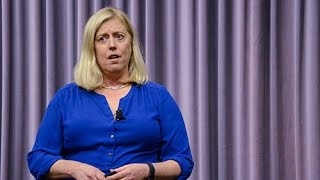
This content was created by GHION.AI . This content was uploaded by GHION.AI . This is a YouTube video titled "Bonny Simi: An Entrepreneurial Mindset — Applied to You [Entire Talk]" created on October 19, 2016, which appears to be a talk or presentation by Bonny Simi discussing the application of an entrepreneurial mindset.
Chapters
Thank you. So I can get a little idea of who all we have. How many of you here are undergrads? Great. How many of you are grad students and then how many are from the community. Outstanding. So it looks like, first of all, I'm incredibly honored to be here and it looks like I've been in most of your shoes. So hopefully today you'll be able to take away some kernels. And because as you mentioned, I was an undergrad student here a long time ago, won't say exactly how long. I was also an Ms. And E student and that actually was not all that long ago. I got my Ms. And E degree just about four years ago. I actually took this class. I took one class for credit, one credit. And then I just kept taking it because I loved it. And after every one of the talks, I took away one kernel of information that was of value to me. And if I've done my job right, you'll be able to take away one or two things. And I also hope that perhaps one or two or more of you will actually completely change the way you think about your life and your career. And that's really what today's talk is about. It's about an entrepreneurial mindset, which of course that's what these talks are about, but as applying it towards you. So whether you're a student, set aside your class studies, set aside what you thought you were going to do, whether or not, if you're a professional out in the field, set aside that today it's about actually you and how might you think differently in an entrepreneurial way about your life. So I'll give a short summary. I'm going to be giving sort of a storyline, if you will, of my life, but then as how it might play out for you. So I'll give just kind of a high level overview. I start sort of the journey starts as an undergrad here. While I was here at Stanford, I competed in three Olympics. The first one was here. After that I graduated, but in the sport of luge. And I'll cover what that is. Started working in television and then kind of moved along through my life. Was a pilot and a mom and was a director at JetBlue in a variety of different jobs. Came back to Stanford, was the head of talent and I'll cover a little bit about that. And then now as the president of JetBlue Technology Ventures, now that looks like a really winding journey. And if I realized back when I was an undergrad that I'd end up where I am now, it wouldn't make sense, but actually, this journey was incredibly purposeful. And it starts with my first theme. Now, he mentioned that my life came in threes. I actually have five for you today. And the first one, the first tenet, really that kind of guided my life, is you have to have a dream for a dream to come true. People talk about dreams coming true, but have you ever stopped and thought about what are your dreams? And a lot of people, sure, they have some thoughts and such, but they typically hold themselves back because, well, I can't do that. I don't have enough money, or I don't. There's some I don't, I don't, or I'm afraid I'll fail. I want you to stop for one second right now and think, if you were 100% guaranteed to succeed, what would you do with your life 10 years from now, 30 years from now? Pick one thing, one dream, that if you were 100% sure you were going to succeed, what would it be? And hold that thought. Don't worry, you don't have to tell anybody next to you. But we're going to be coming back to that for a second, because for me, my journey actually started. I was in high school, and a person came and talked to us in a classroom, just like I'm talking to you. And this gentleman, his name was John Goddard, he had. When he was 14 years old, he came up with a list of 127 things he wanted to accomplish in his life. Crazy things. Some of these things here, you know, go to the moon, land an aircraft carrier. When he was 14 years old and he had no money, this is his actual list of what they were. And he said to us, you need to come up with your list of what you want to accomplish with your life. I happened to be 14 at the time, and I thought to myself, I can't think of 100 things to do. But I was kind of looking at his list and I thought it was pretty intriguing things going to the moon and then climbing Kilimanjaro and then Mount Baldy. Now, for those of you who happen to be in Californians, Mount Baldy is a little mountain in Southern California, which is where I grew up. So I thought it was pretty cool that this world explorer wanted to climb the mountain that we lived on as one of his 127 goals. But it also does put it in perspective a little bit. So I grew up in this little tiny town, very little money, little red schoolhouse that really is my school and single mom. We were on public assistance. We didn't have an Internet. We didn't have a library there. We didn't have any of that kind of stuff. But what I lacked in resources, I had an imagination. And, you know, when you're young, you don't think of obstacles. And so I thought, well, I can't think of 100 things to do, but I could think of five things. And this is my actual list that I wrote when I was 14 years old. Now, putting it in context. So going to a good college, I think that's something pretty normal for a kid who's in high school. But to go to the Olympics. Now, where did that come from? Well, it happened to be an Olympic year, and I was watching the Olympics on tv, and that might have been what inspired me. Now, again, I'm going back many years, so I can't exactly remember what was going through my mind. But at the time, so I was watching the Olympics, and it was on ABC tv. And so I thought, well, I want to be a TV commentator. And I wanted to become a pilot. And I didn't even know anybody who was a pilot. My mom was a school teacher, and she used to bring us to the local airport, and we used to watch airplanes take off and land. And so I assume that is how come I wrote that down. Now, for those of you who are parents or someday will be parents, think about exposing your kids. I don't know if I would be here today if my mom hadn't brought us to the airport so I could watch airplanes take off and land, But I wrote that down and I wrote Build a Log Cabin. So the only ones that even seemed remotely reasonable was the first one and the last one, because I live in the mountains and everybody lived in a log cabin. So what about this stuff in the middle? And how did I get from one thing to the next? Well, the college part was fairly straightforward, writing essays and doing all of that. And I was very, very fortunate to get in here at Stanford. And my parents didn't think that I could. We weren't going to be able to afford it. And the other part of it was they were from Cal. And so did my brother. He went to Cal, too. So I was the black sheep in the family, came here. But this is where the part of my journey is. So I mentioned you have to have a dream. So I checked off the box. I went to a good college, but this is the next part of one of the life lessons. And I got it very, very early. And that is to be what I call a T person. And what a T person is, is to become very, very good in something. Something that can be transferable, something that can be. That you can take that skill and transfer it over to something else. So when I was writing my college essays, I was actually pretty darn good at writing. And I had this crazy dream, and I kept thinking about it, about being in the Olympics. Now, I wasn't a great athlete. I was an okay athlete. I was in track and swimming in high school, and I played field hockey. And I hoped to get a scholarship and ultimately did end up with a scholarship here. But it wasn't something I was going to go to the Olympics in. And so would I really be in the Olympics. But it was in the back of my mind for about four years after I wrote those goals, I still was in the back of my mind, I want to be in the Olympics. So I was fascinated. And the next year, the Olympics, as they come every four years, was on. And I was thinking about it, and lo and behold, there was a magazine article to be a torchbearer for the 1980 Olympics in Lake Placid. And I thought to myself, hmm, well, I don't know if I can be an Olympian, but I can be an Olympic torchbearer. And they were picking one person from every state, so there was going to be 50 torchbearers, and you had to write an essay. And I was from California, and I thought to myself, what are the chances that I could be the one person picked from California as well? If I don't try, I won't get it. You're never going to win a lottery if you don't enter. And I thought to myself, I'm really good at writing, so I can take the same college essay that I used to get into Stanford, rearrange it a little bit, and apply to the Olympic torchbearer. And it worked. So that was my first exposure to becoming a tea person. So I came here my freshman year. I stopped out winter quarter, the first of many times I stopped out at Stanford, and I went to Lake Placid as an Olympic torch bearer. So there I am at 18 years old in Lake Placid. This is the opening ceremonies. And yes, I watched all of Eric Haydn's competitions. And I was a hockey player, field hockey player. And one of my fellow torchbearers said, hey, let's go. You know how to play hockey. Why don't you come watch the hockey games? You know, us is going to get smashed, but let's go anyway. I Said I've never seen an ice hockey game. My very first one ever was USA Russia. So while I was there, I had stopped out for Winter Quarter. So when the Olympics ended, I had nothing to do and no money to do it with. And I didn't have to be back here until the end of March. And the Olympics ended in February. And thinking about that goal I had in my mind, like, well, should I check off that I had been to the Olympics? Well, there was a sport that I saw called luge. And I thought, you know, they had a beginner's camp. It was only $8. Even I could afford it. And this is another one of those things of just taking those risks and just going for it. So I decided to apply for the camp and started competing in the sport of luge. Now, in case some of you don't know what this is, this is kind of like little flexible flyer going down a hill, except going really, really, really fast. And it looks crazy, but people who are crazy and daredevils do not do well in this sport. Now, thinking about this in life as well, if you're completely and totally crazy and you don't put thought and precision into what you're doing, you will not succeed. So this was one of those metaphors for me and metaphors in life was to think about, could I be precise? I don't know. I could be precise. Could I be planful? Yes. The other piece of this, this little sled, There are no shock absorbers on the sled. None. The shock absorber is your human body. And if the human body, if you're stiff, the sled will dig into the ice and you go slow. So this is truly, truly the sports metaphor for all you have to fear is fear itself. Because if you're stiff, the sled won't steer, and if you can't steer, you crash. So the idea was to be completely and totally relaxed, managing and being in precision while riding the sled. I say that this is one of the most purposeful ways for me, as I grew up, of learning how to really relax. Now, let's face it, I was getting ready for today's talk. Was I nervous? Yes. But I thought to myself, just relax. When you relax, you speak better. So whether you're in class, it's very much about being relaxed. So in case you have never seen the sport, I called up one of the team athletes. They're over in Europe right now. Because when I was competing, we didn't have GoPro cameras, but they do now. And at St. Moritz Teams in St. Moritz, and I asked him to mount a camera on his helmet. So this is an actual ride in St. Moritz. It's about a minute. I will let you watch. Notice how close the walls are. And, yes, you have to steer or else you'll hit it. At this point, he's going about 40 miles an hour and just peeking just over his toes to see where he's going. Speed is increasing, is about 60 miles an hour at this point, and the G forces are starting to hit, so his head will be pulled back to the ice. As he's zooming down the track. It starts to breathe a little bit heavy at this point. The sound doesn't pick it up. But you'll watch as he's coming around the turns. He's actually moving his feet because he is very much steering the sled. It is more steerable than a car coming down or almost down to the finish. At this point, he's reaching about 85 miles an hour. This is about four GS through that turn. And the track now starts to move uphill. So you can see he's starting to sit up. He's crossed the finish line and just put your feet down and stop. So there you go. That is the sport of luge. So I'll talk a little bit about lesson number three, and I'm going to unpack this sentence that we have here. I start off with take risks. If you know they'll pay off, they will. Now, if you say that all together, it might sound like take risks, but only if you know they'll pay off. That's not what I'm actually saying here. First of all, it is to take risks. So I'm going to talk about that for a second. Some of you may have heard, particularly the women in the audience, that women, men tend to apply, will apply to a job if they're 60% qualified. That's the stats. You may have heard these. There's various studies on this. Women mostly wait until they're 100% qualified. Why is the difference? A lot of different reasons on a lot of different studies. But a lot of it is women tend to take less risks, tend to have less confidence, tend to think well, and also tend to follow the rules a little more. Rules. A, these are the minimums you need to do. But in the end of the day, it gets back to, you just need to take the risk and step out there. And this is the next part of the sentence. Once you put yourself out there, if you believe that you will pay off, others will Believe in you, too. You exude that confidence and that multiplies your chances of it paying off. So I didn't know starting luge that I would end up in the Olympics. I did it. Just had the confidence and just displayed the confidence and the coaches helped. In fact, I went over to Germany right after. So it was my freshman year. I did the sport, it was a two week beginners camp. Came back to school and I said, well, if I'm going to get good, I have to go to Germany. Because the Americans weren't very good at the time. And so bought a ticket to Germany the following fall, stopped out from Stanford again. Took me seven years to get through my undergraduate degree because I kept stopping out. I showed up in Germany and didn't know a whole lot of German. I tried to explain that I was just a beginner, but they figured I came all the way from the US so I must be good, one of the best in America. I didn't even know who one of the best in America was. So they put me in with a German national team and I proceeded to crash. I only had two weeks in the sport. Obviously figured it out pretty quickly. I crashed 52 times in a row. No, you don't get too hurt in the sport. It does look crazy. But when you crash, you actually only fall this far off because the sled is that close to the ice, even with a centrifugal force. But I was so determined and the coaches had mercy on me or else I would kill myself, they thought. But then really. But I had the confidence and I wasn't going to leave. And because of that confidence, they kept coaching me. And by the time I finished that three months, I came back and became the best in the us so it really is around that confidence and it begins to pay off. So this is where we start getting into the career moves. So as I mentioned, one of my goals. So I ended up competing in the Olympics in 1984 in Sarajevo, Calgary and Albertville. And one day I was just about to graduate finally from Stanford. And the local TV station ABC News KGO up in San Francisco came to interview and said, so what are you going to do when you graduate Now I was majoring in communication with a focus on broadcast journalism. Why? Because I had written when I was 14 years old that I wanted to work for ABC TV. Also because I couldn't take Physics 51 because I was always gone winter quarter and I couldn't get away from it. I think it's still called physics51 engineering and I wanted to be a simple civil engineer, but I couldn't do that one. So I majored in communication because he didn't require physics. 51. But I'm standing there in front of the camera, and the guy says, what are you going to do when you graduate? And I said, I want to work for ABC tv. Will you hire me? And he said, sure. No kidding. He was a Stanford grad. And he said, why don't you cover some stories? Because this was in 87. I was just headed to the 1988 Olympics, and they allowed athletes to do stories. So I was going to file some stories from Calgary. So I just sort of reached out and did it. Now, I could have completely failed, but fortunately he liked the stories and the KGO liked the stories. So as soon as I graduated, they hired me full time. So I worked in San Francisco for ABC tv, and I enjoyed it. I was in the evening news doing everything. I did sports, everything but football, baseball, basketball, and so covered recreational sports and Olympic sports and all that kind of stuff. And while I was there, I started thinking about flying. Why? Why? Because I wrote the Dome when I was 14 years old. So I went down to the Palo Alto airport. I didn't know anything about aviation whatsoever. I just knew that I wanted to try it out. I was not thinking about being an airline pilot. I was in my career. My career was in television. So I simply went because I wanted to learn how to fly. Now, I suppose if I thought about it and said, well, I want to be an airline pilot. Oh, I can't be an airline pilot because there aren't very many female airline pilots, and that will be really hard, I probably would have done it more because I just like to knock down barriers. But I literally just want to learn how to fly. It's one of those things I tell people. Now, if you leave today and you write down that you want to learn to fly as one of your goals, I just tell you, go to the airport, take three lessons. After three lessons, you'll know if you want to continue it. Three lessons. The first lesson is pretty scary, all these dials and gauges. But over time. So I took my three lessons and I learned. And that's session 152, Palo Alto. And I remember getting in the cockpit on the one on the left, picture on the left, thinking, it is so confusing, so many dials and gauges. But I became so passionate about it. And I actually began thinking about becoming an airline pilot while I was at the TV station. Now, this is one of those Other career moves and career things to think about. You can do some things in parallel, because if you do some things in parallel, it does de risk it a little bit. So I was working at the TV station while I was building my hours. It takes a long time to build the hours to become an airline pilot, and you don't make much money. And so a great way was to do it in parallel. So I was doing corporate flying here in the Bay Area while I was working at the TV station. A couple years went by and I got a phone call. It was a Saturday, and I was teaching some students that Saturday, and the tv, but the news director, the same guy who'd hired me, called and said, I need you to come in to do a story. It was going to be a slow news day, and I was going to have to cancel all of my students. So I thought about it and I said, look, I was going to make 100 bucks for teaching that day or 500 bucks to do the story evening news. And I said no. The reason I said no is because of the passion. I realized at that moment that my passion was around aviation. And I firmly believe that you need to follow your heart. So that is when I continued and I decided I would strive to be an airline pilot. Applied to United at the time and eventually was hired. I'll cover that. I had a very standard airline pilot job. I worked in San Francisco, flew 727s, 737s, 777s over the course of 13 years. And I loved flying, absolutely loved flying. Towards the end of my career at United, I was a 737 captain, pretty senior, had a great schedule, making decent money. I had reached the pinnacle of aviation, but not unlike when I was a TV reporter. I started thinking, where's my passion? And I started thinking, well, I love the job, but this is that fourth lesson that I have for you to think about. When you get hired somewhere, think about the company and think about the culture. Does it match who you are? And for me, I loved aviation, and I decided this is where I belonged. But the culture where I was didn't exactly match what I wanted to do. And I'm not saying that a culture is good or bad because you can think of culture in terms of countries, you can think of culture in terms of parts of the country. East coast versus West Coast. I'm a West coast person. That is also part of my culture piece, which was also a bit of a challenge because where I ended up was on the East Coast. But ultimately I ended up back here on the West Coast. So culture. I'm not saying that where I was at United was bad and where I ended up was good. It's just very different. And so I decided to take this move, crazy as it would be. There was a startup I wanted to work for a startup. This is. It was JetBlue in 2003. It's called Jet who Really, if you're especially on the west coast and it's still not all that big here on the west coast, this is the route structure. I think there's like 10 cities there. Says San Francisco was really flying to Oakland. So I became an Airbus first officer. It was an enormous pay cut to go from a senior captain at United to a junior first officer at JetBlue. And people said, once again, you're crazy. But I believed if life is more than a paycheck. And when I went to JetBlue, part of it was I wanted to do more than fly. I wanted to fly airplanes. I still fly airplanes. I'm still an active captain for JetBlue. But I wanted to do something more. And that wasn't possible. A previous employer, what it was at a startup, because at a startup you get to do all kinds of things. And this is where I started forming my thesis around career. And this will be one of those things I want you to think about finding the perfect job. So, as I mentioned, culture is like table stakes. And that's something that a lot of people don't think about. For example, if you're looking for jobs and you think of going to Facebook or Google or Apple, all three of those companies are fabulous companies. All three of them have completely different cultures. So I'll ask you, what are you? Are you more of a Facebook person? Are you more of an Apple person, more of a Google person? And it doesn't say that you're good or bad or any of those. It just figure out what that culture is. So that's the table stakes. The next piece is what I'll call the need. That's the job. You're being hired for a job. What is that job? So the company needs you to do something. The passion. And I've covered that a lot. Are you passionate about it? And then the third piece is skilled. So the perfect job is one where they actually need. There's a job available, you're passionate about it, you're skilled for it, and it's the right culture. So when I started thinking about this and I'm at JetBlue and I'm flying airplanes and I'm doing a bunch of different projects and I'm starting to move up in the company. And I started thinking to myself, do I really have all the skills that it takes to move up to whatever my place of potential at this company is? And I sat back and I looked at the aviation industry, the airline industry in particular, and it's a little bit spotty. And part of it is because people who end up in the senior leadership of an airline tend to, although not always the case, tend to either grow up through the industry and don't have a solid business background or have a very solid business background, but don't grow up in the industry. And I didn't want to be one of the first ones where I grew up in the industry but didn't have a business background. I didn't, I didn't even know how to use Excel. I'll admit it, I used it as an address book. I couldn't even add one plus one in Excel. And here I was, 40 something years old moving up in a company. I said I need to take a pause, a career break and I need to go back to school. So. And it's on the west Coast. Yes. So came back to Stanford to the business school, took some time off from work, lived in Escondido Village. And this is where I said, okay, what are all the skills that I need to move up to be an airline executive? And those are all the classes that I took and then some. I took this one and when I finished that was in 2007, I was still learning and I was still connecting and so decided to stay connected to Stanford and do the MSE program through scpd. So I took and little known fact, you can actually do it, you have five years to finish your degree. So I didn't need another degree, but I did it because I wanted to keep learning. The technology was changing so fast and it was a way to stay connected. So actually graduated here in 2012 in Ms. And E, returned back to JetBlue and moved into a variety of different roles. And this is where in the end, this is that fifth, my fifth lesson, something to think about. Because if you truly love what you do, you never work a day in your life. And right now I don't believe I'm working. And where I've ended up over the course when I went back, I used that T philosophy. I said to myself, what do I really want to do while I'm at JetBlue? Well, I want to help people, I want to make a difference, I want to expand the culture. I want to keep JetBlue, the amazing company that it is, with the innovation. And somehow I want to be on the west coast, which that was the part that was going to be impossible because it's an east coast airline. I did spend a lot of time. I worked in a variety of departments. I worked in the call center, which was in Salt Lake, which is kind of West Coast. And then was the head of talent. And then I'm coming back to my whole. Everything was working great. I loved, I was running. Like I said, we hired over 12,000 people, was hiring pilots, executives, building leadership programs, making a difference in people's lives. Except I was still on the east coast, but I was commuting from here. So I would fly to, I'd leave on Sunday evening, work in New York, come back. And my husband said, honey, how can't we get JetBlue to move to the West Coast? I said, no, it's an east coast airline. But I kept coming up with these innovative ideas and such. And that's when JetBlue had decided, wanted to build a venture capital unit. And it was interesting because actually it was the leadership, the head of our CIO who I had hired him and helped him build his strategy and such for his team. So he came to me and said, I need to build a strategy for a venture unit. And I thought to myself, oh, man, that would be great. But I didn't say anything. But ultimately they came back and asked if I would do it. And the question people would say, well, I actually don't have any background in venture, but this is where that t part is. What I do have a background in is talent. And at the end of the day, early stage investing is all about the talent. So I'll take an absolutely fabulous, talented team with a mediocre business plan over a amazing business plan and mediocre talent. And so in the end, we started our venture unit out here in January of this year. And I hired. I have a managing director who has a background in ventures. So we have an awesome team. And that's where I am now. So this gives the kind of that journey and that high level picture going from undergraduate to here, using those five principles. This is the website. You guys can check it out. Checked off the goals, went to college, went to the Olympics, worked for ABC tv, became a pilot. I have to leave something for retirement. So I have not built the log cabin, but we do have a place in Utah. And I do plan to build my log cabin. My husband says, but log cabins Aren't energy efficient and all that. I said, yeah, but it was a goal. I wrote when I was 14 years old and I'm going to get a goal. So in summary, and then I will hand it over for questions. These are the things, and I hope that today you walk away. Make a list. Make a list and assume that there are no obstacles. What would you accomplish in your life in 30 years? Make that list. Think about the T person. What are you really, really good at? When I was called to go out to Salt Lake to help work in the call center, I was going to be a director. Where you call one here at JetBlue, that's the call center. So I was going to be a director in a call center over reservations. And I didn't know anything about running a call center and I didn't know anything about reservations. But why was I asked for the job? It's because I was good at strategy, planning and projects. That was my base T thing, which strategy, planning and projects are things that you can do anywhere. So that became my T. What is yours? What are you good at? Are you good at analytics? Are you good at writing? Are you good at strategy? What are you good at that is transferable? So think about those. Take risks. And once you take the risk, you've already jumped out of the airplane, you can't jump, climb back in again. Be confident about it. Be confident that the parachute's going to come out. Take risks. Others will believe in you when you're applying for those jobs. Do not get hold in handcuffs. Culture matters. And if you love what you do, you'll never work a day in your life. So with that, I think we have time for questions. Open up to anybody. Yes, yes. What kind of Technologies is JetBlue investing in right now? Oh, great question. Especially for those of you who are entrepreneurs and with startups. So what we do is think about. Oh, yes, I'm repeating the question. So the question was, what kind of technologies does JetBlue Technology Ventures invest in? So a little bit about JetBlue Technology Ventures. So there is the word technology in there that actually. So that gives it a little bit of guardrails. So we don't invest in things that are product like seats or airplanes or those kinds of things. Things that are basis of technology and typically things that are capital light. So not things, but more of the software type of things. But it's everything from the moment you think a person would want to travel till they go and come back and say, wow, that was amazing. So everything on the Customer facing side. So magnificent customer service, things like biometrics, how do you walk through the airport and everything is amazingly simple and TSA already knows who you are and you don't have to pull out all your ICE licenses and that kind of thing to service delivery. So AI bots, those kinds of things. When you think about our call center right now, if you actually want to contact JetBlue, you have to call one and her JetBlue. We do not do chat, messenger, WhatsApp, any of those, but all of you do. And all of you, I hope will fly on our airline. So we want to, so we're working on those types of things. Also maintenance operations. So we think of machine learning, predictive analytics for maintenance operations and how to optimize the operation. From scheduling to maintenance to resource planning, revenue, ancillary revenue of things and next generation regional transportation. We have a thesis that short haul air travel, short haul travel 600 miles or less over the next 10 years will not be be on big jets, they will be on other things. Could be hyperloop, could be autonomous pods, could be electric aircraft, could be, who knows what it'll be. But you will not drive all the way up to San Francisco, take an hour and a half to go through the airport to fly an hour to go an hour and a half through la when you could get there some other way faster. So those are the areas and the technologies that we investing in. Yes. How do you apply for your firm? How do you apply for your firm? I like your style. Now, JeffBlue Technology Ventures is small, but we do hire. So we have a team of seven people. We have associates and analysts. And you go to our website and apply. We actually have an open position as associates and analysts. So the. Oh, how do you get. Oh, I thought you wanted a job. Okay. But actually like the fact you have a better chance of us investing in you than hiring you. Because we are investing in a lot more companies and we have a small team. So you just go to our website and you can send the information it says right on there how to do it. And we actually run incubators and programs like that too. But actually my team reads every single one of those emails because we're actually the only venture firm, corporate venture firm in the travel and hospitality space. So we're getting a lot. We've actually seen over 800 startups so far this year, but there are several that literally came in straight. Normally venture firms don't. You don't get a whole lot of interesting things coming just straight Cold from the email. This mostly comes from referrals, but for us, we've actually found a lot of interesting things just straight from us. So that's what you do? Yes. If you were to write sixth item in your list, what it will be. Ah, if I were to write the sixth item on my list, what would it be? Well, I, I've actually done it and it is something that I'm very passionate about and it is about education. So I won't say I've written. I haven't done the goal yet, but I've written it down and it is without getting too deep into it, because I someday hope to do a startup in this, but it's transforming higher education for people of limited means. Of all the folks coming here to Stanford, you'll always go to Stanford. But think about the 32 million Americans who have some college and no degree. 40 years old, never have a chance. There are people. My husband, who's a firefighter, didn't have a college degree, but he had a lot of college. And it's. How do you help those type of people get across the finish line? And so we're doing a program at JetBlue that I started that we're carrying forward to help our crew members get a college degree. The pilots, the flight attendants, the gate agents, and then taking that and transforming that across to the Walmarts, UPS and all of that. So that's my passion and we've started it at JetBlue and then we'll see where it goes from there. And then I want to build a cabin and retire. Would I invest in. What was the question? Will you invest in David Needleman? Would I? Well, would JetBlue technology venture? So David is actually. David is an amazing entrepreneur. Amazing entrepreneur and he does amazing things. So he created the foundation of the culture of our company and he's doing it again at his old. And whatever his next company is too. I mean, I think people who are entrepreneurs in that early stage do amazing things. Now, would JetBlue Technology Ventures? Probably not in the sense that it wouldn't be a technology. But if David came up. Well, actually in between, before he started JetBlue, when he was at Southwest, he left Southwest and then came to JetBlue. He actually created a software firm which if JetBlue Technology Adventures existed, then we would have invested in that. So yeah, I mean, if he has a technology, he's an amazing guy. Oh, hi, David. I didn't know. Yeah. So you were pretty faithful to your goals that you had when you were 14. But did you ever have any goals that popped up later on in life that you might have had to choose between? Oh, do I? Did I have? The question was I was pretty faithful to my goals. You know, in the end of the day, they were dreams of a 14 year old. So it wasn't, I look back in retrospect, it did sort of guide. It was sort of like a North Star for me. But in the end of the day, I wasn't overly specific on some of them. And I did, once I got going on things, I started setting mini goals and all that kind of stuff. And it's often in retrospect that I'll say, hmm, I didn't realize that I actually followed it. And then part of it too, when you think of I actually accomplished, I don't have the list there anymore. Four of the five by the time I was 30. And so people would say, well, why didn't you restart it? So there was part of me and that was that move over to JetBlue was to do something different. So, you know, I said some private ones and such. Yeah, in the back. What's the case for JetBlue investing in companies as opposed to just being a customer of small companies or buying them outright? Ah, good. Why do you need to take a minority state? Oh, great question. So there's a whole lot of reasons. It was actually very purposeful repleting the question. So the question is, why are we doing investing and taking minority stakes? Not like buying whole companies or anything like that. And why not just be a customer of them? Well, the types of the way we look. So Jeff was a very innovative, in part because of David. So if David's still watching David too. Okay, very innovative. But what is now we were the first to have live tv, first to have broadband, WI fi. What is next? So the things that are coming next are coming fast and furious and are coming at the very early stage, often before JetBlue is ready to be a customer. In fact, most of the companies that we will likely be investing in, there's a few that we're investing in that we're doing proof of concepts with and that will roll out within a year with JetBlue. But a lot of them are two to five years out. And so for us to have investment at the early stage, it helps us learn, helps us as an airline, learn about blockchain, learn about AI, machine learning. When I talk about those things back at JetBlue now, they wouldn't know what it is. But now over the course of A year ago they wouldn't know, but now they do. So it's a way of saying, just like me staying connected to Stanford through doing the MSE program, it's a way for JetBlue to stay connected. And once JetBlue applies their wonderful brand to a company, whether it's JetBlue or JetBlue Technology Ventures, typically the company gets a big boost. Whether it's other customers, they get media, whatever, the valuation goes up and we ought to actually get something out of that valuation. The last reason that we're doing it is because JetBlue is an airline. Right now we run an airline, but will we always. What will JetBlue be in 10 to 30 years from now? Will it always be a 5%? So there's in the U.S. 100% of airlines. Of the airline traffic, there's four airlines, each controlling 20%. United, American, Delta, Southwest. We're one of the. We have 5%. Well, we always be at 5%. Maybe, but what if we're something more? When you think about it, what was Walt Disney many years ago? It was a mouse and a movie. What is Walt Disney now? So this is a way for JetBlue to expand its brand and start playing in a broader area without impacting mothership too much. Hope that answered your question. Yes. In the white shirt. Yeah. So you're talking about general adventures, looking at both capital light, things like software, but at the same time looking at what the future of transportation is. Aren't those a little bit contradictory? In a sense, hyperloop is an innovative technology. Yeah, we're not going to invest in hyperloop. But yes, hardware is inherently capital intensive. Yes. So hardware. Oh, yes. Repeating the question. Thank you, Robbie. The question is, why are we so focused on capital light and aren't we going to miss the boat? I'm paraphrasing here. Aren't we going to miss the boat by not doing some of the capital intensive things? Particularly when we start thinking transportation, the transformation of transportation. So, for example, hyperloop. Hyperloop. Pretty capital intensive. Doubt we'd ever invest in that. Certainly not JetBlue Technology Ventures. JetBlue. I don't know. Doubt it. But we're very much part of the conversation why we're here. Our office is here in Silicon Valley. I know hyperloop's down south and actually distributed in many ways, but we are very much part of the conversation and often will advise. So we are talking with companies who the transfer. Aviation is not like the hotel or taxi industry. It's very difficult to come in and disrupt it like Uber did for taxis or airbnb did for hotels. We're very regulated. Takes a lot of specialty knowledge. And so while we might not invest in companies, we certainly could have a seat at the table in terms of advising and that in and of itself gives us a lot of knowledge. Back to JetBlue. So we're very actively talking to a variety of companies that are still hardware heavy. We wouldn't necessarily invest. Yeah. What would you say distinguishes JetBlue from the other airlines? What distinguishes JetBlue from the other airlines'? You probably haven't flown JetBlue, have you? I think that for us we. It's a different airline, it's a different kind of experience. So I encourage you to try it. I don't want to be an advertiser necessarily for the company, but it is working for JetBlue. I mean have worked at different airlines. Right. It's just different. And customers tend to like it. So. Yes. So when you were at Stanford as an undergrad, you took opportunities elsewhere in the Kalamata by going to Germany. Is that something you encourage if you are an undergrad to have a certain opportunity like an entrepreneurial one or sports related or something that requires you to take a pause in your. I absolutely, positively keep forgetting to repeat the questions. So the question was do I encourage people to follow a non traditional path and not necessarily complete your degree in four years? Okay, so I'm talking to Stanford audience and probably Stanford administrators watching me, but I'm just going to say it. I absolutely, positively encourage you to take a stop out. I think Stanford is as lenient about stop outs now as they were when I was here in undergrad. It has completely changed how I looked at things now. I was traveling in Europe and I was stopping out from Stanford in the middle of how Europe. You think of the time from 1980 when I came here to when I graduated in 1987 and then into 89. What was happening in Europe, Eastern Europe, Russia. I was living that. I watched the wall come down. Those are those things that I would have never had those opportunities. And it's completely changed how I think about things. So whether it's an opportunity, my daughter is looking at internships and might take a year to go overseas. Take an overseas, do the Stanford overseas program. If you absolutely positively have to graduate within the four years, then do one of the overseas programs. But I highly encourage you to take a year off or a semester off, go do a job. It so changes how you think about your studies. Completely change I guarantee you when you come back from however long you took, you'll take a different class than what your class load would have been had you not left. Yes, Kenny. Oh, hey. Yes, I actually know a few people here. I didn't realize you were there. You say you value talent, so what do you look for when you start? Oh, yes, I value talent. So one of my very favorites. So you saw the question was, since I know talent, what do I look for in talent? And yes, I've done lots and lots and lots and lots of interviews. I've read I don't know how many thousands of resumes. So we'll start on the resume. It is really important. People who are in recruiting, and I was in recruiting. Average time looking at a resume is 10 seconds. I call it 10 seconds to 30 seconds, to five minutes. Right? 10 seconds. I will decide in 10 seconds if I'm going to spend another 30 seconds. I'll spend 30 seconds to decide if I'm going to spend five minutes and really kind of think about the person and move them into the next folder for an interview. Really? And this is where those activities make such a difference. It will separate you. So then let's say you get an interview. One of my absolute favorite interview questions, and it always throws people off. I ask them, what was your favorite class in college? And, you know, they have to think about it for a second. And the reason I ask that question is because I want to know to their core, what are they interested in? I see, what do their eyes light up? And if they weren't at college, I asked them what was their favorite job and why. All I want to know is what's their passion? And if it's something that's totally unrelated to the job, then I'll ask, why are you applying for this job? And then we'll see if their eyes light up. So it's all about, I'm looking for passion in their eyes. If that answers your question. Yes, for somebody who didn't make a list when they were 14, make one now or it's still not true what their passion is, what advice can you give? Yes. And so finding your passion. So the question was, if you didn't make a list when you were 14 and you're not really sure what you want to do now. By the way, when I came to Stanford, I said I was going to be an engineer. I didn't put that on my list specifically, but I came here to be an engineer. And it took me 30 years later to come back to be the Engineer. But this is where. Just exposing yourself to so many things. So this is where. Going back to, why did I have being a pilot on my list? It's because my mom had exposed me to small aircraft flying at a local airport in Ontario. And so expose yourself. Go take other. Take classes that you never thought you would even like. Go do an internship. Just explore. Yeah, but fine. And think back to yourself. I mean, you're not 14. You're something more than 14. So you have a little bit of life experience behind you. Think back in your life going backwards. What are those times in your life that you had pure joy? What were you doing? Somebody had asked me that when I was trying to decide whether I would take the job from. I was working in Salt Lake, running the call center, lived in Park City. My daughter was going to high school there. It was amazing. I was actually living and working in the same state. What a concept. And I got a call for a job, a promotion back to New York. It was to be the head of talent. And I didn't want to go back to New York. And so I put a lot of thought and a lot of thought. I said, well, what am I really, really, really passionate about? And I did have those. I went back and I thought about my life, and the times that I was most happy was when I was helping other people achieve their goals. Whether it was recruiting for luge. Luge and bobsled, two sports that I did a lot of and recruited about 1500 athletes to the sports. Ten of them became Olympians. Five of them won Olympic medals. I'm far more proud of that than I am of being an Olympian myself. And so that was recruiting. And I just realized there were several other times that I did that type of stuff. That was something that I really loved doing. And so that was why I chose to take that job. Yes. So I really, really enjoyed your talk. I wrote a list of my own when I was 16. I'm getting closer and closer. Yes. Can you give us one of the things that. So this is something. You wrote a list when she was 16. Give us one thing that was on that list. Become an astronaut. Become an astronaut. Yes. But I'm Australian, so I have to become a citizen first. Well, so she wanted to be an astronaut. And I just a very short, little short segue to that. And I could connect you with this person. So, remember, I said I was recruiting. I was recruiting athletes, and I was recruiting athletes here at Stanford for luge. And I recruited this track athlete, and he was really, really good and he said to me, I want to become an Olympian, and I also want to become an astronaut. And ultimately, he had to choose between the sports, so he. Or between the two, he quit luge and he disappeared for a while. And then about four years later, some guy in a black suit and glasses and everything says, do you know Scott Parazinski? And I said, yes. And I'm thinking, who. Who are you? And he says, I have some background questions. He was doing a background check. Top security clearance on Scott Parazinski, who ultimately became an astronaut. He's done quite a few moonwalks. He just retired from being an astronaut. And so I'll be happy to connect you up with Scott Perusinski, who is a Stanford student and an astronaut. So there you go. I'm recruiting for this. I was actually wondering whether you would be willing to meet up with me for a meal sometime and talk more, because I found mentoring totally invaluable. Very good. Very good. So we'll catch up afterwards. So the question was if I could do some mentoring. We'll catch up afterwards. I think we have time for maybe one more question. Yes, Personal question. What do you think of the air control center in the US versus Canada? Ah, so the question is, what do I think of air traffic control in the US Versus Canada? Canada. Well, I'll put myself on the economic perspective being, oh, the technology. I don't know enough about the technology of the air traffic control in Canada. I do know that. That there's a lot of fees for. So airlines don't like going across Canada, so we'll avoid it. But I do know it's more efficient. It's much more efficient. So that's. They probably run it better. I just don't know the details of it. I do know that the US Air traffic control system is definitely in need of an overhaul, and they've been working on it for a long time. So I think with that, I think we're coming to the close. So thank you very much. All right.
More from GHION.AI


O processo de reconhecer limites, mesmo quando a vida parece exigir sempre mais.





Depois de tantas histórias, aprendizados e pausas necessárias, o @interior_iza está de volta



