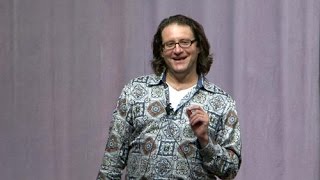
Brad Feld closed Mobius Venture Capital in 2006 rather than raise a follow-on fund, then started a new Boulder-based firm in 2007 with a $225 million fund. He built it around a deliberate strategy: invest in about ten early-stage software companies yearly, keep the team small, and skip growth for its own sake.
Chapters
Over the next couple of years as a fund, Mobius evolved quite a bit. We had grown a lot. We shrunk. We started to think about what our future would be by 2003, 2004. Ultimately, as a firm, we decided not to raise another fund in 2006. And that was a very deliberate decision. We didn't really have urgency around making that decision. We were still making new investments through the end of 2005, but as partners, the partners that were still at Mobius, which included Heidi and myself and a few others, spent some time talking about do we want to continue to try to go raise another fund and continue this institution that was this thing that emerged from Softbank, or do we want to do something different? And together we came to the conclusion that it didn't make sense for a variety of reasons to keep doing it. And we decided to essentially end of life Mobius. Now it takes a long time to end of life a venture capital firm. I think those of you that sort of watch venture capital system, there's this notion that it takes about a decade to kill a venture capital firm because venture funds raise money in a particular year. They get commitments from their investors, and those commitments are at least 10 years long. Usually it ends up being 11, 12, 13, 14 years because you get extensions, but your investors are committing to you for that period of time. You make new investments for five years. So you kind of have five years to be in the game, and then you have the remaining amount of time to continue to make follow on investments in your existing companies. If you haven't raised a new fund within that five year window, you're on your way to being out of business. And as it becomes a six or seven or eight year window, as more time passes, it becomes harder and harder to sort of reignite raise a fund and keep the firm going. So at Mobius, we decided in year six, at the very beginning, not to continue as a firm. And we figured out as partners how to manage the portfolio that we had through the end of life. As part of that, I decided that I wanted to raise another fund. And I was living in Boulder, and I decided that one of the things I was going to do this time around was be very deliberate about what the principles of that fund were. And part of that was not just being deliberate about how that worked, but making sure that the people that I partnered up with had the same sort of deliberate focus. So I ended up getting very lucky. Three of the people that I'd worked with at Mobius, two that were in California Actually, five people. There were five of us originally, and we asked one of the original partners to leave, but the four of us that you saw in the video, part of the thing that was difficult for me as a partner in Mobius that was based in California, was being in Boulder. And so I decided that even though I wanted to invest nationally and that whatever I would do would be a national investment approach, I wanted to have all my partners in the same place. And that was partly selfish because I wanted to be around my partners that I like to be with, but I also didn't want anybody to have to go through what I had to go through in the context of Mobius, which is as the one that wasn't where everything else was. I was constantly having to travel to California, constantly having to be the one that was coming to where everybody else was, which was a lot of personal overhead and frankly was just not very satisfying over a period of time, again, as reactive versus deliberate. So my partners, Jason, Ryan and Seth, all sort of agreed, bought into that thesis. Jason and Ryan both made very big commitments because both of them had very deep roots in the Valley. Moving to Boulder was a big move for both of them and for their frame of reference, their networks, and how they're approaching things. In 2007, we set out to raise a fund. We waited about a year before we went out to raise a fund to make sure we felt comfortable that we could manage what we had committed to manage in the context of Mobius, and that our relationships with the other partners at Mobius were in such a way that everybody felt good about things. We raised a $225 million fund in 2007 with the premise of making early stage software Internet investments all around the U.S. we were categorized as a type of fund at that time called an emerging manager, which was experienced VCs that sort of were regrouped and creating new funds. Some of the other emerging managers that came out of that cycle were Union Square Ventures, Spark True Ventures, First Round Capital, handful of others. That fund we've invested in about 28 companies. We've had a couple of exits early on. We've also got a couple of companies that are doing extremely well. And in 2010, we raised another fund exactly the same size, $225 million. And part of our plan was that we would raise exactly the same size fund each time. So another deliberate decision on our part was we weren't going to try to grow our firm. I'd gone through that at Mobius. It's very difficult to grow a venture capital firm. It's very difficult to be great at doing what you're doing in the context of venture capital if you're also trying to grow. And so our decision, at least from our frame of reference, was we're going to make about 10 investments a year. We're going to invest as a team. We're not going to add people to the team. We're just going to be excellent at what we do, and we're going to love working with the people that we love working with, and we're going to do that over a period of time until we're done doing it, and then we'll be finished. So no legacy, no transition of power, no figuring out what to do when you get older. We'll just do it for a while, and when we're done, we're done. And that was another one of our beliefs in terms of how we've approached it.