Brian Murray: A Story of Change and Opportunity [Entire Talk]
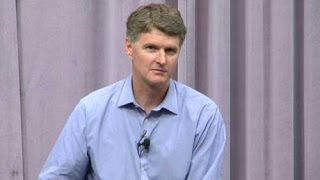
This content was created by GHION.AI . This content was uploaded by GHION.AI . This is a YouTube video titled "Brian Murray: A Story of Change and Opportunity [Entire Talk]" featuring a talk from June 12, 2012, where Brian Murray, CEO of HarperCollins, discusses his career path, the evolution of the publishing industry, and the challenges and opportunities faced by HarperCollins in adapting to digital changes. The talk is hosted by Tina Seelig at Stanford, covering topics like the transition from print to digital, the role of publishers, and the future of the book industry.
Chapters
And I figured that we would start out with your telling us a little bit about your career history because we have lots of CEOs and entrepreneurs and venture capitalists come to speak to us, but we've never had a book publisher. And this is an incredibly important industry. Of course, most of us in this room are huge consumers of books and printed material and now digital material. It'd be great to know how your career evolved and where you end up where you are now.
Great. Well, look, first of all, thanks for the opportunity. It's really great to come out here. It's my first time to Stanford and we just had a very quick tour around the campus. Very impressive. I'm still perspiring a little bit, but let me. You know what I think is interesting about HarperCollins is I'm going to venture to guess that I may be the CEO of probably the oldest company that you've probably ever had in here in terms of entrepreneurial and engineering based. I mean, we're about 200 years old, so maybe we're older than all of the other companies that have come in to see you. So I'll have an interesting story to talk about later, but I got my undergraduate degrees are in physics and electrical engineering. So I didn't start out as an English major and I didn't think I was going to be running a publishing company either. But I was curious. I liked math and science. I graduated and then worked for four years basically writing code. And then I went back to business school and got a degree. I was interested in both technology and business. And so I wound up working for four years business school and then Booz Allen working in New York in their media consulting practice where I happened to work for three publishing companies in a row across 18 months. And so got to learn a little bit about the book publishing business. And my last client, only after two years was HarperCollins and I joined HarperCollins. So now it's been a little over 15 years that I've been with Harper Collins.
How did you join and how did you end up going from that to being the president?
I joined Harper Collins, was a client of ours. So I was one of the, you know, the young kids on the project and you remember what that's like. And after the, you know, the three or four month project, when our project of analysis and trying to figure out what to do with HarperCollins stopped, they decided to hire two of us. Instead of doing another consulting engagement with Booz Allen, they decided to hire two people. And I was one of Them and my first job, I think was I was a director of finance, which I'd never taken an accounting class ever. So there happened to be an opening and they put me in that job. And then I just, I kept moving from one role to another. And I would say just about every two to three years I was in a different role. And I kept getting a little bit broader and broader set of experiences. And the big change for me was when I went, I think it was 2001, there was an opportunity to go run our HarperCollins business in Australia and New Zealand. And I'd had my. My wife and I had our third child. He was six weeks old. And we all got on the plane and flew to Sydney and we'd never been there before and it was the best job I ever had. So we spent, we had three and a half years there. And then I was asked to come back to New York. I said no. Then I was asked to come back again six months later and I couldn't say no the second time. So I came back to New York. So I really moved around. Usually on the business side, I'm not an editor, but I work with a lot of very creative people. And so I kind of think I bridge both the business and strategy and helping creative teams get the most out of what they can do.
So having been there at HarperCollins for 15 years, I'm going to guess the publishing industry has changed dramatically over that time. Can you paint us a picture of what it looked like then and what's happened over that time?
Yeah, I can try. I mean, it is. This industry is the book publishing industry. And again, we're not an educational publisher. We're what's called a trade publisher. That's consumer books. So Barnes and Noble and Amazon are our biggest customers. We're not selling textbooks, for example. But you know, when I started, it was back when Amazon was founded. I mean, if you go. Amazon's only 15, 16 years old. So it's hard to imagine back then that we weren't selling books online. And so at that time, Barnes and Noble and Borders, the superstore format was the really big. Was the big new innovation in retail and in book publishing. They were the big bad bullies. At the time, independent bookstores were all across the country. Books were really not sold in Walmart. I mean, it was a very more of a cottage industry. There had been a lot of consolidation. So there were publishing companies now were owned by media and entertainment companies, whereas the generation before they were family owned. So they had Been the people who were running them had grown up when they were family companies and had a different sensibility. And now they were owned by large conglomerates, often global. And there was a bit of a, a bit of friction there. I would say to now where our businesses in the U.S. 30% of our businesses are ebooks. Online sales of books for us can be 20, 25% of prints. And our new customers are now Apple and Google and Barnes and Noble and Amazon are also making that transition. So a fundamentally different business. Now we're at the leading edge of technology and consumer devices. We're grappling with change. Our business model was underpinned by scale and logistics of physical goods. And now we're basically dealing with all of these new platforms and platform economics and everything that goes with that kind of business. So we're at a fascinating tipping point in our industry where a lot of the old rules maybe don't apply anymore and we need to learn the new roles fast and then apply them. And so it's a very exciting time, but it's also a time of tremendous change. And in some corners of a big organization, you know, that can lead to opportunities, but also anxiety in a big company.
Can you paint us a little bit of a picture of the number of books that you publish and how that fits into the global book industry? Because I think it's hard to understand the scale and even maybe if I had one more question on top of that, what percentage of those books are big sellers? Because we think also about apps and people are producing a lot of apps and which ones are big sellers. But in the book market there are also blockbusters. So maybe the numbers, a little bit of stats.
Sure. HarperCollins is the third largest English language publisher. So we have operations in the us, Canada, uk, Australia, New Zealand, India. We have a small office in China. So we cover all of those English language markets and we have teams, both creative teams, publishers as well as sales, marketing and distribution in all those markets. So what's interesting, in the old days our business was very much country by country based. And now with digital, it's really become language based. So for those in the English language, we publish 3,000 new books per year. That's first editions, that's not a paperback of a second book or I'm not counting an ebook separate from a print book. It's 3,000 new product launches a year, which is about 12 new product launches a day. It's unbelievable, the scale. And so we have an unbelievable process that brings all of these books to market. And in the most efficient way, we do it now in print as well as in digital. And we have teams of people that are trying to position our author's books in the best possible light, whether it's working through B2B channels and working with the buyers of bricks and mortar bookstores and now going directly to social media sites, whether it's Facebook and Twitter. So a tremendous amount of volume goes through. And what we do is a lot of our values. We own the copyright in the books. And books will sell, good books will sell for decades. And so we build up this catalog. We have about 50,000. Our catalog, Print Books is about 50,000 unique works in the English language. And then now our ebook catalog is getting up to around 40,000 copies. So we are an intellectual property business and we try to sell best sellers, but we also try to educate and inform. We have children's books, we try to have a book for everybody. And we publish very widely, fiction, nonfiction, poetry, cookbooks, best sellers and literary books. So we never know where the big book is going to come from next year. We have to reinvent the revenues every year. The majority of our revenues come from the new books. And if you think about a consumer packaged goods company where they have selling soap or cereal, that product doesn't change at all. And we do 12 new products a day. So there's not a lot of scientific experiment because every product is different, it's much more organic. A lot of gut feel and a lot of collective wisdom that comes from the group of creative professionals that work on those books. So we're the third largest. And I mean, I've lost track of the number of books published per year because now we have self publishing. We have, there's probably millions of books published a year. I once there was a stat a couple years ago that said 20 million Americans write a novel every year. So it's a shocking number of people that want to write a book. And I'm sure many of you know people or have written a book at one point in time, but we don't, you know, we're not in that self publishing space right now. We are kind of curating and picking the books that we think we can make a difference with.
So I'm just curious, how many books does a book have to sell for you to think of it as successful? I mean, is it, is it, I mean, just because. To get some sense of scale.
Yeah, that's a really hard question to answer. And there are so many ways to define success. When we do our business planning a Book is successful when it sells more than we expected it to sell. So that could be 10,000 copies. But if we bought a book and we thought that book was going to sell a million and it sells 100,000, it's unsuccessful. So it really has to do with our expectations when we take on a project and we take on projects of all different sizes. So, so. And then there's critical successes too. There's books that win Nobel Prizes. They're big successes as well, but for different reasons. Not so much for economic, more for reputation, more for making a difference. There's a kind of a general genre of important books, books around policy, whether it's government or social policy. We don't expect them to ever be big best sellers, but we like to think that we're kind of advancing the dialogue on those issues. And books are unique in a way to do that. There's a lot of short content out there, whether it's newspapers, magazines, blogging. But a book is a little different. It has that enduring value and they can really add to a conversation in a way that some other media forms can't.
So why should somebody, I mean, so many people I know are self publishing because if they've got a platform, they write it, they can get out there right away, they make more money on it. Why should somebody go through a traditional publisher? I mean, I certainly know that the reasons I do.
But I'm curious, we can compare notes. I know we can compare notes.
Why?
I mean, look, there are, as I said, there's millions and millions of people who write a book every year. There aren't enough kind of traditional publishers who could ever publish them all. So there are real reasons for people to self publish. The reasons to go with a publisher like HarperCollins is that you are tapping into, I think of HarperCollins or a publishing house like us as an expert network of professional publishing people. And if you look at the people that we have in house that are involved in publishing 12 new books per day, the feedback that we get from the marketplace is really astounding. And so we're able to adjust to the zeitgeist. We're able to adjust to what consumers want, whether it's price, whether it's product titles, the marketing. We are getting all of this feedback into an organization with thousands of people organized into creative teams and that expertise, that tapping into that expert network. You can't do that as a self published author. So you can have success and many people do have success self publishing. But what you get when you come to a big publisher is the expertise of what's working in the market now. And what we can do is help position that author's work to achieve its maximum success. And there's a lot of logistics that goes into that. There are a lot of connections that we can make to traditional media, new media, to all the buyers, to the librarians, where reviewers make a difference. It is beyond what any one person could do. So some people will say, some authors who are successful self publishers say, oh, I can hire the editor, I can hire the marketing person. I mean, and that's absolutely true. But if you distill down each book, we probably have 80 to $100,000 of professional time going into a book. You can't hire or tap that kind of expertise in one individual or two individuals. You're actually tapping into that kind of expertise by tapping into about 25 different professional departments in a publishing company. And that's unique and that's not going to go away. But we're also. Publishers are not very good at articulating that value. And media loves to write about the disruption and the disintermediation of traditional publishers. And that's a risk and a concerned. We think about it a lot. But there's a tremendous amount of value that a big publishing company brings to the process.
Well, I found that from my experience.
Good. Shoo.
No, I know. I absolutely have. I mean, I could give a whole laundry list of like totally amazing things that I benefited from. One of the things that's always fascinated me is that people who are in the publishing industry, if you say that you're writing a book, the first thing they say is who's publishing it? And I say HarperCollins. And they go, oh, really? So, okay, so it's very nice. But people who are not in the publishing business don't even ask. They don't know. And one of the things that's always fascinated me is that publishers don't build a brand around books. Like, people don't go to a bookstore and say, I'm going to buy a HarperCollins book. And I've always been fascinated that publishers don't do that. And maybe you can talk a little bit about that.
Sure. I mean, this is. I mean, it's a great question. We always view the author as the brand and we are putting the author forward and trying to help them build their brand and their platform. We can help them do that. The publisher's name does help, certainly, when it comes to maybe not with that consumer who's not in publishing. But when it comes to the reviewer, when it comes to the media, if you want to book, you know, if you want to get on major media, or if you want to get reviewed in the newspaper, who's publishing, it really matters. So our business traditionally has always been a B2B, a business to business kind of channel. So we work with the buyers, we work with the reviewers. We will market directly to consumers. But we don't have that direct consumer relationship now. That may change as we go forward. I mean, the digital world that's developing around us creates a lot of new opportunities for us to reconsider that traditional practice. And there's a lot of debate and discussion within the publishing industry about exactly that issue. There are a few brands, but maybe in certain genres, there are some brands that people read a lot of fantasy, they might know a brand or two, a publishing brand. But by and large, the biggest publishing companies, we have a lot of imprints, and those imprints are really creative teams. We don't have a monolithic publishing process. We have what we call imprints, where you have a publisher and then the creative team around them. And we find that those small teams are where the best creative work takes place. And so if you're going to organize that way, they have to do the best job with each one of their imprints in order to make those connections with media, with reviewers and book buyers. So it's a complicated issue and it may change in the future, but for now, we put the author out as the brand.
You know, it's interesting, I always, as I've learned more about the publishing industry, think of publishers really as venture capitalists. They are investing in these books which are each a little business. Can you talk a little bit about those parallels?
We absolutely are the bankers of this creative industry. We take the risk. A contract with an author is, I think, a really elegant contract. The incentives for the publisher and the author are completely aligned in every way. And what we do as publishers is we have, I mean, we probably spend about $200 million a year signing authors every year. That's a lot of venture capital that goes into a cultural business. And we try to pick the best, make the best bets that we can. Sometimes we don't even have a finished book. I mean, many times it's on an author's idea. It might be an outline. We are absolutely placing bets and using our understanding of the marketplace and what's happening, what we think consumers are interested in, we're placing bets on authors that we think we can get behind. And as I said the real success for us is when we do more than we expected. So we take those risks. We guarantee an author a certain amount of income so that they can write the book. They don't have to have a full time job. In theory, when they work with a publishing company, we will finance them and they'll get payments as they hit milestones through the writing process. And then we take all the risk and inventory and marketing and we try to sell that book and then we share proceeds with the author. So we are the venture capitalists. I mean, when you think about the role we play, it's the financing and I don't think that's going away. In the digital world. It's the editorial helping shape and package the book for the best possible sales that you can get and the marketing to actually deliver it. Those three capabilities are fundamentally not going to change as we go forward. How we do them, that may change with all of the new marketing vehicles that are out there.
So let's drill down on a little bit. I love the metaphor of the publisher. As venture capitalists, we know that VCs get tons and tons of business plans every day. And we know that publishers get tons and tons of manuscripts every day. And I also know that in the VC industry, they're out there trolling, looking for deals that are not this, you know, being mailed in. How are you finding these? Because I've gotten a little bit of a sense of how complicated this is to actually finding the authors that you want to work with.
Right. So we have about. In New York, I would say we have about 120 editors and their job, these are, they're focused on acquiring books. And a typical editor at a big publishing company might acquire 12 books a year. So kind of like one project a month that they're working on at different points in time. And they are, they're working it. I mean, they have relationships with literary agents, they have relationships with producers. They have, they might be involved in certain markets, whether it's politics or business, where they have a network where they are trying to identify people who have a great story to tell if they have an innovative idea that we think could be a book. We're looking at all these different avenues now. You see a lot of bloggers, a lot of bloggers turning into books. We published one of the most successful ones, Shit my dad says was a blog that we pulled out and turned into a book and became a television show. We've done there was another one of the most successful one is Pioneer Woman. There's a woman. If you know her, she has a television show now. We've done two books or three books with her. And so we have people looking everywhere to try to identify the next big thing. I mean, talking about venture capital, we do it in that cultural sense and trying to find books that can really find a marketplace. Yeah.
My fun story is I met Mark Tauber, my publisher, on an airplane.
Oh, really? Yeah.
And we became fast friends. And it took two years, but he then finally said, will you write a book?
That's great. All right. I'm glad it worked. Here we are. Now.
You meet them on airplanes.
Exactly, exactly.
So what do you see as the biggest challenges, opportunities? I mean, we teach our students that the bigger the problem, the bigger the opportunity. So what are the problems, opportunities that you see ahead?
Yeah, I subscribe to that same theory. I mean, anytime there's a lot of change, there's a lot of opportunity. And so trying to figure out where is the market going to go is really important for us. I think one of the biggest immediate challenge we have is during this transition from print to digital, we. We want to make sure that this digital world that's unfolding very quickly around us, we want to make sure we have the right sort of digital ecosystem for selling and marketing books. And so that means we want to have as many partners as possible to sell books through. We want to have as many marketing channels, and we want to be able to offer to consumers the greatest possible choice in formats and price and in content that we can. So if you go back three, four years ago, there was really only one major ebook player, for example, and now we have four, and I think we'll have six as time goes on. As I said, we'll have Apple came into the business, and Google is finally organizing around their MyPlay platform. There are going to be, I think, now, four, five or six major distribution channels and partners for us in the ebook world. So building that, making sure we have the right ecosystem for the future is one of the top, top issues. The second issue is, during this time of change is how do we get the right capabilities, the right people, the right skills, and the right capabilities into the company? You know, publishers have done some things the same ways for decades and decades, and as the business transitions to digital, there are so many new ways to do things. As I said, we have to rethink some of the old traditional rules. And, you know, we need to think about how do we market directly to consumers. We have to ask ourselves questions about the brand. Should HarperCollins mean something, particularly in a world of a lot of self publishing. So trying to get the right people involved in those decisions, trying to challenge a very big organization of more than 3,000 people around the world to wrestle with these issues head on and to kind of anticipate where is the market going to be. There are the big, big challenges that we have. Yeah.
So is the definition of a book changing? I mean, is a book still a book? Is it still a book when it's on a digital reader?
How is that, to me is the most exciting part of the business right now is we can reimagine what a book will be. The print book, I think, is going to be here for a long, long time. But with all of the color tablets that are out there now, we can imagine, and we are producing some books with tremendous extra content in them. We can do interactivity. We can have videos, multimedia is embedded. There's social elements that will probably be rolled out from some partners in this year. There are so many things that we can imagine, we can update. We were talking earlier about updating books. We published Game Change a couple of years ago. And Game Change is a great example where Game Change began. Kind of a national discussion about the last presidential campaign. And this book went on and on and on. And there were fantastic interviews with the authors on Charlie Rose on npr. I think in the future, the editor and the authors of books that begin this kind of national dialogue should be, you know, we should pick the best of them and they should be appended to the back of the book. Because I know when I finish a book, if I love the book, I don't want it to end. I then want to know, well, what else has happened since this book was published and the technology is there for us now to append, you know, on my iPad, I'd love to have the red dot show up on my bookshelf on the book. And to know that there's now a great video that I missed. You know, I don't want to go to the web and search all over the place. There's a lot of. There's a lot of content out there that's maybe not curated, but I think the editor at the publishing company and the author should mutually agree. That was a great interview. This really advanced it. Let's add it into the. So everyone who bought the book two months ago is going to get this new content. So those are the kinds of ideas that I think are right around the corner for us.
So what about digital rights management? I mean, there's this interesting problem of content and who owns it and who can have it. And maybe one person buys my book and they share it with everyone in the world. And how do we deal with this?
That's a complicated issue. One of the challenges that I didn't mention earlier is this whole idea of the value of a book and the issues of piracy and so forth. So digital rights management has some benefits in that it protects the value of the book because it can't be. You know, file sharing is a little bit more difficult. Anybody can file share any piece of media if they really want to do it. But so it has some benefits, but it also has a lot of drawbacks. You know, you can't move. If you bought a book from one platform, you can't move that book to another platform. And so a number of publishers, including us, are beginning to experiment with either light DRM or watermarking or removing it. And I think everyone's going to continue to test to see is it better with DRM or without. And I don't know how the industry will evolve over time, but we're going to do the testing and then we'll make some decisions as we get some results.
So Amazon is the big elephant in the room, right? When we talk about book publishing, they have changed the entire landscape. And how do you think of them? Are they. Do you love them? I mean, are they your best friends? Because they're this incredible distribution channel. You know, what's the relationship?
It's a complex relationship. I mean, it's. You know, the term frenemy is a great term to kind of capture what business is like today. I mean, we've had the situation with Amazon where they're a very large distributor. They're also a publisher. We've had this in the past. I mean, Barnes and Noble was what Amazon is today. Five, 10 years ago. They were a publisher then too. So we've sort of been through this. But Amazon is a really terrific company. They have achieved amazing success in a very short amount of time. So they're a challenge. They're a challenge for us. We love working with them on some dimensions, and we do. And then there are other dimensions where we have to be very careful because they're so good at whatever they set their mind to do. So it's a very complex relationship. And we see that more and more in business today. We also, I mean, Google is another one. Google is an unbelievable company. They're helping people discover our books through search. They're getting into the e book business. But We've also had problems with, in terms of them scanning all of our books. So there's another company. Great. Unbelievable. On the one hand and very complicated on the other hand. So you have to be a little schizophrenic, I think, today to work with some of these really big successful companies and figure out what are your policy positions and try to work with them with your left hand and then sometimes argue with your right hand. So it's complicated and I don't know what else to do about it.
Facebook status with them. It's complicated.
No, no, but it should be.
So it's interesting, since things are changing so quickly. Do you have a picture of where you anticipate the book publishing industry to be one year down the line? 5 years? 10 years? 20 years? I mean, I'm assuming you're thinking strategically about this with your team. How far in the future do you try to predict and try to work towards?
I mean, I kind of think five years out, which five years out is an eternity these days. I do. I mean, I kind of have my wish in terms of what this business would look like. And I, you know, work with my team to try to set policies that get us closer to that. So I think, you know, in an ideal world, from a HarperCollins perspective, you know, ebooks and print books would be, you know, balanced. 50, 50, 60, 40. I don't know. They would be complementary. We want bookstores to be around. We think they're a very important source of discovery for consumers. They're really important in those communities. So we don't want them to go away. And so, you know, we're trying to set policies in order to ensure or to encourage that that outcome will come to pass. We also would like to, you know, we were talking about, you know, the different kinds of content. If you, if you think about the print world, we have many different print formats. We have hardcovers and then we have what we call trade paperbacks. They're the $13 to $15 trade paperbacks. And then we have mass market paperbacks, which are low priced. I think in the digital world we should be trying to develop similar multiple digital formats. I can see us someday bundling the audio with the ebook where it's. So if someone's reading at night and they get in the car or they go to the gym, they can switch on chapter four. They know exactly where they left off, and they can listen to chapters four and five while they're driving or at the gym, and then they can go right back to chapter six. Or seven, that technology is there today. So we're trying to experiment, innovate and create some of these products so that consumers have lots of choice. So we're working towards those ends. But you can't just get there right away.
Yeah. So I'm going to open up for questions in a minute and I want to ask one more question. That's a really terrific experiment. In fact, we did a project in my creativity class on the future of the publishing industry and that was one of the ideas the students came up with was this the idea that you go back and forth between media for your book. So I know that there's some demand for that.
There is demand for that.
So what other exceptions, experiments, I mean, what other things can you share with us that are some prototypes you maybe are working on or big ideas that would really be breakthrough?
Well, the audio, we call that audio sync to text. That's one that we're talking to all of our customers about. Trying to develop what we're calling enhanced ebooks. Publishing through the Apple Bookstore. There's some really terrific things that we can do. We've had some enhanced ebooks where we've seen sold 15, 16,000 copies of enhanced ebooks. And so we're really trying to develop those. We're trying to scale up the number of enhanced ebooks. We're doing a lot with promotional pricing. I think it was Tim O'Reilly who had said the biggest problem with books is they're obscure. And so the more you can allow them to be discovered, the more you're going to sell. We're now doing a lot of promotional pricing and working with having an author blog. And then we're able to lower the price for a limited period of time and offer the consumers who maybe had heard of an author but hadn't trialed them before, lower the barrier, the sampling barrier. We're getting a lot of success out of that. And then on the marketing front, there's a tremendous change. Facebook advertising on Facebook to communities who like a certain author is very, very powerful. A lot of the marketing we did in the old days where the traditional publishing plan was a full page ad in the New York Times, I mean those days are kind of dwindling. But the targeted advertising and social media where we can measure the click streams and the open rates, we're getting much more sophisticated about how we spend our money, when to spend it. We now are doing a lot on the pre order side. So even before books go on sale, the marketing campaigns now start a few months before the book is on sale, there are campaigns dedicated to trying to build pre orders. If you build the pre orders high enough, the minute that book goes on sale, you have a tremendous activity in the first week, which drives books up onto the New York Times best seller list. That then has another viral effect after that. So all of these new social media, the tools going to the bloggers and blogging networks, we're learning quickly a whole new set of skills and channels that I think are going to be very beneficial. And this is where I think a big publishing company like HarperCollins that has 12 experiments going on per day is really going to be at the leading edge of finding out what's going to work and helping our authors reach their fullest potential with their authority audiences. So it's really on the product and marketing side that we're spending a lot. Another area, one example of trying to help booksellers, independent booksellers, is we did a deal, there's a company called Espresso, which has basically printing machines that go into the stores. And we did a deal where we put all of our catalog, our backlist titles in there because we wanted every HarperCollins book to be available in a small independent bookstore. So even if they don't have room on the shelves because the store is small, our books go into the machine. If someone comes in and asks for a HarperCollins book, they can get a cup of coffee, and while they wait, they'll have the book printed out in five or 10 minutes. I mean, that's another innovative idea. I think that, you know, we could be moving from very large superstore formats in retail. The size of the retail store will probably shrink, but I don't think we have to give up on the variety of selection. And so there's a lot of ideas like that that we think we need to push the envelope, try things, and we're getting great results.
Terrific.
Great.
I'm sure the audience has some questions. Anyone want to start us off?
Yep. As the head of such a large and old company, how do you go about keeping up to date with what's going on within the company and facilitating collaboration between those who are really creative and those who are technical?
So could you just repeat?
Yes. So the question was, in such a large company, how do we stay on top of all the latest developments in technology? And also, how do we. What was the second part? The second part was facilitating collaboration. Facilitating collaboration between the creative teams. And the kind of the business side, I mean, that is one of our big challenges is to do that anytime you get into a very large company, sharing best practices is something that we spend a lot of time talking about. And we do it a couple of different ways. One, we try to have people that will communicate almost like their job is to kind of share those practices. So in marketing, we just hired recently a new position into our company in both the US and the uk. We hired a chief marketing office officer. We've never had one in book publishing because we had probably 50 small creative teams between the US and the UK and they operated fairly independently. Now we have chief marketing officers in both the US and the UK in order to facilitate best practices going back and forth. So that's an organizational change. It's now someone's responsibility to figure out what marketing channels work and sharing both the successes and the failures. I mean, sharing the failures in some ways is more important than sharing the successes because we don't want to repeat things that don't work. So that's one of the things that we're doing on the creative side and then on the business side and particularly in say, like IT and some of these digital support areas, we have to get them working much more closely with the creative people. And it's a matter of setting up meetings, bringing them in kind of closer to authors and decision making on the products, on whether it's pricing decisions, format decisions. They need to understand where we're going and what's working so they can help us really build the right infrastructure and the right tools to support where our business is going to be in two, three and four years. But it's not easy. I mean, there's a lot of people I'm out here. One of the reasons I came out besides coming here was to see our team. We have 30 people in San Francisco and it's great to come out and to just kind of have informal conversations about what are you hearing, what's working, what's not. And I'm doing the same thing comparing what's working in the UK or in a different division where there's not as much conversation, but it's a challenge. When the business isn't changing or there isn't this kind of rapid transition, it's a lot easier. And now with this rate of change from print to digital, it's really important that we do the best job we can. Really talking. It comes down to people and communication. Great. Yes.
How does a company like yours compete for talent, especially in the technology space? I would imagine like the top engineers who want to work for a high tech startup versus publishers how do you compete for talent?
So the question is, how do we compete for top notch technical talent? It's a real challenge. I mean, I think we have to find people and we've been able to do this in a lot of different functional areas. There are people that are very good in their functional or operational area, but they're also incredibly passionate about books. And so the goal for us is to find that intersection. Someone who has grown up around books, loves books and almost feels like it's almost like a mission for them to, to help their skills in order to help a company make a transition. But if someone is just die hard and wants to be on the leading edge of technology, probably HarperCollins is not the right place for them. And so our job is to find the person where there's that intersection and then to bring them in and then to keep them challenged. So some people, I mean, I sort of. In this business. One of the things that was interesting to me about the publishing business 15 years ago was that it did feel like it was ripe for change. And sometimes when an industry's ripe for change, there's a lot of opportunity that opens up for people that want to join that company or get involved in that industry. And we're certainly at that point in time where we need a lot of new skills and a lot of new thinking.
Can I just slide a question in here?
Sure.
So you were an engineer by training?
I was.
And so how has your engineering training? I mean, we've got our room filled with lots of people who are engineering students. Why did an engineer go into this? I mean, like. And how are your skills being used today?
I always tried to make decisions in education and in career that one, I had to be curious about something and two, I wanted to do something that opened a door and I've just kind of followed that path. And that's how I wound up here, how it's helped me, I think I have, I have undergraduate degrees in physics and electrical engineering and I wrote a lot of software. My whole background, I feel like, was really in solving complex problems. And I tell you, a company, a publishing company, any company is one big complex problem. So I actually, I love that part of the job. And I also find, you know, working with creative people as well as business people and operations people, that kind of cross section is fantastic. And so I think that's really how it helps me. So it's kind of training that I had a long time ago, but the problem solving, thinking about different things that we could do, thinking about now the people. Because the more senior you get in an organization, the less you actually do the work. So it's really about asking the right questions and asking how are you thinking about solving this problem than it is of actually doing the problem solving yourself. Right.
Really great. Yes. So given all the benefits of ebook versus, you don't have to worry about inventory or anything like that, and it's easy to distribute, why would HarperCollins pressure Amazon to increase prices, which would deter customers from buying ebooks?
Right. So the question is, without all the costs of a print book and the print publishing process, why did HarperCollins pressure Amazon to increase prices? That's a good question. Let's see. I think if you go back a couple years ago, before Apple came into the business, Amazon was selling books at $999. I'm sure you all remember that at the time we were selling those books to Amazon, we were charging, they were paying us about $13 and they were selling them at a $3 loss. And they were very successful. It was a great marketing campaign for Amazon and for ebook consumers. But all of our customers, Barnes and Noble, Walmart, Costco, Google, all of the customers that wanted to develop an E book platform, they kept coming to us and saying, we want to get into this business, but we can't afford to get in the business because the going price is $3 below our costs. And so I think it wasn't so much about trying to raise prices as it was thinking about what's the right business model to allow kind of the right digital ecosystem. That's why I was talking about one of the issues is how do we make sure that we have tremendous choice for consumers? How do we make sure there's a lot of innovation taking place? Innovation tends to take place when there's a lot of competition between different players. And we were potentially on a path where there was not going to be any competition. So it really wasn't about trying to raise prices. It was about trying to think about what's the right model that will increase output for consumers and give consumers the greatest choice. And that was one of the issues that we had.
So it's really refreshing to hear how a big company like HarperCollins is, you know, speak out louder. I guess it's refreshing to hear that a big company like HarperCollins is willing to change the format and fit with the times. How willing are you? I mean, we're talking a little bit about business model right now. How willing are you to entertain other business models besides just selling books? Because I actually own a kid's ebook library and I want to talk to you afterwards about. It's a subscription based model. So is that something that you guys have thought about or entertained?
Yeah. So the question's about, is HarperCollins open to other kinds of business models for our books? Yeah, we're definitely interested in different business models. Sometimes we have complications in different kinds of models. So for example, on a subscription model, some of our partners, some of our literary agents are very concerned about a subscription model. I'm just going to give you one an example of. I think there's an opportunity to do subscription models. We'll probably pilot. But some literary agents who represent big authors, they might not want their big author to be in a subscription program because they think their author is really the attraction for the subscription, the entire subscription offer. So a small author who might get a few books that are loaned or taken out in that subscription model would get the same compensation as a James Patterson. And some of the literary agents who represent the really big guys, we don't publish James Patterson. I'm just using as an example. But you know the economics in terms of how they're shared, not so much with the publisher, but with the individual authors. What's the fair compensation structure for the authors who are included in that subscription model? No one's figured that out yet. Okay. All right. So that's one of the issues is how do you do that? What is it based on? And then you have to get everyone to buy into it if you actually want to get the authors to go into it. So some literary agents are very. Are less open to experimentation than the publishers are. And we've got to balance everything. But we're open. There's a lot of models that are out there and we're in very early days. We're just hitting the critical mass really of E books in terms of the installed base. And so I think there's going to be a lot of experimentation as we go forward.
Back in the very back.
My question is, what advice do you have for someone who wants to publish for the first time? So the question is, what advice do you. I have for someone who wants to publish for the first time? I would say one of the easiest paths depends on how you want to publish. So that's the first question is what kind of audience or market or book is it that you're trying to publish? Fiction, nonfiction and so forth. Children's books. That's the first thing. What kind of book is it going to be? Second, you have to do Some research to find out who. Who. If you want to be published by a big publishing company who specializes in that particular area, one of the ways to do that is to work with a literary agent. Another way is to go directly to those publishers or the editors that specialize in that area. And cold calling is really tough. The best thing to do is work your networks. I know you have a great network here. Find somebody, a friend of a friend who's either in the business and kind of help point you in the right direction. And be persistent. That's probably the single biggest thing is there are so many stories of publishers turning down Harry Potter, turning down Freakonomics, Dr. Seuss, so no one's perfect. It really takes. If you're trying to go to a big publisher, you have to find that editor that realizes the vision that you have. And that doesn't happen on the first call or the first coffee. You really need to find someone who's like, yes, I get it, and can help you shape that book into something that is unique. So, number one, persistence.
Can I chime in with my tricks?
Sure, sure.
Do you want to know my tricks? Okay. The thing that I always think is you go to the bookstore first, and you go and look where you want your book shelved, and you look at all the other books that are there, and you say, I want my book to be like this book. And then you look who publishes it, and you read the acknowledgments, and you see who the acquisitions editor is, because it always says, thanks to my fabulous editor. Okay. And then you reach out to them, because then means it's like going to the venture capitalist who is investing in exactly the same thing. The information's all out there. You just have to do your homework. The worst thing, though, is to just blanket it everywhere because it's a waste of time and everybody's time.
Yeah, well, that's very good. Or taking a flight with somebody. Yeah, exactly.
Get on a flight with Mark. So anyway, another question. Yes, Back there. Can you say any more about the policies, policy changes that you think are.
Going to help bookstores?
And in particular, can you say more about the espresso concept?
Is that yours proprietary?
And do you lease it to bookstores? Sell it to bookstores? How do you do that?
Yeah. So the question is, can I talk more about the changes in policies that might help bricks and mortar booksellers? And to talk a little more about the Espresso Book Machine. So the Espresso Book Machine is financed. I think one of the largest owners I believe is Xerox. They are not. We don't own them. We just put our content in. So we just did a business deal with them. We also have encouraged our sales reps who call on independent bookstores to try to promote it. It's part of what we call at HarperCollins. It's a comprehensive. We call it a comprehensive backlist program. So we're offering promotional dollars to independent booksellers. We might have 10,000 backlist titles, but a normal independent sized bookstore in a community might only be able to stock 2,000 of those titles. So we'll go in and say, well, maybe if you carry 2,500 of our titles in store, we'll give you the other 7,500 in this machine. So you're never out of stock from a HarperCollins backless title. That's the idea. So we don't own it. We just are trying to find different business models and ways of encouraging those bookstores to basically to compete in the marketplace today. Ebooks don't go out of stock. There's no shelf space that's taken up with ebooks. So how does an independent bookseller compete with that? And then online bookstores have everything there. And so this machine seems to me to be a way for them to really compete on the selection and the availability issue. And, you know, I think some publishers are in it. We're the largest publisher that's in it. You know, I don't know if others will get into it. I think it would be great if they did. But everyone has to make their own decisions. Other ways we're trying to help, and we still do. We still do author tours we're trying to do. We still are calling on bookstore, independent bookstores, and we're looking at other models, kind of financial models to see. There's a concept right now called showrooming, where people go into a bricks and mortar store and they look at the products. Isn't just about books, it's about any retail product. And then they buy the product on their phone from an online site. It's becoming a very, very big issue. There have been stories in the Wall Street Journal and the New York Times about this issue with Target, for example, I've heard stories in Australia. If you want to buy ski boots in Australia, you have to pay $100 just to try the ski boots on. And then that counts towards the purchase of the ski boots because everybody would go in and try them on and then order them online. So we're looking at new models of how do you justify? How do you compensate? How do you recognize the value that comes from having a retail partner in a physical space that pays rent, pays employees and experts to help introduce your products to customers? So we're kind of toying with that whole idea. And it's a bigger issue than just book publishing. So I can't say that I have any answers right now, but I think it's going to increasingly become an issue for all vendors who sell to both bricks and mortar retailers, as well as online or through digital retailers.
Yes, in the back.
Michael, how do you figure out what's going to be good content or what's.
Going to be a good book?
Do you consider crowdsourcing it? So the question is, what do we consider to be good content or a good book? And have we considered crowdsourcing? We haven't really done any kind of official crowdsourcing, but the examples I gave earlier about looking at blogs, I guess that's a little bit of seeing what's out there and what works. Someone who has a good voice or is developing good content, it's not in book form. So what our editors do, part of their job is to figure out, well, this is someone who has something unique to say they have a unique story. And then the question is, but can it stand on its own as a book? And that leap is not a trivial leap. You know, you really need to think about the other books that are out there. Can we get review coverage? Are we going to be able to get buyers? Are we going to get general media to help? Is that book going to last, or is it something that's very short? So there's a big gut instinct that comes in on the decision in terms of making a judgment on what is quality content. If there was some algorithm we could run against the content, I'd love to know about it, but I haven't seen anything just yet. We do use crowdsourcing from time to time, sometimes around jackets, around packaging. We've done it a few times where we have a book. Take someone, a commercial fiction writer, we might design four or five different jackets with a different look, maybe a different title or subtitle, and we'll put those out and we'll do AB testing and we'll figure out which one of these is going to register with different markets. So we'll use it more on the package than the actual entire narrative.
I'm curious. I just want to ask a couple of quick questions to the audience. Since we have this room full of all of these young people. How many of you have bought a book, like a physical book in the last month. Okay, look at that. It looks like about how many of you bought a digital book? Okay. It looks like about the same. Okay, cool. I just was curious, you know, whether we basically, you know, had lost our audience. So people are still buying books.
That's great. No, I'm very happy.
Ok, here's a question. Of all the books that you published, can you estimate what percentage are those for written or written in conjunction?
I think the question is what percentage of all the books that we do are ghost written or written with collaborators? I would think it's pretty small. I would think it's probably in the, I don't know, maybe 5%. Whether you're looking at a lot of the fiction. I mean, fiction is not ghost written at all. Right. So. And then children's books, there's no ghost writing that goes on there. Nonfiction, you know, there are collaborators that work on books for, you know, people who are very busy. You know, I don't really know what it would, you know, what exactly that number would be. But we'll work with an author, we'll work with them to get them the right coach, the right help, depending on what the book is. We just want to get the best content and the best product that's out there if that particular project requires it.
So we're going to take one more question. Who has the most fascinating question? The most Is yours. The most fascinating question? Is yours? The most fascinating question? Ok, you look ok. Better be good.
Okay, what the price of the book should be. What's the title? How to change it? Do you also suggest what to write about? So the question is, do we suggest what to write about? Yes, our editors, that's sort of the editor's job is to help them shape the book. So what should be included? What should not be included? Sometimes the manuscript is 20, 30% too long. And a lot of times the editor's job is to say, don't add this. Take this out. And sometimes you're missing this whole part of your story. And so they're recommending really elaborate a lot more on this particular theme or on these issues. So there's a lot of back and forth between the editor and the author in order to make the book as best as we think it can be. You can do a survey and find out that, say, 70% of the people wants to have this kind of character, main character, and wants the book to end this way. And politicians do things like that. We haven't gotten to that level of detail. The question is, do we, when it comes to the actual narrative or the story arc or character development, do we do any kind of polling and that we haven't gone in that depth of detail a lot of times. We also, when we crowdsource, sometimes we haven't done it with the entire book because often we hold that book back for the big media blitz. So if you kind of let it out there, or if you let it out there where it's only 50% complete, it's then hard to kind of bottle that back up again and then kind of go out to the market. So you'd have to do it in a small closed group in order to kind of get that big marketing bang once the book is ready to go to go to market. But we do, you know, in the children's area, some of the teen novels, there's a lot of it's more instinct, I think, about how should the narrative develop, what kind of characters are people looking for? There's a lot of collaboration in that space because it's a really fast growing space. But some of the best literary novelists, they're doing whatever they're going to do and we have a hard enough time getting a straight edit out of with them. So it really depends on the book and the author.
Well, this was a fascinating peek inside the publishing industry. Please join me in thanking Brian Murray.
Thanks.
More from GHION.AI


O processo de reconhecer limites, mesmo quando a vida parece exigir sempre mais.





Depois de tantas histórias, aprendizados e pausas necessárias, o @interior_iza está de volta



