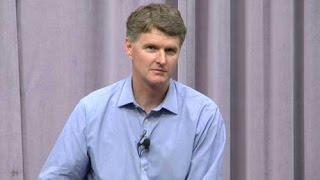
Brian Murray, an engineer-turned-CEO, discusses how his technical background shapes his approach to leadership. Engineers bring systematic problem-solving and data-driven decision-making to the executive suite, skills that translate directly from building products to running companies.
So you were an engineer by training?
I was.
And so how has your engineering training? I mean, we've got our room filled with lots of people who are engineering students. Why did an engineer go into this? I mean, like. And how are your skills being used today?
You know, I always try to make decisions in education and in career that one, I had to be curious about something and two, I wanted to do something that opened a door and I've just kind of followed that path and that's how I wound up here, how it's helped me, I think. I have undergraduate degrees in physics and electrical engineering and I wrote a lot of software. My whole background, I feel like, was really in solving complex problems. And I tell you, a company, a publishing company, any company is one big complex problem. So I actually, I love that part of the job. I also find working with creative people as well as business people and operations people, that kind of cross section is fantastic. So I think that's really how it helps me. So it's kind of training that I had a long time ago, but the problem solving, thinking about different things that we could do, thinking about now, the people. Because the more senior you get in an organization, the less you actually do the work. So it's really about asking the right questions and asking how are you thinking about solving this problem than it is of actually doing the problem solving yourself.