Build the Right It [Entire Talk]
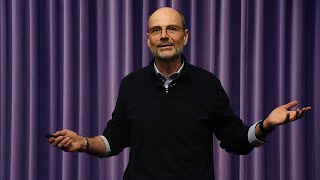
Alberto Savoia explains pretotyping, a method to test whether you're building the right product before investing heavily. He shares examples from his career and argues for collecting your own data instead of relying on opinions.
Chapters
Who you are defines how you build.
This is my battle cry these days. Failure bites. Bite back. I'm a serial entrepreneur and I kind of got my butt kicked a few times. And the last time I decided I don't want this to ever happen again to me or anyone else. So my mission is to help entrepreneurs, most of you here, to teach you how to fight failure and win consistently. But first, let me tell you, I'm going to structure it very simply. Seven strategies in 35 minutes. I don't have a lot of time, but fortunately there is a book that you can buy out there that you know you can spend six hours in my company and I was told give the advice you would give to your 20 year old self. So a lot of 20 year old here, but regardless, this advice is timeless. So whether you're 20, 30, 40, 50, 60, this entrepreneurial advice is applicable now. My entrepreneurial journey. As you can tell from my accent, I was not born here, I was born in Italy. And like pizza, I decided to come from Italy to America for bigger and better things. And of course, what do you do? So I landed in Silicon Valley. I decided I want to join a startup. And I joined in 1985 a little startup called Sun Microsystems pre IPO. And some of you are too young, you don't even know about this company, but used to be kind of like the Google of those days. And I had a very good run there for about 13 years. I was in engineering at first and then I ended up running a research group and the stock went great. And so I thought, wow, this is so cool. Startups are great. This is awesome. I want to do my own startup. So I left sun and I started my first company. We raised $3 million in VC funding and 18 months later we received an offer for acquisition for $100 million. You think we accepted that offer? How many think we accepted? Are you a fool? Yeah, of course you accepted it. You accepted it. You know, this was 2001, that's like a billion today. Don't be an idiot, take it. Right? So it worked out very well. And I thought, wow, you know, this is easy. So I thought, well, I called my friends in Italy, hey Mario, come to America. It's good, you know. And so I spent a year at the acquiring company and then I joined another little startup, pre pre IPO called Google, as the first engineering director. And you know, among other things, I led the ads team. And we all know how well Google did. So I thought, you know, this is really easy. And I'm kind of good at picking startups. So If I raise $3 million and exited with a hundred million dollar offer for his $30 million, I'm going to exit at 1 billion. You know, the math doesn't really work like that, but you know, in my mind that sounded good. So my second startup, which I founded, where is $25 million from the best VCs in the Valley. We developed this tool that people told us, if you can build the software development tools, everybody will flock to your doors, please build it and we will buy it. So we built the tool, spent two years to build a very sophisticated product. We won every possible awards for technology. It was an amazing tool. So I thought, wow, I'm really good at this. You know, I may be the Italian Steve Jobs, Stefano Jobini. You know, I thought, that sounds good. It has a ring to it. Except that five years later, bang, we had a fire sale. All those people that told us if you build it, we will buy somehow disappeared even though we built exactly what they said we were going to build. So this time our reaction was a little different. And I created this acronym that stands for why the failure? Right? So I asked myself, why did we fail? And I decided, okay, I want to study failure. So I went back to Google as engineering director, but also as innovation agitator to try to shake new ideas out of Google. And you cannot innovate without failure failing. So I became from an engineer, I became an innovation agitator. And I always wanted a PhD and I didn't get it, but I got an FD. I'm a doctor of philosophy, the only one in the world. I don't know if anybody in the planet has studied failure more than I did. And I'm here to share with you some of the. So I only have time to give you seven strategies. I started with 10 and then I timed it and I couldn't do it. So I decided, Alberto, you're going to talk fast and you're only going to give them seven strategies. First one, obey the law of market failure. The law comes in two parts. The first one is pretty depressing. Most new ideas will fail in the market. The second one gets even more depressing it even if competently executed. Now, if you've been around the block, you know that's true. Most new ideas, most new companies, most new products from existing companies will fail in the market, right? The data is you cannot fight against it. But what about the second part? What does it mean that they fail even if competently executed? It means that even if you're at Google and you launch products that are squarely and what Google is good at, the law of market failure applies to you. If you search for Google failure, one of the pages you'll come up with is called the Google Graveyard, apparently put together by a Microsoft product manager who was kind of upset at Google at the time. But it illustrates that even large companies fail a lot. I ask my students, take a piece of paper, write all the Google products you know of, and then I show them the list of the failures that I know of. And the ratio is usually 5 or 10 to 1. By the way, Google didn't like what Microsoft did to us, so we created the Microsoft Morgue, which has even more failed products, right? So this is pretty much par for the course. You know, the law of failure applies to everybody. But then I started to say, okay, law of failure is true, I'm going to obey. But why do most new ideas fail in the market? So I did my research, look at thousands of failure, and basically I put them into three major buckets with a convenient acronym, flop. Failure due to launch operation or premise. Failure due to launch means that the market doesn't know about your idea or cannot reach your idea. So essentially kind of a failure of marketing, people don't know about it. Failure due to operation means the product doesn't work right, the app crashes, or maybe it's a restaurant and the food sucks. Failure due to premise means that even if you market it well, even if it works well, people simply do not care about your new product idea. Which one do you think is the most common source of failure? Well, I'll hold the suspense. It's the last one. Most new ideas fail because the market simply does not care. And as we'll see, even if they tell you, yes, yes, build it, we will buy it, that's not the case. Most new ideas fail because they are not what I call the right it, which happens to be the title of my new book. What is the right it? Well, I'll explain it in a second. But first, the second important strategy. Make sure you're building the right it before you build it right? Because all of my research and anybody that's been around will confirm it. Companies do not fail because they really cannot build what they set out to build. I mean, it happens, but it's rare. Most of the time you fail because you built the wrong product. So the right. I define it as follows. It's an idea that, if competently executed, will succeed in the market. And it has an evil twin the wrongit. An idea that even if competently executed, will fail in the market. That means that if your idea is bad, doesn't matter how much marketing fireworks or engineering brilliance you put into it, it will fail in the market. Let me give you some examples of the right it and the wrong it. Big Mac for McDonald, the right hit other Arch Deluxe or the Mac Hula. A burger with a slice of pineapple in the middle. Not the right it. Right. Coca Cola. The right it. New Coke after millions of dollars in research and launch and advertising failed. Not the right it. Everybody here has probably seen the movie Star Wars. How many saw the movie Howard the Duck? Not a lot. Yeah, there's just a few. And you know what those two movies have in common? Steven Spielberg. Howard the Duck, believe it or not, is a movie that Steven Spielberg decided to do after Star wars and it had 10 times the budget. And on top of it, it had ducks. And everybody loves duck, right? Donald Duck, Daffy Duck, Duck, color orange, Ducks are cool. And yet it failed miserably. Gmail. How many people here have Gmail accounts? Good. How many people here had a Google Wave account? Just fewer hands. Yes, sir. How many Google Waves did you write? None. None. Right. So actually you're better than people said two. Right. So Google Wave was supposed to be the follow up to email. A new paradigm, lots of marketing, developed by the same people that did Google Maps. Great team. And yet it failed. And yet you see it as the same Google call, or the same Google great engineer, the free massager, the free lunches, all the Google benefits. And yet it failed. Ford Mustang, Success, Ford Edsel, not so much. Right. So all of these examples, what they have in common is that these are companies that are successful with other products and they're launching products that are exactly what they do, like cars, you know, electronic things, movies. And yet they fail. Because you cannot fight the law of failure. If you take competent execution plus an idea that is the wrong git, you're guaranteed failure 100% of the time. The law of failure is blind. So you don't want to bring out an idea that is the wrong it. And you ask yourself, well, how do I know if an idea is the right it? Well, do not ask. And what I mean by that is that if all you have is an idea and you tell other people your idea, the most you can get back are questions. And this is a very dangerous thing to do. Why? Because ideas live in a place I call Thoughtland. So in Thoughtland, you have an idea. Hey, here's My brilliant idea. You tell it to other people and what do you get back? Just a bunch of opinions. Whoops. I over clicked a bunch of opinions. And opinions are subjective, they are biased. You filter them through your own preferences and beliefs. I, for example, I thought that Uber was a terrible idea. Strangers picking up strangers from strange places and driving them to spend the night at the stranger's house on the couch. That's another startup idea, Airbnb, which I thought was terrible. So you need to filter these ideas. Two horrible things happen in Thoughtland. The first one is if you have an idea and people think it's the greatest thing ever. One of my favorite example is the Segway Transporter. Those little scooters that you used to see a few years ago when this was about to be launched, everybody talked about it, right? Everybody thought best idea ever. It was in the COVID of magazines, it had some of the best VCs in the valley. Architects said cities will be redesigned. So everybody's going around in a scooter, right? So, and then they launched it. And who do you see riding Segways, mall cops and lazy tourists? That's about it, right? So, and clearly it's not because a failure due to marketing. People knew about it. In fact, it was talked all over. It's not a failure due to operation because you work. Well, I don't know why things fail, right? I just know that most of them fail. So, and these are called an example of a false positive. People tell you best idea ever, you launch it and it fails. How common are false positive? The most common thing that people launch. So everything in the Google graveyard, in the Microsoft morgue, in the Amazon ambulance, et cetera, et cetera, all of these are ideas that at some point people thought best ideas ever. And then they launched it and it failed. Why? Because you know what doesn't fail? The law of market failure. Right? Most new ideas will fail even in market if competently executed. So first bad thing that happens, people give you the thumbs up, you spend a lot of money, you launch idea, it fails miserably. The opposite can happen. You have an idea and people think it's the worst idea ever. Honestly, I felt that way about Twitter the first time I heard about it. Well, 140 characters, people can follow, everyone can follow anyone. Sounds terrible. And yet, for better or worse, we know that Twitter has changed the way that we converse as a species. So this is an example of a false negative. People tell you it's a terrible idea and then it succeeds. So here's your Dilemma, Right. If all you have is an idea, you cannot depend on people's opinion. You cannot just ask them, would you want it? Would you buy? What would you do with it? So what can you depend on? Any ideas? Okay, well, I'll tell you, I'll jump ahead because we don't have a lot of time. You depend on data, and as you can see, you trust, not opinion, trust data. And not just any data, your own data. Right? Because when I tell people, you know, you need data, bits, opinion, and you need to collect your data. People think, okay, yeah, well, this looks like data. I mean, it's in the spreadsheet, so it must be data. No? Right. There's two types of data. OPD and Yoda. OPD stands for other people's data. Can you guess what Yoda stands for? Your own data. You guys are smart, okay? You're great. Yes. Your own data. And these two are as different in my book, literally as apples and oranges. In fact, rotten apples and fresh oranges. OPD is the worst possible thing you can collect, right? So OPD is market data collected by other people at other time for other products, with other methods, with other filters, et cetera, et cetera. It may or may not apply to you, and most of the time, it does not apply to you. It's dangerous because just because other ideas similar to yours have failed doesn't mean that yours will fail. Imagine if Elon Musk, thinking of Tesla, thought, well, let me see how other car companies did with electric cars. Zero of them succeeded. Said, well, okay, forget this Tesla thing. I'm going to go and do something else. Right? So just because other companies failed with an idea doesn't mean that you will fail. You. The opposite is true. Just because others have succeeded in the past with your idea doesn't mean that yours will succeed. Apple succeeded with the iPhone. Google succeeded with Android, and Samsung. Did Amazon succeed with the fire phone? No. Right? So OPD is very dangerous. So I urge all my entrepreneurs to collect your own market data firsthand. Fresh, local, recent, recently collected, and most importantly, your data needs to have skin in the game. What do I mean by skin in the game? If I asked you, what do you think of my idea? And you tell me, oh, Alberto is good. Should I leave my job to pursue it? I say, sure, go for it. Right? You have nothing at risk. Skin in the game means that as an entrepreneur, you're risking, right? You're risking your time, your reputation, your money to go and start a new venture. You're putting your own skin in the game, you want to get skinning the game back from the market, right? And skinning the game can be the market's time, money, commitment, information, reputation, something of value and at risk. Let me give you a very simple example. Suzy came up with a great idea, a smart hammer. So you hit the nail instead of hitting your fingers. She goes and asks people, hey, I'm thinking of this hammer. Would you buy it? And some people said, yes, good idea. Other people say, bad idea. Does this count as data? No. Right. This is opinions. Now, in another scenario, she says, well, I'm planning to build this hammer, and if you give me $50 deposit, I will make sure that you get one of the first one. So some people say, it's a lame idea. They're dead to me. Just like in Shark Tank, you're dead to me. But the other people say, instead of saying it's a good idea, if they actually open their wallet and give you some money, you have the first indication that the market really is interested in your idea, right? You fix an asymmetry before you put in your skin in the game by quitting your job or getting VC funding, get some from the market. So that's what we call yota. You can quote me on this. It's much easier to get people to open their mouth than to open their wallet. The hardest thing an entrepreneur can do is to get companies and people to open their wallet. I've been told so many times, Alberto, it's a fantastic idea. Go build it. And then when I went to sell it to them, say, well, yeah, not tonight. We're having a bad quarter. Forget about it. Right? So it's very important. You need to change the way you approach market research from this traditional model of doing market surveys or asking people this question. If we build it, will you buy it? Which is how most market research is done, by the way, right? You ask these questionnaires, you flip it around completely, 180 degrees. Think about this. If you buy it, we will build it. Now, this seems very counterintuitive, but I will give you example of how exactly how to do it, because now you're asking, well, don't I have to have a product built before I can see if people want to buy? And the answer is no, you don't build it. You pretotype it. This is not a topo. This is a word. I invented pretotyping because it had to be invented. So strategy number five is pretotype it. What is the pretotype? Well, it's the simplest Artifact or technique you can use to collect YOTA very quickly and very inexpensively. So there is a big range between having an idea and the final product that could be years, months, millions of dollars. And the way I see it, pretotype come very, very early. A pretotype is something that you can build in minutes, hours, maybe a couple of days. And it should cost anywhere from zero to, to maybe a couple of hundred bucks if you really feel like splurging. Right. A prototype is something that actually works, can do something, and can take a couple of days, couple of weeks, couple of months. I've worked on prototypes for software development tools that took a year and a half just to prove that the thing would actually work. And of course, the products take a long time. So prototypes are things that you can build very, very quickly, literally in a couple of hours. Let me give you an example of prototyping, something that actually got my thinking about this process. About 30, 40 years ago, IBM wanted everybody to have personal computers. But you know, 40 years ago, most people didn't know how to type, right? Those of us that were around there, you remember, this is how people type. So they figured, no way that people can use computer if they have to learn how to type. Who types? Programmers, writers and secretaries, right? Nobody else knows how to type. Nobody wants to take typing lessons. But they wanted to know, well, if we solve this problem of speech to text, right, so you can just speak to a computer, will people actually buy our product? So they did something very clever, an experiment. They brought people in the room, they gave them a microphone, a monitor, no keyboard, and told them, look, speaking to this computer, we have a prototype of speech to text. And people spoke into it. And magically the computer did whatever people told them to do. Of course, this was not possible those days. Even the fastest computer couldn't handle this. So what was happening? Well, in a room next door, one of those amazing people that can tap as fast as you can talk was actually transcribing everything that was being heard through the computer. And I tell you, as an engineer, this example kind of really messed up with my mind because if you go in, how many engineers here. Yeah. How many? They use soldering iron, et cetera. So if you come to an engineer said, alberto, we need to build a prototype. I said, Great. 5 Power up the compiler or the soldering arrow, right? I thought, this is not a prototype. They're just pretending that they have something to work. So in fact, I created this first word, pretendotype, because I knew this is not a prototype. It's not like IBM was planning to breed a race of small types that they fit inside boxes and you feed them cheese and crackers through the floppy drive, right? So it's not a prototype. It's something completely different from the end product. And then I shrunk the word to pretotype because it's easier to pronounce. But remember, pretotype means before a prototype, but also use your imagination to pretend. So what IBM learned is that before the pretotype test, a lot of people thought, of course we want a speech to text computer. Now, if you try to actually use a speech to text computer all day without a keyboard, your throat gets sore, the room gets very loud, and you cannot dictate or work on confidential things like fire. Bob. Oh, sorry, Bob. Didn't know you were around here. Right? So in Thoughtland, speech to text was a sure winner. When people actually tried it, realized it was not. So this is an example of what I call a mechanical turk prototype. And these days everybody's talking about robotics and AI. Before you spend four years and $40 million to create some automated pizza maker or something else, you can use human beings to simulate that behavior. It doesn't scale, but you can learn if people would actually use it. A prototype with a noise, something you typically build to figure out, can we build it? How long will the battery last, how will it work, et cetera, et cetera. It basically asks the question, how do we build it, right? And here's the secret. Most of the time, you can build it. Now, if you tell me, I have an idea for a time machine, you know, I call the guys with the white coats and tell you, you probably cannot build it. But most of the ideas people have are buildable. A pretotype asks different questions. It asks you, should we build it? Will I use it? What will I use it for? In other words, pretotype asks. The idea asks, is this idea the right it? Something that if I build competently, will succeed in the market. Now, there are several pretotyping techniques. This is a cheat sheet from a class that I had the honor of teaching with Tina. Let me give you just a few more examples. The facade prototype cars Direct wanted to know at the beginning of the Internet, would people buy used cars online? So what did they do? Did they buy cars? Did they have a big complicated website? No, they had a very simple website with just a few cars, no cars in inventory. They advertised it and miraculously, the first two days, they sold four cars. So immediately they shut down the website. They Bought four cars at retail. They sold them at retail. So they lost a few hundred dollars on each car. But what did they gain? Yoda. Right, Yoda. Nothing is more valuable than a check. A check tells you that people really want your product. I'd rather have a one page business plan, an outline with four checks stapled to it, than a 30 page, highly detailed business plan with all kinds of charts. Another example of free to typing is this from Ikea. This team in San Francisco came up with a really simple product called the Wall Hub. It's a piece of plastic where you put your keys and your. They wanted to know, would people buy them? You know, should we have 10,000 built? So they had an idea. They thought, well, where would people buy this ikea? So they did something very clever. They went on ebay, they bought a used IKEA employee shirt so they could pretend, remember, pretend that they were an IKEA employee. Then they created a fake label for their product. Of course they had to change it to an IKEA name like valhub. And they put this label and then instead of shoplifting, they entered an IKEA store and, and place their product on some free shelf space. And then they watched to see if anybody would actually stop and buy it. And lo and behold, you can watch the video. I put the link there. People actually took it, put it in their cart and everything worked fine until they got to the cashier because things got a little confusing. But would you agree that if I have two valhubs in my cart, is that opinion? No. Is that other people data? No, that's Yoda. That's the most valuable thing you can have. Another example of prototyping called the impersonator. You can take an existing product, put a wrapper around it and very quickly come up with a new idea and then you can use that to collect data. My favorite example for this is what Elon Musk did with the original Tesla Roadster. He took a lot of Solis, ripped off the gasoline engine, put an electric engine and then went, you know, built this one off model and then gave people rides in this car. It's amazing. Zero to 60 in three seconds. So let's assume I gave you for a ride. Did you like it? Quickly, Quickly. Did you like. Yes. Pretty fast and sexy. Okay, it's going to cost $120,000 and you have to wait two years and you have to put a big charger in your garage. Would you buy it? Yes. No. Okay, so two years and to know. So the nos are dead to me now. But the yes have not given me any skin in the game. So what Elon Musk did, which was brilliant to say, remember, if you buy it, I will build it. So I'm going to ask you. Well, you know, it's not that I don't trust you guys, but you know, if you give me a check for $5,000, I'll put you in the list. Your number 31 and your number 32. Now think, is it easier to say yes or to write a check for $5,000 to a guy that never built a car company before, right? And yet few hundred people did that. And to these days you cannot buy a Tesla without putting a deposit. So if you think that my idea, if you buy it, we will build it, is crazy. Tesla is a perfect example of that in action. You want to do this because you want to fail fast and cheap. People talk a lot about failing fast, but as you can tell from how fast I speak, that's not fast enough for me. Right? I tell them, I want you to fail Ferrari fast and Fiat cheap. Sorry, Fiat, right? So, because remember, most new ideas will fail in the market, which means that you have to test a lot of ideas. And if you take six months to test some ideas, good luck, right? Unless your luck is going to take forever. So pretotyping allows you to test very quickly. More importantly, you're not going to experience painful failure, right? Because you spend $20 to do a prototype test. It's an experiment, right? It doesn't hurt. Definitely doesn't hurt after as much as spending three years and $25 million to build a product that people do not want. So strategy number six. Say it with numbers, entrepreneurs, and probably most of you, when you have an idea, you come to me and you express it very vaguely. So here's an idea from some of your fellow students. Maybe five, six years ago, Second Day Sushi here's the idea, right? Packaged sushi is kind of expensive. So they thought, you know, what if we buy sushi that's about to expire, right? It's only good for an extra eight hours before it kills you. We can buy for 25 cents on the dollars and sell it at 50 cents on the dollars. And since students are young and have a strong stomach, we can handle it. So I said, okay, I'm not going to give you my opinion on your idea, but I'm asking them. So this is how they articulated, right? People. Lots of them will buy not super fresh sushi if it's cheap enough. That's pretty much how they Express. I said, look, who are these people? How many is lost and what is cheap enough? So I was in a room actually outside there, just outside this auditorium and somebody had left a formulas calculus class or electrical engineering class on the wall. And I thought, okay, tell you what, write it like this. X percent of Y will z. I call this the XYZ hypothesis, right? So it forces you to write your idea in numbers. So in this case they Translated into number. 20% of pakka sushi buyers will buy secondary sushi if it's half the price of fresher sushi. How do you know if those numbers are right? You don't. It's a hypothesis, right? But at least it articulates and puts into number what your ideas are. And what is the job of a hypothesis. A hypothesis exists to be tested and prototyping are tool to test hypothesis. Last point, Think global, test local. Maybe the second day sushi team is planning to take over the market, right? Every supermarket is going to have second day sushi. But you need to start to test your ideas very quickly. You want to minimize these metrics that I explained in my book called time to data, dollars to data, distance to data. If people say I have this great idea and I need six months, $2 million and I need to fly to Hawaii to do my research, I said, well, no, you're going to do it here, you're going to do it for $20. And I want the results by tomorrow, right? And a technique for doing that is called hypo zooming. So you take this big hypothesis, 20% of packaged sushi buyers, and you zoom in. You know those documentaries where you see or those videos where you see the earth from space and then it zooms into a town and then to a particular place and then to a building. And I want you to do that in your mind, right? So you take the big XYZ hypothesis and hyposume to something you can test here and now. And when I say here and now, I mean it literally, here and now, right? So where are we now? North America. Right. We're in North America. Silicon Valley. We're in Silicon Valley. Stanford University. We're in Stanford University Building Y2E2. And then ask you, is there a place in this building or nearby that sells sushi? Yes, there is. Upstairs, right? Koopa Cafe. So I said, great, so you're going to hypo zoom. You have your market, a small sample of your market is there. So you can go from the big XYZ hypothesis to the small XYZ hypothesis. 20% of students buying sushi at Cooper Cafe to their dinner will buy second day sushi. Right. And do you believe that this is actually testable? Can I do this test? Absolutely. In fact, we did it. We even did a little video. Why would some of my friends there. Where are you guys? Yes, we did it here. We filmed it. We created little labels that said, second the sushi half off. And we slapped them on fresh sushi. Right. It's an impersonator prototype. And then we tried to sell them. In fact, if you're there, that's outside the STVP offices. Now, how many people do you think bought our second day sushi? Zero. Right, Right. Because the typical thing is, well, I don't want to get sick. So doesn't mean that second day sushi has no chance. It just means that you need to do some more tests. But frankly, your Yoda doesn't look very good. Right. So these are just seven strategies. There is a lot more, but I cannot possibly talk any faster and our time is limited. So there is more? Yes, a lot more. There is a book. I see some of you already bought it. Thank you so much. If you haven't bought it, go to Amazon and buy it. No, I'm not done. Not done. Yes, yes, it's a great book. Thank you. But there is more. But. Because the question you have to ask is, hey, Alberto, do you practice what you teach? Say, you bet I do. Not, because I don't want to be a hypocrite, because what I teach works all the techniques. I'm an engineer. I'm not in marketing, I'm not in sales. I'm an engineer. If it doesn't work, I wouldn't talk about it. Right. So pretotyping techniques cannot not work anymore. That the quadratic formula cannot work. Right. You plug in the numbers unless you scrap, it does work. So I thought most books fail in the market. They don't even find the publisher. So before doing that, I spent a few days, less than a week, writing a pretotyped book called Pretotype It. I printed it in PDF, I made it available. I stapled some copies myself. Soon tens of thousands of people started to download. It translated into a dozen languages. So I thought I was able to find a publisher. They said, okay, this looks promising. So I actually went from the pretotype to a prototype, which in the case of a book, is the first draft. And then it finally became the product. So one of the many examples of me practicing what I preach. So that's Kind of a presentation. I wanted to leave some time for questions. 15 minutes. And guess what? We have exactly 15 minutes. Do I have my timing right? Yes, I do. So now let's go and ask some questions. Please raise your hand and I will pick you at semi random. All right. Nobody raises their hand. Watina. Okay, that's easy though.
What's the biggest problem people have with crypto? What is the biggest problem?
Yeah, the biggest problem people have, entrepreneurs have, is they fall in love not with the problem, but with their idea, with the solution to the problem. Right? So, and I see this happening all the time. And you know what? Prototyping. Because if you believe the law of market failure, chances are 80% that your idea, your initial idea is not going to work. And you know what pretty tapping is going to expose that. You should have seen the face of the second day sushi guy when nobody bought it. I thought at least somebody would try it. Right. So I would say that is the number one problem. The techniques work, but it takes a little bit of courage to take your baby, your idea and put it in the market. Yes. So this makes a lot of sense.
When you have a physical product. Right? But what if it's like an app or something?
Oh, app. Well, in the book I use app. The question is it works well for a physical product, but what if it's an app? Well, first of all, do you know what happens to most apps? They die a very slow death, you know, in the app store. So most apps are the wrong it. People don't care. And yet, you know, it's the number one thing that people want to do. So with an app, it's exactly the same idea. And I go through a full example in my book of an app called Feedbird. You know, there are bird watchers, and in this app you can use it. If you spot a bird, you can say, I know where this bird is. And if you pay me $5, I will disclose the location. Right. So it doesn't matter what the idea is. So I go through an example of exactly how you would pretty type that. And let me tell you what, it doesn't involve writing a single line of code. Are you a programmer? Computer scientist, yes. Okay, resist the temptation. If you are a double E major, resist the temptation to fire your soldering iron. Right? Because do you have any doubt that this the app you have in mind that you can build it? No. Right. So there is no risk, there is no uncertainty. Right. So the uncertainty is you're going to spend six months building an app. That nobody wants. So one technique, you could do that without writing any code. I know it's hard to resist. You can fire up PowerPoint and you can have a simulation and create a little bit of what your app is supposed to do. And then maybe you post it on YouTube or you show it to colleagues and you say, look, if you're interested in this app, you give me some skin in the game, which could be the smallest unit of skin in the game is a valid email address. So a Stanford. Edu email address, not the one that you throw away like hotbobmail.com right. So try to actually collect data. But yes, definitely. App can and should use prototyping. And in fact, it's one of the most common uses. More question. Yes. How much time do I have between the. So I got a bunch of people that want to buy this, so I just worried my mind I wouldn't have time to get it to them if I took a deposit. I'm so. I don't understand the question. So I took a deposit, $50. Oh, the deposit, right. Same. So the question is, how much time do I actually have to deliver to them? Well, there are many techniques, by the way, pretotapping. Everything I teach is absolutely ethical, right? You're not out there to trick people. You know why? In fact, not prototyping is not ethical. You know why? Because what is one of our most valuable resources in the world? Well, time or actually entrepreneurs, you know, especially kind of these young entrepreneurs, most of whom, if they don't follow this advice, are going to build. You're going to spend time, six months building an app nobody wants. So the biggest, the worst thing you could do is to not test the market, right? So one of the things you could do, say you pretend that you have this. Let's say Elon Musk decided not to build a car. He gives the money back and maybe gives an extra bonus. He pays the interest in that. That is, by the way, a problem that happens a lot with other tools like Kickstarter, right? Kickstarter is very useful at the right stage before you Kickstart prototype it. Because once you kick start, you have the following once One, everyone in the world knows about your idea, right? It takes quite a bit of work to have a nice Kickstarter page. And three, if 10,000 people or 100,000 people sign up and they want your pebble watch and you don't deliver it, then you're going to look like a fool and you're going to have a lot of people upset. So in pretotapping, everything is really, really scaled down. Thank you. Questions from here? Yes. Okay. Hi. Speak loud because you're way back there.
I can see how you define prototyping in B2C products and solutions, but how about B2B2C or worse than that, B2B?
Yeah. So the question is, clearly it works well in B2C. How about B2B? Which means business to business? It works just the same. It's just as necessary because think about it, most B2B ideas, at some point, as you hint, they have either C, consumer or users. So even if it's the world's most boring B2B application, some, I don't know, accounting database, at some point you will actually have the users. So you get into the room with your potential customers and you work out a prototyping to see if what the build you build for them will actually be sold. By the way, the second startup that did not work for me, the $25 million, was a B2B. And our B2B research is pretty much the same. Yes, please build it, we will buy it and then we'll give it to all of our developers. And maybe some of those developers didn't want it. So B2C and B2B, same idea. Most ideas fail, whether they are B2B or B2C. Thank you. Yes.
So I'm a PhD student and I had many failed ideas. And for each idea, I worked like three months on that paper and it just didn't work out. So I wonder if pretotyping works for things like research.
Well, so give me an example. What would be the end result of a successful research?
So let's say I want to build a chip that's like 30% faster for a specific operation. And I can only see the effect after I build a chip. But if I cannot deliver 30%, then it's a failed product.
So that's different because you are your own market. Right. So to me, this becomes more of a can I build it? Question, in which case you actually have to do prototyping. Now, not all ideas have to be prototype. Let's assume that I come up with a little thing that I put inside a gasoline car and it triples the mileage and it costs a dollar a gallon. Right. Do you think, do I really need to prototype that? No. You know, if I find a cure for a disease, do I really need to prototype? No. So some ideas don't need to be pretotyped. What about pizza? Do I need to prototype pizza? I Wonder if I would put, you know, cheese and, you know, pepperoni on some flatbread and I bake if people will want it. Not all ideas have to be pretty typed, but if it's new and different enough, it has to. How are we doing with time? Yes. We have a few more minutes. Yes.
Suppose you upload your video onto YouTube and what if some people steal your idea?
Oh, great. So if I can repeat, what if people steal your ideas when you pretotype it? That's precisely why prototyping is so beautiful, because you contain the market. Those of you who still remember your statistics, if you have a sample of 100 people from your actual target market. So it's a very careful sample. That's all you need to test. As opposed, as I was talking, say, with a Kickstarter, where you let the whole world know about it so you can really contain the number of people that are exposed to your idea. And let me also give you this other explanation. What is the risk that your idea will fail in the market? 80 to 90%. What is the risk that another entrepreneur hears your idea and decides to steal your ideas? It's negligible. Right. In fact, it's very hard to even get other entrepreneur to listen to your idea or to bring them on as partner. Most entrepreneur want to build. You want to build your idea. You want to build your app or his app. He wants to build your app. Right. You know, when people steal ideas after they know it's the right it. So after it's the right data, of course, then you have to build it. Right. You have to compete like crazy at the beginning. Nobody cares about your idea. Maybe you're really unlucky and somebody's just thinking of building exactly the same app. But play the statistics. 80% chance of failure versus 0.035% chance somebody steals your ideas. I would try to avoid failure. Don't worry about people stealing the ideas, honestly. Okay, how about this side? This side has been pretty quiet, except for Tina. Yes.
So I have a question. I know that teaching with you, one of the most important things about this is that in very complicated products or services, there are often some very specific things that can be tested that might be just a hypothesis about one part of it as opposed to doing the whole thing. Can you talk about that?
Yeah. So you don't need to test the. You have a specific example in mind?
Well, sometimes. Like Google Glass.
Okay. Yes. Yeah. So Google, perfect example, Google Glass. By the way, in my book, it's not a failure because it has been Pretty typed. At no point did Google go out and order 1 million Google Glass. Right. If you remember, you actually have to sign up and pay do $1500 to participate in the Google Glass Explorer program. So don't think that Google thought from the beginning this is going to be huge. They would like to, but they knew it wasn't guaranteed because they never built a million of them. So in the case of Google Glass, great example. The way they pretty. First they created a video we showed you in YouTube, just like for yap, it shows you what the world would look like through Google Glass because at the time the technology you still needed a backpack and then you were able to buy it only in very small amounts. And if you had to jump through a bunch of hoops and pay $1,500 and then they gave a handful to these people and they started to collect Yoda your own data. And one of the things they learned, even if everything worked great in the technology, one of the things they could not predict is that if people knew that you were being recorded by Google Glass, they didn't like you at all. So they came up with a rather derogatory term. Can I use it in this forum? Yeah. So they were being called glass holes. Right. So the people that bought the Google Glass and they were going around and trying to, to video stuff, they said just take them off. Right. They were banned in a lot of places. The interesting thing, you could have simulated that and in fact there were some people pretended to have Google Glass to see what their reaction would be without anything actually functioning. Yeah. So a lot of unexpected results come out. Any more questions? Yes.
So some products are only useful after it reached some scale, for example. Also, AI products sometimes rely on huge amount of data.
Good, good, Very good. Excellent question. Said some product, how are we doing? Time. Right. Four more minutes. Some products need scale to be successful. Some AI product. Right. You need a lot of, you know, learning before they can become useful. Beautiful. I have an example actually in the book where I tell you how you could simulate and test an AI product without scale. In fact, I knew that Amazon Alexa was going to be successful about a couple of years before it did because I built my own prototype. A prototype was a can of beans which are wrapped in some black plastic. I didn't know what it was supposed to look like. And then it's called a Pinocchio pretotype, so it doesn't do anything, just like Pinocchio is a puppet. But then I put it in strategic places around the house, trying to think you know, if this company's actually building speakers, would they work? So my first iteration of my version of Alexa, I didn't know the name was, I would ask. I called it Hal. What time is it? How. Play me some Led Zeppelin. So without actually building first, I realized I would actually use it. I would love this. So I predicted I would need three of them. Bedroom, kitchen, and my study. And that's exactly what I bought. The next iteration, which actually did an example with one of my friends there, I took this can of beans, and we hid a smartphone behind it. And then we had another people in another room listening to the smartphone and actually googling the answer and playing it back. Right. So there are many of these tricks that you could do before you go and spend the millions of dollars to develop the AI and you can do the test in a very limited basis using these techniques. How are we doing? We have. Great. One more question. One more question. Okay, there. Hi.
Hi. So if you're doing a pretend attack and you go with some potential customers and say, hey, test this out. We built this, would you be able to buy it? They start assuming that you have the technology to actually do that. Right. And when they ask for stuff and you can't deliver on that because you're just pretenoting, how would that get you into trouble?
Right. So remember the thing this. Assume that you're confident that you could build a product, right? So when you preot. This is not a matter of deceiving the market. This is a matter of resolving the asymmetry between you giving a lot of your skin in the game to the market and the market giving nothing to you. So if you came and told me, alberto, I'm building a time machine and would you like to invest? I would say no. But if he's going to build an app, I'm pretty confident that we can build the app. So I'm sorry, I cannot go into all the techniques, but in the book, I actually talk about the ethics and how you make sure not only that pretotyping is 100% ethical, it's much more ethical than not pretotyping, which I think is a disgrace because 80% of failure means a lot of stuff goes into landfill. A lot of people spend time building products that nobody wants, and this will save you. So with that, I think we're just. Right. Good on time, and thank you so much.
More from GHION.AI


O processo de reconhecer limites, mesmo quando a vida parece exigir sempre mais.





Depois de tantas histórias, aprendizados e pausas necessárias, o @interior_iza está de volta



