Building a People-First Company [Entire Talk]
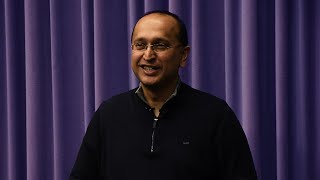
This content was created by GHION.AI . This content was uploaded by GHION.AI . This is a YouTube video titled "Building a People-First Company [Entire Talk]" from March 6, 2019. It features a talk by Navin Chaddha discussing the principles of building iconic companies with a focus on a people-first philosophy. He shares his experiences as a serial entrepreneur and venture capitalist, highlighting lessons from companies like Lyft, Marketo, SolarCity, Moat, and Poshmark. The talk emphasizes the importance of mission, values, focus, innovation, and a people-centric approach in company building.
Chapters
Who you are defines how you build.
I'm here to talk about some rules of the road for building iconic companies. As you heard from Tom Mayfield has been in business for over 50 years and we have partnered with thousands of innovators, many of whom who came from Stanford and have gone on to create iconic companies. However, if there's one thing I want you to remember from my talk today, it's that company building is a marathon, it's not a sprint. There'll be a lot of ups and downs, it won't be easy. It requires patience, it requires perseverance and grit. But believe me, from my own experiences as a serial entrepreneur, the journey is well worth it. Let me start with my own journey, which is an example of this belief. As probably you can tell from my accent and my looks, many people think I'm not from India, but I am from India. I went to Indian Institute of Technology, graduated at the top of the class. Like many other Indian students came to Stanford University. I was blessed with a fellowship with $500 to pursue my master's and PhD in electrical engineering. Back in the early 90s, the Internet was happening. Based on my PhD work, I started my first company, V Extreme, which enabled the delivery of video on the Internet. The basic idea was how do you take Stanford lectures which were being broadcasted within classrooms, were available in videotapes in the Terman center and make it available over the Internet. Once we did that, all VC said this is Netscape for video and they start chasing us. I was confused. I've come to this country to study. I'm pursuing a PhD degree, I need to drop off. I called my parents, I called my friends. They were shocked. You really are going to drop off out of your PhD program? Well, somehow they were nice professors, my mentors. They said, why don't you take a one year leave of absence and go to this company? Most likely you're going to fail and you're going to come back and finish your PhD degree. But life didn't have that. V Extreme grew extremely fast and became the de facto standard for streaming video on the Internet, getting used to by most of the media companies and also by corporations. And 18 months into our founding, we were acquired by Microsoft to become Windows Media. Once an entrepreneur, always an entrepreneur. You taste success, it's like lions. You taste blood, you want more of it. So I went on to start two other companies after we Extreme. One of them was called Ibeam Broadcasting, which went public in 2000. No better time to go public in 2000. Especially in May of 2000. And then you go out at a billion, trade at a 3 billion, and by end of the year you're back to 200 million. And you scratch your head and you say, what happened? And I read a book and it said, somebody moved my cheese. I'm still wondering who moved it. I think it was the stock market and the hedge funds. No offense to any of them in the room. Then I did my third company after that, which was Revio, a software as a services company for small businesses. Ten years early of its time, which ended up getting acquired by CPA.com, which is still a thriving business focused on the CPA market. Post the acquisition of vextreme, I became one of the youngest execs at Microsoft at the age of 26. Worked very closely with Satya Nadella, the current president and CEO of Microsoft. We were both peers. I was running Windows Media, he was running Microsoft's commerce server. Learned a lot of what it takes to run companies at scale and to take that knowledge. I joined the venture capital business by accident in 2004. I had gone in as an entrepreneur in residence to start my fourth company. I didn't know anything about venture capital. I just had fun creating companies and having impact. I've been a VC for over 14 years now. I've been leading Mayfield as the managing partner for over 10 years. I've invested in over 50 companies, have been extremely fortunate to have partnered with world class entrepreneurs who have created companies, 16 of which have had IPOs and another 18 have been acquired. God bless them for the work they do and make the life of VCs like mine. Easy. Now switch. Let's switch gears to Mayfield. And I like asking a lot of questions. I'm known at Mayfield. I put people on the spot, I ask questions, but I do give awards. So Mayfield, as you heard from Tom, was started in 1969 and has its roots at Stanford University. Any takers? Without searching on the Internet and none of the professors, please. Where did the name Mayfield come from? The people who get it right. In the first five seconds we'll get an award which will be handed by my colleague Kelsey. So here you go. One, two. Yes.
Isn't there a street called Maple Avenue?
No. I knew that would come. You got it, you got it. What's your name, sir? Sutter. Good, good. So Mayfield was founded in 1969. It wasn't founded to your answer on Mayfield Avenue, which is next to where the frat parties happen. Neither was it formed after the name of Mayfield Bakery where we get great coffee and great things to eat. So Mayfield, you're absolutely right, was after the name of a thriving town called Mayfield, which preceded Palo Alto. Fast forward 50 years, what is Mayfield about? We are a people first organization where we bet on people first, market second. We believe on betting on the jockey, not the racetrack. Our strong belief is if you invest in a people, their initial idea may not be the right one, but they'll quickly pivot to find the right market opportunity. We are partnering with entrepreneurs who want to change the way in which we work, live and play. Our entire team has an entrepreneurial DNA and operational background where we have been in the shoes of the entrepreneurs and realize how lonely that job is and how difficult it is to be an entrepreneur. And in our 50 year track record, we have raised 18 funds to date, invested in over 500 companies, 200 of which have been acquired, another 116 have had IPOs. And we have an expert network of over 500 CXOs who help our companies from time to time as needed. Believe me, I'm going to get to the stories, but wanted to just rather than introducing me, introduce Mayfield. And I know I'll keep it to 25 minutes for sure. As Tom mentioned, thanks to the great work his organization has done in stvp, we are proud sponsors of the Mayfield Fellows program. I see some faces here who have been ex Mayfield Fellows. The program was endowed in 1995. It chooses 12 students every year to help them become leaders of tomorrow. Tom just told me it's becoming a very popular program and let me see if I get the numbers right. Being an electrical Engineer, there were 112 applicants that applied, 56 were interviewed and you chose 12, is that right? Okay, I passed. The program also has over 250 alumni, many of whom might be in the room. They have started companies like Instagram or are working at startups and well established companies. If you are not thinking of pursuing an mba, if you're getting into your third year at Stanford, I highly recommend go talk to Tom Byers. He's the best in helping people get to this. Right?
Thanks dad.
Let's move gears. And now I'm going to get into the crux of the stuff right about the rules of the road for building iconic companies. So as you heard from Tom, Mayfield is a build to last organization. Very few venture firms we can count, maybe two or three are celebrating their 50th year in business. And this will apply as you think about building iconic companies yourself one day. So the firm has Some fundamental beliefs on which we are built. If we cannot see eye to eye with the entrepreneur on these beliefs, we won't invest in them. We'll tell them we are the wrong partner for you. So what's the first one? Our motto is people first. As I mentioned earlier, we bet on people market. Second, because people build companies, companies don't build people. We are known for embracing the unconventional, the different, and the unusual, which means we are typically backing people who don't come from central casting. I was a good example. When I started my first company at 25, most of the VCs said, hey, you don't have an MBA degree, you don't have white hair. But today I can go and say, hey, it's okay. I don't have white hair, but I have no hair, or I have very little hair, if you will. Our other belief is that great people evolve, which means CEOs are made, not born. If you want to do it, you can do it. Fourth, we are loyal to a fault. We believe if company building is a marathon, we need to be running along with the entrepreneur through the ups and downs, through the thick and thins. Sometimes we are carrying bottles of water when they get exhausted. And believe me, sometimes we are carrying their sweaty cloth they use to do things I won't get into. We don't beat around the bush because we believe in radical candor. In any partnership is very important to speak the truth and don't take too long to communicate the messages. We believe experience counts for something, both as a firm and as an individual. And finally, the most important belief Mayfield has is it's all about teamwork. This is not a solo sport. Companies cannot be built around one individual's. All of us are better than any of us. Now, over the next 15 minutes, I'm going to share some learnings, what I'm calling rules of the Road that we have gathered from partnering with thousands of innovators over the past 50 years. I can go for a day, I can go for a week, I can go for a month, but I'm going to be writing a book, so be prepared. But for today, I'm only going to share five lessons, which I think are good enough to get started, because I don't want you guys dying of indigestion. I want you to die of starvation. So for the time I've been given, I want to focus on five examples which you can all relate to, that are about current companies. So let's get going. My first story is about Lyft. I'm sure all of us in the room use it. Not their competitor, whom I won't mention. Is that the case? How many people. This is for prize number two. How many people in the room know who Zimride was? Five seconds.
It was a sharing app for people who had zipcars so they could share rides together with each other.
Not zipcars, but you're almost. But who owned it? Students. Students.
To share it was precursor of lift. They started this community to help people share rights together.
You're right. Name, please. The Second War. So this story. Can you repeat what he said? What's that? Could you repeat? Yes, I'll say that. Right. I'll tell the story. So. And the talk I was told it's better to tell these examples through stories rather than the result. Right. So when we met John and Logan in 2011, their business was called Zimride. As Lyft didn't even exist. What was the idea? The idea was a social site, a variant of Craigslist where people were posting requests and offers for shared rights. It was primarily being used by students, primarily at Stanford, and commuters for the Bay Area traffic. But it wasn't a direct consumer to consumer application. It was distributed through universities and corporations. It was a good idea, but not a massive market that a VC would invest in. Then comes the smartphone revolution and the smartphone step. Like any other smart entrepreneur, John and Logan pivoted the company to creating the first. Now this is debatable. I'm an investor in them, so please take it with a grain of salt. The first peer to peer ride sharing service not focused on the black car market and have grown in seven years or so to providing more than 50 million rides a month. What led to their success was their authentic mission of making people's lives better by providing the best transportation. Not only did they have an authentic mission from day one, they also had a set of core values. Any guesses on what they were? Five seconds. 1, 2, 3, 4, 5. I get this award. Their values still are be yourself, uplift others and make things happen. And I still remember it because I just can't forget it. Given their mission of making people's lives better, supporting local and global communities is a big priority. They walk the walk and talk the talk. This is one of the most mission driven company I've seen in my career as a VC and entrepreneur over the last 25 years. They walk the walk, as I said, and they talk the talk. They provide free rides to tolls, to polls. They're supporting California fire victims and in many cases outside the United States. They're transporting people stuck in weather conditions to get them to warming centers. So what's the lesson if you have to build a company which can achieve a valuation over 15 billion? A foundational company, which I'm sure many people in the room want to do. Codify your mission and values. On day one, if you don't have that, think about you're going to build a 50 story building and the foundation isn't there, it's going to fall, It'll be the Millennial Tower. You don't want that. You want to create a real company. So start with the right mission and the right set of values. My second and I'm going to be cheating. I'm only talking about unicorns and pentacons and deco cons today. I can also come next time and talk about companies which didn't work. My second story is about a company called Marketo, the leader in the marketing automation space. In 2006, when digital and email marketing were going mainstream, Phil and his co founders had the mission of transforming art. Transforming marketing from an art to a science and elevate the role of marketeers. Any people in the room thinking of becoming marketeers? Raise of hands. Good, good. I know you're a marketeer. So what did they do? They always wanted to start small by solving a simple problem which was very critical for their customers, but always had the vision to create an end to end platform for marketing. Their first product was about management of Google AdWords for search marketing. The product met with limited success. You all know how hard it is to build a scalable business on Google. Separate story, separate chapter of another book. But let's focus on what happened. These people were tenacious. They didn't give up. They went back to the drawing board because they believe company building is a marathon, not a sprint. One of their core values was listening to customers first and foremost. Based on listening to customers, they expanded and came up with a new product for lead management for B2B Marketeers, which was the easiest to use in the market and became the underpinnings for their end to end marketing platform. They worked tirelessly not only to educate marketeers, but also to elevate their roles in organizations from being enablers to drivers of revenues growth. They not only created a category, they created a movement. Marketo nation. A community of tens of thousands of marketeers. Think GitHub for marketers. Why was Marketo so successful? They decided to focus on one functional area, marketing. They didn't go and defocus and said, I'll solve a problem in sales one day in hr, one day in support. That just doesn't work. So what did they do? Rather than going an inch deep in solving problems in many areas, they built trenches in solving the problems in one area. And rather than being a jack of all trades, they became a king of one hill. What followed? Marketo became one of the fastest growing SaaS companies in the marketing automation space, went public in 2013 and was acquired by Adobe recently for 5 billion. So the key lesson is focus when you're building a company, as startups die of indigestion, not starvation. My third story is about SolarCity. Today, seeing solar panels on homes is becoming fairly common. However, that was not the case in 2006. For that reason, Lyndon and his brother Peter and their cousin, the famous Elon Musk came up with SolarCity. The initial idea was they would install and maintain solar panels on people's homes. But there was one problem with it. Everybody had to fork out 30, 50, 100k up front and the ROI was 15, 16, 17 years and people didn't want to do that. So their initial business met with limited success, not unlike other entrepreneurs. They said, what can we do? So they did the same thing. They went and talked to customers, they talked to advisors, they talked to mentors, and they came up with a simple business model in 2009, 2010 where they said, why don't we go back to customers and say you pay us on a monthly basis on a leasing model similar to what you pay your electricity company? What followed? People were used to buying electricity in that way. The example I would give is I want to have a pizza, I know how to pay for it. Rather than selling me a pizza which is already ready to eat, you're giving me all the ingredients and saying make it on your own and pay for it upfront. Neither do I have the time, neither do I have this acumen. So sell products in the way people are used to consuming. So what's the summary? This non technical innovation made SolarCity a breakout company. They generated billions of dollars in revenues, went public in 2012 and achieved a market cap of over 5 billion and were eventually acquired by Tesla. So as you look at starting your next company, I know it's Stanford, I'm a double E. Don't just think about technical innovation, broaden your horizon, think about other forms of innovation. I already talked about one with business model through SolarCity. Think about innovation in go to market and distribution similar to what leading open source companies are doing and at the same time, think about innovation in delivery models, what companies like Salesforce and AWS are doing on the delivery front. So think innovation has many forms and you can innovate across across the value chain. My next story is of Mote and I'm going to pick it up. MOTE is the leader in digital media advertising measurement. I don't know if you guys know the most successful brand advertising campaigns online are the ones which sell stories and are memorable. For that reason, Coca Cola, Nike, Unilever and Apple are the gold standards. However, even I didn't know this before I went on and invested in this company as a firm that half the money advertisers spend on brand advertising is wasted. The bigger problem is they don't even know on what. So the big pain point they face is to measure the effectiveness of their digital brand advertising. To solve that problem, Jonah and his co founders started Moat in 2010. They looked at existing solutions. They always are. They were models like pay per click, pay per impressions. They looked at it and they said hey, this just doesn't work. And rather than doing incremental innovation, they went back to the drawing board, talked to customers and came up with a simple product which was a Google like search engine to tell brand advertisers where on the Internet are the most effective brand campaigns running. So it was a competitive intelligence engine for competitors. Based on that, they expanded. Companies never stop, they learn, they pivot and they expand. They expanded into providing an analytics platform which measured attention and engagement. What followed? All major online brands including Internet companies like Snap, Facebook, once a leader, Snapchat all became their customers. They became the fastest growing company and the Nielsen equivalent of digital brand advertising and were acquired by Oracle for a hefty amount. So what do I want to communicate in summary here? Make sure that the product or service you're building is a must have for your customers because painkillers sell vitamins don't. My last and favorite example is of a company called Poshmark. I know my friend Manish had appeared last year, right for an ETL talk. So let me be quick with this story. Poshmark was founded in 2011 and there were many unbelievers. Most of the people didn't believe that selling used fashion through a marketplace online was a big idea. However, Mayfield is a people first investor. We don't care what the idea is. We're making the bet on the jockey. I know nothing about fashion, as you can see with the way I dress. We made a bet on Manish and gave him A term sheet even before he had started a company and connected him to his co founder Tracy, who had great background in fashion and merchandising. Fast forward to today. The company has expanded beyond used fashion. They've expanded beyond women's fashion. They're selling men's fashion new. I don't buy used. You can see it may not be the best, but it's Michael Kors and Joe's right? Like what Nordstrom sells. So they have expanded from men's, from women to men's, to kids to beauty for both new and used fashion. I'm pleased to further report a sale is made on Poshmark every second and there are over 5 million sellers who are selling goods from their closets online. And there are over 40 million community members. The platform has deep engagement. It's number three in engagement after Facebook and Instagram users are opening the application five to seven times a day, spending 27 minutes on it. There are millions of social interactions every day when an item Is posted and 80% of the daily shoppers are repeat buyers. However, the main reason this company is so successful is because they embrace a people first philosophy. Manish, when he came here talked about and he still says it every day. Poshmark is all about love. It's all about customer first. So let me give an example. In the early days when Poshmark didn't have enough people, Manish himself tried to solve every customer request from 7am to 11pm Delhi. Now we know that's no way to build a sustainable company. But what does it speak to? It speaks to the tenacity of the company. It speak to the culture of customer first. As a result, to this date, the maximum number of employees in the company are not in technology, they're in customer success and customer support. More than 40% of the employees are in that organization. When we are just a marketplace, we don't even touch the goods which are sold on our platform. So in summary, the lesson is if you have to build an enduring company, start with people, end with people. Take a people centric approach. Invest in relationships, don't invest in transactions. People could be your employees. People could be your customers. People could be your partners, they could be your vendors. It could be anybody. It could be even giving back to the community. You do good, which Poshmark is doing good happens to you. To summarize my five rules of the road, first and foremost, you need to codify your mission and values as they are critical. Second focus as startups die of indigestion, not starvation Third, innovate across the value chains. Don't just get boxed down into tech innovation. Make sure your product is a must have because painkillers sell, vitamins don't. And finally, embrace a people first philosophy. But I said at the beginning of the talk, remember one thing. All that stuff I told you the slides will be available. You might forget. But remember one thing. Company building is a marathon, not a sprint. It's not for the faint of heart. There'll be many lessons you will learn every day. And keep a nimble mind. If you know all the answers, don't do a company. If you don't know the answers, like the way you bike, like the way you take the risk, jump and do a company. Now I'm in front of an audience which are overachievers. So I'm just wondering what should I tell you at the end, right? I want to share some tips with you. Remember I talked about. Remember only one thing. Company building is a marathon, not a sprint. I don't know about you, but I can speak for myself. I'm never going to go run a marathon or climb Mount Everest unless I practice, unless I train, unless I read similarly. I think a lot of you people, since you're taking these classes are eager to start off the company. But I want to share some tips and some lessons that you should keep in mind before you get started. The first one is start with a disruptive and big idea, but make sure it's a painkiller and not a vitamin. Check with customers. Talk to customers. Not one, not three, not your friends, the vast majority. The world is noisy. There are too many products, too many solutions. People don't have time. Second, surround yourself with experienced mentors. There's many of them in this room. You have professors, you have executives, you have VCs. I would go to them last because there's always a negotiation on price. But make sure these experienced mentors have seen the movie before. You should make new mistakes, not old mistakes. Find great co founders. They need to be complimentary to you and don't need to just say yes to everything you say. That's very very important. Fourth, as I mentioned, define your company mission and values. It's like the foundation. Everything starts and ends at there a weak foundation. You can build as tall a building is going to fall one day. Fifth, I'm a vc. This advisor is not a vc. This is a very critical decision. I was a three time founder. You need to make sure you pick the right investors. We interview you, we interview. Check your references on Sheet off sheet. Why won't you do that on us? Right? I've invested in 50 companies. Pick up the phone. I'm also a human. I must have some good things. I have some blind spots. See if there's a match. Can I be complementary? Or can the investor you are choosing be complementary to things you need? And finally, and most importantly, this is not an easy road. It's harder said than done. Smell the roses along the way and enjoy the journey. In the end, you can read books. I can give you as many talks, I can write books. You can attend many schools, you can get many mentors. Remember one thing besides running a marathon and not a sprint, in the end, you are the ones who make it happen. And since you are attending this class, I'm a person with a lot of add, but I pick things very quickly. So this is what I found outside the STVP office. That's not part of my talk. I just picked it. First, like, you bike and you take risk. Dare like an entrepreneur. Second dream like a disruptor. And finally, I have to read this. It's in some cursive font, so it's not easy to read. I'm just kidding. I like kidding. We'll be faced with a lot of problems in life, but remember, it's a marathon, it's not a sprint. All of us are blessed to be in this room, to be in Silicon Valley where money is easily available, mentors are easily available. So every time you get a problem, look at it as an opportunity. And finally, I would like to end by Andy Groves saying, hey, your failure as an entrepreneur is very important. Your failure this year is an opportunity to succeed next year. So please keep these things I'm sharing with you today in mind. Because it's time for you guys, as you graduate, to make the jump. Take risk, think big, and at most, what will happen, you learn something, then get started again. If you fight, if you fall from a bike, you don't stop biking. You just run to the small place, they give you some injections, they tie you the stuff and you're back to the races. So that's what I had on the official stuff. I would like to open up the floor for questions, but I said before, I take questions to reciprocate, I would like to ask questions and there'll be a few more awards. So what's the first lesson I shared with you? You have five seconds. It's a marathon, not a strength trauma.
Again, Good.
What's your name? What's the last rule of the roll.
Embrace the people first philosophy.
You got it, Ben. You guys were paying attention.
Good.
I only had like four awards. They've all been given. Now I'm all yours. Anything. I know people are rushing. Probably they got the things they needed. I'm here for the next tom, 10, 15 minutes or more to take on any questions. Throw darts at me, ask me tough questions. It's all fair games. I'm one of you. I'm going to have a little bit of water if that's okay.
I was going to take two questions and then it's 5.
20. OK.
So as an entrepreneur, what kind of red flags do you look out for when going to a VC or different investors? Hey, these guys are not just looking at the opportunity and like through me in the long run.
So this is for you as an entrepreneur or for me as a vc?
For us.
So I think, as I mentioned earlier, if you have codified your mission and values, look these people in the eye and say, are these people aligned with you? Do they believe in your values? Do they believe in your strategy? Will they be part of your team and watch your back? Go with your gut, not with their brand. And if you can feel that way independent of price, make the jump and sign that term sheet.
So define missions and values. I get the values part on the mission 1. Doesn't the mission change oftentimes for these companies?
I think there's a difference and I'm not a business school professor. There are three things or four things. I tell companies. There is a mission, there is vision, there is values, and then there are strategies. 3M. Does anybody know what 3M stands for? It's one of the most successful companies.
Minnesota Mining and Manufacturing.
What do you think is their mission?
Just to create products that make life simple even.
That's it. It doesn't matter which category they enter. That's their key thing. Lyft. Today's mission is to make people's lives better through providing the best transportation. They didn't say, we'll only do ride sharing with people. They're thinking of autonomous. One day they might be flying cars. So your vision and strategies can change, but your mission is something which is core, which is more than your basic product. So keep that in mind, please.
More from GHION.AI


O processo de reconhecer limites, mesmo quando a vida parece exigir sempre mais.





Depois de tantas histórias, aprendizados e pausas necessárias, o @interior_iza está de volta



