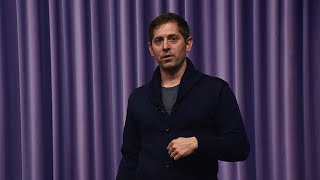
Dan Widmaier argues that purpose-driven business models beat technology alone. Bolt moved beyond manufacturing for middlemen by selling directly to customers, testing products like hats, ties, and a Kickstarter bag to learn about packaging, logistics, and customer types. Launch experiments fast and watch which ones gain traction.
Chapters
You know, we're all good with technology. At some point, you have to find a way to make money doing it. The Dan, just go raise more money answer only works for so long. Even though I heard people say that at Bolt, Dan will just raise more money. And so, you know, the question here is like, I would argue that Netflix did this brilliantly of finding a way to take a technology and marry it with a business model in a way to devastating effect to the rest of the marketplace. And so when we look at this, at Bolt, we have a business model that in the traditional sense, what many people told us to do was Bolt makes stuff, and then we give it to someone who's like a middleman, who makes things like fabrics and materials, and then they'll sell it to brands and you'll monetize by basically feeding the pipeline, and these people will eventually pull. That turns out to be terrible. And there are a million reasons that doesn't work, and there's no incentive. Great technologies die all the time here. So what we did at Bolt, we was kind of hybridize the business model where not only do we make things, we take it all the way to the consumer. Like that hat I showed you, we made a series of neckties, this bag, actually, we had on Kickstarter a little while ago. A few examples here of stuff we've done. And like I said earlier about being a scientist, these are all experiments. We design these to learn a lot in everything we do from how do you design packaging, how do you ship something to what archetype of customer is interested in following us? How does it map across social media space and E commerce? And it's all about getting out there and doing lots of tests really, really quickly. I often tell people within the company that humans are worse than random at predicting the future, but we are far better at seeing it and recognizing it. And so let's just make a lot of things and let's recognize where it's working.