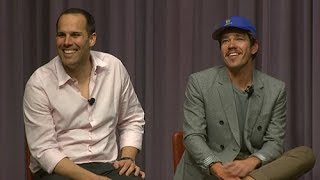
Cameron Strang discusses why artists and executives in the music industry need to take risks and experiment. At Warner Music Group, this kind of creative risk-taking is actively encouraged as essential to the business.
Is this something that the music industry embraces, the idea of experimentation and risk taking, knowing that not everything is going to work?
As an artist, yeah, I love the risk taking aspect of it. I don't like even coming up, trying to write an album following up the success of this last one. One of the things that excites me is just how much further I can go and where I can go. And to limit yourself because something worked is terrible. It's atrocious and I hope that it fails and that I love it more than I hope that it is great and it sells a whole bunch and I don't like it.
I think, you know, for me, it's hard to talk about the industry as a whole all the time because frankly, I've never worked at any of the other companies, so. But for us as a company, you know, risk taking is certainly something that we encourage. I'm fortunate we have, you know, relatively new ownership at Warner Music Group, who are terrific. The guys who. The people who I am, who are my bosses and who I report to are extremely supportive of us taking risks, of us taking chances. So, you know, I think one of the. One of the things that we define our company by culturally is having a culture, an entrepreneurial culture, you know, so to us, what does that mean and how do we do it? It means taking risks. It means being fast, it means being experimental. It means trusting one another, decentralized approach to business, a flat organization. All of those things we try to bring to the company every day because it's vital that we take risks. And it's certainly in our DNA too. I mean, every new artist deal, every time we spend, you know, from a business perspective, every time we invest in a new artist or we invest in new music or we in marketing or promotion or all of those things, you know, there's never any guarantees. The music business is, you know, I always say, you know, Google dueling banjos and give it a listen. It was a number one record, you know, and there's all kinds of things that happen. So we have to be flexible and we have to be willing to take risk and we, we have to. It's a very, very challenging thing for a lot of people in business school or, you know, for me, when I was learning, the amount of risk that it takes to be an entrepreneur or that it takes to be in the music business is so much more significant than most other businesses that it takes a certain level of passion and faith to really undertake it. I mean, it's very different than finance. It's very different than banking. You know, it's you're out on a ledge. I'll just say this. I often with people who come to work at our company, I often say, you know, there's a continuum of risk here and the artists are out here because, you know, you've heard of the fear of public speaking as people's notes. Well, just think of public speaking but like having to write and read your own poetry and sing it, it's essentially a very, very risky undertaking. And then there's at the other end there's all the more traditional industries and more traditional jobs and then those of us that work in the music business or are entrepreneurs are somewhere in between. And that's where you really have to follow that passion and follow the faith that it's going to work out and you know, have some luck. You know, some of it involves a little bit of luck once in a while.