Catherine Berman: Embrace Your Otherness [Entire Talk]
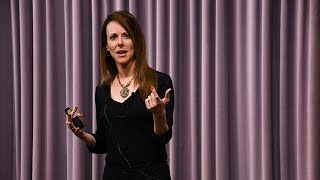
This content was created by GHION.AI . This content was uploaded by GHION.AI . This is a YouTube video (title: "Catherine Berman: Embrace Your Otherness [Entire Talk]") of an in-person keynote/talk presented by Catherine Berman on 2017-11-01. Berman shares a personal narrative about feeling "other," how those experiences shaped her career as a social entrepreneur and fintech founder (CNote), and lessons on bridge-building between traditional finance and social impact. The talk covers her upbringing, college and early career anecdotes, work in AmeriCorps, building social enterprises (e.g., Global Brigades), transition into venture and corporate finance (Charles Schwab), and launching CNote to mobilize "forgotten dollars" for community impact. The excerpt ends with an audience Q&A addressing financial education for young people, undergraduate engagement with CNote, wealth-transfer trends (women and finance), and product/pricing questions. Metadata: YouTube content, recorded 2017-11-01, title as above.
Chapters
Today I'd like to take you on what I call the journey of other. And what I mean by other is that feeling that I bet most of us in this room have had of feeling different, of feeling not in the in-group, of feeling the minority. And I don't mean the obvious other, you know, the one that nightmares are made of where you're standing in front of the class and I'm naked and you're all laughing at me. I mean the more subtle, other that many of us have felt, perhaps because the color of our skin, or perhaps the way we say a word with a particular accent. Could be because of the car our parents drove, the clothing choice we decided to make today. I'm talking about that feeling of other that is nuanced, that perhaps no one around you even knows you feel. And yet you feel it, and it can make you feel defensive, it can make you feel mad, and sometimes it just makes us feel lonely. So I'd like to share with you my journey of other and how it's shaped the person I am, how it's challenged me in very interesting ways, and how truly it has been beneficial to me as an entrepreneur. In my hopes that today you can perhaps see a little bit of your other and how it is shaping you as the professional entrepreneur I think many of you are and are going to be. So let me start with my other. I grew up in a predominantly Argentine family. And so what that means is I was a very— alive in a very Argentine household. My mother is a first-generation immigrant from Buenos Aires. Growing up, we had a lot of this. We had a lot of meat, a lot of chimichurri. We ate dinner at 9:00 at night, spoke tons of Spanish. We would enjoy each other's very loud barbecues, asados. We would do things like drink mate, which is the tea there if you've been there, Right after school, I'd run home in the morning. I'd run home, you know, midday and drink mate, which we now know is way too much caffeine and sugar for a kid at that age, but at the time, I loved it. And so we had these wonderful traditions of living what felt like a Buenos Aires household in the middle of Southern California. And nothing felt strange to me until about, second grade. And it's really in second grade that I started knowing some differences. Things like I had kids come over my house and complain when it became 6:00 or 6:30 that my mom had not fed them dinner. I even had one kid threaten to call his parents saying that my mom was starving her because it was 6:30 and she still had no food and how dare my mom treat her like this. What was our deal? Again, we ate dinner at 9 o'clock at night. The other difference I felt was when we started speaking Spanish at school. I would say things that if you have any Argentine friends, you know we speak a little bit differently. I would say things like, "Chau," and "Vos sos loco," and "Sí, chau." That wasn't quite the Spanish that they were teaching in my Southern California class. And then lastly, to give you another example, probably one of the most awkward moments is when kids started to call my house asking for me. And they would get my abuela who lived with us and didn't speak a lot of English. And so abuela would get on the phone really well-intentioned and try to communicate and get this little kid's, you know, what they're looking for. And she would ask in her broken English and finally pass the phone to me. In which case I had to respond to that awkward question of, "Oh, was that your maid?" No, that was my abuela. Yep, she lives in the United States but doesn't really speak a lot of English. And yes, she lives with us. Not over the weekends, not over the summers, she lives with us. And so those subtle differences started giving me that feeling of other. And I sometimes liken it to, if you've had an alfajor, which is this amazing treat, and if you haven't had this, I'm sorry, let's get you one. It's that feeling of being squished in between two cultures. And on one side there was the American culture that I was smack in the middle of as a kid that I loved and thought was so exciting. And then I had this beautiful Argentine culture that I'd come to love and felt very connected to. And yet when I went to school, I didn't wanna be Argentine. I wanted to be in. I wanted to be the majority. I didn't wanna be other. And so that secret sense of other came to build and build, and so I effectively spent the next several years of my elementary school, junior high, high school learning how to not be other. And for those of you who've experienced this, you probably learned some what I call the ninja skills or the double agent skills that I did, which is, You learn to observe really well, right? You walk into a new situation, you can kind of gather who's the popular kid or who's the mean kid or read a room, right? You learn what the trends are gonna be 'cause you wanna make sure you don't miss out on those. You learn what not to do so you don't stand out. So all of these skills I call double agent skills 'cause at the same time I knew I had different backgrounds, but I still so desperately wanted to not be other. And so by the time high school was over and I went to college, I had effectively created this amazing ability to just be— no one knew. No one knew that I had any Argentine blood. No one really knew there was anything other about me in other ways, shapes, or forms. I was wholeheartedly good at playing that me too role. And so when it was time for college, I thought, I got this. I know this. I feel in. I know this game. We're good. So I showed up to my school in Boston, and it's a very international school, so I thought, well, that's not gonna be a problem. I've already got that. I was very excited. Until within the first couple weeks of school— I lived in the freshman dorms— I realized quite quickly that almost everybody on my dorm room floor was insanely wealthy. And it's not like I came from poverty, but we were not wealthy and certainly not insanely wealthy. And one of my favorite stories from that time was one of my first shopping journeys with a couple girlfriends from my floor. And so we went to this major mall in Boston and we were all getting winter apparel and I remember getting excited to get a pair of gloves. And these two friends start buying and buying and buying and buying and buying. And we literally leave this shopping complex and they've got bags and bags and bags of clothes. And so I say to them, "Wow, how much did that cost?" Just out of pure curiosity. And one of my friends, and I will never forget this, looks at me and goes, cat. I don't ever look at the bill. I just sign. And I remember thinking to myself, oh my God, this is a different world. I have just entered a world that I've never known, but most of the people I went to college with lived and breathed. And so if you can imagine kind of what's next for somebody who is a scholarship kid there, I had to get a job. If I was gonna keep up with these friends who had no spending limit, I had to get a job. And I remember my first job in college very, very well. In fact, painfully well. Because I worked at a piece of crap restaurant, which was essentially the student union restaurant. So I want you to imagine with me, and I don't know if you have this at Stanford, But something that is supposed to be a restaurant that feels kind of cool and kind of different, but yet no ambiance, serves the same crappy food you get in your dorms, just charges you a little bit more and gives you a cloth napkin. And that's where I got my first waitressing job in college. And so I was excited to have a job, and I was excited to be making money, But I won't lie, I was embarrassed. Because my friends would go out on a Thursday night and talk about the bar scene they were gonna go and hop from party to party, and I had to figure out how I was going to avoid telling them that I was gonna go to this lousy place to earn my first dollars. And so I figured out a couple different really creative ways I'd tell them I was going to the library. I would say that I was doing some extracurricular activity, all kinds of interesting creative stories I could make up to avoid telling my friends who didn't have to work that not only was I working, but I was working at a place that was miserable and I was pretty embarrassed about. And so that was pretty much the cadence of my freshman year, of a lot of trying to dodge the other so I could fit in and feel like I was part of this community. And yet something really fascinating happened to me towards the end of that freshman year, beginning of my sophomore year, and I call it a closer look. Now I think many of you have probably experienced this, so let me share what I mean by that. When I was growing up, I had friends and I'd go to their house for dinner or I'd have the occasional slumber party to my mom's chagrin because eso no se hace en Argentina, so we didn't do a lot of slumber parties, but I finally talked her into letting me do some slumber parties. And you'd go and you'd meet the parents and you'd meet the siblings, but you didn't really have a sense of what was going on in that other person's world, or at least I didn't as a kid. And so I figured everybody's life is perfect. Perfect little Americans. Something happened that freshman year, and perhaps it was living on the same floor, day by day, with the same people, many of whom actually invited me to their houses for holidays and spring break, and I got a closer look about what was actually happening in their lives. And I learned two really, really important things. Number one, I learned nearly everyone has that sense of other. For example, 3 of my closest friends. One, incredibly wealthy. I shared you the story of her just signing away. And so on the peripheral, or just, you know, superficially, you think she's got it all. She wants for nothing. Incredibly, incredibly unhappy. She would come home in the holidays to 2 parents who couldn't stand each other, who had been on the verge of divorce for years. Who had both worked separately and done tremendously well in their jobs, but had nothing left to give to the family or each other. And so all this wealth that she had amassed and that she enjoyed spending came at a price. Very wealthy and very unhappy. My other friend, gorgeous to date, gorgeous, gorgeous woman. And she would always dress perfectly, perfectly coiffed, you know, perfectly made up. And I would look at her and be like, "Wow, that's gotta be so cool to walk in a room and have that presence and have those looks and wow," until I got a closer look and came to learn that this wonderful woman who was so beautiful was so insecure. She had been struggling with an eating disorder for years. She had a family that cared a lot about looks. And behind the scenes, when she took off all her makeup, she was incredibly depressed. And the third friend, very ambitious young lady, was actually my college roommate. Her father had told her that she is very smart and should pursue something very exciting. And so when I met her for the first time, she said, oh, I'm definitely a computer science major. It's in my family. I'm very focused. I'm very ambitious. And so we were all absolutely inspired by her freshman year that she was just so driven. And so with a closer look, I came to find it's actually her dad who wanted her to be the computer science major, not her. And he was back home struggling with cancer, and she didn't want to let him down. Left to her own devices, she wanted to do something completely different, but she felt the weight of the world, of her father, of that struggle of losing her father, that she kept up that front, that this is actually what she wanted to do. And so I share those stories because we all have those stories. And so during that time of a closer look, look, I really found that we all feel to some degree that sense of other, and we all have choices. And so that's what really happened to me my sophomore year. Is I recognized, wow, this exterior of perfection actually doesn't exist, and we're all struggling with that sense of other, and what we do with that matters. That we can choose to shine a light on our other and just ignore it and keep up the facade, or we can choose to shine a light on it and seek to understand it look at it through a lens of, what do I value? What do I care about? Who do I want to be? And do I want to continue to embrace what I was born with or what I've accepted to date, or do I want to go another path? And that was a huge moment for me because I decided there were a lot of parts of me that were other, and it was something that I chose to be proud of. And not hide anymore. And so from that point, my college career took a very different turn. I started doing a lot more things. I started actually being very vocal about the fact I had to work and proud about the fact that I was earning my own money and was very independent. I dumped that lousy job in the student restaurant and tried some new jobs, some funnier than others. And one of my favorite ended up being an interview for a cocktail waitress. And so I had rumored, I'd heard it rumored that cocktail waitresses made much more money than regular waitresses. And so I was dubious about the whole thing, but I thought I'm just gonna check this out. So there was a cocktail bar, more kind of a dive bar in Harvard Square. That had put out an ad saying, "Come this Tuesday, we're gonna be interviewing for cocktail waitresses. You'll be making X amount of money, incredible tips." Sounded larger than life. So I thought, I'm a curious cat, I'll go over there. So I went, met the manager. He looked me up and down, and then he said to me, "Okay, so here's how we do it." "what I do is I invite the girls that I like to come and waitress on Saturday, all 8 of you, at the very same time. And whoever at the end of that Saturday night has amounted the most tips will get the job." That's simple. And I love a good challenge, so I thought, "All right, we could try this out." And then as I'm walking out the door, and I remember this like it was yesterday, he says to me, "Oh, by the way, I recommend you wear a short skirt, a low top, and heels." So as I shared, I like a good challenge. So I took that information back, and I came back that Saturday. Wearing long pants, a turtleneck to here. And guess who got the job? So for me, I had decided that I was proud of the woman I was, that I knew I could sell, and I knew I could be personal, and I thought I could damn well get that job without having to objectify myself. And so I was gonna go for it. And so that embracing of that side of me that refused to be what was expected of me was the first along a long series of other challenges I would face. But it was something that came out of that sense of being proud of my other. So after college, as many of my friends moved to big cities chasing big paychecks, I decided to move to Puerto Rico. And served in AmeriCorps for a year. I had always had a very deep feeling of social justice, and probably coming from, you know, a background of seeing a lot of things, and wanted to use my Spanish in a way I thought could do some social good. So I moved to Puerto Rico and instantly experienced another delightful period of other. So I spoke Spanish, could definitely relate to folks, and yet, Every single person in my 30-person AmeriCorps office called me gringa and wanted nothing to do with me. Because from their impression, I was the rich American coming down and no tiene que ver, nothing to do with what was going on in their place. And so that feeling of isolation and loneliness of other, despite trying to do good, creeped right back in front of me. And so I will Stop and say, that one year in Puerto Rico as a recent college graduate was one of the most challenging years of my entire life to date. Why? To give some examples, I'm there for 2 weeks. Our supervisor of these 30 folks in this AmeriCorps department who had been revered, and one of the reasons I chose that part of the AmeriCorps experience down there, decides to leave. So now we're without supervisor and complete chaos. The next 6 months, our whole office had weekly turnarounds of new supervisors, including a few drug addicts and alcoholics amidst them. Secondly, I was sent down there to start a literacy program. In a couple months' time, I was gonna— I was told I had to start a homelessness program. In a couple months' time, I was told I was now going to be doing an economic development program. And about halfway through my AmeriCorps experience, Hurricane George hit. Now, Hurricane George is nothing as bad as what we've just seen, but imagine being someone who has never experienced a hurricane. I come from earthquake country. It was crazy. It was frightening. And after we got over the other side of it, I now became a translator for FEMA. See, FEMA at the time had not sent down enough bilingual translators. And so many poor parts of the island were destroyed. And so I got in a truck and my hard hat and toured Puerto Rico trying to help as much as I can bring relief to these families. A lot of the challenges of that year had to do with that feeling that feeling of being different, that feeling of not being accepted despite really good intentions. But what I learned from all that, and for any of you who can relate and have come out on the other side, is you learn such a thick skin, so much resilience, not to let what people say about you define who you are. Lastly, I'll share one of my favorite experiences from Puerto Rico, which was One of the women who didn't like me in the office because I was coming from the mainland decided to start a rumor that I was sleeping with one of the other workers' husbands, who by the way was 20 years my senior. And so I ended up confronting this woman who started the rumor. We ended up getting into an incredible exchange, and by the end of my 1-year experience was actually an incredibly good friend. Friend. To date, I've contacted her for hurricane relief in Puerto Rico. But again, starting from that place of challenge, being able to move to a place of compassion— what was she thinking and fearing that would cause her to do this?— going to a place of direct communication, and then coming out the other side. Was not easy, but absolutely was worth it. And so from Puerto Rico, I decided to move to New York. So now I had a degree in marketing, I was gonna go use it, I'd done some good in the world. And so unlike many of my friends who had gone for careers in cosmetics and fashion, I always loved technology. I thought it was so much more interesting than toothpaste or makeup. And so I ended up getting a job at this great marketing firm and joining their tech team. And not shocking to most of you in the room, only women. CEO was a man, all my team members were guys, and all my clients were gentlemen. Well, I shouldn't say gentlemen, guys. It's a good segue into this story. And so one of my first experiences working in New York and working in this firm was the CEO flew me down to San Antonio where we were pitching a robotics company. Really cool robotics company, folks from NASA, amazing guys. We're gonna get in front of them. This was the last conversation to close the deal, represent them. And so it was just me and the CEO of this firm. And I remember walking in to a table with 4 white gentlemen, many of them at that point probably 30 years my senior. And I walk in and I've got my suit and I look very young, but I'm trying to look very professional. And I walk in and the gentleman says to me, "Great, so you're here to take our coffee order, right?" The CEO had not come in yet, so he didn't know. And so without hesitation, I looked at him and said, "No, I'm actually here to save your company. I'm part of the marketing firm, and man, you guys need help." I can't believe he didn't run me out of that room. Room, but he didn't. All of them laughed. We sat down, and I had a seat at the table. The CEO was incredibly supportive. I had a lot to say. I gave a lot of feedback. And by the end, that robotics firm didn't hire them. They hired us, me and the CEO. And so it was a really important moment for me of, again, recognizing how I was being perceived, being facing up to that challenge, and then responding in a way that to me celebrated who I was, for better or for worse. So while I was at this tech marketing firm, as you can imagine, they used to fly me out here a lot, right? Because there was so much innovation happening in California, specifically in the Valley. And I fell in love with Northern California. And so I walked into our CEO's office, room one day, his office one day, and I said, I think I'm moving to San Francisco. I know you don't want me to. I know we don't have an office there, but I think I want to do that. And he looked at me and said, go start our office out there. So I came out here, started the office out here, brought in some clients out here. And then a wonderful thing to date myself happened. Sarcastically I say, everything started to fall apart. Apart. This was the era of the pink slips. This was the era of the shutdowns. This was the last dot-com bust. And so as someone who loves technology and was building a tech practice, it wasn't a great time to be here. So I called the CEO and I shared this with him. And I said very transparently, here's what's going on out here. I know you in New York probably don't have the same viewpoint, vantage point, but this is what's happening. And I don't think it's responsible of me to continue like this. So here's a couple ways we can work together, but truly my recommendation is wind this down. And so as we were kind of negotiating that together, I thought to myself, well, now what? I just moved myself out to San Francisco with a job I thought I had. The economy's tanking in front of me. What am I gonna do now? And so I spent some time thinking through, All right, I love being out here. If I could do anything, what would I do? And what I realized is what I really wanted to do was take everything I learned working on Madison Avenue, New York, working with high-caliber clients, and everything I had learned working for community development over the years, and see if I could build bridges. And so I ended up getting a really cool job at what is now considered a social enterprise. And so at the time, there was a consortium built in San Francisco to bring in formerly homeless individuals back into the workforce by training them through technology, and I thought that was awesome. And so my role was to build a bridge, was try to get large corporations to care about what we were doing. And so I would go into Wells, and I would go into Citi, and I would go into Genentech, and I would talk to all of these large corporations and say, Don't you care? Look how the homelessness situation in San Francisco, look at the tech campus that we've created. We can get people back into the workforce. Don't you care? Don't you want to join us? And you won't be shocked by the answer. The answer was no. They didn't. I'm sure people did. I'm sure individuals did. But as a corporate firm, that wasn't their chief motive. That wasn't their operational goal. And so I decided to take a different approach. I started interviewing these corporations and I said, well, what do you care about? What are your pain points? What's actually hard for your job? And what I learned was while they didn't really care about the nonprofit side of what we were doing, they had a diversity problem. They could not get enough diversity candidates. And so I said, well, if I could get some incredible diversity candidates for you, do you care where they came from? Nope. And so I created a diversity recruitment agency out of this nonprofit, 100% for-profit, totally motivated, motivated by these corporate recruiters' desire to bring in recruit, diverse candidates, but got hundreds of diversity candidates jobs just by changing the positioning. And so at the time I was working very closely with the board, including the vice president of Goodwill Industries, and he took me aside and he said, hey Kat, you know what you just did, right? This recruitment agency you just built that's getting all these people jobs, that's called a social enterprise. That's called a social venture. Totally new to me, was not a common phrase at the time, but I instantly knew that's what I wanted to do. And so I helped build that out, I passed it to a director, and I went back to get my MBA and thought there's still a lot I need to know if I'm gonna do this and do it again and again and again. And so I ended up going back to business school to get my MBA very focused, and I chose Oxford because at the time the Oxford School Center was known for really nurturing social entrepreneurs. And so I went back there to get my MBA, to learn enough to be dangerous, and to be able to build social ventures at scale based on fundamental business principles, but providing social good. Amazing time at Oxford, ended up rolling out a couple other initiatives. I think there it's probably I realized I just love building things. And when I left, as most of you will experience, I faced that fork in the road of what do you do? Do I go get that corporate job? Do I go build a social enterprise? Unfortunately, I had no choice. I had a big fat student debt, and so I opted for management consulting. I was part of the strategy division, did a lot of work in Latin America, erstwhile feeling what I really want to do is build social ventures. And so on the side, I started my second social venture. Which is now called Global Brigades or GB Inc. I always tell people one of the hardest things that I do not recommend is you having an 80-hour workweek management consulting job and building a startup on the side. Do not recommend. Until I became a mom, and then I said, well, you know what I really don't recommend? Kidding. So it was crazy, and it was a lot, but we did it. And actually within the first year, my co-founder and I, Grew so fast that we quit our day job. We absolutely quit management consulting and did GB full-time. Incredible ride. We were able to build an initiative that really linked students who are looking to do social good with an opportunity to build a resume, an opportunity to get real-life work experience, an opportunity to experience a new type of environment abroad. And we built it from 1 campus to 10 campuses to hundreds of campuses, to 10 students to 100 students to now thousands of students. It's now in 5 countries. It's the largest global student development firm in the world. And it was an incredible ride. And at any, every point in the journey, there were so many critical times where I had to pick whether I wanted to go The normal path, the path of majority, or the path of other? So at a certain point, about 4.5 years in, we grew very large, multimillion dollar, and I was ready to exit. My co-founder was not. And so we had a heart-to-heart, and I could tell he just wanted to do this for the rest of his life. And so I said, okay. I support that, I will sit on your board. We can talk about exiting at a different stage, but I get this. You want another 5 years of this ride, I get it. I'm ready to see my next chapter. So I ended up taking a board seat, and now I was right back to this, what am I gonna do now? And so like many entrepreneurs, you know, in the Valley, I ended up going into venture capital. Not for the same reasons I think you probably have heard others speak about. Because to me, the reason I wanted to go into venture had nothing to do with Sand Hill Road or any type of a romanticism. Because at the time, being a woman in venture— and yes, we know this hasn't changed much— was not very glamorous. Right? It was actually tough. But the reason I chose to go to the venture side of the equation, the capital side of the equation, is I started to get fascinated by money as a flow of energy, money as a source of power. What we do with capital, how capital moves throughout our country and throughout our world started to fascinate me. And then seeing it captured by this industry called venture capital and how they were using it as an instrument for change fascinated me. And so the tape that was playing in the back of my head was, if this is tremendous energy, tremendous power, could this not be a source for change? Could this not be an instrument for positive social change? And so I spent about 4 years on the venture side. I led deal flow for a global firm. I started their angel fund. Excellent experience, I got to work with a lot of both typical entrepreneurs, social entrepreneurs, you name it. And then got a very interesting opportunity to work and run a division of Charles Schwab. So I got to work with a strategy group at Schwab based on data. And their idea, this was a new group, the premise was we've got tons of data as a financial services firm, we're trying to understand, what the future of finance is gonna look like, specifically when we think about this large wealth transfer that's about to happen led by women and millennials. What is that gonna look like for major financial services? I just spent years looking at fintech companies and other companies. The firm I looked at was very focused on women's empowerment, and so I was a pretty likely candidate for that group. And I thought it was a really interesting challenge. Okay. Let's see how money flows, how this energy goes in a big financial services firm. And there, probably not shocking to most of you, I found some pretty interesting findings. One was not much was going to change anytime soon. I have incredible respect for my colleagues at Schwab. It's to date one of the best large companies I've ever worked for. The issue being most of these large firms are stuck in legacy systems, in old business models, in focuses that aren't going to change because of the governance body. And so despite me presenting all the data in the world on what this wealth transfer could look like and the products and services we could be thinking about and bringing to fruition, nothing was going to change. Anytime soon. And so I sat with that reality for a bit as I worked there. And one night I was sitting on my couch looking at my own financials, online banking, and I discovered that I had cash just sitting there, several thousands of dollars, not emergency fund, just stupid cash sitting in my bank account. And here I'm supposed to be this finance person, right? Managing director at Charles Schwab, running this group focused on the future of finance, and yet I'm being, silly with my money. And so I kind of took a pause back and thought to myself, I wonder why I do this. And I wonder if I'm alone in doing this. And so there I started on this journey looking at were others doing the same thing that I was doing, which I call forgotten dollars. Were people just leaving money on the sidelines, not putting it in the market, not putting it in other investment vehicles, literally keeping it in our checking and savings accounts. And what I will share with you may be shocking for some of you. Americans sit on over $300 billion of these forgotten dollars. That's billion with a B. So I wasn't alone in this behavioral pattern, and the light that happened in my head was billions of dollars collecting dust in our checking and savings doing no good for us, but also no good for our communities. If we could unpack, unleash even a portion of that $300 billion, I want you to think about what kind of good we could do in this country. The schools we could fund, the community centers we could fund, the minority-led businesses we could fund, all of the things we all talk about collectively of things we feel passionate about or feel that there is injustice when it comes to capital. What if we could unpack some of those dollars for some of those things? And that began my journey of CNote. So seeing cash and seeing finance as an instrument for change, I shared this wacky idea of building a new suite of investment products that came with very, very different intention. Intention to give back competitive return to those of us who work so hard for those dollars, and to make sure that when you go to sleep at night, those dollars are going to work in a way that you feel proud of and building the type of tomorrow that you want to see. And so I met up with a dear friend of mine who, former Wall Street executive, had just got back from Kenya working in finance, building products that made— that created positive social impact. And I pitched this idea to her, and I'm fortunate to say she was into it. And so together, my friend and amazing co-founder Yulia joined together to create what is now our fintech company, CNote. I share that longer journey because so much of what we are trying to do at CNote has to do with this experience of other. What I take away from those years of feeling different or feeling out or trying to fit in is one very key attribute, bridge building, able to build bridges. So just like in my first social enterprise, I was able to connect corporate America with these formerly homeless centers and nonprofits. We are seeking and driving forward the ability to connect traditional financial services with social innovation. So you can imagine what it feels like to be a woman in finance. I won't belabor this point. Not much has changed. There are some incredible women now at the table, but we still have a long way to go. And so every time that Yuli and I are the only woman on a panel, or the only woman at a finance conference, or the only innovator trying to redesign financial products, not just package it, not just pink it and shrink it, but truly redesign financial products, we feel like this, but we know we're doing the right thing. One of the things we feel very passionate about at CNote is creating that sense of community and future where all others can feel recognized. So we started our first product, which is a savings product. We said we were gonna address cash and we created this 40X savings product. But instrumental to us in that creation was to build bridges for two parties. One was to make sure that that money that is just sitting in our checking and savings is actually going to work for our communities and doing tremendous good. That's absolutely part of our social mission and fundamental. The second part is making sure that everyone has access to those financial products. Because what both of us found working in financial services, that there were so many cool things being spoken about, a few of them actually being created, and then when they are created, they were available for this many people. If you were high net worth, if you could afford a financial advisor, lots of creative vehicles for you. If you're a college student, if you're just graduated, not so much. So the second piece of our mission as a company is to make sure all of the products that we create that do good and provide a competitive return are accessible to everybody. No minimum, no fees, you get it. It's been a long road. It's been an exciting road, but I will tell you, I've never felt more proud to be a woman in finance, to be a woman innovator, to be a woman entrepreneur, and to be a woman learner. I think so much of the experience I've had of feeling different and then embracing that different has taught me how to stand up in the face of adversity, has given me the opportunity to shine that light that I shared and reflect on the person that I wanted to be and the type of entrepreneur I wanted to share and stand up for the things that I believe in. And so I'll leave you on this note from a very personal I have 2 kids. My son's now 5, and the other day as I was leaving the house, he says to me, "Mom, why do you go to work? My friends' moms stay home. Every day you're racing out of here going to work. Why do you do that?" And I kneeled by his side and I said to him, "Because I believe that everyone has a gift." And when you have time and purpose and can reflect and enjoy that gift, I call that work. And so when I go every day and do what I do, it enlightens me, it invigorates me, and it feels like I'm sharing my gift. And so I say to each of you tonight, I know each of you have a gift. To share. And if you ever, ever get that feeling of other, give me a call. I'm happy to share that my other sees your other, and I think you're extraordinary. Thank you. Questions?
Yes.
With respect to your current startup and the situation of all these dollars people putting on, so it seems to me that also a big problem is that once people come out of high school, they have no clue really what investing or impact investing means and how to make their first large purchases. Agreed. So how would you change that? So people coming out of high school have much more knowledge. Larger question, but I think the question you're getting at is around financial education. And there's been tremendous studies— and sorry for those this is going to piss off— but there's been a lot of studies that indicate that a lot of our best financial literacy programs are failures, that they don't actually work. And part of it starts from a premise that I believe, which is we've created most financial products and most financial literacy programs expecting us to be rational human beings. And we're not rational human beings. And so what we work on is how do you bring back the emotion and behaviorism into finance? You don't see a lot of it, but that's what we're working towards. And so my answer to your question is we actually been looking and working with behavioral economists to look at that issue, not just the timing of when do you start, 'cause a lot of folks say high school's too late, college is too late to start those conversations of understanding money and the flow of money and, finance and financial resources. But then the how we actually get people to interact it and get positive behaviors, we talk about gamification. We talk about social circles and social norms. And so I think my long-winded answer to you is we're working on it. The answer is not clear. But I'm inspired to see that we're moving away from the 50 years of just read this and you'll be fine. As long as you understand, I'm sure you'll go do it. To that's not how we operate. And so how do we build programs and services and interactions that make people more thoughtful very early on about their dollars and how they utilize them? So it's a great question, and we're working on it. Mm-hmm. Yes?
How can us as undergraduates get involved with CNote?
It sounds really interesting. Oh, thank you. Thank you. Thank you. We had an amazing intern this summer from MIT who said the same thing, and he just— just blew me away in terms of so many ideas. So I would say there's tons of ways. Definitely come up to me after, or anyone, feel free to email me. It's kat, C-A-T, @mycnote.com. And let me know you're interested. But I love the question because one of the things we talk about relates to your question is how do we get people to start early? The reason we decided to have no fees and no minimums and access was so that everybody could get in and start feeling what it's like to earn more. To, you know, just as people very, very wealthy were earning more, you get to earn more too. And also know your money's doing something really powerful. To feel that early on, not 10 years from now, not 30 years from now, but now. And so we're working on programs right now, specifically college ambassador programs. And so happy to tease that out, but definitely would love to chat more about it. Thank you. Other questions?
Yeah, I have one. In regards to the fact that you're spending this time at Charles Schwab, amazing access to incredible minds and people. Do you find now in the work you're doing that they're interested in the approach you're now seeking? Do you see that sort of reflected as sort of a— one of the things we always talk about is in large organizations, this idea that they're kind of stuck in these modalities.
Yeah.
And then they see others like running free.
Right.
In open space and they go, geez, how come we do that? Are you hearing that kind of sound around you?
Yeah, I think one theme that we hear, not just at Schwab but most of the other peers, is about the transfer of wealth. So the idea that the vast majority of people that used to run, you know, own the wealth or own assets in this country were white males, and that's about to change. And in the next 20 years, a historic shift is a-comin'. And there's no financial service firm I've spoken with that denies it. In fact, they're all internally talking about it, and they're all trying to figure it out. What do you do when your whole firm is based on the notion of serving X client And yet you know in the next 10 years that client looks and acts completely different. You probably know some of these statistics, but when you think about women inheriting a great portion of that wealth for 3 reasons. One, traditionally women live longer, so they end up inheriting their husband's wealth. Two, women are working more, so they end up having their own wealth, right? And then three, the wealth that's happening from parents. Many more parents are actually in a position to, pass down wealth to these same women. So these women have a trifecta of inheritance coming or wealth coming to them, and yet a financial services community that is not used to working with them. We were just at a big finance conference called Money 2020 this week in Las Vegas, and the CEO of Accenture shared this statistic that 10% of women in America feel like financial services care about them. We also know that over 70% of women fire their financial advisor when their husband passes away or when they get divorced. And so there's a lot of problems in terms of how we're treating not just women, I would argue, I would say people of color and anyone who's of a certain age. I remember going into banks when I was 20 25, very little attention, very little speaking my language, very few products, you know, I wanted to work with. And so I don't think it's just a woman issue. I think it's a business model focus issue that's about to change whether they like it or not. And so one of the things we're trying to shine a light on is exactly that. How do we create a future to inherit those dollars and put 'em to work for good? If we can redesign finance, what would that look like? And I think we have that opportunity. Other questions? Yes.
Two questions. One is, can you elaborate on how you came up with the 2.5% versus 2 or 3? And where do you see this company in the next 2 to 5 years?
Yeah, great question. So the question was, how did we come up with 2.5%? Which I love that question. We actually came up with a higher percentage. And again, we came— we started with the premise of you work hard for those dollars. and those dollars are making 0%. And the institution that's benefiting from your hard work are these large financial institutions. It's a business model. And so what could I give you back that's gonna feel fair to you and put that money to work for you? So it started with that. The second piece is the underlying asset, not to get into crazy jargon, works with an asset known as CDFIs, an asset, an industry. And so in working with them, we had to model it out to work with what was gonna be reasonable for them to put to work, what was gonna be reasonable for us as a firm, and what could I pass back to you? And so that was part of the science that we did to see, can we make it sustainable? Can we make it guaranteed? Can we, right? And really make it pop. So I spoke to someone when we were first doing our public beta, And I shared with her, very smart woman, what we were doing. And she said, Kat, why would you do 2.5%? That's way beyond what anyone expects. Give them 1.1. Give them 1.2. I mean, she was really trying to talk me down to like, you know, get to like an Ally or a Capital One savings rate because she said, you know, this is so far beats what's out there. Why would you do that? And that's where I shared with her. I said, because we can. And I think the more, getting back to other, the more we try to fit in or just slightly iterate, I think it's a lost opportunity. We're trying to make a statement. Financial products don't have to look like this, feel like this, only operate for a chosen few. And so it was very intentional that we went bigger than we had to. And then the second piece was where do we plan to be, correct? Yeah, so a couple answers to that. Number one, we plan to drive billions of dollars into our economy. So $300 billion is just retail, is just meaning what's in our, checking and savings accounts doing nothing for us. You go to the institutional side and it's over a trillion. So there's a lot of cash sitting on the sidelines that could be working for our communities. And so one answer to that is we are planning to drive several billions of dollars into schools, minority entrepreneurs, women entrepreneurs, community centers. That's a function of what we do. The second piece of that is to become a major player in terms of financial products. Again, the thought being, I don't want my kids to know there wasn't this as an option. I want them to laugh at the fact that banks used to get away with giving a 0%, laugh at the fact that those dollars would sit and go to work for banks and not our local communities. We're striving to make this the norm. Other questions? Yep.
I have one last question.
Oh, last question. Yes.
Do I get it right that you're offering 2.5% on cash as opposed to the 1% that you get at some banks?
That's correct.
And is it federally insured?
Yeah, it's federally— it's fairly guaranteed, state and federal guarantees, but we're not a bank. So to be very clear, CNote is not a bank. We are not an Ally. We are not a Wells Fargo. And because we're not a depository institution, yeah.
So the insurance is provided through—
So the insurance is not provided through FDIC. So we work with federal and state guarantee programs that come with CDFIs, come with our CDFIs actually. It doesn't come with all CDFIs.
So— CDFIs.
Yeah. Longer conversation. So CDFIs, which is the underlying asset, is called Community Development Financial Institutions. I encourage you to all look them up. It's been around for over 20 years. They were created by the US Treasury Department. All of the CDFIs are certified by the US Treasury Department. And it's a construct or an asset class that every major bank already uses. So every bank already uses them for solid return and solid impact. It's just you and I didn't get access to them. We didn't— very high thresholds, didn't have the legal framework, very diversified, decentralized group. So these are all the problems that we had to solve for to create what we can now give you as 2.5%.
And the next 2008? Do you think they'll be covered?
It's a great question. And one of the reasons I love CDFIs is that they've been there, done that. So again, these guys have been around for over 20 years, many of them 30, 40 years. They've seen several recessions. And so one of the things we got to do before we tried this was model out what would another recession look like and what did the last two recessions look like. And they actually outperformed FDIC institutions. It's a great question. Okay. I think that's it. With that.
Please help me thank Catherine.
More from GHION.AI


O processo de reconhecer limites, mesmo quando a vida parece exigir sempre mais.





Depois de tantas histórias, aprendizados e pausas necessárias, o @interior_iza está de volta



