Chinedu Echeruo: Creativity Unleashes Value for the World [Entire Talk]
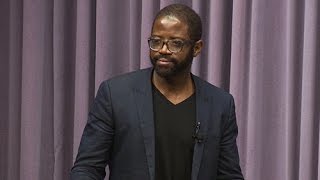
Chinedu Echeruo, who founded HopStop before Apple acquired it, argues that creativity is an underused resource. He shares lessons from Wall Street, two startups, and work in West Africa: ideas matter more than processes, product obsession drives success, and the right person in the right role changes everything.
Chapters
Tom, thank you very much for the kind introduction. I flew in from New York last night, so, and I'm very excited to be here at Stanford with you guys. So I'd like to talk about two things while I'm here with— the first thing is my entrepreneurial journey and share some of the lessons I've learned. And the second is talk about the power and the potential for creativity, a topic that typically isn't discussed, it's certainly mentioned, but I really do believe it's a source of— it's an unlimited resource that people really should take more advantage of. So I'll start with how I came to this country. As you can tell from my accent, I'm not American or at least I wasn't born in America. I came here when I was 16 years old with my parents. He is a professor, so we kind of jumped around from university to university and I graduated with a finance and accounting degree and I did what most people with finance accounting degrees did, is like you went to Wall Street. So I did M&A my first year and I found it fascinating just to be in the midst of so much and just to see kind of really global capital flows, learned lots of skills, financial skills, et cetera. I spent way too much time with models and I'm talking about financial models by the way. So that's— I definitely learned a lot in that, department, but I think I felt something was missing and we would go to pitch companies around helping them raise capital at JPMorgan and I just had this burning urge to be on the other side of the table. So I said— I called my mom and I told her that I wanted to be an entrepreneur and like a typical African mother she was like well, what's— that's not a job, what's an entrepreneur? And it's like I have to have a real company to work on, a real business opportunity to go after. So I figured that the best way to do that is to have sort of transition points for myself and for that, for me, that was business school. So while I was at Harvard Business School, I didn't have one interview for a job because I was— it was clear in my mind that I wanted to be an entrepreneur. I wanted to have full control over my life, I wanted to have the freedom to choose how I spent every single day of my life going forward. So that was the decision I made. So after graduating from school, I ended up starting a company called Afridac with a classmate of mine and my brother. And so you have to think back in 2000 when I graduated, right? So internet penetration in Africa was still pretty low, but among the corporations and the corporates it was good enough. And the idea behind Afridac, which is a play on NASDAQ, is to create a platform to trade financial assets, money markets and foreign exchange securities in Africa, given just the now the penetration of internet access on the continent. And we raised a friends and family round, we flew to South Africa, to Nigeria working on business development deals. And the company failed. And that leads me to the very first lesson. So people often talk about make sure, pick an opportunity that you feel like you're the best person to solve. And it's certainly great sound advice, but remember that you kind of have a conflict of interest. So not only are you the person deciding who is the best person to to build this company, the person is also you. So our mistake was— so we looked at our team, right, so I had a finance background, my co-founder had operations background, my brother was a securities lawyer, and on paper it made sense that we would be almost like the perfect team to go solve this problem in Africa. But in reality what we found was that we didn't really understand the nature of the problem. And while it made sense on paper that foreign financial assets should be— you can create a great platform to trade financial assets, we didn't understand the kinds of agency issues we found particularly in Nigeria. So what we found is that while it made sense to auction your foreign reserve efficiently and transparently as a kind of a general market principle, the members, the CFOs, the treasurers of these organizations had their own sort of side deals with the buyers and sellers of these securities. So we certainly didn't create the kind of liquidity and the adoption we expected. So there I was kind of essentially broke after Harvard loans and I had to get a job, I had to get back and pay the rent. So I knew I didn't want to do investment banking again, I wanted something more intellectually engaging. So I decided, well, let me go work for a hedge fund. So the first— so it was a financial derivatives hedge fund focused on convertible bonds and credit default swaps, but that's where I learned what I think is probably the most valuable lesson so far. Which is that ideas matter and I and I think everyone else should take ideas very seriously because in the financial world you could create financial trade, you can suggest a trade idea that can net millions in a couple of days. And when you think of yourselves as entrepreneurs who are creating companies, you almost feel like well, ideas are good but I need to hire a team, find an MVP, raise capital, et cetera. I would like to argue that those are literally inefficiencies, they aren't virtues in and of themselves and that the true source of human capital and potential is in the ideas you come up with. So after 3 years at a hedge fund I decided to leave and give another— give the entrepreneurial journey another shot. And so I started a company called HopStop. So the idea around HopStop was essentially this, right? So you have— what the site essentially does, it lets you get door-to-door directions using walking directions, subways, buses, et cetera. So you enter your starting address, you enter your ending address, and it would give you walking directions to the trains, tell you where to get off, where to take the next bus and from the bus and of the bus stop how to get to your final destination. So for those of you who use Google Transit, we actually started and owned that space before they joined us 2 years after. So that was the company, but I love to share with you at least the initial stories as the initial kind of hopstop stories early on. So I lived in Brooklyn at that time and I remember having to go on a date on the Lower East Side. And I think it was somewhere on Eldridge Street and then you had the subway maps, obviously we didn't have the kind of everyone, the map in everyone's phone. And I remember figuring out well how actually do I get to 200 Eldridge Street and I'm in subway and I have a horrible sense of direction and I got lost, et cetera. And I don't quite remember how the date went, but I have vivid memories of what I did the very next morning. I went to the subway station, I grabbed a subway map, put it on the floor of the apartment in Brooklyn and I used the only tool I could use which is Excel because I was a finance guy. So what I wanted to do was like how do I describe the subway system to a computer science engineer such that— so that they will be able to write an algorithm to solve that problem. So I had some experience with kind of datasets, et cetera, so that's where I started. So I built spreadsheets, okay, well I have routes and stops and exits and so all kind of the core kind of informational— information model for the company. So I went to eLance, which is I think now called UpMarket, and I found a developer in Russia to build it. So we continued on this process, iteration after iteration until we actually had a viable product and called it the MVP these days. And the interesting thing about that story is that I actually never met— I met developer Alex for the first time 4 years after we started working. So for the vast majority of my time at the company, we worked remotely using— I think then it was Messenger, et cetera. And I definitely had a few lessons from that experience. The first one is that product matters, right? Product solves so many problems in so many ways, right? So it helps you retain and grow your user base, It helps you get PR, right, because once someone in the press uses it, they won't write up a product that they aren't actually in love with. It helps with the viral growth of your business. Obviously with the existence of the social graph, there are much more efficient ways to engineer the kind of virality you want in a consumer-facing product, but back then it was really kind of press, and kind of really old-fashioned kind of word of mouth. So that was like the early days and I was obsessed about the product. So my wife would look at me and wonder why I would stare at the screen and HopStop by the way was only 3 pages, right? So you enter your home page, you enter your directions and you get the results, there isn't that much to think about, but there is, right? There are so many elements of that experience that I absolutely obsessed about. And I think one of the reasons we continue to grow even after Google stayed competing with us was because we had such a loyal user base going forward. So again, products matters, products solve so many problems going forward. So while I was at HopStop, a Columbia Business School student emailed me and said he wanted to— he loved HopStop and he wanted to be an entrepreneur, but he didn't have he didn't have ideas that he could work on. I said well, I have tons of ideas, let's meet for coffee and discuss a few. So I pitched him on an idea which was based on my own frustration of being able to find a travel specialist. So back then if you wanted to travel to— if you wanted to do a safari in South Africa for example, it's easy to get a flight, in a hotel because you can use Expedia, you can use Kayak, you can use Travelocity, et cetera. But if you wanted what back then people called long tail travel, so this kind of like more specialized travel experiences whether you want to do a safari, you want to do some wine tasting in Kenya for example, it's hard to find an online solution to that problem. And the business was essentially aggregating demands or interest for these kinds of travel and then monetizing that interest through a network of travel professionals who are willing to pay you for that lead. So kind of lead gen meets travel was the essential concept. So it was great, I was more focused on the product and he was more focused on business development and sales, so we eventually raised venture capital for the business. We hired a CEO to continue running the company and the company still exists and it's now owned by USA Today. But so I did this while I was CEO of HopStop, but I also realized that my true passion and my true interest and my core strength is really in the kind of the early stages of a company. So I approached my board and with their support, I ended up— we ended up recruiting a new CEO for the company. Then the company was in I think 20 cities or so and he did a fantastic job, the new CEO, and scaled it I think to close to 300 cities by I think by the time of the acquisition. So it was a decision that was a really tough decision to make just because I was so product-centric and to be able to hand over a company that you've built kind of really from scratch to someone else to have stewardship over, it's a pretty tough thing for any entrepreneur to do. But I thought it was the right thing to do just given my own particular skill sets and that kind of understanding of what my own particular passions were and my deficiencies in particular in terms of growth and scaling the business. So I then moved to— West Africa where I essentially did private equity for 3 years. So then— so I switched from entrepreneur to now investing or wanting to invest in food businesses started by small and medium scale entrepreneurs. So the whole idea was if we could— if I could invest capital and also help in addressing the food challenges in West Africa, it would be something worth doing and I thought that at least I'll be able to do good while making money as well. So we saw lots of companies, we saw one particular story was a soy processing factory in Kumasi, which is an hour away from Accra, Ghana's capital. And so I walk into the guy's factory and you see this kind of old equipment and still rusted, you see holes in the wall and essentially this entrepreneur had incredible vision in terms of what he wanted to do, but he lacked lots of information. He didn't have really a template to begin to build his business. He bought the wrong equipment from China. He just made so many fundamental— he didn't think about the layout of the factory to allow for the optimal processing of soy, et cetera. And I saw many companies like that. And so I did a short TEDx talk on this whole idea of a business in a box where if society's real goal is to foster entrepreneurship, especially among small and medium-sized businesses that account for the vast majority— not the vast majority, around 50% of the non-government workforce, we can easily do so much more to encourage it and kind of de-risk that process for them. So the whole idea around the Startup in a Box was basically say look, let's think of the verticals or the industries that make sense whether it's soy processing, mango processing, food processing, silos, whatever it is, and let's create and crowdsource and open source and make it freely available, the core elements of a successful business of that kind. So think of being able to look at say mango processing and be able to say look, here is the blueprints, here is an architect submits a layout of an optimal factory for mango processing and then the engineer says look— a process engineer says look, here is the best way to set up your line to be able to you know, get the results you want. So a financial person contributes a simple financial worksheet that lets them plan for working capital, which was a major issue in many of the companies I saw. So that was the idea. And so for those of you who are interested, you can just Google my name and I think on YouTube, it's on YouTube, if you are interested in pursuing that, but that was kind of what I felt was missing on the African continent. So we ended up not investing in the food business as I wanted and we did make some other investments that also turned out okay, but I certainly didn't— I didn't succeed in the ability of being able to contribute to the kind of food value chain in West Africa. So then in 2013 Apple bought HopStop, so I moved back in 2013 to New York City. And so there I think is another lesson. So just think of— I think it was 2005 that Google Transit launched, right? So up of 2007 probably. So there we were, small team of guys and girls in New York City and literally the number one competitor you have is Google. I mean that's a pretty tough place to be. And you never know— people talk about the ups and downs of entrepreneurship, it's very true, but the thing to realize that the ups may actually be downs and the downs may actually be ups. So regardless of what the good news or bad news you have, just keep on focusing on what you need to do. So to illustrate that, so one would argue that the entry of of Google into our space was one of the worst things to happen. And we continued to grow even though we probably didn't grow as fast if you just think about how widely distributed and syndicated the Google Maps product is. But I suspect— I wasn't in the boardroom when the Apple decision was made, but I suspect that the Apple acquisition of HopStop was because they had a competitive hole in their map, in the core mapping product and they needed to fill that hole. So again, take your good news and take your bad news and just keep on going because again, in my own case the entry of Google was probably one of the catalysts for Apple's acquisition of HopStop. So over the past 12 months have actually been one of the most creative months for me. I can't describe how I feel right now because every element of every month, every couple of weeks, an idea pops into my head and I think they are good ideas and I am very excited to work on them. But what I see, and so Tom's introduction is what I see as well, you have these what you think are great ideas, then why can't they be great companies? Then as I observed the— what's happening in the kind of incubator and accelerator space, I just feel like there is more that can be done. And in some ways the entrepreneurial process even in the United States reminds me of what I experienced with Kofi in Ghana. So you have ideas, you have passionate people who want to build great companies, but you also lack so much information, so many resources to execute on those ideas. And in my mind, I realized that I think that the whole system can be re-architected in in a much more efficient way so that the countless entrepreneurs don't spend their life savings and have all the family issues that go with the failures that are very often the case with many of these startup ideas. So my particular passion right now is to basically rethink the entrepreneurial process, rethink how do good ideas turn into great companies and create the kinds of win-wins where you have Great idea, great company, you have investors who make enough money for the ideas and you have the entrepreneurs who don't spend 5, 10 years of their lives on a company that doesn't result in the kind of outcomes they want. So I had— I came across a very interesting commencement speech by a guy named David Foster. I'm not sure how many of you— who knows about David Foster? Okay, great. So it goes something like this. So two little fish are swimming down a stream and they come across this older big fish and the older big fish says, good morning boys, how is the water? And they swim by and one of the little fish looks at the other little fish and says, what the heck is water? So it's— I guess you guys— so I mean, I thought it was very profound because it really cuts at the heart of the question of creativity. So I believe that in this very moment we're all immersed in kind of unlimited potential. At this very moment you are at the cusp of the next big idea. And you might wonder, well, I'm looking for the next big idea, but I'm really struggling. And I think that's the— I believe that's the wrong approach. So the key in my mind in terms of unleashing the kind of potential human creativity that I think all of us have is to try not to look for the next big idea. So instead of doing that, I suggest and I hope that you figured out what kinds of activities and habits do you need to inculcate to basically be able to see the water next to you, which is a different approach because what you'll find is that not only will you see that which you sought, you might see that which you didn't even know to look for. So a whole different set of possibilities that become available to you once you have that mental approach towards creativity. And that the idea— Sorry. So to make it— put it in some practical terms, right, so what's the big deal about creativity, right? Like we're in Stanford, it's all about products, all about customers, et cetera, but I do believe that creativity plays a big role in success, right? So I mean I used Uber to get here and I'm sure there is a kind of like the guys that came after Uber and the guys that came after them as well, but I use Uber and that's what I use. So there are real competitive advantages in being first to market and if you have a new idea that no one's thought of, you own that space, you own the market share, you own the— you create thought leadership in the space and it's a real competitive advantage, especially to the extent that you're building network effect type businesses, it's a strong and it's a— being able to be first being first in doing something is a real advantage. Even after starting a company, to be able to take comments, ideas from your customers, from other people, from other industries and then apply it to your own company again is a source of incredible value and I encourage you to think about— think of creativity as a way of really unleashing a lot of value that's right there in front of you, right? So you might not see it, but it's there. So instead of looking for it, trying to figure out what stops you from seeing really what's next to you. So again that leads me to kind of what I'm working on now. So because I have gone through this period of lots of creativity, my challenge right now is to figure a way, well, how do I turn that creativity creativity and the ideas I have now into companies. So I'm working on a variety of things, but the first thing that I realized like the number one bottleneck for me is finding talented people to join the team and work on these different ideas so far. I believe creativity, again as I said, is a source of unlimited wealth, you will never run out of good ideas to start, you just haven't found those good ideas and once you find the next one, there will be a next one after that, it never ends. There won't be a point in human history where we would have all the ideas, all the services and all the products we want, that will never happen. Those ideas are out there, you just need to figure out how to actually see the water next to you. And to put it in more concrete terms, imagine marketplace where you have the small fish competing with the older big fish and they don't even know there is water next to you. So those are my comments and those are my experiences so far, I would love to answer any questions you have. Biggest success over your— what do you mean, in what aspect? So you said you were in private equity. What was your most favorite experience when you were in private equity?
Could you repeat the question?
Yes, the question was what was my most favorite experience in private equity? I'm not sure if I can answer that because for me It wasn't my thing, I realized again that I wanted to be an entrepreneur. So I certainly enjoyed my time in Ghana and Nigeria and looking at what's— but I wanted to be an entrepreneur and the Apple sale happened so that gave me the luxury to go back and pursue that, but my true passion is creating companies. So people think of businesses and entrepreneurs as business guys, but for me I really think of it as arts. I think of businesses as a form of creative expression where there are things, there are unique experiences that each one of us have and if you have the intention or you have the interest in manifesting some of those interests, for me that's a big part of what drives me to create companies.
Yeah, you mentioned that it's better to put yourself in situations where you're able to see opportunities and think differently and how to generate ideas. Can you give maybe one or two specific examples of what you did differently or habits you actually inculcated in your personal life that sparked ideas that you didn't have before?
Sure. So one of the things I did over the past 12 months is literally devote an entire day towards investing in my creativity. So I would literally say Fridays I wouldn't work, I wouldn't have any meetings set up and I think it's— everyone is different, some people focus on meditation, some people focus on listening to music, people focus on traveling and experiencing new things, but it's— you kind of need that because while education and society are great, they're very bad at inculcating the human spirits in terms of what you want to do. So we've traded kind of an oddness around the world with kind of potential, right, so you ought to do this, you should do this, and I think what's missing is the wide variety of human potential and I think education has to play a role, parenting has to play a role in it, but each person has to discover for themselves what unleashes and what brings down the walls of literally seeing the water around you. And for me it's So I listen to music quite a bit because I think something about music and the complexity of sounds allows my brain to see new things, so to speak.
I just had a question about the impact that your company has or actually Constant Capital LLC or partners ventures has. In Africa. I think recently, I guess, you were ranked among the Forbes Africa's most powerful men or whatever. What do you see as your vision and your impact for the African region in terms of constant capital ventures, investing in the young people or the people in Africa in general, and what kind of impact or changes do you think you—
I don't know how I made it on the list, so let me just start off with with that. So I think technology represents a huge opportunity for Africa. So the way I think about the opportunities with technologies, especially in Africa, is I think at some point, I don't know if it's 10, 20 years from now, all the phones in the world will probably be smartphones. So you have the poor African armed with a smartphone. And that for the first time allows them to access and now creates an ecosystem, a marketplace for people to build the kinds of apps and services that actually create value for them. The large corporations and most of the governments in Africa have done a poor job in really catering to the average man. So once you have these phones in the hands of the average African, you can now allow them to access a whole variety of resources and assets that they never had an opportunity to. So in healthcare, in education, I mean financial services, all those are things that make a big impact on the lives of the everyday African. So we don't invest specifically— you're saying we're going to invest only in Africa, my vision for the company, venture builder based out of New York City that I'm working on is to be able to address global opportunities, those including those in Africa. In comparison to current— to other incubators or accelerators that are out there, what are you going to do differently from the ones that you see right now? Yeah, well that's the secret sauce that I'm working on. There are so many elements to it and I really can't discuss in detail, but the short answer to the question is there are— in my mind there are basically 4 things you need to have a successful company, at least in the initial years. So you have a great idea, you have a well-functioning team, you probably have a product that has some traction and you have capital. People could disagree on a few things, but I think roughly those are the elements of at least early-stage success. And I believe that each of those processes are currently— each of them is broken. So just think about how people think about team, building a team. So you guys are I think mostly very technical, I think engineering school at Stanford, but the typical process— so like let's take the case of Harvard, right? So a Harvard Business School student says I have a great idea, let me go to MIT, let me figure out a technical co-founder, which may make sense because you have limited resources, you need to figure out the best person to help you work on the idea, but I think what you'll find is like probably the number one reason why internet companies fail in the early days is kind of internal team dynamics. So it seems odd to me that an industry focused on disrupting and innovating other people's industries, that this is all we have, this kind of lock-based approach and this kind of highly networked approach was finding team, like what are the characteristics, so a person like me with a certain attributes of what I think are important in my own life and my own work style, isn't there a more thorough way to think about team building? Is this really the optimal set of processes in terms of building a team? So I think there are lots of things that can be done around it. Product cycles, for example, is another one. So you have these entrepreneurs, obviously lean startups is a major theme, right, but I feel like even within that industry, right, so if you go to an incubator or an accelerator and then they have speakers tell you about best ways to think about your MVP, there is still so much that you have to learn, right, and all— there is so much wasted in that effort to be able to figure out how do I go from an idea to a prototype to an MVP, et cetera. Same thing with capital raising, right, so you guys are here in the heart of Silicon Valley, so you probably have an easier chance of meeting and having those kinds of meetings that allow you to raise venture capital. But for the most— for most other parts of the world, people don't have that opportunity and I think there is a much smarter way of really aligning capital to these kinds of ideas. So those are essentially those three things I'm trying to build systems around, people, products and then capital.
So looking back on your childhood, what specific experiences would you say were particularly pivotal in forming a set of values that you think have enabled you to be successful in a variety of different contexts, but particularly within entrepreneurship? And I guess what advice would you give to to maybe people in college or going through college right now to really seek out experiences that will help develop those things?
Sure. So I grew up in Nigeria as I mentioned and I came here when I was 16 years old. And what's something that really affected me is this whole idea of the power of business to change lives, right, because I always believed that and everyone knows this like the African countries in general are not very people-friendly, the one resource that that human beings have, kind of our own selves, people kind of downplay for natural resources and others as well. So what I found was just the power of business to change lives, so that was a big factor in the way I think about what is valuable work. So I definitely think business is right up there with education, with being a doctor, et cetera, because you solve problems. And my definition of entrepreneurship is solving problems profitably with limited resources. So that's how I think of it. I really think of every startup I've done or intend to do is geared towards solving a real problem for people. So that's the way I think about it. But on your question, there is one experience I had that I actually realized was actually much more important than I've actually thought about. Which is the whole— so one of the first real jobs I had was as an intern at this company called Agway, it's now bankrupt, but I was an intern. But then the whole idea was I had to basically— they had all these reporting units and I had to find— use Excel, I had to use a database and I had to use Excel to basically streamline the reporting for all their different operating units. And coming to think about it, that experience allowed me to have a certain comfort with information and how to think about data that that then allowed me to kind of be able to attack the HopStop problem. So you'd be surprised how those nuggets of experiences have now become the thing that gives you a leg up or gives you insight into the nature of different problems. You talk about finding the right people is such a hard thing and whether it's people you're looking to help you build out your next platform or people you're looking to invest in, what are 2 or 3 of the qualities or characteristics that you have developed a keen sense to look for in people that you align yourself with? So I think— but I think many people have already discussed this, so I'll try to figure out how to— spin it differently. So I— they talk about skill sets and capabilities, so I know my— I think I've been able to kind of look at myself and figure out well, these are the things I'm good at and things that I'm not good at and the logical step for me is to figure out people who can do the things that I don't want to do or can't do. So I think that's just the first one, but I think There is no one way to do it, like the CEO of HopStop who did a great job running the company, him and I are entirely different. He went through basically a whole transitioning of people at the company just because him and I have different kind of work styles and personalities. So I don't think there is a particular answer, some people could be very analytical but slow and there are people who are kind of got driven and quick. And so it's really— you can't really— there is no real kind of one answer for that kind of question. But the things that matter obviously are kind of interest and passion in the product that you want to build and your ability to really be able to work with them, which is such a key thing. Again, the team dynamics is one of those underlooked or overlooked parts of entrepreneurship that I think people should really, really think about before starting the journey. Yeah, sure.
Last question. Last question, yeah. I was reading, I think Apple bought HopStop for around $1 billion or somewhere around there. What all do you think went into that process, that deal of having them actually purchase it for that amount and what were they really looking —in the whole process?
Sure. I don't know where the billion dollar came because it was certainly not public and I've never said what the— and Apple hasn't either said what the purchase price was, so I just want to be clear on that. So the— obviously the rationale is what I initially explained, they needed— again, I don't know what the rationale is, let me be clear on that, but I I assume it's because of the relevance of transit into the core Apple mapping products. But again, it's something that happened and I'm happy it did, but it's not something that drives kind of the decisions I make generally.
With that, what we'd like to do is have a big round of applause for Chen Zhu.
More from GHION.AI


O processo de reconhecer limites, mesmo quando a vida parece exigir sempre mais.





Depois de tantas histórias, aprendizados e pausas necessárias, o @interior_iza está de volta



