Chris Redlitz: From Lockup to Startup [Entire Talk]
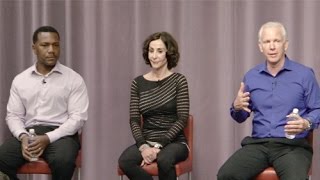
Chris Redlitz and Beverly Parenti founded The Last Mile, a program teaching entrepreneurship and coding to incarcerated people. Graduate Horacio Harts shares his story. The program aims to reduce recidivism through internships, employer partnerships, and post-release support.
Chapters
Hello everyone. My name is Horacio Harts. I'm especially happy to be here today, not only because I was in prison for 8.5 years, but also because I'm here representing The Last Mile. My life dramatically changed when I made a commitment to my family and myself to maximize my time in prison so that I can become a productive member of society after my release. During my time of incarceration, I received an Associate of Arts degree from Patton University. I read numerous books and prepared myself mentally for the challenges that I would face in a free world. And The Last Mile was the final step towards freedom for me. I, um, I— the program provided knowledge and confidence that would allow me to be where I am today. I left San Quentin March 12th, and today I work in San Francisco at rally.org. On the first day of The Last Mile, each participant must sign a pledge of agreement. This pledge extends beyond the length of the program. It is a lifetime commitment to ourselves, our family, and our brothers, and to everyone that we meet. This is the Last Mile Oath that we pledged. I pledge to maintain a high level of respect and integrity as a member of the Last Mile. I will uphold my commitment in practice and in spirit to help the program advance authentic learning, trust, and leadership. I will not participate in activities that are detrimental to my position or activities that will negatively reflect the Last Mile program. I will encourage my fellow members of the Last Mile to lead by positive example inside the institution and outside in the free world. I realize that this is a commitment that will endure for a lifetime, but if broken it will result in an immediate dismissal from the program. I make this pledge, I've made this pledge in the spirit of honor, dedication, and trust. As I look toward my future, I'm committed to becoming successful professionally and personally and to help other Last Mile graduates after they are released to society. This is my chance to shine and rebuild my personal brand. The Last Mile is our fraternity, and this is my commitment.
Thank you. Ray is a testament to the power of the program. He trusted in the program and he believed in the program. We guarantee that every graduate of The Last Mile, after they serve their time, gets a paid internship. They work hard for that. This is the first step to a successful future. Many startups begin with a simple idea that's inspired by enlightened moments. My enlightened moment for The Last Mile came 3 years ago. I was invited to San Quentin to speak to a group of men about business and entrepreneurship. I had never been in prison before. That first day when I first arrived, I was ushered through a series of gates. Until I arrived at the courtyard at the center of the prison. On my left, the adjustment center which houses all death row inmates in California and some of the most notorious criminals in California. On my right, the Catholic chapel which was surrounded by a well-manicured garden. I was, as they say at San Quentin, at the gate between heaven and hell. I was led down a paved road past the guard towers into the lower yard, where hundreds of men dressed in blue were exercising, milling around, or playing checkers. At that point, I was questioning my decision to come to San Quentin. But I was led into a small classroom where I was supposed to speak to about 50 men. And as I began to speak, I noticed how they were fixated on every word. There was no distraction, there's no cell phones in prison. After my talk, hands shot in the air, and my 30-minute talk turned into about a 2-hour session. And I was struck by their interest, their preparation, and their commitment to create a better life after they served their time. So I left San Quentin that night really excited. I was going to tell Beverly, as Tina said, we run an accelerator called Kick Labs in San Francisco. We work with young entrepreneurs every day. Why not here?
So when Chris came home that night, he was so energized. He had that look in his eyes that he gets when he has extreme focus and intention. And he started telling me about his experience and how surprised he was at the level of interest and understanding of business that the men portrayed who were in the audience for his speech. So then he starts pitching me on the idea his new startup is going to be the last mile. We came— became the last mile, and we were gonna have a startup program inside San Quentin. Well, I am not an easy sell. And my first reaction was, why would I want to spend my free time, because I have so little of it anyway, why would I want to spend my free time working with prisoners? But he had that passion, and he actually asked me not to make any judgments about something I knew very little about. So reluctantly, I committed to do research about incarceration and also to go and visit the men to experience firsthand what he was so passionate about. So first was my research. Well, I wanted to find out about more, more about the issues facing the prison system in California today. And what I learned from my research made me realize that even a small-scale effort could make a difference. So here's some of the learnings. In California, we spend more for prisons than higher education. The average cost per prisoner to taxpayers, $45,000. The rate of recidivism exceeds 60%. So by the time many men are released from San Quentin, as taxpayers, we've already invested nearly $1 million for their incarceration. But without rehabilitation, many of them will return. That's a bad investment. If we could reduce recidivism by just 5%, Billions of dollars could be saved in the next 10 years alone. But without rehabilitation, these problems will persist. So if that wasn't convincing enough for me to get involved, I went to San Quentin so I could meet the men, many of whom later became the founding members of The Last Mile. And it was then that I realized why Chris was so passionate. About this program. These men were not bad people. They're people who made bad decisions, and many of them decades ago. I saw hope in their eyes. They are determined to succeed and to right their wrong and to give back to their communities and make their families proud. So I agreed. I was on board. I joined Chris as co-founder of The Last Mile, and we created this program as our social cause. From that point on, our goal is to help these men turn their dreams into reality and begin to pave the road to success.
So we started the program, but we have to have— as you, you know, learn and, and talk about startups, What are our KPIs? How do we judge the success of this program? And the first thing that we had to understand and appreciate was, does it resonate with the men in prison? Is this something they want to learn? And can they really absorb the applications that we're presenting to them? Because they have no internet access. They have no access to technology. And will the correctional system adopt what we're trying to do, and be open enough to understand what we're trying to accomplish. We didn't ask to do a program, we asked to do a program that we thought would be disruptive and beneficial and create a pipeline for people like Ray to have a better life. That meant that we were doing things that they weren't used to. One of the things that we asked to do was allow the men to participate in social media. We wanted them to have a voice, to get a response, which all of us take for granted today. These men had never experienced it before. We also wanted them to really understand how to build a business plan and how to get the confidence that they can enter a job, either create their own or enter a job, and feel confident like they belonged. So when we started to see things that really resonated and get comments from the men that really were profound— one of the men in our program, Larry Histon, said, when that door closes to our class for our 2-hour session, I forget that I'm in prison. They also have to do things that, again, are difficult for us to do But even more difficult for them because many of them have never done this process, they've never gone through a collaborative environment, and they've never presented to anyone before. In our first session, we had a man named Eric Phillips, who the first session had a difficult time stringing two sentences together. And he went on and struggled for the first month. So many of you may not be old enough to remember the movie, but if you remember My Fair Lady, Henry Higgins is teaching how to go from a Cockney accent to a proper British accent. So that night I walked in class singing, "The rain in Spain stays mainly in the plain," and they thought I was out of my mind. But we had Phil start to sing his presentation. And when it came to demo day, he was flawless. And some of the people at San Quentin came up to me and said, either Phil has been reincarnated, or he has a twin brother. But that's the type of response that we needed to see that it really resonated. The second one was engagement. Beverly and I can do this ourselves to some degree, but we really need volunteers and people from the outside to bring their expertise in as well. So as we would in business, we try to find those key influencers in the market that would really help us to teach, but also to share the message. So we invited entrepreneurs in, some from our portfolio and some from the outside. And we also have a reading curriculum, and the first author we invited in was Guy Kawasaki. Guy came in, Not only did he come in, he donated the books, and he was phenomenal. He said it was his most captured audience he's ever been in front of. So Guy's been here before, so you can appreciate his sense of humor. But from then, we got Brian Solis, who many of you know is well known in the social media area for his writings. Jon Hamm, who wrote a book on leadership. Andy Smith and Stanford's own Professor Jennifer Acker, who wrote Dragonfly Effect, as well participated. So that type of participation is great. Business leaders, MC Hammer you saw in the video, well-known VC Josh Kopelman, and some of the up-and-coming entrepreneurs in the Valley, Brian Wong, who was in the 30 Under 30 for Forbes list, Patrick Collison, who has a company called Stripe, who you may know. They all came in and donated their time. Then we realized that this is a program that we could scale with the right type of involvement and people volunteering. The third and most important part was, are we going to get businesses and people to support people like Ray after they graduate and after they serve their time? That means that businesses have to step out to something that they're not necessarily comfortable with. But believe it or not, we have many businesses now that have reached out to us and said we'll participate. Sachi Docter from Rally is here with us today, and Rally was one of the first companies to raise their hand and said we'll participate. We actually have one of the guys who was in the video, Kenyatta Leal. Who actually closed the video, already has a job waiting for him and he's still incarcerated. He was that impressive that Duncan Logan from Rocket Space said, "I'm going to sign this guy today because I know he's going to have multiple offers when he comes out." What we're trying to do really is show that these men have skills and opportunities that they can actually add value. I was with the CEO of Rally yesterday, Tom Serres, And he said to me, what's the deal with Ray? And I looked at him like, oh, what did he do? He said, he's smiling every day. He's infectious with his enthusiasm. He's added value already to our company. So this is not a one-way street. It's a mutual benefit, which really makes us feel great that we can start adding that value. So those are our KPIs. That's what we're looking at doing as we start expanding. And our expansion has started really in September. We will be expanding our program to Folsom Prison and we'll be expanding to LA County and also University of Michigan, outside of University of Michigan, the Jackson Prison. And the coolest part of that is that We're not only expanding the last mile, but we're taking that curriculum to a very functional area. We're actually teaching Python programming starting in the women's prison in Folsom. So not only are we teaching entrepreneurship, but we're also teaching functional job application.
But I would say that our biggest challenge is teaching the men how the digital world has changed over the last decade realizing that not a single one of them has been on the internet, used a smartphone, or a mobile app. Or as the CEO of Twitter, Dick Costolo, so aptly says, they don't have the internet in their pants like most of you do. So they read books by digital media and business experts and they interact with guest speakers from from technology companies, and they listen and learn from our experience until they get a chance on the outside to experience it firsthand. They also tweet, blog, and answer questions on Quora, which is amazing because there's no internet access in prison. So they actually have to handwrite or type their content It's not real time. It's then taken out by our volunteers and uploaded to the net. And it's actually a requirement of the program that the men tweet on a daily basis. They answer at least one question on Quora every week and create a blog post. And those blog posts are posted on our site, lastmile.org, but they're also distributed through other media networks and media sites like the Huffington Post or the Daily Love, where we actually have a weekly feature. Also on the Atlantic Monthly and even the Wall Street Journal, just to name a few. So social media plays a big role in our curriculum, even though they're not on the internet. In fact, just recently Chris and I returned from New York City. We were on stage at the Time Center to accept an award for one of our founding members, Crispino Cañada Leal, who was also featured in the video. He received the Shorty Award for the Quora Answer of the Year, which is amazing because he was selected from thousands of questions. He won the award. And I was able to go into San Quentin before we left for New York to shoot a video of him accepting the award. His acceptance speech was created inside San Quentin and then shown on a huge screen in New York City and broadcast to thousands of people. And this is a way for him to have a voice and be a person, not a prisoner. It was really a great honor and— Just an amazing experience, and we're very proud of all of our graduates for their accomplishments. So they learn about social media, they learn about business, they listen to entrepreneurs, they listen to guest speakers, they read these books. And finally, what they do for their final project is they need to conceive of a business idea and then create a plan, and each one must include a technology component, and a social cause. And in fact, we teach them to create a business plan utilizing the same business model canvas that's taught at the University of Michigan Ross Business School. So we have people who come into the sessions, they practice their pitch, they start with a 1-minute elevator pitch where they get their whole concept down. And we have people from Forrester Research and some of the venture firms and entrepreneurs and volunteers who— the Golden State Warriors, I mean a whole spectrum, not just technology, who come in and listen to their pitches and critique them. And they learn what it means to pivot and they learn what it means to actually change your message because no one understands what you're trying to convey, or you're not conveying exactly what you had intended to do. Once they get their pitch down, they then expand it to a 5-minute presentation with a PowerPoint show, and they present those to a live audience of invited guests and fellow inmates. So we've already had 2 graduating classes, and there have been 2 demo days, which we consider to be a great success. And here is the logos of just some of the companies that have been created. By the members of the Last Mile program. We even had First Lady of California Ann Brown in the audience at our first demo day. And I'll say without exception, when people leave, they are so inspired and impressed by what they've seen. Some have even commented that the pitches are better than those they've seen at demo days. In Silicon Valley. And we're very, very proud of that. So at first glance, the Last Mile appears to be a program that teaches business skills, entrepreneurship, presentation skills, and social media and what's happening in the world of business today so that when the men leave prison, they'll have— they won't be in the dark ages. They'll understand what's happening in the world and have the ability to create their own good fortune. But it's really a lot more than that because, as you know, collaborative and creative learning environments just kind of foster creativity and great ideas and great things can happen. And one of the things we believe very strongly in is for the last mile, we teach them all that, but so many life lessons that will help them be successful when they're free men.
So we needed social proof. I needed social proof when I started this, saying if we teach these men these skills, could they actually be successful? So one of my inspirations is Dave Dahl. And some of you may actually buy his bread. Thumbs up? Yeah, it's great bread. So Dave is a really interesting story, and he's kind of put me over the edge saying, I think this will work. Dave was incarcerated off and on for 15 years. He was a meth addict and suicidal. He didn't get serious about education until his last 18 months in prison. And when he got out, he didn't have anything but a desire to actually, for the last time, sort of make something of himself. And his family had a small bakery, and he went to his brother who was running the bakery and said, I want to be part of the bakery. And they said, no, but you can go do your own thing in the corner. So Dave did his own thing, created his own recipes, and went to the same farmers markets that his family's bakery was going to. Well, he started outselling the family bakery. And Dave's business started to grow. This year, Dave will do about $100 million in sales. And almost every weekend, Dave is speaking to a school, a youth group, or some sort of social cause. Dave's been in San Quentin with us several times, and he is constantly an inspiration for me. As a matter of fact, he says hello to you today, because he was actually going to come here for this, but he couldn't do it because of another obligation. I get a lot of questions and we get a lot of questions about, you know, these guys do these business plans, is anything actually going to come to fruition? So James Houston is a graduate from last year. James has been incarcerated for 18 years. He's from Richmond. And James has had an impeccable record inside prison. He is one of the most respected guys at San Quentin. And he's actually started a program called the Richmond Project, which is helping guys as they get out when they go back home, and he's still incarcerated. His plan that he developed inside is called Teen Tech Hub. And Teen Tech Hub is an after-school program for kids 9 to 14 years old in Richmond where they can learn about computers and programming. He presented his pitch at our demo day, and in the audience was a guy named Eric Moore. And Eric also grew up in Richmond, but Eric became an investment banker. And Eric is about 6'3", big husky black guy, and he's sitting in the audience and he's crying. And he said to me, Chris, I looked around and I was embarrassed because I'm supposed to be a little macho and here I am crying because what James is presenting is what I want to do back in my community. So in September, we're actually launching Teen Tech Hub. We have a location. James comes back home in June. And it's the first one of many that we want to do across the country in underserved neighborhoods. But it just shows that that dream that he had and the dream Eric had could come together and create something really incredible. Barely said that not only are they creating business plans, but each one of those plans has to have a social cause. So Tulio Cardozo, who is sitting in the audience here, is a 2012 graduate. Tulio came to us 2 months after serving almost 7 years. And he actually went through the Last Mile program on the outside, worked extremely hard. And we got the approval for him to go back into San Quentin and present at Demo Day. So think about— going back into prison. Pretty odd experience, but he was phenomenal in his presentation. And he now is independent, has his own consulting business where he does small websites for SMBs, and he's learned WordPress and Drupal, and he has more customers than he knows what to do with, and they haven't come from me at all. But part of what Tullio has done in his social causes is create something called Collaborative Benefit. And this is basically the LinkedIn for incarcerated. So that men now can have a place where you can find out about them either before or after they're released. It's a way for them to communicate with each other after they're released, and also for businesses to step up and participate and talk to each other to find out what works and what doesn't work. These are the graduates from both classes, and I'll close with a little story about someone named David Monroe. David Monroe grew up in Stockton, and he was in a family of drugs and battery, and he was David was in a gang. The gang was his family. And David killed a rival gang member when he was 15 years old. And he was given a life sentence. For David, every day was survival, not knowing whether he was going to be killed or have to kill. For David, Stockton was his Afghanistan. David served 16 years, and he's ready to give back to society. He goes in front of the parole board next year, and we'll be there with him. Thank you very much.
I'd like to invite you to come up.
Great.
Yeah, great.
Super.
Have a seat. Well, this was absolutely inspiring and fascinating. And Beverly, have a seat. So I'm gonna start. Horatio, can you share with us— I mean, are there things that you want us to know about life in prison, things that we might not know about?
Life in prison, there's not a lot of tasks that you have to do. One of the things that I I have a challenge with being free is I have several tasks that I need to complete during the day, like 15 tasks at least every day. But in prison, you have like 4 tasks. You get up in the morning, you go to chow, you go to work, you come back, you go to chow again, or count time in between that, you go back to chow, Then you go to school, if you go to school, or study, or play your games, board games. And then it's count time, and then that's it. That's your day. But here, you know, I'm responding to emails, texting, I'm working on different projects. So the difference between prison and being free is pretty big as far as what your day looks like. And also, like, commuting. You don't commute to work, right? You walk up a pathway. It takes you about 2 or 3 minutes to get there. And here, you know, I bartend from Dublin to San Francisco, and it's like an hour commute. So it's a big difference.
Interesting. I think that paints an interesting difference there. So I'm curious, in starting this program, you made it seem so simple, okay, Beverly, Chris, you made it seem like you came up with this idea and all of a sudden it got hatched. I mean, what were the challenges to get this going?
Well, first it was convince Beverly. You know, the biggest challenge is that we all are used to this idea of disruption. That's, you know, the system, so to speak, is very allergic to disruption. So when I went to Sacramento the first time and I said disrupt and hack, they felt like ushering me out of the office. So it's this legacy sort of process that doesn't allow for change. So as I said before, this wasn't going to be a program, just another reentry program. This was going to be a reentry program that had results. That we're doing different that everyone here could participate in by reading or responding. You know, we were at Quora earlier today speaking with the company, and Quora has been a great opportunity for the men to express themselves, but even more so for people to comment back. That was really difficult for Department of Corrections to deal with. You know, when we started, we had to start tweeting first, They had to read every tweet. They realized that's a lot of work. Then they said, we'll give it to you, but just don't screw up. And then we started doing a little blogging and got on Quora. And now we do this massive— every week there's tons of content that we're producing. But I think that was the biggest challenge, just getting the system to understand what we're trying to do.
So there are some other challenges, I would say. Number one is just getting in. So you would think it'd be really easy to get in, not that easy to get out, but just the process of going through all the guard stands and getting your credentials and finally make— if class started at 6:15, we would leave and get to the first guard stand about 30 minutes prior. And just the frustration of the lockdowns So we have a specific agenda, we have our curriculum, we have our program, we have our demo day and all the activities that we need to do to prepare for demo day. But you show up at the gate and you can't get in because there's a lockdown. A lockdown because there was a fight, a lockdown because there was a virus, a lockdown because they were doing some kind of inoculation. So it was very unpredictable. We weren't— we couldn't actually enroll everyone in our program and expect to have smooth sailing ahead. The other real challenge was not dissimilar to my initial response, and in trying to describe what we're doing to people and rally their support, I thought was going to be very difficult, and I thought that we would have naysayers and people who say, why are you spending your time and energy doing that when there's so many other places in the world that you could put your energy, but honestly, it's a place that deserves attention, is definitely becoming very much in the spotlight because of our tremendous deficit, and where are we spending our money? If we could help to reduce the amount of money we're spending and have that excess capital to invest in our children and our education so that they don't go that route. How good would that be?
So Horatio, why did you choose to participate? I mean, this was sort of something it sounds like you didn't really know much about before you started. What was it that attracted you to this type of program when you were in prison?
Um, well, I learned of the program through a friend of mine, but prior to hearing about The Last Mile, like, it was, uh, Their first class graduated in, I think, September of 2012. Yeah, and I had like 6 months to go before I was going to be released, but I had studied business books and read financial books and magazines because I really thought that I wouldn't— no one would hire me. I was going to have to become self-employed and create my own company. So I studied for 8 years preparing to make a life for myself. I wanted to create my own company, and I attended— I was invited to attend Demo Day, and I'm sitting there and I'm watching some guys that was wearing blue just like me present these wonderful and very viable businesses, and I'm like, I need to be in that program, you know, so I submitted my application and I was selected to participate.
Has demand for the program increased since you've gone through now 2 classes?
Yeah, it's been pretty amazing. I mean, we— I mentioned the programs that we're expanding to. When we started it, it was truly an experiment, but we actually have a group in Canada that's already created a website I'm like, I'm not even ready yet. He said, Last Mile's coming to Canada, like it or not. So yeah, it's really struck a chord, I think, because the people that come in, you know, we've had over 50 volunteers come in over the last 2 sessions, and they become evangelists. And basically we just say, come in and give us 2 hours. We're not asking for money, just spend 2 hours, If your opinion doesn't change in those 2 hours, never come back. There hasn't been one person that's come out after a session saying, this is amazing, I'm coming back and telling everybody. So it's been that virality that has really expanded, and then now we're starting to get correctional facilities calling us. So there's definitely demand, and I really believe that the coding curriculum is going to be phenomenal.
So I'm—
Can I just comment on that? Aside from the virality on the outside, it's also about the virality on the inside because word spreads quickly. Not a lot of secrets inside prison walls. And when we first started, we didn't know any of the population, and so we had to rely upon other trusted people to make recommendations for our founding class. And it was— so we had a smaller class to start. And then, of course, once we had our demo day and had an instructional session about what the program was and then had a graduate who became successful, people started believing and trusting us. And we— I talked about the fact that we have business books as part of the curriculum, and it just so happens that Guy Kawasaki's book and I think Jon Hamm's book were both read. And we take the jackets off. They have hard-covered books, which is an exception to the rule. You're not supposed to have hard-covered books. And they all were carrying around these red books, the founding members of the program. And so other inmates were asking, "Well, what's this red book all about?" And we were like, "The Red Book Program." But it became aspirational inside, especially after our first demo day, to want to be part of it. And in order— and the first class for the coding, which won't even start until the fall, we already have a stack of applications. So it's really helped people lift their, kind of the level of who they are and their character inside, because if you have any infractions, we wouldn't consider your application.
So I wanna ask one more question before I open it up to the audience. What sort of support do people get once they leave? Obviously this sounds like an incredible program when you're actually in prison. And you have all these mentors coming in and all the support. I mean, when you leave, what sort of programs are there to help you get to the next step?
So what I'm doing right now, I'm interning at Rally, but I'm also using their platform to raise money for other last-mile graduates. Many of the graduates will be released with $200 and little support, financial support. So I would like to raise funds to help them purchase phones, computers, help with transportation, clothing, and just really like give them that need, meet that need that they'll have when they first get out, support their first 60 days. Like, I've been out for 2 months and I haven't received any other income But my family was fortunate to provide the support that I needed to have a successful transition. So I would like to give other graduates the same opportunity. They're vetted, you know, they come through the program, so I would like to help them.
So you're doing this, but does the program have any—
Yeah, well, we're in the process of creating our 501(c)(3) now, because we've been self-supportive of the program. Part of what we want to do is create a scholarship program. 'Cause really, like Ray said, it's that first 90, 120 days. The internship program that we have is 120 days, so they have immediately a place to go and get some income. But we want to put a scholarship program on top of that so they can buy some of the necessities that they want to have. So that's coming in the short term.
So two things. First is we have an internship program, however, The applicants must interview, apply, and be accepted by the employer. It's not an instant job. So you still need to do a lot of work to become employed, and Ray did that, and he went through a rigorous interview process. I'm very glad that he's there at Rally, and he actually created his own Rally campaign. So now not only is he going to help future graduates of the program, but he truly understands the platform and can help others accomplish what they would like to do for their own causes. And then the last thing— sorry— I want to say is that, as you heard in the pledge, everybody who is a participant in our program is a participant for life. And so it was so heartwarming to watch Tulio helping Ray to understand his computer and searching and showing him key sites and just kind of being his tutor, which is a way to pay it forward. And so those are the type of things we do to support our graduates on the outside.
Wonderful. So there's a culture of giving back and helping the others who are going to be following behind you. Great. So let's open it up for questions. We've got the first one here.
What do you base your decisions on when making initial selections?
So the question is, how do you select the people to participate in the program?
So they have to either graduate from Patton University, which is a 2-year program, or be close to graduation. There are other programs there that are more self-help that we want them to go through, more of a self-realization. They have to go through a variety of interviews, do some writing exercises. They have to be recommended by someone who's currently in the program, and they have to be approved by the prison administration. So it's—
And recommended by another participant in the program.
Yeah, exactly.
So it's having a sponsor. Right, another question?
Seems like a fantastic way to really address recidivism, which has been a very poor area of performance for the government.
Has there been any sort of any intention on your part to marry what you're doing with, say, state legislatures or reaching out to Governor Brown and getting funding and sort of partnering in that way?
You know, Governor Brown is very supportive, but we are making a conscious effort to do this privately. So all of our funds and support will come privately. You know, I think when we went to Sacramento the first time, we finished the meeting with Matt Cade, who was the Secretary of Prisons at the time, I think he was waiting for us to have our hand out. And my hand was this instead of this. And it made a big difference, right? So we can get a lot further by doing it outside of that. And we really want to show that you can marry private and public effectively without taking public funds. So that's really been our strategy.
Other questions?
What was the question that received the short answer?
So let's actually repeat the question.
So could you repeat that?
Yeah. What was the question that received the Shorty Award? It was, what is the— Yeah, yeah. So Kenyatta answered a question. And the question was, what does the first day of a 5-plus-year sentence feel like?
So something I forgot to mention is, for those of you who don't know what a Shorty Award is, It's like an Academy Award for social media. It's a pretty big deal.
So go check it out. How big is the class? How big is the class and what's the graduation rate?
So how big is the class and what's the graduation rate?
Yeah, the class, the maximum for Last Mile will be 12, and in coding it's 27. It's been about 80%. Some guys just haven't stepped up, so some have not completed the program. It's been about 80%. I mean, frankly, our goal is to have a zero recidivism rate for all graduates. That's what we strive for, to your point. And we have small numbers. But I think just like Dave Dahl was a beacon of hope for so many people, and he was an inspiration to me, you get guys like Ray out here, he's going to be an inspiration. Doesn't take many to create that movement. That's kind of what we're looking for.
The other aspect is we did have space constraints to begin with, but recently we've been very fortunate to have had a classroom actually built for us. And I think it was partially because of the coding curriculum. And the reason our coding curriculum is a class of 27 is because there's very strict requirements about how many men can be together without a guard being present, even though we are there as certified green card holders so we can be alone in a classroom. But not only do we have the participants in the current program in the room, but the graduates of each other class continue to participate because we have different guest speakers, we have different books, we have different curriculum, and they could lead sessions for the current class and are able to interact and actually act as mentors. So when we're in the process of creating our PowerPoint presentations and our pitches, it was so cool to watch the graduates critiquing the current participants in their pitch and help to guide them to a successful presentation.
So I want to build on something you just said a minute ago because it sparked a big question that I think probably a lot of people have. You said there's a certain number of men that can be in the room without a guard. Was there ever a moment that you felt unsafe? Was this ever a situation where you felt, what am I doing here?
That's a good question.
Yeah.
You can talk about the first session where we had that situation in the room.
Oh, well, there's, yeah, some I can talk about, some I can't, I guess. Do we feel in danger? Well, I think when you walk into San Quentin, there's a big sign that basically says, after you pass this sign, you're on your own. There is no hostage policy. Right? So San Quentin's unusual because of our clearance, we basically have full access and we're not escorted around. Yeah, I think it's daunting. I mean, I've been to different prisons. When you go to Folsom, it's level 3. 3, it's a little bit stranger because it's a little more dangerous, I guess. Maybe you can talk about the different levels of different prisons. San Quentin is unusual. It has death row in level 2. Level 2 is basically guys get to go in the yard, be a little more free, participate in classes. But I have to say, though, that now we've been there, I've been there for 3 years. They all know us. And when I walk across the yard at night at San Quentin, I feel more comfortable than I would walking at night in San Francisco.
Well, it's interesting. As a woman walking through the yard, it's a little daunting when I'm there by myself. But I have been very fortunate to have my security device with me at all times. And this is the security device. That they recommend that we carry. It's just a whistle. And so I guess if I were to blow this whistle, the rule is that everybody would have to, in the yard, everyone who's out would take a knee so that if there is any kind of confrontation, the guards would have full view of what's going on. But this is my security.
Did you ever have to blow it?
Only on stage at Michigan once.
This is actually the most serious thing. Actually never heard a whistle blown? Because that's serious. If they hear that, they draw their rifles and they're ready to shoot.
I'll just add to that from a prisoner's perspective. Chris and Beverly are very valuable to the institution, and there's a lot of prisoners who would really probably take action if something was to happen to them because they have so much value. Inmates wouldn't let anything happen to Chris and Beverly. I mean, no one says but—
yeah, they're—
yeah, I mean— that's wonderful for you to say.
I think that's terrific.
You're made out in the world, I guess we were made in prison.
Yeah.
So it sounds like one of the biggest value props And the last one also has to do with the personal touch at Eastern Beverly. So in your plans to scale, for example, to other prisons, how do you plan on, I guess, picking a framework or distributing the personal touch?
So I want to repeat this. The question is, you seem to have a secret sauce. There's something special about your relationship. How can this scale? How do you scale this in other places since you certainly can't be everywhere at once?
You know, I understand what you're saying, but I don't— I don't necessarily agree. I think that there is such a strong desire for them to learn and absorb and be successful. It's not about me. It's not about Beverly, really. It's about the program. It's about this camaraderie. I mean, frankly, we bring in all these people. We don't say much during those sessions when we bring people in. We also have a film crew. It's another thing that took me a long time to get through. We have a film crew that comes in twice a month and they film all what we're doing and we're repurposing that content so that we can send it to other prisons. We're actually in the process of creating curriculum sheets for every day of the program and part of this is peer-led as well, but for certain parts of that, we'll have video that they can play, right? So it's almost franchising it in a sense. So I really believe that a year or two from now, they won't even know who we are. It's the last mile and it's really being promoted in many different places, but it's really not about us.
Great.
Tom?
Thanks. I have a question here.
So you have Facebook and Google and all the people who are here are all web users.
So the question is, is this all volunteers who come in and participate?
Yeah, we're going to continue that. The one thing that we're hiring are coordinators, because it's just scheduling and all that kind of stuff. We really believe that it's most effective by a volunteer basis, because people are very passionate about doing it. So yeah, I think we'll continue that. I mean, we're going to have paid people and paid staff, but For the most part, it's going to be two things. One, it's going to be volunteer-based, and at least 30% of the program will be peer-led, be led by the guys in the program.
More questions? Great. Yes.
I'm just wondering, when you teach inside and you do the program outside, is there a difference in the questions that they're meeting with that are coming back?
And they have a different view and they have a different experience.
Is it something that we should learn?
So the question is, what can we learn sitting here at Stanford and outside of prison? What can we learn from the things that you teach inside of prison?
Well, we've actually adopted some of the things that we've developed inside. When we work with young entrepreneurs in Kick Labs, part of what we do, we get them pretty early so they have to learn how to not only pitch for money, but pitch for customers. And it's amazing how bad they are. So we actually make these guys condense their pitch into a 1-minute pitch. Can you still do yours? Is it okay if he does his pitch?
Want to do your 1-minute pitch?
Sure.
Okay, ready, go. Who has a timer? Okay.
Okay.
Here, I'll hold your water.
All right.
Okay.
Timer.
Julio?
By show of hands, how many of you have witnessed either a parent, a child, a friend, or maybe your spouse struggle with obesity? You don't have to raise your hand for this one, but think about it. Did you ever feel helpless in their struggle? If you have, you're not alone. Many people who have lived in a low-income community like I have, where the obesity rate is above 50%, have experienced the same feeling of helplessness. That's why today I'm doing something about it. Good evening, my name is Horacio Harts, and I'm the founder of Healthy Hearts Institute, the co-op that will bring health and fitness back into our neighborhoods. HHION.AI will turn empty lots into gardens and transform neighborhood food deserts into green nutritional oases. We will turn abandoned buildings into LEED-certified fitness centers and provide our members safe places to exercise. Our goal is to get us back to the good old days when the community was ripe with nutritional foods, kids were outside running and playing, and the obesity rate was below 17%. So join the Healthy Hearts Institute and let us empower the beat of your heart.
Thank you. Yeah! Brilliant, brilliant.
So I'm going to ask one last question. I'm going to ask one last question. We have a lot of really passionate people here who are really motivated to have a positive impact on the world. How can they get involved? I mean, how can I get involved?
One of the things that I think you could do to help is also support my rally at rally.org/pavingtheroadtosuccess and make a pledge. Give other guys opportunities that I had.
Great. Join me in thanking these fabulous guests today.
More from GHION.AI


O processo de reconhecer limites, mesmo quando a vida parece exigir sempre mais.





Depois de tantas histórias, aprendizados e pausas necessárias, o @interior_iza está de volta



