Climbing the Ladder [Entire Talk]
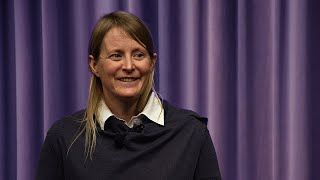
Elaine Wherry talks through her career climb from early roles to founding, covering how to move fast through organizational levels and why communication and feedback matter when you're leading people.
Chapters
Who you are defines how you build. I cannot tell you how thrilled I am to be here. It wasn't so long ago, I'd like to think that I was in your shoes. And when I was thinking about all the different things that I wanted to talk about today, so many things came to mind. And eventually I decided that what I really wanted to be able to share today is something that I don't think you're going to be able to get anywhere else. It was certainly not something that I was able to find for many, many years. But what I want to share today is I want to talk about what I believe might be the future steps of your career. And I want to be able to paint a picture. I want to be able to make it real. I want to share with you I'm not going to be able to predict all the things that are going to happen, but I want to share with you an emotional experience of what it's like to go through all of the different levels within an organization, within your career. So with that, Ravi just gave me the warmest introduction ever. But hi, I'm Elaine. Something that was omitted originally. I grew up on a goat farm in southwest Missouri. My mother, she was a nurse, she was a goat judge. And to everyone's surprise, I did not follow in her footsteps. But instead, I ended up out here in California learning how to code, graduating with a degree in symbolic systems. From there, went to a company called Snaptics, worked on usability, human factors research for scrolling devices, and then in 2005 ended up co founding Meebo. We, I think up in 2009, 2010, we had hundreds of millions of users, we had lots of funding. And then in 2012, we ended up exiting to Google. And since then I did a lot of things. I did advising, I did a little bit of investing, I contributed to the Wall Street Journal, and then more recently took a totally different turn, which is to bring a bean to Bar Chocolate Factory to San Francisco, which has been so much fun. So, anyway, today, okay, so today I'm going to go through and I'm going to touch upon every single one of these levels and I want to talk about where does this come from? So a traditional career, traditional career might span 30, 40 years. And every single one of these levels, you might be at one of these levels for 5, 10 years. And if you're good at it, hopefully much, much, much longer. Certainly not a race. But the experience of being a founder is a unique one and it is so stressful and it is so intense and Essentially, when you start a company, you're starting as an intern or contributor, and then within the next six to 12 to 18 months, you are responsible for basically running through, flying through every single stage of your organization and defining, hey, what is it going to be like to be a contributor here? What is it going to be like to be a manager here? And you might be in a role for three to four months and then later on you start off, you're in the code, you're trying to develop a feature, trying to show proof of concept, and then, bam, three to four months later, you have to hire a team and now you have to manage that team. And then, bam, three to four months later, you have multiple teams and then you have to manage across teams. And then all of a sudden, bam, you're at the VP level and you're thinking about strategy and finally you're at your helm and, and you're trying to predict what's actually going to happen in an organization with your organization three to five years out happens so, so, so quickly, so, so, so stressful. Wouldn't trade it for the world. But the thing that, that gives you is this perspective that I think is really, really rare. And most of the time when you're going through these different levels, you don't have the experience of having them back to back. So if you ask somebody, hey, what's it like? What's the difference between a director and VP? You know, it may have been for a VP, it may have been 10 to 15 years since they were at that level. I thought this was super fascinating. And even when I was with Amiibo, I was taking notes of my experiences, recording everything I could because it was just changing so rapidly. And what I want to do today is we're going to try something and I'm going to share with you six stories that I've handpicked. Some of them are mine. They've all been anonymized. So don't assume that these are engineering has been swapped for design, whatever it is. And I think that these six stories really crystallize what it is like to be at this level. And then afterwards we're just going to do a brief, like, hey, what do you feel like happened in that role? What was really going on? And then we're going to bam. Whereas I might have been switching roles every three to four months, we're going to be switching roles every, I don't know, four to five minutes. And then we're going to feel what it was like to be the first day as an intern, and then we're going to end with last day as a CEO. All good. All right, so next, there are so many caveats to this. So first of all, I am simplifying a thousand things. A sales organization is different than an engineering organization. A large company is different than a small company. There are so many things that I know that this is not going to be a perfect simplification, but. But it is one slice of an organization and I think that it's still really, really interesting. So with that, this is such a good one, Logan, not his real name. Logan. Oh, love this guy. All right. It was probably year one, year two at Meebo, and we wanted to hire our first Internet. And I ended up hiring Logan, not his real name, who was amazing. He was a sophomore. He was taking classes that were far beyond his years. He was super, super fun. He had big crazy hair. He could recite like 200 digits of PI in a second. I loved working with him. And we said, logan, come on board. And we, as a company, we were trying to focus on this very regimented product roadmap. We know what we have to do, we have to deliver. We have this board roadmap. And we said, but, Logan, Logan, we have all of these projects that we can't get to. And some of them were really deep memory challenges. Some of them were dynamic skinning. And we said, take your choice, do whatever you want. You're here. We're super thrilled to have you. Take your pick. And so Logan takes our list of potential projects that we've thought through the summer, goes through line by line by line, and then he puts his finger on the hardest project of them all. And just to give some background, the hardest project that he wanted to work on was Pop Out Windows. So this is back before jQuery even existed. This was when we were working with really, really, really, really crusty, antiquated browsers. We weren't even sure if it was going to work. And he's like, that's my project. And we're like, whoa, if you say so, that's fine. Let's just see how far you get. Great. So week one, week one, Logan, he is checking in code, he's fixing bugs, he's getting himself deep into the repository. He's trying to figure out how things work. He. It's great. Week two, he's like, you know what? I think it's time. I think I understand how the code works. I think I understand these libraries. I'm going to start trying to build a prototype and by week three, he actually has a prototype, something that looks like when you hit pop out, bam, it's there. And we are all rejoicing. We're like, whoa, this could actually happen. Week four, he's like, yeah, everything's looking good, but I have to figure out some really deep technical issues. Week five, I think he goes to take a break for the summer, comes back. Week six, he's like, okay, I got the technical issues. Now I just have all of these really tiny bugs. And I think we're good. Like, this is incredible, right? Like, holy cow. This feature we were never expecting to have wasn't on the roadmap. And I'm actually thinking that Logan can deliver. So then we get into week seven and I'm like, Logan, how's it going? When are we going to be able to check this in? He's like, I'm working on it, working on it. Just got these small bugs. I'm like, okay, great. Next week. Week eight, week nine, he's like, you know, those small bugs weren't so small, but I'm working on it. I think I'm almost there. I think I'm almost there. Week nine, week 10, week 11, week 12, I'm sweating and I'm just like, Logan, right? Like, if we're going to do this, we've got to do this, right? And he's like, I'm working on it. I'm just getting the documentation. I'm making it perfect. Keep in mind, he's already branched it into a different. He's taken away from trunk. So we still have to merge all of his code back in. Gets to Friday and wake up and he's like, okay, I'm ready. I'm like, holy cow, you're ready. And he had printed out all of his code and it was a 30 page code review on paper. And our entire team, we're like, okay, right? And we had to review every single line and merge it into trunk the entire day. And for those of you who are not engineers, this is the equivalent of like, I don't even know. It's like the equivalent of doing like open heart surgery. And then it comes to noon and you're like, hey, you know what? Actually, it's my lunch break, I need to go, right? And for us it was like, this is Friday. He's checking in 30 pages of code into a live product. And then after 5pm we're not going to see him again. Crazy. Now here's the thing. Full credit. First of all, Logan is amazing. I love Logan. If I could hire Logan today, I absolutely would. And to his credit, oftentimes when interns come in, their projects may or may not work right. But to Logan's credit, it was a massive undertaking. And yes, there were some bugs, whatever. He checked in 30 lines of code, but we actually maintained that code up until the very, very end of the existence of Meebo. It was good code. He did a really, really good job. And yes, my engineering team pulled out hairs at time and they were super, super frustrated. But when I look back at it, he knocked it out of the park. So then nine months later, everybody's come to terms where we are. We're already moving on. I get an email and it's from Logan, and he says, elaine, Elaine, how's it going, Elaine, I'm ready. I want project number two. And I had to write this really, really difficult email, which is, Logan, you are great. Your code is great. However, my team still has PTSD from the 30 pages of code that you checked in nine months ago. And as much as I would love to have you here, I don't think I can do it. Then time goes by and Logan says, I get this email from him, and keep in mind, he was a junior then, and I have to say this is one of the most mature emails I've ever received. And he says, elaine, thank you so much. I appreciate the feedback. That is a very, very, very, very valuable lesson, and I wish you all the best. And that's where it was. So from that, that's our experience, number one. When you think about that experience, what do you feel are the potential mistakes at that level? Anybody shout it out? I'll repeat it. Yes. So did you say intern really quick or the managers? The intern. Intern, yeah. I mean, I think that he was obviously killing it the whole time, but he wouldn't check in with you and.
Let you know that or where he was. And so you had no idea where.
He was at with it? Absolutely. Last month, yeah, there was no feedback loop. I was checking in with him. But yeah, for sure. There were definitely things that I could have done better as a manager as well. But at the end of the day, that's not what I never. Yeah, yeah, no, it's totally true. But, you know, there was that feedback loop. It was missing. Right. Like, what else? Anything else. All right, so when I think about that experience, here are some things. Like, number one, I think that Wogan, especially when you're in your school, you're focusing on getting the A and you're focusing on how do I deliver? How do I prove myself? And what kind of drifted was this idea that this code wasn't just about the summer. It was going to have to last a really long time. The other thing is this black box. I would ask Logan, hey, how long is it going to take to be able to deliver on this project? And he'd be like, I just need either six hours or I need to, you know, just need a little bit more time. And the thing is that the experience of having a project that is that meaty and being able to say, I'm going to build some predictability and be able to tell you what I'm actually going to deliver, that's actually a skill. And it's really easy to be like, oh, I just need three to four more days. You know, especially in school, like you can pretty much solve any problem. No one will tell you this, but you can pretty much solve any problem in like one, maybe two all nighters. Right? But this was a bigger project and it was really, really hard for him to be like, you know what, I'm actually three weeks out, wrong pace. I think that especially for internships, you either have people swing two ways. They're like, I'm waiting for a checklist, tell me what to do on a day to day basis, or you have somebody who's Logan who wants to essentially get his PhD in a summer and then left field, which is where what we talked about earlier is not waiting for feedback until the last day. These people. This is going to be your reference and you can ask for feedback and make sure you're on the right track throughout the. So that's where we are. We're an intern. Are you guys ready? Ready for the next level? Yeah, we're feeling good. All right, so next one. Oh, so good. So good. Team member, contributor, call whatever you want. All right. Told you an engineering story, so I thought I'd mix it up and I'd tell you something. A different type of story. I love a story. Okay. So the story comes from a person who I worked with really, really closely at Meebo. And she was on our HR team for a period of time. Doesn't really matter. And she came to me and we were talking and she shared this story with me that has always stuck. Love this story. And so in her very, very first role, she was not in hr. She was actually in recruiting. And so as a recruiter, I worked with her and I know how amazing she was. Let's just, for the sake of this, let's just call Her, Lisa, it doesn't really matter. Lisa was just so amazing at detail. She was completely type A. She would just nail all of the details. And in her first role, recruiting was a perfect fit. She was coming in, she was creating all of these job descriptions. She was making sure that everything within the organization was just so. So making sure they weren't hitting any deadlines. And within like three or four years, she decided, you know what? The next thing in my career is not going to be moving up, but it's going to be moving to the side. And so now, instead of being a recruiter, she wanted to jump into a lateral move on the HR side. Totally fine. So as part of that, she was responsible for hiring and training her replacement, who was her peer. And so we're just going to say peer's name was Margot. And Lisa tells me, hey, listen, in the interview process, I was so excited. I loved Margot. Margot was amazing. Margo even had more years of experience than I did. And I just couldn't imagine a better person to take my position. But then on day one, all of a sudden, she realizes that they have wildly different working styles. And where Lisa was super, super detail oriented, always made sure things were right, made sure that she communicated. Margo was fast and loose and was just trying to roll with it. And it was just a completely, completely different working style. And it came to a head when they were working on an applicant tracking system. Now, for anybody who doesn't know an applicant tracking system, it's kind of a fancy way of saying, like a spreadsheet that has all of your candidate information in it, and it keeps track of which roles are open, which roles aren't open. And Lisa had been working on this applicant tracking system, and she had almost gotten it to the very, very end. She'd been working on it super, super hard. And then she's like, you know what? You know what the mature thing to do is? I should make sure she give that project to Margot as one of her first projects that she can work on. And I should give that to. She should be the one to roll that out, not me. So she did that. Margot comes in and Lisa's like, listen, this is my baby. I've been working on this for a really, really long time. You know, there are lots of things that we still need to think through, but I'm really excited for you to have it. And Margo's like, great, let's just publish that thing. And Margo just wants to immediately launch it. They're a public company. She wants to launch it across the entire organization within her first few days. Now, from Lisa's perspective, she almost had a heart attack. And she's just like, I couldn't even believe it. To me, there's so many things we need to make sure. We need to train the team, we need to think, we need to double check that all of the data there, we need to, you know, we need to make sure we're compliant. And for me, this just seemed like it was, you know, she wasn't respecting what I had done, but it was just like grossly, grossly irresponsible. And so Lisa, she goes to her boss and she says, listen, you have a problem. I have been, you know, working with Margo, but Margot is fast and loose. She is disorganized. She is not handling this. I think she's been irresponsible. I think things are going to break. And frankly, I don't like her. And her boss said to her, okay, you know, first of all, I hear where you're coming from. I understand where you're coming from. You know, I get it. But that feedback would be a lot better coming from you than from me. Now, Lisa was already super, super stressed. She was already on edge, like this was her baby. And when her boss said, hey, essentially, you know what? I think this is your problem. Lisa was just furious. So she is similar day. She goes to, she's at the lunch table, and things have been brewing and so tight for so long. She's sharing a pizza with her friends or other colleagues, and she's just like. She's like, I'm venting, and I'm just like, listen, you guys, I have to tell you how awful it is to work with Margo. Margo, she doesn't understand things. She's launching this at, yes, it used to be my baby. And stuff is just going to go wrong and there's nothing I can do. And I've already complained to my boss and nothing has happened. It just feels really awful. And let's enjoy this pizza. I feel a lot better having told you guys this. Great. She goes back to her cubicle. So then a few hours go by and there's a knock, knock, knock. And she looks up and who is it? The cfo. The cfo. She does not report to the cfo. Right. However, one of her friends at that lunch table, her bosses, bosses, bosses, whatever, did in the course of venting, she had said, hey, listen, we're losing candidates. And one of those candidates actually reported to the cfo. And somehow within those few Hours. It got back that because Margo had launched this ats, they had lost a candidate, just lost in the process. And now the CFO was pretty upset. So the CFO comes. He's like, hey, listen. Really, really polite. She's like, hey, listen, I just wanted, you know, that ats. I just wanted to. Could I ask you a few questions? And Lisa said, you know, she knew it. Even though the cfo, Completely diplomatic, she knew that the CFO was about to build a case for letting Margo go. And so she's like, oh, yeah, yeah, yeah, come in. And so they go through the ats, and they're just like, hey, listen. Oh, which applicant? Oh, this applicant. Here's when the offer was made. Here's when the offer went out. There's a huge, huge, huge disparity. The candidate just got lost in the cracks. Nobody followed up. And that was ultimately what led them to lose this really, really powerful individual. And so the story. Lisa all of a sudden said that she just feels this wave of guilt, and she's like, I had no idea. I was at the lunch table. I was just venting. I had no idea that a few hours later, this could potentially end up in having somebody, my former replacement, building a case for letting them go. And in the process of this, the CFO was asking her questions like, hey, listen, just curious. Why do you feel like we launched it so quickly? Why do you feel like we designed it this way? Why did we do these things? And the thing is that those questions were actually really interesting because all of a sudden, Lisa realized that she didn't know the answers, but she wished she did, and she wished she had asked Margot, and she wished she did have that perspective. And now everything was moving so, so, so fast and was going so, so, so quickly, and. And she didn't think she could get ahead of it, and she was right. So the boss came out and said, hey, listen, this is my decision. I don't want you to feel guilty about this, but we're going to let Margo go. And they did. And really, really sad. And she still feels guilty about it today. She's written to Margot. She said, I apologize. And Margot just hasn't ever talked to her since then. And so why am I sharing this story with you? What mistakes do you hear that could have been that happened? Communication. Communication in the workplace, Definitely. Holy cow. Yeah. What else?
Conflict management. Being able to have a dialogue about.
Yeah, definitely. Conflict management. For sure. For sure. The interesting thing. So I'm going to go through a few. A few Lessons from this. But the thing is that I actually have the exact notes from Lisa. I have them here on my phone. I'm just going to read them to you. So this is exactly what she told me. I have these notes on my phone. I was saving them for this. So now I realize that her decision to launch the ATS early was actually probably the right thing to do. She wanted to get it out early and elicit feedback. I was trying to design a perfect system before rolling it out. My strategy probably meant that I was going to optimize for problems that didn't exist, and I would have been slow if I had been able to get it out at all. The mistake around the approval and the offer was true. Absolutely true. She was disorganized. But in the bigger picture, that was a small issue. I took up way too much of my boss's time complaining about what she was doing instead of giving her a helping hand. Your team is only as good as your weakest link. And I was doing the team a disservice by just complaining. Today, I hold myself responsible for not helping. And in her final days, I got to know her as a person, and I saw she could have gotten there. I also know that I could have learned from her experience, and I was actually really sad to see her go in the end. Okay, so that's emotional journey number two. Stay with me. Bam. Now we're managers. Oh, boy. All right, William. William is somebody that I work directly with. Love William. William is amazing. And I am anonymizing the details, but for all intents and purposes, William was an engineer. He was an amazing, amazing engineer. And at some point, we were growing the business super, super, super, super fast. And we wanted to be able to. We needed somebody to be able to lead the next generation RO team from New York. And William, he seemed like the absolute perfect person to do it. He knew the code. Everybody loved him. He was just a fantastic engineer. He had been with the team for a really, really long time, and when he was promoted, everybody just applauded. We are so excited. Now, the thing that was tricky is that we also knew that to be successful, we needed to double, if not triple, his team within a year. So that meant hiring. That meant writing a job description. That meant coming up with a plan. And if you asked William, hey, listen, you have a choice. You can either fix a super meaty bug, you can either figure out the new architecture for the system, or you can work on job descriptions. The job descriptions and the hiring were always going to come last. And it's just so hard, that transition, right? Like, you have spent years and years and years learning how to code and developing these skills, and then all of a sudden, when you switch from contributor to manager, you have to let that go, and you have to try on a new set of skills. That feels really, really uncomfortable. And William, we could see William going through that in a really, really painful manner. It was obvious to everyone else except for William. So it got to a point where we actually had. We knew that we needed to be able to support William. And unbeknownst to him, we scheduled this meeting. We had five or six of the most senior people in the organization there, and we're literally going through the job descriptions and we're trying to help him out, and we're just like, hey, listen, what do you think about this candidate? And I can see him, and he's just like, oh, yeah, maybe, maybe, maybe. But it's just not clicking now. He didn't report to me. He reported to a director. And I had worked with William. I believed he would step up to the plate. I wasn't really concerned. But a few weeks later, many, many, many, many weeks later, the director came to me and he said, hey, listen, I think I'm going to have to let William go. I was just like, whoa, whoa, whoa, whoa, whoa, whoa. I love William. William's amazing, right? Like, what happened? And he started to tell me the story. He's just like, listen, William is supposed to, you know, we have to make sure. Like, I have people coming to me. You know, they're saying that the team is overstretched. They can't get things out. And a few weeks ago, I went to William and I said, william, you've got to start hiring. You've got to start working on your job descriptions. I need you to step up. I need you to manage. And William was like, I get it, I get it, I get it. And then the next week, they'd be talking, what projects are you working on? And he was working on some code, he was working on some such and such. And he's like, oh, but how are those job descriptions? And William's like, oh, yeah, I have a few new ideas. I have a few new ideas next week, next week, next week. So it got to the point where next week, next week, next week, the director is stressed. He's like, wow, I promoted you and now I put a lot of trust in you, and I'm beginning to regret that because this is seriously jeopardizing our business. So then he tries tactic number One. He says, william, next week, I need you to show me a plan. I need you to show me the hiring plan. And I wanted to say, what roles are we hiring? When? I want you to tell me, which one are you going to hire for first? What's their first project going to be? How many do we need to do? When is it going to land? And I want to make sure that we are both on the same page about this hiring plan, and I want to see it next week. And William's like, okay, sounds good. And so the next week came. They're having their one on one, and they're talking. And he's like, okay, great. How's it going? And William's like, it's going really, really well. And he's like, okay, great, but where's the plan? And William was like, oh, I haven't done it. I'm really, really, really, really sorry. I know that was super, super important, but I just haven't done it. There have been so many other things that's on the backseat. And the director said he almost lost it. He was just like, oh, my gosh. I really. This was kind of my, like, trying to give him yet another opportunity. And he said at that point, he'd already lost all patience, but he slept it off. He was just like, what are we going to do? And so a few days later, he tapped William and he said, let's go on a walk. He said, william, you have seriously jeopardized the business. I don't think you even understand the impact this is having. Right. Like the fact that you haven't done this hiring plan. I specifically asked for it. This is one of the most critical initiatives in the entire organization. You may not feel it now, but in a year, this is going to have serious consequences. And William said, yes, yes, yes, I hear you. I'm really, really sorry. I really am excited about this opportunity. I want to do well. I'll try even harder. And the director said, it's too late for that. I don't think you understand. But I have come up with, let's just start clean. And what I've done is I have worked on my network and I found this external recruiter, somebody's personal friend, and I have found the budget, and I'm going to pair her with you and your entire. All she is responsible is for helping you build out this team. This is. I understand. Let's water under the bridge. Let bygones be bygones. This is a brand new, fresh slate. We're going to get things Right. We're going to get things on the right path, giving you the resources that you need. But I need you to hire. I need you to actually spend time hiring. And so the William. So weekly weeks go by, and the director is going off doing his meetings, and he gets an email. And he gets an email, and it's from not William, but the external recruiter. The external recruiter says, hey, listen, I'm just touching base. You know, you introduced us a while ago. But I just want you to know that ever since then, William just doesn't respond to emails. This hasn't gone anywhere, right? And it's just like, holy cow. And so at that point, that's when we had to start talking about what are the next steps. And eventually we ended up moving William into a senior role, senior engineering role, and eventually hiring another leader to be in that spot. But the thing is, many, many years go by, and I'm like, william, you know, like, I know you and you don't report directly to me, but I want to hear what happened, right? Like, what's the story? I got all of this insight from the director, but that just. I know you, and it doesn't sound like you. What actually happened. And so the story. And what I think is really interesting is that when I was hearing the story from William's perspective, he's like, you know what? At the time, that wasn't what I was hearing at all. It's like, I know that we're having these meetings. I knew that the director was really, really, really, really mad at me, and I knew things weren't going right, but I never heard, hey, I just need to focus on hiring. And I know that that boggles your mind, but it is true. And when I look at that, when I said, like, okay, well, what do you think happened? He's like, I really. At the time, I was just like, I just don't think the director wants me here. I don't think he likes me. I feel like he feels like I'm getting in the way of doing what he really wants, and he wants to build the team in this particular direction. That's not how I want to build the team. And he said from then on, he realized that whenever he got feedback, first he was internalizing it, but whenever he got feedback from then on, especially from somebody who is a senior, he realized that he really needed to focus. He was hearing feedback, and he wasn't sure at the time was this he's hearing. You know, there are lots of things that the director is upset about. And he realized that if he doesn't understand something, he needs to be able to identify whether this is an ant hill or whether it is a mountain. And when they were having their one on one conversations, to him, the urgency and the severity of it, you know, he's just listening to here. There are 20 things that the directors asked for and he didn't realize, you know, why are they talking about it in the last five minutes? Why weren't they talking about it from the beginning? Right. And he just didn't understand that he was supposed to drop everything and spend 80% of his time just doing, hiding, hiring. So what are the mistakes here? All right, so, yeah, one potentially again, communication. But I think that maybe he just wasn't the right person for the job. And nobody realized that quickly. Yeah, yeah, yeah, exactly, exactly. And we've kind of talked about that. And I think there's this tendency whenever you go, especially from the contributor to the manager level, instead of adapting and taking on a new set of skills, your inclination is just to become a super contributor. And you're like, I'm going to solve everything by being faster by doing all these things. But when you need to double the output of your company, it's not going to happen just by you pulling a few all nighters. Right. That's really the main thing. Also thinking short term, not necessarily long term. He really needed to be. He was doing all this coding, but he wasn't necessarily thinking about how to be able to plan for the successful career of his team. And then it was just like the feedback, they were just operating on totally different channels. And he wasn't hearing it. He wasn't hearing the urgency. He wasn't asking follow up questions and being like, wow, what am I not understanding here? This is not going. I know that this is not going the way I think it should, but what's really happening. Awesome. You guys ready? Director. Oh, here we are. Now the director role. A director role always ends up sneaking up on me. And I love managing teams, love managing teams. And all of a sudden it's just like, oh, Elaine, can you manage another team? I'm like, sure, that sounds awesome. I love hitting goals. I love figuring out how are we going to prioritize things. Super, super fun. And then all of a sudden somebody's like, oh. And at the same time, can you land this huge media initiative that involves both of your teams? And then I'm like, oh, shoot, now I'm a director, right? So, so the story that I want to tell, oops, whoops, the story that I want to tell is a story from. An engineer that I know. And she had grown into a director role, and she was responsible. She was at a startup and she was responsible for overseeing a product team, an engineering team, lots of different roles. And her startup at that time had the opportunity to. To potentially get a Fortune 500 client. So first it was a make or break deal. Just like, holy cow, this client says that if we build such and such, they will switch from our competitor to using our tool. This has a huge signaling value. This could be a turnaround moment for our organization. I cannot wait for you to build this. And so the director, let's just call her Emily. Emily. Emily's like, great. Got it. Everybody's so excited. And there are people who are excited because they think it's going to generate money. There are people who are excited because they think it's going to have tons of press. There are people who are excited because it's just a really interesting engineering problem. But she's just like, you know what? I heard the feedback. I knew we had to get started on this. And so the first thing I did was I just. Was just like, let's just get the. I'm going to deal with all the feedback in turn, but let's just get this thing rolling. Let's just keep going. So she starts building it, and a few. I think they have like five or six months to build it. And around month two or three, she's taking her initial prototype and she goes to the Fortune 500 client and she says, hey, hey, I'm so excited. I want to get your feedback. We're so excited to work with you. Thank you for this opportunity. I'm really excited. I wanted to make sure you got feedback early, all those things. And the client says, well, this is great, but why doesn't it integrate with our database? Emily is just like, what database? Nobody told me we had to integrate with the database. Database is going to take us two to three more months of work. No one said this to me. She doesn't say that to the client. But she goes back to her VP and CEO and she's just like, listen, if you have conversations with a client or you've had conversations or there's something we have to implement, you need to tell me because otherwise I'm not going to be able to have the team and be able to build this for you. So CEO is like, yeah, we could have handled that better. We could have given you more feedback early on. The VP is like, yeah, but I really appreciate you just rolling with it. I'm so excited. This is kind of, aren't startup days crazy? And she's like, yeah, okay, that's fine. That's fine. What I'm going to do is I'm going to build the world's most beautiful plan, and I'm going to show you exactly how much time it's going to be to take to be able to build every single feature. And I just want to make sure that we're all on the same page, because if we have any other surprises, I don't know. And she went to her VP and she's like, see this plan? If we have any more surprises, like, crazy idea, free trial experience, something crazy out of the moon, I want to make sure that you know that we can't do it. And we need to be able to say no. You guys know where this is going, right? Yeah. So they're building it. They've done a really, really great job. And all of a sudden, it's a week before their deadline is supposed to happen. And the CEO, the VPs, there's this high level management meeting. Everybody comes out and her VP comes straight to her and he says, hey, Emily. Right? Like, try to remember, I know we had this conversation a while ago and the CEO was asking, I can't remember, did we decide we were going to do the free trial experience or not? And Emily's just like, holy cow. Literally the one conversation I did not want to have happen. We talked about this. We both agreed that we weren't going to have any more features. And the feature that I said that I was just making up in that moment that I absolutely did not want to do was free trial experience. And so she's like, we can't do that. That doesn't make any sense. That's going to be so hard to implement. She called in her engineer and she's like, engineer, please tell her VP why this is so hard and why we can't do this. And the engineer tried and the VP is like, yeah, but our CEO really needs it and that's what we need to do. And so in a week, they built the world's worst free trial experience ever. And they launched with it. And what do you think happened? Didn't work. Right? It crashed and burned. It was not the successful. They had done so much work. And then the last week, the week where they should have been working on bugs, they should have been working on all these other things. The free trial. How do you get somebody to use a buggy product off of a really, really buggy free trial user experience like this does not. So if you go to Emily and you say, Emily, what happened there? Right. What do you feel like the mistakes might be? Yeah, she was there to download, but not upwards. Oh, you are so astute. Yes, that's absolutely right. She wasn't necessarily thinking about. Especially in the director role, you really have to be thinking about you're managing your peers, you're managing the people underneath you and you are managing the people above you. And especially for director role, you are right in the thick of it. Absolutely. That's a pretty much the number one of it. But the other thing I want to point out here is that for directors where they are really trying to figure out exactly the director role, it's where the strategy hits the road. And they are responsible for taking these high level initiatives and turning them and articulating them into a feasible plan. And the number one problem that I see directors have is this feeling of they're always complaining about a crazy vp. The crazy VP came to me and the crazy VP said this huge major initiative that we cannot do. And I felt like in that moment I only had two choices. I could either say no and look weak, or I could say yes. But I knew that we were going to ultimately fail. And so it's like, which one do you choose in that moment? But the truth is that what was really happening is the VP and the director were not using the same language. The vp, totally rational person, he wants the company to do well. But when Emily was going to him and saying, this is really, really complex, the VP wasn't hearing, this is going to throw off all of our strategy. So what she needed to do was say, hey, listen, I understand this is really important and if you want this to be successful, you want us to hit our numbers, then maybe we need to talk about whether something needs to go, I need more budget, I need more people, I need whatever. And be able to have a communication at the VP, have a conversation at the VP's level. Cool. Great. All right, Emotional journey. Are you ready for the next one? We're getting down to the very, very end. Oh, awesome. Thank you. So I want to talk about the vp, the VP stories, the pivot. I'll touch upon this just briefly and then I'll move on to the final thing. But I want to talk about within Meebo. We had one thing that we always wanted to do and that was we always wanted to make sure we had a plan B. And so we're always really really good about this. For those of you not familiar with Meebo, we were on the back of a. We were on the back of all these other things and we knew that we could be turned off at any second. And so we originally said, hey, listen, if all else goes, we can always be open source. At one point, when we thought AIM was potentially going to release a competitor, we actually ended up building a copy of the entire social, their social graph so that we could launch something that was a competitor overnight. And then at the very, very end, like three to four years in, you end up in this point where in an organization you need to be able to deliver on your promises to your investors, and we need to be able to deliver on profitability. And in this point, we thought we had a plan B, which was. We were really, really excited because our plan B was going to be. We were also building mobile at the same time. If we needed to switch over, we could. And we built this amazing. We swung hard. We said, we're going to go from chat to advertising platform because we wanted to own our own destiny. We wanted to be able to generate revenue, and if we had revenue, it would make everything else easier. And built it, worked on it for, I don't know, 12, 18 months. And then the market slipped and in Q4, which is the biggest advertising quarter of them all, all of a sudden, it was the first time where we really had to implement our Plan B. And though we had kind of a Plan B in our pocket where it was like mobile and all these other things, what we realized at that point and what I realized at that point was that the Plan B was there, but the team was not. And I had spent all this time doing all of the strategy and thinking through things. And we built this entire organization around this new idea of advertising platform. And we wanted to be able to innovate and we wanted to be able to go things. But the people who have been responsible for the innovation, who are part of our really core DNA, they had either left the organization, they were no longer in the right roles. And from that point, even though I really wanted to be able to be nimble and be able to move and be able to pivot again, I had built an organization that was probably going to take another two to three years to be able to get to the point where I'd be able to have that again. And so that's the reason I share that story, is because typically whenever you're at that point in a startup, there's this tendency to swing really, really you build out a product and then you swing really, really, really, really hard to be able to meet your first deliverables, to be able to deliver profitability. And you forget that once you achieve that, you're probably going to need to have more R and D and you're going to need to be able to innovate again. And if you swing too hard and you emit some of those really wonderful key initial players, you may not have that plan B. And you should have gotten more buy in from the organization overall. So that's a really, really, really, really short version of it. I think maybe I really want to read the CEO story, but Seven minutes. Seven minutes. Oh, yeah, I can totally do it. All right. Vip, Clint V. Optimize for numbers. And then I shortchanged this a little bit. Where do we have buy in? Team wants to do what is right. But we didn't have the organization. I had the strategy, but I didn't have the team to do it. And I wasn't thinking ahead at that level. Oh, sea level. Oh, I'm so excited I got to this one. Okay, okay, okay. So final days. So this is not. This is a story shared to me by a friend. It's really, really personable and I feel really, really honored to have it. And I asked him. He was the CEO. He was the founder and CEO of a public company. And he, after they IPO'd, he ended up stepping down. And now he does investing. He does lots of great things. But I was just like, tell me about how you knew it was just time. And so he said, you know, like, when you're doing a startup and you've been there from the very, very, very, very beginning, you are always trying to get to the point where you have a successful and you have a sustainable company. And we have worked for years and years to get there. And this moment when we finally achieved it, and I could feel it, he's like, it was like an adrenaline high like no other I've ever experienced. And when he was at that peak, he's just like, we did it. I can't imagine ever leaving this organization. This is where I'm going to be for my entire life. Like, there was no world in which he could ever imagine himself not being part of this team. Fast forward a little bit. One of the things with the CEO is you always are working on things that your team doesn't have time for. And so it first started off where he's working on some HR tasks, then he's trying to work with his CFO to be able to build a dashboard that captures some random finance thing. And he said it wasn't something where he's being in a startup with tons of highs and tons of lows, but he got to a point where he realized that he had had a lot of blah phases. And specifically after all of this, he woke up and he was in his hotel room. He had been traveling, doing all these conferences, speaking things, meeting with partners, and he realized that he hadn't left his hotel room in four to five days. And he just suddenly looked at all the papers around him and he was just like, is this really what I want to be doing? And all the things that he really enjoyed doing, like working on the product and working on the engineering, it wasn't. You know, those things still existed, but it wasn't under his purview anymore. And he realized, hey, listen, I'm not sure. It was just the inkling of, like, maybe this isn't actually where I want to be long term. So he went to his board and he said, listen, not doing anything right now, but I just want to ask you, just trying to figure out how I feel. And the nice thing about his position is that all of his board members had been previous CEOs, and they got it, and they said, perfect. They delivered the perfect response, which is like, I hear you. I know this is hard. Really appreciate where you've been from. I've been there, too. And there have been times where I thought, you know what? Maybe this is the beginning of the end, and I've been wrong. And there have been times where I thought, maybe this is the beginning of the end and I've been right. And what I want you to do is I want you to, in your head, start imagining a future in which you stay and start imagining a future in which you go. And I want you to start thinking about who your successor would be, how you would get there and start planning for it, and then in six months, see which future feels better for you. And so he did. And he originally thought, hey, listen, my COO is definitely going to be my number two successor. I'm so excited. And he realized, actually, maybe not. And he got really, really lucky. He said that was his biggest mistake. He got really, really lucky where he was able to find a number two, but it was just a fluke, and he just got super, super lucky. And so then that was it. And so he left, and that was the end of his startup journey. So I've given you all six different levels here. No, succession planning is the Thing I want to touch upon for sea level. The sea level, it's such an intense experience. The work life balance. Humans are not physically capable of enduring the sea level role for too long and then also at the very end being left with the crumbs not having projects that really excited him anymore. So with that, I'm going to go to Q and A. What do we have? What questions do you have? Yeah, so you mentioned all these steps as part of a professional progression. Do you feel like founders that go straight into the C level, business user, the founders and don't go through all the previous steps, are they in a disadvantage? I think that, yeah, absolutely. Thank you. He's asking, hey, for founders who jump immediately into a V, A C level, are they missing something out? And the thing is that regardless of what my title was, my title was like co founder and I was leading the product team and leading the front end engineering team. So from the very beginning I had a ctitle, but what I was actually doing in a day to day was very, very different. And so I would say from a founder's perspective, if you're really a founder, regardless of what your title is, you kind of have to start at the ground level and build your way up. Yeah. Other questions? Yeah, go ahead. Did you like all the roles? Did you feel like they were a natural fit for you? Yeah, I definitely weren't like the first. Whenever I switched into a new role, I had two or three weeks where I was just like, I used to be good at what I did and now I'm not. And it took me two to three weeks to feel what the organization needed. So it was not a natural progression at all. It was just like, oh my gosh, yesterday I was doing such and such. Now I'm in this new role and I had to get used to it. Yep. What's it like transitioning from the tech industry to a totally different industry for Dandelion? Great question. What was it like to transition from tech to a completely different company like Dandelion Chocolate? I think that there were things that were really lovely about transitioning to Dandelion Chocolate, which was I felt like whenever I was in the engineering world, in the tech world, everybody has this very concrete sense of how things should go. And when I moved into a completely different industry, I felt like I had tremendous freedom and flexibility to test things out, especially at an organization level and do things that I hadn't done before. That was super exciting. At the other hand, release cycles at a chocolate factory are a little bit slower. Than in the engineering world. So that was definitely something to think about. Yeah, go ahead. You talked about deciding when to leave. How do you decide when to move up? Or do you cultivate your skills at your current level? The question was, when do you decide to move up or when do you decide to stay? And I would say that as a founder, you really don't have much choice because you just rise to whatever occasion that the organization needs from you. And sometimes you're not good at it. And that's, you know, it's frustrating, but it's okay. There were definitely times where I'm like, okay, I wasn't very good at that, but I'm better at this level and that's good. Yep. Final question. Okay. Yep. From the very, very back, I noticed.
On the VP slide, one of the points was that it's important to have the team aligned, even if you're not sure it's the right course.
Yep.
What's the tension that you see between trying to get to an alignment that you think is better versus go with something that's more of a consensus view and push on that?
I think it's a great question. And when I talk to other. Thank you. When I talked to. So the question was, how important is it to get consensus versus kind of doing what you think is the most important? Is that a good or. Yeah, politics.
Driving towards the consensus that's more aligned with what you think is the right consensus.
Right. So driving towards what you think is the right consensus versus actually getting consensus. There's another story that I don't have time to share, which I feel like ORCA illustrates this very, very well. Where it's from. A CEO who comes into a startup and has to figure out, what are we going to do next? And he's just like, I feel like this is where we definitely need to go. But the team just came back from south by Southwest and all they want to do is build such and such. And he's just like, I don't know if that's the right thing to do. But it was just like, mentally, I know it's going to take me at least 12 months to be able to get the entire team onto this versus we can just start building this thing that the team really wants to build after south by Southwest. And even if it's the wrong direction, at least we're all aligned. We haven't been aligned before, and I know we can course correct to be able to get to where I think we need to go long term.
More from GHION.AI


O processo de reconhecer limites, mesmo quando a vida parece exigir sempre mais.





Depois de tantas histórias, aprendizados e pausas necessárias, o @interior_iza está de volta



