Cyriac Roeding: You Have to Break the Egg [Entire Talk]
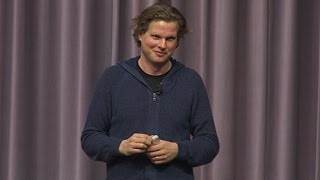
Cyriac Roeding gives a talk about breaking eggs, a metaphor for disruption and change. The specific claims, numbers, or stories from the talk are not detailed in the description provided.
Chapters
Thanks, Ravi. That introduction scared me personally as well. So it's a pleasure to be here today, and I want to spend the next few minutes with you talking a little bit about essentially a couple of topics. The first question I want to ask to all of you, and I promise I'll repeat whatever I'll see for the podcast. So who of you wants to start a company one day? Okay, that's about 70%. And who of you is interested in mobile? That's about, what, 40%. The rest of you don't have a cell phone. Got it. All right, so who of you have already started a company before? Wow, that's cool. That's about 5%, I would guess. And how many of you have basically run out of funding? Okay, that's about the same group. Got it. So with that, I would like to ask you the last question, which is, who wants to know how to potentially not run out of funding? Okay, that's about 80%. So I think we're in the right room. Let's get started. So I would like to take you on a journey today, and I'd like you to sort of be as present as you can and sort of imagine yourself being on that journey. Imagine you are a monk in Bhutan. Okay? Imagine that. Picture it. I'm not going to ask who has already been a monk in Bhutan. So imagine you are at 10,000ft altitude and you wear a red robe, and you are in one of those countries that basically has gotten the Internet in 2004, on the same day that television was switched on, and on the same day that mobile phones got switched on, and on the same day the Internet got switched on. And all of this because of the. The king's anniversary of his intronation. Now it is 2008. It is four years later. How many percent of the Bhutan population in the Himalayan mountains has the Internet? Four years later? Six percent. How many percent of the Bhutan population is. Has a mobile phone? 60%. And how many percent of the monks have a cell phone? Practically everyone. Because if you are at 10,000ft altitude, you need a connection to call your parents. So therefore, I was actually there in 2008, and I walked around and I saw a few monks actually huddled on the ground like this. And they were all looking at something, and I was wondering, what are they doing there? What is right there? Are they playing a game? And in the middle was a cell phone, a smartphone, and they were playing ringtones and being really entertained by that. And I thought to myself, if there is a business in terms of creating Entertainment for monks at 10,000ft altitude in Bhutan, then mobile and shopping might be a really good combination. I was actually traveling the world just for fun. I had left CBS Mobile in Los Angeles. I had already done two mobile companies, and I was ready for a big break. And so I was traveling the world with my then girlfriend and now wife, and. And we were going to 11 countries in two months. We went to New Zealand and Bhutan and Nepal and India and South Africa and the Amazon jungle. And we really just wanted to take a trip. And it turned into a venture about understanding how people use mobile phones and how they change their lives. In total, I took 1,500 photos of people using their smartphones. The thing that I took away was a deep inspiration. I was trying to find a place in the world where people didn't have phones. And so I traveled further and further away, all the way into the Amazon jungle. It didn't work in the Himalayan mountains, It didn't work in South Africa, where, in fact, the people that were actually. They were actually doing safaris were informing each other where they found their rhinos based on text messaging. So that didn't work. And so then I went to the Amazon jungle and I thought, here there must be a place where there is no cell phone anymore. So went to Manaus, went outside of Manaus, took a trip down the Amazon river. And then outside of the city far away, there was a village with 25 people living there. They had one washing machine connected to one main power line for the village. Think of it as a strip, just a strip, which is a power line and a washing machine attached. And they had 23 cell phones, so that didn't work either. And after that didn't work, I sort of gave up and went back to the US And I thought I might as well be part of this again. And so I was really inspired. And I thought, wow, this is actually. What's so unique about this, is that mobile phones are not just there for doing all kinds of entertainment and business and whatever we all do here in this room, except all of you who don't have a cell phone, but it's actually the only computer that most people in the world have. It's the only one. They do their finances on it, they listen to their ringtones for entertainment, they call each other, they look at the news. There is no other computer. And so I took it back to the developed world and I thought, okay, this is really interesting. What are we going to do with this? So I want to take you a little bit on that journey of starting a company in mobile and what you learned from it. Because there seem to be a lot of people who want to start a company. One day a few of you were interested in mobile and then there were a few people who wanted to know how not to run out of funding. Now I know how to run out of funding, so therefore I could tell you how to get there and then I can tell you what happened after that. So the time I ran out of funding was in my first startup in 1999. I started a mobile company and cell phones had green screens. At the time, text messaging was a geeky thing, even in Europe, which means something. I grew up in Germany, but I caught my mobile virus in Tokyo. I lived in Japan in 1994 and at the time they had these very large clunky machines called mobile telephones. They were mobile in the sense that you could carry them, they had a handle and a receiver you could pick up. And I was fascinated by that thought. I thought, this is actually going to change the entire world. How people communicate, how they live. Everything is going to change. And I remember pressing my nose against sort of like the shopping window of a store that carried a mobile phone. It was the first one that wasn't two parts, it was one part and it was this big and had a big antenna. And I thought, wow, this is like unbelievable, it costs like $10,000. And I thought maybe one day in 20 years I have that money to buy that. And so five years later I started a mobile company. This was at a time in 99 when most companies were setting up websites. And I thought the next big thing is mobile. And I was pretty insane, so don't do that. So we set up a mobile company and it started as a mobile auction company. Turned out to be the completely wrong business model. And in 2000, in early 2000, for some of you who were already born at that time, the stock market was crashing, the bubble burst, we had no business model and we were running out of money. My two other co founders job became to find fresh money. My job was to became to find a business model. And I don't know who was worse off. So the summer was spent trying to find a new business model and trying to find fresh money. And essentially what happened then was that our investors, they were kind enough to give us a bridge loan. Basically that means we're handing you some debt and if you pay it back on time, fine. If not, then the whole company falls to us. Essentially it's game over. And I remember very well what the date was, it was September 16, 2000. That was the last possible day for repayment of the loan. And we actually managed to find new Money on, on September 17th of that day of that year. And our investors were kind enough to backdate it by one day. So that was how we did not run out of money. And then we transformed the whole company into a mobile advertising company. And the idea there was that you could turn a mobile phone into an interactive device and you would find a code on the back of a Coca Cola bottle. You would text it in and you would get a piece of entertainment back to your mobile phone. At the time, logos were really hot. That was a 24 by 36 pixel black and white LCD display. And it was really cool to create something that is unique and customized on your phone. And then color came into play and that was just unbelievable. And then of course there was text messaging and voice. And what do you do with that stuff? Not a lot, right. So we created a new idea we which was a mobile greeting card. And the way it would work, you would text in your first name and your friend's cell phone number to a short code. And that message then would trigger a phone call to your friend out of a server. And it would be a normal phone call. You would pick up and there would be an alien on the phone. Hello. This greeting was sent to you from outer space. Who sent it to you will find out in a second by text message. Goodbye. And then you would look at your phone and it would be a text message and it would say this message from outer space was sent to you by Robert. If you want to greet him back or greet someone else, just text in your first name and your friend's phone number. And the viral chain kicked off. Turns out this was sponsored by Coca Cola. And believe it or not, the average times people sent that on was nine and a half per person. And every time they paid 20 cents for a piece of advertising to send it to their friends. And what does that teach you besides insanity? Basically what it says is that mobile phones are a very different medium. They have very different. It has very different rules than other platforms. And understanding those rules is very critical if you're interested in mobile. So for several years I went along and tried to understand what really happened on mobile phones and why they different and how are they different. One of the things that I found was that mobile phones are really about intersecting entertainment, personalization and peer to peer. Those three things together. Entertainment. It should be entertaining if an alien calls you, if not There's a different problem and it should be very personalized. If your friend sends it to you and it's peer to peer because it comes from your friend and not from yourself. So it's for you, from your friend, an alien from space. And the intersection of those three things are really interesting. And then there is a fourth circle. If you think about the three circles, right? Entertainment, personalization, peer to peer. There's a fourth circle which was not available in 2003. And that's context. And that is, where are you? What time of day is it? And so on location technology was not available. It only makes it better though. The principle is the same now. It's all color displays and LTE and whatever. All that is not changing the fundamental principle of it. So with that, I thought I had sort of cracked it, what mobile is about. And I went on and I went to cbs, to Los Angeles and I built up their mobile group and did a lot of stuff there that was really fun, like CSI games, a game that would call you while you're not playing it because a crime has just happened. If you're not showing up in the next five minutes to play the game, you're a bad age and you lose points. So those things are all interesting and fun. But I don't think I had cracked yet what mobile is truly about. It took me another step further, and I think it took me that trip to understand what it really meant. What I finally came about was this idea that people always answer. Like when you ask an entrepreneur, what is mobile about your startup, you probably have heard that many times before. It's the, you can now do this or that anywhere and anytime. Who of you has heard that argument before? You can now do this or that anywhere and anytime. And that's why it's great. Okay, so if somebody says you can now do this or that also anywhere and anytime, that essentially means you could already do it before. Correct. By definition, that is not a new idea. You basically took something we already know and you transferred it to a new medium. That can't be it. If this is a new medium, it has to have its own ideas. So when I went to KP and I was part of this iFund, there were 5,000 business plans that had been submitted in six months. And I went through a lot of these business plans and I was looking for the next cool thing that I could do. And I was really motivated. I wanted to find something. And I put a very important first filter on every plan I looked at, which was, does this idea Work nicely without a cell phone. And if the answer was yes, I would pass. Does that make sense? If this works nicely without a cell phone, it is by definition not mobile. Therefore it needs to not be done. What is mobile? Video without mobile. Anybody? What video? It's called YouTube. And what is mobile? Social networking without mob? Facebook. In other words, if you believe these companies are smart, I wouldn't bet against that. They should own this space. There's absolutely no reason they shouldn't. And we don't need another mobile social networking company. So what doesn't make sense without a cell phone? That's the question. What's simply impossible? And that led me to the insight which I still believe in to this day. What is truly uniquely mobile? The answer to that question that I gave myself is that this phone is the only interactive medium that you carry with you in a non interactive physical environment. Let me say that again. Smartphones are the only interactive medium that you carry with you in a non interactive physical environment. So for example, this table is completely offline here, right? It's an offline thing. It's wood until I put this on top of it. And now there is some sort of digital layer on it, some interactive layer. So in other words, the touchable physical world becomes an interactive place. And that is fascinating because the desktop makes about 0.000001% of the world an interactive place, namely your desk. And this makes about 70% of the land mass as an interactive place. That's really interesting. So if you believe in that intersection between mobile and the physical world, then the next question becomes, where's the money? Unless you just want to build a feature. And there's a big difference between a feature, a product and a company. A lot of entrepreneurs want to build features or products. That's totally fine. I didn't want to do that. I wanted to build a company. A company needs to have revenue streams. It should, otherwise it's a little bit of a problem. So therefore, the question needs to be where is the money on the intersection in mobile and the physical world. And I think the answer to that is actually quite simple. It's called shopping. That's where people spend their money in the physical world. It's called shopping. It's not called social networking. It's not called mobile video, it's called shopping. So if you believe that, the next question needs to be, okay, so what is the number one problem of every retailer in the world? If they all had to agree? And the answer I gave was, they all need to get People through the door, called foot traffic, because foot traffic is so important. Conversion rates are very good in the physical world. They're very good. Up to 80, 90% in the physical world when you walk into a store and about 0.5 to 3% online. So if you can get them through the door, you stand a very good chance of making a sale. And it's a 10x larger market than online. So I'm going to stop here because I don't want to pitch you Shopkick. I want to actually go to the next step. I want to explain how you then go and solve problems as an entrepreneur. I can take that as an example, but not for the sake of pitching the company. So what is the problem of an entrepreneur? The number one problem. What is always the problem when you start a company? Money. Actually, that comes later. What's the. What is it? An idea. A good idea. Right. So an idea. Right. An idea is important, and money is also important. And it's actually great. So if you had an idea, you could get money, Maybe, right? Maybe. And if you had money, you could get staff. If you could get staff, you could build a site, could build an app, you could start a company. In my case, this was. It worked like this. The idea that I came up with for Shopkick was if foot traffic is the number one problem of one of the largest industries in the world, retail, $3 trillion in the US alone. Trillion, not billion. Then how come no one ever rewards anybody for visiting a store? Why only for purchases? Why not for visits? Why not just for being there for walking in, if that's the number one problem? And the answer to that question was because nobody has a clue that you're there. Until when? Until you buy something with your credit card, Right? In other words, until you leave. So you walk up to the register, you swipe your credit card, they look at you, say, hi, Robert, how are you today? And they look back and they say, I'm doing great, thank you. And then they say, bye. That's a little weird, isn't it? To be greeted when you leave? 100 years ago, it would have been the opposite. You walk into a store, you're being greeted, how are your kids? Did you like the cereal we sold you last week? Nowadays, they don't even know you're there. So I had this idea. Rewards for walking in. Just for walking in. Well, idea. Cool. Might work. Big, large market, all that. Great, I'll get to that later. Then the next question was, okay, if you want to get rewards for walking in Then you sort of need somebody to pay for these rewards. Who should that be? The people who want the food traffic. Right. They're called retailers. Okay. So the retailer should actually pay for this. All right, if that's the case, then if you need retailers, then what are the retailers going to ask? Well, I thought, okay, it might be much better for the consumer if it's the same points you get everywhere. Kicks here, kicks there. Not different kicks for Macy's, Best Buy, Target and so on. Always the same currency. That would be very powerful for consumers because every retailer that joins makes it better. And there you get to the problem. You go to a retailer and you say, this was in the financial crisis in 08. The world was coming to an end. Very soon, was just a matter of time. And you basically walk up to them, you say, I would love to start a cross retailer rewards program. And you get rewards just for walking in. That drives foot traffic to you. And they said, well, that's great. Who else is in that alliance? Well, right now it's just you, but that will change. Okay, why don't you come back if you have others? And then you go to the Sand Hill Road venture capitalists and you say, I have this idea, rewards for walking in. And they say, that's not bad. Who's going to give all those rewards? Well, the retailers. Great. Do you have any yet? So if you had a retailer, then we might actually fund you. And then you go to the retailers and they say, so do you have any other retailers yet? It's just you, but there are others interested. Okay, do you have funding yet? Not yet, but if you. Then they. And they say, well, if they. Then we. That's called the chicken and egg problem of entrepreneurs. It's the number one problem. And the number one job of the entrepreneur is to break the egg. Essentially, that's the art of entrepreneurship. There's a lot of science, but that's the art. How do you break the egg? There's always a chicken and egg problem because you have nothing. The art of entrepreneurship is to create something out of hot air and then make it valuable. So the second thing an entrepreneur needs to do is to create assets and reduce risks. That's it. It's not that easy, but that's it. You have to create assets and reduce risks. How do you do that? By breaking the egg. What does that mean? What is an asset? An asset can be a large user base, an awesome technology that's hard to copy, that solves a big problem, a viral mechanism that is really hard to copy and it takes off and it has increasing returns dynamics. Or it could be an enormously strong team of experts, or it could be a partnership contract. That is a make or break thing to get the company going. Those are assets. Assets basically mean valuable things that make your company valuable if you put them together. And then there's the risk. When you first start starting a company, you are right here at the risk curve, like 100% risk. Everything is uncertain. You have no team, you have no idea yet. You have no funding, you have no success, no user base, no technology, nothing. You're right here. And then your goal is to bring it down really fast. Bring the risk curve down, for example, come up with an idea. Well, that takes you 20. Excuse me, 20% down. Not 80%, by the way, just 20. Maybe 10. And then after that you need a team, and then you need funding, and then you need partners, and then you need the first users, and then you need the first million users, and then you need first 10 million users, and then you need the first revenue and you need to break even. And all you're really doing is take down the risk curve. And while you're doing that, you're building up assets. Does that make sense? So that's really what you're doing as an entrepreneur. And so the question then becomes, what are the models that actually work? I would like to talk a little bit about business models, because that's sort of one of those things that we don't talk about enough. I believe we all talk about. Let's start another Instagram. Right? Cool. Let's do it. Instagram is an awesome. What. Product? Awesome product. It's a great product. Love it. Is it a company? No. Could it become a company? Maybe it's too late for that. It's just got too quiet. But it is essentially can still become a company within Facebook, of course, but it was the product. And so if you want to build a company, and that's a decision anybody can make. I'm not passing any judgment. I really am not. I really think it's great to build an awesome feature. I think it's great to build a great product. It's also great to build a great company. And you have to decide as an entrepreneur, which type you are, what do you want to do? I like to go the road of starting companies because I like to build things that last and that. I like to sort of like, create things that get established and they can prosper and they can grow and people can work there and it can get larger and it can change people's lives for a long time. So that's my passion. And everybody needs to know what their passion is. So business models are very important when you want to build a company. What is a good business model? So the first thing that you need is an answer to the question, whose problem does this solve? Who is the possible person who actually has a problem? And if you're trying to build a technology first and then find a problem to that solution, then you have a problem. So there are a lot of different companies that got started around the technology, and then you're sort of fishing for the problem that this solves. And it's very exciting, but that is not a good company idea. So in the case, I want to just use that as an example. So the rewards for walking in. You remember that? Rewards for walking in. So how do you know somebody has walked in? Gps can't do it. The accuracy level is two blocks. You can check into a Starbucks right from here and it's two blocks away. That doesn't work. So how do you do it? We had to come up with a whole new location technology, and there was no other technology out there that could solve our problem. So we actually had a problem. We called it the threshold problem because we needed to know whether somebody has crossed the threshold of a store. It's actually really hard to do. So my first idea was maybe you can look at degrading satellite signals as you walk into a structured building and therefore identify that you've just walked into a building because the quality of the satellite signal just went down. Well, that's really nice. But that data is not available. You don't get that from Apple or from Android. You don't know that. So therefore we had to come up with a new technology. And basically this is a little box that you plug into a power outlet. And basically it emits an inaudible audio signal at 21,000 Hz above the range of human hearing. And inside the signal is a unique code embedded that's different for every store. The microphone of the smartphone can pick it up, decode it, and knows exactly which store it's at. It's so accurate that we would know whether you're in this room or just next door in the hallway. And that's the kind of accuracy you need if you want to reward people something that has monetary value. It's not so cool to reward people for being in the parking lot or worse next door at a competitor store. So what I'm trying to get at is not how great Shopkick was, but actually it was important to create this without it was not, there was no company. So we had to wreck our brains. How we solved this problem and create a technology around a consumer problem that we were trying to solve. And now ibeacon is coming into the game and Bluetooth, low energy. And those technologies have lots of problems too. They bleed through walls, they're spoofable, and so on. But there are ways to combine technologies and make them really hot and basically take the upsides of different technologies and avoid the downsides of them. So the problems remain, they keep going. The point I wanted to make is if you want to break the egg, you have to be very creative. And on the technology side, when you create a business model, it's great to have a core technology, but it has to solve a real problem. Next point, short term defensibility versus long term defensibility. Those are two different defensibilities. Both are really important. The short term defensibility allows you to enter a market and be safe for a little bit. Like this is a great example. We didn't build the company around this technology, we just needed it to get started. Other technologies are coming and that's all great, wonderful, but we needed to get an entry to get us going and be protected for a little bit so we can start growing. Long term defensibility is something totally different. What's long term defensibility? Increasing returns, dynamics, viral mechanics, network effects. New users bring new users, who bring new users, who bring new users. And before you know it, you have 10 million users and they're all connected to each other and that's a really good asset. Now that can also go downhill quickly if you don't have consumer value. We all know of startups that went up like a rocket because of viral mechanics and then went down like a rocket that fell from the sky. Of course we know that. I'm talking about combining value with viral mechanics for long term defensibility. So those two things are really interesting when you start a company. Like, what's your short term defensibility, what's the long term defensibility? And then after that, quite interesting also is the question, should a business model be put on top and you figure it out as you go along or not? And there are two different schools of thought. My belief is that a native natural business model that's sort of authentic and automatically built in is really cool to have where you don't have to think about, okay, and how are we going to monetize this now where it's automatically part of it and it makes total sense. It has to be part of it. For example, when you walk into the store, you earn the points, right? The points have to be paid, there's a margin, you earn money with it. Every walk in is a revenue event. Every purchase that you make at the store is worth something to the retailer as well. And therefore that's an affiliate fee. Think of taking online affiliate fees and bring them to the offline world, which is 10x larger in terms of revenue. So in other words, creating business models that are automatically natively woven in without having to think about what are we going to do next to make some money with it. I'm not saying the second one doesn't work. What I'm saying is I really prefer the former because it's so beautiful when it all fits together into one piece. It's like design where things match and if you can find that it's a real advantage, it's great because then you don't have to worry about it. How are you going to make money at some day. So then the other thing that I think is interesting is when you start a company is the team. So that's one of the things that I'm very passionate about. If I could only do one thing, you might have figured out by now that I'm passionate about mobile. Despite that, I'm actually even more passionate about building awesome teams. So if I had to choose one thing, only I would choose that. Why? Because awesome teams are the secret ingredient of every success. It doesn't matter whether your idea was great if you don't have an awesome team to execute on it. If you have a mediocre idea and an awesome team, you have a chance to find a good idea later. If you have an awesome idea with a bad team, you're done. And apart from that, I simply love growing great teams because it's so awesome when you see the dynamics kick in and people are building things together, it's just very rewarding. So what makes an awesome team? And I wanted to share that philosophy with you. I don't know if it will make sense to everybody, but it's what I've lived by and what has worked for me. And so I wanted to share that. I've never shared that outside of my own company. So I think an awesome team is made up by four things. The first one is individual brilliance. And when I say individual brilliance, I'm talking about 10x. Very good. I'm talking about outliers. I'm sure there are A few of you in the room, individual brilliance is very rare. So it means you're just amazing at what you do. And by the way, this is not limited to intellectual skills and so on. I don't know if you've ever been to a coffee shop where a barista who made your coffee was just amazing and they were just so much better and nicer than anyone you've met before. Have you had that experience before? Or you flew an airline and a flight attendant was just unbelievably great, or somebody at a store helped you and they were just so much better than anybody else. Or you had a teacher and they just stuck out of the mass and they were just so much better than all the others. Do you know that feeling outliers individual brilliance. Now, here's the problem. If you take individually brilliant people and you put them in a room, they're likely going to kill each other. So what do you do to solve that problem? That's where the second one, the second circle comes in. First one is individual brilliance. The second one is a set of shared values that are very unflexible. Very unflexible. So, for example, integrity, high aspirations, change the world. Attitude can do attitude. Work hard, play hard. Those are values that all the people that are these individually brilliant people need to adhere and agree to. And only if everyone agrees to change these values, then we'll change them. Otherwise we're not. And this person needs to either adapt or leave. In other words, not flexible at all. So now the third one, the third one is outside of these individual, very unflexible values, extreme diversity. So in other words, you have people who are very different. At my company right now at Shopkick, we have people who come from the fashion world, they worked at Vogue before. And you have hardcore developers who are absolutely outstanding in their field, some of the best engineers you will have ever met yourself. And you have people in business development who are unbelievably good at striking deals, right? They are very different people. They look different too. As you can imagine, one worked at the Vogue, other one didn't. So in other words, very different. But outside of these values, they are completely diverse. But inside they're very aligned. And because they're so aligned on what matters, it works. And then the magic kicks in and then the fourth pun comes into effect. Because now if you don't have the fourth one, then people might just go crazy at awesome things, but they all don't help the company. So you need a mission and a vision that people believe in. And if they all believe in the same vision, it's like a wind blowing into one direction and then it gets really powerful. And the combination of awesome individual people with values and diversity creates a super interesting culture, because these people are interesting, they're all different. And so the culture becomes very exciting to work at. So it goes from Whiskey Tuesdays to Wacky Wednesdays. Today's Wacky Wednesday, where we're supposed to dress up like crazy people. Today, I couldn't do that because I went to Stanford. I tried my best. That's all I got today. So there's lots of different things happening that are created. I don't create these things. The team creates them. And it happens when you put this mix into a room. One other point I wanted to make about culture. Culture, I believe, is highly underrated. People like to talk about culture, but the execution of culture is actually very underrated, I think. And I wanted to explain why I think culture is so important. Let me give you an example. Let's say you started a new company and you are the newbie, and you're sitting at your little desk and there are people around you, and now you're thinking about, can I get up and get a coffee? I just started here, is that going to be OK? What if I hang out for 15 minutes in the kitchen? Is that going to be okay? This is where culture comes in. Culture is a decision framework. It's not just some fuzzy little nice little things, values. It is a decision framework. In that moment, you make your decision based on the culture of the place, and then you go to the kitchen, you hang out there, and you might have had the best idea of the day, talking to other people, hanging out, having your coffee, which you would never have had if you had stayed sitting at your desk. So my point here is, with this very little example, this happens all day long. The decisions are constantly being made. So culture is like a wind and it blows into one direction. If you have a strong culture, it blows everyone into one direction. So if everyone moves in the same direction, you are basically adding up the forces, maybe even multiplying them. If you are moving in two different directions, you kill each other energy. That's why culture is very important. It's a wind, a force that's blowing. So in essence, the key things I wanted to get across to you today is as an entrepreneur, you have to break the egg. You need to create assets and reduce risks. Mobile is about the fact that it's the only interactive medium you carry with you in a non interactive physical environment so you can make the world an interactive place that previously wasn't interactive. I also wanted to tell you about teams and dynamics and what makes for an awesome team. When you build your own company one day, remember individual brilliance combined with values. Don't be flexible about it, but bring diversity in nevertheless and create a great mission. And so I think one of the things that's important in that regard is also when you start a company with your co founder, the same principles apply, only multiplied. And even more important, when in doubt, you're not exactly sure about the other person. Do not co found with the person. It's really important because you're going to be stuck together so deeply. You have to really like each other and respect each other and there can't be any doubt. If you have doubts, it's probably right not to do it. The same is true for hiring. By the way, when in doubt, don't hire. When you are in pain and you need really strong help because you are so overwhelmed and you have doubt, don't hire. Take the pain. Because it's very important to build this awesome team. It changes everything. So therefore no compromises regardless of how hard it is. We're constantly in pain, but we have to be. I would be surprised if I suddenly get too many people to hire. We talk to many, many people and only very few make it through the process. And it's on purpose. We have to be that way otherwise we're not going to create that awesome team that makes the difference in the end. So I think I've run out of time. Yeah, we can open it up for Q and A. So we can open it up for Q and A. And I'd be happy to take any questions you have. Hopefully it wasn't too boring. Go ahead. So how did you end up solving the chicken and egg problem with the retailers? Oh, the question was how did you break the chicken and egg problem with the retailers? That's a long story. I'm going to try to keep it really short. Essentially I went to a lot of retailers, I rented the smallest rental car I could buy I could get and drove through the Midwest from retailer to retailer in late 08. And I knocked on the door and I said, hey, this is the future. You should really think about mobile. And they said, well, we just fired our staff because it's the financial crisis, so not really sure. So then finally I got one meeting and it was towards the end of my entrepreneur in residence ship at Kleiner Perkins. I had already spent five months there. I didn't have a retailer. And there was this call with best buy at 7:30 in the morning. And we were sitting around the table and I thought, okay, this is the moment when I have to go all in. This is it. I had already spent countless months worrying about this. So on the call I went all in, just trying to convince the other side. You can imagine how many calls they have. They don't really care. It was a conference call. It's the worst ever. People are probably reading their emails, doing whatever. So you have to get across on the phone and be so present that the other side really feels the inspiration there, that this is something unique. My only goal was to get a meeting, a physical meeting, so they invited me. So I went there and when I walked into the meeting, I knew that this was either the end of the road or the beginning of a road. And so I came in and I try to explain to them how what a fundamental shift this is in thinking about loyalty and about marketing and about how you run your business. Because if you do the financial calculations, the foot traffic piece is by far the most important one. They don't know how to solve it. So I had my phone with me and I literally walked out of the room, I closed the door and I said, I'm now coming back in and here's my reward just for being present. Wouldn't that be amazing? And people thought it was funny and cool. And then I went on with the presentation and I had all kinds of graphs and there were questions, lots of critical questions. As you can imagine, everybody's trying to kill the idea. It was finished. And then there was one sort of silence. And then I asked a question. I said, do you like it or do you love it? And I also knew that only if they would say love, they would do it, possibly do it with, like, they're not going to do it. It's not sufficient. And it was sort of like, quiet. And people were a little, you know, uncomfortable with that question. And there was one person in the room. She spoke up. She'd only been there for one year at Best Buy. And she spoke up and she said, we are very good here at killing ideas. This one we have to make possible. That flipped the entire conversation. Then after that meeting, I had to go through 40 meetings with 60 executives and pitch it over and over again and convince every single one. Because with one person against it, it would have broken. And there was one person who was not for it. She was unfortunately responsible for loyalty. And so I had this weekend where I was sitting in my living room, and it was very intense. And I pinged my friend to create some screens and basically explained to her how their loyalty from ours could be really great together because it's not a competition. It's actually an awesome partnership where you can reward people more and have more contact points. So there were a lot of reasons why it should be working. But of course, she hadn't spent the time to think that through yet. So I pinged her and I said, I want to have dinner with you. And she said, I have 30 minutes at the office. And I said, I want to have dinner with you. And it was Minneapolis. It was January, it was 12 degrees and it had lots of snow. So I went there and I actually got her to get out of the office. We went to this restaurant and we had two wine glasses and a napkin, and I drew the whole thing out for her. And I said, this is how it's going to be. And this is how you can get 10x more contacts with your own people today than you ever had before. This is why this works. And she looked at me, she said, this is brilliant. I love it. And I took a photo of the two wine glasses after she had left. I knew that in that moment, Chopky was founded. And I took that back home. And then I had to go through many more things to get a letter of intent, which is not even legally binding. Then I took that back to Kleiner Perkins. I said, here it is. And they said, now we might fund you. Then I was brought to another meeting with 12 people in the room at Kleiner Perkins, and I pitched my case with everybody in the room. All the great partners. Matt Murphy, John Doar, Randy Commissar, Chihuahu. There were all these great people, and I had to pitch my case. And then in the end, they actually pulled the trigger. I thought I had messed it up completely, by the way. I thought I walked out and I missed the last hurdle. It worked. And that's where we started. But with that, you just broke like, one egg. And then you go on, you say, okay, so now I have a retailer. Actually, it wasn't even a deal yet, but it was sort of like, okay, we want to do this. And then you have funding. Now you need the team. The team obviously was liking it that there was funding that was helpful. Now you go to the next thing and you say, okay, so now we need technology. And then the technology guy said, do you have any? No. Do you know how this works? No. Do you have a solution for the threshold problem? Not really. So it basically just keeps going. So my point, what I'm trying to make is it never stops. And when you're an entrepreneur, one of the things that I really believe in is that as an entrepreneur you have to be ready to be laughed at for a very long time and people don't take you seriously. And there are so many startups and all of that, right. 98% of the time it's very unglamorous to be an entrepreneur and 2% of the time it's freaking awesome. And that 2% makes up for everything else. And it's an amazing experience. And the highs are higher and the lows are lower and they never stop. But you have to sort of ask yourself whether that's what you want, is that who you are? And when you think you are that, then you should really leap and do it. And if you don't think that's you, then I wouldn't do it because it's not glamorous most of the time. And you have to know why you're doing it. And if people say, like, ask me the questions of when is your ipo? I have no idea. If I was motivated by that, I'll be long gone. An IPO is nothing but a way to inject capital into a company. That's it. So if you want to create a significant institution, organization, something that matters in the world and to people, then it's not about an exit, it's about the beginning and it's about the journey and it's about growing it into something meaningful. And I'm not saying that because it sounds good, it's just my belief that's what it's about. And if you are motivated by something else, not so good. Any other questions? Yes, go ahead. How are you going to maintain a long term barrier to entry with giants like PayPal, perhaps chase them up behind you with their PayPal Beacon and check in and all this type of stuff, Right? The question is how do you create a long term advantage or defensibility with large players like PayPal entering the market with a beacon and all of that. So the answer to that question is very simple. You have to create a unique service that so many people love that it stands on its own. Very simple. And honestly, if you take this example of payments, I have a very strong opinion on that. So obviously I've thought about it, right? I really believe and I'm not going to talk about PayPal, I'm talking about, I'm going to talk about mobile payments and mobile wallets. Okay? So please disconnect that a little bit because I think the PayPal team is awesome. I think that mobile wallets will fail and the reason they will fail is because they're empty. I don't need another wallet. I have a credit card. It's pretty good. I swipe it, it works. I don't need any network connectivity. It always works. It's actually quite convenient. So do I need another payment mechanism? Not really. So essentially what I'm saying is that the idea of starting with payment, and let's be clear, in this room, I don't think anyone in this room wants to pay. Payment is the one thing at a store you don't want to do. Everything else is cool. Not payments. You don't want to pay because that's something that is a means to an end and it's a necessity, not something you love. So therefore, the more payments can disappear into the background, the better. And so the question is then, what does matter to consumers if payments doesn't matter, what matters? And what matters is very simple. It's the shopping experience. I go to a store. I don't know, all of you guys buy everything online, I bet it. But some of you might actually go to a store to give you a little bit of a context of the size of the markets because it's fascinating. Offline shopping $3 trillion in the United States Online shopping $250,012,X larger growth rates of online commerce including all Amazon revenue 12% a year 12% out of the $3 trillion, 1.2 trillion are influenced by online activity. Before you buy offline, you go online, check out a product, but then end up buying it at the brick and mortar store. In other words, it's five times larger than all e commerce combined, including Amazon's revenue. That market, the 1.2 trillion, is growing at 19% a year. In other words, the gap is widening, not closing, as most people believe. So this is a very interesting market, probably one of the most interesting markets. So the question then becomes, five years from today, why would anybody want to go to a physical store anymore? And because of online and same day delivery and mobile and showrooming and price comparison, all of that. The reason you go to a store is not because you need anything. I really don't believe that you don't go anymore because you need anything. I don't even think you will go because you want something. I think you'll go because you want to feel better, because you want to feel better, because you want to go on a mini vacation and in order for it to feel that way, the shopping experience needs to change. And that is the counterpoint to payments. The experience needs to change. I need to walk in and love it. I need to love the design of the store. The whole store's design needs to change. Like, it can't be that I walk around with a little cart and I pick up items from a shelf, throw them into a basket, and then I drive my little basket to the register and put myself in the queue in order to be allowed to pay later. Something needs to get better than this. So essentially, the experience needs to change. There are two factors. One is the design of the store, the products in the store, and the other one is the digital overlay on top of the physical world. I find this fascinating. Remember, this is the only interactive medium you carry with you in a non interactive physical environment. This can be the digital layer on top of the physical world. This can turn Macy's into your Macy's. This can tell you what your friends have liked when you walk in. It can give you things that you show you, things that you should check out here, but they are interesting for you and not for you. It can basically be the lens on it. And then Google Glasses comes in. Of course, we have one here already. That's all the beginning of wearable computing. And that's just the beginning. Watches will be the earliest one, most likely. So all of this is basically putting a digital layer on top of the physical world. And that is a very interesting way to make the experience better. And payments needs to be a part of that, but it needs to disappear. So the wallet is not interesting. What's interesting is what's before the wallet. Does that make sense? And that's what we're building. Next question. Actually, sir, I think we're out of time, unfortunately. I think we could go on for a lot longer. Those, they're fantastic gems. Thank you very much. We're out of time, so everybody please join me in thanking Cyriak Roding for your time. Thanks. Thanks, Cyriak.
More from GHION.AI


O processo de reconhecer limites, mesmo quando a vida parece exigir sempre mais.





Depois de tantas histórias, aprendizados e pausas necessárias, o @interior_iza está de volta



