Data-Powered Diversity [Entire Talk]
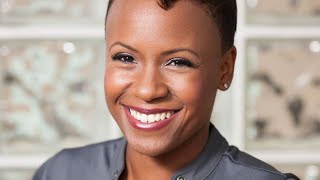
Stephanie Lamkin, founder of Blendor, discusses how unconscious bias shapes hiring decisions and how her company's analytics platform helps organizations measure and fix diversity problems in tech.
Chapters
Who you are defines how you build.
Today, I am delighted to welcome Stephanie Lamkin to ETL. Stephanie is a TEDx speaker and former downhill ski racer and also the founder and CEO of Blendor, which creates enterprise software that leverages augmented intelligence and people analytics to mitigate unconscious bias in hiring. Lamkin's work has been featured in the Atlantic and Forbes and she has appeared on Fortune's 40 under 40 list and the MIT Technology Reviews 35 under 35 list. Her 15 year career in tech industry has included founding two startups and working in technical roles at Lockheed, Microsoft and TripAdvisor. She holds a Bachelor's in Science and Management Engineering from Stanford and an MBA from the MIT Sloan School of Management. Welcome Stephanie to etl. Before we dive into a fireside chat, I was hoping that you could give us an overview of Blendor for those of us who may not know what it is.
Absolutely. Thank you everyone for having me. It's really great to be here. I was in your seats 15 or so years ago and this was actually when Basis first got started, obviously not actually in your seats. I was on Stanford campus. But it's really exciting to be on the other side of the table. So as mentioned, I am the CEO and founder of Lindor. I'm just going to kind of take you through the journey of the company and what we've done and what we're doing and what's coming next. So I started coding actually really early. Here's a picture of me at a hackathon as a teenager, before it was really called a hackathon. I've been coding Since I was 13 and took AP Computer Science in high school and did a lot of software engineering work throughout college. So as mentioned, I went to Stanford undergrad MIT for grad school and worked for like a Fortune 500 company for the most part, all throughout undergrad. Landed a job at Microsoft and did some work at TripAdvisor. But about six months after I graduated from MIT, I interviewed for an analytical lead job at a very well known Silicon Valley company and they told me not qualified. So it was the first time in my life as a ridiculous overachiever really being confronted with what felt like wasn't a meritocratic process. And a lot of that I realized at that moment had been happening throughout my experience in corporate America in tech, not just in recruiting, but in a lot of other facets of being in the working world. So I later found out that that company, along with several others, was really struggling to diversify their workforce. They're about 2% black, 3% Latino, and about 30% female across the board. But the common narrative was it's a pipeline problem. We just can't find qualified women and people of color. They're not getting the degrees. And obviously I knew that not to be the case. My auntie actually earned a computer science degree in 1984 from the University of Maryland when about a third of all computer science degrees went to women. So I identified that there was friction in the marketplace connecting talent. And so I built the first version of Blendor, literally in my mom's basement. Took me about two months to ramp up on the stack and moved back to Silicon Valley and got into StartX about nine months or so after creating that first MVP minimum viable product. And then also took advantage of another really great accelerator called SAP IO. So, fundamentally, the problem we started off solving was unconscious bias. So the fact that you can have a resume with identical names and yield a 2x difference in response rate depending on the ethnic sounding of the name. And just further research sort of going into and understanding the impacts of unconscious bias and resume review. So we went ahead and created a job matching app, connecting companies with diverse talent, but also removing the name, the photo, any indication of age or gender or race, algorithmically matching candidates based on the things that matter, like skills and education and experience. And that's how it started. So now I'm going to tell you how it's going. So seven years later, or seven years since companies started measuring this data, but six years since we started, there's been only a 3% increase in women in some of these workforces, and almost stagnant when it comes to underrepresented minorities. And again, the narrative that we're seeing year over year, it's a pipeline problem. Well, actually, about 2/3 of all college degrees go to women now. Women have officially surpassed men in terms of education. And when we look at entry level talent, it's a bit more on par than a lot of people realize. But when you get further and further up, the latter is when things gradually decline. And this is most significant for women and even more significant for women of color. And so as much as we want to respect that, companies are trying their best and they're still working on it. I realized that there was a bigger opportunity for us to make an impact. And so we started under the Obama era when everything was great, and then Trump hit and believe it or not, business started to boom because I think it awoken people to what was happening, the realities in this country. And then 2020 hit. So we saw this young lady be. Breonna Taylor be killed in her sleep. We saw this gentleman die in about eight minutes. And I really saw myself in this people. So this is Sandra Bland. She's college educated, she was on her way to a job and this gentleman pulled her over. And I've seen this space before. So while driving in San Francisco, I've been racially profiled. I'm a private member at a club called the Battery where some of my guests have been discriminated against and asked to leave under false accusations. So despite the fact that I appear on the covers and I'm getting awards, I am constantly living under the threat that at any point in time, somebody can take my life in an instant and pay no price for it. So 2020, kind of because of COVID and many other things, led me to a bit of a point of just reevaluating what, what role I was playing and Blendor was playing in a lot of the optics, companies were managing around diversity, equity and inclusion. So we decided to double down on this index, this rating and ranking system that I initially built for customer acquisition purposes. And it worked beautifully because we made this diversity score public. Companies all of a sudden came out of the woodwork and instead of wanting to understand how to buy a better unbiased hiring solution, they more interested in their score and how they could appear better. And so it really threw me into the understanding that, oh, this isn't a hiring problem, this is a social problem. And the way companies are thinking about social right now is through esg, which is basically the financial services interest in how companies for good also lead to profitability. And then on the corporate side, this little known space called corporate social responsibility, where. Where companies talk about their carbon footprint and how they're being good global citizens after all. So I realized that there was a much bigger opportunity for us to fit some of the DEI analytics within the scope of these existing frameworks for measuring and monitoring how well companies were just being good citizens in the world, treating people fairly, paying people fairly, hiring people fairly, and how that could impact their employer brand. So, so this is really a big reset for us to get away from hiring and the masking of names and unconscious bias which people get to really hone in on, like the social problems behind this. So we've been collecting this data for about six years. It's all based on publicly available information. Like the makeup of your board, your executive team, we aggregate it, we normalize it. For any of you management science and engineering majors I think it was MSME or MSME 108. Stochastic modeling.
It's.
This is like we have modeled basically how likely a company is going to experience a lawsuit, attrition, involuntary resignations, or bad press just based on publicly available information that we're able to gather about the demographic makeup of their companies and the policies, benefits, programs, initiatives that they have in place focused on treating people fairly. And this is the biggest weakness we see is the lack of diversity on the leadership. Though white women primarily have made significant gains over the past seven years in terms of representation, everybody else has been left out of the party and we now have the data to show that. So what we sell to companies is, I kind of call it like a credit karma for diversity. So we show you your score and the breakdown of your score, and we give you recommendations on how to improve your score. And what this is, is not just branding, if you really think about it. What we're teaching companies how to operationalize, De and I much the same way that they optimize for revenue, much the same way that they optimize for employer happiness, we're teaching them how to optimize for creating workplaces that people will be proud of and people will have an equal likelihood of succeeding. And so we're kind of in this risk and brand management space. And I also realized that the. There is a need for finding people like me and other executives that a lot of companies seem to not have access to, which I think is primarily due to their social networks. A lot of executives go from boarding school to Stanford to Google to Facebook to starting a company, and they're interacting with the same people over and over and over again, continuously validating the thesis. And they have that. They have that it's a pipeline problem. And it's not a pipeline problem. It's just that you don't know us. And frankly, we don't want to work for companies where we're not likely to succeed because we have been succeeding in almost every other facet of our lives but this one. And so I've tried to map our original sort of bias mitigating technology, but enabling companies to strictly focus on identifying diverse leadership that can help guide them and in a very operational way and not just this intense focus on hiring. So fundamentally what we're trying to do is create a recognized brand that gives companies sort of like a badge of approval around being a fair company to work for. We've seen this with U.S. news World Report and the way that they use rankings to help people Find colleges. We've seen this with LEED in terms of finding a green building. Our goal now is strictly focused on employer branding. And the timing is right, right? We've seen a ton of Black Lives Matter statements and pledges. We've even seen this in the financial sector. Institutional Shareholder Services wrote a letter to all of their clients that they now have to publicly share the racial and demographic makeup of their board and their executive team. We see a lot of pledges. Probably the biggest one last year was NASDAQ proposing to the SEC that they would delist companies with who do not publicly share the demographics of their board. So that's big. And, you know, I believe in, you know, drinking our own Kool Aid. So our team reflects exactly the mission that we are going after in terms of diversity and demonstrating the benefits of diversity. We also have a very diverse candidate set, over 1 million profiles and resumes in our database, spanning all career levels and race and gender identities and functions and majors. We've generated over about $4 million served in revenue, served over 232 companies. And we've actually raised a modest amount of venture capital. And if anyone wants to know why, I'm happy to share. But while about 2% of venture capital goes to female founders, 0.06% goes to black female founders. So there's only about 90 or so black women in the world ever to raise a million dollars or more in venture capital. And we're just lucky to be one of them. So our goal long term is to be this trusted source of truth for people primarily, to be honest, Gen Z and millennials that are way more woke, also known as socially conscious, who want to work for and invest in companies that are doing well. And so you can come on our platform and identify yourself by gender, by race, by socioeconomic background, by foreign national status, whatever, and we can tell you exactly what companies you're likely to belong in and succeed in and that align with your core values. Here's a little data joke for any of you nerds out there. This is all built on data. I am bullish about leveraging public objective information, which is why we aren't in the Glassdoor space, though. Shout out to those of you who realize that Blendor was named after Glassdoor. We're not yet getting into the review space because there's so much data out there now that I think could be really revelatory and we want to build on that. And so for any of you that are data nerds, we are hiring. So please reach out and that's it. You know, our motto is work fair. I don't think any of you would want to go to a university where you knew that women who did the same amount of work were going to get less grades or be less likely to make it to sophomore year. So why would you work for a company like that? And that's our thesis.
Amazing. Amazing. Stephanie, thank you so much for sharing such an in depth view of the product, the metrics that you're developing for employers to get better at what they do. You know, it triggered a lot of thoughts for me and I wanted to ask, you know, I know you run a substantial team and what have you done actually, speaking of which, during this era of COVID times to, you know, help them? I mean, there's a lot that has happened since last March. How have you, you know, kept up the morale? How have you helped people adapt? How, how has this period impacted Blendor other than, you know, some really positive shifts that we've seen that you've presented already?
Yeah, well, business wise, there's, there's definitely been an impact. It's kind of been a roller coaster. But in terms of employee morale, you know, it's been, it's been tough because everyone's family situations are different, everyone's living situations are different. And so I've tried to make a concerted effort to kind of meet with everyone one on one to just them know that, you know, we are sensitive to your unique circumstances. And if at any point in time, you know, you need to take a break or you need to have time for whatever you need, we're totally understanding and empathetic in this moment. And then just like some funny little hacks, like we obviously use slack and so I've encouraged everyone to use Giphy. So to just put like funny little gifts in the chat that are relevant and we'll, we'll, we like send out awards every month for who, whoever's had the funniest gifts. And then more recently we sent like care packages to everyone just consisting of all sorts of fun, like little, you know, just like little stuff you get in college that are just cute and inexpensive but just make you feel thought of. So, so yeah, it's, it's been challenging, but I think the biggest thing is just showing empathy and, you know, and care.
Do you think the mission for your staff has, do you think this year has emboldened your staff with respect to your mission and maybe you could tell us a little bit more about that? I know it's, you shared a little bit of content during your presentation about that. How has the response been on that front?
Yeah, very much so. I think, you know, particularly after the murder of George Floyd, because everyone was at home when it happened. It landed really hard. I actually had an investor who Southeast Asian. He called me in tears around what happened. And honestly, I didn't understand it because to me, what happened to George Floyd was just as bad as what happened I, you know, to Michael Brown and a lot of others. But I realized because we are home and because people are watching it over and over and over again, things are just landing different and we're just way more connected to our vulnerability and humanity in these moments now more than ever. So, yeah, everyone is just super empowered and passionate because I think they realize, like, the bigger things that matter. And, you know, and also it's around this whole point of employer brand. I think a lot of people who are working in big tech are just reevaluating how what they're doing might be in misalignment with their core values. And so the people who work for companies like Blendor, I think feel really lucky to not only to be able to make a living, but do something that is just on the right side of history.
Yeah. Hear, hear. How lucky they are. How lucky they are. How do you recruit? Do you use Blendor to recruit to Blendor?
Is it like that? So Blendor is really not optimized for startup hiring. Startup hiring is way more high touch than a large public company. So I do, I recruit through a few different mediums, primarily through like alumni networks, so Stanford in mit, even Berkeley and a few others. And then I do quite a bit of speaking and just sort of like leveraging public social presence to just put out there what we do. And we just get a ton of inbound interest. So I would say a good 75% of the people who work at Blendor just found us because they read an article or they saw me speak at an event or I. They saw us post through some alumni network.
Fascinating, fascinating. Maybe I could go to the other end of the spectrum. Now. There was a slide that you presented that reminded me of A study that McKinsey did in 2016, I believe, on just how when we get to the very, very top, there's very, very few individuals who make it to that executive level who are part of the historically underrepresented groups. Maybe could you share a little bit more about what you're doing in that space and how you shifted some attention there? Because I continually see that as a challenge for Big companies and small companies.
Yeah, promotion, I believe, in corporate spaces is very different than academia. Right. It's really not based on how hard you work. It's really not based on the quality of your work. Always in a lot of cases, it's based on your social networks and your interactions. And so I think that's a key reason why women and underrepresented minorities find themselves at a ceiling, is because there are just certain structures in place that limit the extent of your social interaction with others that are in those higher echelons of the C suite. And so what I'm trying to do is figure out a way, if there's a. If we can facilitate those connections. And that's why I call it executive Match and not executive search. Because I have a theory that a lot of challenges with bias and with limitations in social access are just due to lack of exposure. Again, with the ways in which we tend to stay within our same train, our same social stratification throughout our entire lives. I think the way to hack it is just to facilitate connecting people of different social strata and different identities in a way that makes sense, in a way that isn't forced or it doesn't feel inorganic. But I'm trying to do that by leveraging data, so we'll see. It's a huge social problem that doesn't necessarily have a clear technological solution, but we're trying to leverage people analytics in the meantime until we can, you know, really hack it.
You know, Stephanie, it reminds me of, like, the social graph. And I know there's a number of researchers who have shown that social graphs, you know, it's. It's really. For example, if you're connected to, you know, people who are smokers, you're more likely to smoke. You're much more likely to adopt the behaviors, positive or negative. And, you know, maybe I could ask you to dig a little deeper on that. Like, how do we get these social networks to sort of overlap a little bit more? Like, do you bring people together to share, break bread together? Is it, you know, more sort of informal conversations, especially in times of COVID How are you sort of bringing these very disparate social networks that kind of stay separate together?
Yeah. Our awareness of sociometrics today is primarily through social media. So obviously, Facebook has figured this out really, really well. And more often than not, sociometrics are used for the purposes of marketing. But within the context of human resources or human connections, we're trying to leverage some of the research that has actually come out of MIT about the ways in which different social networks overlap. So more often than not, there's certain nodes that exist in our networks that overlap. And if we can figure out a way to facilitate connections on the outer rim of those social networks, and based on that interior node, I think there could be an opportunity. And when I say node, it doesn't necessarily have to be a person. It could be an interest. It could be a core value. It could be. You know, I don't know. I'm a backcountry skier, and it wasn't until I posted something on LinkedIn about a speaking engagement I'm doing about backcountry skiing. I got inundated with messages from people that I may not have otherwise interacted with, but we had this common node that, frankly, I think a lot of people think are unexpected. It's not unexpected to me, but I think there's some underlying. There's some underlying things that we haven't yet figured out yet that can bring people together beyond just common race and gender.
That is beautiful that the social graph is not just about demographics, but it's about things that we care about and that sometimes is even more powerful than just our cultural upbringing and whatnot. It's like the things that are draw our hearts in. I'm going to ask you one more question before I hand it over to the students, because I know there's a backlog of Q and A questions coming up. I'm very curious how, speaking of upbringing, how that experience growing up with your mother, with your aunt, how that gave you soft skills or hard skills to be such a successful entrepreneur.
Yeah. So I am the descendant of American slaves, I guess we've been in this country for 10 years whenever we got off that ship. And I think that more than anything, and just the ways in which my grandfather's grandfather integrated into society, coming off of a very challenging path. So my mother actually went to a predominantly white school, and this was in the 60s, so this was. It was part of this sort of early integration. It wasn't busing that Kamala Harris point, pointed out during her election, but it was a very unique situation that I think actually has more to do with where I am than anything else. Like, my grandfather, for whatever reason, moved somewhere in rural Michigan, and his children all had names like Stephanie, which are culturally ambiguous. Right. And my mother's name is Cindy. And I speak in a way that if I talk on the phone, you might not know what race I am. Right. So those things, I think, have more to do with my trajectory than anything else. But United States social factors as they may, led to my mother at one point, despite being college educated, being homeless at one point, and that's kind of how we ended up moving to the Washington, D.C. area. She moved in with her sister, the computer scientist, and that's how I got that early exposure to tech. But growing up below the poverty line very early on in life, it just gives you a resourcefulness that you can't learn. You're constantly thinking about how to stretch things and make it work and. And hack and find alternatives like skills that, ironically, a lot of corporations say they value, but, you know, they're hiring, you know, mostly people who never were forced to be that resourceful. So there. There are a lot of things that I think about, you know, that I think my background has to do with. With where I am. But probably the most impactful was my grandfather's decision to move into predominantly white spaces.
Wow. Wow. Well, it took courage from multiple people over many generations to get to you, which is just so beautiful, so beautiful to see. So I'm going to go into Q and A. There's a number of questions that I think you'll see in front of you. I'm going to read them out so that everybody can hear them. All right, so the first one that was at the very top of the list is could you talk more about how you've been able to be successful without raising a ton of capital from VCs? Has that been by choice, by circumstance, or something else? And are you happy you ended this with this route and will you stay on that path?
That was a lot. Okay, so the fact that we've only raised $1.5 million, I would say half of it is by circumstance and half is by choice. Within the first couple years of running the company and trying to raise capital, I realized that, okay, trying to do this as a black woman is going to be really challenging. And I'm not up against a meritocracy. So similar to my experience when I was interviewing for a job and got rejected, I'm very astute to realizing when I'm operating in a space that's not a meritocracy and I immediately exit because it's not a good use of my time. So. So I have totally exited. I won't even take a meeting with most VCs. I'm just over it altogether. It's a horrible, horrible use of my time. And so now I would say over the past few years, it's been by choice, but what I have been successful at doing is finding foundations that do PRIs. So PRIs are called program related investments. And it's basically a financial vehicle where foundations who typically only do grants to nonprofits, can invest in social impact ventures. So that's proven to be really successful for us. We got a PRI from ECMC and we're pursuing a few other foundations. And then I've just been really successful with angel investors. So high net worth individuals who are just really passionate about this. And they're not all women. Actually, some of our biggest angel investors are, you know, white cisgender straight men who just realize that there's an inefficiency in the marketplace. So that's proven to be far more successful. Moving forward, I will probably not actively pursue traditional institutional capital because I honestly feel like there needs to be a signal to the market that they're missing out on something. For any of you who are unfamiliar with the VC industry, the first thing that they'll tell you, it's a very fear driven industry. People like, latch onto deals primarily for the fear of missing out, then really understanding the workings of the business. I think, you know, that's why Theranos actually became really successful at raising capital because it's just, it's just, it's emotional driven. And so I think in order for people like me to succeed and have it easier when I'm long gone and dead is if I'm able to get to a successful exit IPO acquisition and yield 10x returns to our investors and showing that I was able to do it without traditional vc. So that's my goal. It's harder. I'm not advocating for that route, but I kind of have a story that I'm trying to tell.
That's bold. That is so bold. I think there's a misconception sometimes with our students that VC money is the way to go. Right. And the more you raise, the better. Right. And yet there are so many sources of capital out there that oftentimes are untapped or just less well known because it's not what's being seen in the media. So thank you so much for paving the way and demonstrating that.
Yeah, absolutely. And again, it's harder. I don't want to glamorize it, but I've raised a half a quarter of a million dollars from pitch competitions alone. Loan. And that is dilution, free capital. So yes, there are alternative means for sure.
Very cool. Very cool. All right, next question. How did you incentivize companies to want to get a good score? I would imagine getting the first Companies on board would be difficult because nobody else is using the score.
Well, we actually released the score about two years into the company and we had got, we received just a ton of organic press and attention. So I would probably say the key was building a brand, a very well known and well trusted brand before creating the score. If you create the score first, you're right, no one cares. They don't know who you are, forget about it. But because we had built some reputation before that, it helped. And for the most part, you're right. Most companies don't really care about the score itself. They're in fear. So you'll notice I use the word fear here a lot. They're more so fearing that people like you will come into an interview and say, I looked at your blend score and I'm a little concerned about how well you're accommodating women who become mothers. Can you speak to that? Like that is what they fear. And so that's why when you saw my goals, it's about reach and impressions. And so we're white labeling the score with Indeed and Career Builder and actually a couple other sites this year. So that Blend score becomes a little bit more well known. We're also doing things like releasing reports. So I can't talk about it publicly yet because there's a big story coming out. But we will be releasing a big report on the state of diversity in tech. So we're really doubling down on the brand and the research reach of our content because we know that the only thing that companies are really worried about is not getting access to the best talent or not being considered the best company to work for.
You're here. You're here. I love what you said about just building the brand. And it's about building trust with your audience first. Right. And then you have the credibility to be really open and transparent about the score, which is amazing. Amazing. All right, next question. How do you prevent candidates from lying about their backgrounds on your platform? There are some people always trying to, trying to game the system. We're seeing it now with the wealthy cutting the COVID 19 vaccination lines. That's a great question. That's a pretty punchy question.
So in a lot of cases, in a lot of cases, wealthy people are going to find a hack. They built the systems, they made the rules, they get to figure out loopholes. It's kind of how this country has been founded and how it's going to persist. However, for the remaining 99% of us. I do think that you're going to see a growing trend in validation. So Whether it be LinkedIn, I think LinkedIn has started this with their whole endorsements. But I do believe like the future of work is increased validation of skills and ability and personality and all sorts of enneagram or what is it, the estj, the mbti. I think you're gonna see Myers Briggs. Yes. I think you're gonna see more and more of that for this very reason. Because you're right. Right now it's the wild, wild west. I can say, well, whatever I want. And you know, a company just has to take me at my word. Which for the record is why it's harder for people of color to get through the screening process. Because we don't get the benefit of the doubt when we say that we can do a thing. But certain people do. And I think companies are realizing they're losing money as a result of that, hiring people who are not being completely honest about their abilities. And so you're going to see more and more and more investment in, in validation systems.
Very good, very good. All right, next question. How does entrepreneurship coming from a Stanford engineering background feel different than Stanford entrepreneurs with scientific and humanities backgrounds? And how has the Stanford community, classes, instructors, peers, et cetera, specifically influenced you as an entrepreneur?
I'm sorry guys, I'm probably only get get like one of these two part questions. I have a little bit of like, is it dory from Finding Nemo? Like short term memory loss. Okay, so I can't speak too well on the difference from sciences versus engineering, but I do know that a lot of my peers who went into the natural sciences, oftentimes there was a much easier progression for them to go into a PhD program, and they did. And going from a PhD program to a startup in this day and age, so I get it, it worked in like the 2000s and 90s. But in this day and age, it's really tough in part because you can no longer just be a really smart CEO. You have to be charismatic. You have to understand, you have to be very multifaceted. You have to understand in many, many aspects of the business and not just the science. Like it's hard. It's hard being super strong in your domain and garnering the broad support that's needed. And I think that's a little bit more unique to the sciences than it is to engineering because engineers and granted I'm an industrial engineer, basically Stanford calls it management science and engineering, but it's industrial engineering. It's a bit more frictionless for us I think in terms of. Getting into tech early, so we're not quite as pressured to go into a PhD program or even grad school for that matter. And so we oftentimes are just immediately thrown into the gauntlet and we get the experience and we build the networks and we build the soft skills that I think are necessary to get, you know, to get. To get a venture backed, basically, is what I would say. But I don't think that's fair. I don't think it should be that way. I think there just has to be more intentionality on the part of the venture capital industry to recognize that this is happening, that the bias is happening, and figuring out a way to mitigate it.
Fascinating. I would agree. I would agree that Stanford and engineering does throw us into the gauntlet with projects and working in teams and all that stuff that we benefit from. All right, one last question, and I'm going to close with mine. So this one's a good one. You are naturally this incredibly charismatic person and we're curious. The question really is about how do you pitch? Like, when you're pitching to somebody who you are hoping would invest in you, how do you pitch the opportunity? I could.
I'll send. I did a 60 second elevator pitch show. It's like a shark tank, but you're in an elevator. So I can share the link in the chat if I can find it. How do I pitch? I've developed the. I've developed the art of the story arc. And that has actually come from growing up in a black church where it's very common for people to stand up and give a testimony. And these testimonies are elaborate. And so I think subconsciously, given I grew up in that environment, I've developed the keen ability to tell a story because as we know, there's research that stories resonate in our brains. We remember stories more than we remember just pitches. So I think when I am pitching, I try to tell a story that makes sense so that they understand exactly why this is a problem, why I am the best person to solve this problem in my team, and why it's a big deal right now. So that's like, that's sort of the three big things of sales. It's like, why you? Why anything? Why now? And so I've just figured out a way to weave a story into it that I think has led to a lot of our success.
Beautiful. One last question from me, which I always ask at the end of these sessions. So some time ago, you were sitting in the seat no Maybe not virtually like this. You were sitting in the seats of our students. Right. You were once upon a time, 20 years old. If you could go back to that time and have a conversation with a 20 year old Stephanie Lambkin, what would you tell her?
Well, I would tell her to be more aggressive in making friends outside of my cultural comfort level. So I, at Stanford, I stayed in ujima. I was, you know, actively a part of like the black community service center. I kind of stayed in my bubble. And there are many reasons for that. I don't fault my younger self for that, as I'm sure many of you know, low SES and first gen college students just have a totally different experience on these campuses than everyone else. And so I think I needed that bubble. But I wish I would have branched out more. I mean, my classmate, same major, same year, is Kevin Systrom. Like, I saw this dude all the time. And so I think I was entering MIT when he sold to Facebook for a billion dollars. And I read it and I'm like, how I knew this guy, how could I not become friends with this guy? Like, what was I doing with my life? But I realized, you know, I was focused too much on my own comfort instead of fully leaning into the just amazing people around me that didn't look like me.
Yeah, here, here. It's all about those social graphs and, you know, taking that step to take a risk and going to another bubble on the social graph.
Yeah, exactly.
More from GHION.AI


O processo de reconhecer limites, mesmo quando a vida parece exigir sempre mais.





Depois de tantas histórias, aprendizados e pausas necessárias, o @interior_iza está de volta



