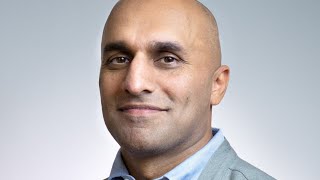
This content was created by GHION.AI . This content was uploaded by GHION.AI . This is a YouTube video titled "Deciding to Become a Founder - Qasar Younis (Applied Intuition)" created on April 24, 2024. It features a conversation between an unidentified speaker and Qasar Younis, discussing his journey and motivations for founding Applied Intuition, his experiences at Y Combinator, and his views on entrepreneurship and personal identity.
Chapters
We would be remiss not to talk about automotive AI. And so I want to talk about Applied and the markets that you're in. You're seven years into now Applied. I don't know if that's gone by quickly or slowly, but I'm curious right now, just if you had to give yourself a rating on a scale of 0 to 10 in terms of where you're at versus where you envisioned when you started the company, how have you. 10 is exceeded your expectations, 5 is met expectations?
Yeah, My expectations were the company was going to fail, so exceeded my expectations. I mean it's a profitable company. We which is, you know, does hundreds of millions in revenue. I mean that's just hard to do. And I'm very fortunate that the company that I started is in that.
Do you really honestly say, do you really?
No, really, you really. With the expectations that you were leaving yc YCCO is a great gig, by the way, if you can get it, like take the job. It's like you work with smart people, Sam, all the YC people, Paul Graham, amazing people and leaving. I'll leave the VC's names out of it, but there are people like John Doerr, Marc Andreess, I mean the illuminator, the true, not just your average vc, I mean the tip of the top. And I asked these people, should I do a company? And they said, hell no. That's so stupid. You can write any, you can get any job anywhere in the Bay Area doing anything you want. You have this product background, you have this venture background. You're still young enough to go run a firm. A lot of times there's firm succession questions like venture funds, need people to run them. And the fundamental reality is it was never going to be Andreessen, Horowitz, Eunice. It's never going to be Kleiner Perkins, Eunice. And in my heart of hearts, when I grew up, I grew up poor. And so I always thought that I did this company thing to not be poor because I'm cynical and there's some part of my brain which is deep. It's that radical pragmatism.
Had you made enough money at that point where you could retire if you didn't want to. So you'd made enough before you started applied, you had enough money where you didn't.
That is when like this truth like that, you know, like self revelation happens, which is like, oh, actually this is the thing that I want to do. And even boiling down, why do I personally want to start a company? It's because I have Strong opinions. And I hate mediocrity and I hate working with people who are just okay with a B plus job. And by the way, there's a cost to that. There's a personal emotional cost to it. You work a lot and it's satisfying to do things at a high level, but it ain't free. It takes a lot of cost. And so I think for me it was just making that decision of like, am I willing to pay that cost? And to me, yeah, like I don't do anything else. This is all I do. You know, that's another thing I think you talk about, you know, the question you asked, like what's not founder? It was not often talked about founders. Like being obsessive to some degree is I think a requirement.
I just want to make sure we didn't lose that gem because so you made this decision, you had enough money where you didn't need to work a day again in your life. You, you had ample opportunity to do whatever you wanted to. And the decision to do this wasn't because you even expected the company to succeed. It was because you loved so much the idea of performing at.
Well, there's insecurity. There's a fundamental insecurity there at yc if you're giving advice to people. And my first company failed like the other company wasn't even a year old when Google bought it. There's a certain level of insecurity which says why am I giving Tony at doordash advice? Like that doesn't make sense and it's great. I talked to Sid from Gitlabs company I was first investor in went public. Right. Who, what right do I have to give Sid advice on organizational development? And I remember saying this to other YC partners and they said, that's okay. That's just the name of the game. We're looking at patterns. And I think it's true. I don't think you have to build a huge public company in order to give advice on it. But there was some insecurity in me which felt. And also I think it took me 20 years. I feel like I'm pretty self aware about my motivations, but it still took me 20 years to really realize that fundamentally I don't see myself as an engineer, as a business person, as a vc. I see myself as a founder. And so you have to figure out what's your own identity. And the unfortunate reality is when you're in this environment, your peers heavily influence you. So you think you might want to be a founder, but it's actually not your calling. And you might waste 10 or 15 or 20 years discovering that actually that's not the thing you want to do.
What is that hidden insight just in case it's not clear about what makes you a founder versus the other roles. How do you know if you.
For me, I don't, I don't know what it is for everybody else but for me was. I just can't deal with other people's bad ideas. Like that's like I hate to say that. Yeah, it's, it's, it sounds so arrogant and I assure you in my own brain I don't think like I'm some, you know, I have all the answers but when I do have specific viewpoints on product development, on whatever the thing might be, I, you know, places like Google, you get along to get along. It's a giant organization. You know, part of it is like shaking hands and being agreeable. And in this job I don't have to be agreeable, which is like such a wonderful thing. Yeah, exactly. And what I like today watch like this company will like fail and like this it will age very poorly. The company's doing well now and so it's like yeah, I was right. Like that was. Those ideas were not completely wrong and, and there's something deeply satisfying about that. And I would say, sorry, I know these are rambling answers also. It's hard. It's really hard. So there's a parallel universe that I go into art. Like I really like photography and the kind of fine arts. And I think in my mind I thought that's not hard enough. The way that I rationalized it is. I'm poor, I can't be an artist. I need to go into engineering because that's the right thing. But I think there was another nugget below in that psychology subconscious which is like this is hard. Like this is the ultimate. Like even if you're successful, even if a multi billion dollar company. We're in the Nvidia auditorium, there's like the bars are so high that you can spend your entire life in this endeavor and never reach the top. Even in hike and mountaineering in lots of other fields, you actually getting there is plausible. In business, I think or starting companies, starting technology companies specifically. It's, there's maybe no limit. And I like that.