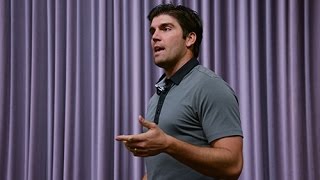
This content was created by GHION.AI . This content was uploaded by GHION.AI . This is a YouTube video titled "Derek Belch: Being Real About Entrepreneurship" created on April 12, 2016. Derek Belch discusses the realities of entrepreneurship, emphasizing the importance of revenue over fundraising, the sacrifices involved, and the benefits of bootstrapping a business.
Chapters
One of the common misconceptions among the entire Stanford football team who's still bitter at me for leaving and not coaching anymore, is that I'm rich. We did 3 million in revenue last year. We went from 4 to 29 people basically overnight from June to August 5th or so. When college camps started, we had to figure out how to actually service all these teams that I was just out on the road signing up over and over and over again. So we grew really, really fast. You have to pay people. My salary last year was $40,000. We'll just put that on the table. This is an entrepreneurship class. If you want to start something, you have to be prepared to sacrifice. And we have people right now at our company that this is an equity play for them, and they are literally just making enough money to pay the bills. These are people that have Harvard MBAs, Stanford MBAs, people that walked away from $250,000 jobs just so they could be involved in something that they are really, really passionate about and that they believe in. So that's something that I really, really, really want to emphasize. One of the tendencies in Silicon Valley is the first question you ask somebody is, how much money do you raise? And I'll read Inc. Magazine and Forbes and Fortune and all these things when I'm flying all the time. And. And I just read something recently about the 30 under 30. No company that was mentioned, did they talk about revenue? All it was was how much they've raised. Well, that doesn't mean anything. That doesn't mean you're rich, doesn't mean you have a business that can succeed. Raising money is great. Don't get me wrong. Congratulations. If you do, it means a lot, especially if you do it from a really reputable brand. But the bottom line is that it's about bringing in dollars as a business. And I think today with the Snapchats and the Instagrams and even Uber to a certain extent, they're obviously bringing in a ton of cash. They burn more than they bring in. Basically, everyone at this school that's young and then people that want to go out and get rich, they forget that businesses aren't all about users, right? They're about actually dollar in, dollar out. So one of the things that we've done really well so far is we bootstrapped. Our office for the last nine months has been a townhouse in Menlo Park. It is literally the size of this. The living room, on any given day, has 12 people crammed into it. There's three sitting on the stairs it is not sexy. As a matter of fact, when people come meet with us, I apologize in advance. And when they get there, they usually say, no, no, we love this. This shows us that you're humble. This shows us that you're hungry. It's something that actually we've turned into a positive. So one of the things that I've been kind of hammering our people about from day one is, is, guys, if we don't raise money, if we can do this organically, we're in control, right? We make our own decisions. Nobody's looking over our shoulders. As far as financial flexibility, that really goes a long way. If we want to pay someone a bonus at the end of year for doing a good job, we don't have to worry about somebody harping on us over our shoulder. I'm not saying that that can't happen if you do raise money, but thus far, we've had a lot of financial flexibility, and it's been really, really neat, and we're kind of a cool success story in that regard.