Designing From Values [Entire Talk]
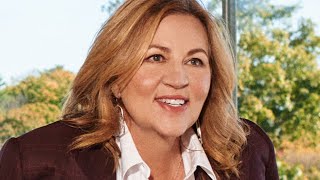
Sharon Prince, CEO of Grace Farms Foundation, talks about designing buildings and supply chains with ethics in mind. She built a foundation focused on humanitarian work and sustainable construction practices, turning architecture into a tool for social impact.
Chapters
Welcome everybody to the Entrepreneurial Thought Leader Seminar at Stanford University which is a seminar for aspiring students, aspiring founders at Stanford ETL or the Entrepreneurial Thought Leader Seminar is presented by stvp, the Stanford Engineering Entrepreneurship center and basis, the Business association of Stanford Entrepreneurial Students. I am Ravi Balani, a lecturer in the Management Science and Engineering Department at Stanford and the Director of Alchemist and Accelerator for Enterprise Startups. Today I have the pleasure of welcoming Sharon Prince to etl. You know we wanted to kick off the spring with a true catalyst for change and we couldn't be more happy than to have Sharon kick off the Spring quarter. Sharon Prince is the CEO and founder of Grace Farms foundation, which is a new kind of boundary defining public space in New Cannon, Connecticut that has become widely known as a global humanitarian and cultural center. Grace Farms is the platform for the foundation and its interdisciplinary humanitarian mission to pursue peace through nature, arts, justice, community, faith and design for freedom, a global new movement to eliminate forced labor from the building materials supply chain. Since opening, Grace Farms has garnered numerous prestigious awards for contributions to architecture, environmental sustainability and social good including the AIA National 2017 Architecture Honor Award and the Mies Crown Hall Americas Prize. Sharon also co founded Grace Farms Foods which offers coffees and teas that demonstrate what the foundation advocates for ethical and and sustainable supply chains. And I think there may be some that you guys all are going to get the benefit. You can be the beneficiaries of tasting some which is in the back of the room here. And for those that are in 178 you're going to get even some more privileged gifts and 100% of the profits from Grace Farms food supports the Design for Freedom movement to eliminate forced labor from the building materials supply chain and the construction industry. In recognition of Sharon's impactful work, Fast Company has named her to its list of the most Creative people in business 2022 for cleaning up construction and the AIA New York and Center for Architecture recognized her for the NYC the New York City Visionary Award. Please join me everybody in welcoming Sharon Prince.
Thank you. Thank you.
Hello.
It is such an honor to open your ETL series with you, Ravi and all of you art, engineering and entrepreneurial students who are really thinking about how to create new things as you can think about architecture which is inherently creating new things. What is so surprising, fascinating and and under realized is the power, the enormous power of architecture to drive new outcomes and even humanitarian outcomes. As a fellow entrepreneur, I think of architecture as a three dimensional expression of a vision. And one other thing Is that you think about architecture, space and I do believe does communicate. So you start to wrestle with this idea. What does space communicate? And also can it embed values into space? Can you do that? Can it be generative over 100 years? What can it do? Well, I'm going to share with you three creations that are all starting with a place. It is Grace Farms. This is Grace Farms. It is, like you said, situated on 80 acres where one of the first things was to preserve the land that was slavery broken up. And then from this you'll see the river building. It's a porous building. It also tests the limits of engineering innovations, which I'll get into, but also creates proximities. And in terms of creating proximities, that includes people, sectors and the whole concept to advance good in the world through nature, arts, justice, community and faith. And actually worked on me because our investment in architecture to do justice and our commitment in terms of justice really created an epiphany for me that initialized the design for freedom movement. And the other aspect is of like, okay, now that you know, you can't unknow it. And I have to think about all the materials are we using when we bring them into site now. Because that epiphany happened after the whole concept was before we built Grace Farms. So those teas and coffees are the other avenue with my co founder to demonstrate what we're advocating for and that is ethical and sustainable supply chains. So now I remember starting off as an entrepreneur like you. I was in college just many years ago is at the University of Tulsa. I was putting myself through school and I was the graduate assistant in what was a new entrepreneurial studies department. Dr. Hisrich was a Rhodes scholar and was the foremost expert on entrepreneurism. He had just written a book on women entrepreneurs. I was like, wow, okay, gender parity, it's coming. It's right here. Not so much. This is almost more than 30 years ago. Right. And this is what I've been working on too. Gender and racial parity and being able to do that. So part of the concept that I employ in terms of being an entrepreneur is being immersed. It's a little different than being passionate and obsessed, which, yes, probably like you and that too. But immersion is necessarily present and active. And when you're immersed, you start to see the gaps in society that you might want to be able to address. You also see opportunities. And when you're immersed, you're also enveloped in a way that you're creating all the senses. Right. That you can start to see connections. So I found my. This is me at Stanford 30 years ago. This is the first time I'm at Stanford. And if you can see, there it is. The 1994 World cup is my first soccer match. So you can tell I'm really all in. Even though it's my first soccer match. And I had 36 hours to get here. So I said yes. You got to be present. You got to say yes and show up. I did that. I happened to also be an outdoor adventurer, so I love to drive fast and started, let's say. So I started six years old, water skiing, about seven or eight, riding dirt bikes, and still have my motorcycle license. And this is ICELAND back in 2003. So now a decade later in Iceland, I thought about, oh, it's so exciting to be able to, like, go full throttle on a glacier. Go full throttle on a. On a snowmobile. At the same time, you could dip into a hot spring. Well, at that time I got there, I was like, oh, my gosh. This is like, I never. Mostly what you saw at that time was very boxy North Face, no ads with women in it. And this is what I saw when I got to Iceland at that time. So cool, right? But what I also saw back here in the United States on the right is an advertisement that I literally just found preparing for this. The same magazine that when I did get the brand, I got the brand of 66 Degree north brought to the United States. I got the North American distribution rights and just love this because introducing the winter collection, also known as the summer collection. And at that time I brought it into the United States, was in Urban Outfitters, Paragon Sports, a little bit of fashion also. Paragon Sports being a very outdoor, active place. And then what you see on the right is what I was dealing with. It is, let's see if you can bring warmth to cold places. Ex girlfriends not included. That's not exactly what I wanted to see. So trying to fill those gaps. And also, when you're an entrepreneur, you're scrappy, of course. Course you're scrappy. You got to figure, you have no budget. You're figuring out what to do. Well, when I brought the brand United States, I just called up the Wall Street Journal, did not have a PR firm, called them up, said, bring this brand to the United States. They did assign a reporter. The reporter came with me for four days. And I mean, fantastic, right? Well, not so much either, as, you know, there's plethora of challenges that you're going to Face. In fact, I think there's probably an infinite amount. But what happens, the way I think about it, is that there's always going to be a challenge of the day and then I look for the good news of the day. It literally has been my practice for 17 years, just every single day. In this case, it was a bit more of a challenge than I thought because I was really, really riding high on this idea that I was bringing the Wall Street Journal reporter. They sold out the company. I did not own the company. I got the North American distribution rights. Did not own the company. They sold it out from underneath me. I had the right of first refusal of my contract and yet I'm not Icelandic. So they sold it. Now I have a choice. There's a day before I'm literally getting on the plane. I have a choice to file a breach of contract lawsuit or do I make sure I get into the headquarters now and bring the Wall Street Journal reporter with all that I had invested in. So what happened is I got the report and I did do both. So now the next stage is to developing retail stores. And the architect friend of mine who is helping us to develop these retail stores, I'm about to now roll out retail stores. And the Soho store went so well, it was actually profitable. Think about a pop up store for three months. For a couple months. Profitable. Crazy, right? Had a dance party basically in Soho with Icelandic DJs. It was really fun. And okay, this is now 2007. Only problem is I did not own the full. I'm not vertically integrated, right? I also did not own the brand. Did not have a margin. The tariffs went up. Didn't have a margin. I mean that eliminated the possibility for me to stay in that company. So I divested. Good news of the day is that Iceland, not good for Iceland, but good for me. Divesting when I did is that Iceland went bankrupt. How often does that happen? Okay, so I mean I can tell you a thousand stories like this that are just crazy, right? But what I did adopt from that and without 66° North, I would not have created Grace Farms. There's no way. Because this concept of space communicates was derived from that. It's also about experiencing nature with the awe and wonder. There were so many aspects. Including the owner's project manager that I hired that was a colleague and through this process too. And he was the one that had built Guggenheim Build Bow didn't answer my calls originally. But then we started working together sort of like his pet project. And so now of course his Favorite. So the concepts that I want you to really think about again is that architecture space is a three dimensional expression of a vision. And it does. Even if you're unconsciously doing so, it still expresses a vision. And we now have this opportunity to reimagine architecture as a driver of humanitarian outcomes and even to be this entrepreneurial platform. All right, so here's the first expression of Grace Farms. It is a really cool expression. In fact, it won an AIA New York merit award for unbuilt work. And yet my role as the entrepreneur is to mark to market the vision and how it's being expressed. So I had a 35 page program that was highly aspirational and also utilitarian needs. So after two years of development, I had to abandon the project because it did not achieve the goal. It's very tough to do, however, knowing that this was going to be a long term project. Went through a whole search to find the right architect. Now that I compared with this is an image of Sejima and Nishizawa of Sana in Japan. The reason why they were so perfect. And it was a long another process just in terms of selecting them. But they were never tethered to existing models. And what we're creating is a new kind of public place. There's not a place like this that was not only in terms of form, but in terms of concept. And so they could think in that abstract way. And you can see here too that when we were, it was an iterative process. So I am proposing concepts like we want to create an environment where you are experiencing nature, where nature's in the foreground and the buildings recedes. They took that further. You can see here that the building becomes part of the landscape. And also other things like we want to create a place, evoke curiosity, new perspectives, create an individual experience and a collective experience. And it just goes on like, okay, very peaceful respite and an active community diametrically opposed. And there was many of those. So now here we are, it's an equestrian, former equestrian site. And now we start to develop. I'll show you a couple of the images that allow you to see that we retained two of the barns. So in terms of reuse and remodeling, very effective in terms of design for freedom because you start to truncate the supply chain at the extractives, reducing the risk of exploitation. And it ends up being the only opaque spaces that we had which were very advantageous as well. Then Grace Farms is the only site in Connecticut that is both leed Certified for how we built and also how we operate. Demonstrating what we're advocating for is always in our mind. How do we, of course, decide to have gardens? We could have the produce that we would also have on site, but also be able to donate and as a place. So here we are really again, immersed in nature, the arts, all these aspects that I was describing. One is to experience nature, to encounter the arts and the arts, meaning visual, performing, culinary, and so forth, to pursue justice. This is Dr. McCwaigy, Nobel Peace Prize winner on the right, and Nicholas Kristof on the left. And to foster community. This is actually the sanctuary at the top of the river that you can see has no stairs because it makes it become part of the landscape. Many aspects. Each chair is individually designed. The height of the stage is determined, so it becomes a more egalitarian space and that you yet see into the landscape. Foster community. Here is the commons, the center of the five glass enclosed volumes and that you can see. People now have to sit with each other. There's no option. There's a few others on the side. You can see. These tables were made from wood that was felled on site. That was part of the sustainable endeavor. But also by doing so, it also reduces human exploitation, because we know our supply chain. And using locally fabricated materials in the United States. And actually, if you know where they are, even wherever you are, it's advantageous. And then in terms of being able to advance good in the world, explore faith, because people of all faith backgrounds, you can start to examine how can we do this together from a faith perspective. And this image I love because it shows you the hopeful space we're meant to, in terms of the space being able to address pressing humanitarian issues. So we wanted to create a light field space that had both spiritual potential and social potential. And you can see here there's many divine interventions that happen along the way. So now the process. What is the process in terms of creating that you can apply to many of the creations you're involved in and will be? It starts with not knowing, and also it starts with creating many, many options. So this is in their studio in Japan. And what I love about this is that the answer was always, we study, we will study. Not an answer that you would, not a linear answer. And it was a really fun process to be going back and forth with them iteratively. But also they had the same way of being. In terms of being immersed. So after we selected the River Building, it wasn't called the River Building. It was actually the solution to A set of requirements, the architecture directive. And we selected the River Building. I thought, okay, it's done. And no, it was like literally many, many years. All the way up to the finish line while you're still iterating back and forth. The that image of Teshima is in Japan where they said okay, now go out and see some of our other projects. I've now probably seen 15 so that I can understand how they were interpreting that architecture. Again, being immersed. So this is the interior. You see how it was situated on the hill. But the interior, this is a mind blowing project. One art installation. And this is just opening when I took that picture. And then some other elements. So you start to think about materiality. And this is really intentional. It's not a very clear. It's more of a blurred reflective spacer. So that everyone has their own entryway, their own entree in. And this is a really important part of selecting them is that I could see on the left that is as if you're walking out in nature. And you also can be having this experience altogether. That long bench I loved. And then on the right, the use of glass. Super fascinating. But what I saw here is that the glass was green and did not quite love that. I still like the clarity and now the process. So this is a moment where I had to let Asejima Nishizawa know that the order of operations this. We'd already been two years now into development, about to go into construction documents. And as we're examining, I did not see a rendering for two years. So I really highly encourage something along those ways where you're not. Along the way where you're not tethered to existing materials that you're starting in. Here you can see what we're doing is I'm determining whether proximities are right, the atmospheric elements. Not really concerned about whether that material. Sure, it comes later. But first are we. Is the order operations right? And at first I thought when are we going to see the rendering? And now I realized like that was elemental to producing the outcome. And then you'll see here too that there are many iterations. I can look at this as an art piece actually at Grace Farms. That helps you see all the variations of all the decision making along the way. But I did have to tell them that the order was out was not achieving the goal because the tonality was intended to be both peaceful and active. But the way that the volumes ended up being positioned, it was peaceful. I realized, oh, it's active, peaceful, active. Achieved many other goals. But it did not achieve that. So we had to switch those. And that was a huge deal to do that. When you're in construction, you'll know it's not a good thing. It had to re engineer the whole roof. It took about six months to make that change of just changing the order of the volumes. But again, you really need to know and be confident in your vision of what you're trying to create. And you have to articulate beforehand. You have to have to articulate the values. You want to also embed the team members that you want on your. You want to be a part of your team. And I think that's. It was a really important way of being able to determine whether or not we were going to. Okay. Oh, okay. This other one too, I want to show you is that there's rarely a form of building like this where it again becomes part of the landscape. But this elevation change afforded many of those aspirational ideas. Just the elevation change so that you have these sight lines along the river. You're also even curious now if it's glass, like what's happening here, what's happening over there versus opacity. And I asked for ambulatory experience because when you're moving, you're creating, you're creating new perspectives. Okay. So I had the, the whole, the whole now, now we have the right order, the project's ready to go. About to go into construction and lo and behold, another challenge. This is, there's many. This is just one of them. And this is. Well, I really want green. We, we definitely value green Energy. We have 55 geothermal wells that power the river building. I just didn't want to see in a landscape a cell tower 150ft with a windmill on top. So about 10 lawyers from a top communications company was coming in to make this happen. And there was state laws to proceed local. And I had to go up against 10 of those lawyers myself. So pay attention on your business law. Definitely do. I use it all the time. And what happened is that just prior to that, that one rendering did emerge and architects newspaper identified Grace Farms as an architectural gem. So I use that in my defense because that was one of the rulings that said if there's a treasured property, then those cell towers have a way out. So you have to be always. You're on deck is the point. You're going to be on deck, so be prepared and then you go into building. So now prototyping in architecture, it's one to one huge. These models, many models on site determine whether this material is going to reflect the sky, make the building become part of the landscape. And now the glass. So we spent two years also on glass and the glass. Now I go over to Shenzhen to take a look at the glass. Here we are. We have over 200 individually curved in size glass panels that need to be clear in order to see the landscape. And so when I'm there, they're very excited. This is it. And I had let them know that no, it's not clear enough. We're not going to go through all this and not have clear glass. Their response, One of the best, like literally top glass, folks. And actually Michael Ra was here from front at Grace Farms just a couple of weeks ago and discussed it again. What's interesting is that we didn't create a new type of glass after that because that was pushing. We were at already the limits of what we could do in terms of creating the glass system in the Northeast that would be able to withstand temperature and had all the art factors that we need. So instead, Sejima and Nishizawa worked with everyone and created and altered the design. So we extended the roof and took off the laminate. And so therefore, with that simple solution. Right. What I didn't realize until just a couple weeks ago, I forgot is that by removing the laminate, you're now removing a contaminant. And now that glass can be recycled. It's not recycled right now, just so you know. So the flat glass right now is generally not recycled because those contaminants and so not through recycling this. But you can see like all these. Some of these are just pushing up, asking the questions about how to improve and also really to reach the goal. This is what typical mullions look like, the separators. You can see it. That says a black one on top. And did not want to see a black one. I did not want to see a black separator and system there. So we actually reduced the size of this spacer. These are your double glass. This is an IGU unit and reduce it by 55%. So you see the gray below really wanted clear, but I had to compromise it gray. So we had that was that commercially we could end up doing and make it warrantable. Then we had these mock ups. So here's a large scale mockup. And we're still testing and testing, but we did achieve the goal. Here it is. So you can see all along the river. Okay. In construction. Let's see. Okay, this is it. Take one quick sip. All right, so now we're in construction. And I am super fascinated with the whole process. I had never built anything, by the way. I also never had a retail store. I think you're in a great position because you're not tethered to any models or anything. This is where you have so much promise. You don't need the experience. You need to actually know. What's so valuable is knowing what you're trying to achieve. So in this case, I was not invited to the construction site meetings as an owner. Usually not, and certainly not invited on the site. I was there every week and I loved it. I mean, come on, it's just. Look at that. It is so super cool to see all the materials. And even in our case, they were voluminous. And that actually informed design for freedom. Because I understood even though this building looks so light on the land, it had the volume of material. So it's mesmerizing. It says quite a lot. In this case, I had just been to Sundance and I was like, wait a minute, we have arts. How are we going to show any film in a glass building? So in the middle, in situ, we had to take the footings out and created a space in the lower level. And always immersed. I think a little too immersed here, but I got mud up to my thighs. But I love this image because now you see these are inverted egg crates. That is a system that we brought in from Europe. It's not really. Hopefully it's going to be more adopted because you're using less concrete as you pour it over. And then the airflow acts like a radiant floor and the air flows out to the perimeter grills. So what I see here too is we have cold rolled steel. You have FSC certified wood. FSC certified wood at that time did not include fair labor inputs. It does now, but certainly reduces again the exposure to forced labor in the supply chain when there's more inspection of it. Now here's old school modeling. We had to determine the height of the stage. Literally just for that, just getting out. You see in the background too, there's just cutouts of people making sure you can see, but again determine that height of the stage. I think even since I was little, I loved walking on a roof. So this was actually very informative because now I understood how the roof was being designed. What you see is this beautiful, beautiful roof. But I was able to see how it was even made by engaging right by being on the roof. And then in this case, it does look beautiful. To achieve this is also extremes. We went to the Extremes because normally you have protrusions in a roof. We even had to create a totem for the exhaust of the kitchen that was in the landscape like another whole section. So Kazuya Sejima and Rui Nishizawa as immersed and obsessed to ensure that we were reaching the goal. Now underneath the flooring, I started to activate the space with the arts to warm it up. So it's inherent in the whole atmosphere and the volume of it. We had an artist come and we're just using nature arts and so forth. Also invited dancers. I don't think. I don't know that. Again, OSHA rules and all these other things I was applying here. But how cool, right? And so this is the court. That last volume that I didn't speak about. It is a. The glass is. You can see the perimeter at the top. So it's light filled and it's submerged. So it's submerged into the landscape. On the left also has There still now is an art piece and both Marcus Miller is on the right. He is a Harvard mathematician who was just starting embarking. This is 10 years ago, 2004 on his journey to be decided to go into being a saxophone player professionally. Right now he's playing with Jon Batiste and he's also our music director. So when you're creating something new, our team are all entrepreneurial but there's never been a specific job that would line up typically right. And so the potential of people to contribute was really enormous and fun. And we could also think about how we're going to create that team. And here's at this point before we open not only inviting the arts to be a part of the place, also had our stake in the ground in terms of justice. And that is to end modern day slavery. And we've had this point within the first year. We had the UN University come also inviting a more multisectoral group. And we had a report that went to the UN Security Council and passed 2331. So now what's happening so much there's like an all happening simultaneously. So people have a chance to engage as they choose that outcome. I'm describing Design for Freedom. This is at our summit just two weeks ago and we had 550 come. Just to be super clear, we're taking on the entire construction sector and creating this radical paradigm shift to remove force and child labor from the building materials supply chain. And it takes a whole industry to become a part of that. And that's what we did. The built environment does have relationship to nature and People. And the question that brought people around the table is, is your building ethically sourced forced labor, free as well as sustainably designed? As a question I asked end of 2017, beginning of 2018 to get people on board. And the answer is, we don't know. If you look around here, you don't know where these materials are made from. Unlike even clothing, you know the provenance. You might not know who, but you know, oh, I know the origin and a piece of clothing, but you don't know. And these are materials that are highly fraught. So the one thing to note is that with construction, you think about labor, but it's mainly on the job site. The whole sector has been given a labor transparency pass on the material procurement side. And half of the cost of a building is the material procurement. So construction is the largest industry that has the largest industrialized industry at risk of forced and child labor. It's also the most egregious violator of carbon emissions at 37%. And they do go together. We can talk about that another time. Why that relationship? You might be studying that, but the size of the industry, nearly 14 trillion in consumer spending and spending globally. And there are new numbers that just came out of estimates of the illicit profits that are being earned by subsidizing with forced labor. 236 billion of which that's on modern slavery, of which $63 billion derived from forced labor. At that time, there was no list of materials. And this is literally only five, six years ago. Right. 2018 at the beginning, no list of the materials. So we issued that. And I also explained how that happened because we started to. Before I do, the most important thing is people, not the numbers. There's 28 million people in forced labor conditions around the world estimated, likely more. And it's been escalating. The last estimate that was revealed was 25 million a few years ago, five years ago. And it's escalating, it's not decreasing. Even with more knowledge, right. About supply chains and forced labor. Here's that list of materials that really some of them have long standing histories of forced labor. Rubber. You might be studying these in different ways, but rubber, glass, fiber, textiles, steel, electronics, bricks, Think about, right? It's crazy. Timber and copper, stone. So we read the rest of them. Iron, minerals and polysilicon. Okay. These are at risk materials and we're not expecting our supply chain. Now solar panels, you saw polysilicon. It's fraught. I mean, it definitely is. Solar panels are not sustainable. They're subsidized. With forced labor made with that. So I know you're working on projects. Okay, this is a very important concept because 35 to 45% of all the poly silicon in the world is being sourced from the Uyghur region of China. But that's not the only at risk material. You have steel, copper, aluminum, glass. Glass also when I described that before, there are no third party audited certifications for glass that include fair labor. There are for many others that we put in our toolkit. So now we also see some low hanging fruit. Right. There's been, I said first food is called to be accountable, then clothing. Next is shelter. Clothing has already been accountable. And there are certain transparency certifications that have been put into place. There's more transparency in that sector. So now we're looking to take that sector and that accountability and convert that into interiors. So curtains, chairs, carpet, just the textiles alone. From that, from the garment industry we can convert and we're doing that also. Now this question that I got quite often is like I've already. And you might be thinking it's just like I've already. There's so like lead certification. I'm not just lead, but in being sustainable takes a lot of effort and it actually costs more quite often. And so people asked me, is this going to cost more? Is this going to cost more now that I have to now go through this process to be ethically sourced. And in my head I'm thinking that is crazy because I'm not going to accept subsidizing our ROIs to slavery. So that's what I was saying. I'd be saying, look, we're subsidizing our ROIs with slavery. And the response was, okay, now when you're developed. So in terms of trying to explain how to create a movement, in this case, it's also creating some succinct language that can help to be adopted more broadly. So instead converted that thinking and says it can cost more. Are we willing to accept the slavery discount? I'm not willing to do that. So I want to show you the key factor here. When we say challenging, really fair market value. Fair market value is not fair. It's not the current price if it's subsidized with forced labor. Another way to think about it is that if the fair market value with fair labor is here and the market price, it's really the fair market price up here with fair labor, but the market price is here without inspection. You don't know, it may or may not, that delta is the slavery Discount. So that's a term that is starting to be adopted. I proposed that about more broadly a year ago and now the good news of the movement is starting to be adopted. And another thing about building movement from the very get go, the urgency of this situation really made me think about having the full ecosystem to really come together. It's not just one sector that's responsible. So these you'll see in blue, it might be a little difficult. Well, you can see it. Yeah. These are the pressure points that you do have agencies. So whether it be owners and developers, there's an owner's project requirement. You could say you can't actually right now have a fully ethical supply chain without forced labor, but you can determine a subset and you have media is important in terms of awareness. Government agencies on contracts and extractives and manufacturers obviously documenting as a university being able to initialize research, which I'll tell you about is happening at Stanford right now and then the public demand, that's a very important part of the equation. So bring people around the table. And the idea from the get go is that we need CEOs and industry leaders to be a part of the working group because we want them to be able to make immediate decisions. And how does that happen? You ask them. So everything that most everything it sounds like, oh, you had connections. No, I asked those who built Grace Farms and then I asked them to say who else do you know? Let's ask them. And we're going to have gender parity on this. Looking at also in terms of gender, racial parity, trying to make sure that's part of our concept of how we want to create that team. And did so then. Then the next part that's really important too is to have you as university students. Really this is a gift to be here because you as university students are able to imagine the future but like I said without being tethered. And we're now have been engaged with probably 25 universities and I think it's a very important part of being able to for you to carry the baton. So our first industry report, we formally launched the movement 2020 and those working group members, 30 of them were part of that, are part of it. You can see it in the report. Then people ask, okay, just tell me which one of those materials are made without forced labor. Well, we're at the beginning of the movement. We need the transparency. So we did start to say, okay, you have to use a toolkit. It's not going to be a certification out there already. We have to create it we have to start to. We developed a toolkit for the industry to start using and they are. And then our creative director Chelsea Thatcher is one of the co authors on the report along with the former ambassador on modern slavery. She said okay, what are we going to do next? Again asking the questions, what's next? So now we need to have pilot projects. So here they are. They're in locations on three different continents. This is in three years time, three continents. And that means you have to get the whole team, like an owner, the architect, engineer, construction manager to agree to do this. We had three continents, 12 projects and one really beautiful project that aligns is Shadow of a Face with Nina Cook John which is the Harriet Tubman monument that replaced Christopher Columbus monument. See that shot of a face? It's really extraordinary. And Black Chapel again limited materials in London at the beginning. And then we had a full scale project in New Canyon Library. Turn construction is on this project and you see how now they have adopted Design for Freedom and are committed as well as Miller Knoll, a top firm too. And then the bridge in India, this is now a bigger project, a million square feet. And it's with one of the key industrialists there, Sunil Minjal in India where there is the highest number of those in slave conditions. So it's pretty bold to do that too. And then our team's now starting to get RFPs for new projects. One of them that we just announced. We announced five new ones last week at the summit and Karsh Institute of Democracy for the University of Virginia is on board. You can imagine that capacity we're going to have to accelerate the movement and Design for Freedom Ethical Supply Chain Workshop Turn Construction and State Department OBO said you've got to bring suppliers to the table. And I said you're the one who has all the suppliers. So let's co host a working group which we did just November and have a report now that we also published last month. Now this is the main concept I hope that it you'll carry with you along with slavery discount is that we need to ethically decarbonize. We're at a point in time now where we're already myopically focused on let's say on materials in terms of embodied carbon. And what we've left out of the equation is embodied suffering. This is the time now, this next step. We coined the term Ana Dyson from the Yale center for Ecosystems and Architecture and I coined this term and that was just in September. And now the press is already picking it up. And we're already starting to have that mindful because it's important, because as we're decarbonizing, we have to determine who is making these materials. So we are accelerating the movement through the summit that just happened. 550 came important to tell you because we had 75 students from 30 universities. And on the left is yours, Sarah Billington, who is the chair of the Civil and Environmental Engineering Department here. I don't know if Antonio's here, but Antonio, so great. He is a PhD student who has now initialized the Design for Freedom research project. This is how cool this is to trace and understand the provenance of concrete. Don't know if this has ever been done anywhere else. This is incredible. And then the middle is students from Pratt and they're architecture students with Kai Uwe Bergman, who I also just invited to be part of the working group. They operate in 40 countries and it's pretty exceptional. But what they said, the students said this last week, a couple weeks ago, is just that. They said, why is this part of our curriculum? And I want you to know that Sarah is already hoping to make that happen here at Stanford. On the right is Princeton students with our structural engineer, Nat Oppenheimer. This is happening today, which. This is one of the panels that we had. It was called Navigating to Yes, with the ACE team and legal. And on the left next to me is Sarah is Leslie King. She's a killer construction lawyer. Been working with her for a number of years. And then then part of the working group too. Thing that's so important about this now is how can we get this into contracts. So on today's loop with all of us. So I'll have to chime in when I'm done with this, but we're trying to wrestle with the dilemma that persists between being compliant with existing laws. There are now laws not going to that, but there's laws that are now making us accountable and the capacity to be in compliance. Big dilemma, right? But now we have great minds on it and working on it together. We also now want to initialize a public demand. And so with Every Fiber is an exhibit that we're opening next month. And it does include Nina Cook, John again, and in the middle from Pentagram, been working with Eddie for 12 years and Anna Dyson from Yale. This is the exhibit. And not only are we going to create an understanding of the materials that are fraught, but there's a biowall there that is really going to be extraordinary. You'll see that when you Come hopefully, but it shows the future of materials. Then lastly, our greatest farms, teas and coffees, which I hope you get a chance to taste, but it's important. We're demonstrating what we're advocating for B Corp. And it is a new structure that is wholly owned by the foundation that gives back 100% to design for Freedom. So this is again an entry point for the public to engage and even learn about Design for Freedom. You'll see that logo on the back. And this is in Darjeeling, which is considered Darjeeling tea, the champagne of tea. Again, immersed. And so I just really, really invite you to be able to think about the agency you have to create a more humane future. And also note that we all do have agency to Design for Freedom. That's it.
That was so, so, so terrific. I know we're coming up on. We're almost at the end of the allotted time and so if there are any burner questions, please raise your hand. Otherwise I may just take the liberty of asking a question myself which is. You know, I think one of the biggest gifts, Sharon of this class is that the students get to feel the agents of change, you know, firsthand. And I think one thing that's so self evident, I think everybody can feel this is the buoyant confidence that you have. You know, this is a narrative of like all entrepreneurial journeys of challenges. But I'm curious, is that confidence something that you cultivate? Are there practices that you do that you treasure now that you wish you knew of when you began? Or were you just born with this effervescent energy to overcome challenges?
I really believe that it's the micro every day stands that you take. And I do that all the time. I do that just every week. I said examples of like, okay, bank account puts the male's name first instead of the female. Me, but my husband's on my. It's like, no, it's me first, not him. And I have literally been write all new checks. It's just like there's little microaggressions, you know, that people that I think are improper. Like that's not how it should be. So that's just one example of a thousand. But it's just inside. I don't know, just every. It's a practice and I just do it all really almost every day. It seems like there's like a correct like you're trying to help see in a positive way. Okay. No, there's a better way forward with.
Even small acts just getting energized for taking action on small acts. And then I also noticed that you were saying that every day you're conscious about what was good that day.
Yes, yes. Oh, that's super important. No, because you will not. And actually there are. When you're looking for, when you're looking for the good news of the day, which you have to look for it, it's sometimes not obvious. So I literally say, okay, and the good news of the day is. And the good news, you're saying that.
To yourself or you're writing it down.
And I say it out loud.
You say it out loud to yourself?
No, no, I say it whoever's within six feet. So, no, I literally do. And the good news of the day is X and Y.
Well, the good news for us today is that we had you, Sharon, kick off etl. So thank you. I have to draw it to a close because we're out of time. But thank you all for joining us for the kickoff next week, we're going to have Kazar Yunus, who's the CEO of Applied Intuition, joining us. And you can find this talk and others on our YouTube channel. It's the E Corner YouTube channel. And more materials you can find at Ecorner Stanford Edu. So thank you all for joining.
Thank you for having me. Sa.
More from GHION.AI


O processo de reconhecer limites, mesmo quando a vida parece exigir sempre mais.





Depois de tantas histórias, aprendizados e pausas necessárias, o @interior_iza está de volta



