Ed Catmull: Creativity, Inc. [Entire Talk]
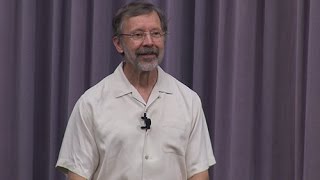
Ed Catmull, former president of Pixar and Disney Animation, discusses his book Creativity, Inc. and how Pixar built a culture of innovation through practices like the Brain Trust. He recounts founding Pixar at Lucasfilm, working with Steve Jobs, and applying those lessons when he moved to Disney Animation.
Chapters
Today we have a special guest. We have Ed Catmull from Pixar. So he's the president of Pixar and also the president of Dixie— Dixie, I knew that— Disney Animation. Dixie's a little different company. And what we're here today is to talk about a book.
But Disney does use a lot of cups.
Disney does use a lot of cups. They do, I would imagine. To talk about his new book, Creativity Incorporated. So Ed has, and just to give just a little byway of introduction and also to give a plug, I really, and I just said this to Tina Seelig who's sitting over there somewhere, I really do think this is the most useful and interesting creativity book I've ever read. And note that I wrote one, so I'm like putting it ahead of one of my books. And the reason it's so, What's so interesting, in addition to the fact that it's very well done and Ed and I were just talking about the very compulsive process by which he and his editors went through to make a great book, is there's kind of no matching Ed's sort of life and his path, which we're gonna talk about. Of course, Pixar, and then on top of that, he weaves together all these sort of ideas about things that you can do to build a more innovative and creative company. So that's what we're gonna talk about in you used Pixar as the background. Just one little comment that I thought was sort of amusing, I was lucky to be one of among 40 people who were given an early version of the book to read and give comments. And this is sort of a hint into, I think, Ed's personality and style is that, so having, being sort of like a management person, I've read and commented on a lot of business books, especially ones by successful senior executives. And after reading the first draft of it, I guess it was the second draft, one of my comments to Ed was, "Not enough narcissism," which I didn't think was ever possible. And what I meant was I didn't want him to be more of an egomaniac, was I wanted to hear more about how he was feeling and thinking and what his reasoning was. And then just having spent the last couple of days rereading the book again, I think he really has done a magnificent job of bringing his perspective without real narcissism, it's just your perspective. So without further ado, let's start getting to questions. So in rereading the book, one of the things that still strikes me is that as a young boy you were sort of fascinated with Disney films, but then you did this weird thing, you went off and went in another direction and got a PhD in computer science. Ed did an amazing thing, this hand, was that your dissertation?
No, it was a class project.
It was a class project, describe what the hand was.
Well, I— by chance I happened to be at the Foundation School for Computer Graphics and I sort of took a class and everybody was supposed to make something and there was some software they had. Now at this time everything was made out of polygons or quadric surfaces and that was it. And they didn't show enough promise and so I thought what I would do is digitize my left hand. So I made a plaster of Paris mold of it, And I learned later that you should either shave your hand or put Vaseline on the back. And then I carefully digitized this, and then I made a little movie of it. And it was shown at the computer graph— excuse me, the ACM conference, because there was no SIGGRAPH at that time, back in 1972. And it was only those of us who actually ignored the existing software and wrote our own that stayed in computer graphics.
So that's— to me, I think that story is sort of diagnostic and maybe we could talk a little bit more about that. The next thing I want to get to is this amazing experience you had at the New York Institute of Technology, but so there is sort of your boyhood dream of being sort of a graphics person and then you kind of move into computer science. So maybe you could talk a little bit about how you thought about bringing those things together and how that's sort of affected what happened subsequently.
Well, for the— I grew up in the '50s and so my parents— and I didn't know this at the time because we were just growing up, it's a safe neighborhood. It was only years later I looked back and thought, wow, they just went through the Depression and World War II and now we were in this bubble of the '50s and the two iconic figures at that time were Walt Disney and Albert Einstein. So I wanted to be an animator and I watched Walt every Sunday night explain things and I read about it and I did a lot of drawing, became fairly good at drawing. And I liked math and physics and when I got out of high school, I realized that I had no idea what the path was. To get to be an animator because there were no schools for it. So I switched over into physics and I got my undergraduate degree in physics and I got a second undergraduate degree in computer science where I was going to study computer languages at the time. But I returned to school and this is during the height of the Vietnam War so it was important to be in school. My draft number was 30. That probably doesn't mean much to people nowadays, but it meant an awful lot then. And I was at this great school and when I took this course, I recognized that the art and the technology side could come together. And while the images were very crude at the time, and there was no way you could say this could go on any entertainment thing. There was the potential there. So I worked on solving problems of trying to make it so that the images looked good enough to go into a feature film. And when I got my doctor's degree, I went out with the goal of creating the first computer animated film. And my prediction at the time was that it would take 10 years for us to solve the problems. I was wrong. It took 20.
So you were optimistic. So in between, I mean, one of the most amazing stories in the book to me is you got this job offer from this guy at the New York Institute of Technology. This guy, and maybe you can talk— so the guy's name is Alex Shure, that's his name?
Alex Shure, Dr. Alex Shure.
And so one of my favorite parts, you read this in the book, is that his word salad. So he would say things like, our vision will speed up time eventually deleting it, things like this. So this guy apparently was quite a character. So why don't you describe a little bit about this early sort of attempt I guess to solve this problem, sort of amazing.
Well, what was really cool for me just coming out with this vision was here was a man who ran this college on Long Island and he wanted to be the new Walt Disney. Now, he never said he wanted to be the Walt Disney, what he said every day was he didn't want to be the new Walt Disney. But he was willing to fund it. And at that time, I was in charge of this brand new lab and hiring people. And Ali Rae Smith, who graduated from here, was actually my second hire there. And it was this amazing opportunity. And here was a man that was willing to fund it. But at that time, I did not want to be a manager. So I had some theories about how to manage so that I could get some really good smart people in there and have them be so highly self-motivated that I wouldn't need to manage them and I could do my interesting work. And so 5 years later, I was hired away by George Lucas and we had actually a pretty great group and had made a lot of right decisions. But I remember at the time looking back thinking, okay, when I came here I had some ideas about how to manage and one-third of them were an absolute crock. They just were bad ideas or naive. And two-thirds of them actually were pretty good. And I felt going forward, into Lucasfilm now where there was this incredible opportunity, that the ratio would probably be the same. And the reason I say like 1/3, 2/3, because most people have heard the 80/20 rule and 90/10 rule. And actually I think the problem is those kind of delude you because they make you think you're better than you are. I think you're better off saying, you know, I'm probably wrong more than I think I am.
So let me— let's talk a little bit about LucasDays next and then on to sort of Steve buying Pixar. But one thing that really struck me, we were just talking about a minute ago, was how open you were. So you did a whole bunch of things that almost sound like modern open source to sort of build the knowledge around making computer animated films. So how did you come to that decision and how did it help and the like? Because I mean we look how closed and how paranoid the companies are, including one Steve Jobs founded, for example, but it's sort of an interesting decision that entrepreneurs, a lot of entrepreneurs in the group would have to make whether to be open or whether to be closed.
Well, I came out of a university environment which is very open. So I was inspired by that and I would say, it was an— at the time I knew it was an extraordinary environment in the way that we share things with each other. So, and I came out with this idea of making a film and I wasn't the only one around who wanted to do that. And I was aware because it was actually a really small field, we're talking about a handful of people here. And they wanted to get there first, they're very competitive with their ideas and so they did not want to share their discoveries. At this time SIGGRAPH, the computer graphics community, was brand new. But my belief at the time was that we were so far away from what we needed that the ideas that were current today would get completely bypassed. So we published everything, and the rationale was that if we publish everything, we're more likely to attract the best people. So we began to accumulate people that not only shared in the vision, but they were very good because they liked the idea of sharing. And we were rewarded because not only did we get these people, but we were participating in a bigger community. And today most of my friends are still in this community. And I really highly value them. We get together all the time. And Steve never actually tried to prevent us from doing it. Even when Steve was there, we always published and to this day we still do. In fact, for the last couple of years, the papers coming out of Disney and Pixar have been the single biggest block of papers from any institution.
So you've maintained that openness despite Jobs' infamous sort of secrecy at Apple. He was okay with you operating?
He never applied it to us. He said, do it my way.
So let's move on and talk— so you mentioned you got hired by George Lucas when he was sort of at the height of sort of early Star Wars fame. Tell us a little bit about what you learned and what happened in the early days with Lucas. And then tell us about how you almost got bought by General Motors, which is, I think, sort of an interesting plot twist. It really surprised me when I read it.
So George had just made Star Wars in 1977. And he was working on his second film, Empire Strikes Back. And he was going to take a big risk with it because, as you know, it ends with a cliffhanger. He believed that the technology of the time is one of the things that helped Star Wars stand apart. I mean, he obviously believes in the story, but he had the best people working with optomechanics, which you need for doing blue screen matting and those kinds of things. So he was the only person in the industry that was willing to fund bringing high technology into film. So he hired me to bring in expertise in digital audio, video editing, and computer graphics. So we then got together and I had learned something about managers, so I got somebody over each group instead of trying to have a flat structure. I got Andy Moore who came here from Stanford and Alvy running the graphics and Ralph Guggenheim over video editing. And we just start plowing ahead with full support from George. And it was exciting, it was rewarding. We were also off to the side, that is while they had these really good filmmakers there, it was clear to me that what we were doing was was completely and utterly irrelevant to what they were doing. But it's George's money and he could spend it the way he wanted. So that was kind of the attitude. So we're off to the side busily doing things there and—
So you had two pretty good early sugar daddies actually if you look back, that's pretty good.
Well, that would actually— I count ARPA, now called DARPA, as the first one. And ARPA's way of running at that time I thought was enlightened. I think they went downhill after that and I think they're back on a better track. But their funding of students across the United States with very low bureaucracy I believed was brilliant. And at the time I knew it was great. So that's why I loved the model. And then there was Alex Shores, the sugar daddy, but he knew nothing about filmmaking. And then there was George Lucas who had just made Star Wars and then of course the next two were phenomenal successes. So it was an amazing adventure with exciting people and all these—
So it was great until it wasn't, right?
Well, in this case George and his wife got separated and George wanted to maintain the control of the company, so She got the cash and he got the company. And so they were then cash poor. And at that time it was— the decision was made to sell us. We had built some hardware that we had designed, so we were going to use that as a basis for the business. And we brought in VCs and we put together a fairly difficult deal to sell. But in the end, it was Philips Medical and General Motors who came through and were willing to buy the company for— to give $15 million to George and give $15 million to us to get us going. And it was within one week of signing when within General Motors, the EDS part, the Ross Perot holdovers and the Kars people got into a war with each other and it brought all the deals to a halt and so ours fell apart. We were very close.
But what this was is so they weren't a film company, you were selling a piece of computer hardware, right?
Yes.
What was it?
Well, it's called the Pixar Image Computer. It was made to composite images together, but it was 4K resolution film, so very high resolution. Really fast for that, but it turns out that it was also very good for image processing. So we had, as we started the company, a lot of orders from three-letter agencies around Washington, D.C., where the box would be delivered and we'd never hear from them again. And then in the medical image industry where we did the first volume imaging, And then we entered into a contract with Disney to color the cells. So that hardware we built and we had to learn how to manufacture. So when Steve bought us, I'm now the president, I know nothing about being the president of the company, I don't know anything about manufacturing or sales or marketing and there wasn't anybody in the group that did.
So why did Steve buy you guys? That's not exactly an endorsement, the last couple of seconds.
Well, no, no, actually, I mean—
Same sense.
I know. The thing was Steve had worked with consumer products before, but he had never worked with a high-end product, so he had no instinct for the marketing, pricing, selling, or manufacturing of high-end product. So basically none of us were—
But when he bought you, was he buying a computer hardware company or was he buying a movie company, I guess is sort of the question. What did he think he was buying?
Well, we were still years away from it even being a practical. So he was buying the people. Now what happened was after he— we first met him when he was at Apple, then he disappeared for some strange reason, which we learned about a month later, and then he reappeared and he wanted to buy us to use as the foundation for this new computer company. So we declined. So then he went and got some—
The new computer company was NeXT?
Yeah, well, he then went and got some people.
Okay.
And that then became NeXT.
Okay.
And after he formed NeXT, I ran into him at SIGGRAPH, which by coincidence was in San Francisco. So we walked the floor and he still wanted to buy us as a group, but now it was to be what we wanted to be. Okay. So we then entered into negotiations, which itself is an interesting long story, but we won't go there. But it resulted in him acquiring us from—
So far I don't see much sign of an organizational strategy. Are you somebody who believes— this is an aside, but it's really— do you believe in organizational strategy after going through— because we haven't gotten to the story about how Pixar emerged and became a film company. What's your view about sort of long-term planning and organizational strategy?
Well, at the time I didn't— I mean, other than the fact that I was reading a lot of books to try to figure it out, but I couldn't actually connect with them. It's like surfing, you got to be at the right place to catch the wave. Well, I was never at the right place. So you were just tumbling around there in the ocean. But in terms of strategy, in one sense you could say yes, we had a business plan, we did so forth. But I believe, and I'd say this very early on, is that for all the planning, it's like when the reality hits, I'm going to adapt to the reality. Right. So those plans quickly went out the window for a variety of reasons, either because we had miscalled it or we didn't know what we were doing. There are a variety of reasons there, but in all cases we kept rethinking and trying to adapt to what was there.
So you were— they call it sort of improvisation. Our colleague Kathy Eisenhardt always talks about how a lot of times you improvise and respond to what's in front of you and the plan goes out the window. Constantly. So let's talk a little bit about the early—
Still doing that.
You're still doing that. Yeah. Talk about sort of the early days. What did you do before you became a film company? Because there was a— how many years from the time that Steve bought you to the point where you were sure you were a film company? Because that went on for a while.
He acquired us in '86, beginning of '86. Okay. And we entered into our contract with Disney to make Toy Story in '91.
Okay.
So basically it was 5 years. And in the 5 years we had to go from nothing to hiring the people, figuring out manufacturing, which was an intense and very educational experience in a surprising way to me. And I learned something that which just affected my outlook. But we weren't big enough to keep creating new hardware to actually keep up with the wave that was happening in the whole industry as a whole. And so our business plan basically did not work and then we had to figure out how to gracefully get out of it without screwing our customers. One of our customers was Disney. And I'm looking at this saying, okay, while we're kind of doing okay here, I mean we're a little underwater, so that's kind of It's kind of okay, it's not all that okay. But you could see where it was going, it was going more underwater. So how do we get out from this? And so a guy called me who was running some other company, he was acquiring all of the image processing companies, figured that if he got all the different products and consolidated into one company, he'd have a sustainable business. So he called up and said, would you be willing to sell your hardware business? And I said, well, let me think about it. Click.
Yes!
So called him back the next day and said, yeah, we will do this. And so we sold it for $1 million. And the thing was, I knew that they would never pay the $1 million. And the reason we did it was they would keep manufacturing the box for Disney while we were rewriting the software to go on to Silicon Graphics boxes. Oh. All right. And it turns out they did fine, they lasted for several years, but ultimately, which we knew, they were doomed. But it—
So that's an argument for selling something for nothing and it's still the right thing to do, it's sort of an interesting—
Well, yeah, we were trying to protect them and—
And Steve was okay with that? Because I mean— Well, the reverse was, Steve tried to sell the— by the way, Steve tried to sell the company to Microsoft and Silicon Graphics sort of in between.
Yeah, and Alias there, so— Oh yes, so that was— it was a very unusual time. First of all, we were losing a lot of money and so by the time we were— we had done with this, Steve was $54 million in the hole. So that puts us in an unusual circumstance because you logically would say—
And this was before Steve Jobs was really rich, this was like a substantial portion of his net worth at that time as I understand it.
Yeah, I think the biography said he was worth $100 million at the time, which I I don't think was true, I think it was probably double that, but he never said. But $54 million out of any one of them is a significant chunk. So it was very difficult for him and so he would sell, but what he would do when he would try to sell, like to Microsoft, he would ask for this number which is outrageously high and they came back with a really big number, but it wasn't the number he asked for. So I'm thinking, well, okay, it's over with. I know it's too big of a hole for Steve, so they will compromise in the middle. But Steve wouldn't compromise. And this happened 3 times. So I finally realized he's actually not trying to sell us. He's trying to validate whether or not we're worth something. And as soon as somebody says they're worth something, well, he's not going to let them have us. So we dumped the hardware business, we started selling software, we started making commercials and because of our— one, we had maintained a superb relationship with Disney through all this and because we had won awards with the shorts, because John directed these shorts and we were making very good commercials, that we were in a situation where Disney now having these 4 remarkable films thought there was a big appetite for animation, so they took a gamble on Nightmare Before Christmas and they thought, well, that's kind of idiosyncratic, computer graphics is probably just as weird as stop motion, but we'll take a gamble on it. And the term they used, it was boutique animation. So we entered into the contract in 1991 to make that film.
For Toy Story.
Yeah.
And that was your first film. So when you were— talk a little bit about what you learned and what happened during the making of the first Toy Story because I want to hear a little bit about that and then one thing that's sort of interesting that I had forgotten until just today when I was rereading it, Steve decided to do the IPO before the movie even came out, was that correct?
Yes.
So sort of amazing. I mean, so you still had made no money at all.
Yeah, we made no money.
So this isn't the way it's supposed to work, they tell me, in your venture capital classes. So it's sort of an amazing story.
So, and this is where Steve was showing his brilliance. Now around this time, Next is kind of not working out so well. And I've got a good relationship with Steve, but— and all of us do, but we didn't want him there full-time. He was really good part-time because he faced our agenda and he let us— excuse me, I keep raining things in. Just put it on the table. We are out trying to figure out how to make this movie and we were a group though that had been through failures together. So we had all experienced that and it was really difficult to figure this out. We made a lot of misestimates and the first versions didn't work very well. But as we got closer, it became apparent that we were on to something really big. And I have to say, John Lasseter believed right from the minute that this was going to be gigantic, but from Disney's point of view, it was a boutique film, so they didn't put any consumer products behind it because they didn't see it being anything. But as we got into the last year, it was now apparent it was big, and so Steve said, okay, now we are going to revolutionize this industry. But we're also in a position where because we've got the experience here, not only do we have the first film out, we will probably have the second film out before anybody else can get into this. But the deal that we had with Disney, frankly, was not a very good deal. We got like 3 to 5% of the profits or something like that. So it was not all that—
not very good.
Not very good. So, so Steve called John and me together and he said, okay, our deal lasts for 3 pictures and at the end we're on our own. Michael Eisner will realize as soon as this film is successful that he will have just created his biggest nightmare. So he will not want the contract to end. So when the film comes out, he will renegotiate. And when we renegotiate, I want 50% of the profits. But if we get 50% of the profits, that means we have to put up 50% of the money. So in order for us to put up 50% of the money, we have to have the money in the bank, therefore we should go public. So John and I are saying, whoa, whoa, whoa, whoa, whoa, this is a little early here. Let's prove our worth first. But Steve being Steve had a compelling way about him. So we put on the road show. We went out and showed pieces of the movie. But what he told people as we went on the road show— so I went out, our CFO went with us, Lawrence Levy, and Steve. And as we went out, the argument was that the company will go public one week after the movie opens. So you will see that we're changing the industry. And so that's the prep. So the movie comes out, it opens huge, it gets incredible reviews, and then the next week we go public. And it was the biggest IPO of the year, it was bigger than Netscape. It was an incredible thing.
So since you mentioned Steve, at some point we should get this— one of my favorite parts of the book is— and the book at various times touches— so you worked with Steve 26 years, you said. Yeah. And there is also a chapter at the end that's specifically about Steve. One of my favorite parts was you describing how you basically learned how to argue with him without going crazy. So I thought that was quite interesting. Maybe you could describe a little bit about how your relationship evolved and how you learn to—
Yeah, so as we started with Steve, Steve had a reputation which everybody knows because it's part of the public record. People talk a lot about it and I want to later address some of that. But I did ask Steve to begin with, I said, so what happens or how do you work if somebody doesn't agree with you? And he said, Well, I just explain it to them until they understand. So I go back to my colleagues and explain this and they all have this nervous laugh. Now the thing you should understand is in all the 26 years with Steve, Steve and I never had one of these loud verbal arguments. I mean it's not in my nature to do that. So I never actually had an argument with Steve, but we did disagree fairly frequently about things. And the way it worked was, I discovered, was that I would say something to him and he would immediately shoot it down because he could think faster than I could. So, you know, we end the conversation and I would then wait a week and usually it's on the telephone. I'd call him up and I'd give my counterargument to what he had said and he'd immediately shoot it down. So I'd wait another week. Sometimes this went on for months. But in the end, one of three things happened. About a third of the time he said, oh, I get it, you're right. And that was the end of it. And there was another third of the time in which he'd say, you know, actually I think he is right. The other third of the time where we didn't reach consensus, He just let me do it my way. Never said anything more about it.
[Speaker:GUY_SPIER] So that worked out. But it's pretty interesting because I was really struck with that and I don't think we'll have a lot of time to talk about it at the end, but also you have an argument that especially later in his life he sort of was misunderstood in terms of just the negativity part glossed over, the fact that he got more mature and emotionally sensitive. With age.
Yeah, for me it was an important thing is that you heard about Steve in those early days and things and the way he interacted with people. And I was there for that and saw that as it applied in our particular environment. And I saw a lot of cases where Steve overreached or like he would go for a home run and he would get the home run, but like he would lose the game. And what people didn't understand is Steve was so incredibly smart that he was learning from those mistakes. He was learning that certain kinds of overreaching get in the way. And by the time we got to dealing with Disney, he was going for a 50-50 partnership. The way he delivered hard news changed with people and he became an empathetic person. And again, there were difficult decisions and the way Steve delivered the news changed dramatically. Basically, most of the people who saw this change in Steve then stayed with him for the rest of his life. Alright, so that arc in Steve is unreported. And the reason it's missed is like when reporters or anybody that's going to write about Steve calls to ask us, Well, Steve was still alive. I'm not going to psychanalyze Steve to a person I don't know. And none of these people would. So the change in Steve, which to me was very dramatic, is not publicly known.
And so that's well described in the last sort of addendum to the book or whatever. So we've got about 10 minutes before we open up to questions. What I'd like to do now is we've sort of talked a lot about what it took to sort of get to Pixar kind of through the first film and the IPO, but a lot of the book and to me some of the most interesting parts of the book are the way that Pixar operates as a routinely creative organization. So maybe there's a couple of different topics you could discuss. One is, why don't you talk a little bit about the brain trust because to me that's a fascinating part of the film and think a little bit about how that might apply to other kinds of organizations too.
Well, the brain trust is something we happened on accidentally. John was the director and he had 4 people around him who were very focused and funny and really driven and they were passionate about the film itself. So they would have intense discussions, but it was never personal. And they basically went through 3 films together and this was so successful that as other people were coming up, we would add them to this thing. And then Andrew Stanton started to call it the brain trust. So there was something about having colleagues giving notes to each other that worked really well. So we tried to apply the principle to other groups, like with our technical groups and others, and we found that it didn't work as well. So then we had to go back and look at it and say, okay, what's actually going on here that's making this group work better than just a collection of smart people, which is— for a lot of people, a brain trust means, oh, you get your smart people together in a room and you discuss it. So that's not what I mean. So one of the things we realized is that the brain trust had no authority. They could not tell the director what to do. So when somebody else was directing, and now John is a member of it, he could not tell them what to do. I couldn't tell them what to do. Steve couldn't tell them what to do. And the consequence of that is that the director, the person responsible, was not coming into the room in a defensive posture, knowing that this group could screw him over. Alright, so it changed the dynamics. But then we had to pay attention to a lot of elements of the dynamics, because in our case, we need a lot of deep candor about what works and what doesn't work. And what we found, and this is true in most places, is there are good reasons why most people hold back and they don't say what they think. They don't want to embarrass themselves. They don't want to embarrass other people. They want to look good in front of other people. They might want to grandstand. There are all sorts of personal, emotional reasons that get in the way frequently, and most of the time actually they won't admit that they're there. So our view was that, as the managers, was not to actually examine the idea at the time, it was to sit back and examine the dynamics of the room. Because if the dynamics are working, they're going to solve the problem. So rather than me get caught up in the problem, I wanted to look and say, okay, are they all saying what they think? And the result is we've got this group which on the whole has done completely remarkable things. Every once in a while it doesn't work, it collapses. And every once in a while magic happens. But by setting it up and paying attention to it, we've got something where on the whole it does, it's had a remarkable body of work.
Yeah, so one thing, one of the things I do when I teach is I actually show a little film that Brad Bird actually told me about first. It's the extra material in The Incredibles and it's It's this team sort of fighting over various things and really constructive conflict. And when I show it to executive audiences, which I do all the time, they say that's great, at our organization that would never work. So can it actually work someplace other than Pixar?
Okay, so I know we're running out of time here. Here's the thing, I have a lot of views about various things from failure and risk and so forth and which I believe very strongly in.
They can read the book if they want to read more.
Yeah, so but with all that theory, I was also very aware that I am also subject to delusion just as other people can be or are. So we could be successful for reasons that we don't see because we're all together and we don't fully acknowledge what somebody contributes. But 8 years ago, Disney came in and bought Pixar. And at that time, they asked John and me to run Disney Animation. So we made the decision that we were going to keep these two studios completely separate. That is, they're not allowed to do any production work for each other whatsoever. So now we had a group that was failing and demoralized and led poorly. So there were these great films of the '90s, basically it was four, and they were cultural changing, Little Mermaid, Aladdin, Beauty and the Beast, and Lion King, and then it went downhill. So we walk in and basically the process people have taken over, and since process is so important, they're thinking about how to lower costs and get everything running smoothly and so forth, and they bad film after bad film. So for us, it's like, well, how often do you actually get to take your principles and apply them to an entirely different group of people? And I knew almost nobody there. So we determined to turn them around. So we worked with them, we taught the principles. It took a while. The fact is, all this stuff sounds good, but like a lot of things that sound good, they depend upon trust. And trust is something that takes a while to earn. And usually what it means is you have to go through some screw-ups together and some failures and mess-ups and then still be there for each other. And when you're there for each other, then you begin to trust each other and then begin to apply the principles. Now, they've made 6 films since we've been there. All 6 have been critical successes. And we dramatically altered everything from top to bottom in the way they thought about it and the principles and the philosophy. And then finally they had the big commercial success which was Tangled, which is the biggest film since Lion King. Then Wreck-It Ralph was a big success and then Frozen just became the highest grossing animated film in history. Alright, so here's the key thing. It's largely the same people who were there when they were failing. And the things that couldn't do and like in terms of being honest or candid with each other or figuring out how they thought about problems and failures. Those same people learned those things and they altered their behavior. They are a different group of people together. And it's actually an amazing and gratifying thing to go through.
That is amazing and gratifying.
And the other thing is like it has— because we kept them separate, like nobody could say— like they couldn't say Pixar rescued us.
Pixar rescued them.
And likewise, Disney didn't bail out Pixar because we kept them separate. But they evolved into having very different personalities. The brain trust just have a completely different mindset, but they're both extraordinary, like they're the best groups that I know of and they're very different from each other.
So the brain trust at Disney, as I recall from the book, there's a brain trust but and you pulled out the people who actually knew nothing about making films, for example. That was one of the kind of changes you make as—
Yeah, when we got there, they had above the director, they had 3 levels of people who were giving mandatory notes, none of whom had ever made a film before. So that's the first thing to go, was like you go to the director, okay, you don't listen to any of their notes, you don't have to take our notes either. And that was, rather shocking thing for them. But we had to go through some training. So in fact, what we did was we brought them up to watch a Pixar session, but we didn't allow them to say anything. It's kind of strange, really. But it was actually very effective. So the next day, we all went down and looked at a Disney movie, and our brain trust is there watching, and they didn't say anything. But the brain trust there, according to the producer, gave the best notes they had ever given. That is, just seeing how it worked altered their behavior.
So there's 1,000 things in the book left. We got about 2 or 3 minutes. I want to do a quick one, see if we can do it quick, and then I want to ask you the Tina Seelig question. So the quick one is my favorite chapter. I especially recommend it. It's got this kind of weird name, "The Hungry Beast and the Ugly Baby." So just to give us a little taste, can you give us just a minute or two of what you mean by the hungry beast and the ugly baby? Because I think it's essential for managing innovation.
Okay, so it's a term I heard used at Disney, but it's used in other industries also. And that is the bulk of your people are working on your products, it's a creative, active thing, and it is where the— it's the group that generates your revenue, but it's also where your costs are. So I don't mean it's the hungry beast in a derogatory sense, but it's like it's this beast that's got to be fed, or think like the news or newspapers, right? You've got to feed this thing. So upfront, we have to generate new ideas. What happens in a lot of companies is after the founders go away or move on or get hit by cars or whatever happens to founders, then they— the most organized people are the ones who run the beast. So they put those people over the whole thing and they bring the values to the upfront process, which is okay, let's get on schedule, let's get this because we've got to feed this beast here. Our issue, and I think this is true in most places, is the very nature of what we're doing at the front is fundamentally different than we're running the beast. We're doing something which is unknown, we're in wild territory, we don't know what's going to happen. And what we first do, or if I think of movies, people think making the movie sounds exciting and it is exciting, but there's an imagination of what it must be like. It's sort of like having this beautiful baby and the baby grows up to be this beautiful movie star. But what do you do if the baby is ugly? All right, and that is our reality, is that the new ideas are They don't look good, they take protection. You cannot judge them at that point. You can see how well the team is working together, but you can't judge the ideas. Now, so we have to go from that stage to somehow with engagement with that beast, and this is a long process. But the normal thing that happens is people screw up the front end.
Okay, now the Tina Seelig question, and then get your questions ready. So Tina— where's Tina? I saw her somewhere. Anyhow, she's waving way in the back. So Tina wrote a great book, What I Wish I Knew When I Was 20, so I'm going to ask you the Tina Seelig question. So if you could go back to your 20s, you had quite a bit of experience, think of sort of your early management sort of jobs, what advice would you give yourself that you wish you knew then?
Okay, so this is— and I was asked this by a 20-year-old on this road trip here, and I hadn't been asked it before. So here's the difficulty I've got is I've seen so many people who— in companies at various stages, they believe they need to know what's right and they can't listen to the advice. So a lot of you have heard of the term cognitive bias, is that right?
Confirmation bias.
Confirmation bias, yes, confirmation bias. I think confirmation bias actually is not strong enough of an implication for what it is. Most of us have filters which take the words that we hear and frequently turn them into the opposite of what they mean. It's not even selecting, it actually is warping them into something which is wrong. So then the question is, okay, could I have said anything to myself at 20 years, when I was 20 years, that would have made a difference? And honest to God, I don't know. Because I sometimes talk with people and I tell them things there and actually even with the book, I go through some examples in the book of things which are I think important and I'll say here's something, but the train of thought is that that thing which I thought was powerful, I later learned meant nothing. Okay? So one of them is like story is king. Like in our business, story is king. And we believe that. We gave it to, or we said it, but then I realized that every studio said that whether or not they were producing works of art or complete utter pieces of dreck. All right, so the phrase didn't actually have any meaning. So my logic is then go to the next stage after that. But what I found was, on a lot of the websites, people would refer to that as, "Oh, thank goodness he said that because that's really what I believe." And kind of missing the deeper point is that sometimes those things that are true don't actually alter our behavior. And that's why I find it really hard to say, "What would I say to myself when I have the opportunity to talk to some people and I find that some get it and some don't?" So the question is, am I the sort of person who would have gotten there? Or listened?
Well, to give some subtitles and then we'll get to the questions, Randy Komisar actually in ETL a few years ago, you can find the video, basically made the argument that it's that as great as it would be to learn from other people's failures, they just don't have the same emotional impact, you got to have your own failures to really move forward, which is I think is sort of —part of what you are saying actually.
Well, it is. Other than having lived this, I don't know what to do. But I do believe that along the way because of the mentors and people I worked with, there was a view about mistakes and failure and trying things which did inform me. And having that philosophical view about how the world changes, how— what interdependence actually means and the full implication of that as well as— and this would be advice to like— the first conclusions are almost always wrong and so are the second and the third, right? And to this day, we're still finding things that we had concluded long ago actually are incorrect. In some cases, they were incorrect then and we didn't realize it because we had overcome it because of other means. In some cases they were correct then and they are no longer correct.
Okay, so we've got 10 minutes, we should move to questions, lots of hands here. So yes, I guess I should repeat them because you guys can have— so yes, talk loud.
So in addition to creating these fantastic movies, I infer from the book that you've established this remarkable cycle in which rapid advances in technology enable these new creative works that then feed back to accelerate the advances in technology, computer graphics in this case. And I'm curious whether it's getting any cheaper to establish cycles like this between new technologies and new kinds of creative works, or whether it's actually just more and more expensive now. Well, I'd say probably more expensive. But the one thing to note about that is that the underlying technical base, that is the hardware, continues to change, the underlying software base is changing, and our expert— expertise level and the workflows are changing. There is nothing stable about it. And the reason you want to think about this in a— this loop between the artistic and the technical, which I think it applies in a lot of areas, is a mechanism to deal through the instability of that. And that instability is where we want to be. All right, someone else, all the way in the back, yeah, I like the back, yell.
Can you speak a little bit about the balance between the art and the technology at Pixar?
For example, are there ever tensions or conflicts between them? Would you ever change the story to showcase the science? Well, no, the issue of showcasing the science would actually never be a point of conflict between the two. For me, the issue is, and I know this is true with a lot of companies because companies now are all realizing they have to involve technology, but for most people they are trying to bring it in, a lot of them they don't do it very successfully. And for me, the model is that you know you are an integrated company if you can't draw a line between the technical and the creative. Okay. Alright, and I would say in Pixar and Disney is there is no line between the two. So that kind of conflict actually, if you were to talk about that within that, that particular comment wouldn't make any sense. There are people who are pure technical and people who are pure artists, but then they span this range. But whatever we work on, and there are certainly disagreements about a variety of things, but it would never be about showcasing technology over over the art. OK. Somebody, hand right there. Oh. Govind. In another talk, you mentioned that something really important is that while an organizational hierarchy might be necessary, it's good to avoid a communication hierarchy. One of the tricky things about this is even if I'm in the mailroom at Pixar and I know I could email you, that doesn't necessarily mean that I will. So I'm curious to know what other manifestations there are, what other effects accrue after you've established that there is no communication hierarchy. Well, okay, so we say this to all new employees. Now the fact is because of people's emotional responses, then I know full well that there are certain things that I won't see or they won't say things to me. And I also know that a manager, let's say at some level in the company, has got objectives and goals and when you're on tight budget or schedule, which is sort of the reality of our lives at all times, then you will give off body language which was that don't do anything to disrupt it. So while this is a principle to strive for, there are deep human personal emotions which get in the way all the time. So the reason we're talking about this is not to say, oh, what you're going to have is a structure-free information thing, That ain't going to happen. But it means that you want that because you need the truth to come from anywhere and to be able to come out of order. So that means that you are continually— you've got a Sisyphean— is that the way you say it?
I can't say it. All right.
You have the Sisyphus task of continually rolling this up there because there are always the tendencies to go back and to have the structure, the communication follow the organizational structure. So the trick is to realize it's always going on even if you're doing a pretty good job of rooting it out, it keeps creeping back in.
It's an endless job. All right, let's see, woman all the way in the back with the hand, yell. Thank you. From your own experience, what do you think is the best about working in groups, like what lessons have you learned?
What have you learned about teamwork at Facebook? Well, the— I mean, teamwork is one of those things everybody says, well, it's good to work in teams. So I want to go beyond the obvious, is to say that what we learn to look for is just whether or not that magic is happening in the team, like when the team is clicking together. And so we go through phases, like you put a group together, it's good to have some people who have already worked together. If they've all worked together before, then actually you've got a closed group, which isn't open. If there are too many new people there, they may go over the rails. So you actually want a balance of new people coming in. That's your upfront risk, is how much new versus experienced do you have within a group. Then you have to work things out there. Sometimes the groups click and they move along quite well, but a lot of times there are problems. Now you've got this problem. If there are problems, do people immediately raise their hands and say they have a problem? Well, it's kind of the responsibility for the group to work things out, and they feel like it's going out of school to go immediately up the ladder to say there's a problem here. But on the other hand, sometimes there really are problems that will sink it. So you've got this fuzzy thing where problems should be worked out in the group, but sometimes they're not. So what you need are people who are candid, who have enough experience to say, I want to raise a flag. So it's not blowing the whistle. It's not calling it a halt. It's just saying, I think this isn't working as well as it should. So you get a couple flags and say, OK, let's try some tweaking. So we will do tweaking. Most of the time, the tweaking, which sometimes is adding a person or taking a person out, is enough for the team to click into place. Sometimes that doesn't work and then we have massive failures and restarts. So we span the range there. But the only time we know it's going to work is when you actually feel that team working together. All right.
I'll follow all the way to the right. Yeah. Yes. Where do you see this industry in the next 5 to 10 years?
Well, since our films take 5 or 6 years to make, then the 5-year part is the easier one. We even have them scheduled out. But when I talk about the stability of it, obviously the mechanisms for distribution are changing. There are 3 different kinds of long format storytelling, there's obviously some very good long form television, there's the live-action model for making films, and then there's the model that we use at Disney at Pixar. And we're embedded in an industry which is both changing the way we deliver, and because it's going global means that there is a— we're bringing in connections with the other parts of Disney and the outside world. So it is trying to make storytelling work. So that's the changing part. The thing that still is the same is that storytelling is not just entertainment. It is the way we communicate with each other, the way we talk with our children, we read to them, we tell stories, we read stories in the newspaper, we've got articles, books, storytelling is our way of teaching and talking with each other. So that's always going to be there even though some of the form will change. So we're trying to be flexible enough to adapt to the things that are happening but believe we have a model based upon the way we as humans act.
Last question. Yeah, right here.
At Pixar in particular, where do you enjoy spending most of your time, in the management sector or in the creative, more of the storytelling and the animation and everything that goes along with that, or the technical research and development like the OpenSubdiv and all the projects there? Where do you find yourself enjoying the most time? Well, the first thing to know is for me, managing is a creative act. And I define creativity to be very broad. It isn't just what some people think in terms of the artistic side. It is problem solving. And that our central problem is to try to remove barriers to that. And in addressing the barriers and the blocks and things that get in the way, then one has to think about the human nature that we've got and our differences and things that happen in other people that are very difficult for me to discern. And I find that very fascinating, so that takes most of my time. So early in my career, I was very technically focused. And now I'm very focused on what I think is a complex, difficult problem, and that is how we address these hidden problems that get in our way of problem solving.
All right, so we're at the end. Just a sort of closing comment, I think in Ed's answers you're seeing that you don't get glib management consultant or PR person responses. He thinks very deeply about the stuff that he does, much more deeply, frankly, than most business people or consulting people I know, and that's one reason that I found the book so fascinating from the very beginning because it really does reflect the sort of deep thought that you've seen from Ed here. So thank you so much for joining us, Ed, and thank you everybody else in the audience.
Thank you. Thank you very much. All right.
More from GHION.AI


O processo de reconhecer limites, mesmo quando a vida parece exigir sempre mais.





Depois de tantas histórias, aprendizados e pausas necessárias, o @interior_iza está de volta



