Elements of Effective Leadership [Entire Talk]
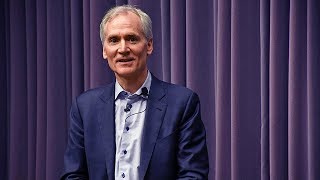
This content was created by GHION.AI . This content was uploaded by GHION.AI . This is a YouTube video titled "Elements of Effective Leadership [Entire Talk]" featuring a talk by Marc Tessier-Lavigne, recorded on March 14, 2018. The talk covers his background in academia and the private sector, his experiences in leadership roles, and the lessons he has learned about building and leading organizations. He discusses the importance of people, teams, decision making, vision, and values in leadership, and answers audience questions on various topics including artificial intelligence, maintaining entrepreneurial spirit, and personal reflections on his career.
Chapters
You. It's really great to be here and have the opportunity to share a little bit about my background and a few of my thoughts about entrepreneurship. I thought that maybe what I do, we have a limited amount of time, just maybe give a little bit of background on myself, my trajectory, and then describe, you know, try to pull out a few of the lessons that I've learned about building and leading organizations that might hopefully be of some use to some of the members of the audience. So by way of background, as Tom said, I've been very fortunate to have experiences both in academia and in the private sector. I started my career as a scientist, a neuroscientist, working on how the brain develops during embryonic and fetal development and also what goes wrong at the other end of the spectrum in neurodegenerative diseases like Alzheimer's and Parkinson's disease, where nerve cells die. I was a faculty member at UCSF in San Francisco and then recruited here to Stanford, where I focused on understanding fundamental mechanisms of brain development and degeneration. But in the course of this, I was also very fortunate being here in in the valley to interact with people in the private sector and got involved in a startup company as a scientific advisor, learned something about that, saw the power of the private sector and then co founded a first company in 2000, Renovas focused on neurological disease, where I learned a lot about applying scientific knowledge to difficult problems like developing therapies for poorly treated disorders. And that gave me exposure, it gave me some experience, it got me interested in applying fundamental knowledge. And then I was very lucky and fortunate to be invited to go to Genentech to oversee about two thirds of the research organization. Eventually I was in charge of the entire research organization, directing about 1,400 scientists in disease research, translational medicine and drug discovery for neurodegenerative diseases, but actually primarily for cancer and immune disorders and also infectious diseases in addition to neurodegenerative disorders. It was an extraordinary experience there where I really got my first taste of executive management, working with just astonishingly inspiring leaders, starting with the CEO Art Levinson and the other members of the executive team. So I learned a huge amount of about working in the private sector and harnessing the power of the private sector to tackle major problems. A number of the drugs that we worked on in those days have now been approved by the FDA for previously poorly treated cancers and also some immune disorders. So it was incredibly exciting and incredibly fulfilling also. But then after I was there for eight years, I was again provided with a wonderful opportunity to return to the academic sector as president of a small research university in New York called Rockefeller University. Just biomedical research, just a PhD program, no undergraduates, PhDs and postdocs, but a remarkable place in terms of the accomplishments of the university and the discoveries that have been made, the Nobel Prizes that have been won. So I felt very fortunate to go there and be back in the academic sector. And I was excited because I've always loved both the fundamental research and also applying that to the other sides. And there I reconnected with the startup scene, getting involved on the boards of some startup companies and then eventually co founding three years ago, Denali, as Tom mentioned. And then about two years ago I was approached about this position and I couldn't believe my luck and again felt very fortunate to have the opportunity to return to Stanford, where I'd been on the faculty in the early 2000s, and to rejoin the community here with a passion both for supporting our faculty, our students in learning, and also in research, both fundamental and applied. Again, I love both and I believe in the importance of both and also to be able to help the members of our community who are interested in, in taking their discoveries and applying them to solve real world problems. So that's some of the background. Just briefly and maybe I can go through this quickly so we can open it up to questions. As I think about the lessons that I've learned in my career about how to accomplish what I hope to accomplish. There are several, maybe five elements that are important. And by the way, I'd say if I had to summarize it, what really drives me is to try to do great things with great people in great institutions would be the short summary. That's what really excites me. Five elements. First and foremost, people. And given time, I'll just say a few things. Everything always starts with the people. The people you hire, the people you work with, the people you retain. It's essential, of course, to have a high bar to recruiting and retaining people. You want to work with the best of the best and you have to work at that. But every individual has their strengths and weaknesses. And one of the things that I've learned in my job is it's really important to try to set people up for success, to really play to their strengths, while also giving them the opportunity to develop in areas where they're less skilled. So really it's about supporting, recruiting and enabling great people to create that space for growth. And of course in all of this, to be fair and respectful of the people you work with. I think that's really the single most important pillar in everything that we do in all of the work, whether it was in my lab, where I had postdoctoral fellows and students, or later in my executive positions, it's first about the people, but then next it's about the team. And it's essential with any group of people to work on building the spirit of the team through communication and again, reinforcing the mutual respect and encourage creating an atmosphere where, where there's mutual respect among members of the team. So setting a positive tone, establishing that mutual respect is absolutely key. People, teams, decision making. This is something that, again, everything I know I learned at Genentech, I like to say a big focus on decision making. And all of us in our lives, whether it's in the research that we do, in our teaching, whether it's in starting a company or working in a company, we'd always like to make at every turn the right decision, wouldn't we? Anybody would like to make the wrong decision? No. Now I don't see any hands. So we always wanted to make the right decision. But very, very, very often you don't know what the right decision is. Certainly in drug discovery, where it can be 13 years from idea in the laboratory on average to a drug approved by the fda, many billions of dollars, there's huge attrition. Most of the ideas you start with turn out to be the wrong idea. So often you don't know what the right decision will be. And so what do you do if you don't know what the right decision will be? Well, what we strive to do at Genentech and what I strive to do in my life going forward is to, if you can't be certain that you're going to be right and you try to make good decisions. So I'm going to distinguish the right and wrong decisions versus good and bad decisions. So how do you make a good decision? The way you make a good decision is building on the team of great people who you empower and whose ideas you solicit. So you have to create an environment of open exchange. You discuss the issue with the very best minds that you have and then take the best information and then try to make a rigorous. Have a rigorous process of decision making based on that, not consensus. Often with the most difficult issues that we tackle, there can be many different views about what the best decision is. So you have to hear them all, but you have to be rigorous about it. And importantly, once you've made the decision, provide a rationale. If you agree with the majority, explain to the minority why it is that you're going to go with the majority. If you go with the minority, even more important to tell the majority why you're going with the minority opinion. And if you go with an opinion that's different from both the majority and the minority, then it's really important to explain why you're going with neither of their points of view. But consistent good decision making, bringing together the best people and providing strong rationale for why you make the decisions tilts the probabilities in favor of making the right decision. That's the theory that if you work hard at making good decisions, which is under your control, you're more likely to make the right decision. And by the way, if you have a clear rationale, then if you realize down the road that it was not the right decision, you're alert to this and you can course correct. So you have to be ready to course correct as well. I went into this a little bit for a while because it turns out in a large corporation we were making decisions all the time about where to spend $10 million, $100 million. We didn't have the luxury of pausing and saying we can't make a decision. In many cases, actually any decision is better than no decision. You have paralysis if no decision occurs. So you have to strive to make a good decision and be ready to course correct. People, teams, decision making, vision. You need a framework for making decisions. And I'll call that the vision, a philosophy, a direction that you want to go in setting up that vision. You decide, we're going to spend more time on this than on that. We're going to spend more time on oncology than on, than on immunology. Why would you do that? And being very clear about that in a university, we're going to tackle these opportunities rather than those opportunities. You have to have a vision for that. And again, I'm a big believer in the wisdom of crowds and surrounding yourself with great people and being in a great community like here at Stanford, and tapping into that click of wisdom to try to identify the great opportunities, the great challenges you should tackle and prioritizing them that way. We did that in the private sector, I did that at Rockefeller and here at Stanford. Hopefully some of you have been involved in the long range planning process where again, we've tapped into the community. In fact, we model this a little bit on what happened in the school of Engineering a few years before under Persis, to tap into the community and again trying to get the input and then being really rigorous about assessing it and being very clear about why we're making decisions, we're in the middle of that right now. You will all be the judges in the next few months as we continue collectively to head towards a vision. But that is the model and that is the approach, and that's how we are doing this here. And I believe that, again, this is good decision making. And hopefully by making good decisions, you ultimately make the right decision. Last point, people. Teams, decision making, vision, values. I should have started with values, but I think it's also very powerful to end with values. As you approach everything that you do, you have to be clear about what your values are and the values of your organization are. And maybe I can just end with how people ask me, well, what are your values and what are your top three values or things like that? I like to divide them into three areas. Personal values, interpersonal values, and what I call action values. And so in terms of personal values, what I strive for is honesty, integrity, and personal accountability. So owning that decision, knowing that if I made the mistake that it's. I have to own up to it. Interpersonal values, respect, collaboration and compassion. Again, that's what I strive to live by. And action values, optimism, initiative, and tenacity. And optimism, of course, what I love about Stanford is that is such a deeply entrenched value here. Optimism, initiative. You can't leave it to others to do things. You have to be willing to step up to the plate. And finally, tenacity. Because nothing important in the world gets done easily. Nothing of significance gets done easily. You have to keep at it. Everybody here in this room knows it, but you can't say it enough. You have to get back on the horse and you have to keep going. So maybe I'll stop here. So we have some time for some questions. But people, teams, decision making, vision and values are five important pillars in my worldview and how I approach my job. And again, I feel very fortunate to have had wonderful experiences at extraordinary places with great mentors and very inspiring leaders that I could learn from and who modeled great decision making and great integrity and a real focus on serving the world. So thank you very much. Any questions? Two unrelated questions. What books had the most impact on you and what made you co found Denali? What books have had most impact on me and why did I co found Denali? Well, I guess many, many books have had an impact on me. I'd say the most important formative time of my life was when I had the good fortune to study philosophy at Oxford for two years. And there There's a range of books both on esoteric subjects, philosophy of mind and things like that, but also in philosophy. A number of writers in moral and ethical philosophy. I think that's one of the most important formative times of my life in recent times, I'd say. A book that I've loved and I go back to time and again is a book called the Art of Learning. Some of you will have read it by a chess prodigy. Those of you who know the movie looking for Bobby Fischer. It's this young man who had an extraordinary career who really talks about the importance of that. His great strength was not that he could do one thing or another, but he was exceptionally good at learning. And he talks about how to approach that and how to constantly be learning and moving on to the next thing. So I recommend that book very much. Why did I co found Denali? The I'm very passionate about neurodegenerative disease where there are no treatments today essentially for Alzheimer's disease, Parkinson's, Lou Gehrig's and so forth. I believe that the time is right scientifically to tackle those diseases. Our knowledge of what goes wrong in those diseases, the genetic basis and environment basis, has accelerated thanks to the plummeting of the cost of sequencing, which has made it possible to identify many disease genes and zero in on the biology that goes awry in those fields. This is not an area that major companies are focused on because there's so much progress being made in other areas that are more that are nearer term and more tangible, like immuno oncology for cancer. For those of you who follow that, that resources are being poured there. This is being neglected and it's a time when I think we should be focusing on this. So that motivated me to get together with some colleagues and to co found Denali. Yes.
So I think it's very clear why Stanford University is one of the finest in the world. I'd like to hear your perspective on what is the single biggest sort of threat and weakness of Stanford University and what your tactical plans are to work on that weakness.
So what's the biggest threat weakness to Stanford? I think the. When you have a. So I was on the faculty in the early 2000s and I thought it was the most extraordinary place in the world. And then I came back 13 years later and it was even more extraordinary. Right. It's really quite astonishing to see. Which just goes to show how great leadership can take a place that's great and make it even greater. Right. That said, with the success that the university has had. I think that our biggest threat is arrogance and complacency. The belief that, hey, we're the best. What could go wrong? Pride cometh before a fall and you have to beware. We have to be constantly on the lookout for how is the world changing? What are the new opportunities? You have to be constantly striving to improve. It doesn't matter how good you are. There are things that have to be fixed. There are plenty of things here at Stanford. There are things here that are amazing, awesome, miraculous. There are plenty of things that are subpar and broken that we need to fix. We're aware of them. This long range planning effort has been great in giving us lots of input from our community on places where we fall short and need to do more. You have to constantly say, yeah, this is great, but let's keep going. For those of you a certain age, we want to be Avis, not Hertz. Who here understands that? Let's see. Okay, everybody's over 50. I see. You'll explain to the younger generation what that means. But you want to be striving that you're number two. If you think that you're number one, you get lulled into a false sense of security. And that's the beginning of the end. Oh, another way of putting it. In this business, there's no stasis. You either move forward or you fall back. And you have to work hard to keep moving forward. Yeah. Yes.
Tina, so how different is it running an organization in genetic, in a public research organization versus a university? Leadership has to be quite different.
Yeah. So how is it different running being at Genentech and again at Genentech, I ended up being head of research. I wasn't the CEO, but. So there's some ways in which it's very similar. The ways in which it's similar in a great place like Genentech, in a great place like Stanford, it's all about talent management. It's about hiring great people and enabling them to do their work. That's true in the private sector, it's true in the academic sector. And that's the role of leadership, first and foremost is to hire great people, enable them to do their work and yes, also hold them accountable. Right. So that's what we do. So in that sense it's very similar in other ways. It's very different at Genentech it is a hierarchy. Right. So I was the boss of 1400 people. At Stanford, there are 2,200 faculty, but that means I have 2,200 bosses. Right. It's not that I'm the boss of 2,200, but in the end. So in a sense in the private sector we would discuss things and I could at the end of the day say, you know what, I've heard you all, but we're just going to do it this way. You would never do that. People who are great don't want to work for someone who will just be autocratic like that. So in fact, the management smile is not that different. If you strive to hire great people who you want to empower and you want them to be independent and function as a team, you have to treat them the same way you would treat faculty, which is to say, you're the boss. I'm going to enable you to do your best work. Yeah, we're a team. And yes, I do have the final word if it's necessary. But you never want to do that. Yes. Oh, actually I should say it is because of the team aspect. In a company you can move further along where you can assume that people will come together. So you can. With strategic planning, for example, you can go faster than in a university. In a university, it's so important to get buy in from people in the company. You can get buy in more rapidly. So I would say the rule of thumb is if you're doing something strategic in a company, you can do it twice as fast as in an academic second or in an academic second, you need to take twice as much time because you need to. It's very important to get that buy in from the community. So there are differences. Yes. Oh, sorry, the young lady here. Sorry.
So you, as president of Stanford, how do you influence the culture here? We talk about optimism too.
Yeah. So as president, how do I influence the culture and how does optimism fit into that? I think to influence the culture, first and foremost, you have to be a full member of the community. Right. And so you have to, first of all, you have to love the community, I think, and be part of it. And you have to go out and meet people and get to know them and then you have to set the tone. And by the way, this isn't just me, this is again, running a university is a team sport. Right. So I'm just so blessed to have a great, an amazing team, an amazing partner in the Provost Persis Drel, who is head of your school here, and the whole executive team. And it's really just extraordinary, setting the tone. So you have to know your values and you have to project your values and that's what we strive to do. One of the things that Persis and I have done, we felt that it was important to have additional ways of communicating with the community. So we have town halls. We had one yesterday, we're having another one tomorrow at Porter Hall. You're all welcome. Every member of the community is welcome at those. I have office hours to meet with students. And again, I saw some students this morning and on Tuesday who's just signed up. Please sign up. If some of you want to come, that's for students. The office hours town halls are open to everybody. We created a blog, the Notes from the Quad. I hope you've had the opportunity. Just type in notes from the Quad into your search engine. You can see we try to address major issues, but also minor issues and just fun things that we've encountered in the community. I think setting the culture is about knowing what your values are and it's about interacting with community. And by the way, it's bidirectional. We hear from the community, we learn from the community, and then we try to work together to move forward as a community.
I'm an alumni and thank you very much for doing this. My question is about artificial intelligence machine learning replacing jobs. Do you think it's a new normal or it's the same old thing every 10, 15 years we go through? That's the question. And then for alumni, other than the money, what, from your point of view, what are the top two things alumni can help?
So the first question is my views on artificial intelligence and machine learning. I probably know less about that than every single person here in this audience. So just to be clear, although it is very clear, this is the digital age, it's been called the second machine age. The transformation is extraordinary, and this is true thanks to advances in data science and in artificial intelligence. And machine learning, of course, is powering artificial intelligence in just in a remarkable way. I do think that it is different. I do think this time is different. I think that Stanford has an opportunity to lead in this area, not just on the technology side, but also thinking through the societal impacts of this so that we can augment and multiply the beneficial impacts and mitigate the downsides that will come from this and also think about the moral and ethical dimensions of the application of those technologies there. So I do think that it is different. I think that was your question and I think it's opportunity, I would say, more than an opportunity. In a case like this, where there's an opportunity for us to lead, I think we have a responsibility to lead as well. With the Great gifts that we have here at Stanford. We have a responsibility to get out ahead of these issues and do this work on behalf of society. In terms of alumni, how can they help? Stay engaged, stay involved with the campus community and do two things? Tell us in leadership positions. Sure. What we're doing. Well, we like to know that. Not just so we can feel good about it, but so we can reinforce that that's the real reason for knowing what we do well, so we don't walk away from it, but equally, where do we fall short? We need to hear that from you so that we can try to fix that and also stay engaged, not just to give advice to leadership, so to engage to help the current students. You are such an extraordinary resource for our current students and you were there before. Right. And so you knew what it's like. So please stay involved with them as well. Yes. In a research organization the size of Genentex, how did you maintain the entrepreneurial fervor and intensity with 1400 people? And are there any lessons from that experience applicable to Stanford University? That's a great question. How do you maintain that? And there are a few things. There are sort of the positive actions and then the things you just try to beat back. There are lots of things. When you have something that large, working to reduce bureaucracy is really important. And actually in an organization that big, with a lot of teams, there would be so many meetings. Meetings, meetings, meetings. Right. So we actually had to deliberately have rules about meetings. You can't have a meeting unless it's clear what you're going to achieve and who the decision maker is. No decision maker, no meeting. Because otherwise you could just spend your whole day in meetings. So we had to do things to try to prevent bureaucratic creep on the one hand. On the other hand, a combination of bringing in new blood, young people are always sort of really stirring things up on the one hand. And so it's really important to do that. That's why Genentech maintained a postdoc program. Very unusual in the private sector, 100 postdocs out of the 1400 employees. Very unusual, certainly in the biopharma sector to bring in that fresh blood, those new ideas and so on. And also maintained a culture of discovery and publication. The same thing as in academia that scientists reevaluated not just by what they did on their projects, but by where they published. So those were some tools we had to maintain an academic, entrepreneurial kind of. So those are academic tools in terms of doing it at Stanford. The same rules about really try to Push back on bureaucracy and enable free people up so they can focus on things. We have a very entrepreneurial spirit here. We recruit people who are entrepreneurial, the whole system. So I think that's one thing here that we just have to in some ways enable it, take away the shackles, make it possible for people to do their best work. I think that we don't need a lot of stimulating, you know, going to give people pep talks on being entrepreneurial. That's, that's in the DNA of the, the people we recruit here. There's a question back there. Yeah.
I'm a student and I always like walking down this very university avenue and then you see their homeless and you bring through magical painful process and you just feel like it's like a kind of like, like a display of bubbles. Like everyone seems civilized and super smart, but you really want to change something, but at the same time you're not sure, should I start with public policy or something? You're not sure, how do you change that and what's your recommendation?
Yeah, so if you want to have a social impact, how do you go about it? So a few things. You bring that spirit to whatever you do and be respectful of the fact that whether someone is doing fundamental research, that it's not obvious what the impact is going to be, or is directly working to help homeless people or working with patients in an intensive care unit, that all of those are doing good in society. So we have to be respectful of the fact that that all are possible. That's number one. Number two, there's the opportunity for multitasking. So if you are doing fundamental research and you want to have something more tangible, there's so many service opportunities, there's so many people who could benefit from your direct activity. Go work with Habitat for Humanity on the weekend. There are many, many opportunities here in the community. And then the third point is life is long and lived in chapters. So you can do something for a while and then you can change and do something else and then change and do something else. And you don't have to always try to do everything in each chapter of your life. So I think bring that service of that spirit of service to the community, to the country, to the world, and it will infuse and try to have it infuse everything that you do. But don't feel that you necessarily have to do it all at once. Maybe we can take two more questions and I will have to go, oh, sorry, there's one back there. And then we can come to the front here. Yes.
I would love to hear about your view on hierarchies, especially in a place like this where like lots of young people with ideas and inspirations and yeah, just stuff on their mind want to maybe share it with you. And how do you approach that and how do you try to maintain a certain level of hierarchy?
Maybe. So what's my view of hierarchy? Hierarchy in certain types of organizations is necessary just for the proper functioning of them, but it should really just be to grease the wheels and should never get in the way of the flow of information up and down. It just should be sort of just to make things easy so you know who the decision maker is and stuff like that. It's really important, whether it's in a big company or in a university to be constantly reaching out to all layers of the organization, you know, the management by walking as it's often described. And so I hope that it's pretty clear that I'm not big on formality and, you know, so I hope that if you have something you want to ask me, you wouldn't hesitate to just come up and ask me. And by the way, sign up for my office hours and be happy to talk to you about it. So very important to not have hierarchy and interactions. Very important to listen to people. There's so many brilliant people and there's so many people who have great ideas and so many people have so many experiences that it's important to hear in our community. You need to be open to all of that. Tina, final question, final question.
So project yourself back a few decades.
Yeah.
And you're now back as a student. What do you wish you knew when you were 20?
That's the title of a great book, isn't it? What do I wish I knew when I was 20? And if it's not been written, maybe I should write it. No, damn, it's already been 21. Oh, there's so much I wish I knew. So I was a first generation student, I went to college and I didn't know anything. I'd never met a scientist, but I thought I wanted to be a scientist. And so the only thing I knew is, boy, if I work hard and get good grades, probably good things will happen. And as a result, I didn't broaden my experience as much as I should. I wish someone had said, you know, actually getting a broad experience and learning lots of different things would be really valuable to you in the future. Just learning more physics, you know, might be useful to you as a physicist, but, you know, life is long and you May not end up being a physicist. Check. You know, I didn't end up being a physicist, so I wish that people told me that. I wish I'd known that. What I said earlier, life is lived in chapters. I was the most hyper anxious undergraduate you'd ever meet about my future. Oh my God. I have to plan out the next 50 years of my life. Do not plan out the next 50 years of your life. Okay, think. You do have to think out. You have to be intentional about it. But you're going to. Almost certainly. Almost certainly what you think you're going to do for the next several years is not what you're going to be doing 15 years from now. Probably not even 10 years from now, possibly not even five years from now. And that happened to me. I. I was certain I wanted to be a physicist, but then I got exposed to biology and I had the opportunity to study philosophy. So I studied philosophy and biology. I became a neuroscientist when I started at ucsf, my lab. I always wanted to be a research scientist. I was so happy you told me 12 years from now you'll be a biotech executive. I would have laughed when I started at Genentech if you said, eight years from now you'll be president of a research university. I would have laughed when I started at Rockefeller if you'd said, five years from now you'll be head of a comprehensive university with undergraduates and professional school. And said. I said, forget it, you know, because I was not thinking about those things. I just. As I had the great good fortune of working with amazing people and getting great experiences, it opened my mind to things that I didn't know I liked. I changed. The world changed. I gained experience. Things that I was excited to do for a while. I realized that I was now excited to try something else. So keep an open mind. And by the way, the pace of change of the world is just accelerating. So this was true for me in a career that started 30, 40 years ago. It's even more so for the students who are going to set out today that the pace of change is rapidly. So keep an open mind, watch how the world changes. Listen to yourself, listen to your heart, listen to your soul, and what's exciting today to you. Ten years from now, you may feel that you're ready for something else. Be open to that.
More from GHION.AI


O processo de reconhecer limites, mesmo quando a vida parece exigir sempre mais.





Depois de tantas histórias, aprendizados e pausas necessárias, o @interior_iza está de volta



