Entrepreneurs Keep Pushing [Entire Talk]
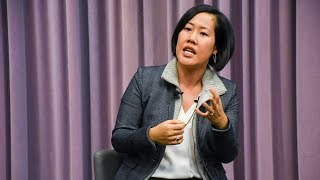
Ravi Belani talks with Amy Chang about her time at Google and founding her own company. Chang discusses the entrepreneurial environment at Stanford, networking, and building company culture as a leader.
Chapters
Now, when you were back here for the masters as well, and even in your undergrad time, tell me a little bit at that point, what was the entrepreneurial environment like on the campus? Were you always kind of aware that you were interested maybe someday in working at a startup or founding something or how did you find that here on our campus?
I don't think it was like it is today. I mean, it's much more kind of widespread and pervasive even in mainstream media today to be an entrepreneur and to pursue those opportunities. And I think in 99 and 2000 and Ravi, you can correct me if your perception is different. I don't feel like it was quite as pervasive. And so for EE in particular, many of us would go into hardware companies right after school. It wasn't really as much of a thought process to say, oh, let me start my own.
And.
And it wasn't until 12, 13 years into my career that I thought I might be interested in doing that. And I don't think I would have had the confidence coming straight out of school. So kudos to those people that do because it's such a great experience.
Even some of our faculty have done research over the years on Stanford alums and the number of them, the really very high percentage that end up in startups or early stage companies. Did you ever feel any pressure to be in a startup or do you see that? And we sometimes hear that from students now, like in am I going to go work for the right company? Should I be starting my own thing?
Well, I hear that all the time from either candidates or folks. We're kind of mentoring and people feel a lot of pressure. They feel like, oh, if I don't take advantage of the opportunity now, when am I going to have this opportunity again? And I think it's something that has become a pressure that folks feel. But I will say this, you have plenty of time and decide when it's right for you to start something, decide when it's right for you to join something. Because a career is a very long lived thing and often it's very serendipitous and people always ask, oh, so did you have a 10 year plan? I'm like, I don't even have a two year plan, let alone a 10 year plan. Let's take it six months at a time people, because it's crazy out there. So you just kind of take it as it comes and analyze each opportunity in the framework of where am I now and what do I want most immediately and what do I want Next.
You'Re an advisor to firms as well. Do you see sort of those pressures play out? I'm sure you get a number of people pitching you an idea or coming to you just to spitball something and things like that. Do you sense in their pressure? Where does that come from? Does it sense of keeping up with the Joneses here in the area, or do you think it's just some internal driver that they have, that they have to do that?
I think to have gotten here in the first place, you're very motivated and very strongly driven, and there are things that you wanted out of your life and your career, and there are things you wanted to learn. And that bar is high. So you see the person in your dorm kind of deciding to start something or half your graduating class, let's say, from cs, deciding to go to startups. Of course it gives you internal pressure. I don't see how you would be human if it didn't give you a little bit of internal pressure. But that doesn't mean you have to go that way. It just means you take a step back and you recognize, oh, I'm feeling this pressure. Where is it coming from?
You were an early member of the Mayfield program and things like that. How did you discover it and what was attractive even to the idea of it? Because it was pretty early then, it didn't have the reputation maybe it has now.
Yeah, I knew two or three people who had been in the two classes or three classes before me, and they just raved about it and they said it was basically life changing, which it changed my trajectory as well. I wouldn't have gone to McKinsey straight out of school if not for Mayfield. And so after hearing about it from these two, three people, I think it was Steph Hannon and a couple others, I kind of thought, okay, well, I'll go take a look and I'll interview and if I get in, then I'll think about it and I'll decide. And if I don't, then, you know, then I won't. But then, you know, luck had it and it kind of went from there from if you.
And it's a few years back to reflect on a little bit. But are there things that from that educational experience, because it's somewhat different than just a very standardized class that you still kind of carry with you or kind of things that came out of that you say, you know, that kind of has stuck over time, you know.
I'm sure it was shaping in ways that I did not realize. I didn't even know what a business model was before I got into Mayfield. I didn't know what a support. I didn't know what any of those terms meant. And it was very eye opening to get kind of a sketch of the business side and to understand that there was a whole realm of things which, having done Double E and been immersed kind of in hardware network systems for five years, that I didn't even have a conception of, which I'm sure all of you are much more sophisticated today and already have kind of a better handle on that. But I felt like it was very eye opening at the time.
It's interesting. We've had the pleasure at our program of working with students from all over the country at different universities, different contexts, a lot of students internationally, which is quite interesting too, the dynamics of it. But one thing that always seems to hold up is students are in the midst of this experience, which is so formative and there's so much to do. I mean, it's an opportunity rich environment. I don't actually know a Stanford student that's not sort of overextended in some way. Whether it's classes or activities or clubs or something, you know, there's always seems to be. There's a little bit more to add to the plate at the buffet. You look back on that now, what do you wish you had spent a little bit more time doing? If you could refocus or reallocate that time now, what would you have spent it on?
I think I would have been more deliberate about spending time with those people that I sat in class with that I thought, oh my gosh, that person is smart, right? Or that person seems so crazy capable. I would have spent more time building my network even then. Because those are the people who 20 years from when you've graduated have gone on to do some amazing things and you have the opportunity, they're literally sitting two tables down from you right now, or they're across the hall from you in your dorm. And so when you find someone that is a little bit fascinating or just a little bit kind of, you feel like, oh, there's some chemistry here, I would carve out time for it. Because you studying and doing kind of all your problem sets and everything that you need to do, all the obligations that you have, of course you want to do well. But I would carve out an hour or two every week or two to find somebody new who you thought was interesting and make the time to actually get to know them, because you'll see later, 5, 10, 15 years out, they will have done amazing things and you will be glad you took the time.
So clearly that's an excuse to just pass on the problem sets, just build relationships or get a nice mix going. That's a totally. Okay, that's permission from an alum you've worked at the companies you've worked at before ebay and Google. You've had these really interesting formative experiences. I mean, Mackenzie, I imagine you got to see inside lots of firms through a different kind of portal. What did you find culturally about places like ebay and Google and maybe others, especially because you were at them at places where there was still this sort of trajectory and scale going on culturally. How are those cultures similar and what did you learn from those two?
Well, I'll share a practical story because I think a lot of you are going to decide on summer internships or you're going to decide on jobs within the next couple years. So one thing that I was found helpful when I was leaving ebay, I had offers from Yahoo and from Google. And the thing that I did that I think really helped me make my decision because at that point in 2005, Yahoo and Google were still neck and neck. Obviously the story has changed since then, but back then they were still pretty comparable in many ways. So they won't let you in the building because there's security, but they will let you sit outside. They can't stop you from sitting outside. So I went and sat for two hours outside of Yahoo and I sat for two hours outside of Google and. And I watched people's faces because I wanted to understand how are they interacting with each other? What do they look like when they're talking to each other? What do they look like when they're walking from meeting to meeting? Do they look happy? Do they look as if they want to be there and they want to talk to each other? And I just wanted to see what I could discern about the environment from watching people interact with each other as they were doing this and going about their day. And I think that was what made my decision more than kind of anything else. Because at the time, Yahoo was willing to pay more. They were willing to give me a team. They were willing to do stuff that Google just wasn't willing to do. There was something visceral about how Google felt to me when I was on the campus and watching people's faces. And so I would advise you, if you're going somewhere to interview, go early. They can't stop you from just sitting there and observing while nobody knows that you're a candidate yet or that you're there for anything. Just watch and see what you think and how you feel about it. Because that gut instinct call, I think you'll find as the years go on that it should be heeded at least fairly often.
That's a great story in the sense of actually being able to pick up any kind of environmental factor. So often people come into an interview sequence and they have no understanding of it except outside of this room, and it feels pretty isolating. And then you give a true sense of it.
I actually like to sometimes when I'm there for board meetings at Procter and Gamble or Cisco, I'll just sit and work for an hour or two before kind of the board meeting starts because I want to get a feel for how things are feeling and to take the temperature.
That's really fascinating. Did you find once you were inside Google that the experience there was. We've had a number of folks who have had Google experience over the years here at the series, but what did you take away as sort of a pattern of it that either impressed you or surprised you about the way that place operates? It's so unique from so many other places in the world.
So the first time after we launched Google Analytics out of beta and into the real world, we went back and I think we had 2.7% market share or something. And we were so proud that we were on the map now. And we said, okay, and by the next kind of quarterly business review with the executive team, we will have 9% market share. And we were like, 9%, that's triple. That is so huge. And we were really excited to express this. And Larry basically said, come back to me when you have a plan for 70% market share and don't come back to me saying 9% like that's chump change. You figure out how to get to 70. And that was kind of game changer because we had not in no place in our heads had we gone to majority market share thoughts, right? And we were. I mean, the system was still falling over sometimes at 2am and our site reliability engineers were still waking up every single night and having to reboot machines and get us back up and run. It was like behind the scenes there was some stuff going on, right? So we weren't thinking about 70% market share. But when somebody pushes you so far beyond what you thought was possible and forces you to think at another kind of level of ambition, if you will, than you would have by yourself, I actually think that's a really good thing to experience and it makes you deeply uncomfortable for a little bit. You have no idea how you're going to do it, but that's how you grow. And that's when you experience your most massive jumps in growth, I think.
Is that something now you've carried to a company in the way you want to excite your team and excite the leaders as well? Did you get to have the 70%?
I'm sure it annoys the living daylights out of them sometimes, but yes, yes.
Do you find folks push back against it or do they seem confused by it? Like, how do you guide leaders or people you're grooming to really be kind of leaders inside the firm? How do you get to that?
I think you are explicit ahead of time to say, I'm gonna set the expectations at a place where I don't expect you to always meet them, but I expect them to be high enough to. Where you push yourself into the yellow, where you're not in the green anymore, where you're completely comfortable, you're not in the red, where you're so stressed you can barely see straight to right there in the yellow, where three out of five days you're going to learn something totally new that you did not know in the morning when you woke up. And by the end of the week you will have gotten further than you thought you would have gotten on Monday morning when you first came into work. That's a good week.
That sounds a lot like the description of the life of an entrepreneur in general, kind of living in the yellow. How do you. You find people you've worked with that are constantly in the red and they're under the gun all the time, and then there's other folks kind of slow rolling it in the green. If I'm understanding your scale there, how you do, how do you find the right balance for yourself as an individual, as a leader, running a whole group in that way?
There are some weeks when things are in the red. So Cisco and Procter and Gamble had board meetings back to back one week, and it was a little bit of a crazy week and it'll happen again in December. So those weeks are a little stressful, but you just deal with it. And then, yeah, you keep going. And not every week is red. So that's the good part, right?
How would you describe a company?
Wait, can I ask a question? How many of you here feel like you operate in the yellow now, where you're challenged enough to. Where you don't know everything you need to know for that week? And how many of you feel like that's a place where you're operating now, where you're in the yellow? Okay, that's fantastic. This is the beauty of Stanford, right, Is most people are operating in the yellow. So if you do feel like you're in the red and you're drowning a little bit, you just saw the other people who are in the yellow lean on them for help, because there are. Everybody, I think, feels overwhelmed sometimes and like they're operating in the yellow. Even people who look perfectly polished and put together, they're in the yellow. So don't feel as if you're isolated there in the yellow. Just poke the person next to you, and I'm. You know, somebody will talk to you about it and feel the same way. So lean on each other a bit.
When you first started to ask the question, the hands didn't go up quickly. And I was concerned that we're all gonna say red. Like, I was like. Or they are red and they don't want to admit to red. But that's. That's a whole other thing.
Yeah.
By the way, guys, if you have a question throughout this, feel free, raise your hand, jump into this as well. Amy and I'm sure are pretty. Going to be fine with that as well, please ask. We'll have time at the end as well, but feel free to pop in.
Yeah. The whole point is to be useful to you guys. That is the whole idea. So anything you have, please, please ask it.
So a company is now about four years old, roughly. How would you describe the culture? And I guess that's the. I guess you could tell me the way you would describe it to a prospective hire or how would you just describe it? As the CEO.
So our number one value and excuse the cursing in class is no assholes. And you have to be willing to hire and fire by that. Right. You have to be willing to say, oh, my gosh, this person is really, really bright, and they could be a phenomenal technical talent on the team, but they're just kind of an asshole. So we're not gonna hire them. And it's a hard line to hold.
Right.
Cause it's tempting to say, oh, but they're really, really brilliant. But we, as a team and as a company have decided that we. We want to. Want to work with everybody on the team. That doesn't mean everybody's cookie cutter and the same and et cetera, but it means that people have consideration for other people and respect for other people as they work with them. Right. Doesn't mean all the same personality type. So there's communication differences. But we don't want somebody who fundamentally lacks respect for other people and doesn't treat everyone as a human being should be treated. So that's the line. And then I actually think Reed Hastings said something fantastic. But I don't know if you guys have seen his culture manifesto. It's actually quite good to look at, especially if you're thinking of starting your own company. I think he wrote it four or five years ago at this point, a long time ago, but it still has held up very, very well. And in it he basically posits that the culture should be real enough and authentic enough in some ways gritty enough to repel people, the wrong people for that company as well as attract the right people for that company. And I too kind of share that belief. Right. If it's all kind of apple pie and rainbows and unicorns, then it's not real enough to be kind of strong enough and cohesive enough to both attract and repel, which I think the culture, you should be honest about what you are and what you are not so that the right people come in and the people who are not going to find it to be a place where they thrive, find a place where they will thrive, which is not your company.
It's an interesting concept in the sense of some people come into an interview situation and I think it's a one way street, but it really is this two way. I'm hiring you. You're hiring me? Do I want to spend my time here? Have you had situations where maybe you've done your best to set up a culture that they can clearly sense a signal about where they should be? Maybe they sat outside for two hours before maybe they picked up a little thing. Have you had a situation where you've hired somebody? It's clearly not as advertised, perhaps on the individual once they're inside there because they just really wanted to get inside the company. How do you manage that? Is it just as quickly as possible.
As mainly as you can. But you have to let them go, right? Because the effect that they have on the rest of the team and the other members of the team that are working so hard to create a place where people want to be is not a good effect. So I think that's your job as a leader, to figure out when is it time and to do it in as fair and as humane a way as possible. And if you can help them understand what they are looking for as well and what's going to Suit them well, all the better. I've referred people who haven't worked out for us into other companies. Like there was someone who was better suited to be at Google than they were at a startup, at any startup. They just, they wanted a lot of structure, and a startup just isn't the best place for extreme process and structure. Right. So we found her a place at Google.
That's terrific. One of the things that's sort of interesting, we're at this sort of moment in, not only in society, but here in the Valley, very specifically, having really important, long, long, long overdue conversations about who's in the room, whether that's the boardroom or the C suite or rank and file folks that are coming part of the companies. My understanding is that probably about 60% of the executives or maybe more than 50% of the whole company are women that work at a company. Is that correct?
Yeah.
How did you build that in? Or was that just picking the most talented people? Or do you guys have tactical things you do to make sure you're getting good balance in the teams that end up working for you?
You know, it's funny, we didn't actually do anything that deliberate or different. I think when one of the founders is female and the CEO is female, that helps where people feel like, oh, I would probably be welcomed, I'd probably be welcome in the environment there. And I think it builds on itself. So having the female role models, whether in the executive suite or on the board at each company, I think it actually is important because who's going to talk to you during your interview? Who's going to answer those questions? Who's going to role model that? Yeah, we care about diversity here. We care about diversity of thought, diversity of gender, diversity of race, et cetera. So, yeah, I think that's extremely important.
How long, totally were you at Google? 10, 12 years?
Eight and a half years.
Eight and a half years. Okay, so eight and a half years. You are doing incredibly well there. You have a large portfolio of what you were taking on and the teams that you've built. What's the thinking when it's time to step away from something like that?
The scariest decision I've probably ever made for me. Right.
Take us through that a little bit.
So when you're at a place where you've kind of grown up, right, and you've been there for long enough to, where you have a lot of friends there who've kind of grown up in the same cohort class with you, you know how things work in the Company, you know who to go to for what. And the biggest thing is you're attached to your team because you built that team. And by the time I left, my team was a few hundred folks and I had hand picked many of those folks and I loved them and so I didn't want to, to leave them. But at the same time, when you're eight years into somewhere, you ask yourself, am I a lifer? And is this what I want to do for the rest of my career? Or like, what is happening here? What do I actually want? And if there is something where, when you close, right before you close your eyes to go to sleep, and right when you open them, when you wake up in the morning, if you keep finding yourself thinking about something or thinking to yourself, I should be happier, why am I not happier? I should be more grateful for what I already have. And if you find yourself kind of thinking about an idea or thinking about a possibility, pay attention and maybe write it down for yourself and go back and look longitudinally across a few weeks because you'll find that your gut instinct or your kind of sense of what you want is already there. You just may be a little afraid to act on it. And so now I try. When there's something that keeps coming up for two weeks or more, I already know I gotta act on this and this is something that is bothering me and I just need to change it. But this. So I probably Woke up at 2am two, three times a week for a couple months before I finally decided that I was going to resign. And then they made it hard to resign. It's a fantastic place, right? And it was, I think my husband who finally said, okay, you have already made up your mind, you need to stop waking me up. And you already know what you're doing, so just go in, let her know you'll do it well, you guys will still be friends and it'll be fine, right? And yeah, I finally went in and just resigned and it was, I didn't end up resigning right then. It took another six months. But that was the beginning of the process. So I have since learned if something is in there for a couple weeks, I gotta pay attention to it.
It's eating at you, it won't let you go and things like that. So how long after Google did you spot the opportunity that you're pursuing now and take us through a little bit of like, what you saw and why you'd want to dedicate so much of your life to it?
So my co founder I met at Google two Weeks in to coming to starting Google. And he is an MIT CS PhD. He won the ACM his year. He's amazing, and he's just a great human being. And he had just gotten citizenship. And so we were celebrating it and we were at dinner and he basically turned to me and he said, do you still want to start something together? And I kind of went, yeah, I would love that. And he's like, okay, I'm ready. And that way he's very understated. So he's like, I'm ready. And I kind of meant, now you're ready. And he's like, yeah, I'm ready. So we both decided within a few weeks after that to. To leave and to start this. And then we got very lucky and got a 5 million seed and just started. So that's kind of how it happened. He just.
It was time I described a company briefly up front. But do you want to take a moment and kind of explain it to everyone here what that is and how you see it?
I'd love to. So our mission is to change people's career trajectories long term. Like, the whole point is to bring you something. And let me explain something just very quickly. So I grew up in Texas, in Austin, where our entire network was like 19 other Chinese people that we hung out with every weekend. So I did not understand the importance, and this is why I talked to you guys earlier about the importance of the network and the importance of investing and getting to know people you find interesting or you find fascinating when you don't have time because it bears fruit in such unexpected ways later. And I'm on the boards that I'm on because of our product, because two people, Chuck Robbins and David Taylor, the CEOs of Cisco and P and G, respectively, were using our product, had a serendipitous moment, and were asking, okay, well, who made this? That's how I ended up on those boards. And the exec headhunters were using our stuff. So anyway, long story short, I guess the point is. So I didn't understand the importance of network when I came to Stanford. Only probably five years into my career did I get it. And so now what we're trying to do is bring this data and this intelligence to serve it up to you on a silver platter to make it so easy. It would be silly not to stay in touch with these people that come and go in your life, because they will be the ones who will pull you up later or push you up later, Right? But that whole. That whole Kind of serendipity of a career is all about serendipity. It is all about people knowing what you do, appreciating what you do, and recommending you for things. That's how opportunity occurs. That's, in some cases, the only way you ever find out about certain opportunities. So the more you take the time to get to know people and to really genuinely get to know them, but to allow them to get to know you too, the more people can be kind of recommending you and looking for opportunities for you. Right. And that's the piece where I really wanted software to enable that. I really wanted to have that be something where people like me who did not grow up with that concept and who didn't understand the importance of it, I wanted to be able to accelerate their career by 5 or 10 years or 15 years, but by a substantial amount so that they could experience this opportunity much, much earlier. Please.
So we have a grad school. I see it a bit different, but often when I talk to my undergraduate friends or when I tutor, they all tell me, yes, I could go to all these events and network, get to know people, but it's the greats and the greats and the greats. And I tell them it's really not all about the grades. But how can you, in a different way, tell people to find or to be able to draw the line between, yes, school matters, but going to all these events, learning something else and networking is also important.
Can you restate it a little bit?
Oh, sure, I can restate that. So how do you balance between when you have a limited number of hours in the day, how do you balance between going to these events and all of this and your schoolwork and making certain the grades stay high so that you can get into grad school, et cetera, et cetera? Right? Is that the question? So I actually really am not a huge fan of big events where you meet 40 people for five minutes. I'm not memorable enough to where you would remember me after meeting me for five minutes. So I kind of don't think that that's the playing field that I want to be on. The playing field I want to be on. If we're in class together and there's 20 people and let's say it's a sib class or something, and you say something so interesting to me, I think to myself, I want to have lunch with that woman. What is she thinking when she's, you know, when she's saying these things? That's so interesting. I will ask you to lunch, because I actually want to get to know you. And I will invest that hour, if you will, to get to know you, because I actually think you said something super interesting. That's how I would rather do it. I'd rather take a walk with you, I'd rather have coffee with you, I'd rather have lunch with you. And I find that. And if you pick, let's say one a week at the end of the quarter, you've gotten to know 10 people, probably two of those will stick, right? But then if you accumulate that over a 10 year period, that's a lot of people and that's how I would prefer to do it instead of doing the events. And you can fit that into your schedule around all of the other obligations you have from a school work point of view, please.
Hey, Amy, thanks so much for being here.
Question.
As a founder, I'm keen to understand a bit more. You mentioned you were lucky and you got the $5 million Seagram. As a founder, that's very lucky. I'm keen to understand a bit more though about the product as well. What you originally went with, what were they investing that 5 million in? And then your journey a bit more to your next round. So that'd be really useful.
So the original concept was a relationship management kind of tool, right? And the thing is, at the time, LinkedIn's API was still open, Facebook's API was still open, everything was still completely open and available. And then about a year into the company's lifetime, LinkedIn shut down the API. Facebook kind of pulled back on their API by quite a bit. We had a big decision to make whether or not we would create the data platform ourselves. And it's actually one of the most fun parts is creating the data platform. But Dave Goldberg was a good friend and we sat down together and Dave basically said, if you don't create this data platform yourself, you don't have a business. Right? It's not a standalone business, it's an acquisition, it's not a business. And we talked about it and he basically said, you have to dig the moat and the only thing that's going to give you the moat is the data. You cannot depend on somebody else for that. And he actually said, I will give you $15 million to build this data platform and I really think you should do it. So I went back and I talked to my co founders, we talked about it for about a week and we decided to take the money. And that was our A round and iconic led that with Dave. But we basically since then, have built this data platform that is 300 million profiles and 20 million company profiles. And we look for kind of digital exhaust everywhere. So anytime you speak anywhere. So Matt, let's say you go and you speak at ted. We'll grab the speaker bio, we'll NLP it into its component pieces. And it's so much easier to edit than it is to author, right? So then all you have to do is come in and edit your profile. We don't even need you to edit your profile because we're diffing all the time as we find new bios for you on the web. And then what we're doing is for any professional who's on the system, we're prepping the briefing for them ahead of time. So when we sit down together, I already know your context. I understand your company and your company's financial performance, but I understand any news about you, I understand any tweets you've had, I understand kind of who we might have in common so that I can open with that. But the system now is self learning and it's 92% accurate without any human intervention, which has been so fascinating to build. And it's the team that's done all of that, but now has allowed us to do things like predictively say, okay, so in any given company, here are the people we see as kind of rising stars whose careers have pulled a standard deviation up off of the cohort norm and they're moving faster. Right here are the super connectors who sit between industries and can cross pollinate between different industries. So if you're looking for someone in your industry to bridge you into this other one, here's this person that might be really good for you to meet with. So these are the types of kind of insights and analyses you can do on top of this massive data platform.
Just to follow up and go back to the original seed round.
Yes.
What did you pick? You shared what you picked. But like, did you have debt? Do you have an mvp?
Did you have like, I had a network? And that's how the 5 million happens, right? People have to know you, they have to trust you, they have to know what you've done in your career, because it's all risk mitigation. So any venture capitalist has LPs they're responsible to and they have to be responsible stewards of that money. And so as much as you can mitigate risk by understanding what the DNA of this founding team is and what they have credibly done before in their careers, then you can Feel more comfortable investing more or less accordingly. Right. So again, that's why the network is so important.
Besides this sort of kind of moat moment where it was sort of like very clear that you had to build the business around this platform. Building data platform. Really fun, really cool, really hard.
Yes.
So what are some of the things that. I mean, that's clearly a surprise in this sort of four years of time. What have been a couple of other things or one thing that you go, this was completely unexpected. This is not something that we.
Every week there's something that's unexpected. That's part of the fun of it. Right. But are you asking from a kind of business standpoint or maybe more of.
A strategic question in that sense?
I think one of the questions you always ask yourself is what talent do you need to bring on when. Right. And when things take off, you're suddenly caught there thinking, oh, my God, I need to hire this person yesterday. And if you become so urgent about that hiring, you lose sight of either the culture point or one of the other kind of core things that's important in bringing on a new person to the team. You could hire someone that it's expedient to hire instead of being disciplined and waiting, because it's painful to wait. I mean, you yourself are doing two or three or four jobs, so you're very tempted to bring this person on. So holding that line is. Yeah, if you go on the wrong side of that line, it's painful to undo it.
Is that the same sort of situation then, in regards to product strategy? Because as you sort of scale up, how big is the company now?
So we're about 40 people.
About 40 people. So just slightly too large to yell across the room. I think IDO famously could put 40 around in one meeting and then it finally busted out or something like that. How do you maintain sort of product vision in a way that stays pure? Or does it have to just be handed off to people in some way and say, you know what? We're not all going to be on the same page all the time.
Oh, my gosh. That's the hardest part as a founder, especially as a product founder, is knowing when to step back and let go a little bit. Ben Horowitz gave me some phenomenal advice. He basically said, you need to start writing everything down. You can't expect things to be transmitted just by talking anymore. You're going to have to start to be more formal about it and start to write more down and be more disciplined about it. And I think it was very Good advice. I'm still working on that. But I think it was very good advice.
When you look at sort of then the competitive landscape, I mean what is even about. There's just a pure love of the technology on some levels too. What is exciting to you about artificial intelligence just generally as a field? Because that really is. You guys are in there in a specific space and there's so much. The public has a perception of what that is. It's still so new. They don't really. It's science fiction in so many ways for so many people. What is something that you love about it that you find fascinating and maybe something that the public completely misunderstands about this.
I think the scale that you can achieve and the experimentation and kind of the unexpected results and being able to automate so much and have it just cost a lot less to do things that are very far reaching and scaled has been a serious pleasure as a founder because you spend less money after kind of you get things tuned the right way and things are able to run by themselves. Right. It's. It's much more cost effective to do something massive like build a data platform. There is a competitor which I think they have 5, 6 million profiles in their stuff and it costs them a dollar to $2 to generate each of those profiles because they have to do a lot of it manually. It's 0.001 cents for us. It's the cost of storage and compute because we have created this engine that has discernment in patterning on its own. So the scale you're able to get has been fascinating.
That seems like a very strong network effect in your favor. Are they a possible acquisition at some point for talent, especially at that kind of cost, that's pretty challenging as a thing. Part of this is also as a startup founder, there's this move now and I think this has changed a lot in the last 10, 20 years. This sort of older idea of well, great job founder. You got it to this point. Time to bring in adult supervision or hire professional operators to do this. But this trend in the last decade, really more of allowing founders to stay with the firms for longer and kind of I think there's some sort of sense of that they've been able to create a pure or true innovation culture. How do you know if you have a culture that is legitimately innovative? Because everyone says it. It's a buzzword. The word's lost meaning now. What do you see inside an experience.
At a small company or at a large company?
Both actually. That'd be great.
So at a large company, I feel like if in fact anyone at the company feels as if if they have a good idea, somebody will listen and it can go somewhere without it being a Sisyphean task, pushing a boulder up a hill. That's when you know you have an innovative culture as a large company. Because otherwise it's very easy for people to feel like I have an idea but I'm not gonna express it because it's not gonna go anywhere, nobody's gonna listen. It's gonna be such a pain in the ass for me to get anybody to do anything with it. That is a non innovative culture. And I think a lot of large companies struggle with that because there is resourcing, there's bureaucracy, there are layers and layers that can say no. And there's very few people who can give a blanket yes and green light for a project. The larger the organization gets. And as a small company, you better innovate or you're going to die. I mean it's pretty binary. Either you're innovating or you're. You're just going to run out of money and die. So that one's pretty easy. The large company one is the more complex one, I think.
Did you find that it was interesting you mentioned the no assholes rule and I think anyone who's been to class all this time.
Sorry for all the cursing.
No, you're not the first. In fact, I'd say most weeks this quarter we've heard that phrase actually including Bob Sutton who was here earlier. Part of that is also around when it gets to these large organizations, the friction, the policies, the road to hell paved with good intentions around why we do these sorts of things. At 40 people now, do you feel, are you already feeling creep in that way? And then what do you do to kind of.
Not yet. I think it tends to happen right around 75 to 100. That's what I have seen. And it can happen at any stage if you're not careful. Right. But yeah, I think we'll get there at some point, but we're not. Yeah. Yes.
It's interesting also in your background about having been an advisor and now having a number of board seats, you've had experiences now. I guess sometimes people see it as both sides of the table or something like that. What is in your mind? What is your job as a good board member?
To ask questions, right? It's really to ask questions because you don't know the day to day operations like the management team does. You're dropping in for a couple days a quarter, you may meet with members of management in between, but really your job is to ask the questions they may not, they may be too close to ask for themselves. And as one of the board members with less experience, who's younger. Right. Your job is to ask the questions that come into your head as questions that are germane to the company in terms of innovation, in terms of how they're thinking about their 2 year, 5 year, 10 year product strategy, all of that. But you're going to come with a different point of view and they actually brought you on for that point of view. So when they bring you on, they actually want you to ask the questions that you have. Yeah, it's basically your job. And then formally your fiduciary duty to the shareholders is to make certain the right CEO is in place because the CEO then makes the other management team decisions.
Which is sort of a fascinating note given recent events and news as to the do we have the right CEO in the seat at any given moment?
Yeah.
Do you find. So put yourself back in the role of the CEO, your board. What thrills you when you interact with them? What do they bring or how do they want you to be behaving or working with them? That's such a unique relationship depending upon how board people take seats, whether they came from investors or whether they were just great kind of independent folks. What is the right mix of that or does it depend entirely on the company?
Actually, there is a point I would make to all of you who are going to found, choose your board members carefully because it's a seven to ten year relationship. Right. It's a long term relationship. So it's not just the money they bring, but is this the person you want in the boat when the stuff hits the fan, is this the person you want to be seeing every month to two months across the table for seven to 10 years? Do you like this person enough to do that? And I think the weekend before taking the term sheets for our seed round, I actually called 26 CEOs because I wanted to understand what did it look like when you failed with this investor? What did their face look like then when things were not going well, did they stay with you in the boat? Did they abandon you? Did it get ugly? How did it look? And I think that talking to founders who have failed with that investor will tell you far more than almost anything will about them. And so when you pick this person, pick carefully because they're with you for a long time and having a Fair weather friend in that position is not a nice place to be. So having somebody who has the experience and has the gumption to stay with you as you go through all the ups and all the downs is pretty important. So choose carefully and do your homework before you choose someone.
Well, I won't name the Stanford alum founder, but there was a comment once made that a board is sort of like having five or six PhD advisors at the same time and you owe all of them money. The weight on you is it's got sort of mixed issues you're feeling at the same time. Same time, yeah. I wanted to make sure to open up a chance. Anybody have questions? Chance to open it up. You mentioned that your system is self learning and 92% accurate. Are there any good stories in the 8%?
Yes, there's so many good stories in the 8%. Sometimes you look. And again, apologies for the cursing. We have Cluster Nukens, right. So someone's named John Smith. How many John Smiths are there? Kind of on the web there are a ton of John Smiths. So sometimes you get somebody clustered and you know someone's husband is named John Smith and they send in a ticket and they're like, this is not my John Smith. And there's funny stories. So yes. And every percentage point you have to fight for above 90. Right. Every percent is gonna be a dog fight. And there's not silver bullets above 90, it's lead bullets. But it's fascinating kind of the problems that you get to solve because they are hard, hard problems. So yes, there are lots of funny stories where people are confused, especially very common names because we're frequency patterning on the names appearing kind of as strings together. And yeah, there's some funny stories. Somebody had a question. Yes.
I would like to become better at leading the team, at building it.
When you give criticism and starts a.
Criticism, what is in your opinion, the most important factors? Make sure that the person is on.
Board and comes out of the winner. So one of the things I like to do before I have to give really hard feedback is I'll go back. There's a book called Please Understand Me and it sounds cheesy, but actually Edition 1 is better than Edition 2 if you're going to get it. And it's by Kiersey Bates and it's old, like it's been around forever. But I like to remember what Myers Briggs type. The person sitting across from me is if they're an introvert or if they're sensing versus intuitive or if they're judging versus perceiving, like what is their frame of reference and when I communicate with them, how are they likely to interpret what it is I am saying? And I will actually alter my communications so that they are more along the lines in the stylistic lines of that person's communication style, because they'll be much more receptive to my message that way, especially if it's a difficult one. So I will go back and reread and I will sometimes ask them to read my Myers Briggs typing so they don't misinterpret when I say something because I tend to be very direct, right. So I'd like for them to understand that I'm coming from a place of very good intentions and that I'm trying to help. So if you frame it right before the discussion in terms of this is your communication style, this is mine, this is where we're likely to have friction and this is where we're likely to misunderstand each other, that framing is already in their head, which I find very useful.
If you aim to do a startup in a few years, but you want to study how a business works in a different company in your first job, how would you compare a small startup and big startup like Airbnb, Google?
It depends on what you want. So if what you want is to figure out to be adjacent to the founder experience and to understand kind of all of that in a more accelerated way. So think of it this way, the faster you want the ride to go, the smaller you go, right? Because you'll be buffered from far less. And the other thing about a smaller place is you'll have to wear a lot of hats, which if you want to found yourself, you actually want to wear as many hats as you can and take on as much responsibility as they will give you. And in a smaller high growth place, you'll just have more white space around you that you can expand into where there's nobody there yet saying, hey, hey, that's my space, don't go in it. Right? Because there's plenty of space for everyone. So if I was going to found something in a few years, I would go smaller because I would want to be as adjacent to the founders as I possibly could and learn as much as I could as fast as I could.
What would be the. Oh, go ahead. I just see many people just go to a larger company because if you work in a smaller startup then it's harder to get into a larger scheme and work and see how that organization operates.
I would say the war for Talent is so real right now. You have much more leverage than you think. You have much more leverage. And don't be afraid of what doors will close when you choose something. You would be surprised how life works if you work hard and people understand kind of your impact, what doors open up that you never would have expected. So focus on this next closest step and knocking it out of the frigging park for this step. Because doors will open that you never expected as you do that every step of the way. Just knock it out of the park. People will see it, they'll recognize it and they'll start talking about it and things will just happen from there.
I mean, you're hiring all the time.
We're hiring all the time.
You see these folks, the career. Yeah, we're setting up right now. But I mean, you would look at a track record like that and see not problems, but see somebody who is wanting to dig in, it's not a problem.
And you interview them, you sit down with them and right away you're like.
Oh yeah, this person.
Person is, yeah, they're, they're real and they're intense, etc. Yeah. Thank you. Oh, yes. So I know for a lot of network based sort of like ideas, there's this big like chicken egg building your customer base and acquiring that. So I'm just curious, like the first few people that you got on the platform, how do you kind of give them value? Like since there were a lot fewer people. Right. So we're not a social network, we're a data platform with insights on top of it. And so we waited until the data platform was rich enough to your exact point. We waited till it was rich enough to where people like Chuck Robbins would find a lot of value in it. And so the second we gave it to them, we ingested their contacts and stuff. And then there was just a super rich news feed right away already. Right. And they didn't have to lift a finger, they didn't have to tune the system, they didn't have to connect with anyone or enter anything. It was just automatic because we were clustering their contacts with the people, entities that we had and kind of creating that feed for them and their calendar and their briefings and all of that. So you didn't have to lift a finger. So to your point, it's really important to bring value within the first 30 seconds of when someone's using you.
Considering you take so many different roles. Of course, both board director and your own CEO come as is two full time job. Right. Like how do you organize your day and wait? Do you do like end of weekly planning versus things on next week and how you actually deliver the thematic to your team and people around you.
Right.
Because so many more demand your time around the family to go who work for you to other people.
Yeah. So I on Sunday nights will sit down and kind of do my planning for the rest of the week and I find that that is extremely helpful. The other thing I have found that helps me because I'm urgent about everything is meditation in the morning. So I used to make excuses like, oh, you know, but I'm in such a rush and I have a son who's 10 and I don't want to miss time with my son in the morning, et cetera, et cetera. So now I just get up 20 minutes earlier and I actually take the disciplined time to meditate because it makes a difference to my team. They can tell kind of when I've meditated. Right. I'm a lot more patient and I listen a lot better. So on days when, let's say I had a 7am call or something and I didn't quite get there for the whole 20 minutes, I can tell they can tell. But I think for anyone who is more Myers Briggs judging versus perceiving, meditation is a great thing for your team and a great thing for you. But yeah, the weekly planning on Sunday nights has really helped a lot too. And then every once in a while, if you put a block into your calendar, say a four hour block once a quarter to where you don't talk to anyone, you don't bring devices, you just bring a notebook and you sit somewhere and you ask yourself the fundamental questions of am I missing anything? Is there anything I haven't thought about that I need to think about and are there macro things that are going to affect my business in my company that I have not given enough thought to and carve out that kind of strategy time that's by yourself, I think that's important to do too.
Thank you.
What's your opinion on the future of jobs with the predicted or already happening rise in AI.
So I don't think it's all that original or different from what's already out there in the mainstream media. I don't have any kind of two standard deviation off opinions on what's going to happen there. We need to obviously reskill a large portion of our workforce and how we're going to do that and who's going to pay for that is a big question. Right. And kind of the functional hows versus what are we going to do? I feel like that hasn't been answered yet. And there's a lot of smart people working on it, which is good. And the dialogue on it has risen to a point where I think enough people are starting to realize we need to do something, which is great.
Let me ask kind of a follow up on that. There's this ongoing conversation right now about Silicon Valley and we are so driven to create new and interesting things and then we set them free in the world and then a couple years later we go, oh, we hadn't anticipated that that could be an issue. What is the role of companies from an ethical standpoint to build in some ability to prevent against that you might carry insurance in the old fashioned way. It would be a brick and mortar place.
That's where integrity and ethics comes into play and it's so hard to regulate. And that's where a company's culture comes into play. That's where the integrity of the individuals who make the decision to release that technology into the wild. And to have thought about it ahead of time and to have tried to understand the implications of, of their actions is so important. But how do you regulate that? How do you, how do you govern that? How do you enforce compliance on that? It's such a hairy, hairy question, right?
You see it sort of an autonomous view.
There were some questions over there, so I just wanted to make sure that there were a couple of hands raised, I think over here. Did people get.
Yeah.
So I wanted to go back to what you said about goals. About goals. So it seems to me like you set really ambitious goals for yourself and the team, which is really cool. I try and do the same. But my question to you would be, let's say we set our goals in the sky and we don't get quite there, but we get close. How do you justify that to the team or how do you frame that? How do you tell someone an ambitious goal with them, maybe knowing that you don't expect them to reach it?
Ah, so this is the part that Google did so well. I think the point is to put the ambitious goal. It is so ambitious that our OKRs, the objectives and key results at Google, you only ever expected to get a 0.7, you never expected to get a 1. You always only expected to get a 0.7 and people would start gaming the system knowing that you expected to get a 0.7 and your performance was based on that, et cetera. But still the one would be such an outsized one that the whole Point is to force your thinking into a different plane and then for the team to work as hard as they possibly can to get there, but for it not to have been necessarily an achievable goal all of the time. And if it were an achievable goal all the time, that would indicate that it's not ambitious enough. Right. But then to celebrate when the team does reach kind of the 70% level, to have the judgment to know when to celebrate and to make certain that people feel appreciated for. Yeah. What they did.
So it sounds like culture and people are so much. Are so important to the success of what you're building today. Maybe equally as important as the technology and AI and the back end.
Yes.
As a startup and as you're nimble.
And you're growing this uncharted journey.
How do you smell and filter for people who have flexible mindset versus rigid mindset so that you don't get people who come in and stick something into the cogs or the wheel and stop the entire machinery?
The best interviewing guide I have seen to test for fixed mindset versus growth mindset is actually by Adam Grant. So he's a Wharton, I think, behavioral science professor, but you can look it up. And he basically says, don't ask people theoretical questions. Ask them about times when they have actually, let's say, encountered something that was extremely challenging and it felt as if the odds were overwhelmingly against them and what they did and keep digging and keep asking why, why, why, why? Right. And try to get down to their base motivations and what makes them them at their very core. And I think the method in which he coaches you. I actually go review this interview guide fairly frequently because I want to remember exactly how he asked the. The questions. But I would go look at it. It's Adam Grant, but it's a phenomenal one because just the way he poses the questions puts people in the right mindset to express. And then he tells you what you're looking for.
One last question. Who wants last take?
Anybody?
There we go.
Let's say you're back in college right now. Would you still take electrical engineering? I would do cs. I would do CS because the software is eating the world. So I would do CS and I would probably do a subspecialty in AI.
Well, everybody, thank you. Please help me thank Amy for this wonderful discussion.
More from GHION.AI


O processo de reconhecer limites, mesmo quando a vida parece exigir sempre mais.





Depois de tantas histórias, aprendizados e pausas necessárias, o @interior_iza está de volta



