ETL Speaker Series: Delane Parnell, PlayVS
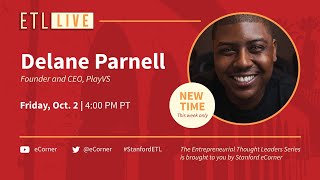
This content was created by GHION.AI . This content was uploaded by GHION.AI . This is a YouTube video titled "ETL Speaker Series: Delane Parnell, PlayVS" from October 3, 2020. It features a seminar hosted by Ravi Balani, introducing Delane Parnell, the founder and CEO of PlayVS, who discusses his journey as an entrepreneur, the development of PlayVS, and the challenges and successes in building a high school esports infrastructure. The conversation also touches on broader themes of entrepreneurship, racial identity, and the impact of esports on students.
Chapters
Is that good? Eunice, let me know when we are good to go. All right, everybody. Hi, I'm Ravi Balani and I'd like to welcome you to the entrepreneurial thought leader seminar presented by the Stanford Technology Ventures program, the entrepreneurship center in Stanford's School of Engineering and basis, the business association of Stanford entrepreneurial students. I'm a lecturer in the MSD department and the director of Alchemist and accelerator for enterprise startups. Today we're excited to welcome Delaine Parnell to etl. Delaine Parnell is the founder and CEO of Play Versus, which is building the infrastructure for high school esports. Prior to starting Play Versus, Delaine worked at Inkwell Venture Capital, where he became the youngest black venture capitalist in the United States. A lifelong entrepreneur, Delaine started his first job at 13, working 40 hours plus per week during the school year. And then at 17, he used the money he saved to purchase three cell phone stores. And then he joined the founding team of Executive Car Rental, which now has 16 locations across Michigan. So everybody virtually please join me. And everybody, especially coming through us From Stanford or YouTube, join me in welcoming Delaine. So Delaine, lots of virtual applause for you right now. So, Delaine, just to kick things off, since all of us are not familiar with esports, can you start by explaining a bit about what Play Versus does? For those who haven't heard about Play Versus yet?
Yeah. So Play Versus is a Los Angeles based esports startup that has built the official statewide and regional leagues around high school esports and the official national leagues for many games at the collegiate level. And so we power high school and college leagues for a bunch of different video games. And what that looks like is, you know, kids are able to play League of Legends, let's say, on behalf of their school, at their high school or college for state or national championship, depending on if it's the high school or college level, as they would basketball or football. And that's all powered through software that we build at Play Versus.
Isn't that cool? And this is not just small local sports. Even though it is creating this amazing community, it's also big business. Delaine. So how much have you guys have also raised? It's a venture backed business just so people understand. How much capital venture capital have you raised?
Yeah, so we've raised over 100 million in the past two and a half years. I started the company January 2018, so we've only been in existence for the past two and a half years, but over 100 million from some really great investors.
And I Like to say that you get a point for fundraising, you get 10 points for building users, and 100 points for building an amazing and enduring community. But fundraising is sort of a necessary part to build these movements that you are. That's got to be one of the shortest unicorn puberty periods to going from 0 to 100 million raised in just two years. And we'll dig into that in a bit. But before we dive into play versus, you also have this amazing background as a serial entrepreneur starting businesses even when you were a teenager. Teenager, teenager. Can you share more about that background and where your motivation and drive came from so early on?
So, yes. So I was born and raised on the west side of Detroit. Raised by a single mother and my mom and my aunt and I had a cousin named Juan who passed away maybe a decade ago. They all used to encourage me to do different hustles and kind of entrepreneurial endeavors even as I was a kid. And my aunt, in fact, her name is Olivia, she used to purchase me magazines, like business magazines, Inc Magazine, Forbes magazine. She would encourage me to read them, and I would. And then I would do deep dives about everything that was interesting that I read. And from there, I just sort of had this bug, you know, for entrepreneurship. And so, you know, I would do. You know, My brother and I for several years had a lawn care business called D and D. We still argue about who was the true founder and CEO, but truthfully, it was me all along. I had a business where I would download music and put it on flash drives for local DJs, and it would pay me a weekly retainer to do so, and that was a pretty profitable business for me. And eventually my mom, she wanted me and my brother to both have summer jobs to stay out of the neighborhood. We lived in a pretty violent neighborhood. And so my brother worked at this meatpacking place, and then I ended up working at this cell phone store. And the owner of the cell phone store took me under his wing, taught me to business. Eventually, I left. I went to own my own cell phone stores, did this car rental, worked in venture. Now I'm here. But yeah, sort of started at this early age, mostly from a catalyst standpoint because of my mom and my aunt and my cousin.
Well, it's amazing how necessity can be the mother of invention and also just the catalyst for bringing out what's already inside you. So, Delaine, how old are you right now?
I'm 28. I just turned 28.
You're 28. And that may seem young everybody, but really I think Delaine's been an entrepreneur actually for 15 plus years with everything that you've done.
It's a long journey.
It's a long journey. And Delaine, I want to just double click into this a little bit more because it's rare to have people with that path. There's some schools of thought that say that there's a difference between little E entrepreneurship and big E entrepreneurship. Little E entrepreneurship meaning like side hustles and starting local businesses versus big E entrepreneurship, which is these venture backed unicorns that you create. Is that a false distinction? Do you think it is the same thread across both or do you think there is actually a fundamental difference between doing what you were doing earlier on and what you're doing now?
Yeah, I wouldn't give significance to little or big E in front of entrepreneurship. I think both are still pretty significant. And in fact, small businesses happen to be the backbone of our country in many ways. And so while I like to acknowledge that entrepreneurship across the board, whether small or big, is tough, there is some distinction between the two types of businesses. They just require different skill sets. And, you know, and that mostly comes.
With skill and it's skill. So you think it's, you know, the difference is just knowing what those skills are is the main difference between the two or is it something that is based on attitude or approach?
I know tons of, you know, small business owners who maybe own a handful of restaurants, who are some of the most phenomenal, you know, entrepreneurs, most driven, passionate, you know, capable entrepreneurs that I know. And that's just, you know, that just ends up being the type of business that they're excited about. And that level of scale is something that they're excited about. And so if they were to go out and start a tech company or any sort of venture backed company, I'm sure they'd be just as successful as I am, if not more successful. And so. So yeah, I don't think that there's a level of capability. I think that most entrepreneurs who find success even by owning some mom and pop retail shops are likely, if they had an interest, could find success running the tech company.
Was there a moment when you realized that this is not just a hustle with Play versus that this is actually something much bigger. When was that moment? And can you just go into detail about that?
Well, specifically with play versus, I never thought about it as a big business opportunity. You know, at the beginning I sort of had this and I hate when people say, oh, I had this problem I wanted to solve because it really Wasn't a problem, but I had a niche that I wanted to scratch around, you know, building out infrastructure around esports just because I knew there was a lot of conversation around esports, but there wasn't, you know, there weren't a lot of businesses being built that I felt truly captured the essence of why people play video games and had the opportunity to unlock what I think some of the biggest areas of the space are from an enterprise value standpoint. So I wanted to do that. It wasn't that I wanted to build this massive business. I recognized that I needed to build a lot of value through revenue, through relationships, and it would become a big business. But I wasn't driven by that. I was, you know, mostly just, you know, you know, focused on. On solving the problem around. People are talking about esports, but there's no infrastructure online for people to play against each other. How do I do that? Where should I start? What's my scarcest resource? The scarcest resource for me ended up being these publisher relationships. So how do you go and work with the publishers and get in, get them to commit to develop APIs to give you access to enable that online play, and then how do I capture value for them and give that back to them so they feel like it's a fair exchange? And that ended up being the reason why we committed our business to going to market at high school, because the publishers were investing tons of money, hundreds of millions of dollars in the top of funnel for them, which is their professional leagues. And, and they weren't really thinking about the rest of the pyramid. And so we went to them and said, hey, what have we created an environment where we train your athletes or these players to become esports athletes for your game, commit to having them play in the exact same format that you want them to play with coaches and with the recognition from the high school governance system where it's treated as a sport as any other traditional sport. And that was really appealing to publishers. And so they gave us a shot. And now we've obviously taken that and scaled that and also introduced the same sort of environment at the collegiate level.
This is such an important lesson and there are some questions coming in, and I'll get into these questions a little bit later. But just to clarify, Play versus is a for profit. It's not a nonprofit. There's some people that are asking that. We'll get into the play versus model in a bit.
Yes.
We'Re for profit and we'll get into those details in a bit. But I want to just really relish this one lesson here, which is what a unicorn looks like when you're just starting out. So when you were starting out, you.
Take that and I'll. Give me one minute.
No problem. Delaine's got to go do something quickly, gang. And then we'll be back with Delaine. But while Delaine's waiting, just on the questions that have come up, Play Versus is a for profit. It's a venture backed company, NEA and many top funds have funded Play Versus. And we'll talk about the revenue model and the business model. But. And I think what I want you guys to do right now is think about what Delaine said. How if you were Delaine at that time, what do you think would be the model? Or how would you actually conceive of this at the time as being something where there would be a viable, sustainable business model? And we'll talk about it in a moment. It's one of these business models that's a multi stakeholder business model. And those can sometimes be the most complicated but, but also the most defensible. Because if you make everybody win in that model, that's the difficulty. But if you can, then it creates all these interlocking parts. So when Delaine comes back, we may dive into that a bit. But what I also want to just focus in on is oftentimes we live in These cultures where TechCrunch or others will glorify these startups as just seeming to go from. As just quickly going up and to the right and. But I want you guys to understand what a unicorn actually looks like when you start it. And as Delaine is talking about when he was beginning Play Versus, it's not that he had in mind that it would become as big as it has, but it has become this emergent need that everybody didn't realize needed to exist, but they now actually do. And so Delaine, I wanted to. I was just telling the students that I wanted to just really just pause a little bit on understanding what actually this big company looked like when you were starting. Because when you're starting out, you didn't conceive of it as being a unicorn when you began. The impetus of what you just really saw was that there was just this need. And did it feel like the same as the other sort of side hustles that you had before? Did it feel like another side hustle that you had done?
Oh, it was scarier, truthfully, because the stuff I'd done before, like the retail brick and mortar businesses, those felt like sure fire hey, people want cell phones. MetroPCS is new to this market. It's creating this sort of affordable cell phone option where there's no contract, low barrier to entry in terms of getting started. And people were really excited about that. And so find a location with strong foot traffic in some plaza, open up business and you know, people come in and it just sort of felt like it would be successful just given some of those dynamics. When I started Play versus, I had no clarity as to, you know, if what I was doing would work out. And you know, there was just a lot of moving pieces. It's a business where the foundation is built around relationships, relationships with several multi billion dollar entities whom we have to get to care about what we're doing and see value in what we're doing. For them to give us the rights to commercialize basically their biggest and most valuable asset, which is their games. In this new category called esports, where not many venture investors were put in dollars at the time or even, you know, understanding what esports is or was. And even at the publisher level they were also still trying to figure out their competency. Then you know, from a distribution side we also had to go to the NFHS and convince them to give us access into all of their high schools. And that's, you know, that's, those are 70, 80 year old, you know, white men that were trying to say, hey, you know what, we know you love football in Texas, but make video games high school sport, you know, that was unique in itself and you didn't, even.
In your own mind's eye, you didn't have the vision of what it would become. Did you know, look, yeah, I wanted to make that clear.
I just didn't think that far along. I didn't think, I just was, I was day to day on, hey, here are the sort of three core components. Here's the thing I need to focus on for each of them. Maybe it was one or two things and then I just like, you know, honed in on that and then what.
Was the thread that kept you going day after day if you didn't know where?
I had no other option. Yeah, look, I had no other option. I moved from Detroit to la, taking a risk to come build this business. I committed a year of time to say, hey, if this doesn't work out in the year, I'm going to do something else, whether it be in LA or somewhere else. And so, you know, gave myself my, I told myself that, you know, I would commit to this year to figure this out. I Understood, you know, what the sort of fundamental pieces to the business were. And day in and day out, I just worked against that until, until it all came together. But there was, truthfully, you know, five or six months when, throughout the process when, you know, I didn't know, you know, what was going to happen, I was pretty sure, and I think people around me were sure that, you know, I wasn't going to be able to get a business off the ground.
And do you have now, looking back in retrospect, is there, is there. You know, there's lots of founders that have that same journey, but very few founders actually succeed or take off. Is there something that you attribute your success to now if it wasn't necessarily having this clear vision about where things were going to go and having full transparency into that? Sure. Was it something process or process?
Extreme focus. I think I was, I don't think I've ever been more focused than that. You know, that first year, truthfully, you know, I moved to LA basically knowing not many people, all I did was go to work and go home. And even when I went home, I had a mattress. And then my entire living room was a replica of what my office looked like at the science building. So desk, chair, same desk, same chair, same monitor, whiteboard, and it was basically all work, no play for me. And so, you know, I was extremely focused on learning the industry, you know, developing a product, talking to players, talking to educators, talking to publishers, talking to state associations, talking to people who would become future employees. Just trying to figure out how we could fit into the space and build a business. And during that time, by the way, that first year, I guess the first eight or nine months, I never talked to investors. Most people sort of come up with an idea, they do some initial work and then they immediately try to start talking to investors to work, quote, unquote, build relationships for potential future raise. I spent zero time thinking about raising capital or talking to investors. I was super focused on putting the core of the business together and building from there, not raising around.
Okay, and you were glad you did that? Obviously, just to. That was the right call.
Yeah, yeah. I mean, look, there was no other option for me. This was. I had a compressed timeline and, and I had to track against that.
And did you give yourself a short term goal? Did you say at this point, I know you referenced a year before, but was there something in your mind where you were almost your own governing body, where you said, you know, at this point in time, I'm either going to take off or kill What I'm doing.
Yeah, no, look, in a year, I figured, look, the business had to be off the ground, and so it had to be a real thing. It wasn't. We didn't even have an entity at that point. It was just like, hey, whatever the core of the business is, which I defined as distribution, IP and product, those are the things that I need to build against. So on the distribution side, I needed effective distribution into high schools, and I found that through the NFHS and State Association. So I needed to get that contract signed. On the publisher side or the IP side, I needed to sign deals with publishers, and I needed those publishers to develop resources to build APIs that would actually enable online play. And then on the. The product side, like, I needed to hire engineers and, you know, product product managers and designers, et cetera, product team to build the product. And then we needed to, like, take the product to market or at least get market feedback from the product. And so, you know, that was sort of the objective, and I just focus wholly on that.
And was there a moment in that first year when you realized now you hit the inflection point that actually this was going to take off? And what was that moment?
So it was November of 2017 before we even actually started the company. I went down to Atlanta to meet with the NFHS, and the meeting was supposed to be 30 minutes. And I think it ended up going like two hours, two and a half hours. We walked out. You know, so during that meeting, you know, because the meeting continued to go over, you know, I could tell that they were really excited. And, you know, obviously I started to get very, very excited myself because I'm like, hey, there's. There's an opportunity here. But at the end of the meeting, they say, hey, you know how the school business is. This could take, you know, two years. I think, you know, we're looking to make a decision within the next year. And so every. Everything, you know, during the meeting, you know, you know, all of our conversation made me assume that they were going to make a decision shortly after this meeting. But then at the end of the meeting, they say, hey, you know, this could take two years. We're looking to make our decision within the next year. And so I was pretty deflated, got in the car, went to the airport, you know, got on a plane, and when I landed, I ended up having a note from them not long after, maybe a day or two after that, said, hey, you know, we've never done this before, but we want to do this partnership with you. Guys, let's hop on the call and figure it out. And we hopped on the call, we figured out the details and so from there I was like, hey, you know, we're starting to see some light. And it still almost died because we were in diligence on that partnership. And a couple of the publishers that we also needed to partner with, they had teams internally to also win that partnership because they were trying to build their own footprint in high school specific to their IP or the IP that they held, if it was multiple games. And so when they heard that the NFHS had decided to partner with us, they were very upset because they're like, hey, this is a one person company and we're this massive company with all of these resources and. But they didn't understand why it didn't make sense for the NFHS to align themselves to one publisher. It was just counter to their tradition. And so for a second we alienated that group which was core to our business. So even if we had the nfhs, even if we had a strong product, if we didn't have ip, then we had no games to plug in. And so I had to earn their trust back and build relationship there. And that took a little bit of time, but it ended up working out. And I made the bet that, that if I signed the nfhs, if I built the product and I had clear vision, the publishers will ultimately get on board because this is an inevitable opportunity. And so, yeah, and so it ended up working out, but there was a lot of ups and downs even throughout that process.
Yep. No, that's so good. Obviously all's well, ends well and the whole adventure has been terrific. But would you give your former self any piece of advice now, looking back on that whole journey when things got born?
Yeah, look, I think some of the decisions I probably reflect back on and wish that I would have done differently is, you know, I would have hired, I would have added more depth to our organization from an OPS standpoint sooner. You know, we, this year we just, you know, hired a COO and built out basically an OPS team, a growth team, a regional ops team. We were pretty product and inch driven group prior to that. And I'd always sort of reluctantly resisted, I guess not even reluctantly, but resisted hiring ops talent because we were so product and niche focused and BD focused to get rights and APIs to then build this product and then capture relationships with states, to be able to even introduce esports into their state. And I felt like there had to be, there would be a Tipping point where those things will be far enough along. Or then we could add ops talent in that level of depth and maturity to the organization. That would allow us to scale even faster. But I would have hired that talent sooner to give them an opportunity to learn the business as we did, because all of that work would have compounded and we'd be even further along. And we had the capital to do so. We had strong relationships with people whom we end up hiring eventually anyway, you know, even that early on. And frankly, that was just sort of all missed time that we could have been making progress, we could have been scaling the business.
And what were you thinking at the time to prevent you from doing that? And what do you know now that was.
Well, that's, that's what I just said, you know, like I, you know, I thought that, you know, we should just focus on, on the product, those partnerships, getting, you know, at the state level, at the publisher level, building a product to even enable the experience. And at some point we have enough maturity there where we could always add that talent and, you know, take off and look, that still ends up happening to be the case. And we're fortunate because we have so much cash in the bank. We have a product with product market fit. We've generated revenue from day one. And there's a lot of enthusiasm around our category. But truthfully, I would have done that differently had I known what I know.
Now, and this is a fast. I was telling people when you went away just for that quick break that this is an incredibly complex business model because at least it feels like you have multi stakeholders and this is sort of a multi sided marketplace. You have the publishers, you have the schools. Your users actually aren't your customers, if I'm understanding correctly.
And that community, it depends on the business. So high school is like a B2B product. College is like a B2C product. But it also has some B2B aspects of it too. And so, yeah, there's a lot of nuance.
And so can you speak to that? Can you speak to. First of all, how did you convince the first schools to believe in the platform and sign up and participate? Because this is one of these things where when the flywheel kicks in, it makes sense. But just getting that flywheel to start, how did you solve that problem, the flywheel initiation problem with the first schools?
Yeah, so it wasn't necessarily a focus around getting the first schools. We had to get the first states that took us. So, you know, we signed this deal with the NFHS, we start the company, January 9th, actually January 9th, 2018, signed this deal with the NFHS shortly after. And then the NFHS essentially says, hey, or deal with the NFHS says, hey, if a state's going to do esports, they have to do it with us. And the NFHS has made us their official provider and exclusive provider for basically online and offline esports. But the NFHS can't force states to adopt esports immediately. So every state has their own board, their own process, their own calendar around when they're going to introduce sports and activities. And for the most part, none of them ever introduce something that they. They learn about within the first year. It normally is. Like, they sit down, they have a couple board meetings that take place only a few times a year about, let's say, girls wrestling. And then once it's approved, they'll put it on a calendar to be added three years from now. And so we're asking them to, like, not only learn about esports, which has a ton of complexities in itself, and it's a sport that they don't understand, but also let us introduce it within months after them learning about it. And this is also our first time ever running the league, and so it's super scary for them. And, like, educators struggle with change management and so. And so. And so, yeah, so, like, I mean, that was sort of the first process. We didn't focus on school, we focus on state. And some of the things we did there is that, you know, the next month we went down to Atlanta and we put together an esports symposium, we called it, and we brought 20 or something states down, and they flew down on their own dime because we didn't have money at the time. But that also showed their commitment to, like, being a part of the process. And they came down and they spent three days, and we basically talked to them about esports, a bunch of things that they had questions about. We took them to a game publisher they got to see and talk to people who make games understand that there's real career opportunity here. We introduced them to the people in the pro scene, and they understood the career trajectory there as a player and a coach, and that got them really excited. And then basically, over the next, you know, whatever, few months, from March, frankly even longer, from March through August, we basically were on a road show talking to those same states, managing them through the funnel, teaching them more, answering more of their questions, as well as talking to their boards. And some of those boards will be as little as five people. And as many as 20 people. And so you understand the complexity there because in many cases that's a consensus driven board. Everyone needs to be on board with the decision. And also there's just a number of politics associated with that process. And so. So yeah, eventually we get five states to decide to roll out esports in the first season and then we just work with those states about, hey, how do we reach your schools? What's the best process in getting the word out? And we leverage channels that they own. We didn't really have internal capabilities to reach schools at that time. Our players and most of it was CRM, so email and it ended up working out. But. But yeah, it was very ad hoc the first year and we were just like doing everything we did.
And that's a really important insight. So there weren't any elegant hacks to shorten that sales cycle from three years. It was just. And I think this is also a theme.
It was just sort of brute force.
Yeah, it was brute force. And I think that's very common with actually a lot of marketplaces as well. Can you explain the business model and the revenue model? Because I think a lot of people don't realize that you can make money in esports and how it works.
Yeah. So look, while we focus on high school and college, we do have a broader vision beyond that. And so I'm happy to also touch on that because the business model will continue to evolve with every product that we build. Our high school product, we make money on a seat based model. $64 per player per season. We offer two seasons within the high school calendar year. So it ends up being 128 bucks per player per season. That's paid for by the school. You know, schools will have on average, you know, 18 to 25 players, you know, per season who participate. So they end up having, you know, 30 something to 50 seats basically within. Or you know, 27. Excuse me. Yeah, like 30 something to 50 seats per calendar school year. And. And yet at the collegiate level, we monetize by charging that same fee, but directly to the publisher. So publishers spend, let's call it $64 per kid who plays. And for the end user, it ends up being free. And there's other opportunities to monetize sponsorship, media rights, et cetera, but we haven't tapped into any of that.
And are there ever any tensions between serving your users, the students and schools and these other constituents? And are there any insights that you want to share about when you're building a commercial business that's also Synonymous with supporting a community. How that all, how to manage those tensions?
Yeah, I mean, you know, it's one of the most challenging aspects of our business is, you know, that we're dealing with a lot of people with conflicting interests. You know, kids want to play games like Fortnite and Overwatch, but oftentimes the state may not think that that's appropriate. And it might not be the state association, but it could be the governor. And the schools are built on some state ran, our state funded fiber network. And so the governor essentially has leverage against the Department of Ed who would typically be out of a sports, any conversation around sports and activities. But now because it relies on the Internet and the Internet is funded by the Department of Ed and the governor has some opinion, the association has to bring down a hammer and stuff like that. And so we have to manage that.
Right.
Because our business gives us the sort of commercial rights to do these things. And we know that coaches, which ends up representing the school and then the players also want these things. But you know, they might not understand some of the, you know, the nuance there, you know, from, you know, how things just operate behind the scenes. So yeah, look, it's a little bit like circus and one, it just takes deep knowledge of understanding who you're dealing with, who makes decisions within those environments, what the process looks like to get decisions approved or passed and then, and just, you know, a lot of conversations, you know, quality communication, you know, to figure things out. It's not easy and you know, we figure it out every day and we make a ton of mistakes in that realm. But I think we've done a really good job given our business has 30, 40 something partnerships with, you know, different organizations and many for profit companies. We've done a really good job at maintaining those relationships. Although there are, you know, conflicting interests from all of those parties. Even publishers. Right. Like there's like we work with multiple publishers who have games and competing categories and we have to work with them to say, hey, everything that we do is going to be standard, there's going to be a universal standard and you can't get any special treatment. Like many publishers don't even like that. And so I think we've done a really good job at our team at understanding the conflict and where it exists and then managing against that. But truthfully, it's not easy. And I think any business built against a BD structure like ours will face that.
Yep. I think that's the tension and the value of trying to build something which is a community Platform and also a commercial enterprise. Do you face issues with parents who worry about having their kids play Fortnite all day?
No, parents. First off, parents love us. Parents love Fortnite as well, by and large, at least from our experience. Ultimately, parents want their kids to. To be able to have activities that they enjoy and can do so in a safe environment. And they also want them to be recognized for talents that they have. And so if your kid is one of the best, let's call it Fortnite players in the country, and they can play in the league where they can earn prizes and scholarships, and they can play with people at their school and be coached from a technical and mental aspect of the game by some faculty member at the school that you trust or they trust, then that's a win win for a parent. It's the same reason parents introduce their kids to sports like football and basketball. So they can, you know, acquire all of those attributes that we find to be positive. And so, yeah, so parents. Parents love esports and they, you know, they love the games that we introduce, and we obviously try to continue to introduce games that we find are friendly for this environment and we don't. And also have a T for teen or lower ESRB rating. And also, just as an anecdotal story, I mean, you know, this is when I realized how impactful the work we were doing is. Human moments like this, I guess. We had this parent who had a. Who has a son in Massachusetts. Their family's in Massachusetts. He plays for some high school in Massachusetts, like JV League of Legends team, I believe. And he never played in, like, his entire life through high school. I mean, from, like, kid through high school, he's never played any sport. Barely, like, it has any, like, social life. And she's scrolling on YouTube one day, sees this video where someone was profiling me. And I guess they went to a school and also profiled him. And she saw her son in this video that she randomly clicked on. And, you know, as she went through the video, so she comments on the YouTube. No one gets back to her. She finds our information and she. And she. Because she found out her son was on this team, and so she was researching it, comes across this video of me, sees her son's in this video, comments on the video, no one responds. Finds our information, reaches out to us, and, you know, we get back to her and she's like, hey, I'm gonna. I'm just gonna fly to LA to meet you guys to talk in person. She flies across the country with her son to LA on her own dime, literally, to come in for an hour and say to us repeatedly how impactful we've been. You know, the work that we do has been, you know, to her son and her family. And it's so crazy. The first 30 minutes I wasn't around, I was in the conference room. I walk out the conference room, come out to shake her hand, reach my hand out. Literally, her and her son are just pouring tears. And it was so insane because I was like, I get really uncomfortable when people cry. So I'm like, could you please stop crying?
That's when you just have to say, thank you, Delane. That's when you just have to say, you have to have gratitude.
I felt like a rock star a little bit, but. But no, you know, it was just. It was such a profound moment, you know, and I. You know, I'm obviously super grateful for that moment. We've had tons of other moments like that, not as grand, but where parents express their gratitude, grandmothers, grandfathers expressed their gratitude, you know, for what? You know, for the opportunities that we're providing for these kids. And so, you know. You know, moments like that, you know, really keep us focused on our mission, which is, you know, we want to build this playground for kids, for all gamers, frankly, of any age, to come and connect with their friends and play in competition. And we want them to be able to do so safely, and we want them to be recognized for their talents, their passions, and we want to bring these communities together. And so, you know, love stories like that. And, you know, we continue to work hard every day to get more of those stories.
I mean, that is pure gold. I oftentimes say, you know, that you're building something that's exceptional when people tell other people about it. When somebody flies across the country on their own dime with their kid, that's beyond special. You're hitting a wellspring phenomenon. That's insane. That's really insane. I would actually love to keep diving in on this, and we may, but there is an important issue that the students also have asked us to shed light on, which is we're going through an important moment in our country right now, and these issues of identity and racial justice are really at the fore. And I would be remiss if I didn't get your perspective on this issue. So I'm curious about how significant of a role for you. Do you think race has played in your entrepreneurial journey or your founder journey?
Yeah, look, I mean, that's a great question. You know, Look, I think I've been, well, from an identity standpoint. Like, first off, I like to say that I'm extremely proud to be black and to be a black entrepreneur and to represent the black, you know, brown community in tech, in gaming, where there's few of us. And I feel privileged and humbled and motivated to succeed, given that I'm, you know, one of few people who raised this much money at this age, you know, from that community and had this much success. And so, look, I think it's certainly more difficult, I'll say. And frankly, I think even for me, I think that it's not as difficult as it is for black women. Black and brown women. I think black and brown women probably face the toughest challenge in building companies, certainly raising capital, because they sort of get hit with the double minority, right? They're women and they're black or brown. And for me, at least I get the privilege of being a man, which there's some privilege there. But look, it's difficult. And luckily I'm able to have investors who care less about the color of my skin and partners, by the way, as well, who care less about the color of my skin and just more about my intellect, my drive, the things that I'm working on, and also just my integrity and character. We've had some challenges, you know, in our business, just given, you know, the audience of stakeholders where, you know, some folks have not worked with us because they've said that, you know, a black person runs the business, and that's obviously super challenging. And this isn't from like a for profit side, but, you know, we face this, you know, you know, with stakeholders on the, on the education side of the business. And I think that that's. That's obviously tough and we don't lean super heavily into that. And we don't even talk about that a lot externally. We sort of push through it. But I'm proud that the team continues to support me and support each other and continue to dedicate themselves to our mission and never let racism get in the way of what we're building. And we're a majority minority company. Most of the people who work at our company are either of color or women or some form of minority. And so we're super excited about that and we want to continue to hire people that represent my community and other communities to help us bring this company to life. But yeah, I mean, that was a very general question, and so hopefully that's that general response also.
I appreciate it, and I think it's a Difficult thing to talk about. Also, just because you. You only have one perspective. Like, I can't wake up in the morning and not be Indian. That's sort of what I am. And so it's a hard question to even ask, to compare. But I also think that makes it even more important for us to have these dialogues and these conversations, especially these stories around. If you have people that choose not to work with you because of the color of your skin, I don't think that that is something that people realize is still persisting, or at least certainly I haven't. Is there anything else, or what else don't people realize that? Do you think about the experience of being black or just being a minority in the process of entrepreneurship that we should be shedding more light into? Is there anything else that you can share?
Look, I don't think that there's, like, a laundry list that I could sort of recite. There's just inherent bias that I face that other entrepreneurs who look like me have faced because of just who they are. I mean, I've been in meetings with my team where people would dismiss me and sort of, you know, revert back to someone else on the team who may be a white male. Not knowing that, you know, it's ultimately my decision. I've had, you know, potential partners that we've talked to who we've been able to uncover, you know, are racist, who, you know, said to. I don't want to be on the phone if Delaine's on the phone. Like, do you know, there's been, like. There's been, like, a number of incidents that we've had just given the nature of our business that. That are just frankly unfortunate. And I think the first time it ever happened in this business, it sort of got under my skin. But, you know, this guy Laz, who was Cuban, in fact, and was one of our earliest employees, he's no longer with the company, started his own company. But I remember I walked from my desk because this happened. We're in a conference room, and we kind of took a breather, and I, like, walk from my desk, and I was just, like, taking a walk. Cause I was thinking. And I was just so, like, I forgot. It felt like, for me, we had so much success so quick. I forget that this could be a factor in the business that I was trying to build, given the audience that I'm serving, which ends up being this really broad audience. But there's a subset that exists there that we have to deal with, and they have that opinion of black and brown people. And last walked up to me and honestly, I had tears in my eyes. And he said, yo, no one can build this company but you. And I'm like, I'm on the journey. And from that moment, you know, I've never. I've never let it. It obviously bothers me, but I've never let it get under my skin. And we sort of just keep moving at the company. Like, we don't. We don't. We don't even hold it against people. We don't. We don't. We don't even, you know, you know, fight it. We just. We just sort of keep moving forward. But. And we do our part too. We try to do our part at least to make sure that the people following us, either in the gaming space or other entrepreneurs of color who are trying to build companies, given the responsibility that we have, given how much capital and success that we've had, we recognize that responsibility. We try to do our part by delivering so that they get opportunities. And we try to make sure that the people we associate with, at least from an investor level, they represent the. The things that we believe in. When I raise capital from Foreplay versus in our Series A, I didn't take a term sheet from any investor who wanted to leave unless they could accommodate. Two things, two contingencies. One, they had other black founders in their portfolio, and I was very direct in asking them that even in our earliest conversations. And then two, they were okay with us having a woman represent the independent seat on our board when it came time to fill that seat. And you had to be okay with that, and you had to be willing to even write that in for me to take a term sheet from you and consider you even to be an investor. And so we try to surround ourselves with people who believe in the things that we believe in. And for those that we encounter who don't, we recognize that and we sort of keep pushing forward.
I mean, you are so right that there are far too few black founders and board members and VCs than there should be. And for any either black or just brown or minority founders that are fighting the fight and going through the entrepreneurial gauntlet and having similar setbacks that they confront any advice or guidance that you would give them as they're going through the process.
Yeah, look, find your tribe that you can lean on to support you. The journey's tough. Don't get discouraged and know that there are people out there who value you for what you bring to the table and don't discount you for the color of your skin or your background and find those people and keep going. We just have to keep pressing forward. We can't let racist hold us down or suppress us and then vote also too one speak about these things. Because I think that that's also really important, you know, like, to have these conversations and don't feel uncomfortable having these tough conversations and don't try to do so by just, like, finding that one black friend and like, you know, asking them all of these things as if they represent every black person on the planet. Because, you know, it was interesting when Black Lives Matter and like, all of the protests started to happen. You don't understand how many calls or texts, emails I got, like, hey, can you hop on the call? I just want to talk. I'm like, I had to tell people, like, and I'm a very direct person. And so people, people know that about, like, look, I'm not the one black friend that you like that you have that you're about to, like, bombard with all of these questions. Like, if you want to get involved and you want to, you know, be a part of the movement, then one, you should, like, just acknowledge that, you know, maybe, maybe there are things that you don't understand that you want to learn from. And then there are conversations that are happening. You should go and be a part of those. And then you should also have more of these conversations and also encourage, like, your other friends in your circle who may not be of color to, if they want to be a part of that community, to do so as well. And, you know, in cases where you can donate or put your money where your mouth is, like, you should do that as well. But, like, don't, don't, like, just email me all day with questions about, like, you know, how do black people feel about everything? Like, you know, I don't know, you know, like. But, but no, I think that that's. I think, look, we have to just keep pressing forward, you know, find people who support us, work with people who support us, don't shy away from these issues. Hire people who look like you, give them opportunity. And then hopefully there's some compounding effect as many more of us have success, that, you know, some of the stigma, at least in tech and venture that exists around, you know, black people not having roles at venture funds or not being funded or lack in opportunity because of whatever in existence, pipeline, nonexistent pipeline problem, those things go away. And that's like one of our primary missions at our company too, is that given that we're a majority minority company, we feel even more pressure to be successful because we know that when we are, we'll create a wave of wealth that'll flow back into minority communities. And then hopefully, more companies get started through that wealth, more opportunities get funded, and then there's like, some flywheel effect that happens just from play versus and so that motivates us. Hopefully, that motivates other people and just keep going.
Oh, I think that's so powerful, Delaine. I think you're going to be creating movements on multiple levels. And so, Delaine, thank you so much for your time. I know how precious it is, and we're coming up on time as well. I wish we could continue the conversation, but I will exercise my obligation, and we will bring this to a close. So thank you so much, Delaine, for all the honesty and insights and action as well. So thank you. And I will call a close, then, to this ETL session.
Hey, thank you, guys. Appreciate it.
Thanks, Delaine. That was great. And, Delaine, if you want to send anything to the community at all, just email us. If there's anything that you want us to send to the Stanford community and just our broader networks, just let us know.
No, it's great.
Okay.
Okay.
All right, cool. Thank you, Delane.
Thanks.
More from GHION.AI


O processo de reconhecer limites, mesmo quando a vida parece exigir sempre mais.





Depois de tantas histórias, aprendizados e pausas necessárias, o @interior_iza está de volta



