ETL Speaker Series: Jessica McKellar, Pilot
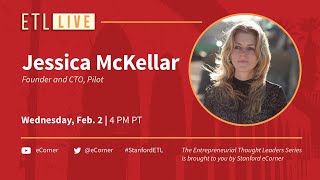
Jessica McKellar, founder and CTO of Pilot.com, talks about building her company and her work bringing formerly incarcerated people into tech. She discusses her entrepreneurial path and why she started focusing on workforce integration for people with criminal records.
Chapters
Hello, everyone. My name is Emily Ma, and I'd like to welcome you to the Entrepreneurial Thought Leaders series presented by the Stanford Technology Ventures Program, which is the Entrepreneurial center in Stanford School of Engineering, also sponsored by basis, the Business association of Stanford Entrepreneurial Students. Today, I'm thrilled to welcome Jessica McKellar to ETL. Jessica McKellar is the founder and CTO of Pilot.com an accounting firm powered by software that has raised more than 160 million in venture capital. She earned her bachelor's and master's degree in computer science from mit. And prior to Pilot, she was on the founding teams of two other startups, ksplice and Zulip. She also teaches Python at California's San Quentin State Prison.
And.
And through that experience, she became passionate about building bridges between the tech industry and individuals impacted by the prison system. So that's definitely something we're going to talk about. Welcome, Jessica. Let's start by maybe an introduction to everyone of what pilot.com is and what kind of users it serves for small businesses and startups. Let's start with that.
Sure. Pilot's how I retire. That's a high level. That's a no. Yeah. So Pilot is basically an accounting firm, but one that works in a very special way because a lot of the work that we do behind the scenes to deliver accounting services, bookkeeping, tax, CFO services, other advisory support, a lot of that work happens in software, which is good for us, but it's actually good for the customer as well because it means we can deliver a higher quality, more consistent experience. And we can also do things with data that nobody else can do to reflect kind of insights back to the customer in a way that nobody else can. So we've built a business around bringing small businesses into the 21st century with their finance and accounting needs, which has been a deeply satisfying thing to work on over the past five years through a bunch of growth in our customer base, getting to work with a lot of small business owners and startups and to really viscerally experience their pain and then, and then hopefully solve it for them through some healthy fundraising where we're a kind of post series C company, and then just working with a really incredible team of, you know, really incredible finance and accounting experts who are all like in house leveraging the software to deliver the service and then also a really talented R and D team that's building out the automation behind what we do. Yeah. So we solve your finance and accounting back office as a small business and we help you be competitive with you know, bigger companies who have a lot more facilities to take care of this internally than the typical small business does.
It's amazing. We're going to come back to pilot.com.
In a little bit.
Maybe we can rewind in, I think, a number of years to when you were at mit. So you've had this incredible, incredible career with these three startups. But, you know, all of us were once a freshman, and I'm curious, we went back the clock, like, how did you decide to study computer science? Like, what did you experience that led you to wanting to do a startup, your first one, and like, what else happened during that time that inspired you to take this path?
Yeah, absolutely. And I just. A little tiny bit of background on me. I kind of Born in California, grew up in Nashville, went to a public school in Nashville. My dad's a musician. My mom is. Oh, hi, Mom. Mom's probably watching. Hi, Mom. Mom is like a free spirit who's done a lot of things in her life. So I, you know, I didn't know anybody who was interested in programming while I was growing up. Although I would say that my dad had a strong affinity for computers because of what you could use them for, for music. I actually thought I was gonna be a ch. First degree is actually in chemistry. And I, While going through the chemistry undergrad program at mit, I accumulated a lot of friends who were in the CS department because that's the largest department at the school. And, you know, honestly, I think I was. I was kind of was watching them out of the corner of my eye while I was going through my chemistry studies, and I saw them learning what seemed like a very powerful, very general toolkit of tools to solve a broad range of problems in the world through programming, through software engineering. And I decided that I wanted to have that kind of toolkit as well. Chemistry is great. It's a very kind of. It's its own discipline, though. And I think that the fact that software engineering and programming can be. Can be leveraged and in every discipline at this point just became attractive to me. So I ended up kind of dabbling with a couple of courses and really fell in love with it and ended up pursuing a bachelor's degree, a master's degree, and certainly it's how I've paid the bills ever since.
How about the startup side of things? Like, you know, coming out of MIT with a computer science degree, a bachelor's and a master's. Right. A lot of opportunities. So why go right into startups?
Yeah, well, I mean, I've had the great honor and pleasure of working with my co founders at Pilot Jeff Museum for 15 years. At this point, we met in MIT's computer club, the Student Information Processing Board. Sippy. MIT's computer club. And our first company out of school was centered around Jeff's master's thesis. He had worked on some very, very like, very fun kind of deep tech for rebootless kernel updates on Linux that we built, totally bootstrapped into a profitable company called ksplice that was ultimately acquired by Oracle. But you know, it's incredible honestly, to think about from where I sit today, like the fact that we, we happened to meet each other through the computer, the computer club and, and have just had such an incredibly productive relationship ever since. It just, it seems so blessed and fortuitous, but it, yeah, just, it just kind of happened. Jeff's like, I've got this technology, we think we can productize it. We're like, let's, let's do it. Let's make, you know, we have nothing to lose. You know, fresh out of school, we have like no money. We have, you know, we. Quick sidebar. I, I, I was a technical advisor to the HBO show Silicon Valley, if anybody's seen it. And a bunch of small, like narratives in, in the show actually come from our experience building, case wise. Like we, you know, we were like running the company out of this disgusting apartment in Cambridge, Massachusetts where everybody lived. And it was very formative, wonderful initial startup experience. Also just like the complete kind of Wild west fresh out of school experience too. Yeah. So we just, we decided we were going to do it and we did it and we've been together ever since.
Oh my God, I will come back to that as well because that's something really unique. You built three companies now with Jeff and Waseem, and it does sound incredibly magical with these very humble roots that you've had. With Key Splice, though, you were acquired by Oracle, I believe. So what was that experience like being acquired and then deciding again that you would launch out, like, what happened during that period?
Yeah, the Oracle acquisition experience was funny because Oracle's an enormous company and so like they've developed an acquisition team that is able to ingest like $2 billion acquisitions and then they kind of apply that machinery towards also like 13% startups, I guess, before we get to the actual acquisition itself. You know, I think when we were starting ksplice is a very exciting, interesting deep technology, but ultimately for a pretty narrow audience. The audience is basically companies that have a lot of computers who for which downtime on those computers is problematic. So this could be if you're like a hosting company or a supercomputing cluster. I mean, nobody wants to be the person who's like, the supercomputing cluster is not for maintenance. So, you know, they're like high need in a relatively niche market. And I think if that is the shape of problem you're solving, being there's only so, so much you can grow, like you kind of, you have to have a plan for what's going to happen at the end of the day and you can stay independent if you can turn that into it, if you can keep it a standalone, profitable business. But I think an acquisition is always a pretty likely outcome for this shape of company. And so I think we knew that that was probably always on the horizon and who was going to be the acquirer. We didn't know up front it ended up being Oracle. Oracle treated us very well through the acquisition process and the time that we spent there post acquisition. But the acquisition process itself was very funny because there are more people on the acquisition team at Oracle than there were like employees at CasePlay. I think actually the number of team leads on the calls with us exceeded the number of employees at caseplace. Yeah. Although one thing just to like tie this back to pilot, one thing that they actually called out from us during the acquisition process was the state of our books. Because we, I mean, we encountered a thing that every founder and small business owner encounters, which is like, you have to take care of your finance and accounting needs at a minimum for compliance purposes. Like you have to file taxes and to file taxes you need books. And also hopefully you actually want to know how much money you're spending and making to like make decisions about the business. And we had like, who are you supposed to use to solve those problems? There's like, no, at the time, there was no clear best in class solution to this. And so we did a thing that a bunch of business owners do, which is we bought a copy of QuickBooks for Dummies and we bought a copy of, at the time, QuickBooks Desktop because QuickBooks Online did not exist. And we also, okay, the thing that was maybe a little unusual is we wrote some software to like auto reconcile our books ourselves, but we kind of built up this machinery to close the books ourselves. And the Oracle team was very impressed by our fastidiousness with this, which maybe was like a premonition of things to come. So that problem had been unsolved for us when we were starting that company. So we did it ourselves. And yeah, that set us up for the rest of the journey to what Pilot is today.
In a sense, that's such a great story. We never quite know that the things that we might do that are small to make our lives easier ultimately become the thing that we focus on. And we can never quite predict the future, but when we look backwards, the tapestry reveals itself. So thank you for being so sort of colorful and detailed and sharing that story. However, between Oracle and Pilot being founded, you had another chapter in there. So what was that about?
Yes, so we had a, had a good stint at Oracle. It might have been a year and a day. And then we kind of reconvened in one of our living rooms knowing that we still had some startup left in us. And we, you know, we wanted to think about is there another problem that we think needs to be solved where we think we're the right people to solve it? And we ultimately ended up building, taking some funding for, and building kind of going into beta with getting some customers for a company called Zulip, like Tulip with a Z that is actually kind of like Slack before Slack existed. Now we've probably mostly heard of Slack and we probably mostly have not heard of Zulip, so. So that tells you something about kind of the outcomes for this. But actually some of the ideas in Zulip around like kind of threaded chat have sort of now exist in other systems in a way that's satisfying to see. But this came out of again, our own kind of lived experience as collaborators in a business context and feeling like the tools that existed at the time were not meeting our needs. In particular, if you wanted to have substantive conversations over chat, conversations that you could, you could go back to as kind of a repository of useful information if you wanted to do that, you needed more structured information in the chats themselves. And so we built a, like a business chat solution around that. That idea, Zoolog, actually lives on today. Interestingly, like it's like, well, Zoolup was ultimately acquired by Dropbox as part of Dropbox's interest in being a more foregrounded application for how businesses collaborate to get work done together. So kind of part of a thesis for Dropbox that has included other acquisitions. It ended up being the case that there was a fourth co founder, his name is Tim, who actually got the IP for Zulip released by Dropbox, and he continues on today with Zulip as a very robust open source project that has a company built around support for that open source chat product. So Zulip lives on Today, which is also very gratifying to see with a very healthy open source contingent behind it. Yeah. So Zulip was acquired by Dropbox and spent a while at Dropbox. I was there for, I think, three and a half years myself, Jeff, and we'll see. Were there and did get back together circa early 2017 and said, One more time. There's like one more time. We really, this time want to tackle a large market with the goal of really seeing how far we can take this with solving, again, a business need, like really, really reflecting on what has changed, what hasn't changed over the past 10 years. And if there's a real acute business problem that we're well positioned to solve given our experience. And that's how Pilot happened.
That is. That is so cool. Let me step back for a second. So it's been you, Jeff, and Waseem, and you sort of naturally fallen into being cto, COO and CEO. And yet you were all, I believe, computer science or electrical engineering majors. So all of you had gone through that sort of technical experience. How did you figure out that those are the roles that you would take? Like, what was the process for that? Were there, like, ways of working that didn't work, that were informative? And then it seems like you guys have this incredible, magical way of working now as a result of having gone through many iterations. So maybe you could share a little bit about that journey.
Yeah. And you know that, that stratification did happen very early. I mean, even at caseplace, Waseem was the salesperson. Like, he was the salesperson. And today, you know, I mean, everything kind of rolls up to the CEO technically, but he really lives on the demand side with sales marketing. Jeff really lives with GNA and I really live with R&D and Ops. I think it really, I mean, it really, it comes from our, our personalities and interest. Waseem is. Waseem loves talking to people, he loves talking to customers. He loves sales. Jeff reads corporate tax law for fun. So he kind of a behind the scenes kind of GNA operations kind of person. And then I've, you know, I've just, I've always loved that being on the product side, on the technology side. And I think that's been really gratifying at Pilot is actually really leaning into the operations side of things as well. So we have these phenomenal teams doing the monthly close, tax prep, CFO, AP, AR, et cetera. And really supporting those teams, working with the software to deliver the service has been, has been a really interesting texture on top of just Like a pure software business. So I really enjoy that personally. But yeah, we kind of, it just kind of happened. I mean even really just that case slice, you know, Waseem was doing sales, Jeff was taking care of a lot of the kind of legal back office stuff and I stayed, kind of stayed on the R and D side and it served us well.
I think, I think you're incredibly fortunate because you all had sort of natural affinities and that was very clear. That's not always the case. Right. You might have two founders that have overlapping skills. Speaking of which, I'm actually really curious, you know, one of the questions that we always sort of talk about and sort of discuss and explore is are there benefits and disadvantages of co founding and are there benefits and disadvantages of going solo? So curious about your thoughts. I mean I think you have a bias obviously, but like you know, are there downsides to co founding? Is there hard, are there, has there been anything challenging about that?
Um, well, so, so first of all, like why do startups not work out? Maybe the number one reason is probably you're, you're like not tackling a market or a problem that you can actually build a profitable business around, can get traction around. But a pretty common follow up to that is, is probably around founder dynamics and like issues with execution that come off of the founder dynamics. So I think it's super important that that founder that a founding team and then as you grow the broader executive team, you're building out a well rounded team that's very high trust is very values aligned and where folks have clear swim lanes. So that's super important. And if you don't think that you can do that, maybe being part of a founding team is like not the right plan for you being a solo fan. People, I mean people do it all the time and I mean my hat's off to them because it, it seems very hard partially because when things aren't going well, like especially if you're pre product market fit, you just like don't even know if this is gonna work. You have like nobody to you know, be depressed with about it. And there, you know, it's, you know, if, if you're down, your co founders can bring you back up and if they're down, you can bring them back up. And having someone who's really there with you on it certainly has been so important to me personally in these experiences across these companies. That's just me. I mean everybody's different. So clearly there are many very successful solo founders. But I think Having folks to share the burden with has felt pretty important to me.
Let me dig in a little bit. So you've been together for 15 years as this incredible team. What happens when you disagree? Like, do you have like a sort of ritual, sort of way of making decisions or like I like what happens.
Oh yeah, and I should clarify it. Like, and Jeff would, he'd be fine with me saying this because he, I've said it in front of him before. Jeff and I didn't get along for like the first seven years of our relationship together as, as like kind of business owners together. And you know, I think what that speaks to is that, I mean a lot of what, what running a company is about is about just interpersonal stuff and, and that's something that you get better at over time. Like you, this is like a muscle that you practice. One of the most transformative experiences that I had as an adult was actually at Dropbox in an executive coaching program that they, they kind of deployed with various departments, including the engineering leadership team. And you know, they run you, they, you sit in the fire with, with, with that type of executive coaching program like that you get a bunch of like very detailed, you know, like they send questionnaires to everybody who works with you, like your manager, your peers, the people who report to you. Like, everybody gets like a 200 question questionnaire where they're rating you on a five point scale on like every possible attribute of your leadership style. And then an executive coach distills that into themes like where are your strengths, what are behaviors that are not serving you well or not serving you well anymore. And you like process that together and then you decide how you want to come out the other side of it. But you know those types of reflections they make you, they made Sorry, I statements at least for me. It made me a better leader, but it also made me like a better partner in my personal life because it really forces you to reflect on how you engage with difficult situations, how you engage with conflict. So yeah, I mean it's a continuous investment in oneself and the team to be better and better as a people manager and as a leader. That was a really transformative experience for me and I think I benefited from it coming into, coming into Pilot because that's an experience I hadn't had in the previous two companies. So. Yeah, so. Oh, sorry.
I'm just really touched you share that because I personally went through something very similar and it was super eye opening just having that feedback come back and then eventually working through. For me, I am incredibly Conflict avoidant. If I could, I would just hide in a cave. And then I realized over time and through a lot of coaching and continuous development, like you spoke about, like, conflict is not always bad. Right. I think sometimes we have this perception, as I was growing up, it's like, oh, conflict is not a good thing. Or culturally it's not a good thing. And yet it's kind of where the good stuff happens. It's like when people are able to be compassionate and respectful and laid out on table, you may find better solutions and better outcomes from it. And yeah, I talk about this because I think especially for students, sometimes there's this desire to go solo because then you'll have less conflict. But actually, we're missing out on some great, great interactions and great opportunities to develop.
Yeah, absolutely. And then to go back to your kind of direct previous question, I was like, how do we resolve conflict? Well, first, we've gotten a lot better at it because I think we've mostly got sorted out our issues over the past 15 years. And so if you're coming at it from a place of, there is sincere mutual trust and respect. And you know, for me, it's like I had hang ups about feeling like I had earned my place at the table, right. And so, like challenges, things that felt like they were challenging that made me react in a counterproductive way. When I have it, once I work through those things, it's like, oh, okay, we're having a disagreement. Like, we're both reasonable people, we both trust each other. Let's make sure that we're working off of the same fact base here. Like, maybe that's, maybe that's the issue. So, like, let's make, let's check if we're, if we have the same information and if we do, great, we probably have two reasonable opinions that just happen to be different and we just need to make a decision about, you know, who's late, whose call is this? Because some things are my call. They're in my, they're in my kind of sphere. Some things are, you know, Jeff's call. Some things are what seems call. And you know, you can really, you can like pull the card if you need to say, like, hey, this is a deal breaker for me, but Otherwise we're making 100 decisions every day. Like, I'm not going to micromanage. I don't have time nor the interest to micromanage everything that these folks are doing. They're highly capable of. They're better than me at their, the stuff that they're doing. So let them do what they're doing, let me do what I'm doing. We'll make sure that we're aligned on the big ticket items for sure. And then you just let it go. You like, disagree and commit. Let's move on. We've got a million other things to do. I love it.
I'm going to say that again. Let it go, disagree and commit. And I think that was probably the hardest lesson I had to learn in my early career, is that it's just really hard to let go, especially when we're smart people who have a lot of education, we want to get things done. And so letting go, disagreeing, committing, because we just can't do everything ourselves. And so thank you for sharing that and reinforcing that message. And I know it might seem awkward in the beginning to do that, but then it's like, oh, you know what, we're going to, you know, win the war and not like scrimmage over this battle.
Right.
Just makes sense in the long term to have that North Star and know.
Where we're going, going.
All right, let's bring it back to Pilot. You have had a ton of experience already, this lived experience of being challenged with small businesses, with accounting. Tell me a little bit more about the early days of Pilot. How did you go through to figure out product user fit? What was that experience like? And did you reach out to networks to learn more about other small businesses? And then how did you crystallize the first couple of product features and products in the portfolio?
Yeah, so when we were deciding what we wanted to do next, what were the parameters on this? We knew that we wanted to solve a business problem. We like don't have a consumer phone in our bodies. We know that we live in business land, not consumer land. So we knew we were going to solve a business problem. The businesses that we understand the best are small businesses and startups, because that's what we've done primarily. And then we also had our experience with our previous companies and this observation of there's no clear best in class provider for bookkeeping for other financial services. And that hasn't changed over the past 10 years, which is like the thing that was mind blowing from like 2008 to 2018 or I guess 2007 to 2017. And also we can sort of observe that there is kind of a rising tide of businesses, financial platforms moving online. You know, it's like, yeah, of course your payroll's online now. Of course your expense reimbursement system is online now. Of course you like handle your vendor payments online now. And so everything is, you know, moving towards these electronic formats. There are APIs, there's structured data that you can, you can manipulate software great against that. We, we did a lot. We figured we'd interviewed a bunch of people basically. Like, we talked to a bunch of people in the back office of various small and mid market companies. Legal teams, accounting teams, HR teams, what have you. Where is the pain? Like, where is the pain? Where are the problems that haven't been solved yet? And I mean, the unambiguous loudest theme in that research was on the finance and accounting side and in particular the monthly close. Getting your books done, like maintaining your books is a nightmare for small businesses. And so that was a good foundation. It's like our own experience triangulated with this feedback from other people who have this pain. And then you can triangulate that with the market. And if you look at the market, the size of the market is staggering. Fun fact, about one in every hundred people in the US does bookkeeping, like full or part time. Like if you walk down the street and you like, you pass a pizza shop and a nonprofit and a startup and a dentist office, somebody is toiling in the back office trying to solve this problem like de novo for that business. And that is simply not the way that it's going to be forever. The question is, who's going to make that not be the case? And it has a convenient property. If you're trying to build business, which is again, it's basically legally required. It's not a nice to have, it's a must have. And so you have this and it applies to every business. Like every business has to file their taxes, every business has to do their books. So if you do the market analysis, you're just like, it's like a staggeringly large market. So if you can be successful even within a small percentage of that market, you've built like a hugely, hugely successful profitable public company. And we're all very pleased with ourselves. So if you take all of these things together, it's like the market size, the market analysis, our own experience, and then talking about validating our experience against other people that pointed us towards the financial back office. And then our initial wedge into that was bookkeeping, specifically as a very, as one of the earliest, highest trust relationships that businesses tend to start with a third party provider.
I got to ask you the recursive question. Do you at Pilot use Pilot for yourself?
Oh yeah. Oh for sure. First off, doing bookkeeping without Pilot's tools is not very fun. So I. Yeah, so we definitely use pilots to produce pilot's own financials, which is, yeah, it's like important dogfooding, but also it actually is better than doing it any other way.
That's awesome. That's awesome.
So.
So maybe I could dive into a little bit that you had touched upon. You really enjoy the R and D work, you really enjoy the technical work, but you've been increasingly also enjoying this part of the work that really is about ops and people. And I was fascinated by your philosophy of people software. And so you've made this decision to also include this community of dedicated finance experts while automating, as you said earlier, a lot of the bookkeeping functions and accounting functions in the first place. So how did that decision come about and how has that evolved?
Yes, so I mean, one of the very earliest observations was that businesses don't want to buy more software, they want their problem solved. So in general, folks are not interested in yet another tool that they need to set up and manage and use day over day or month over month to accomplish some finance or accounting task. They just want to know that the problem is solved by someone they trust who has their back. If they have questions so that they can like a focus on, you know, you start a business like bring something into the world, right, you want to mostly focus on that. So for the parts that are kind of the low level, kind of compliance oriented parts, let somebody who's better than you do it and how they do it almost doesn't matter. Like the fact that we use software to accomplish this and that gives you a better work product and like these insights that you don't get anywhere else. The how behind it almost doesn't matter. What you care about is the end result, which is like you have great clean books, useful insights, and you have like a person who you know and you trust, you can ask questions of. Then on top of that though, we can also be the strategic partner to you, like a person who can get on the phone with you and help you plan and make better decisions about your business based on the data and based on data that we're aggregating that nobody else is going to have access to. So it was always going to be people plus software and the interfaces. We solved the problem for you. We're not selling you yet another tool.
That makes sense, that makes a ton of sense. So instead you created a subscription model. It's not just perfect purchasing the software itself, it actually always comes with a financial advisor who you can trust to help you interpret the results. And I think that's such an important theme because I see so many companies out there that are like, we're going to build you dashboards that will give you insights. But it's hard. Most people don't know how to read data, and most people don't know even how to interpret insights. And so having that human touch really, really does make a big, big difference.
The dashboards are only as useful as the quality of the underlying data. And that's the other place where people can get pretty tripped up. Like, if you don't have. If the books aren't accurate, what's a dashboard on top of them gonna tell you? Spot on.
Spot on. Well, you know, you've been at Pilot now, you know, running this company with Waseem and Jeff for five years, I believe, so you've built this incredible team, so lots and lots of individuals, and I'm sure you've been involved in hiring a lot of people as the company has grown. You have a very, very particular philosophy around this, and I was hoping that you could take some time to share what that is, because it really is unique and you're really at the forefront of that.
Yeah, absolutely. So. Well, I mean, while being a realist about why we do this, like, why do I work so hard building this company? And, you know, a lot of that is about the economic upside of having a successful startup. Right. For sure. You know, taking that as a given. Another thing that is really important to me is the tremendous opportunity and I would say obligation that you have as an employer. You know, there are a lot of decisions that you're making explicitly or implicitly through the way that you hire and the way that you conduct yourselves, you know, as a company and, you know, in support of employees at the company. And so I take that. I take that responsibility very seriously. And so, you know, our company values the way that we think about kind of the employee lifecycle and supporting employees, the way that we think about our recruiting strategies. They're all an extension of values into the world. And so you have values whether or not you say what they are. And so being explicit about them and then living up to them is really important to me. I think one particular aspect of this that you and I had talked about before, so just maybe to highlight in particular is one of the things that Pilot is maybe most known for, for on the hiring front is kind of creating space for and changing the narrative around hiring folks who have records into the. All these, I mean, great phenomenal Tech jobs that have great benefits and great pay and all this career growth potential. Like it's like the economic upside again of being at a tech company is so tremendous and can really change the lives of people and their families. And so making sure that we're intentional about being a place where folks from a wide range of backgrounds, including folks who are formerly incarcerated, can get in the door and be successful has been really important. So we've done a lot of work on. Yeah, so kind of hiring and supporting folks with records and. And this is across a bunch of different functions of the company. Like folks in engineering, like folks on the operations side, support sales, like really everywhere. And it's, it's not, it's like, it's not like it's an act of charity. It's like we think these people are really good at what they do. And you know, your loss if you other companies don't recognize that there's all of this talent that may just not pattern match super easily against the ways that folks have hired into the tech industry in the past. So that's super important. I don't give specific questions about this, but happy to talk in more detail about it, but that's really important to me. It's important to me because it's the right thing to do, but also because it's actually good for the business.
It's so, so wonderful and so beautiful that you do that. How did you find your way into that sort of work? I mean, was it through the volunteering at San Quentin that you learned about the population and got to know individuals? Was it through something prior to that?
Yeah, I mean, I think everyone has their own journey into caring about the, the kind of carceral state. But yeah, I mean, I think this started for me with an interest in the law and how the law impacts our lives. And I first started volunteering at San Quentin kind of under, under those auspices. But you know what happens is if you're going inside of a prison regularly, you like meet a bunch of folks who are like super smart, super talented, are in some cases they're going to need jobs at some point and you're like, well heck, I need a salesperson, I need an engineer. Like I need a, you know, a customer support person. Like, would you like to like, it would be my pleasure if once you get out you could work at this company because we're absolutely in need of talented folks like you. So I think it comes from like, who do you know? Like who are you in community with? Who are you spending Time with and realizing that there are tons of super talented folks who happen to currently be in prison or who maybe used to be in prison. And this is, you know, outside of Pilot, this is, this is like a very central kind of part of my life outside of work. You know, I run a house for folks who are recently out of prison who need transitional housing but maybe can't afford housing on the open market. There's a very amazing. And that house is run by and for folks who are formerly incarcerated at no cost. There's a phenomenal group of kind of current and aspiring software engineers called Underdog Devs where we've like built up a community and like a stipend program to help folks pivot their careers into software engineering. If coming from a background where you face tremendous employment discrimination, usually if you have in particular a felony conviction on your record. And so kind of creating the space and the support network and like a referral network to help folks land jobs through that community. And again, I think what's important about that is it's kind of by and for folks who are formerly incarcerated. So really centering the folks who are impacted in the strategy and the work that is done. So a lot of my time outside of work is spent on prison stuff. But it's wonderful that it can be connected to the work. The work at work and the work outside of work are deeply connected in that it's like spending your time on extending your values into the world while also building a really great business. And that's been like a deeply satisfying dimension to my adult life is being able to keep these things all connected.
I am so glad we took time to dig into the story. It was the one that actually attracted me the most to of explore this topic. And it's hard to bring our life life with our work lives and when we can do that, we're really, really fortunate. So final question before I hand it over to students. We actually had a vote on this on Monday. We discussed this at length and then we voted on it. I'm not going to share with you what the students had voted on, but we're curious. Like this is your third startup. If you're willing to talk a little.
Bit about what you see for the.
Future, at some point you've raised 160 million. The investors are looking for their returns. What does that look like? What does the exit look like?
Yeah, well, and I think this goes back to, you know, kind of what, what is the shape of the company? What's the business model, what's the size of the market that you're tackling. And we were very intentional in starting Pilot about tackling a market of a size where there was a very, I think, clear, strong path to staying independent indefinitely, like building out a suite of products that allow you to continue growing as an independent company indefinitely. And so I certainly think the most likely outcome for Pilot is that we, you know, stay independent, we IPO and you know, at some point I'll retire and my full time job will be decarcerated in California. But for now, I'm very, very happy continuing to be at the helm building this really remarkable company with this incredible group of people.
Well, we will all be cheering you along and hopefully you might hire some of our students at some point for internships and whatnot. So with that, I'm super, super, super thankful for the conversation. We have a ton of questions. We're going to go into student questions now. Let me start with, see, organize through this. Number one, what are Pilot.com's core values? You said that whether or not you state them, you're going to have them. So what are your core values and how do they contribute to the work culture and ethos?
Yeah, so we do have values. And I'll tell you what our actual company values are. And that's like maybe not the totality of the story, right? There's a lot of texture to folks, you know, hundreds of people coming together to work together, collaborate every day. But I'll literally just tell you what the values are and then maybe kind of why they are there. And I think the theme, the meta theme for the values is that I think you'll see that it's very rooted in quality and collaboration and like wanting to do the right thing by each other. So the first value is care more than they expect. And that's true about how we engage with our customers, that's true about how we engage with each other with candidates. But care more than they expect and create delight through that care. Build trust through that care. Get the details right. Another value is do it well or don't do it, which can be a little that one can cause that can start some arguments sometimes, but it's important to focus, maximize your commitments behind what actually matters the most and actually follow through on them. Build it well. If you're not really hitting the mark with the core value prop, the core thing that you're trying to do, being distracted by other things is not going to help you focus on what matters. Do it well or don't do it the next Value is fix the systemic issue. So, you know, every failure is an opportunity, but only if we take the time to learn from it. Especially in the work that we do, which is like, kind of complex, often very subjective finance and accounting activities. You know, if some, if, you know, if there's like a mistake somewhere, it's basically never someone's fault. It's like, could we have built a more resilient system, make it easy to do the right thing? Yeah. So make sure that we're being rigorous in our root cause analysis and make sure that we're fixing the systemic issue. The next value is. There aren't that many more, I promise. The next value is share the work and the win. So it's only a success if we get there together, have each other's backs, be a helper, and take the time to celebrate together. And then the last value is seek justice. So use Pilot as a platform to actively correct injustice in the world.
Last one is like front and center when it comes to the work that you do with incarcerated. That's wonderful. You fake that in very, very deliberately.
Yeah. And I think what's important to highlight about this is like, Pilot is not. This is an incredibly high performing team. Like the team at Pilot is so phenomenal. Like across all of our departments, an incredibly high performing team, an incredibly successful company on an incredible trajectory. We're not, it's not like we're making a compromise here. It's like doing the right thing is a part of being successful. And I hate it when folks try to, you know, if people try to imply that's like not what's going on, sometimes it's like, hey, no, we're great and we're a diverse and inclusive team. And we have all these people from a wide range of backgrounds that have come together across disciplines. And, you know, it all comes together. It's not like we're making trade offs here. So I'm very passionate about that.
I think it's amazing. You've almost found this, like, secret. Right. There's this incredible population of folks that very few people tap into because of whatever reason. Right. Like social reasons or risk reasons or whatever it might be. And yet you've harnessed that and you're helping others also harness it over time. So it's win, win. It's across the board, as you said. People just don't realize it. And you've uncovered it. All right, next question. The question is, did you ever encounter opposition in your decision to hire incarcerated folks? And how did you overcome that?
Basically, no. Honestly, there was some internal discussion kind of setting up the framework for how. And it's not just about hiring. It's like, let's make sure we're actually setting folks up for success and we have the internal infrastructure to do that. But I think once we had that commitment, what precisely would we be worried about here? Because if you, where we're interviewing someone, there's like our full interview process the same that we would with anybody else. You know, we're, we're, we're evaluating someone on what they bring to the table as who they are today, not who maybe they used to be. So what's, you know, what's the issue? Yeah, I think there could be some theoretical like PR concerns here. And it's like, suck it up, it's going to be fine. And it has been fine. Like there's, there's been, it's been totally fine. We've, all we've succeeded in doing is hiring a bunch of really talented people and that's been the consequence.
Let me ask like a sort of a follow up question to that. Why are other companies so hesitant or why haven't they also uncovered this incredible sort of population of folks who are incredibly smart and talented?
Well, I think some of it is around bias that is rooted sometimes in bad data or bad information. Maybe beliefs about recidivism rates or what have you. They're like, frankly, actually they're just wrong. I think I can be very confident from my personal experience, but also from the data with, let me tell you, I've had way more like issues with, you know, some new grad misbehaving, no offense to folks in this group than like a person who did 20 years and got out on a life sentence after a commutation, like no contest, where the issues show up in the workplace. So, you know, what is this? It's like you, what's this really about? You're bringing together a bunch of people to be adults together and do work together every day. And like every once in a while someone's like not going to work out like for, you know, for like performance reasons or, you know, they do something that's inappropriate or, you know, some kind of misbehaving or what have you. And that's like why you have an HR team and you have good policies and procedures and you don't build a company, you know, where nothing bad ever happens. But, you know, you're responsible about how you, you know, evaluate folks you bring into the company and then like you react as responsible adults within clear frameworks when there are issues and then you're just people doing a job together. I love it.
I love it. I think it's important to actively counteract bias because it's implicit and sometimes we don't even know it. And I think you sort of cracked it open to make it much easier and safer to hire a diverse and group of folks and on board and ensure success regardless of background. So you sort of set the stage for that and made it a lot easier to do what's right. And that's not always the case everywhere. All right, next question. What are some of the biggest differences that you can remember between starting your first startup out of college, including fundraising, development, hiring, management, et cetera, versus Pilot now?
Yeah, I mean it's definitely easier if you've done it before in a bunch of ways. You know, having a successful exit makes fundraising much easier. You know, it was, we're fortunate, we're so fortunate, but we're fortunate that fundraising for the second company was relatively easy coming off of the success of the first company. Doubly so for Pilot coming off of the second acquisition. So some like the credibility that you, you, you gain from those experiences for, for fundraising also for hiring, you know, oh, hey, these founders know what they're doing. Like they've done this before. They're going to build a responsible company. You know, it helps with hiring as well. And then you also just like you've done the mechanics before before, you know, it's like setting up the infrastructure for a company. You've got, you know, you need to incorporate you, you know, comp bands and you get like a stock compensation strategy and you administer payroll and you know, when the toilet gets plugged, you gotta shovel it because nobody else is gonna do it because you're a 10 person startup initially. Like you've done it all before and, and it's easier to do it again. So I think just like the wisdom of having done it before and being a little bit older makes everything easier. We really do a lot of toilet plunging though in the early days. So if you don't like view that as part of the purview of a founder, maybe what you want to be is like the first engineering hire and maybe not a founder because you're the shit umbrella, which is good. I like being the shit umbrella, but it's not for everybody.
Maybe not every day.
Maybe there's also a lot of joy in it.
But you know, you know, I think sometimes we forget that startups are not that glamorous.
Right.
There's so much of it.
Like, there's so much work. I work so hard, but I love what I do. I love who I work with. The upside in the success case is transformative. And that, that's, you know, that's why I do it.
All right, maybe the last question I get to ask, the final one after that, in hindsight, one can justify that everything happens for a reason. If you could go back in time, let's say five years to when Pilot was just started, are there any. Are there any things you would go back and tell yourself to do differently?
Yes. Yes. I'm thinking about if there are any that can be explained in a way that's not super in the weeds. Things that I would probably want to discuss with myself from five years ago. You know, everyone always says pay more attention to pricing and packaging than you think you need to, and then nobody ever does. So we should have. Not that we made any huge mistakes here, but some kind of expensive lessons around pricing and packaging that I think we would go back and revisit. I think. Maybe on the operations side, Building out some of the leadership team earlier so that some of, like, we could delegate to experts more earlier, I think might have served us well for making sure that we're kind of building the right scalable infrastructure from the very beginning, the way that the company started, literally. Jeff Waseem and I did the bookkeeping manually for our initial customers when we had no software. And we actually have stayed kind of shockingly close to the details on this in a way that has served us very well in some ways. But you don't ever want to be a bottle like you as an individual, don't ever want to be a bottleneck on your own, the company's growth. So maybe a little bit of reflection on building out the team on the right timeline to really be able to delegate out the expertise. We did a lot of things right, I think, and so I have a lot of very positive reflections on, you know, we. It like Covid was like a sort of a weird black swan event for businesses, and we weathered that remarkably well due to some choices that we made around kind of managing Burn and being smart about fundraising timing. So there's a lot of stuff that I look back on and I'm like, really proud of the discipline that the team had that gave us optionality to navigate Covid in a smart way. But those are some things that I. Yeah, I would reflect on pricing and packaging. So everything is pricing and packaging. Don't ever underestimate it.
All right, final question since we went back five years. Let's go back to freshman year. If you could tell yourself one thing when you were a freshman at mit.
What would that, I mean, in a sense, I like, I wouldn't change my life for anything the way that's played out. And so it's like, buckle up. It's going to be a fun ride. I mean, maybe I would say that chemistry degree, you're not really going to use it. Maybe what I would tell myself, but I don't know what I would hesitate to tip over anything that might caused some weird sequence of events to happen differently, such that I wouldn't have met Jeff and Waseem when I did.
Buckle up. I like that. Buckle up. All right. Well, with that, thank you so, so much. That was super fun for me to chat with you. I really enjoyed myself just deeply. And to our audience, thank you again for tuning into the session of the Entrepreneurial Thought Leaders series. Next week we will be joined by Pyal Khadakia, who is the founder of ClassPass. You can find that event and other future events in this ETL series on our Stanford E Corner YouTube channel. There's tons of videos, podcasts, articles and more about entrepreneurship and innovation at Stanford Ecorner. So there is a site, Ecorner Stanford Edu. Check that out. Highly recommend it. And as always, thank you for tuning in on your Wednesday afternoon. Good night everyone.
More from GHION.AI


O processo de reconhecer limites, mesmo quando a vida parece exigir sempre mais.





Depois de tantas histórias, aprendizados e pausas necessárias, o @interior_iza está de volta



