ETL Speaker Series: Lynda Kate Smith, mParticle
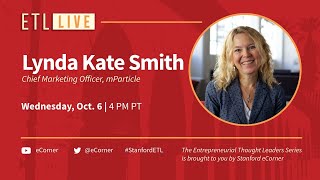
This content was created by GHION.AI . This content was uploaded by GHION.AI . This is a YouTube video titled "ETL Speaker Series: Lynda Kate Smith, mParticle" from October 7, 2021, featuring a seminar by Lynda Kate Smith, a Fellow Fenwick and West Educator of Entrepreneurship at Stanford, discussing entrepreneurial marketing strategies and lessons learned. The seminar is part of the Entrepreneurial Thought Leader Seminar series presented by Stanford's Entrepreneurship Center and the Business Association of Stanford Entrepreneurial Students, hosted by Ravi Balani. The talk covers topics such as go-to-market strategies, target markets, brand importance, and ethical marketing.
Chapters
Before formally introducing our speaker, Welcome YouTube and Stanford Communities to the Entrepreneurial Thought Leader Seminar presented by stvp, the Entrepreneurship center in Stanford School of Engineering and Basis, the Business association of Stanford Entrepreneurial Students. Ravi I'm Ravi Balani, a lecturer in the Management Science and Engineering Department and the Director of Alchemist and Accelerator for Enterprise Startups. Today we have one of our very own. I'm very excited to welcome Linda Kate Smith to the Entrepreneurial Thought Leaders Seminar. Linda is a colleague of mine and also a Fellow Fenwick and West Educator of Entrepreneurship in the School of Engineering at Stanford. Within Stanford, she is famous for teaching Global Entrepreneurial Marketing and in the Department of Management Science and Engineering. That class draws on expertise that Linda's gained as the Chief Marketing Officer for companies or the VP or SVP of marketing for companies that have included Twilio, Jive, genpact, Nuance, and Genesis Telecommunication Laboratories. She's currently a consultant and Fractional CMO for mParticle and Misti Robotics and is an advisor for a variety of developer focused companies from low code development platforms to smart contracts and cryptocurrency companies. She also serves on the boards of Coderpad and Clickatel. Her Global Entrepreneurial Marketing class is around 20 sessions that covers the whole gamut of marketing. We've asked her today, we've invited her today to try to give us a snapshot in the next hour of that and she's graciously accepted. So without further ado, please please welcome.
Linda all right, well thank you and I'm assuming that no one has run away from the topic of marketing, so we're going to be good to get going here and super excited to share this with you. I am passionate about marketing and I am passionate about marketing to developers as well as other audiences. So let's see if I can't give you a few of the lessons that I've learned across the journey that I've had and and the variety of companies that I've had the chance to work with. So we're going to talk about what marketing is again and I will make just of this. But now that I do a lot of work with developer marketing, I know that there's one thing that marketers hate worse than or developers hate worse than marketing, and that's sales. But we're going to talk a little bit about what marketing is and then we'll go through my favorite lessons learned again. As Ravi said, in the GEM program you would get 20 sessions that covered a lot of this. Well, we're Going to give you the snack size portion of this today. So let's get started with what marketing is. And this is a big step because one of the things that I really try to work on, especially in gem, which again has a lot of engineering students in it, is try to get them to understand that marketing isn't just fluff. There's actually a science behind it and it's a super interesting science. And oh by the way, once you know the science, as a consumer or a person that sees a lot of marketing in your day to day life, you, you start going, oh, all right, I know the science behind that. I get what they're trying to do with me. So it's kind of a fun topic once you get into it. So if you were to Google marketing or do a search engine run on marketing, you're going to find a ton of definitions out there. This first one makes me laugh because I am a consumer and boy do they have my number. Marketing is helping your customers understand how much they need something they never knew they needed. And as a consumer you can relate to that. Yeah, I didn't know that I needed that thing and all of a sudden I own one. Marketing can really persuade people in that sense. But the definition that resonates most with me as being a serial CMO out there is this one. Marketing today is finally customer focused outside in perspective which we're going to drill down a little bit further into here in the next section. Social media made that happen. It did give a voice to customers. Markets are once again conversations, many to many. I can't tell you how fun that has made marketing. It used to be a one to many and now it's a many to many type operation. Marketing is about knowing the market, creating the right product, creating desire for that product and letting the right people know you have it. The reason this one resonates with me is you see a whole life cycle there. A lot of times people think of marketing as just that one piece creating desire. For me, marketing is the full strategic process. It's from understanding the market I'm going after, understanding the audience I'm going after. I have very often had product management and product marketing reporting to me. So it's about diving into the product itself. It is about creating that desire, that demand piece of it and then it's about the customer and retaining that customer thereafter. It's the whole strategic process. The other thing is marketing is a strategy and when it's really done well, it can really drive a company forward. When it's not done well, then it's just a bunch of random tactics. So as entrepreneurs, when you start thinking about marketing for your company, something to really think about is how do I make this strategic, how do I make it proactive and how do I not let it just end up being a bunch of tactics that I'm not sure I need or not? Now what really has come to be is marketing is about growth. Our job as marketers is to drive growth and to drive it profitably. And when you think about driving growth profitably, you really start thinking about, wow, marketing is central to a company. It's central to a company's business to get to that revenue number that you're trying to get to. And there are different types of companies, different types of marketing efforts. In some marketing is very supportive of a revenue effort, so supporting a selling effort because sales is needed to be involved. But there are other companies, like product led growth companies, where you'll often see marketing even own the whole revenue number. So at the end of the day, marketing's focus, it's about driving that growth. Now that then begs the question, what is entrepreneurial marketing? Well, it's based on the same fundamentals of traditional marketing. We use the same push tactics, pull tactics, we have the same fundamentals about driving that demand. But there's a different orientation when you're in an entrepreneurial company and oh, by the way, that can be an entrepreneurial organization within a well established company. But when you're in that entrepreneurial mode, you got to move fast, the company is moving fast. You've got to be agile because yeah, there are going to be changes and turns because things aren't established yet. You have to leverage passion, the passion of the founders, the passion of the product that you're working on or the service that you're developing. And you've got to be creative. We're going to come back to that one in a minute. And you're focused on establishing the company in an industry or establishing a product in an industry. And you're really focused on that rapid growth again. Now that may sound. It's got to be easy, right? Marketing is easy. Well, the reality is you're up against a lot of challenges when you're in an entrepreneurial situation. The company, the product and the service, well, they're likely not known or maybe in a really early stage, maybe the product isn't a whole product yet. Maybe there are only pieces of it there or it only has some of the features that you know your audience really wants. And marketing resources are Modest. So you have to get super creative. So if it is more challenging to do marketing in an entrepreneurial environment. But boy, you're going to learn a lot from that. And by learning a lot from that, you can take that into any other company that you're a part of. So that gives you a little bit about what is marketing and what is entrepreneurial marketing in a nutshell. So let's start jumping into the lessons learned. One of my favorites really is this idea of the importance of a go to market strategy. And you may be asking yourself, well, doesn't everyone have a strategy? The reality is no. And I'm not going to mention the companies who don't, but I've been a part of them, I've come into them, I've advised them. And what you really want to look at is what is the go to market strategy going to be for this organization? Because otherwise you are likely going to hit a wall. So what is that go to market strategy? Well, sometimes you'll hear people define it as just really how am I going to go drive revenue? How am I going to just again create that demand, sell my product? I believe it's much broader and it really is going back and to really creating that plan that's going to specify how that company is not only going to reach its customers and achieve advantage, but it's going to include things like what is the product that we're delivering or the service offering, if that's a part of the product, it's going to take into factors that pricing and distribution. It's a much bigger concept, but it's what aligns an organization. And so when you think about your go to market strategy, there are key questions that it's going to answer. It answers, what is the market that we're going to pursue? It's going to answer, well, what customers in that market are we going to sell to? What is that actual offering? The product, the service, the combination of product and services that you're going to bring out to your market to your customers. It's going to lay out what are those channels, how are we going to reach the customer? What's our sales and distribution model? How is marketing going to actually create that demand? What's the price, how much are we going to charge? And then what is that real positioning? What is that unique value that's going to give us that competitive advantage? This gets the whole organization aligned. I've walked into very mature companies, Series D, Series E well along their journey. And I'll walk in and I'll talk to the marketing team and say, okay, tell me who our target audience is. What are we creating content for? Who are we creating content for? Oh, cto. Definitely the cto. And I'll walk over to the sales organization and I'll say, well, who are you selling to? And they'll say, oh, never to the cto. We really go in and we try to sell to the developer or to the engineer. Oh boy, I've got a disconnect already between this. Then I'll go off to product and I'll ask. And what you start finding is if everyone's not working towards the same market, the same customer, building the same offering, thinking about it in the same way, you're going to waste resources and you're going to find at the end of the day that you're going to hit a wall. So definitely things that you need to think about. And so let's dig into what those benefits are. It clarifies that plan and direction for everyone inside. It establishes that path for growth. It maximizes that competitive opportunity. It reduces the time to market because everyone's not going on different swim lanes, everyone's going down the same swim lane. It reduces the costs, it maximizes the profitability you're not wasting. It increases the ability to adapt to change. Boy, think about it in your entrepreneurial environment. I've been through a number of companies now where we're going after one direction and yep, we have to change and move to another direction and that's okay. You're flexible, you're agile, and everything has to move with it and enables that clear external communication, making sure people, you know what, know what you're doing. So, so go to market strategy really key. And don't think that it's something that you can kind of slap on after you've already gotten your product built. Maybe that product isn't right for the actual market you're trying to go after. So recommendation lesson learned. Get your go to market strategy down, get it down quickly, and get it down early. All right, next lesson one. I'm passionate about everything we do in global entrepreneurial marketing. It starts with the whole that who is both the target market you're going after and that individual within the target market that you really need to reach. And one of the fine things that you'll find is when you really center in on the who, there's so much more you can do with what you're doing as a company. And again, it ties back to the go to market strategy. It's a really key Part of it. So when you think about the whole, when you think about really coming in and aligning on it, there's a real reason for it. All right, maybe this gets back a little bit to the science. It's that recognition that every market is made up of distinguishable segments of buyers and they have different needs, different buying styles, they have different responses to offers. It's about this idea of thinking outside in rather than inside out. So yes, it's an art, but there's also a science to it as well. And when you think of the value of segmentation, again, it's an alignment. It's a tool that helps us all go together. It improves your decision making. What product is going to be the right product that's going to appeal to that market? What's the right marketing motion for us? What's the right sales motion for us? It enables that better use of resources, just like the go to market strategy does. Super key. When you're in an entrepreneurial environment and money's not everywhere, resources aren't everywhere, it makes it easier for us as smaller companies and startups to compete. It makes it easier to disrupt the market because we're laser focused. You can't be spread all over. And I've had people ask me, well, how many target markets should you have? You know, how many target audience you should have? My answer, get as focused as you can because at the end of the day, if you're chasing too much, it's not going to work. Your resources will be spread so thin that nothing actually makes a dent. Now, it may be obvious what a target market is versus an audience, but I'm going to recap it here because a lot of times they do get conflated. The target market is a group of customers that you're going to go after. From a business perspective, it's a group. The target audience defines that individual that's either going to buy or or use the product. So there is a difference. One kind of nests in under the other. So when you think about your target audience, it's the person, the individual. When you think about your target market, it's that whole group. So I'm going to give you a couple of frameworks here. When we think about target markets, there is a rubric for finding them. You're looking for where there's a problem or an opportunity where there's not already a great solution. And that problem or opportunity, the positive side of a problem, is a very high priority relative to others that that same group might spend their money on. You want to make sure that the market would find your offering compelling. So get out, talk to the market that there's evidence that customers can and will pay. I've also run into the situation where I'll have like the first bullets there. I've got the problem or opportunity doesn't have a great solution. It's a high priority. They find my offer compelling. And when I get out there and I say, all right, you want to buy it? Oh, you have to spend money on this or oh, you're going to charge that much? Oh, I'm not interested in it anymore. There is an idea there about getting out and really testing that people will want to pay for it early on. So you definitely want to do that and that the market segment is large enough that it can be attractive, that it can actually make a viable business for you. So give you a little example. This is from my early days of Twilio. Twilio, so much bigger now and going after so much more. But when we really sat back and we said, what is the problem? It was about integrating communications into web and mobile apps. There wasn't an easy way to do this out there. When you think about where we solve this problem, well, it was with developers. And in particular we sub segmented the world of developers and the one we really focused in on were the entrepreneurs. These are developers that code to build a business. We asked ourselves, okay, on a scale of 1 to 10, how big of a problem is? And we found it really was a 10. And one of the reasons Twilio has been so amazingly successful is it is a company that was built by developers, for developers. So we knew the problem. Our CEO and co founder understood the problem because he had tried to do this before, integrate communications into a web or mobile app. The reason it was such a big problem is telecoms. They were a legacy industry and had such a different vernacular. They were so different in terms of how they operated. Would your offering be compelling? Yes, it was about APIs. The API culture was just really starting and it was something that developers could really use and use easily. Their time to value was super fast. Was there evidence they would pay? Yes, because we were already looking at what the telecoms were trying to charge for this and we knew that we could make it more affordable, more interesting and we can make price the differentiator. And was it a large enough segment? Yeah. Think about how many companies could leverage communications into their web and mobile apps to improve their businesses. So we were very, very confident about what we had out there. So our Target market was developers. In the earliest days, we were really going after those entrepreneurial developers, developers that were coding to build a business. All right, let's switch over to audience. Meet Misty. Misty is a platform robot. It is a robot that developers can actually build skills for robot applications. And so talk a little bit about the audience. The audience really informs the messaging that you're going to deliver to the market. If you know your audience, you can get that story right. It informs the demand creation, it informs the sales approach, and it informs the product. And so it's why it's so important to really understand that audience and to give you another framework. The way as marketers we do that is we build out Personas. Now, you may think that a Persona is just a B2C, a business to consumer type tool. Well, no, you see them used in business to consumer, business to business, B2B world, business to date, business to developers. Whatever your target audience, beta X, you're going to see Personas used. And it's not just a marketing tool. I've actually had in companies where I've had the product management team, the engineering team come to me and say, hey, we really want to understand the Persona that we're building for so that we get it right. And so how do you know you're going to get it right? Well, you're going to look at the demographics, you're going to look at the goals and challenges, you're going to look at the values and fears, you're going to look at how they learn and they buy. So you really have a great perspective of who this audience, who this individual person is that's now a part of your world. And the Persona template, super simple. Going to show you what a real example is here. But the one I like to use is all right, I'm going to identify the name, the title or description of this individual. I have written prose that describes them. A really easy read. Got a photo so that people who are more visual can relate. And then I like to have a boiled down version in my template. I've got the touch points, how they learn and buy, how I reach them. I've got the key motivations, their goals, their fears, their challenges, and then little tidbits about them that give me a little color that help me be able to relate to that person. And to give you an example, this is from Misty, why I introduced you to my little robot there. One of our target audience members was Jeff. He was a pro developer in business. My long prose describes it. By day, Jeff works as A developer, a software engineer with a focus on innovation. I won't read the whole thing to you. You don't need to hear my voice that much. But an example of how I try to bring Jeff to life for anyone that has to create or work with Jeff. And I have my tidbits and I love some of my tidbits here. They were the fact that the desk shows evidence of what he's working on. He speaks at developer conferences. I really tried to bring out a little bit more about his character. So when you're thinking about your target market, you want to think about a whole bunch of your target audiences and you want to really get to know them. So know your target market. Know the individuals within that market that you have to appeal to, whether it's your product, your marketing effort or your sales effort. So another lesson that I learned, and you used to think very early in my career, you know, yeah, you had to have a brand. It was like a logo. It was like the colors that you picked out and you know, you had to have a brand. You're a company, had to have a brand. I didn't realize until later in my career the power that a brand can really have. Maybe that's because I was doing a lot of B2B work and I didn't think of it as much there. Probably my peers that were B2C thought about it every day. But it finally dawned on me and I got very excited about it. So when you think about a brand, this is the perceived emotional corporate image as a whole. And why do we emphasize the whole? Well, it is more than a logo, it is more than the color or the fonts that you've picked out. And a brand exists in the mind of consumer, by the way, another word that if you go out and do a Google search on, you're going to find umpteen definitions. But a brand also exists in the mind, the consumer, which means it really comes back to how people perceive you. Coming back to that idea of the whole, a brand lives at the intersection of the brand attributes, all right, the logos, the colors, the words that describe it, those are the more marketing ish things we look at. It's also about the company actions, which is driven by culture and the values. And then it's about the customer experience and how you really have a customer feel. And when they go through the complete experience they have with the company, from the time they get to the know you to the time they buy your product, to their ongoing experience with you, coming back to that idea, that Your brand lives in the hands of the consumer. Well, that end customer is really going to be the one that helps shape that brand and projects that brand as they talk about you out there. And brands are important with a whole variety of audiences that you as an entrepreneur need to care about. It's your prospects, it's your customers, it's your channel partners, it's your employees, it's the investors, it's the market influencers that are out there, the brand influences. But again, it's not just the logo. It's all aspects of that brand that are part of that influencing tool. And if you can achieve that really strong brand out there in the market, it is going to add value to your company. It's going to require less persuasion for consumers to use other products from your same brand. It can ensure that lasting customer relationship, a relationship that's built on trust. Again, if you think about those three circles, trust isn't necessarily coming from what your brand attributes are. It's really about how they interact with your company and the experiences. It's going to help in that recognition in the cluttered marketplace. It's going to allow differentiation between very similar products. It has that ability to command a premium and it leads to that premium perception of quality. And I like to laugh. And one of the companies that I think has done an amazing job of building the brand started well before I got over there was Twilio. People thought we were five times the size we were. And part of what really drove that, and I like to laugh about it, is the power of cotton. We had Twilio T shirts all over the place. And we as individuals who had coded, had developed our Twilio app, had our red track jackets, and people would see us out there and was like, oh, my gosh, you seem to be everywhere. Well, it was how we deployed our brand out into the marketplace. And that power of the brand was super strong and it really helped carry the company a long way. This iconic Lao T shirt still exists today and the brand is still stronger than ever. Coming back to how brands are communicated, in addition to the power of cotton, it's the name, it's the logo, it's the visual grammar. Yes. Think colors and fonts and all of that. It's the voice. And I want to just pause on that one a little bit because people forget about the written word is so much a part of your brand and how you use that written word, whether it's the customer support tickets that people are responding to, it's the website that you're Creating, it's the way you actually talk to customers when you're engaging with them. It's that voice of the company carries so much power. And then some companies use taglines. Everyone has marketing, has messaging and marketing really leverages all of these to bring that brand to life. Brands also create bonds with companies. It really is that emotional attachment. Yes, there's an intellectual side of why do I want to use your product or your service? But there's also that emotional side. So your brand is also creating that really tight bond. The company that I'm currently the CMO of is a company called mParticle. This is a CDP, a customer data platform. This is a B2B and a B2D play that we have out there. One of the things we decided to do was really try to anchor more on the dev eng audience and make sure that our brand related to them or relates to them. One of the first things we did was we went and we looked at all of that messaging and we really tried to take it to more of a voice and, and more of a messaging palette that would appeal not only to the marketers that we appeal to, but also to that dev eng audience. What does that mean? Well, we got rid of the hand wavy stuff. None of the we're the best and we're the greatest. We really try to bring it into centering in on value. And the other thing we've done, just introduced to the world is a little guy named Higgs. He is a capybara. And what we wanted to do was bring a mascot to life to soften a little bit of the rough edges of the brand, to warm the brand up. And one of the key things we wanted to do was really think about how do we want people to feel about the brand. And the capybara is an animal that interacts well with everyone, with all the other animals out there. And part of what we do as a CDP is we allow people to move their data, bring it in, provide that quality to the data, governance, privacy, apply all those good rules to it, and then allow them to take it out to lots of different destinations, partner destinations. Capybara seemed right on target for that. So brands are powerful. Brands can do a lot for a company and think about it early. Sometimes people will think, oh, worry about all that branding stuff once I have a product in market. Every day that you waste, every day that you don't have your brand established, you've wasted the time, you've wasted the energy of a lot of the efforts. You've already got out there. All right, creating demand. This is the part that a lot of people really think is. Yes, this is what marketing does. You create that demand in the market. And it is. It's very important. It's not the only thing, but it's very important. It is one part art and one part science. So let's start off with the science. There's something that's called the hierarchy of effects. It's been around for a long time. I by no means invented it, I've borrowed it, I've leveraged it. All great art is a replication of former art. But when you think about the hierarchy of effects, it really describes that world of I have no idea who your company is or what your products are. Oh, you're an entrepreneur. Guess what? That's the world you live in. And then you bring it down to, I have to drive awareness. But awareness isn't enough. I need the people that target audience I'm going after to really get the knowledge about it. And once they've got knowledge, now I can get them to where they like it, and then I've got to have them have preference for it over what else is out there. And then I got to drive that conviction, and then I got to drive to purchase or action if it's signing up as an example. The other thing you'll hear about this is we'll call it maybe the funnel, and we'll talk about how awareness, consideration, and our action are driven. But this is really core to creating demand. And guess what? Companies use different tactics, different strategies as they work through this whole hierarchy of effects. What a company does to create that awareness is going to be different than what they might do to create that preference, that liking thinking about. Think about. You now know about a product. You go to their website. Maybe they have a freemium offer from that freemium offer. And after you've used it, then they communicate with you about, here's how you might upgrade all different tactics. I challenge you to think now about the different companies you interact with. Whether that is a tool for business or it's a tool for your own personal life. Think about how they get you all the way through from not really knowing enough to do anything all the way through to where you purchase or you take that action. It'll start driving me a little bit nuts, I guarantee you. The other part of the science is how perceptions are formed. When you think about it. If you just see something once, an ad once, a billboard once, maybe it got into the sensory register if it was good, but, boy, it's not in your short term memory and it's certainly not in your long term memory. As marketers, not only are we trying to move you through the hierarchy of effects, we're trying to get into that long term memory because that's where the real value is. Because once you're in that long term memory, you're going to be word of mouth for me. You're going to go out and talk about me and really help others to know about me, or you're going to decide to use me on your own. Maybe you didn't need me when you first learned about me, but now you really do need my product or my offering to get people into that long term memory. It's all about that strength, that repetition, getting it to a point where that signal strength is so strong that the consistency and frequency of knowing about me is so much there that now I am a part of your long term memory. So another piece of the science. So you are going to think about how do I move people through the hierarchy of effects and I am going to think about how do I get you in that long term memory. So, so there's that retrieval, that word of mouth power that comes. And by the way, the brand is a big part of this as well. Okay, this is an art or science. This is just common business sense. When you're thinking about creating demand, you gotta make sure that the lifetime value LTV is greater than cac, the customer acquisition cost. If you don't do that, if you have the flip, you, you're going to end up in a situation where there's just not a business model that works. You're going to see a little sock puppet down there and some of you may have heard of this thing called the dot com bust ages ago. But companies were getting money, they were getting funded, they were getting excited, they were putting a lot of marketing out there and they failed to have the lifetime value greater than the CAC and they disappeared. Sock puppet was with a pets company that was delivering pet products out to people. Really good concept. But because they didn't get the business model right, it unfortunately didn't last. All right, one last piece of. Let's call it the science side of this, we'll call it the strategy side of it. When you're creating demand, you do have to take a strategic approach. This isn't just about random tactics that are cool, oh, I want to have a Facebook page or yeah, yeah, you know, let's go out and let's do a little bit PR out there. You have to start with the whole who are we trying to reach? And once we really understand that who our target audience is in the target market we're going after, then we talk about what we're trying to accomplish, what our objectives are. We want to think about what our strategy is to be able to get there. Then we want to think about where we're going to reach them as a part of that strategy. Then we think about what we're going to say, what is that messaging that we need to project. But it all comes back to a strategic approach. A strategic approach not only with everything that I'm going to use to create demand, but actual individual tactics as well. And when I'm going about trying to reach people, there's kind of two flavors of doing it. There's inbound and there's outbound. The outbound is more what we've been used to as marketing. Kind of pushes the message out there. It's really talking about me, me, me. And you have to do some of that. It's just, it's part of marketing. The inbound is what I think we've all as consumers or recipients of marketing have come to appreciate a lot, which is it's really more about that pull. It's about drawing my audience into me. It's about really thinking about what's going to be useful to them. And it's not interruptive, that outbound stuff. Yeah, it tends to be a little more interruptive. And this all make more sense when you think about the tactics associated with each inbounds. That content marketing. We're not talking a seller sheet. We're talking about really good useful information. The top five ways of doing X. It's about search engine optimization, influencer marketing, the social media marketing and then outbounds. All that stuff we've traditionally looked at. It's the pr, it's the AR public relations analyst relations, it's advertising, direct mail, webinars. Read the list, they're all out there, we all know them. The art is picking the right ones for the audience, being strategic about it. What am I going to use of those tactics for the awareness? What am I going to use for the consideration? What am I going to use to drive that action? Lay that horizontally. But it's a whole lot like that hierarchy of effects that we talked about. This is art. It is getting to know for my audience what the right tactics are going to be. Another one of my lessons learned. Demand is part art, it's part science. You have to do it well. You and this is really the heart of driving that growth and driving that revenue. All right, last lesson learned. Painful lesson. Somehow I left the world of Twilio and ended up in the world of personal robots. And they're awesome in terms of the technology, by the way. It's a super cool area to be in, but it's really hard. Hardware is hard. Software is hard. Hardware and software together super hard. Great. Marketing does not replace product. Product market fit. We tried. So the company I worked for was Jibo. And Gebo was this amazing. It was the world's first personal robot. We had an amazing roboticist, Cynthia, who really came up with this construct, and we really thought we had a shot at this market. Our industrial design was fantastic. The concept was really good. This idea of having a robot in your home you could interact with that would help you. That could help engage you, to help make you laugh, but also help you get really important stuff done. It was the largest Indiegogo crowdfunding campaign of the time. There is definitely a market out there for this. We had passionate early adopters, people that loved this robot and really embraced the robot as a member of the family. And we had fantastic marketing. We made the COVID of Time magazine as one of the 25 best inventions in. And we were number one. We got the centerfold. We were all so excited. But we ran into the problem that the robot was coming out just about the time that this thing called a smart speaker was coming out. And those smart speakers which are all over your home, pick your flavor, had a lot more utility. And it made people feel like, well, it's a social robot, but it should still have the same utility of an Alexa. Right? We didn't. We had not been able to yet build out that full portfolio of skills. And unfortunately we had to close the company down. But as an entrepreneur, as you know, that is part of it. That can happen, but you want to guard against it. So why do great ideas fail and there are so many of them that are out there? Well, it may be that it's a nice to have, but not compelling. That was a little bit of our problem with Chibo. It didn't meet the needs of the audience. That thing about utility, it just didn't have as much utility as they expected for the price point. It was before its time. We don't have many social robots out there. One was just announced here lately that was interesting. But at the time, it was before its time, there was no market for the product. The market wasn't big enough. I think we could have overcome that. We had enough ideas about where this could be compelling, that if we could have gotten the skills, I think we could have done it. An element of the marketing was off. I don't think so. I think we had the right marketing. The product doesn't work well. No, the product worked. It just didn't have the utility. And then there are always going to be things out of your control. This is a great checklist if you're an entrepreneur. Go back and look at it. Am I building a product that is destined to fail or can I overcome these items now? This is my last lesson, so I didn't want to end up on a very sad note. The good news is Jibo is back. Jibo is not part of the original company, but the assets were picked up by NTT Distribution. Jibo is making another run of it out in the world. It's an amazing interaction. Go to the website, check it out, you'll see what Jibo is about. But not all stories have to end on a sad note. Luckily for us, Jibo is back, but originally we did not have the product market fit and we did have to close the doors of our entrepreneurial operation. So your mission, Define your go to market strategy. Do it early, do it at the beginning. Don't hit the wall. Get your product. Get the product right for your audience. Told you. It all starts with the who. Get the marketing right for your audience and then create a brand that's relatable by your audience. All right, that's it. That's all I got. Those are your lessons. I will turn it back to you.
Ravi, that was awesome. Thank you. That was a fantastic overview. And it's. I. It was for me, it left me wanting more as you and so gang. If this teases you or it whets your appetite, there is. There's 20 sessions behind this. If you want to dive in deeper, check out global entrepreneurial Marketing. Next year I'm going to open up to the students, have a bunch of questions and so I'm going to prioritize the students first and then I may ask a couple questions too as well. But Brian right now is the most upvoted question. And Brian. Oh, sorry, I'm not supposed to mention the students names. I apologize for that, but I will not mention your last name. The question is this though. What do you think about most people having a negative view of marketing? Especially exploiting people's psychology to sell them what they wouldn't want to buy? What percent of marketers do you think would care about customers over profitability?
Yeah, this is a, this is a great question. I'm going to answer this in two ways. The first way I'm going to answer it is this is where ethics come into play. And this has been, I think, super important in what we've been doing here at Stanford as well, is really looking at ethics across everything that we do. And when I think about marketers, marketers do need to learn and understand what that ethical behavior is all about and really think about what are they doing as a marketer and make sure they don't cross that line. So I think that this whole idea of ethical marketing, I think, is a very important thing for any marketer to really learn. What is my personal opinion? Yeah, companies do go over that line and they will unfortunately put, hey, I want to really make money. And so I'm going to put my ambitions as a company because I have shareholders, I have investors, I'm going to put it ahead of what I think is really right for my market and for my audience. So they're always going to be bad eggs out the other way. I'm going to answer this is welcome to my life. I walk into a Stanford classroom of all these engineers and it's like, all right, I want to see a show of hands who thinks marketing has value. I can tell you, not a lot of hands go up. And that's always part of my job. Then during those 20 sessions is get you from where you think it has no value and it's all that fluffy stuff or sadly, stuff that is inappropriate from an ethical perspective to where you know how to go out and drive marketing in a way that's ethical and a way that makes sense for the business. And it is always finding that balance is a great question.
Is there an example of that? Linda, just to. I'm just double clicking on the question and just diving a bit deeper because one of the takeaways from the talk is economics. You need to make sure that you have a business model that's balanced. And so I think there is this takeaway that it needs to be profitable. But if that profitability comes at odds with your principles, how do you reconcile the two? And I don't know if there's an example that you can share where there might have been a tension between your principles and what was profitable or how you navigated through that process.
Yeah, what I can say is being in the B2, a lot of my career was in the B2B world, and then I moved to the B2D or business to developer world. And in the B2B world. I would say that I never ran into an example in my companies where what we were doing was wrong for our customers. And so I was very lucky that way. I will say we had one company where we did have to look at what are our practices at the end of a quarter and closing a quarter. Used to hear about in the old days where software actually came on a disk, gold disc deals to get a quarter close. I have seen that in business and we did bring that back. We had to bring that back because we were a publicly traded company. But I've been very lucky not to have seen people crossing the line in terms of what they're doing to customers. I will say I have observed, and I don't want to say company names because they've not been names, companies I've been associated with. But I have seen in the B2C world where it's really easy to do that. And I think there you're seeing a lot of questions around this. Especially with forming young kids associations, you're seeing a lot of question. I mean, it's, you know, without seeing a name of a company, there's been a lot of question about even in the product development, are we developing children's dolls in a way that is to make them feel good about their own personal images. So I think in the B2C world, it is much easier to cross that line. And then a company has to question why are they in business and are they feeling good about how they're in that business?
And doesn't it come back to then your values, which is ultimately your brand? Because ultimately I think isn't it articulating what your values really are in the beginning and, and having that be informing part of your brand and making that decision?
Yeah. So agree with that. And I'm passionate about the whole idea of value building and building values. And I have worked in organizations where it was, shoot, where's that car from hr? I know we have values. I just got to find that card and find out what they were on the back of because they weren't a part of how we operated. And I have worked with companies where the values were taken so seriously that they actually did drive the business. They were the underpinning. Underpinnings of how the company operated. And as entrepreneurs, you get to make that choice. And so another thing I would say is don't wait to select your values until way downstage. Oh, I guess we're big enough now. We need to have values. They can be such powerful tools for building the brand. But for building your organization, hiring the right people, making the right choices, as you're pointing out, it seems to me, I think we need to have at Stanford, we need to have an ethical marketing course. I think there's a new opportunity there we need to build.
Yeah, I think we have to decide that. We have to figure out the marketing for that too, to make sure that it's something that will appeal to people. But I agree, I think. I think packaging that would be important and understanding that, and I couldn't agree more regarding the values. I'm going to go to the next question. The next question is social media has likely made marketing far easier than ever before. Does this mean marketing is more competitive now? How do companies market in a way to stand out in a crowded social platform?
Wow. All right. This is a great question as well. I sadly can say that I knew what marketing was before social and what it's been after. Some of you may not believe that, but I would say that social has actually made it marketing both easier and harder. One of the reasons that it's made it harder is the fact that I have so many more platforms that I can go out on. And coming back to the audience, I need to make sure that I'm going out on the platforms that they're really engaging in. I also have to recognize that, quite frankly, people are on social not because they want to see my advertisements or see me promoting myself or my company. They really will only embrace me if I'm a part of that community. Now, yes, there is an advertising element. We all use these platforms to do advertising. But if I really embrace social in the way it's meant to be, that inbound mechanism, it's about becoming a part of the community, understanding what I can share without going all salesy, all marketing on people. So it's actually. It's a real. It's hard. So it's actually by, you know, coming on board, yes, it's made it easier, but it's also hard. It's a. It's a real discipline that you have to get to understand on the easier side. You know what I would say it is that it has given me additional avenues. Everyone is on one social platform or the next, so I can't ignore it as a tool that's out there. What I have seen companies wrongly do is they'll automatically say, like, and to use a platform, I need a Facebook page. You know, all right, why do you need a Facebook page? Everyone has a Facebook page. You got to be on Facebook, right? To Be a company. You really want to go back to the strategic aspects of this and you want to really go and go back to the audience. What is am I trying to accomplish? Are they on that platform? How do they use that platform? And what's my right engagement means on that? Did I get all of that question? There were a lot of nuances to that.
Oh, I think, I mean it was a deep question, but I thought that was a deep answer too. I mean, just to probe on that, last week we had Justin Kahn who was talking about how he's really excited. I know I'm asking this because I know you're getting also involved in crypto, but he was very excited about the possibility of creating these community owned ventures where crypto is enabling the users to be the owners. And I don't know if you're, if that's a theme that also you're seeing or if that shifts what marketing means when your customers and your owners are combined or.
Yeah, yeah. So, you know, let's, let's kind of pull the word ownership and you know, kind of pull it apart. When I build a community for my customers and this is something we do actively do, especially for reaching developers, what I really want to think about is all those people that are in my community are actually owners and there may be no financial transaction in the community, but they own the brand of that community. They are such an important part. So in my marketing effort, what I have to really understand is what are the needs of my community members? What's going to be important to provide value to them? How do I create those engagement opportunities that are really going to make them want to stick and be a part of the community? So when I think of the word owners, no matter what community, I stand up. I want to think of everyone as an owner. Now if there is a financial transaction that occurs, that there's a financial reason why people are involved as owners in that community. I think one, it brings up that ethical question again because I need to make sure that the way that community is embracing and interacting with us, with each other, is done in an ethical fashion. I also need to again think about when I'm thinking about the audience. I need to think about what is the nature of this financial transaction that is going on. I mean, is it their lifeblood, like they're depending on this for their retirement years, or is this just kind of a side thing that they're doing and it's kind of just fun? I need to understand the motivations of that community and that financial transaction to do right by them and to set up the right dynamics that are occurring in that community. But when you are setting up a community as a part of your marketing effort and you need to really think again about that audience, but also ownership, if they're going to be engaged, they feel ownership. They feel ownership to the brand, they feel ownership to that community.
That's great. I'll move forward. The next question is, what would you say has been your favorite example of entrepreneurial marketing that you've seen in the past couple of years?
That's. Well, I am going to step back very honestly into my world at Twilio. Twilio is just a wonderful experience on so many levels. But the entrepreneurial marketing, we were really pioneering what was going on in the world of APIs, developers, developer evangelism. And I had an amazing partner to work with, my head of developer evangelism at the time. And we really were able to build up what that construct was of how do you get out into a developer community? How do you become a part of the community and not. And that's why I hate the word developer marketing. It's really more about how do I create that outreach and I think Twilio, their entrepreneurial marketing. And it started, quite frankly, well before I got into it. I just had the opportunity to add some polish to it. But what was being done to really interact with developers? We had some amazing guerrilla marketing. That was how the Power of Cotton really got started out there. Think go to south by Southwest, have a Gatling gun for T shirts, and you're getting everyone your swag out there. I mean, there's some brilliant guerrilla marketing moves that were made in the earliest days. So I'm still very passionate about the entrepreneurial marketing that you really saw with Twilio because it was just pushing so many new boundaries out into a target audience and target market that really was only just starting to get worked as an audience and as a market.
Terrific. Next question. There's a lot of questions. So we're not going to get through everything in time because I'm going to try to rush through them.
They're good.
It's a sign of a lot of interest. So that was a terrific talk. The next question is, on a scale of 1 to 10, how much have algorithmic prediction models changed the marketing playing field, both in content and outreach for you since you began your career? More importantly, what do you predict will be the last human remnants of value to marketing moving forward?
Wow. Okay. Boy. Lots of great questions and a question. I think that when you think about how we are all now using the algorithms in our marketing, that's what funny expression my face is like. Back when I started marketing, we didn't even know what an algorithm was for marketing. It just wasn't a part of it. So it's made a huge dynamic shift. I think where you see it again it really is. The places where I think it's the strongest are in the any, I'm going to say B2C business to consumer but product led growth also is a big part of it. I think anywhere where you have that constant interaction with customers, you need to understand how they're thinking. You need to understand how you leverage the very precious data you have in a very ethical fashion to be able to offer them value. I think it's just, it's changed the full dynamic and that is part of what we're working on. Quite frankly. When you think about a customer data platform, this really is an infrastructure layer that enables a company to really leverage that very precious data that they have in the most intelligent way. I think it has a role in business to business as well. But again I think it's where business to business has very interactive activity with their customers. It's not a. I bought it five years ago as CEO in five when we have to renew the contract. So I think the most impact it has is where you have that frequent interaction with customers. But it's night and day from where I started my career in terms of what we can do with data. Now I think coming back to our ethical conversation, the thing as marketers we all have to embrace and understand is that this data we have is very personal data and it is what we are using to be able to predict how we should interact with a customer in an organization. So the privacy, the governance, the being respectful of this data I think is super important. And I think that's going to be the next dimension of this first dimension was we had none. Second dimension is oh good. Like kids in a toy store, candy store. Look it, we got it. What are we going to do with it? Let's start playing with it. And this next phase that we're really going into is how do we do this in a way that is appropriate and how do we also use AI in a way that we are not biasing it by our own thoughts and interactions. This also ties back to the ethical conversation. There are a lot of steps that we have to take now to really understand that and embrace that. And I do think you had used, I think the word was the Last of the human era. I'm now playing in the world of robotics as well. And I think we are going to come to a place where there is more of a robotic type of a use of this data that's going out there.
Linda, there are more questions that we're going to get to in the next two minutes. If you, if you see the Q and A list and there's any that pop out at you, you're more than welcome to exercise your prerogative and call any of these out. Otherwise, I'll go down the order.
I'm going to have you do it, because otherwise you're going to see more on my face than any deserves to see with the size of.
No worries. No worries. So I just apologize ahead of time, students, because we're not going to get to all the other questions, but in 178, we might be able to get to more of these. So the final question we'll probably have time for is how have you prevented or solved a disconnect with companies that have different perspectives on their target market and audience?
Yeah, that's super interesting. Really, that framework that I gave you earlier on in the presentation, that, that really simple little table, what I have done is I have sat down and said, all right, you've got a target market you think is right. You've got a target market you've got. Okay, let's really dig in and get to a level of detail other than what you just saw in that single slide of. Is there really an opportunity here that someone else hasn't solved for? Let's, let's dig into that, and let's dig into it for each of the markets. How big is the pain point? Okay, let's really look at it. So I'll use that framework very specifically to look at each of the markets, and then we'll have a conversation. Once we have enough of that information out there, we'll have that conversation and then you'll start seeing people get some reasonability about it. And the other thing I have seen is there may be two, call it two, target markets that are really actually very similar. They both have a real need. Then it's just a matter of what can you do from a resource perspective. The thing we have to always remember as well, that when you pick a target market, it has impacts beyond just my marketing effort. It can impact the product, it can impact the services that we need to offer. So it's expensive. So then you have to really kind of sit down and say, all right, if there are two that are really, really strong. You know, maybe we pick one and then follow with the other. Or if we could do both, how do we do it in a way that we do it effectively enough that we can penetrate the market?
Well, Linda, thank you. All good things unfortunately have to come to a close and we're at time, so I have to close it. But I just want to thank you for a fascinating overview of all of marketing and gang. Again, check out Global Entrepreneurial Marketing if you want to go deeper. But that was an amazing summary. Thank you so much for that. And to our audience, thank you for tuning in to this session of the Entrepreneurial Thought Leaders series. Next week we'll be joined by Thredup co founder and CEO James Reinhardt, who will talk about how he built one of the world's largest online resale platforms. You can find that event and other future events in this ETL series on our Stanford E Corner website at Ecorner Stanford Eduardo and the Stanford E. Corner YouTube channel. And you'll find even more again at Ecorner Stanford Edu. As always, thank you for tuning into ETL. And until next time, stay be healthy, both physically and mentally. Thank you everybody.
More from GHION.AI


O processo de reconhecer limites, mesmo quando a vida parece exigir sempre mais.





Depois de tantas histórias, aprendizados e pausas necessárias, o @interior_iza está de volta



