Etosha Cave: Returning With Real-World Wisdom
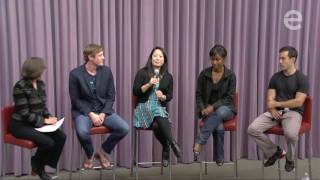
Five Stanford alumni entrepreneurs discuss founding startups at Opus 12, Striver Labs, GRAIL, and Bright. They cover fundraising challenges, scaling problems, regulatory hurdles, and why some pursued advanced degrees while others didn't.
Chapters
Super.
So I thought that it would be really helpful to have each of them introduce themselves, just give a little bit about their background, what they studied and what they're doing now to set the stage. So who wants to start? Cody?
I'll start.
Yeah, I'm Cody. I studied symbolic systems. I'm Cody. I studied symbolic systems here. I graduated in June and now I work as head of creative at Striver Labs, which is a performance training virtual reality startup that came out of research here at Stanford.
Hi, my name is Elaine Chung. I did my undergrad here at Stanford in biological sciences, and then I did my co-term in MS&E. And as Tina mentioned, I was Mayfield Fellows Program as well. I'm at a company called GRAIL, and what we're trying to do is analyze circulating nucleic acid in the blood in order to try to be able to detect cancer early.
I am Tasha Cave, and I did my master's and PhD here. I was in the mechanical engineering department. However, my advisor was in chemical engineering, and while I was here, I participated in the Excel Scholars Program. I also did Ignite, the summer program in the GSB. We also were in the Stanford Venture Studio, we did StartX, so done a lot of entrepreneurship things here at Stanford. And the company that we started, I have two other co-founders who also were Stanford grads, we started a company called Opus 12, and what Opus 12 does is recycle CO2, so we make reactors that input carbon dioxide and water. And then using metal catalysts and electricity, we break it up— we break down the CO2 and water into smaller atomic bits and then reform those atomic bits into a new molecule. And we can make one of 16 new molecules out of just CO2 and water. And these include things like a precursor to diesel fuel, to plastics, common household chemicals. And the idea is that we can provide an economic incentive for companies to utilize their CO2 instead of just throwing it away.
Awesome. Jonah Greenberger. I was Stanford class of '08. I don't know if classes do that anymore, the little '08 chant. But I started a company called Bright 2.5 years ago, and we provide cheaper electricity to homes in developing countries with rooftop solar subscriptions.
So pretty impressive, right? So I've had a lot of students come to me recently. It must be that time of year is The students are thinking about graduating at the end of this year and thinking about what they're going to do next. And they're trying to figure out what drives them. And it would be really helpful to know from you guys what motivated you to get involved with the endeavors that you're working on now. I mean, so for example, Cody, this is right out of school, as for you, Tasha. Yeah.
Yeah, for me, I really found myself in a place where there was a— identifiable use case for the virtual reality industry. I happened to be studying VR at a time where it was exploding, so a little bit before what we see now. And another student here at Stanford came to me and had this really great idea, which was the first time that I thought there was an actual real quality use case for VR. And this was kind of before the explosion of the industry. So what motivated me was just being excited about a use case that I thought was a tremendous application.
Great. And Tasha, you also started right after school.
Yeah, and actually we started a little bit before I graduated. We were working in our free time before I finished to figure out what we're going to do for the company, how we're going to make this economically viable. And for me, it really just was I was doing this research here. I loved it. It gave me a huge sense of purpose. And I really wanted to see if it could work in the real world. So my other co-founder Kendra, we did our PhD together, we were in the same lab. We just started writing down ideas of how we could actually scale up the technology. My PhD was mostly focused on the basic science side, so we wrote papers and we looked at things on a very fundamental level. And this is kind of the other side of that, of the applied side of like how do you make it cheaper and more cost-effective and how do you make the economics work. So really just stemmed from interest in wanting to do the technology, not seeing anyone in the Bay Area or this side of the country that had worked in this area. And so we thought, well, if not us, then who? Why don't we just see if we can make this work? So that was 2 and a half years ago.
So it's really interesting because Jonah and Elaine, you have a really different story. I believe, Jonah, you had a passion for doing something meaningful in the solar space, but you made a really different decision about how to go about it first.
Yeah, so you kind of led me into this, but, so energy's an interesting field. You need some industry experience. It's like a very global industry with a lot of regulations. So I actually, when I was graduating, I did the Mayfield Fellows Program, and then I decided to go to the largest company I could to learn about business, and I had studied mechanical engineering, so I went to Chevron, which was doing some interesting stuff, in cleantech, and I went there to learn the processes that make a company tick at scale, and what regulations work, and what makes a company successful in the energy industry, and I was there for longer than I thought. I was there for about 5 years, but I learned a ton, and then started Bright right after that. One of the reasons actually was, this is kind of a morbid quote, but I think on people's deathbed, the number one thing they regret is not taking a risk, And so I read that once, and it kind of haunted me. And I was at Chevron, and it was haunting me. And once I felt like I'd been there and I started to get enough courage, I just decided I didn't want to be that person on my deathbed that had not taken a risk and did what I wanted to do. So that's kind of how this all started.
Great. And Elaine?
Yeah, so similar to the energy industry, which takes a lot of capital, is highly regulated, it's been my passion since I was a kid to be in the life sciences industry. After school, a couple of the opportunities that I went to were being the industry leader for molecular diagnostics in oncology to help cancer patients guide their treatment decisions, and then went to the industry leader in DNA sequencing technologies and spent several years at both of those organizations kind of learning the space and really learning the domain. But wanted to get back to a more kind of startup opportunity where I could be very close to developing products for the patients. And so really, GRAIL is an opportunity for us to do that, to leverage really, really exciting technologies to be able to improve patient lives.
So we know that starting a company or being involved with a startup is full of surprises and often pits that you fall into, as well as really fabulous highs. Have there been already some surprises that you could share with us? Obviously, you started with the idea that, OK, this is going to be fabulous and great. What happened that might have surprised you along the way? Cody, do you want to start?
Yeah, for us, we're surprised that— so we build a training tool for professional athletes to use VR to train, and we're always surprised that coaches don't want to use the tool. I think the biggest surprise for me is how important sales is to our cycle, is to actually try to sell this tool. Because to us, I mean, we are a company of athletes and sports-minded folk. But the sales process is so important to the industry, and I think the biggest surprise was just how hard we need to work at that. So instead of proving it as a tool, it's always about kind of pitching it to kind of how do they use it in a way that is effective for them, and how do we pitch it to them as something that's going to be non-invasive to their current coaching philosophies.
So interesting. You sort of thought if we build it, they will come.
Exactly.
And you learned that that was certainly not the case.
It's not the case, yes. So we're still working on that.
OK, great. Elaine.
Thanks. Well, I think generally speaking, the genomics industry and the technology that's been developing over the last decade has been moving extraordinarily quickly. The cost per sequencing a base pair is dropping much, much faster than Moore's Law, exponentially faster, in fact. And so it's really enabled this technology to be applied in a clinical setting now very rapidly. So I think at a meta-level, that's been a surprise to all of us in terms of how quickly that technology has developed. Developed, but I think for us at the startup, we're a very mission-driven company, and so the rate at which we've been growing, but we have a company value of GSD, which is get stuff done. It's just been a phenomenal experience over the last several months to see how much a group of really smart, like-minded, mission-driven folks can get done, and so as an example, we brought in our first wave of hires in March, And by August, we had already started enrolling in our first clinical trial, which will end up enrolling over 10,000 subjects. And just the pace at which that has happened is pretty unprecedented in the oncology space. And so that's been a very pleasing surprise for all of us.
Great. So a good surprise.
Yeah, I think for me, the big surprise was when we were first starting this and kind of working in the evenings, figuring things out, I sort of naively thought that, oh, we're 3 Stanford students, we have 2 technical co-founders and 1 business co-founder, and someone will give us an initial amount of money to get out there and get going, and then the later stage funding would be the harder part, the first funding would be really easy, and that turned out to not be the case at all. No one really wanted to give us any money because we had no prototype, we just had an idea and had a a decent story. And so what we had to do was end up getting government funding to build our initial prototype. And in general, we've had to diversify the streams in which we've raised money. So we've also looked at philanthropy and family offices and kind of to get us to the stage where we would be attractive to venture funding at a later point. We're still not there yet. We're bringing in angel investors and that type of thing, but we're not quite ready for venture capital funding. And so that has been the most surprising part of— you hear all these stories about, oh, couple students, got their initial seed funding right out of school and then could take off in that. For a clean tech company and doing hardware, that's not the case.
[Speaker:GHION.AI] So I was surprised by how many people will tell you that you can't do it. I, when I started Bright, so I wasn't fluent in Spanish, I still am not, and our first market's Mexico, so there were some things that just didn't make sense and I knew that, but I also was very surprised that so many people said that just doesn't make sense, like you can't start in in a country you've never been to that you have no connections to and you can't speak the language. And it was like the nos and like, what are you doing, you're crazy, would come from everywhere. I think there was like maybe 5% of the people I talked to that were really supportive and like, this is a great idea. But it's kind of like, I don't know if anyone, who here has signed up for a race that they thought was like a crazy race, but then because they signed up, they just did it? Like, that's how it works, and it's kind of the same with entrepreneurship and startups. You kind of just have to sign up, like make the leap, and then on the opposite side of the coin, I was surprised by how much you can figure out if you just do that. I actually, I flew to Mexico for the first time when I was starting Bright, and the power of the Stanford network, I reached out to Stanford alumni in Mexico, and someone I had never met, I ended up staying with, My flight was late, so I ended up getting there at midnight. He was asleep. It was a very awkward interaction when I was blowing up the air mattress to sleep on his floor. And that was like, it's a crazy start, but that was my first connection in Mexico, and then it just grew from there. And yeah, it was crazy and it didn't make any sense, but kind of signing up for it is the most important step that you can take. And you'll test your limits, but you will succeed far more than you think you're capable of. And it'll only happen if you sign up.
So it's so fascinating that there were so many people saying, oh no, this isn't going to work. Who did you go to for helpful advice? So we'll go back in this direction. But start off, please.
Yeah, start. Who was most helpful?
Well, who do you go to for guidance?
Yeah, so I think the two people that were most helpful, one was my dad, who had no idea what I was doing, didn't understand it. But was our first check because he, and it's funny because after, I thought I pitched it really well, but afterwards he, like a month later my parents were like, "Sweet, so what are you doing again?" I was just like, "Ah, that's great." This is like unconditional support. And he's a big fan of Jeff Bezos and Jeff Bezos' first check was his parents and he kind of wanted to do the same to me and just kind of believed in me. And so that belief was like, very helpful, 'cause I didn't wanna let him down. And then the other was one of my close friends, Matt Wall, who's the same year as me at Stanford, and kind of also just had this unwavering belief in me, and objectively what I was doing was crazy, but he knew and said, I wanna write a check, I don't care, I know you can do it. And it was more belief than I had in myself, And that was pretty incredible and inspiring and made me push forward because I didn't want to let them down.
That's great. Yeah, I've definitely found mentors and allies in various places. So I would say the first mentor we had was Brian Bartholomew, who's here in the TomKat Center. So TomKat was actually our first grant that we got in, and TomKat gives grants to Stanford students and professors to transfer technology out of the lab. And so I remember sitting right there in Copa Cafe talking with Brian about like, "Oh, we're thinking about doing this. We don't know if we're too early. What do you think?" And he just really encouraged us to go out there and just try it. And subsequently, we've gotten into several incubators and accelerators and has— and that has brought about mentors to us as well. And that has been huge. I mean, I think if you're doing a startup, especially in a challenging space such as clean tech, you definitely need support. I mean, really, if you're doing any industry, you really need support and to have the ecosystem around you. Oh, and one plug for Excel Scholars. So actually, our first angel investor in came through someone I knew in the Excel program. So having that network and stuff was really helpful. And once we got our first angel investor in, it helped to bring others along. So definitely, while you're here now, reach out. Establish network, find out who your allies are going to be, people who believe in your idea and believe in you as entrepreneurs, and they'll be very helpful along the way to kind of keep you going.
Elaine.
Yeah, same here. I have hit many, many bumps along the road, and some of them are really big. Is this company's sort of fundamental thesis flawed, all the way to interpersonal conflict. And all of those are very challenging, and similar to what Jonah and Tasha have been saying, Who I go to guidance for is definitely my dad. So just having that unwavering support and unconditional perspective has been hugely valuable. But I've also built up a network of longstanding and deeply trusted friends and colleagues and advisors professionally. And the ones who have helped the most are those who have that clear-eyed view of what is the right outcome, how do you get to that right outcome, and this feeling of empowerment and optimism that I can get there, and so that's always been an incredible resource.
Great.
Yeah, I think my time here at Stanford was valuable in the sense that I got to build kind of a social support network, which was probably the thing that got me through definitely my program, but also doing my program while doing the startup too, So I was lucky enough to actually take, my favorite class here was CS210. And so during 210, you get to form kind of a pretty close relationship with the other teammates. We actually had a VR-related team. And so I got pretty close with my teammates then. And they're the ones that I really got to turn to for social support when things got pretty difficult when we were going through our kind of early stage of VR turns. So it was great to kind of have them and to turn to them when I needed them.
So you're all at the beginning of these ventures and you're talking about these pitfalls, but I'm sure you have some big goal of what success looks like because obviously you're putting all this effort in. Anyone can jump in first. What does success look like for you? When will you know when you've gotten there?
I would answer it a little bit differently. I don't think, the journey is so hard, to be honest, that you can't just be looking for one moment in time where you say, I've done it, I'm successful. I think a lot of CEOs will tell you the moment they IPO, that's when they think, they really feel it, and I think that's true, I think it's a great moment, but then it's done, and then what's next? So I think really to get through all of the hard times, 'cause it will be very hard, You have to enjoy every moment of it every day and all of the struggles. You have to want that, believe in what you're doing and enjoy the process. And so I'd say there are very hard times, but every day I'd say you wanna make sure you're successful that day, and that's what will push you forward. And I wouldn't try to look for one moment in time and just aspire to that, 'cause that may not get you through all the really tough times.
So what was your goal today?
My goal today is to inspire lots of Stanford students to go out there and start awesome companies and not worry about how many people tell you that you can't do it. But just, if you wanna do it, go for it. And what you end up doing will probably be very different than what you started doing, but that's fine and that's important and that's how it should be.
So who else wants to jump in?
I think for us, success is very clear.
We—
what we're really trying to do is change the paradigm for how cancer is detected. So through that journey, we are building— actually, we've already built what will be the largest sequencing facility in the world by the amount of throughput. We're putting together the largest clinical trials that have ever, ever been conducted in the history of medicine and building an incredible team with disparate skill sets that have not come together very frequently before. And what we're trying to do is really, you know, find cancer early when it's cured. When you can find cancer early in the stage 1 or 2 phase of the disease, it's possible to cure it by surgery and radiation. Most cancers are detected late stage, so at that point it's typically palliative and it's really not curable. And so what we're trying to do is entirely shift the paradigm of how cancer is screened for. And so you can imagine going eventually to your annual checkup and having a tube of blood drawn and through an analysis of that blood be able to tell, you know, do you have cancer, yes or no, and if so, where is it in the body, is it at a point in time when it can be locally treated.
Yeah, so I would say at Opus 12, you know, we seek to make CO2 great again. We define success bigly. We are going to build a company, it's going to be the greatest company. If ever seen— no, I mean, I— for me, the ultimate success is actually 10% reduction in greenhouse gases globally by 2030. That's kind of my big vision. I mean, you know, clearly there's like smaller goals in between there. I mean, we need to prove out our technology, we have to de-risk it, we need to show that we can run stably for 1,000 hours and then 5,000 hours. We need to prove out the market. We have an initial market that we're going after which is a smaller market where we're producing chemicals for small chemical manufacturers. And then we have our larger market where we want to produce cost-competitive CO2-neutral fuels. So we have many goals along the way, but what keeps me going and what I'm in this for is to make the ultimate impact of making a dent in the amount of CO2 that's in the atmosphere. I— you know, there might be more— there might be more profitable opportunities in kind of smaller markets, but I For me, what drives me is impact. I really want to build this company to make an impact on climate change, so that's how we set our goals.
Yeah, for us, success we hope is already happening, which to us means better decision-making. So for professional athletes, we are targeting being on the field and being able to practice as well off the field, so using virtual reality to potentially even do things like reduce injuries. So for us, Being able to kind of replicate that sense of I can mentally practice in a similar way and not have to put my body at a physical risk to do so. To us, that's the dream, is to reduce that risk of injury for athletes and potentially have to be able to reduce practice time and help those athletes make better decisions off the field.
So I know all of you well, and I know that you've all had opportunities to do case studies in the classroom where you're being given some interesting strategic decisions you have to make. And so you had some practice sort of in a classroom setting. What sort of strategic decisions have you had to make that have been really pivotal for your venture so far?
Yes, I can start off. So we— when we first started the company, we were looking at making ethanol out of CO2. And the reason being was that we found this huge value proposition. So 10% of what you put in your car now is ethanol. And that ethanol comes from corn ethanol. And in the process of making corn ethanol, for every ton of ethanol they make, they emit a ton of CO2. So we could take their CO2 and make more ethanol and increase the yield by 50%. It's a fuel, so we can make this huge impact. And so we went down this road of making ethanol and, you know, making it— you know, refining our process where we can make it cost competitively. And then a few things happened. Well, one, the oil and gas prices dropped, and so it became harder and harder for us to be cost competitive in that market. And also, it's a really huge market. And for us to kind of prove out our technology, we'd have to be at a really large scale. So we ended up changing our first product. And now we make carbon monoxide for small chemical manufacturers who use CO. And there's a non-trivial number of small chemical manufacturers who need carbon monoxide in their processes— pharmaceuticals, for example. And that market is much smaller. We can produce smaller reactors, so we can show our technology works in this small market. We can also be extremely cost competitive. We have like a 10x cost advantage in this market for making on-site carbon monoxide for these customers. And it ended up allowing us to not have to wait until we could be at this massive scale in order to show our— prove our technology. And it ended up being a really great decision. We were able to get a lot more buy-in from from sort of angel investors and other people who were looking at our company. They saw that, okay, we could bring in revenue pretty early while we're testing the technology, and then we could use some of that revenue to get to our larger goal. So it was a really nice decision for us, at least it has been at the moment. We'll see how it pans out. Great.
I think the most strategic decision we made, or I made, was who to partner with on the company. I started it without a partner and had never been to Mexico. And so I was like, I needed to be very introspective and look at what was I good at, what was I not good at. I clearly didn't have a lot of domain expertise in Mexico, didn't know how to navigate the local landscape, so I knew I needed someone in country to co-found a company with, but I'd never worked, I wasn't in a class with someone who I worked closely with and that was a great fit. And so I worked for like 9 months with a couple different folks and just saw how it worked out. And some of you may know that co-founder breakups are the number one reason startups fail. So this is a huge decision. I made the wrong decision at first and then ended up firing a co-founder, although we didn't make it official, and that step of messy stuff definitely happens. But since then, the person we did bring on as a co-founder, Pablo Castellanos, has been incredible and the only reason we've gotten this far. Everything kind of comes from your team, especially your early team. So that was by far the most strategic decision and I didn't make it right away. I just needed more information and kept plowing forward. Okay.
Our biggest strategic decision was from the beginning to decide what types of athletes we wanted to work with. So for us, this was research that we started with the Stanford Cardinal here with the football team. So we worked with David Shaw and Kevin Hogan and for us we wanted to decide Do we go to a higher level first, or do we start lower? So do we start with high school athletes first, or do we start at the NFL level? And which direction do we go from there? Do we work from the bottom up or go from the top down? And for us, we luckily landed the Dallas Cowboys as our first client, and that kind of decided which direction we were going to go. So we started with the NFL first, and we're working our way down to high school now.
In many ways, the formation of GRAIL, my company, is the solution to a strategic problem that arose, and let me explain why. So GRAIL was spun out of a company called Illumina, which is the industry leader of nucleic acid sequencing technologies. And the strategic problem that needed to be solved for is that when you are a large, profitable, platform-based company, and your technology is rapidly becoming commoditized because what you're doing, you're so good at what you're doing, Then the question shifts to how do you participate further down the value chain? How do you develop applications for that technology? And oftentimes it's very, very challenging for technology companies to be able to do that. It means a different type of investment and commitment. It means a different kind of mindset. It's a different culture. It's a different skill set to be able to do that. And so at Illumina, you know, it really grapples with a strategic question of how do we continue to drive the engineering revs on our technology, but also be able to participate in the amplification and the ubiquitous adoption of this technology in higher value applications. And so ultimately, the decision was to create something like GRAIL, where you spin it out as an independent entity and you give it the kind of talent and the kind of resources and the kind of commitment and attention that it needs to be able to be successful. If you try to do that within a large profitable company that's looking at its EPS, the company becomes schizophrenic almost, and so it can't be solved for. So in many ways, our startup is a solution to a strategic problem that arose out of the parent company.
So Elaine, you mentioned you needed the appropriate culture to drive this type of technology. I'd love to hear from all of you about whether you think about building the culture at your organizations, what kind of culture you want to build, and what you might be doing to reinforce that. Do you want to start?
Sure.
So sort of fundamentally, you know, the difference between a tools company and what we're trying to do is the difference between kind of a very rapidly evolving technology and engineering mindset to something that's very clinically oriented. How do you develop clinical evidence and the data that a physician can use when they're sitting across the table from a patient in terms of how to help manage that patient's treatment? So that's a very different starting point already culturally. In terms of the culture that we're trying to build within the organization, like I said before, it's very mission-driven, and I think because we're building— we're bringing together skill sets that have typically not been put together before, communication and transparency, conveying that mission is absolutely essential for breaking down the silos. And I think it's a constant effort. I mean, that's actually one surprise is how hard it is to establish and maintain culture because if you really want a tight weave within an organization and a culture that binds everyone together, Those kinds of, it's a real challenge. So I hope we're continuing to do that.
Great.
Who else? Okay.
Yeah, I think about culture a lot, because even when I was here at Stanford, one of the things I really loved about my lab is that we really had a great culture there. I mean, we worked really well as a team. People had their own kind of task in their projects, but everyone would help each other. So I really want to make sure that was created at work because it's not fun if you're working in a place that you don't enjoy, you don't enjoy working with the people you're with. So what we've done in the company as well as what we did here at Stanford was use a lot of beer. So we had a lot of lab socials. We go out every other Friday and we go get drinks, sponsored by the company. We have group lunches. Those don't involve beer just because we We work at a national lab and they don't allow drinking at government facilities. But even though it seems pretty small, it's been really helpful for creating this sense of camaraderie and people feel really comfortable asking other people for help and working together as a team. One thing I've also done lately is do one-on-ones with each employee. We only have 4, so it's been easy to spread them out. And I think that's been really helpful, like understanding any issues the employee's having. They offer suggestions on how to improve the culture and to improve the workflow of what we do in the company, and most of their suggestions we've implemented. And so I think that creates a sense of, you know, that we're listening to what they think and what they care about, and we implement their ideas. And we've become more efficient as a company in working working together, we've implemented some really great workflow tools.
Our company culture is actually probably defined by a staffing decision we had to make very early on, which was that a couple years ago, in order to do— in order to execute the VR pipeline as we needed to, it was still fairly technical. So we had a choice. We could either hire engineers and teach them how the language of football and put them on football fields, or Or we could go the other route, which was we took people that knew football and we could teach them to do the engineering. We decided to go that route, which meant that for a long time I was teaching recently released NFL linebackers how to do basic computer skills and to teach them to do some of the engineering skills that we needed, which definitely made me a much more patient person and involved a lot of extensive professional development. But I think it was great for us in that we we decided and we knew that the clients that we had, they speak football first and that was what was most important to them. And so we needed to cater our company and cater our employees to be able to do that first. And so that was what we decided and now we've become culturally defined by that.
Wow.
So when I was first learning about startups, people talked about the team is so important and the culture is so important. I didn't really understand what that meant until I started Bright. And just to make it really concrete, For us, culture is kind of like how you feel about the company when you're there. Do you have fun in your interactions with other people? Is it frustrating? And then the rules that govern that. And so I think in the first year or first 6 months before I really understood what culture was, it was unintentional and as a result, people didn't show up for work in time, they didn't show up for meetings in time, interactions were really tough and the number one thing that now kind of defines our culture was everyone would always raise issues. They'd say, oh no, we can't do that. Oh no, we just have to wait 3 months for the bank account to open because that's how it works. And everyone just raised problems and there were so many problems you could find. But then, because honestly that just wasn't fun and I didn't want to go to work every day and hear what problems we couldn't solve, I just started becoming really intentional about saying, okay, we're not a company where you can raise a problem without raising a potential solution. And you don't have to have the solution, but you have to present a solution because that habit of just getting in and thinking about what could be the answer then becomes something you take into every single thing you do. And then all of a sudden instead of saying, and engineers are really good at this, saying, oh no, that won't work for this reason because you can always find, the smartest minds can find a reason something won't work. But that actually doesn't build a company and it doesn't make it fun. And so everyone just started saying, oh no, we have this, you have to come up with something. And we just wouldn't respond to emails if they didn't have a solution. It got harsh. But now it's one of the things people value most about Bright. And it makes everyone's life way more fun. So that's kind of a concrete element of culture that we think about.
Super. In a minute, I'm going to open it up to questions from the audience. So you can start thinking about the burning questions you have for these really interesting folks. Let's look out at this room and there are a lot of people here who are aspiring entrepreneurs. And just a few years ago you were sitting in their seats. Are there things that you wish you had done or learned or thought about when you were a student that would have set the stage for making things easier now?
I can think of two. So one, I wish that— I had thought a lot more about how doing a startup would affect my personal finances. Well, yeah, 'cause my family lives in Texas. I don't have any family in the area, and I accrued a little bit of debt while I was in graduate school. And when we started the company, we didn't really have any money. And even when we got our first seed funding in, we needed to really pay ourselves a relatively modest salary in order to hire people to really get the company going. So it ended up being kind of a pretty high stress and burden to have to worry about my own sort of personal finances. And I ended up having to really cut costs pretty drastically. Like, I even moved into my car for a few months to cut costs and get ahead of my finances. So I wish I had sort of thought about that a couple years ago and had maybe saved more or maybe did job on the side or something to really reduce the stress with that. Another thing that I've done that I wish I started earlier was follow minimalism principles. So I have minimized the stuff that I have. Anything that doesn't bring any value to my life or has a functional purpose, I try to get rid of it. I've also done the— and I feel like this is cliché in the Valley, but the work uniform where I have 14 of the same black shirts and jeans to the same outfit to work every day so I don't have to think about what I'm gonna wear when I go into work. I've also just tried to minimize the number of goals that I ascribe to any given week or any given day and even to minimize my thoughts. When I'm in transit somewhere, instead of having these random dialogues going in my head, I try to just focus on breathing and really appreciate the outdoors and the sights around me. And it has been huge in terms of reducing stress and increasing happiness. And just the idea that what you have and who you are is enough, I think that's such a valuable mantra to ascribe to because I think so often, at least in my Facebook feed, you see what everyone has and all these great things and it can be easy to fall into that trap of always thinking you can buy something that'll make you happy. And just realizing that what you have is good enough because, yeah, that's all there is out there. Great.
Yeah, I think just when I graduated from Stanford, I went into a startup and that was, you know, then the whole dot-com boom happened and then I went to a couple of mid-sized companies and then a very large publicly traded company and then now it's all come full circle back into startup again. And I think through that path, one thing that I wish had been more front of mind is think about entrepreneurism in a broad sense. So I don't think entrepreneurship is just to be found in startups, just looking for bootstrap and very small opportunities. I think you can find entrepreneurism in a lot of different places. And I certainly found a lot of opportunity even in a very large company. Where you can carve out and identify opportunities to be entrepreneurial and to get a lot of progress made and things accomplished. It may not be as visible as being at a startup, but you also have the power of a lot of resources and different levers available within that environment. I think that finding entrepreneurial opportunities even within larger organizations is something that is very valuable to large companies. And so I would, going back, I would think about the term entrepreneurism in a much broader way.
Great.
So I don't think you'll ever be surrounded by more smart, ambitious people and with less of a failure opportunity than you are at this point in time. If you try something now and fail, you're still in school, you still went to Stanford, you're not gonna starve. And as life goes on, it gets more complicated, it gets harder, the failure actually becomes more significant. And you're also surrounded, I mean if you look around, you're surrounded by so many intelligent people that don't really understand that there's a ton of risks out there. And that optimism is exactly what you need when you're starting a company. Crazy people that will say, no, we can figure it out, we can do it, and that don't have 50 years of experience saying, oh no, that's really hard to do actually, or that won't work for this reason. And so my advice and what I wish I did more of at Stanford was just go out and meet tons of smart people, see what makes them tick, find something that I find interesting, and then just go try it, try to do something while I'm at Stanford. Again, failure is not terrible if you do it now, and it's still not terrible when you graduate, But think about the unique situation you're in right now. It is actually an incredible situation, and I remember thinking, oh, I need more experience. I need to work for Chevron or another company for a bunch of years, and I did, and it was helpful, but I didn't need to. I could have done much more while I was in school, and again, it's just like signing up for that race. That's the most important step.
For me, I think the biggest thing that I learned out of going through a startup and going through the process is figuring out what support means to you. And if that's social support or personal support or whatever other type of support you need to turn to when things get really hard, is figuring out that early on so that it's not too late into kind of when you're deep into a problem and you haven't slept all week and you're trying to figure out this one issue. Figuring out and looking into yourself to figure out what do I need? And if I do need to turn to someone else for support, then I know who are those people that I can turn to when I need it. 'cause then by the time you're there, then you can certainly kind of prepare yourself for that.
Great, thank you. Those were all very thoughtful, thank you. So who has a burning question in the audience? In the middle here, and please speak up.
Yeah, how important would you say is higher education, like MBA, PhD, to entrepreneurial success?
Would you recommend an undergraduate to first pursue higher education or go right into trying to So I'm going to repeat the question. How important is having a higher degree beyond a bachelor's degree to get a master's or a PhD in order to pursue these opportunities?
You'll probably get very different answers here. It depends on what you want to do, but one thing that may be useful in that decision is you can backfill a lot of expertise in a company once you get it started. So you can hire a bunch of PhDs or people who have had 50 years of experience. Zuckerberg didn't know everything there was about, I don't know, all sorts of things, but he hired some of the world's smartest people and he just had to get the ball rolling. If you want to invent a new technology, then to get the ball rolling, you may have to have that expertise yourself. But I would frame it as what do you need to get the ball rolling such that you can either start to get some traction in a market Show that people want what you're building, show some early success, or raise some funding such that you can then hire the next person. Cuz it's all about just getting to the next step. And you're not a one-man team, you're gonna hire people and you're probably gonna hire really good people.
Tasha.
Yeah, I would also say it depends on what you're in, but I would say that you do need, I think as a founder it's very good to have domain expertise. The one good thing about computer science is that you can get kind of like the PhD equivalent knowledge at home before you even become an undergrad. I mean, you can learn a lot about computer science on the internet and like for free. So if you're not in computer science, you're doing, you know, more physical science, then to get the domain expertise, you kind of do need to be in a school. I mean, if you're gonna do like nuclear physics, you know, you can't really do that at home. You need to be in a lab somewhere.
You don't? Maybe you can.
So I think with the exception of maybe computer science and maybe some other fields too where you can get domain expertise outside the school, then I would say start when you can. But if there's something very specific that you need to get domain expertise in through school, then do it. I also don't think there's anything wrong with going to school first and then starting a company. Timing does matter in these cases, so if an opportunity knocks and you want to go for it, go for it. But I just don't think you need to force doing a startup right out of school. I mean, Jonas worked for Chevron, and that might be a way if you don't have a family that can support you and write you a check to kind of help you get along, like getting a job first and building your own personal finances might be a good way to do that. And then wait till something comes along that's where you have the passion, you have the good idea, you have the team that you can form, and then do a company. So I wouldn't force it if there's not anything there that you're interested and passionate about.
Any different perspective?
Yeah, I mean, I think it's about credibility. It's about credibility with investors. It's about credibility with the leadership team that you want to put together and the people that you want to build around you for that organization. And if you don't know enough, particularly if you're coming from a technical angle, if you don't know enough, it's very hard to establish that credibility. And the most excellent people and the most excellent talent in the world want to work with the most excellent people. And so building a nucleus of that expertise I think is very important, particularly if you're coming from a scientific or engineering background.
Okay, Doug.
I wouldn't have done entrepreneurship if it wasn't for my master's program here. I did an undergrad at UCSB where there was not a strong entrepreneurial component of school, and so I think for me, I wouldn't have done it otherwise without the resources here at Stanford.
Great, next question, right over here.
Hello, my question would be what was your relation to failure? —your company.
So the question is, did your relationship with failure change through this experience? Sort of. You want to make it like that? OK.
So the first startup I was at completely failed. And I remember leaving that opportunity thinking very distinctly, boy, I've got a lot to learn before I want to try this again. And some of this may be domain-specific. Specific, right? I mean, it's hard with the capital requirements and the talent requirements in life sciences to really start with like a 1 or 2 person shop, but I did feel like from that first experience I wanted to go through the rigor of learning from many different opportunities before starting with a new venture again, and I feel like with GRAIL it's kind of finally come full circle where I feel like I've gained the maturity and the knowledge to be able to be credible in doing that.
So I took Steve Blank's course here, the Lean LaunchPad, and so I describe that course as like a startup simulator. We form a team and we did the early workings of a startup, and that was pretty much, I would say, like my first failure as a startup. It was a completely different team. We were actually trying to build retractable high-heeled shoes. In that class as the class project. And we had kind of founder issues. I mean, we never formed a real company, but in the context of this simulation, we had founder issues. And it really made me realize that the team that you work with is so important. I can't stress this enough, like what Jonas said. It's just huge. It's like a marriage. You need to find a good partner to have a marriage that works for both of you. So I got really lucky with the team that we formed that we— well, Kendra and I, we worked together for many, many years doing our PhD together, and then Nicholas we found in the business school, and we worked together doing a business plan competition. And even though we didn't win the competition, just working together as a team was really insightful to know that, okay, we can make this work, we can support each other. and that was huge. So that was probably my first failure in a startup.
So have you guys read the book, I think it's called The Power of Habit? It's one of my favorite books. It basically argues, and this has actually been life transforming, I suggest everyone read this book, that things that you do on a regular basis are easy to keep doing and things that you don't are really hard to do. I think failure is actually one of them, specifically recovering from failure. Failure gets a lot easier the more you do it, and it's really hard if you've never done it and if you live a really cushy life. And something I didn't realize is that we have all these stories about great entrepreneurs or people that are really successful, and it seems like it was really easy for them to do it and they always just had success, and that is just not true. Those people are actually just really, really, really good at recovering from failure. And so I would say embrace it. I failed at every stage of my life, and progressively, I just got better and better at failing and recovering. I mean, even Chevron, like it was a disaster trying to get Chevron to really scale up renewable energy and we faced so many barriers and that just really hardened me. And it was nothing like the failures and challenges that came when I was starting Bright. But I just started to get to this point where I was like not afraid of challenges anymore. I was like, I don't know how I'm gonna solve this, but I know I've solved all the other ones and so I know it will happen and I was just in that habit. And so, it was possible. There's two reasons startups fail. You run out of money or you quit. And you could say it all really boils up into you just quitting, 'cause if you run out of money and you decide to quit, you're quitting. And so, how can you make yourself not wanna quit and not quit, just keep going?
[Speaker:GHION.AI] I've learned to develop a sense of humor around failure. I think that's really gotten through some of our hard times. That's kind of the age-old mantra of tragedy plus time equals comedy. So if you're able to kind of have a lighthearted sense about it, it can help you kind of push forward and try again. Great.
Another question way back in the back.
Two quick questions. How—
can anyone of you share your journey of finding a mentor and how you succeeded in finding that particular mentor? What kind of road bumps you hit in that search?
Second one, how did you make your first hire that came outside of your immediate network? And how did it work out?
So the question had to do with mentors, about finding a mentor. And the second had to do with your first hire. How did you convince the first person that you weren't crazy and that they're going to join your team?
Who wants to jump in? I always thought that— that I needed one mentor for everything, and I think I realized that you probably wanna have like a mentor for every single thing you need help on. No one person can be the expert at everything, and so I just looked at all the challenges I had and I tried to find like the one person in the world that I wanted to help me with that, and a lot of it was just like cold outreach, like seeing if I had a connection to that person, but a lot of it was just emailing that person through alumni databases, for instance, and you'll have a surprising amount of success if you just go and do that. Or at least it worked for me. So figure out who you wanna talk to and talk to them.
Yeah, I think from my standpoint, there's a lot of luck, I think, involved in finding a mentor and finding someone with whom you have chemistry and you click. And I've had many mentors in my career and great managers, but a lot of it does boil down to luck. But when you find someone who you think is a great candidate to help guide you or work with you on certain issues, I think always finding an opportunity to provide value back to them initially, get on their radar. How can you help them think through a problem? Or if they're in a leadership position, what can you do to help them execute an idea? How can you bridge functionally with other pieces that need to come together in order to accomplish something? That's always been a very effective approach from my perspective.
Yeah, I think similar to what Jenna said, that mentors come in many different ways and places and you don't need just one. So for me, I've kind of collected them over the years, so people that I turn to for specific things. Similar to kind of the social support that I was talking about, is you kind of find those that you can turn to, even if it's not something that's specific to their domain. It doesn't need to be specific to your industry or what project that you're working on, but But if it's something that they can offer social support on, I think that's the important thing. So I've always thought about who are those people over the years that I can turn to for that. And that's kind of how I've approached it, as opposed to one specific person that I need to find in a specific technical expertise. Great. Another question.
Yes. How has your personal health and wellness affected your decision-making?
So how's your personal health and wellness affected your decision-making?
Well, yeah, I mean, for the most part, my health I think is pretty good. I don't know of any major illnesses that I have at the moment. But I do think a lot about work-life balances and how to maintain especially really good mental health because it's— I tend to be a little prone to like high stress and like anxiety sometimes. So for me, just trying to integrate in little like walks throughout the day and deep breathing and things like that has really helped me kind of like clear my mind and rethink about the task at hand. I will say that doing a startup, there are definitely times when there are intense phases where, you know, like, well, for us, we write grants, so when a grant is due, we have to kind of all rally to get that grant together, and so things like going to the gym and remembering to take walks can kind of fall by the wayside. So having other people who are really supportive of that and can remind you, okay, all right, we've been working for 15 hours, let's stop, take a break, we'll clear our minds and come back. And kind of always being reminded of that, because I think it can be— you can very easily fall down a slippery slope of your health taking a backseat to kind of the work, and because you're just so driven sometimes and so focused on what you're doing. So Adding little bits in and having other people who care about that.
Does anyone else want to chime in?
I think it's important to exercise every day. It's like the one thing that has helped me maintain my sanity and keep perspective. And it's way easier to do if you do it every single day.
So I'm going to ask the last question to all of you about leadership. You are all now in these leadership roles. How do you think about leadership and developing your own leadership? And how would you describe your leadership style?
Yeah, leadership to me means taking responsibility for things that go wrong, of which we've had a few things go wrong. And so I think owning up to those things, and especially when you're leading a team, and the responsibility falls on multiple people for that, then that ultimately reflects on you. So being able to, as a leader, to accept those things and understand when you're running a startup that there are financial and other consequences that come out of that, of which are fairly large, being able to kind of prepare for those scenarios and being able to expect what will you do when you have to accept some of those consequences.
I think for me leadership is a couple of things. The first is leadership by example, and so I think we're all responsible for modeling the behaviors and the values that we want surrounding us at our companies, and the other element of it is empowerment, so I think it's amazing what people can do when they feel like they own something. They're accountable for it, they're responsible for it, and they have the the trust from you as a leader to be able to do a great job and that you'll help them if they trip. And so I think that sort of empowerment is incredibly fulfilling and I've experienced that for myself and so that's what I try to model as well.
I just want to reiterate that last point. I totally agree. I think empowering others is one of the most important things you can do as a leader. I'm good at a couple of things and I'm not good at a ton of things. And so the only way you can make progress is if you really enable others. And it's really scary, just so you know, to just hand over, especially if you start a company, to hand over your baby and say, "No, you make the decision. I trust you. You have more information than I do." Which, by the way, you'll never have enough information, and so other people probably that are closer to the opportunity will have way more. So just figure out how to start letting go. Hire well so you can let go. Trust those people, enable those people. They'll step up way more than you think. I think that's worked really well for us.
Yeah, I would agree with everything that was said and also just kind of maintaining the big picture, knowing where you're going, what's the vision, what are the goals, what are the intermediate goals, and like communicating that and make sure everyone's on the same page.
Well, I'm sure you'd agree this was really, really interesting. Thank you so much to all of our fabulous guests.
More from GHION.AI


O processo de reconhecer limites, mesmo quando a vida parece exigir sempre mais.





Depois de tantas histórias, aprendizados e pausas necessárias, o @interior_iza está de volta



