Exploration in Sports Technology [Entire Talk]
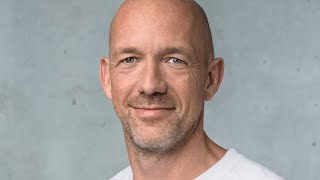
This content was created by GHION.AI . This content was uploaded by GHION.AI . This is a YouTube video titled "Exploration in Sports Technology [Entire Talk]" featuring a talk by David Allemann, co-founder of the sports brand On, presented by Emily Ma at the Stanford Technology Ventures Program. The talk, recorded on May 22, 2024, covers the journey of On from its inception, focusing on innovation in sports technology, product design, and marketing strategies. It also discusses the company's global expansion, sustainability efforts, and the importance of team culture and diversity.
Chapters
Welcome back to the Entrepreneurial Failure series presented by the Stanford Technology Ventures Program. This is the Stanford Engineering Entrepreneurship Center. It's right around the corner if you haven't visited. So go visit at some point and basis the business association for Stanford Entrepreneurial students. My name is Emily Ma I'm a lecturer in the management science and engineering department here at Stanford. And today I have an incredible pleasure of introducing David Alleman who was also stuck in traffic coming from Google. He's here for Google I O is that right?
Yes, absolutely.
So David co leads the sports company on one of the fastest growing global sports brands. He puts a special focus on product design, marketing and a direct to consumer business of on super exciting because I was a product designer and he's like a super prototyper. So raise your hand if you're in product design, mechanical engineering. Okay, so you have some fans here already. Previously he has worked at the intersection of business and creativity at McKinsey as a managing director of the advertising agency Young and Rubicum and as the CMO of design brand Vitra, which I love too. Right after he graduated he founded one of Switzerland's first Digital Agencies in 1996. David also holds a Master of Law degree from the University of Zurich and received an advanced management program from insead. He and his wife Inja over there and his two kids, two young daughters love being outside, love being outdoors and I have no doubt they are testing their product along the way.
Yes, we were outdoors a lot in California on a family business trip. So that was has been amazing.
Amazing. So please give him a huge round of applause. Welcome David.
Thank you so much. And I feel so privileged to be here with all this amazing talent in the room because you're going to go on to do so super interesting things and so it's going to be interesting to watch your journey and I would like to share a bit our journey and also the personal journey as an entrepreneur. And so what we and what I learned in that regard and here we are. So when Olive, my co founder who's a dual clone world champion and a six time Ironman winner called me and Kasper one morning, we were really curious because he was a little bit telling us hey, I had this amazing idea for a new shoe and we looked at each other and said now he's gone crazy kind of. Well he squander his hard earned athlete and prize money on an impossible project. But we were curious and so one morning out in a rainy forest in Zurich we saw this and I often ask my investors would you have invested back then. So Olivier had an idea and you're going to appreciate that as engineers he basically said hey, on all his runs as an athlete, it's amazing that I have cushion shoes on one day and then for my training, but then for my competition, so called raised flats or really hard shoes, but why can't I have both in one? And so she realized that so far it's been mainly material science. So how can I put a better foam, a better mattress underneath my feet? And that's of course great as you will appreciate when you land. But then it becomes very soft running across a mattress when you're pushing off. And so he looked for an engineering solution to the problem and he found a way and I probably can show that in one of the shoes here he found a way to kind of do hollow elements. So really engineering, engineering solution. So that these guys today we call them clouds that they bend back and give you cushioning but then under force they become completely flat like a racing flat. And so you have a solid platform to push off from. And he initially went out and in true engineering rapid prototyping style, he had go home and cut his garden hose at home to get to hollow elements and glue them onto these shoes so that he could test that out. And we tried these shoes on that morning in the rainy forest and we felt wow, there is something there. Because it felt like our first mountain bike full suspension mountain bike ride or our first ride on. On carving skis. Also an engineering solution that changed the feel of that respective sport. Of course then it went very fast and we started to develop shoes. Shoes in running now lately shoes in tennis. Some of the best performance shoes. The Cloudboom Echo 3 has won many marathons world championships at the feet of amazing athletes. We're often seen. I hope you see a lot of on shoes on the running tracks around Stanford where now probably 10% of all runners are in on shoes in the city runs. You probably see them in the gym as well. You probably see now apparel from on as well. If you're a tennis fan, you see on increasingly on the tennis court with Ben Shelton for those who you watch tennis kind of is really going after it IGA Svartech world number one in tennis having joined our team as well. And some probably even see that on crosses over into lifestyle. That's one picture from our collaboration with fashion brand Loewe. Because over the last 15 years definitely sports is not something that you just do on the weekend. But sports is now the new uniform especially then also accelerated and driven by the pandemic where we have learned that we can mix studying business, sport, and that we also dress accordingly. And so it's the new silhouette of our generation. Now, that also all looks great. But that's how I felt when we started out. So it felt pretty much like cold shower, because we were sitting there, we had no clue of the shoe business or of the sports business. So how do you do that? How do you produce that crazy shoe where Olivier just had taken a garden hose? And so Olivier there in the middle, Casper on the left, me on the right side. We had to find a way. And in a perfect entrepreneur story, we would have started the next day. But that was, of course, not reality, because we all came from kind of solid career, kind of, you know, McKinsey solid careers in advertising and so on. And so we were a little bit wary and we fooled around and said, hey, are we really going to do this? Isn't this too crazy? But then probably two months in, we went on a long hike, a hike up in the Swiss mountains. And now you have to know Switzerland, there are mountain people kind of often living in the dark valleys. So it's a little bit a narrow perspective. And so we hiked up in the mountains in the Engadine Valley. And the more we moved, the higher we got, the broader the perspective got. And what we started to ask ourselves on that hike is, hey, we're coming from one of the safest planet of the safest places on the planet, one of the most privileged situations. So if we can't take full risk, who can? And so who feels privileged in this room? So here's a thought. If you have so much privilege to sit here, why can't we go all in? And despite the fact that it's probably crazy, take the full risk. And that's exactly what we did. And we put ourselves in a nothing to lose mentality. It's still a very calculated risk. It's not exactly Columbus setting sail for to discover the Americas. And so we didn't know where it's going to lead us. It led us in 21 to an IPO, where we actually didn't go in our suits, but we ran with all our team to Wall street to do the ipo. But that was not the goal. That was just a stepping stone on this explore journey where it's unclear where the end will be. But we're on this journey and it's incredibly exciting because we chose to go all in, nothing to lose, and risk it all. So, of course, when you Head into that journey. As you all know as engineers, as product designers, product has to be first, innovation has to come first. If there's not something novel, something completely unique, you don't have anything. And so, of course, Switzerland has a little bit of a history in engineering, whether it's watches or putting holes into things, whether it's mountains or cheese or even now shoes. So there's a little bit of engineering innovation there. And we worked very, very hard. And working hard involved also being scrappy. So we had found a carpentry workshop somewhere close to where Olivier lived, and we brought a big team of athletes who were our friends, including Olivier, of course, to that carpentry workshop. And we started to drill holes into different outsoles. And at the end of the day, we probably had 20 different prototypes, and then we narrowed down to five prototypes, and then we test run and so on. So it was a very, very fast process at the beginning. Now, 13 years later, Helen O' Berry has just won the New York Marathon last year, the Boston Marathon, now for the first time in 20 years, the second Boston Marathon in a row in on. And this is our latest secret development which going to be fully unveiled during the Olympics. And people are speculating on social media, is it a boot? What can it do? And so there is a little bit of mystery out there. What has come out of the on Innovation Lab as the latest development. I can't explain too much here, but watch this space. Watch the Olympics because, because you're going to see a lot of athletes in the newest development that came out of this Innovation Lab and who led Helen to an incredible win, third win in a row, New York, Boston, Boston again. Now, it was great in this carpentry workshop, but then we thought, hey, can we do rapid prototyping, probably even a little bit more rapid. And so our team started to enlist also machine learning, so that we said, hey, it's an engineering principle. How can we tweak these holes in a way that they're even more effective in how they close and how to give you a super smooth ride and a super smooth rolling motion. So we started to build a foot and then also an outsole with finite element analysis and going through hundreds, thousands of cycles to optimize. And so the Cloud surfer is the first shoe that was really, actually prototyped by a computer and came out of that. And now that's driving our whole next evolution of the cloudtech platform, as we call our technology platform. So innovation was super core, but of course it was also very much, hey, Switzerland has 7 million people. That's the greater New York area. So you can't build a global sports brand out of Switzerland. And so it was very clear to us, if you want to be a global sports brand, you have to go global from the get go. And you for sure appreciate that the world has completely changed. If you would want to do that 20 years ago or 30 years ago, it would have been impossible. But now, because we have so many digital channels to reach consumers, we have also digital channels to collaborate across different locations around the world. It's for the first time probably in the last 10 years, and we started in 2010, possible to go global in an instant. So we started out in Switzerland, but then we took, we went to New York. And that orange rock, there is a rock that actually existed on the mountain where we did this nothing is impossible hike. And we scanned it with a laser and we transferred it to New York. And then it was 3D printed to kind of bring back that rock to the New York store. We opened that in the middle of the pandemic. So for the first few months it was very much a local community store. But now there are a lot of queues in front of that store and in front of that rock. That was 2000. We started in New York or we started in the US in 2012. The store came later in the next year, in 2013, we went to Japan, we went to China. And this is a running group that I recently ran with in China because now it has become a movement of millions around the globe. Add on, it's also a very diverse movement. So we are now 94 different nationalities. We're across the globe in 20 different locations, 54 different languages spoken. It's pretty much an equal gender split, not just kind of on an overall team level, but also on a management, on a leader level. Our P and L is firmly in female hands because our chief Commercial officer in the us Brit is leading the commercial drive. Our COO Chowe from China is our coo. So it's very much a very diverse team. And we feel that very diverse team is core to the innovation core of on, because diversity is really the petri dish of innovation. It's also not just people from the business side, it's engineers. It's also a lot of creative people. We chose to build our creative team, our marketing team, internally. So it's around 250 people who come from a creative background. And I can tell you there are always super, super intense debates because these different perspectives, they also collide. And then we have intense discussions and it leads to better results. So we opened in China as well. This is the Regent street store. We're trying to innovate in retail as well. So how can you be something that is a shop, but at the same time is a little bit of a science museum as well? That is super interesting and where you can learn something. We just opened Paris. We're actually going to open a second store at the Champs Elysees in Paris, ready for the Olympics. Because of course that's going to be one of the most important moments in sport. And then of course, we came back to the US as well, and this is the Miami store and that opened and we have an innovation in retail because we felt, hey, when you go to a shop, what's the experience that you feel? It's often that you're coming in and then you're asking for your shoe size, and then somebody vanishes to the back room and and basically comes back probably 10 minutes later and says, hey, is that the right size? Then it's not the right size. And then that person vanishes again and you're there with many boxes and 20 minutes in, and you're basically telling yourself, the next time, I'm probably going to go to the website as well to order from there. And so we did this archive, as we call it, and there's a magic button, and if you open it, kind of every shoe is in there in every size. So it's a very, very simple idea, but it completely changes the shopping experience. All of this wouldn't have been possible without this incredible team. And let me tell you a little bit how we built this team, because I think that's important for any one of you who's at some point starting a team, leading a team, probably starting your own company. So when we started out, we were already a team. So we were three founders. And we said, we hired our first two team members and we felt, hey, it's an amazing culture in this small team. So we said, hey, for every person that we're going to hire next, we're going to do interviews and they have to interview with all of us. And so that of course, broke when we were around 10 people, because it's impossible. But we had cultivated a spirit of, hey, we want to have very clear mindset and not just primarily skill set in the people we hire. And so that happens to this day. We noted down our spirits that guide us because we feel that's what is present in that team. And it has become generational because now when Our latest generation of team members hires the next generation of team members. They basically go back to these spirits and ask, is the explorer spirit there? Something that we talked at the very beginning is the athlete spirit there. Something that's very close to innovation, because athletes, when they win, they have to get up the next morning and start to train again. So thinking about failing innovation in innovation and getting up the next morning again to do the next prototype. And so these spirits, together with the positive spirit and with the team spirit, they all have to be there. And we probe first and foremost for these spirits because we feel whenever you write, you go into a company headquarter and you see excellence written somewhere on a wall, you're probably not going to believe that it's really there or that this makes something so it comes through people. And by bringing the right people around you, we feel you have a shot at building a great culture that then is not just there as your first product, but it becomes generational. And these next generations build the next product, because products are probably there for five, 10 years, depending whether you do a digital product or a physical product. But the team is there in eternity if it becomes generational and if really kind of that spirit is present in the team. So I would urge any of you who build a team, first and foremost to think about who do I want to have next to me if I scale really, really fast, and if I have to scale product, if I have to scale geography, if I have to scale channel, like retail, direct to consumer, probably even wholesale. You need a lot of shoulders and don't pull everything to yourself, but make sure that you have amazing people around you. I have to tell you, that's not always easy. For me, that was hard because when you're starting out and you're building your baby, then sometimes it's hard to let go. So I went out and built all the factory relationships at the beginning. And then at some point, despite having built all of this, I had to let go and say, hey, now I hand over to Mark, who's going to continue to do that at the beginning. That is hard. Or when you have built products, or when you have launched a digital experience, or now, lately, retail, and you have to hand that over to a team, to the next person. If you're a builder, that's sometimes hard, but I learned that I have to let go because it creates so much space. First of all, it creates space for the team to have to take over and not always somebody watching over your shoulder. It's very hard to lift the Explorer spirit, if somebody watches over your shoulder, but then also for me to create space for the next thing. So if you want to create the next thing, if you're really on that journey, let go to create that space for the team and for yourself. Now the team and all the creative people in the team have also been amazing. Not just creating products and building countries and retail and all the channels, but also in telling stories. Because for us, we didn't have a lot of money to spend into big billboards campaigns or big TV campaigns. So obviously over the last 13 years, it was the total rise of digital advertising, of social, and we fully captured that opportunity. That could have been feature length films that were heavily awarded as well. But of course it's then the whole machine of connecting to our community of millions of runners, tennis players around the world through a lot of storytelling and a lot of content. Even our stock ticker is a story in itself because we chose to name the stock ticker on On. And so that is probably the shortest story that we can tell in four letters. So it's all about storytelling today when it comes to marketing. Sometimes if you have an amazing team, a great culture, it attracts of course, other members. And so Roger Federer at some point was basically applying for a role at on by posting on Instagram because he had just left another brand and he was in Paris at Roland Carros and he posted a picture of him somewhere standing in front of the skyline of Paris in Anjous. And so we felt that was a clear invitation. And because Switzerland is so small, we had joint friends and they said, hey, why don't you go on a dinner date? So we went on a dinner date with Roger and he came with his baseball cap deeply in his face. But then we hit it off immediately and felt there's so much joint interests when it comes to sports innovation, when it comes to design, when it comes to athleticism. And so he asked us, hey, can't you bring Cloudtech, our technology, to tennis sneakers? And then performance tennis shoes as well. And four months later we invited him to the lab and we had engineered a way to actually bring CloudTec into our tennis sneakers. And then later on developed with him the Roger Pro as well. And he came back, he gave his comeback in Wimbledon in Da2. And then he said, hey, how can I get involved? And we said, hey, doing a little bit innovation on the athlete endorsement side as well. We're not so classical in kind of just hiring athletes and giving them a lot of money. Why don't you give us money? And invest in on. And that's exactly what he did. So he gave us his money and invested in on, and he became a co entrepreneur of us and has been in that ride together with us. And it's a fantastic experience. And for those of you who admire Roger, but probably ask yourself sometimes, is that super, super nice tennis player just a media image? I can really tell you he comes as advertised. So he's super genuine, super humble, and it's a huge privilege to be with him in this journey. And he brought, of course, then also iga, IGA Swiatek, who is tennis world number one, who is now in the team, Ben Shelton, who we feel some of the most interesting players globally, and of course the rising US star as well in tennis to the team. So we talked a lot about our spirits that we have on, so our cultural values. What we haven't talked about is the survivor spirit. And for us it was super important. As soon as we had solved the basic issues of producing shoes, because I can tell you, that was a big nightmare at the beginning, we started to think about what do we have to do to do that in a sustainable way? Because 98% of our CO2 footprint comes purely from product. So we have to solve it in product. And so we started to think across three horizons. First, we said, hey, let's limit down the materials that we can use in creating shoes. And so our team reduced down only to recycled materials. And today of all our uppers, all our uppers are recycled, so fully recycled, polyesters, polyamides, and we're increasing the materials, recycled materials used in all our shoes. But then we said, hey, that's great if we have recycled materials in our shoes, but what happens if you then only use them for a certain amount of time and then they end up in a landfill? Couldn't we kind of borrow a little bit from the digital industry? Couldn't we borrow from Netflix and not kind of preview that shoe, but basically say it's a subscription model, you're never going to own it. And so we created a shoe which is called the Cloud Neo, that is fully made from beans, from ricinus beans. And so it's bio based material, but then you don't own it, but you subscribe to it and you give it back. Once you have used it, you ping us, you get a new shoe, and in the old box, in the box that you get, you send the shoe bags so it becomes circular and thousands of people have signed up. It's really a large scale experiment. We don't Know whether that's going to scale to 70% of our customers probably could just be for the hardcore customers that know that they're going to use shoes again and again and not just kind of see it as a special fashion items that sits in their cupboard. But we're very much on that journey. How can we make it circular? And the interesting thing is that we found out you can do very, even a bio based material shoe that is actually really a great performance shoe. So that sustainability and performance is not in juxtaposition to each other, but they can be really synergetic. Now let's do a third dimension. How can we actually suck carbon emission from industry emissions and create a unique material out of that? And that's our third dimension. How can we use these carbon emissions? And we created a material called clean cloud. So we suck carbon emissions from industry emissions and then through a fermentation process we get to ethanol and then we can use that ethanol again to create materials. So that's eventually the dream, that it's not just recycled, not just circular, but eventually that on a large scale we can bring back carbon emission. And so with that you kind of see that it's always that positive spirit that drives us, that we can do things, that we can take risks, that we bring the right spirit and the right team members to on that we can work on the future. And that's actually our core mission that drives us. Who of you are runners? Can you please stand all up? Who are tennis players? Who are. You can stand up as well. Who are hikers who do any other sorts of sports? Oh, wow, that's great to see. Now can I ask you, did you ever experience a day where you were going out doing your sport and it was bad weather or it was drizzling, or it was too hot and you basically came back and said, hey, that was really not worth it. So for those of you who felt that it was really not worth it because you were demotivated, you can sit down again. That's what you see. So I see most people still standing. And so that's the insight. When you do sports, when you run, when you hike, when you go and play tennis, when you train, something is not just happening to your body, but even more important, something is happening to your mind. And so our mission, and now please, you can all sit down. Our mission is to ignite the human spirit through movement. We feel body and mind are fully connected and that's what's present in what we feel for sports and why all of you are doing sports and are motivated by that. And we encapsulated that in a short film.
When was the last time you dared to dream? Like really dared to dream? The type of dream that can be so powerful, it shapes the course of your life, of everything you do. The type of dream that gets you up and moving each and every day, literally up and moving. The type of big scary dream that summons and ignites the. The power of the human spirit. Yeah, that type of dream. One so audacious you hardly dare to utter its existence. One that will not just need the power of the human spirit, but all the power of the human spirit when things get tough, because we promise you, things will get tough. There will be times when it feels like it might never be anything but a dream. Potential unfulfilled. But here's the thing. There is nothing more powerful than the human spirit. Nothing. So dream on. Dream on.
I really invite you to dream on, to take a lot of risks and to innovate. And so if you take three things home from this opening, because now we're opening the conversation, then it's live the explore spirit. So especially if you come from a super privileged situation, that's the perfect opportunity to take a lot of risks, Lift the athlete spirit in whatever you do. So if you kind of fail, you have to get up the next morning and you have to try harder. And if you win, you have to have to do that even more because the next day somebody has a target on your back and runs faster. And so it's very much this innovation, athlete spirit, and probably last innovation, as much as we are about innovation, is outlived by teams. Because if you create amazing teams with the right culture, a product will fade. A team can go on to do the next great thing. And so these are some of the learnings that we learned on our short 13 year journey. And I'm very happy to open the conversation with you here in the group.
Hi David, thank you for coming. I was really curious about the subscription plan of Cloud Neo that you mentioned. It was really interesting to me. I have two questions on that. The first is what is the dollar value that people pay for subscription? And the second is what happens to the shoes once you return them? Do you give it back to other customers? If so, how do you make sure that you remove wear and tear and also cleanliness?
The dollar value is 25 bucks per month. So you pay really a subscription model. And so if you rotate through quite a bit of shoes, especially if you're a runner, that makes sense. And then we take back the shoes and we recycle them and we can create next products out of that. And so it becomes circular. We're working hard on making it even easier not just for the cloud neo, but also for other models to be taken apart so that the recycling process becomes easier. The next horizon is then even chemical recycling, which makes it easier because the challenge is always how much energy do you have to put into the recycling process to make it so that it really makes sense to recycle from an energy perspective.
Hi David, thank you for being here. I'm a huge fan of the brand and I love the marketing and the storytelling your team does. My question is more around the early stages of launching the company, especially in a space that is so dominated by Nike, Adidas, Puma. I mean, they were clearly incumbents in the industry. And with the product that's like so performance oriented, how did you go to customers or how did you find the right customers to test the product with? And how did you then eventually convince them to go with you versus say a Nike, which then, I mean, has so much more legacy?
Super important question. That's exactly what we asked ourselves in the beginning. We said, hey, let's first go out to all the marathon expos and do a little stand there, kind of put some shoes on the table like here, and convince people that they should try our shoes. And so at the beginning we found out that if you go up to them and basically say, hey, we want to try our shoes, they were kind of not so interested. And then we printed T shirts and the T shirts had on there, don't ask me about the shoes. And then of course people were starting to come up to us and say, hey, why shouldn't I ask you about the shoes? And I said, I'm going to tell you anything before you have tried the shoe. And that was at the very beginning, our acquisition model for making people curious. And then they got into the shoes and said, wow, that feels different. So different was the word that we heard the most and feels light. It feels like on clouds. And actually we immediately stole that on clouds. And then we called it cloud tech. And so these were the very early days. And then we thought about who. So if we shouldn't talk about our shoes, who should? And so we said, hey, probably it's the best marketing approach if we don't tout our shoes, but we have somebody else talking about our shoes who's very credible and who are the most credible people to talk about a new shoe isn't that kind of your local running store, you know, a little bit the running geek that used to be a marathon runner, and she has opened that store in your neighborhood, and that's where all the runners go to get their shoes. And so we called them up and of course they weren't interested at the beginning. And so we traveled to the respective city or village and we called them up and said, hey, we're just here. It's before lunch. Don't you come with us to a run? And they said, hey, you don't even know my shoes. I said, hey, isn't it a 9? We just have your shoe here. Because of course we did before. A little bit of intelligence and that led to great shoe runs. So it was a very healthy moment in our lives because we did a lot of runs over lunchtime. And that was the initial phase. And then it grew really grassroots level from there. Please. Hi.
You talked a lot about the importance of finding the right people for your team. I was wondering if you could talk about how you knew your two other partners were good people to work with. I know you talked a little bit about the different spirits, but how did you know you would be compatible with your co founders and that they would be with you along this entire journey?
It's often that you have friends and so you feel a certain element of compatibility. I had worked with Casper before in advertising. We met initially at McKinsey. I met my wife at McKinsey as well. So Casper and my wife for India were my two most important McKinsey takeaways. So that was an important payback for two hard years of PowerPoint. And so we knew each other and we had worked with each other already six years. And Kasper was actually the athlete manager of Olivier back in the days when he was a professional athlete. And so we had known each other as friends. And so we came together like that. But then we felt, hey, sometimes we were almost too close. So it's not easy if you're really close friends sometimes in the early days because you're so invested, and then it gets sometimes a little bit hard. And it really helped that we expanded the team of great people very early on. And so we had a great balance because it was not just the three of us, but soon five of us, ten of us. And what was interesting in our model is that we really built it as a partnership. So it wasn't that we were hiring employees, we were also hiring employees, but kind of our closest allies in this team we hired as equal partners. And I feel that has been really a core element in the success of ON because it allowed us to really lift the explorer spirit and all these missions. Hey, who's opening the US? Who's opening Japan? Who's going after D2C? Who's building the next shoe generation? Who's kind of building up production? You could give out to one of us and they or two of us went after that. And so it was really kind of this partnership that built the organization and that is present to today. So ON is a very un hierarchical organization. It's a very kind of chaotic organization sometimes as well. So that's why the explorer spirit in all the people that we hire is so important, because you sail away and you're not calling home the next day. And so that's very much the spirit that we have to have in our team as well. Sorry, that was a long answer. Please. Hi, I'm from Switzerland. So I'm super excited you're here today. Hi. I was wondering, like listening to you, like, I know you have a great product, but I think what ON has done super well is going to market and, you know, the advertising. And in this spirit, I'm very curious, like it seems you've laid the foundation or part of the foundation for the success of the company much, much earlier with kind of, you know, what you did before you built the company and given you studied law, I'm very curious how you kind of made that decision to, as an early career step, go into digital, like digital media and advertising. How did you think about this? You know, law was probably one of the most boring stuff that I ever did. So I realized that fortunately very early. So I was always kind of. My passion was always at the intersection of business and creativity. I had my first Mac in 86. I taught a lot of art directors in Illustrator 1.0 to get some money for my studies. And so that was always there. That also led me. Then I discovered that thing called Internet somewhere in 93. And so I wanted to be in there. And so I founded one of the first digital agencies. My co founder, Olive, of course, is a trite lead, incredible inventive sports guy who also kind of tweaked the steering of his road bike in a unique fashion. So he was always tinkering with things. Kaspar has always been kind of the great salesperson and also an athlete manager. So there are different strains that then often come together. And I think if you have these very diverse different strains, they also kind of build in the foundation and the DNA of your company. And so at the beginning, when we started out, there have been brands in our minds, like for example, Dyson, because Dyson is very much an engineered product. So there's an idea in there, can we do that without the bag? Can we do a Tourbin? But it was also a design product. And the same, of course, is true for Apple. I always admired that breathing light in the early Mac laptops because it's somewhere. It's hard to tell is that now design or is it engineering? What is it? And so kind of exactly that intersection creates some element of magic. And so for us, it was important when we were designing the shoes. How can that be super visual so that you don't kind of have to just go to an abbreviation on the shoe that tells you something about a technology that is somewhere hidden in the shoe, but also how can you make it super sleek? And back then there was a lot of space or car shoe design with a lot of material on the shoe. So we felt form follows function. So if you reduce down on design, you're actually also getting the functional benefit of making them very light and less and much more agile. So these are the things that came together in the early days and continue with our newest talents.
Hi, I'm really bad with Mike, so I'm sorry if you guys can't hear me. Thanks for being here. You mentioned early on that storytelling played a big role, especially when you were at a smaller. When you guys were at a smaller team. So I was curious if there was any. If you could share any lessons learned or advice in crafting a good brand story.
Yes, I feel that's probably one of the most important things that you know what you stand for internally through your culture and the spirits that is present in the people. We then decided to codify it at some point by writing down what was already there, but then also really galvanizing. What's your mission? What's your why? And for us it was very clear. It's not just about winning races or being the fastest shoe. But for us it was clear kind of having that explorer spirit which is so important at on that it's about igniting the human spirit through movement. So it's something about what happens to the mind as well. And so that's really galvanized in our claim. Dream on. So not accepting the status quo, but always going after the next thing. And so finding that why is so important because then it's easy from there because it guides decisions, it guides stories that flow out of that and it makes just kind of things a Lot easier. Thank you for coming. I have a question. How were you able to grow together with the founders and keep the company? Because it's very unusual when you start to grow, typically people will ask you either to hire more people or to hire people who can make the company scale. So what types of skills did you learn on the journey to get there together? So I think one element why we managed to do this journey together for a long time is because we learned how to fight and then kind of put the fight to rest again and be constructive again. So how do you operate under a lot of pressure in a small group and can then, despite the fact that you probably have sometimes disagreements, come together again because you're still very clear what the joint mission is? And so I think if you're getting frustrated with your co founders or your team members, always kind of keep the mission in mind and then you're finding the energy again to continue that journey together. And the second aspect has been that we went out relatively early and said, hey, we need allies, we need some of the best people. And so I think we were fortunate at the beginning that we could do both, basically invent and dream, but execute at the same time, which are essentially the two things that you need in a startup. But we're probably not the best scalers. We can do it for a certain amount of time. And so we brought a lot of people to the organization who are better than us in that. And so that gave us also space again to really focus on innovation and building. The next step of the company. And really bringing that team together that can do both was super important. That allowed us to go a very long way together.
All right, well, we're at time. This was an incredible talk. I hope all of you go outside and do something. I form. Back next week. If you look for more videos there at the corner. Stanford Edu, what a pleasure. One more giant applause for David. Thank you so much.
Thank you very much for having me. Thank you.
More from GHION.AI


O processo de reconhecer limites, mesmo quando a vida parece exigir sempre mais.





Depois de tantas histórias, aprendizados e pausas necessárias, o @interior_iza está de volta



