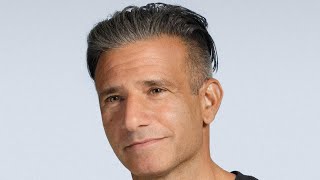
Josh Wolfe explains how to find investment opportunities by targeting problems nobody wants to solve. He uses Curion, a startup that deployed nuclear waste cleanup technology after Fukushima, as an example of how disasters create urgent demand for solutions in technical niches with few competitors.
Chapters
One of the other principles is the directional arrow of progress. We don't know which technology, we don't know which entrepreneur, we don't often know which specific company. But we do know that there are these directional arrows of progress. And you're going to see as I talk through some of the companies and the examples and the founders that we backed some of these directional arrows of progress. Everybody knows Moore's Law. Moore's Law has transcended semiconductors. It's been in memory, in compute, in transportation, in telephony, in film, in tv. We had an insight going back during the first cleantech boom that there was another directional arrow of progress and a lot of people were not focused on it. Most of people were consensus looking at alternative energy. Very few people were looking at nuclear. And all we did was look at the directional arrow of progress, of mankind's use of energy. And we went from left to right, from carbohydrates to hydrocarbons to uranium. And the unarguable trend was higher and higher density per unit of raw material. Why was nobody looking at nuclear? And there's a variety of reasons, some of them psychological, some of them political, some of them technological. But we said, what's the one thing that really sucks about nuclear? And that's the favorite question that we like to ask about any industry. I always joke that it's sophisticated, two word PhD level question, what sucks? You find something that sucks and it is waiting for a technology and an entrepreneur to go and solve that. So we looked around for entrepreneurs and couldn't find one. And so we ended up starting a company from scratch. We named it after Madame Curie, we called it Curion. And we recruited people that were slightly under the age of 60, but were industry veterans. And we pulled together this team, we pulled together technology and we decided that we were going to go after the nuclear waste problem. And it turns out that there's 104 domestic reactors, there's 440 global reactors. You can make a market selling into those, but there's this huge defense market that's in places that most people have never heard of, like Hanford and Savannah river and Idaho National Labs and Sellafield in the uk and, and all of these places have hundreds of millions of gallons of radioactive waste. And that really sucks. That was a big problem. And so we saw an opportunity for a big solution. Now this is a company that would have been great. It would have been a phenomenal business over the course of a decade. We found this company back in 2008 or 2009, March 11, 2011. Something terrible happened in Japan. It was a negative black swan. It was the Fukushima disaster, earthquake, tsunami, nuclear disaster. And that became a positive black swan for this little company. We had never predicted that this outsized negative event would become this outsized positive event for this company. We became the only US Company that picked for the cleanup of that nuclear disaster because we had assembled the team that had the know how, the technology, the robots, the intel and the access for the relationships. And I'll give you a quick video of what occurred here at Fukushima.
The water is so radioactive that people don't even want to go near it, to even sample it.
When I first got to Fukushima, they said it was going to be 30 years. And I thought, that can't be possible. Until I got to the site, they.
Didn'T even know how to define the problem. It was almost like a comet had hit their plant. We actually knew immediately what the answer.
Was and we designed it in two and a half weeks, filled three Russian Antonov military transports with 700 metric tons of equipment in five weeks and started it up three weeks later.
We were just, you know, shocked by the enormity of the whole thing. A large company like Tipco Trust, a tiny little startup with six people, we a critical part of what they needed to recover from the accident just was mind blowing.
The day we started was a scale of about 100 times bigger than what went on at Three Mile Island.
And there's nothing more full scale than Fukushima.
To actually work on a project where you went from a whiteboard sketch to an operating system in eight weeks and succeeding is the accomplishment of a lifetime.
Now we really like to find entrepreneurs and sectors where there's like one or two competitors. So not an area where there's 50 entrants and people are developing social media apps, something that is really hard, something that has a very high barrier to entry, something that is very technical. And if you are an entrepreneur and you can identify one of those spaces that is very technical, something that you can do or assert that you can do or team can do that nobody else can do, your ability to raise capital is going to be much higher. Your ability to succeed is going to be much higher because you're competing with far fewer people. So we like to find these weird off the beaten path technologies and problems that very few people are going after.